
Roman Architecture: Everything You Need to Know about the Roman Building Style

Roman Architecture: Simple, Smart, and Built to Last
Roman buildings were made to work—and to last. From arches and domes to stone roads and concrete walls, everything the Romans built had a clear purpose. They didn’t just copy what came before—they improved it.
Below, we break down how Roman builders worked, what made their buildings unique, and why their methods still shape construction today.
Roman Architecture Style | Key Features, Materials, and Legacy
A simple, expert look at the core features of Roman architecture—why it worked, how it lasted, and what we still use today.
Roman Architecture History: How It Started and Why It Still Matters

Roman architecture began simple and smart—built to solve real problems. Over time, it grew into something bold, useful, and built to last. Here's a clear breakdown:
1. Early Days: Building with What They Had
-
Basic Materials: Early Romans used mud, wood, and stone.
-
Purpose Over Style: Early homes and structures were small but practical.
2. The Roman Republic: Order and Planning
-
City Layouts: Streets and blocks were carefully planned.
-
Public Use First: They built spaces for meetings, markets, and courts.
-
Roads and Bridges: Example: The Appian Way connected cities; Ponte Fabricio (Rome’s oldest bridge still in use) made crossing the Tiber easier.
3. The Empire Grows: Big Projects, Big Impact
-
Aqueducts: Carried fresh water from miles away. Example: Pont du Gard in France.
-
Concrete: Their mix (with volcanic ash) made buildings stronger and more flexible.
-
Arches: Spread weight so buildings didn’t collapse. Used in everything—from water systems to stadiums.
-
Domes and Vaults: Covered wide spaces without extra support. Example: The massive dome of the Pantheon.
4. What They Focused On
-
Function: Buildings had to serve a clear use.
-
Strength: They picked materials and methods that would last.
-
Simplicity: Clean lines, symmetry, and repeatable shapes.
-
Public Access: Roads, baths, markets—made for people, not just rulers.
5. What You Can Still Learn From Roman Architecture
-
Test Before You Build: Romans tested materials, terrain, and load.
-
Plan Around People: Their cities had walkways, water, open space, and shade.
-
Work with the Land: They didn’t force the land to change—they built into it.
Real Examples to Know
-
Colosseum: Fast entry, smart drainage, and great crowd control.
-
Baths of Caracalla: Clean water, heating systems, and storage—all in one place.
-
Roman Roads: Built in layers with stone, gravel, and sand—many still walkable today.
-
Markets of Trajan: Multi-story commercial center with ramps and brick vaults.
Roman Architecture Timeline
Timeline: Charting the Evolution of a Style
Roman architecture didn't remain static; it evolved over time. Let's trace the chronological development of Roman architecture, from its early origins to its zenith during the Roman Empire.
Early Republic (509-27 BCE)
Humble Beginnings:
- Roman architecture began modestly, influenced by the Etruscans and early Greek settlers.
- Early buildings were simple and functional, often made of wood and mud brick.
Etruscan Influence:
- The Etruscans introduced the use of the arch, which would later become a staple in Roman architecture.
- Early temples and public buildings showed Etruscan influences in their design and construction techniques.
Middle Republic (400-100 BCE)
Expansion and Innovation:
- As Rome expanded, so did its architectural ambitions. Stone began to replace wood as the primary building material.
- The use of concrete, a significant Roman innovation, began to take shape, allowing for more complex and durable structures.
Key Structures:
- The construction of the Cloaca Maxima, one of the world's earliest sewage systems, showcasing Roman engineering prowess.
- Development of basilicas as public meeting places, which would later evolve into significant architectural forms.
Late Republic (100-27 BCE)
Architectural Flourishing:
- The late Republic saw a surge in monumental architecture as Rome's wealth and power grew.
- The Forum Romanum started to take its iconic form with temples, basilicas, and public spaces.
Key Developments:
- The construction of the Basilica Porcia, Rome's first basilica, setting a precedent for future civic buildings.
- The development of the Roman domus (house), characterized by its atrium and peristyle layout.
Early Empire (27 BCE - 96 CE)
Imperial Grandeur:
- With Augustus at the helm, Rome entered its golden age of architecture. Augustus famously said, "I found Rome a city of bricks and left it a city of marble."
- This period saw the construction of iconic structures like the Pantheon and the Colosseum.
Key Structures:
- The Pantheon: Originally built by Agrippa and later rebuilt by Hadrian, its dome remains a marvel of engineering.
- The Colosseum: Built under the Flavian emperors, it became the symbol of Roman architectural and engineering excellence.
High Empire (96-192 CE)
Architectural Mastery:
- The High Empire period was marked by continued architectural innovation and the construction of some of Rome's most impressive structures.
- The use of concrete reached its zenith, allowing for more ambitious and varied designs.
Key Structures:
- Trajan's Market: An early example of a multi-story shopping complex, showcasing advanced Roman urban planning.
- Hadrian's Villa: A sprawling retreat for Emperor Hadrian, reflecting the diversity and luxury of Roman imperial architecture.
Late Empire (192-476 CE)
Transition and Adaptation:
- As the empire began to face internal strife and external pressures, architectural styles began to reflect these changes.
- There was a shift towards more fortified and utilitarian structures as Rome's political and social fabric changed.
Key Structures:
- The Aurelian Walls: Built to defend Rome from increasing threats, exemplifying the shift towards defensive architecture.
- The Basilica of Maxentius and Constantine: One of the last great buildings of ancient Rome, showing a blend of traditional Roman and early Christian architectural elements.
Legacy and Influence

Image: Milan’s grand glass-roofed shopping arcade, influenced by ancient Roman architecture with arched entrances, classical columns, and iron-framed glass ceiling.
Beyond the Fall:
- Even after the fall of the Western Roman Empire, Roman architectural principles continued to influence medieval and Renaissance architecture.
- Structures like aqueducts, roads, and bridges remained in use for centuries, showcasing the durability and ingenuity of Roman engineering.
Key Influences:
- The Renaissance: Architects like Brunelleschi and Palladio drew heavily from Roman designs, sparking a revival of classical architecture.
- Modern Architecture: Roman principles of proportion, symmetry, and the use of arches and domes continue to influence contemporary architectural practices.
The timeline of Roman architecture showcases an evolution from simple beginnings to a legacy of grandeur and innovation. Each period brought new advancements and styles that have left a lasting mark on the architectural world.
Roman architecture, with its blend of functionality, beauty, and engineering brilliance, continues to inspire and inform modern design, proving that great architecture truly stands the test of time.
What Made Roman Buildings So Durable?
A Simple Guide to Ancient Roman Architecture
Roman Architecture: Why It Still Works Today

Sure, the Romans liked to build big—but more importantly, they built smart, balancing beauty with purpose.
From roads and bridges to markets and public halls, the Romans made spaces that looked good and worked well. Let’s break down what made their design approach so effective.
What Made Roman Buildings Special?
✔ Strong But Simple Design
Roman buildings weren’t overloaded with decoration. Their beauty came from the balance of space, proportion, and clean lines. Think of it as timeless minimalism.
-
Everything had a purpose—columns held weight, arches spread loads.
-
Walls and ceilings weren’t just decorated—they were carefully engineered.
✔ Arches, Vaults, and Domes

These weren’t just nice shapes—they solved real problems.
-
Arches let them build wider and taller without collapsing.
-
Vaults covered big indoor spaces like markets and bathhouses.
-
Domes created round, open rooms without needing lots of support.
Best example? The dome of the Pantheon. Still standing, still jaw-dropping.

Image: Close-up of the Pantheon's dome, highlighting its intricate coffered ceiling design that defines ancient Roman architectural .
✔ The Magic of Concrete
The Romans made their own version of concrete using volcanic ash. It was:
-
Strong
-
Easy to shape
-
Long-lasting (some buildings are still standing 2,000 years later)
This one material changed how buildings could be designed. No need to haul massive stones—just pour, shape, and go.
Roman Style in Everyday Buildings
Not everything was a giant amphitheater. Roman architecture shows up in more ordinary spaces too.
Common Design Features
-
Straight roads and grid layouts for cities
-
Courtyards in homes
-
Wide public plazas for gatherings
-
Water systems and sewers (yes, they figured that out early)
How Romans Organized Cities
The Romans were masters of city planning. A good city wasn’t just a place to live—it had to run smoothly.
-
Grid-style layouts for easy navigation
-
Public baths, forums, and markets near the center
-
Aqueducts and sewers to handle water needs
These ideas weren’t just clever—they’re still used in modern urban design.
Details That Brought It All Together
Roman buildings were often decorated, but not just to show off.
-
Stone carvings told stories or honored leaders
-
Columns and ceilings had patterns to guide the eye
-
Mosaics added color without being fragile
They made things beautiful and durable.
Still Useful Today
Modern architects still borrow Roman ideas all the time:
-
Domes in government buildings
-
Grid city planning
-
Concrete as a building standard
These ideas have stuck around because they work.
Why It Mattered: Roman architecture lasted because it was built with care—and with people in mind. It wasn’t just about size or luxury. It was about making life better with smart, lasting design.
Arches, Domes, and Concrete: The Roman Way of Building
The Fine Details That Define a Legacy
Roman Architecture Characteristics

What are the specific characteristics that make Roman architecture so distinctive? Let's zoom in on the details, from decorative motifs to the use of space, that define the Roman architectural style.
What Makes Roman Design So Distinctive
Roman architecture wasn’t just about beauty—it was about smart engineering, durable materials, and space that worked well for public life. Below is a breakdown of the core features that made Roman buildings unique—and why they still influence architecture today.
1. Arches and Vaults
Strong, Smart Structures
-
The Romans mastered the arch, using it to build stronger, wider spans.
-
They combined arches into vaults—curved ceilings that covered large open areas.
-
Barrel vaults and groin vaults were common in baths, markets, and public halls.
Examples:
-
The Colosseum: rows of arches for strength and support.
-
The Baths of Caracalla: vaulted ceilings covering massive indoor spaces.
2. Domes
Spanning Wide Spaces Without Support Columns
-
Roman domes created huge indoor spaces without needing beams or posts.
-
They used concrete to form curved roofs, often topped with an opening (oculus).
Examples:
-
The Pantheon: Its massive concrete dome is still the largest unreinforced dome in the world.
-
Hadrian’s Villa: Smaller domed rooms used for both function and decoration.
3. Roman Concrete
The Secret Weapon
-
Roman concrete (called opus caementicium) changed everything.
-
It let builders form shapes, curves, and massive structures faster and stronger than stone.
Examples:
-
Aqueducts and bridges lasted centuries thanks to concrete.
-
The Pantheon and Colosseum still stand largely due to it.
4. Classical Columns
Form, Function, and Style
-
Romans borrowed the Doric, Ionic, and Corinthian styles from Greece.
-
Then they created their own: the Composite order, combining decorative flair with structure.
Examples:
-
The Arch of Titus: Composite columns with detailed carving.
-
The Pantheon: Massive Corinthian columns across its portico.
5. Decorative Details
Architecture That Tells Stories
-
Roman buildings often featured sculptures, friezes, and carvings.
-
These weren’t just for looks—they shared political messages and celebrated victories.
Examples:
-
Arch of Constantine: Covered in reliefs of battles and triumphs.
-
Ara Pacis: Peace monument with carved figures from Roman mythology and public life.
6. Urban Planning
Cities Built to Work
-
Roman cities were organized using a grid layout.
-
They placed public buildings—forums, markets, baths—in central, accessible locations.
Examples:
-
Pompeii and Ostia Antica: Grid-style streets, open plazas, and civic buildings.
-
The Roman Forum: A central hub for markets, politics, and gatherings.
7. Smart Use of Space
Every Corner Counts
-
Romans made the most of every space, from grand civic buildings to crowded urban homes.
-
Insulae (apartment blocks) showed how to house many people in small footprints.
Examples:
-
Roman domus: Homes designed around open atriums and courtyards.
-
Baths of Diocletian: Massive structures efficiently arranged to serve thousands.
8. Connection to Nature
Beauty Inside and Out
-
Roman buildings often included gardens, fountains, and open-air spaces.
-
They built with views, light, and water in mind—creating peaceful and balanced environments.
Examples:
-
Hadrian’s Villa: Mixed architecture and landscaping into one flowing space.
-
Villas with peristyle gardens: Inner courtyards surrounded by columns and greenery.
Final Thought: Roman architecture worked because it made sense. It used materials smartly, designed spaces for real human use, and added just enough decoration to make everything feel thoughtful and grand. From arches to domes to grid-planned cities, the Romans left behind more than ruins—they left a blueprint for how to build well.
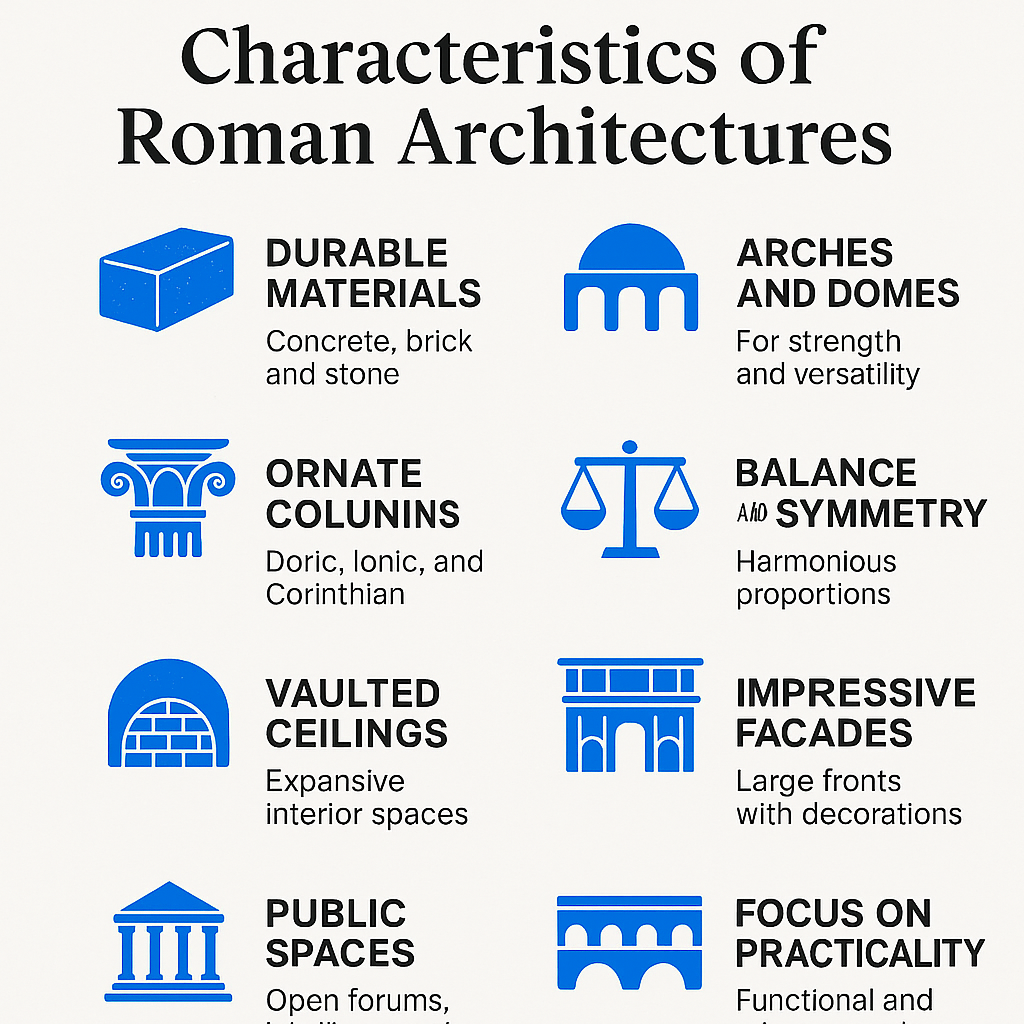
Image: Visual guide showing eight key characteristics of Roman architecture, including arches, domes, public spaces, and durable materials with minimal text.
How Roman Architecture Shaped the Modern World
Roman building style with real examples, smart techniques, and the design choices that helped it last for centuries.
Roman Structures

Epic Creations That Defied the Ages
The Romans were known for their ambitious construction projects. From awe-inspiring amphitheaters to monumental aqueducts, we'll journey through some of the most remarkable Roman structures. Each one tells a story of engineering prowess, artistic vision, and cultural significance.
- The Colosseum: Our journey begins with a visit to the Colosseum, an iconic symbol of Rome. We unveil the history and engineering behind this colossal amphitheater, which hosted gladiatorial combat, chariot races, and theatrical performances.
- The Pantheon: Next, we step into the Pantheon, a testament to Roman architectural mastery. We explore the intricacies of its design, including the remarkable dome that continues to inspire architects today.
- The Roman Forum: Our path leads us to the Roman Forum, the political and cultural center of ancient Rome. We uncover the historical significance of this sprawling complex and its role in shaping the destiny of the Empire.
- Aqueducts: Roman aqueducts are marvels of engineering that supplied water to cities across the Empire. We unravel the innovative techniques that allowed Romans to transport water over great distances, ensuring the vitality of their urban centers.
- Triumphal Arches: Triumphal arches stand as symbols of victory and celebration. We explore their architecture, purpose, and the messages they conveyed about Roman power and conquest.
- Bridges and Roads: Roman bridges and roads were the lifelines of the Empire, enabling efficient transport and communication. We examine their construction techniques and their impact on trade and governance.
- Amphitheaters Beyond the Colosseum: While the Colosseum is the most famous, there were numerous other amphitheaters in the Roman world. We visit some lesser-known arenas, shedding light on their unique features and cultural importance.
- Bathhouses: Roman bathhouses were more than places to cleanse; they were social hubs. We explore the architecture and cultural significance of these communal spaces.
The Legacy Lives On: The influence of Roman structures reverberates through time. We trace their impact on modern architecture and engineering, showcasing how Roman innovations continue to shape the world today.
Roman Construction Explained | Materials, Tools, and Style
Roman Building Techniques That Still Matter Today
Roman Construction
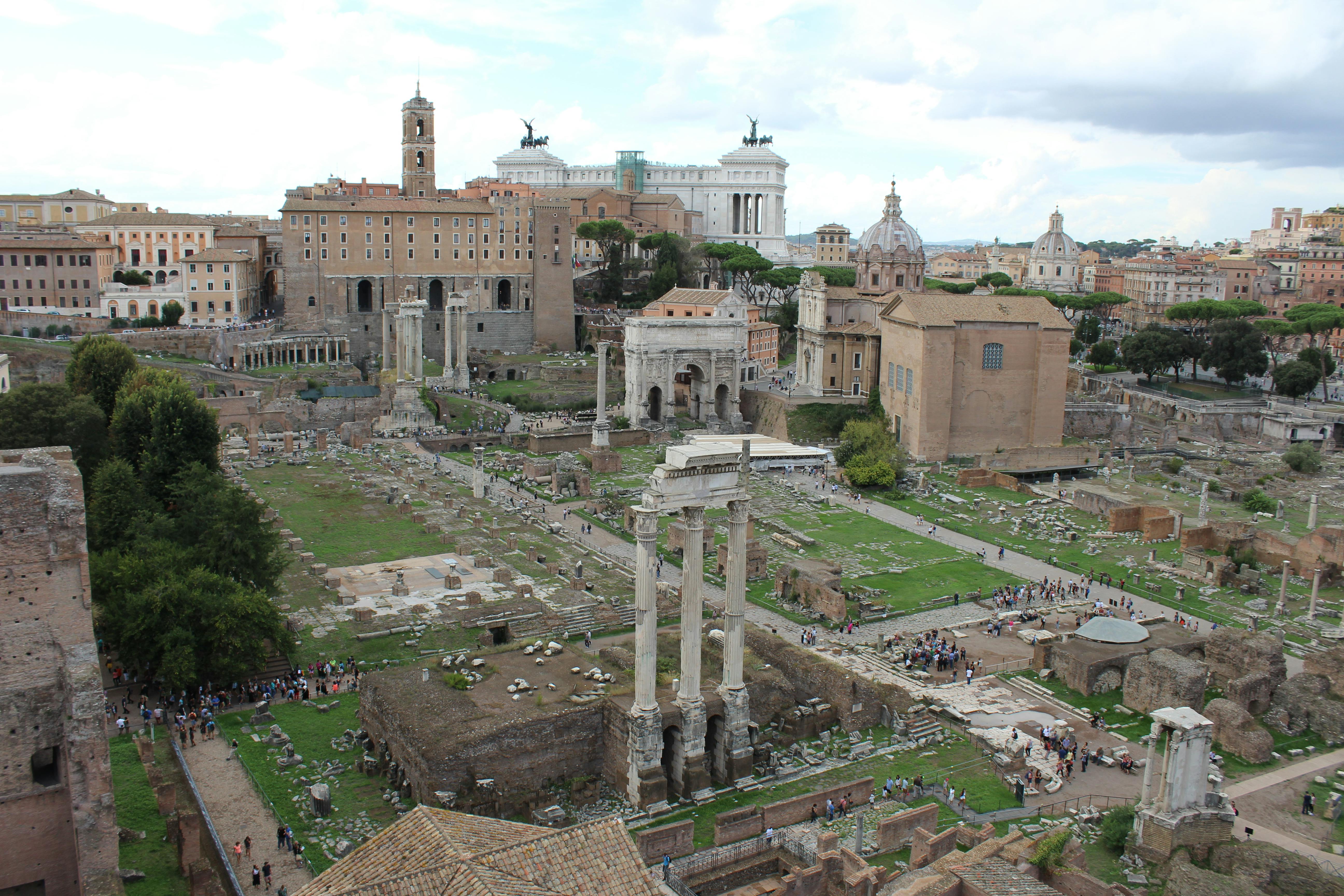
Image: Aerial shot of ancient Roman ruins in Rome, highlighting iconic arches and various advanced construction techniques used by the Romans.
The Nuts and Bolts of Building in Ancient Rome

Image: Infographic showing how ancient Romans built roads, walls, and arches using stone, layered techniques, and basic hand tools—highlighting efficient engineering.
Building in ancient Rome was no small feat. The Romans developed innovative construction techniques that set them apart from their contemporaries.
What were the secrets behind Roman construction—like their use of concrete, arches, and domes?
And how was labor organized to make such massive projects possible?
- Masters of Engineering and Craftsmanship: In this section, we get into the intricate world of Roman construction. The Romans were not only architects of great vision but also master builders. This chapter uncovers the innovative techniques, materials, and organizational prowess that made Roman construction a marvel of its time.
- The Roman Blueprint: We start by examining the meticulous planning and design that preceded any Roman construction project. From blueprints on parchment to the foundation on the ground, we unveil the first steps of turning visionary concepts into tangible reality.
- The Rise of Concrete: One of the Romans' most significant contributions to construction was the development and extensive use of concrete. We explore the formulation of Roman concrete, its transformative impact on architecture, and its secrets that continue to intrigue scientists today.
- Arches: Roman arches are synonymous with elegance and stability. We dive into the mechanics of arch construction, discovering how these graceful curves became integral elements in the construction of monumental structures.
- The Triumph of Domes: Roman architects achieved awe-inspiring feats with domes. We explore the engineering marvels of Roman domes, including the groundbreaking Pantheon's dome, and how they revolutionized interior space.
- Aqueducts: Roman aqueducts stand as remarkable examples of hydraulic engineering. We dissect the construction techniques that allowed the Romans to transport water across vast distances, ensuring the sustenance of their cities.
- Roman Roads: The road network of ancient Rome was unparalleled. We uncover the intricacies of Roman road construction, from roadbeds to mile markers, and how these routes facilitated trade, communication, and governance.
- The Role of Labor: Behind every grand structure were skilled laborers. We shed light on the organization of labor, the hierarchy of craftsmen, and the collaborative efforts that made ambitious projects possible.
- The Legacy of Roman Construction: The innovations of Roman construction live on in modern engineering and architecture. We trace the impact of Roman techniques, materials, and organizational skills in contemporary building practices.
- Sustainable Practices: Surprisingly, the Romans practiced sustainable construction. We explore their eco-friendly approaches, including recycling materials and harnessing local resources, which resonate with modern sustainability efforts.
Roman Engineering: How They Built the World—And What We Still Use Today
Roman engineering wasn’t flashy. It was practical, efficient, and built to last. The real marvel wasn’t just in arenas—it was in roads, drainage systems, and construction techniques that made cities livable and empires connected.
Let’s break down how they did it, why it mattered, and what we still use today.
What Did the Romans Build?
-
Roads: Over 250,000 miles across Europe, parts of Asia, and North Africa.
-
Bridges & Aqueducts: Designed for strength, built with stone, arches, and gravity-fed water systems.
-
Drainage Systems: Urban sewers like the Cloaca Maxima are still partially in use.
-
Fortified Walls & Military Camps: Gridded layouts, easy access, modular systems.
-
Harbors & Piers: Built with volcanic concrete that hardened underwater.
How Did They Do It?
-
No Modern Machines: Just stone, tools, pulleys, and manual labor (often from the military).
-
Standardized Measurements: Every crew followed the same width, depth, and slope rules.
-
Layered Construction: Especially in roads—dirt base, gravel, sand, paving stones.
-
Lime-Based Concrete: Durable, self-healing, and still outperforming some modern mixes.
Why Did It Work So Well?
-
Simplicity: Romans focused on repeatable, reliable methods.
-
Planning: They didn't just build structures—they planned full infrastructure.
-
Modularity: Their cities, forts, and roads followed predictable patterns.
-
Durability: Their concrete mix (with volcanic ash) resisted erosion, saltwater, and time.
What We Still Use Today
✔ Road Grading & Layering – The layered system of modern highways follows the Roman model.
✔ Arches & Vaults – Still used in bridges, tunnels, and domes for strength and weight distribution.
✔ Urban Layouts – Many European cities still follow the Roman grid.
✔ Gravity-Based Water Systems – Modern irrigation and sewer lines borrow Roman ideas.
✔ Pozzolanic Concrete – Some eco-concretes today mimic the Roman volcanic-ash recipe.
What to Focus On If You’re Studying This
-
Learn how Roman roadbeds were layered and sloped.
-
Understand how arches distribute load across supports.
-
Study how water was moved using aqueducts and siphons.
-
Examine how urban planning principles shaped modern zoning.
Famous Engineers and Architects
-
Vitruvius – Author of De Architectura, his work still influences modern design principles.
-
Apollodorus of Damascus – The mind behind Trajan’s Column and Rome’s markets.
-
Marcus Agrippa – Responsible for Rome’s original water systems and the first Pantheon.
Today’s Architects Inspired by Rome
-
Andrea Palladio (Renaissance): Revived Roman proportions and symmetry.
-
Thomas Jefferson: Used Roman ideals in the design of Monticello and the University of Virginia.
-
Norman Foster (UK): Cites Roman clarity and structural logic as inspiration in high-tech modern buildings.
Final Thought: Roman engineering wasn’t about decoration—it was about function. But that didn’t stop it from being beautiful. That balance of efficiency, durability, and refined design is exactly why we still study and apply Roman methods today.
From every smooth curve in a city bridge to the way stormwater drains from a modern road—Rome’s fingerprints are still with us.
Roman Interior Design
The Beauty Inside Roman Homes
Roman architectural brilliance didn't stop at the exterior. The interiors of Roman buildings were just as impressive, showcasing a keen eye for detail and a love for luxury. Let's explore what made Roman interior design stand out.
- Luxurious Villas: Roman villas were the height of luxury. Wealthy Romans decorated their homes with elaborate frescoes, intricate mosaics, and ornate furniture. Each room was carefully designed to reflect the owner's status and taste.
- Frescoes and Mosaics: Frescoes were a common feature in Roman interiors, depicting scenes from mythology, nature, and everyday life. Mosaics, made from tiny pieces of colored stone or glass, adorned floors and walls, adding color and artistry to the space.
- Atrium and Peristyle: The atrium was the central room of a Roman house, often featuring an open roof and a pool to collect rainwater. Surrounding the atrium, a peristyle garden offered a peaceful retreat with lush plants and beautiful statues.
- Roman Furniture: Roman furniture was both functional and decorative. Common pieces included couches (lectus), chairs (cathedra), and tables (mensa). These items were often made from wood, bronze, and marble, showcasing intricate carvings and inlays.
- Lighting and Decoration: Romans used oil lamps to light their homes, which were often placed on elegant stands or hung from the ceiling. Decorations included statues, vases, and small shrines to household gods (lararia), adding a personal touch to the interior spaces.
- Baths and Private Spaces: Romans enjoyed their baths, and private bathhouses within homes were not uncommon. These spaces were designed with luxury in mind, featuring heated floors, marble benches, and intricate decorations to create a relaxing environment.
- Color and Texture: Romans loved vibrant colors and rich textures. Walls were often painted in deep reds, blues, and greens, while textiles like tapestries and curtains added softness and warmth to the interiors.
Bringing Roman Interior Design to Life
Roman interior design was all about creating a harmonious and luxurious living space.
The attention to detail and the use of high-quality materials reflected the Roman appreciation for beauty and comfort.
Even today, elements of Roman interior design continue to inspire and influence modern home decor.
Ancient Roman Architecture
Preserving the Past, Inspiring the Future
The legacy of Roman architecture extends far beyond the Roman Empire's borders.
In this chapter, we'll explore how ancient Roman architecture has influenced and inspired architects and builders throughout history. From the Renaissance to the present day, the echoes of Roman design continue to resonate.
- Tracing the Evolution of Roman Building Styles: This section embarks on a captivating journey through the diverse and evolving landscape of ancient Roman architecture. From the early Republican structures to the opulence of the Imperial era, we uncover the dynamic changes and enduring influences that shaped this architectural legacy.
- The Birth of Roman Architecture: Our exploration commences with the humble origins of Roman architecture. We get into the architectural endeavors of the early Romans, marked by practicality and function, laying the foundation for future innovations.
- Republican Architecture: The Roman Republic witnessed the blossoming of architectural experimentation. We trace the evolution of Republican architecture, characterized by austere yet purposeful structures that mirrored the values of the era.
- Transition to Imperial Opulence: As the Republic transformed into the Roman Empire, so did its architecture. We explore how the opulence and grandeur of Imperial Rome gave rise to iconic structures that showcased Roman power and artistic finesse.
- Provincial Influence: Roman architecture was not confined to the capital; it extended to the far reaches of the Empire. We uncover how provincial influences shaped architectural styles and regional adaptations across the vast Roman territories.
- Urban Planning and Infrastructure: The Roman Empire was marked by remarkable urban planning and infrastructure development. We get into the design of Roman cities, complete with forums, temples, and aqueducts, and the meticulous organization that sustained them.
- Religious and Civic Architecture: Roman architecture was deeply intertwined with religion and governance. We explore the construction of temples, basilicas, and government buildings, shedding light on their architectural significance.
- Residential Structures: Beyond monumental edifices, Romans also crafted comfortable and innovative residential spaces. We venture into the architecture of Roman villas and insulae, revealing the daily lives of ancient Romans.
- Evolution of Architectural Styles: The architectural styles of ancient Rome underwent transformations over the centuries. We chart the evolution of Roman architectural styles, from the early Republic to the late Imperial period, showcasing their distinct characteristics.
The Enduring Legacy: The influence of ancient Roman architecture extends far beyond antiquity.
We demonstrate how the architectural innovations of ancient Rome continue to shape the design principles of modern buildings and urban planning.
Three Iconic Examples of Roman Architecture
Showcasing Timeless Treasures
No exploration of Roman building style would be complete without showcasing three iconic examples of Roman architecture.
We'll look at the Colosseum, the Pantheon, and the Roman Forum, and dig into the stories behind these masterpieces to see what they can still teach us today.
The Colosseum
A Marvel of Engineering:
- The Colosseum, also known as the Flavian Amphitheatre, is one of the most recognizable symbols of ancient Rome. It was commissioned by Emperor Vespasian of the Flavian dynasty in AD 70-72 and completed in AD 80 under his successor, Titus.
- This massive structure could hold up to 50,000 spectators, showcasing the Romans' advanced engineering skills and their love for grand spectacles.
Design and Construction:
- The Colosseum's design includes a complex system of vaults and arches, made possible by the extensive use of concrete and stone. Its elliptical shape allowed for unobstructed views for all spectators.
- The exterior features three levels of arches, each adorned with different classical orders (Doric, Ionic, and Corinthian), highlighting the Romans' appreciation for Greek architectural styles.
Purpose and Legacy:
- The Colosseum was used for gladiatorial contests, public spectacles, animal hunts, and even mock sea battles. It served as a political tool, demonstrating the emperor's power and generosity.
- Despite suffering damage from earthquakes and stone robbers, the Colosseum remains a symbol of ancient Roman engineering and architectural prowess.
The Pantheon

- The Pantheon, originally built by Agrippa in 27 BCE and later rebuilt by Emperor Hadrian around 118-125 CE, is renowned for its impressive dome and harmonious proportions.
Architectural Innovation:
- The Pantheon's most striking feature is its massive dome, which remains the largest unreinforced concrete dome in the world. The oculus at the center of the dome not only provides natural light but also reduces the weight of the structure.
- The building's design incorporates a portico with massive granite Corinthian columns, leading to a vast rotunda. The walls are made of brick-faced concrete, demonstrating the advanced use of materials and construction techniques.
Cultural Impact:
- The Pantheon's interior features a coffered ceiling, which reduces the weight of the dome and adds to its decorative appeal. The floor is composed of colorful marble from across the Roman Empire, reflecting the wealth and reach of Rome.
- As one of the best-preserved ancient Roman buildings, the Pantheon has influenced numerous architects throughout history, including during the Renaissance and Baroque periods.
The Roman Forum
Heart of Ancient Rome:
- The Roman Forum, located in the heart of Rome, was the center of public life in ancient Rome. It served as a marketplace, political hub, and social gathering place, hosting triumphal processions, elections, public speeches, and commercial activities.
Historical Significance:
- The Forum contains a rich collection of ruins, including temples, basilicas, and monuments. Key structures include the Temple of Saturn, the Arch of Septimius Severus, and the Basilica Julia.
- Over centuries, the Forum evolved, with each emperor adding new buildings and monuments, reflecting the changing political and social dynamics of Rome.
Architectural Highlights:
- The Temple of Saturn, one of the oldest sacred places in Rome, served as the treasury and symbolized wealth and stability.
- The Arch of Septimius Severus commemorates the emperor's victories in Parthia, showcasing the tradition of erecting triumphal arches to celebrate military achievements.
Enduring Legacy:
- The Roman Forum's layout and structures have provided a blueprint for public spaces in cities throughout history. Its influence can be seen in the design of modern civic centers and plazas.
- As an archaeological site, the Forum continues to be a source of valuable insights into the daily life, politics, and culture of ancient Rome.
These three iconic examples—the Colosseum, the Pantheon, and the Roman Forum—offer a glimpse into the grandeur, innovation, and cultural significance of Roman architecture.
Each structure tells a unique story of the Roman Empire's engineering marvels, architectural mastery, and enduring legacy.
Together, they highlight the creativity and ingenuity of Roman builders, whose influence continues to shape the world of architecture today.
Discover More
Roman Architects: The Visionaries Behind the Buildings
Behind every grand structure in ancient Rome was a visionary architect who brought innovative ideas and designs to life.
These architects not only transformed the skyline of Rome but also left a legacy that continues to inspire modern architecture.
Here are some of the most notable Roman architects:
Vitruvius:
- Known for his treatise "De Architectura," Vitruvius is one of the most famous Roman architects. His work outlines principles of architecture, engineering, and urban planning that are still studied today.
- His ideas on proportion, symmetry, and the importance of blending function with beauty have influenced countless generations of architects.
Apollodorus of Damascus:
- A favorite of Emperor Trajan, Apollodorus designed some of the most significant structures of his time, including Trajan's Forum, Trajan's Column, and the Market of Trajan.
- His work is noted for its grandeur and innovative use of space and materials, which set new standards in Roman architecture.
Severus and Celer:
- These architects were responsible for designing Nero's lavish Domus Aurea (Golden House), which showcased their ability to create opulent and expansive interiors.
- The Domus Aurea's use of concrete and revolutionary vaulting techniques influenced future Roman and Renaissance architecture.
Famous Ancient Roman Buildings
From Triumph to Tragedy: The Stories of Renowned Structures
Ancient Roman buildings each have a unique history, marked by triumphs, innovations, and, sometimes, tragedies. Here are a few stories behind some of the most famous ancient Roman buildings:
The Colosseum:
- Commissioned by Emperor Vespasian and completed under Titus, the Colosseum was a grand arena for gladiatorial contests and public spectacles.
- Despite suffering damage from natural disasters and looting, it remains a symbol of Roman engineering and entertainment.
The Pantheon:
- Originally built by Agrippa and later reconstructed by Hadrian, the Pantheon served as a temple for all Roman gods.
- Its massive dome and oculus are architectural marvels that have inspired countless buildings, including modern-day capitols and churches.
The Roman Forum:
- The center of political, commercial, and judicial life in ancient Rome, the Forum witnessed the rise and fall of numerous emperors and events.
- Structures like the Temple of Saturn and the Arch of Septimius Severus tell stories of religious devotion and military triumphs.
Pompeii:
- The city of Pompeii was buried under volcanic ash during the eruption of Mount Vesuvius in 79 CE, preserving its buildings and artworks.
- Excavations have revealed detailed insights into everyday Roman life, architecture, and urban planning.
Names of Roman Buildings
Building a Lexicon of Architectural Wonders
Roman buildings often bear names that reflect their history, function, or dedication, providing a fascinating insight into their roles and significance. Here are some of the most intriguing and evocative names of Roman buildings:
The Colosseum (Flavian Amphitheatre):
- Named after the Flavian dynasty that commissioned it, the Colosseum's name also reflects its grand scale and function as an amphitheater.
Pantheon:
- Derived from Greek, meaning "all gods," this name reflects the building's original purpose as a temple dedicated to all the Roman gods.
Forum Romanum:
- Known simply as "the Forum" or "Roman Forum," this name highlights its role as the heart of ancient Rome's public life.
Basilica Julia:
- Named after Julius Caesar, who initiated its construction, the Basilica Julia was used for legal proceedings and public meetings.
Domus Aurea:
- Meaning "Golden House," this name reflects the opulence of Nero's grand palace.
Thermae of Caracalla:
- Named after Emperor Caracalla, who commissioned them, these baths were among the largest and most impressive in Rome.
By exploring these names, we gain a deeper understanding of the rich history and diverse functions of Roman architecture, each building contributing to the tapestry of ancient Rome's architectural wonders.
FAQ
What Are Roman Style Buildings Called?
Exploring the Terminology of Roman Architecture
Roman architecture has given us a variety of terms that describe its distinctive features. These terms help us understand and categorize the different types of structures the Romans built. Some common names include:
- Basilica: A large public building used for legal and other civic proceedings.
- Amphitheater: An open-air venue for public events, such as gladiator contests and theater performances. The Colosseum is the most famous example.
- Domus: A private residence or house, typically owned by wealthy Roman citizens.
- Villa: A luxurious country house, often with extensive gardens and outbuildings.
- Insulae: Multi-story apartment buildings where many Romans lived.
- Forum: A public square in a Roman municipium, or city, reserved primarily for the vending of goods; it was a place where various activities such as public speeches, criminal trials, and gladiatorial matches took place.
- Thermae: Large bath complexes that included facilities for bathing, exercising, and socializing.
What Is the Roman Architecture Style?
Deciphering the Characteristics of Roman Architecture
Roman architecture is characterized by specific elements and principles that have influenced building design for centuries. Key characteristics include:
- Use of Arches and Vaults: These elements allowed for stronger and more durable structures.
- Concrete Construction: Romans were pioneers in the use of concrete, which enabled them to build larger and more complex structures.
- Classical Orders: Incorporation of Doric, Ionic, and Corinthian columns, often combined in a single structure.
- Domes: The use of domes, especially in buildings like the Pantheon, which showcases the height of Roman engineering.
- Symmetry and Proportion: Romans emphasized harmony, balance, and proportion in their designs.
- Ornamentation: Decorative details such as frescoes, mosaics, and sculptures were widely used to enhance the aesthetic appeal of buildings.
What Were the Roman Building Techniques?
Mastering the Craftsmanship Behind Roman Buildings
The Romans developed and perfected numerous building techniques that were revolutionary for their time. Some key techniques include:
- Concrete (Opus Caementicium): A mix of lime mortar, volcanic sand, water, and small stones. This allowed for more flexibility in design and construction.
- Arches and Vaults: Mastery of the arch and vault enabled the construction of massive structures like aqueducts and the Colosseum.
- Brick and Stone: Romans used bricks and stones extensively, combining them with concrete to create strong and durable buildings.
- Hydraulic Engineering: Advanced techniques for building aqueducts and sewage systems.
- Road Construction: Building straight, durable roads that connected the vast reaches of the Roman Empire.
Additional Questions
How Did Romans Decorate Their Interiors?
Luxurious Interiors and Fine Details
Roman interior design was as impressive as their architecture. Homes and public buildings were often adorned with:
- Frescoes: Wall paintings that depicted mythological scenes, landscapes, and daily life.
- Mosaics: Intricate designs made from small pieces of colored stone or glass, used on floors and walls.
- Marble: Widely used for floors, walls, and sculptures.
- Furniture: Elegant and functional furniture made of wood, marble, and bronze.
What Was the Role of Public Spaces in Roman Cities?
Social and Political Hubs
Public spaces were central to Roman life and included:
- Forums: Centers of political, economic, and social activity.
- Bathhouses: Places for bathing, relaxing, and socializing.
- Theaters and Amphitheaters: Venues for entertainment, including plays and gladiatorial games.
- Temples: Religious centers where citizens worshipped their gods.
How Did Roman Architecture Influence Modern Building Design?
Lasting Legacy and Continued Inspiration
Roman architecture has had a profound influence on modern building design. Elements such as arches, domes, and the use of concrete have been incorporated into contemporary architecture. Public buildings like capitols, museums, and courthouses often feature Roman-inspired columns and facades, demonstrating the timeless appeal of Roman design principles.
Reflective Thoughts
The Enduring Relevance of Roman Architecture: Roman architecture continues to inspire and awe us. Its innovative use of materials, clever engineering, and stunning beauty have left a lasting mark on the world.
From grand public buildings to cozy homes, the principles of Roman design are still seen today.
Roman architecture is a treasure trove of knowledge and inspiration.
Whether you're a student, an architect, or just curious, there's always more to learn. Visit historical sites, read up on Roman techniques, and see how these ancient ideas can still spark new creations today.
Related
-
History of Romanesque Architecture
Covers the development and characteristics of Romanesque architecture. -
Roman Building Style: Why It Still Matters Today
Explains why Roman building techniques continue to influence modern construction. -
Romanesque Architecture Style
Overview of the general style and features of Romanesque architecture. -
Characteristics of Roman Architecture: Arches, Columns, and Innovation
Highlights key features like arches and columns that made Roman buildings unique. -
Ancient Roman Architecture: Techniques, Structures, and Impact
Details Roman building methods, major structures, and their lasting effects. -
Roman Forum Architecture: The Center of Roman Public Life
Focuses on the design and importance of the Roman Forum in public life. -
The Birth of Gothic Architecture: From Romanesque to Innovation
Explains how Gothic style evolved from Romanesque architecture. -
Romanesque Architecture Style Interior Design
Discusses interior design elements of Romanesque buildings. -
Roman Architecture and Engineering
Explores the relationship between Roman building design and engineering advances.