
What Is Romanesque Architecture?
A Beginner’s Guide to the Medieval Style That Rebuilt Europe
Romanesque was Europe’s architectural comeback—after centuries of collapse, war, and rebuilding. Thick walls. Round arches. Heavy stone. It wasn’t subtle, but it changed how people built, gathered, and lived.
We’ll break it down. How it started. What it looked like. And how it shows up in churches, cities, furniture, and more.
Romanesque Architecture: Stone, Weight, and Function
When It Happened
Romanesque ran from around 900 to 1200 AD. It spread across Western Europe—France, Italy, Germany, Spain, and beyond. It came after centuries of timber and rubble building and before Gothic pushed things taller.
What It Looked Like
-
Thick stone walls, sometimes six feet across.
-
Rounded arches instead of points.
-
Barrel and groin vaults, heavy but effective.
-
Towers that squared off skylines.
-
Windows cut narrow, more slits than openings.
The overall impression was weight and defense. These places felt closer to fortresses than halls. That was intentional.
Why It Worked
Timber burned. It rotted. It buckled under span. Stone didn’t. Romanesque solved problems that had limited construction for centuries. Vaults carried heavy loads. Arches distributed force. Standardized forms meant masons could repeat solutions instead of improvising every project.
The Skill Behind It
Romanesque was about learning control. Masons handled mass, cut stone to size, and made arches that stood. Every bridge, keep, or hall was training. They figured out how to spread weight, stop collapse, and build at scale. Those lessons were the foundation of later styles.
Regional Variations
-
France pushed large halls and towers, setting the tone.
-
Italy mixed Romanesque mass with classical details.
-
Germany leaned into broad plans and multiple towers.
-
Spain added local materials and sometimes Mozarabic detail.
It wasn’t one uniform style. Each region bent the system to its needs.
Key Materials
Mostly stone. Rubble cores faced with cut blocks. Mortar binding it together. Roofs in stone where possible, timber when budgets or skills fell short. Decoration stayed shallow—carved capitals, simple patterns, occasional figures.
How It Felt Inside
Dark. Narrow windows let in little light. Ceilings felt close. The walls pressed in. Space wasn’t about openness. It was about permanence. These were structures built to endure weather, fire, and time, not to impress with delicacy.
What It Led To
Romanesque didn’t vanish. It gave Gothic its base. Ribbed vaults and pointed arches were answers to Romanesque’s limits. Without the experiments in weight and repetition, there’s no leap to the soaring lightness of Gothic.
Legacy Today
What survives are castles, keeps, civic halls, bridges, and fortified complexes. They show the move from fragile timber to durable masonry. They remind us that architecture isn’t only about style—it’s about solving problems with the materials at hand.
Romanesque Architecture: Key Features
What Stands Out
Romanesque buildings weren’t light or graceful. They were solid. You see it in the way the walls rise thick, the windows stay narrow, and the arches are round instead of pointed. A few details defined the look:
Thick stone walls kept structures stable and secure.
Rounded arches framed doors and openings.
Barrel vaults carried the weight of heavy roofs.
Small windows let in limited light, giving interiors a dim and defensive feel.
Arcading rows of arches broke up the mass and added rhythm to facades.
Romanesque Castles Worth Knowing
-
Castle Rising, England – Built around 1140, its square keep shows the Norman love of mass and control.
-
Rochester Castle, England – Dating to about 1100, still one of the tallest keeps in Europe.
-
Castle St. Ulrich, France – From the mid-11th century, it mixes fortress strength with local stonework.
-
Castle of Loarre, Spain – Anchored on a rocky hilltop since the 11th century, it’s one of Spain’s oldest and best preserved.
Elements You See Again and Again
-
Keeps – The fortified heart of a castle. Tall, blocky, and built to last.
-
Curtain walls – Thick walls connecting towers and enclosing the core.
-
Moats – Ditches, often filled with water, that slowed attackers.
-
Drawbridges – Wooden bridges that lifted to cut off access.
Romanesque was about building safe, durable structures with clear, repeatable parts. That’s why so many of these keeps and walls are still standing.
Romanesque Castles: Strongholds of Stone
Romanesque architecture wasn’t only about halls. The same principles of mass, repetition, and control of weight carried into castles. Between 1000 and 1200, Europe was fractured by feudal lords, raids, and power struggles. Castles had to stand like anchors in hostile landscapes.
What Made Them Romanesque
Romanesque castles borrowed the same structural DNA as civic halls: thick walls, rounded arches, and towers that looked planted in the earth. They weren’t just defensive shells; they taught masons how to stack stone reliably, how to span space with vaults, and how to standardize layouts so keeps could rise across regions.
Keeps as the Heart
The keep was the core of every castle. Square or rectangular, it served as both residence and last refuge during siege. Its walls were often 10 feet thick or more, with narrow slit windows. Inside, barrel-vaulted ceilings created upper chambers safe from fire.
-
Rochester Castle in England still shows how high these keeps could rise—over 100 feet tall with four corner towers.
-
Castle Rising proves how sheer mass could intimidate, its keep dominating the flat Norfolk landscape.
Defensive Layers
Romanesque castles relied on concentric protection.
-
Curtain walls connected towers, forming an outer ring that forced attackers to expose themselves.
-
Moats made direct assault harder. Even if dry, they created a ditch too steep to rush.
-
Drawbridges turned simple gateways into choke points.
These features weren’t decorative. They slowed cavalry charges, ladders, and siege engines long enough for defenders to counter.
Regional Differences
-
France: Castles like St. Ulrich used local stone, often blending fortress walls with steep hillsides.
-
Spain: Loarre Castle sat directly on bedrock, its towers shaped by Moorish influence.
-
Germany: Hilltop keeps rose with thicker stone and deep basements, doubling as storage and prisons.
From Romanesque to Gothic Fortresses
By the 13th century, Gothic builders pushed walls taller and windows larger. But the groundwork was Romanesque. Without those heavy keeps and barrel-vaulted halls, there would be no transition to the elaborate Gothic fortresses and palaces.
What This Taught Builders
Romanesque castles were practical classrooms. Masons learned how stone handled stress, how vaults carried weight, and how to repeat defensive designs across Europe. That knowledge carried forward—not just into castles, but into bridges, town walls, and early civic buildings.
A Look Into Romanesque Architecture & Art History
What Is Romanesque Architecture? Origins & Features Explained
Romanesque art is deeply tied to the architecture it lived on. Think carvings above church doors, illuminated manuscripts, and frescoes inside monastic chapels.
🔹 Themes & Meaning
Romanesque art was didactic—meant to teach. Most people couldn’t read, so art became visual scripture.
-
Biblical scenes: Last Judgment, Christ in Majesty, saints and martyrs
-
Abstracted figures: Not realistic—symbolic, stylized, emotional
-
Animal symbolism: Lions (strength), snakes (sin), doves (peace)
🔹 Where You’d Find It
-
Capitals of columns (often twisted with narrative carvings)
-
Tympanums (semicircular reliefs over church doors)
-
Wall paintings (now mostly lost, but bold and colorful)
-
Illuminated manuscripts (crafted in scriptoria by monks)
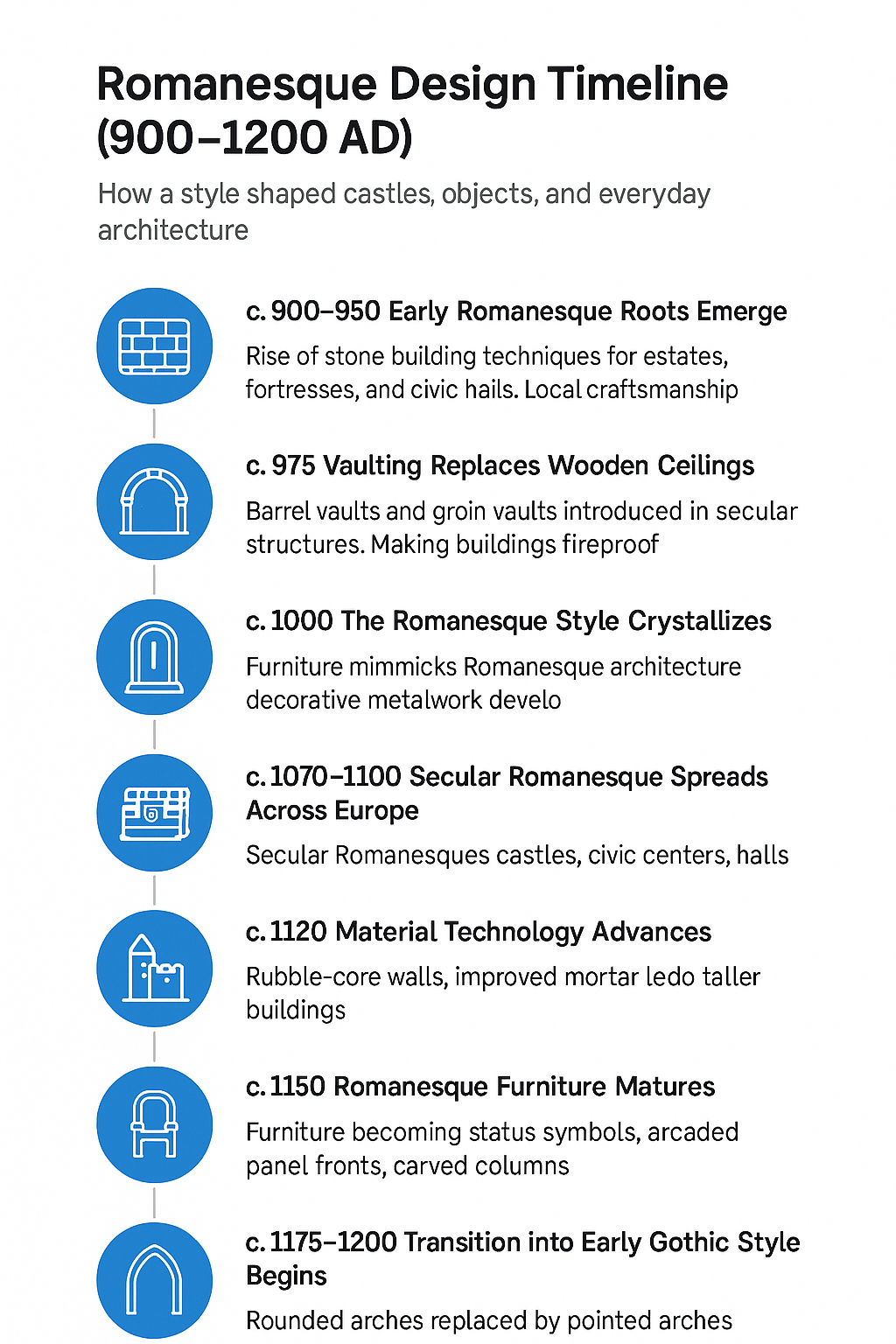
Romanesque Design Timeline (900–1200 AD)
How a Style Shaped Castles, Objects, and Everyday Architecture
🔸 c. 900–950
Early Romanesque Roots Emerge
-
Rise of stone building techniques across Europe for fortresses, civic halls, and monasteries.
-
Timber framing is gradually replaced by load-bearing masonry walls.
-
Local craftsmanship begins reflecting Roman-inspired arches and blocky symmetry.
🔸 c. 975
Vaulting Replaces Wooden Ceilings
-
Barrel vaults and early groin vaults introduced in non-religious structures like storage halls and tower interiors.
-
Buildings become more fireproof and long-lasting.
🔸 c. 1000
The Romanesque Style Crystallizes
-
Distinctive features appear across Europe:
-
Rounded arch windows
-
Thick structural walls
-
Narrow interior spaces for insulation and strength
-
-
Used in castles, civic towers, bridges, and rural estate buildings.
🔸 c. 1050
Craftsmanship Expands to Furniture & Metalwork
-
Furniture mimics architecture: heavy, blocky, with arch carvings.
-
Chests become multi-functional (storage, seating, transport).
-
Decorative metalwork (hinges, straps, locks) gains artistic flair—still seen in museum pieces today.
🔸 c. 1070–1100
Secular Romanesque Spreads Across Europe
-
Romanesque motifs spread via nobility, trade, and craftsmen.
-
Castles adopt massive towers, minimal openings, and decorative arcades.
-
Civic centers and guild halls echo the same proportions and materials.
🔸 c. 1120
Material Technology Advances
-
Rubble-core walls and improved lime mortar allow taller, more complex structures.
-
Stone carving tools improve — furniture and architectural details get sharper, cleaner lines.
🔸 c. 1150
Romanesque Furniture Matures
-
Furniture moves beyond function — becomes a symbol of status.
-
Common features:
-
Stylized columns
-
Arcaded panel fronts
-
Religious and mythological carvings (still symbolic, but now decorative)
-
-
Early versions of benches, stools, and cabinets emerge in manor homes and feudal estates.
🔸 c. 1175–1200
Transition into Early Gothic Style Begins
-
Design lightens: arches become pointed, furniture gains vertical lift.
-
Romanesque design principles persist in rural buildings, military architecture, and utilitarian furniture well into the 13th century.
Summary Highlights
| Year | Secular Milestone |
|---|---|
| 900s | Stone construction replaces wood in estates & towers |
| ~975 | Vaulted interiors make buildings fire-safe |
| ~1050 | Furniture takes on architectural features |
| ~1120 | Lime mortar tech reshapes building methods |
| ~1150 | Furniture evolves into status objects |
| ~1200 | Romanesque starts blending into Gothic style |
Medieval Furniture: Romanesque Forms and Function
Romanesque Furniture Characteristics
Romanesque furniture is rare today, but surviving examples and illustrations reveal clear traits shaped by both the architecture and social function of the time.
🔹 Key Characteristics
-
Heavy, solid, and functional — echoing the architecture’s mass
-
Carved ornamentation, especially arches, crosses, and foliage
-
Symmetry and verticality, often with religious symbolism
-
Thick legs and stretchers—structure over delicacy
-
Oak and chestnut were common materials
🔹 Typical Pieces
-
Chests (the most common Romanesque furniture): Used for storage and seating
-
Thrones and stools: Often reserved for clergy or nobility
-
Altars and lecterns: Built with architectural elements—miniature arches, columns, and capitals
Many Romanesque furniture designs echoed the look of cathedrals themselves: miniature Roman arches, heavy proportions, and geometric decoration.
The History of Romanesque Furniture
🔹 Origins
Romanesque furniture emerged from monastic and feudal needs. Monasteries needed functional but symbolic pieces. Castles needed storage and defense-friendly forms.
🔹 Influences
-
Early Christian furniture (simple and symbolic)
-
Byzantine carvings (especially in Eastern Europe and Spain)
-
Roman stone motifs, translated into wood
🔹 Evolution
By the late Romanesque period (~1150–1200), furniture became more ornate, hinting at the Gothic elaboration to come. Woodcarvers developed more refined relief techniques, and furniture began to show narrative carvings, just like church walls.
Notable Romanesque Architecture Examples
Romanesque architecture was more than just cathedrals and cloisters—it was a language of stability, power, and craftsmanship used in fortresses, civic structures, and everyday architecture across Europe.
Here are some of the most striking Romanesque examples that highlight the style’s range and influence:
1. Tower of London (White Tower), England – c. 1078
-
Built by William the Conqueror, this keep is a classic Romanesque fortress: thick walls, narrow openings, and rounded arch details.
-
Designed more for power projection and defense than comfort, its symmetry and stonework echo Norman Romanesque style.
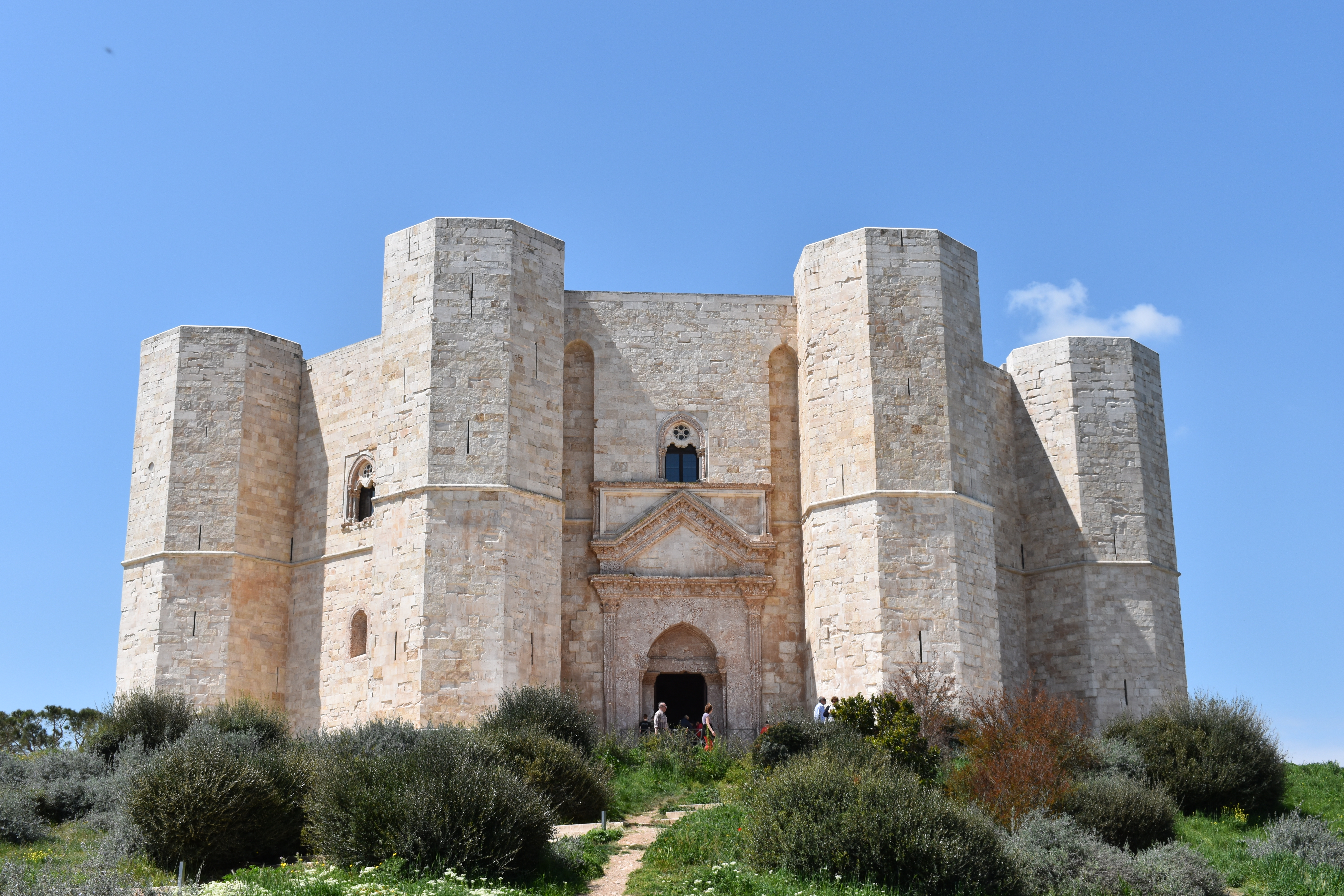
2. Castel del Monte, Italy – c. 1240
-
Although late-Romanesque (transitional), its geometry, stone barrel vaults, and symmetrical plan reflect Romanesque roots.
-
Built by Emperor Frederick II, the octagonal castle blends military structure with mathematical design precision.
3. Alcázar of Segovia (Spain) – Romanesque Core, 12th century

-
While later remodels added Gothic and Renaissance touches, the core of this royal fortress includes Romanesque stone vaults, towers, and round-arched passageways.
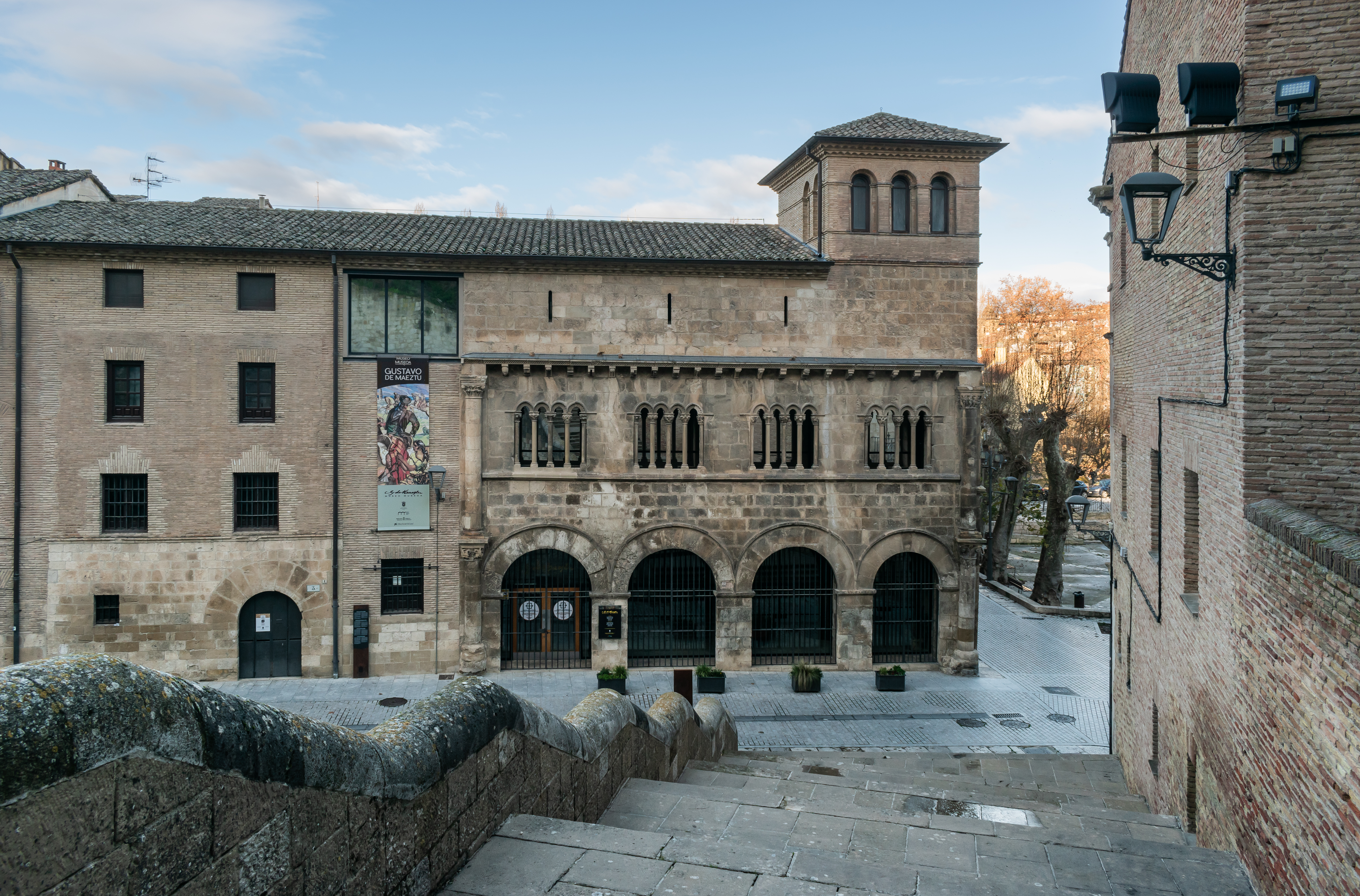
4. Hospital de Santa María la Real, Spain – c. 12th century
-
A rare Romanesque civic building, this hospital near Nájera was used for pilgrims and care, featuring a Romanesque façade, barrel-vaulted interiors, and carved portals.
5. Pfalzkapelle in Aachen (Germany) – Built earlier (c. 790) but influential
-
Charlemagne's palace chapel wasn’t strictly Romanesque but shaped later Romanesque architecture with:
-
Centralized domed plan
-
Heavy piers
-
Geometric clarity that influenced secular and ecclesiastical Romanesque design for 200+ years.
-
6. Cité de Carcassonne Fortifications, France – Expanded c. 12th century
-
The outer Romanesque ramparts and defensive stonework show early medieval fortification design.
-
Characterized by round towers, splayed arrow slits, and massive masonry—hallmarks of Romanesque military thinking.
What These Examples Show
| Feature | What it Proves |
|---|---|
| Stone massing | Structural innovation + fire resistance |
| Rounded arches | Roman engineering influence |
| Vaulted interiors | Durable, scalable public and private buildings |
| Minimal ornament | Focused on strength, not flamboyance |
| Function-first layout | Design was always purpose-driven |
Romanesque vs Gothic: How the Medieval Styles Differ
Romanesque vs. Gothic Architecture
While Romanesque and Gothic styles often get lumped together, they represent two very different approaches to architecture. One is grounded, heavy, and defensive. The other reaches upward—lighter, sharper, and more expressive.
Here’s how they stack up when you strip away the religious elements and focus purely on structure, form, and design function.
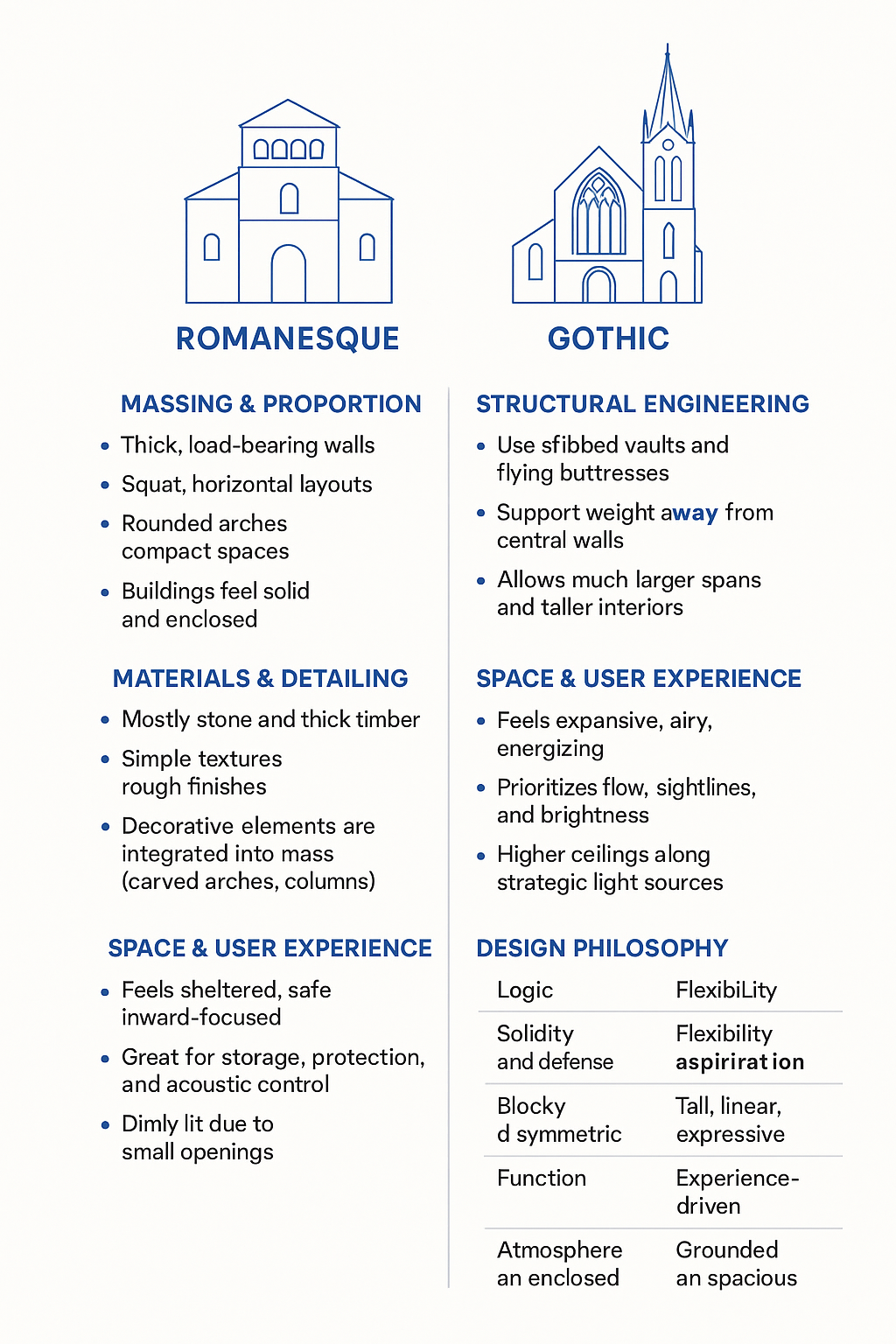
MASSING & PROPORTION
-
Romanesque:
-
Thick, load-bearing walls
-
Squat, horizontal layouts
-
Rounded arches, compact spaces
-
Buildings feel solid and enclosed
-
-
Gothic:
-
Thinner walls supported by hidden systems
-
Vertical emphasis
-
Pointed arches, open interiors
-
Spaces feel open, light, and directional
-
STRUCTURAL ENGINEERING
-
Romanesque:
-
Relies on sheer wall mass to carry weight
-
Uses barrel and groin vaults
-
Few openings = fewer structural weaknesses
-
More resistant to collapse but limits scale
-
-
Gothic:
-
Uses ribbed vaults and flying buttresses
-
Supports weight away from central walls
-
Allows much larger spans and taller interiors
-
More complex to build, but more flexible
-
MATERIALS & DETAILING
-
Romanesque:
-
Mostly stone and thick timber
-
Simple textures, rough finishes
-
Decorative elements are integrated into mass (carved arches, columns)
-
-
Gothic:
-
Advanced stone cutting and iron reinforcements
-
Finely carved surfaces
-
Details are layered on, allowing complexity and modularity
-
SPACE & USER EXPERIENCE
-
Romanesque:
-
Feels sheltered, safe, inward-focused
-
Great for storage, protection, and acoustic control
-
Dimly lit due to small openings
-
-
Gothic:
-
Feels expansive, airy, energizing
-
Prioritizes flow, sightlines, and brightness
-
Higher ceilings and strategic light sources
-
DESIGN PHILOSOPHY
| Element | Romanesque | Gothic |
|---|---|---|
| Logic | Solidity and defense | Flexibility and aspiration |
| Form | Blocky and symmetric | Tall, linear, expressive |
| Function | Utility-first | Experience-driven |
| Atmosphere | Grounded and enclosed | Uplifting and spacious |
Which Fits What?
-
Use Romanesque-style thinking if you're designing for security, permanence, or insulation (e.g., bunkers, basements, storage vaults).
-
Use Gothic-style principles when you want vertical expression, visual drama, or flow (e.g., atriums, performance spaces, open-plan public buildings).
Why Romanesque Architecture Still Matters Today
Why the History of Romanesque Architecture Still Matters
Romanesque design may belong to the distant past, but its influence is timeless. Beyond churches and fortresses, it shaped the way we build, decorate, and design for endurance, meaning, and identity.
🔹 What Makes It Enduring?
-
First unified architectural language of post-Roman Europe
-
Introduced the widespread use of vaults, which shaped all later Western architecture
-
Perfected load-bearing stone walls — a milestone in structural engineering
-
Created a design culture rooted in proportion, geometry, and clarity
-
Influenced modern minimalist and brutalist forms (yes, even today)
🔹 Legacy in Today’s Design
You can still see Romanesque echoes in:
-
Modern civic buildings that prize solidity and symmetry
-
Furniture design using arch motifs, heavy bases, or oak
-
Security-focused architecture like bunkers, vaults, and fortified homes
-
Heritage design, where durability and historical style meet
Romanesque wasn’t about excess. It was about what lasts—and in a world that often favors the temporary, that mindset is powerful.
FAQ
What is Romanesque architecture?
Romanesque is a medieval European architectural style (c. 900–1200 AD) known for thick walls, rounded arches, and stone vaulting. It emphasized durability and symmetry, blending Roman techniques with local materials.
Where did Romanesque architecture start?
It emerged in France and Italy, but spread quickly across Europe, especially in Germany, Spain, and England, thanks to monastic expansion and feudal building.
What are the core features of Romanesque architecture?
-
Rounded arches
-
Barrel or groin vaults
-
Thick masonry walls
-
Minimal windows
-
Stone construction
-
Decorative arcading and carved patterns
How is Romanesque architecture different from Gothic?
Romanesque is heavy, grounded, and solid, with simple forms and rounded arches. Gothic is vertical, open, and expressive, using pointed arches and skeletal support systems.
Is Romanesque furniture still used today?
Yes — modern designs often borrow Romanesque shapes, carvings, and materials, especially in handmade wood furniture, rustic interiors, and architectural cabinetry.
Why did Romanesque architecture decline?
As engineering evolved, Romanesque gave way to Gothic architecture, which allowed for taller, more light-filled buildings with greater structural flexibility.
What types of buildings used Romanesque style?
Aside from churches, Romanesque was used in:
-
Castles and fortresses
-
Hospitals and civic halls
-
Bridges and towers
-
Residential manors and noble estates