
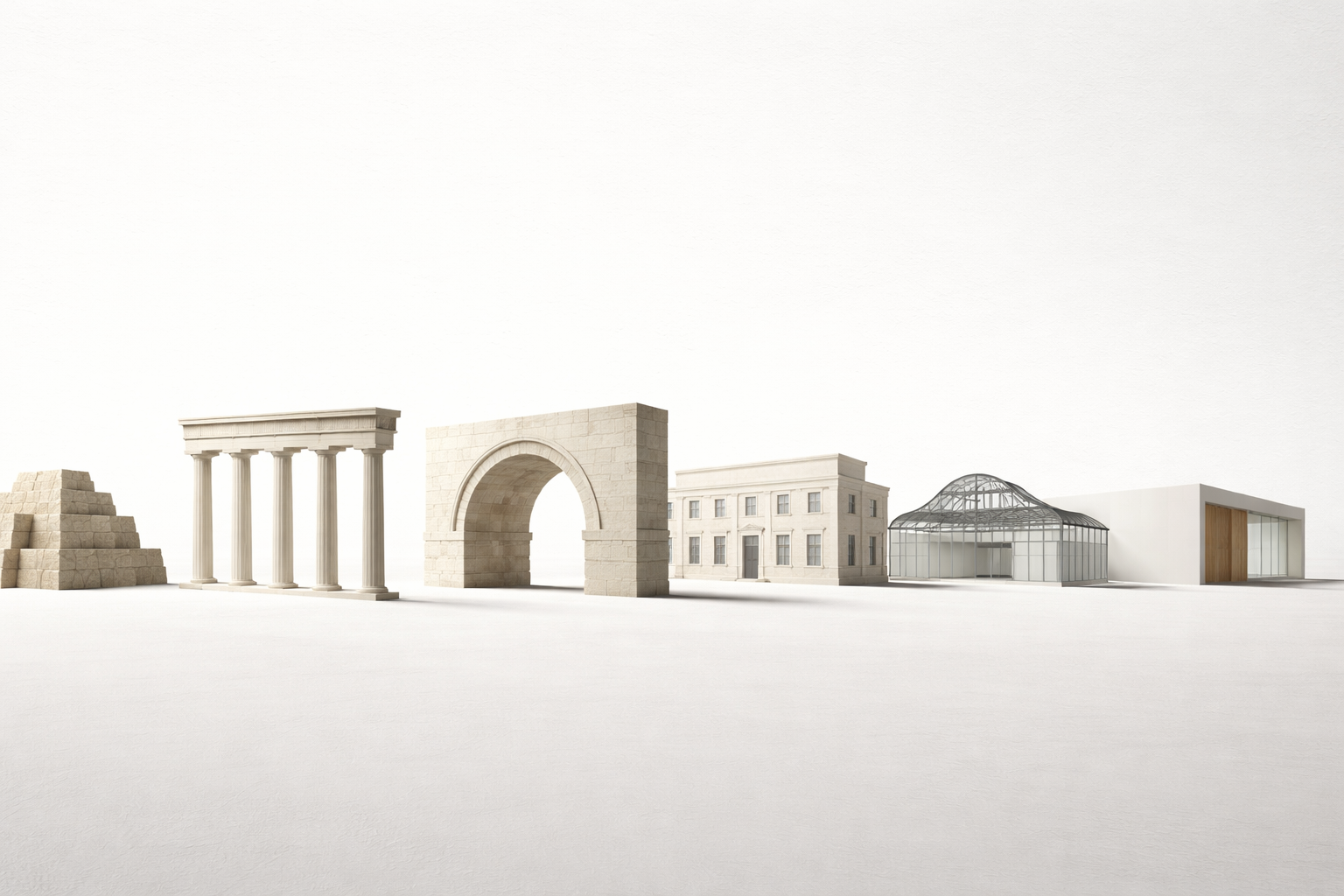
Architecture history starts with pressure: climate, materials, labor, belief, trade, defense, and the size of the city. Buildings change when those conditions change.
Do not start with style labels alone. Start with the problem, the tools, and the society doing the building. That is how the building starts to make sense.
A wall, courtyard, vault, or street plan is more than a style clue. It shows what a culture valued, feared, could afford, and knew how to build.
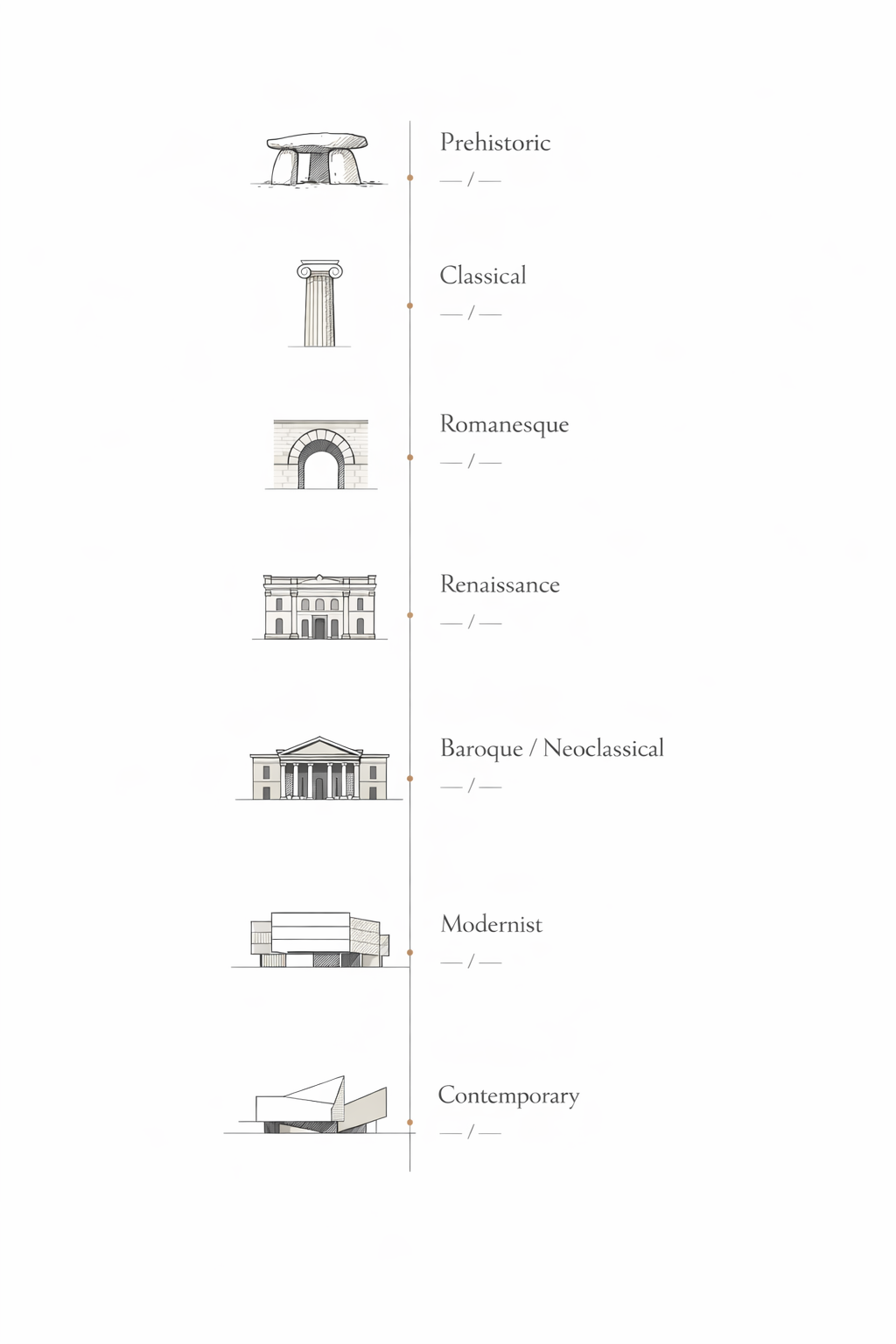
World architecture timeline showing major eras and broad historical shifts.
Major Eras at a Glance
The timeline below is simplified on purpose. It is a starting map, not the whole field. Real architectural history overlaps, doubles back, and develops differently from region to region.
| Era | Approx. Date | What Changed | What Still Matters |
|---|---|---|---|
| Prehistoric and Ancient | Before c. 500 CE | Monumentality, alignment, masonry, early urban order | Mass, geometry, ritual, durable materials |
| Classical Greek and Roman | c. 850 BCE-476 CE | Proportion, civic space, arches, domes, infrastructure | Public planning, structure as order, repeatable systems |
| Romanesque and Gothic | c. 800-1600 | Vaulting, heavy masonry, then height, light, and skeletal structure | Load paths, spatial drama, structure shaping experience |
| Islamic Traditions | 7th century-present | Courtyard planning, shade, water, geometry, urban privacy | Passive cooling, patterned order, climate-smart planning |
| Renaissance to Neoclassicism | c. 1400-1800s | Measured proportion, revived classical language, state power | Symmetry, perspective, civic symbolism |
| Industrial Age | 1800s-early 1900s | Iron, steel, glass, factories, rail, mass production | Long spans, tall buildings, industrial building logic |
| Modernism | Early 1900s-1970s | Functional planning, new materials, stripped ornament | Program, efficiency, honest structure, housing reform |
| Postmodern and Contemporary | 1970s-today | Critique of modernism, digital design, sustainability | Pluralism, environmental performance, computation |
How to Read a Building in Historical Context
Do not read architectural history as a style list. Ask a few harder questions first.
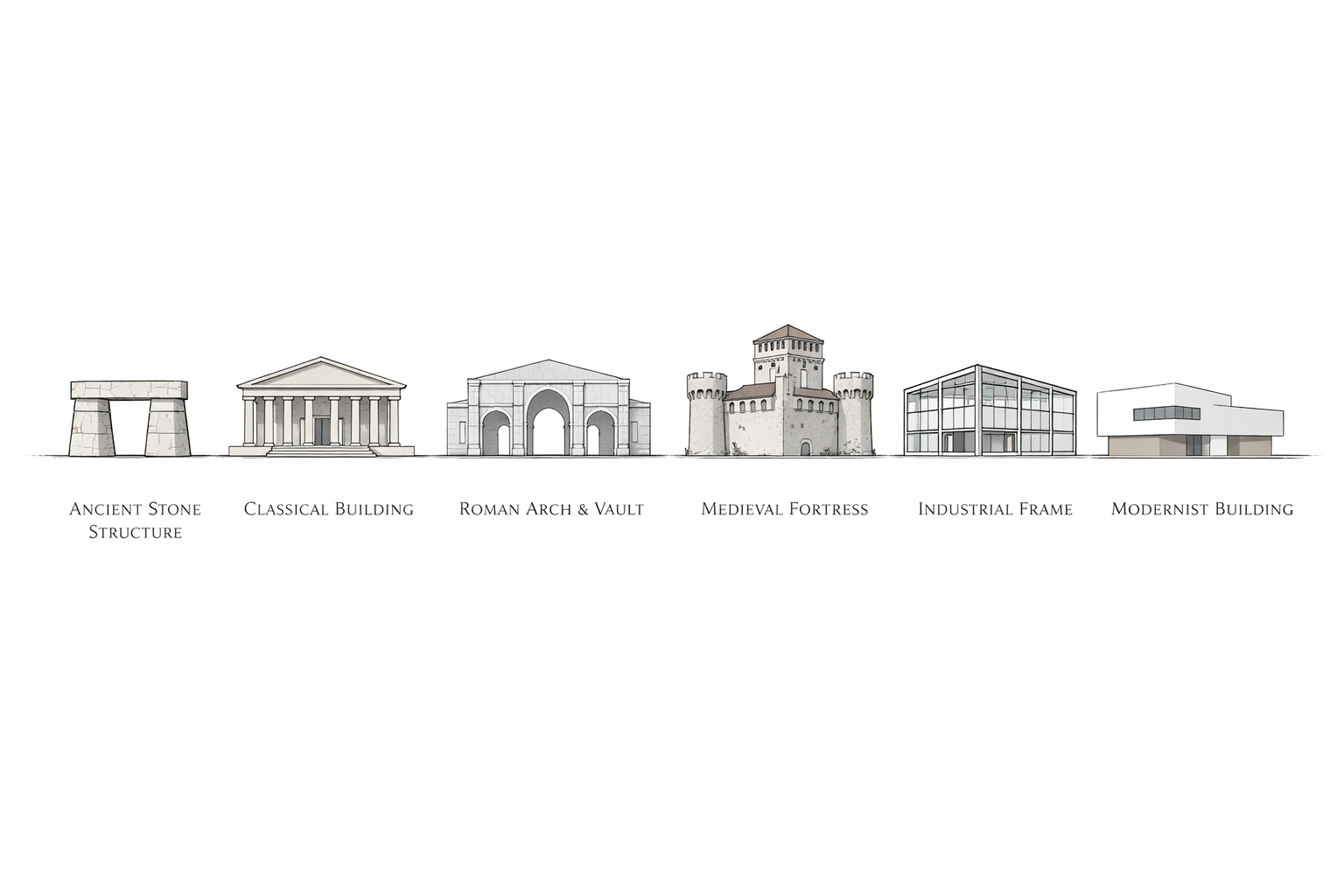
Illustration by ArchitectureCourses.org. Simplified building forms tracing broad shifts in architectural history from ancient stone systems to modernist volume.
- What materials were available? Stone, timber, brick, iron, steel, reinforced concrete, glass. Material supply changes form fast.
- What labor and tools existed? Hand-cut stone and organized craft guilds produce different architecture than industrial fabrication.
- Who paid for it? Empire, court, merchant class, temple complex, city government, industrial capital, welfare state, developer. Funding shapes scale and message.
- What climate problem had to be solved? Shade, wind, cold, rain, heat, flood risk, daylight, ventilation.
- Who was allowed in, and who was shut out? Plans often reveal hierarchy faster than facades do.
That lens works better than memorizing dates alone. It also lets you compare buildings from very different places without flattening them into one story. A Roman bath, an Islamic courtyard house, and a modern office tower may look unrelated at first. Underneath, each one is organizing bodies, heat, light, movement, status, and maintenance in a very specific way.
What Changed Across the Timeline

Architectural timeline from classical traditions through modern and contemporary movements.
Prehistoric and Ancient Architecture
The earliest architecture was blunt and direct. Shelter had to survive weather. Monuments had to hold memory. Settlements had to organize people, goods, rituals, and defense. You see heavy materials, thick walls, geometric alignments, and site choices loaded with meaning.
Ancient building also refuses the modern split between structure, landscape, astronomy, and ritual. A building could be shelter, calendar, tomb, marker, and political statement all at once. That is one reason the oldest structures still feel powerful. They were not trying to do one thing only.
Ancient architecture proves an old point that still matters. Strong design does not begin with software. It begins with orientation, proportion, repetition, labor, and a clear idea of what a place is for. For a closer look at early building traditions, see Ancient Architecture and History of Egyptian Architecture.
Greek and Roman Classical Architecture
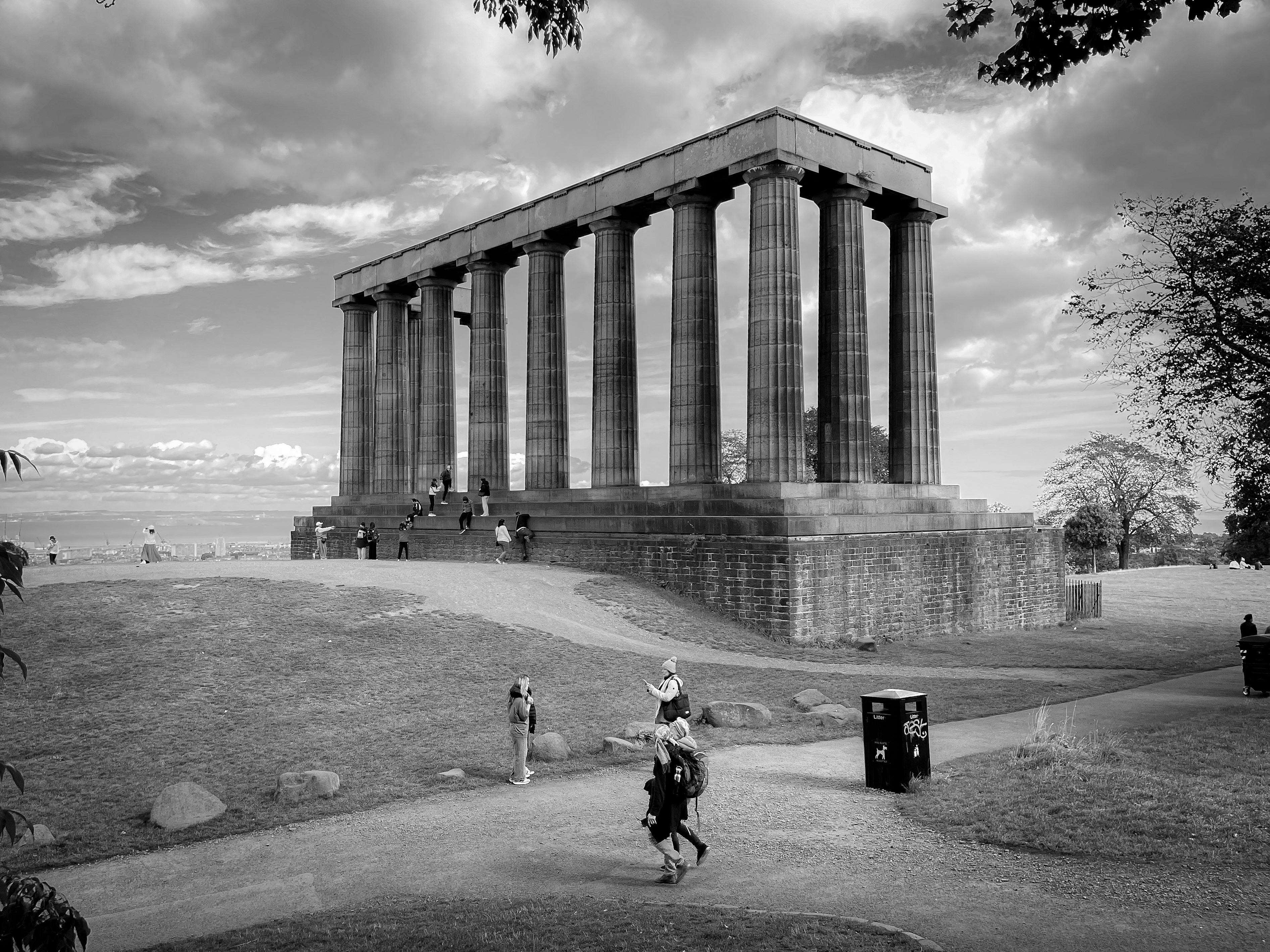
Greek architecture tightened the relationship between proportion, civic identity, and visible order. Temples, stoas, theaters, and agoras were not random formal exercises. They were part of a public language. Column spacing, symmetry, sequence, and approach all mattered because the building had to communicate stability, ritual, and political order.
Roman architecture pushed engineering harder. Roads, baths, amphitheaters, aqueducts, vaults, domes, bridges, and dense urban blocks turned architecture into infrastructure. Roman builders scaled up what architecture could do for daily life, government, trade, and empire. Their use of arches, vaults, and concrete changed the relationship between wall, structure, and interior volume.
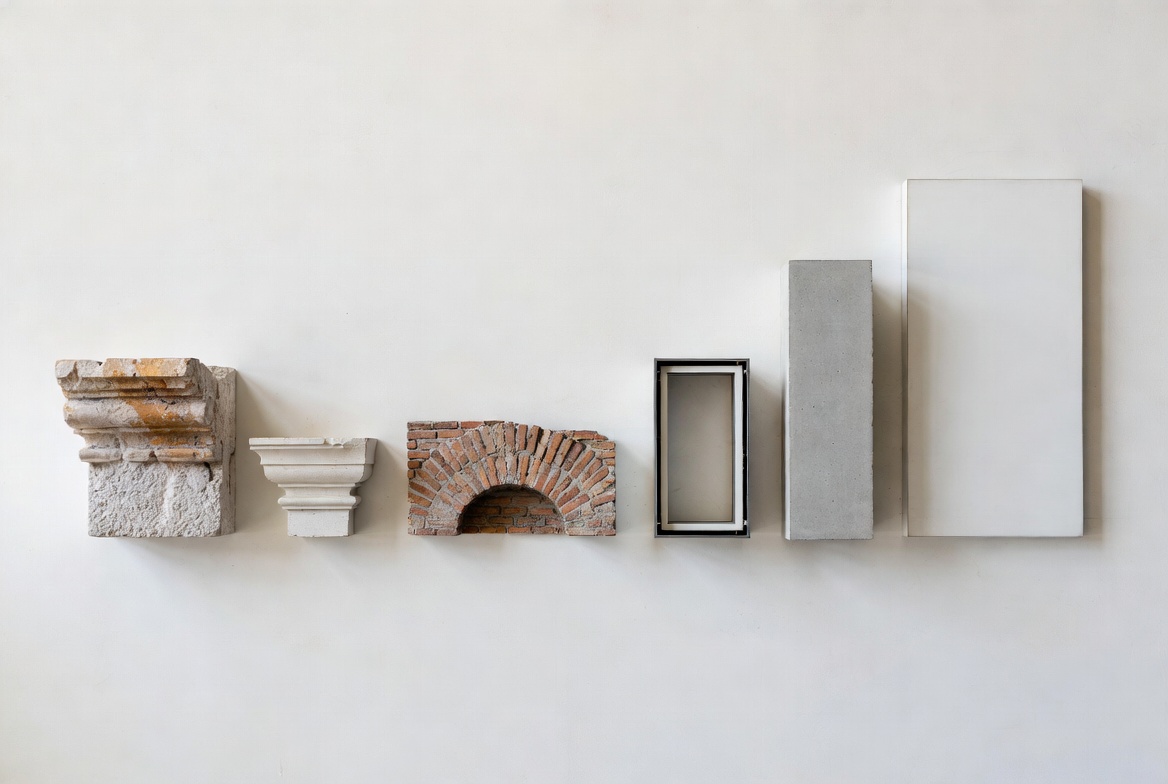
Illustration by ArchitectureCourses.org. Fragments often explain architectural change more clearly than a list of dates.
Columns, axial planning, civic fronts, domes, arches, and the idea that architecture can represent public order keep returning long after the classical world ended. When later governments, museums, banks, and courthouses wanted to look stable and serious, they often reached back here. For more on those systems, go deeper into Greek Architecture, Ancient Greek Architecture, Roman Architecture, and Ancient Roman Architecture.
Romanesque and Gothic
Romanesque buildings feel thick, grounded, and defensive. Rounded arches, barrel vaults, heavy masonry, and smaller openings create mass and permanence. The walls still do a great deal of the work, so the building reads as weight before you understand a single detail.
Gothic architecture shifts the energy upward. Pointed arches, ribbed vaults, and buttressing redistribute load so walls can open up and space can stretch taller and lighter. More daylight enters. Verticality becomes part of the experience. Structure stops hiding and starts shaping the drama of the space.
The lesson here is structural. When support changes, space changes with it. A different structural system changes daylight, movement, acoustics, enclosure, and how a room feels before anyone picks a finish. That is one reason these periods still matter to students. They make load path visible. If you want the medieval shift broken out more clearly, start with Romanesque Architecture and then move into Gothic Architecture.
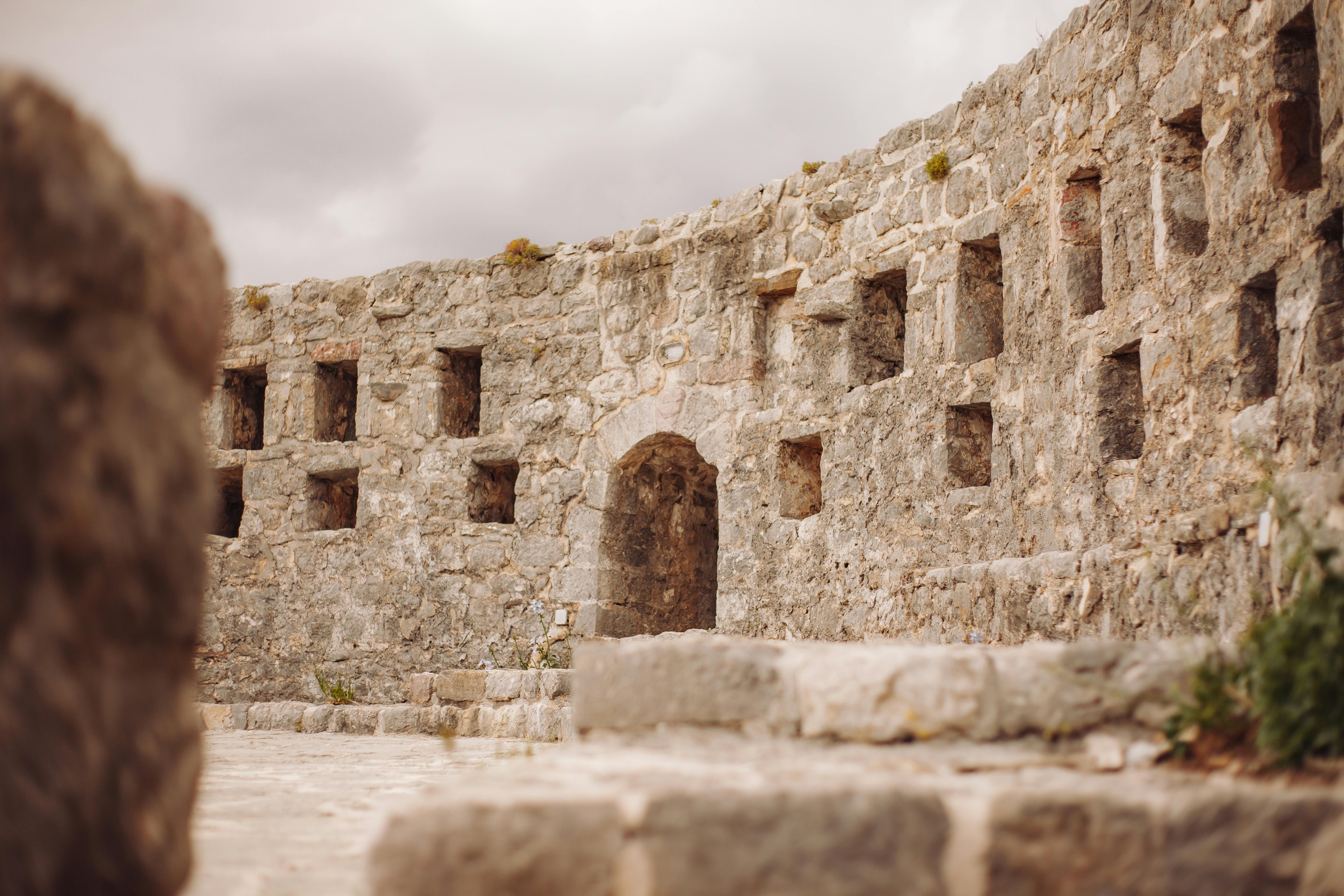
Romanesque stone construction with rounded arches, thick walls, and fortress-like massing.
Islamic Architecture
Broad history surveys often shrink Islamic architecture into a side note. That misses one of the major design traditions in world history. Its urban logic, climatic intelligence, mathematical discipline, and ornamental systems shaped cities and buildings across a huge geographic range, from North Africa and Al-Andalus to Persia, the Ottoman world, South Asia, and beyond.
Courtyards, wind capture, shade, water, layered thresholds, and patterned geometry worked as spatial tools first and visual language second. Many of these buildings solved heat, privacy, and density through planning, section, and surface rather than mechanical systems. Ornament was not a shallow extra. In many cases it was tied to geometry, craft, symbolism, and the way a surface caught light at different times of day.
This tradition also carried and transformed earlier knowledge, preserving and developing texts and ideas that later fed into European architectural history. It kept technical and intellectual conversations alive across regions while also producing its own urban and architectural forms. For students and designers, this chapter matters because it ties ornament to geometry, urban form to daily life, and beauty to climate response. For a fuller survey, see Islamic Architecture.

Dome of the Rock in Jerusalem, showing geometric pattern, domed form, and the visual richness of Islamic architecture.
Renaissance to Neoclassicism
The Renaissance brought classical language back with new confidence in perspective, measurement, and human-centered proportion. Architects were not only copying the classical past. They were reworking it through new drawing methods, new scholarship, and a new sense that space could be ordered mathematically and understood intellectually.
Later periods pushed that language in different directions. Baroque architecture turned up movement, tension, theatrical force, and spatial sequence. Neoclassicism tightened things again into cleaner, more formal civic order. This was not one smooth improvement curve. It was a long argument about control, symbolism, memory, and the right public face of power.
This stretch of history shows architecture working in open conversation with courts, states, academies, and empires. Buildings staged legitimacy. Plazas managed ceremony. Facades communicated authority before anyone crossed the threshold. To break this period into sharper pieces, continue with Renaissance Architecture, Baroque Architecture, and Neoclassical Architecture.
The Industrial Age
The Industrial Age changed architecture at the material level. Iron, steel, larger sheets of glass, mechanized production, rail transport, and new building types all hit at once. Spans increased. Heights increased. Repetition sped up. Stations, exhibition halls, factories, warehouses, department stores, and early skyscrapers pushed architecture into a new structural and urban scale.
The shift was not only visual. The building industry itself changed. Fabrication, transport, labor organization, and standardization started to matter as much as style. Parts could be repeated. Components could be shipped. Structure could be expressed in ways earlier masonry systems could not manage. The city changed with it. Industrial urbanism meant denser infrastructure, new working patterns, and new housing pressure alongside new wealth.
For more on that transition, see Industrial Architecture.

The Eiffel Tower as a clear example of exposed iron structure and Industrial Age engineering ambition.
Modernism
Modernism cut deep. Ornament dropped away. Plans were reorganized around function, circulation, health, industry, housing, and new technologies. Concrete, steel, and glass moved to the center. The building became a machine, a diagram, a social instrument, or sometimes a manifesto. The tone could be optimistic or severe, depending on the architect and the job.
Some modernist work produced elegant clarity. Some produced harsh abstraction. A lot depended on budget, climate, politics, and how carefully ideas were translated into ordinary buildings. Modernist housing, for example, could aim at dignity, light, and hygiene, then fail badly when maintenance, policy, or urban context collapsed around it. That tension matters because it reminds you that architectural ideas do not survive daily life unless the system around them can carry them.
Modernism still matters because it reset the argument. It forced architects to answer what a building does before explaining what it looks like. For the fuller story, go next to Modern Architecture.
Postmodern and Contemporary Architecture
Postmodernism challenged modernism's severity and reopened architecture to irony, symbolism, historical reference, and pluralism. It pushed back against the idea that one purified language could answer every cultural condition. In some buildings that produced wit and layered meaning. In others it tipped into surface play. Either way, the argument mattered.
Contemporary architecture widened the field again. Digital tools changed form-making and coordination. Sustainability pushed energy, carbon, durability, and environmental performance back to the center. Global practice accelerated exchange across regions, sometimes productively, sometimes flattening local identity into an international image economy. At the same time, adaptive reuse, vernacular recovery, and low-tech climate strategies pulled attention back toward older knowledge that modern industry had sidelined.
The present condition is mixed on purpose. Parametric workflows, reused structures, passive design, advanced envelopes, timber resurgence, and highly engineered glass towers all sit in the same conversation now. For the current phase of that story, keep going with Contemporary Architecture.

Absolute World towers in Mississauga, showing curving contemporary form and digitally influenced high-rise design.
Architecture by Human Need
One of the easiest ways to understand the timeline is to stop asking what style came next and ask what people were trying to solve. That cuts through a lot of noise.
| Human Need | Historic Example | What It Led To |
|---|---|---|
| Security | City walls, gates, fortifications, thick masonry | Defensive planning, controlled entry, durable enclosure |
| Climate control | Courtyards, wind towers, thermal mass, shaded streets | Passive cooling, filtered light, compact urban form |
| Civic identity | Forums, agoras, courthouses, formal public fronts | Axial planning, monumentality, symbolic facades |
| Status and power | Palaces, pyramids, imperial complexes, towers | Scale, procession, hierarchy, controlled views |
| Trade and movement | Ports, caravan routes, bridges, stations, markets | Infrastructure, modular systems, urban growth |
| Shared ritual | Temples, prayer spaces, ceremonial courts, processional routes | Orientation, sequence, symbolic geometry, acoustic shaping |
This is why old buildings stay useful to study. They show that design starts with conditions and behavior. Style is what those decisions look like once they become visible.
The Patterns That Keep Returning
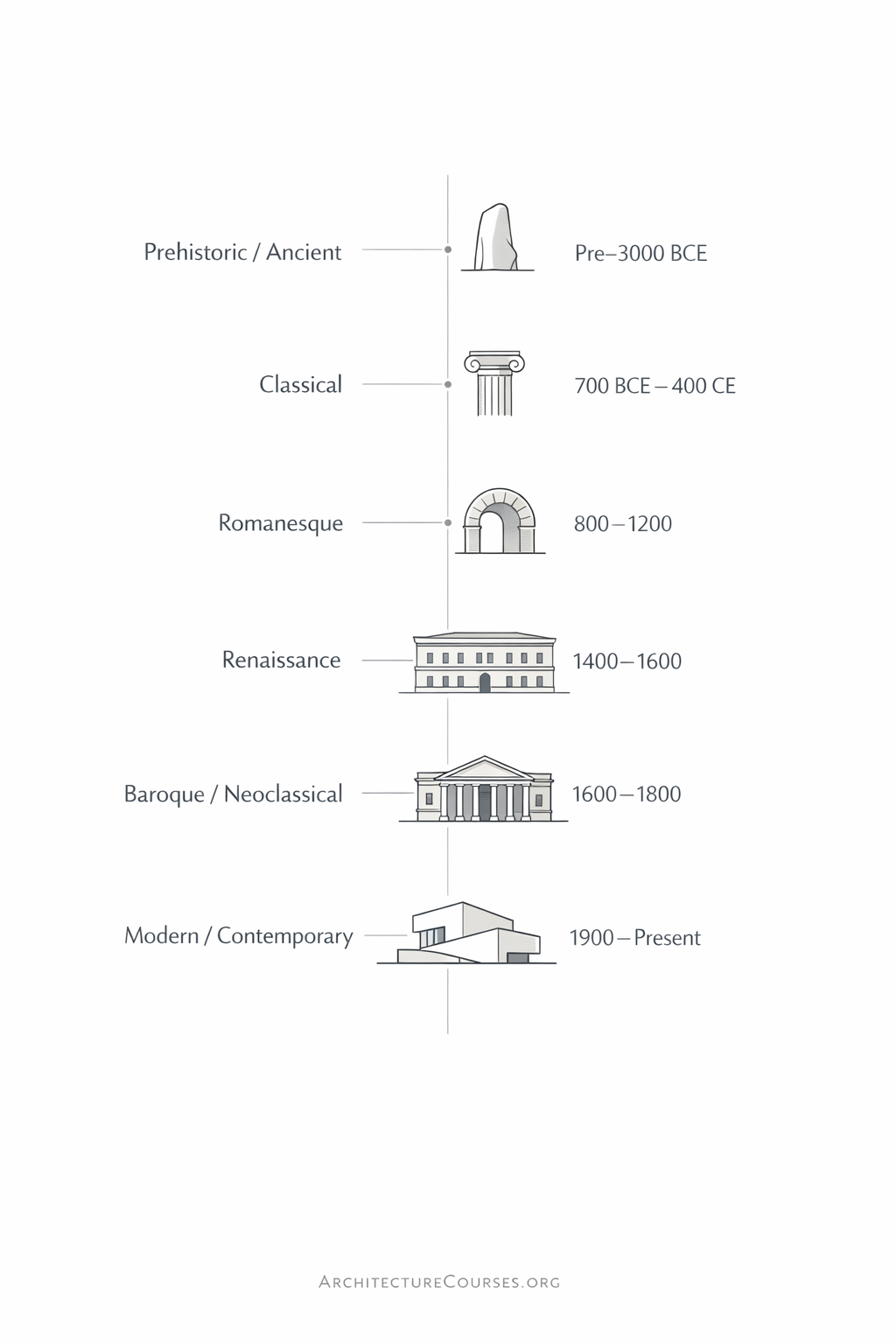
Illustration by ArchitectureCourses.org. Read as a simple sequence, architectural history looks like changing styles. Read more closely, the same pressures keep returning underneath the form.
| Driver | What It Changes First | What You See in the Building |
|---|---|---|
| New materials | Span, height, wall thickness, detailing | Longer roofs, thinner structure, larger openings |
| Climate pressure | Orientation, openings, courtyards, massing | Shade, thermal mass, ventilation strategies, compact plans |
| Political power | Scale, procession, symbolism, urban placement | Monumentality, axial routes, formal civic fronts |
| Trade and movement | Hybrid forms, imported techniques, new building types | Cross-cultural details, port cities, exchange in planning ideas |
| Industrial production | Speed, repetition, standardization | Modular parts, prefabrication, system thinking |
Eras do not shift because style suddenly gets bored. They shift because pressure builds somewhere: materials, labor, climate, religion, trade, warfare, bureaucracy, infrastructure, money. Good history writing keeps those pressures visible.
What Gets Lost in Simple Timelines
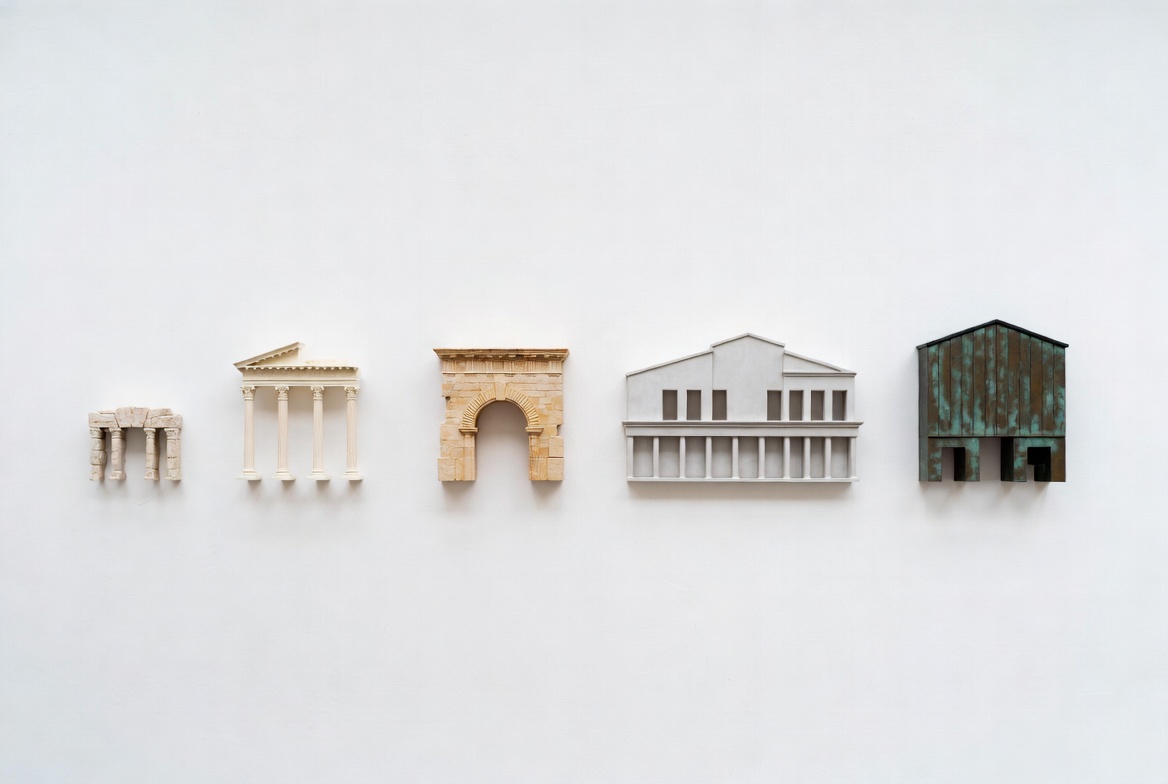
Illustration by ArchitectureCourses.org. Broad era shifts become easier to compare when the buildings are reduced to simple forms.
- Too much Europe, too little else. A usable history page has to keep multiple traditions in view.
- Style treated as surface. Roof form, wall thickness, ornament, plan shape, and openings come from deeper conditions.
- Labor and construction pushed out of the story. Buildings are ideas, but they are also logistics, craft, and available tools.
- Power left out. Palaces, courts, housing blocks, schools, mosques, temples, and towers all organize people in specific ways.
- Vernacular building ignored. Ordinary housing and local craft often teach more about climate and available materials than elite monuments do.
Architectural history reads much better when you follow the pressures underneath the form. That is also what makes it useful in practice. You are no longer copying a shape. You are understanding what made that shape necessary, effective, or persuasive.
Books Worth Keeping Nearby
MUST READ: A World History of Architecture for broad global coverage.
ALSO USEFUL: Architecture: From Prehistory to Climate Emergency for the materials, energy, and environmental thread running through the timeline.
Read This Next
If you want to keep moving through the history cluster, these pages are the cleanest next steps:
- Ancient Architecture
- Greek Architecture
- Roman Architecture
- Gothic Architecture
- Renaissance Architecture
- Modern Architecture
- Contemporary Architecture
FAQ
What is the brief history of architecture?
It is the long story of how people built in response to climate, belief, politics, materials, labor, and technology. The major shifts run from prehistoric and ancient building, to classical Greek and Roman architecture, to medieval traditions such as Romanesque and Gothic, to Islamic architecture, to the Renaissance and later classical revivals, then the Industrial Age, Modernism, Postmodernism, and contemporary practice.
Why does architectural history matter for designers?
It gives you precedent with context. You stop copying shapes and start seeing why certain plans, sections, materials, and spatial moves worked in specific conditions. That is what turns history into a design tool instead of a memorization exercise.
What are the main architectural eras beginners should know first?
Start with ancient architecture, Greek and Roman classical architecture, Romanesque, Gothic, Islamic architecture, Renaissance, Baroque and Neoclassicism, the Industrial Age, Modernism, and contemporary architecture. That sequence gives you a workable base map without pretending the whole world developed in one straight line.
How does ancient architecture still influence buildings today?
Through proportion, axial planning, structural ideas such as arches and domes, climate response, urban order, monumentality, and the use of architecture to express public identity. The influence is not only visual. It is also organizational and spatial.
Where does vernacular architecture fit into the timeline?
Across the whole timeline. Vernacular building sits outside grand style labels and shows how ordinary people built with local materials, local climate knowledge, and available labor. It is one of the strongest sources for practical design lessons because it is so tied to place and constraint.
What is the difference between architectural history and architectural theory?
Architectural history tracks buildings, cities, periods, and the conditions that produced them. Architectural theory deals more directly with ideas, arguments, principles, and interpretation. The two overlap, but they are separate jobs.