

Industrial style goes wrong when the room starts feeling like a warehouse instead of a place to live.
Exposed brick, steel, concrete, black metal, and old wood can make a room feel strong and clear. Too much of it, or the wrong mix, makes the space feel cold, dark, and harder than it needs to be.
The rooms that work keep the raw character but add enough warmth, light, and restraint to make the space feel good to live in.
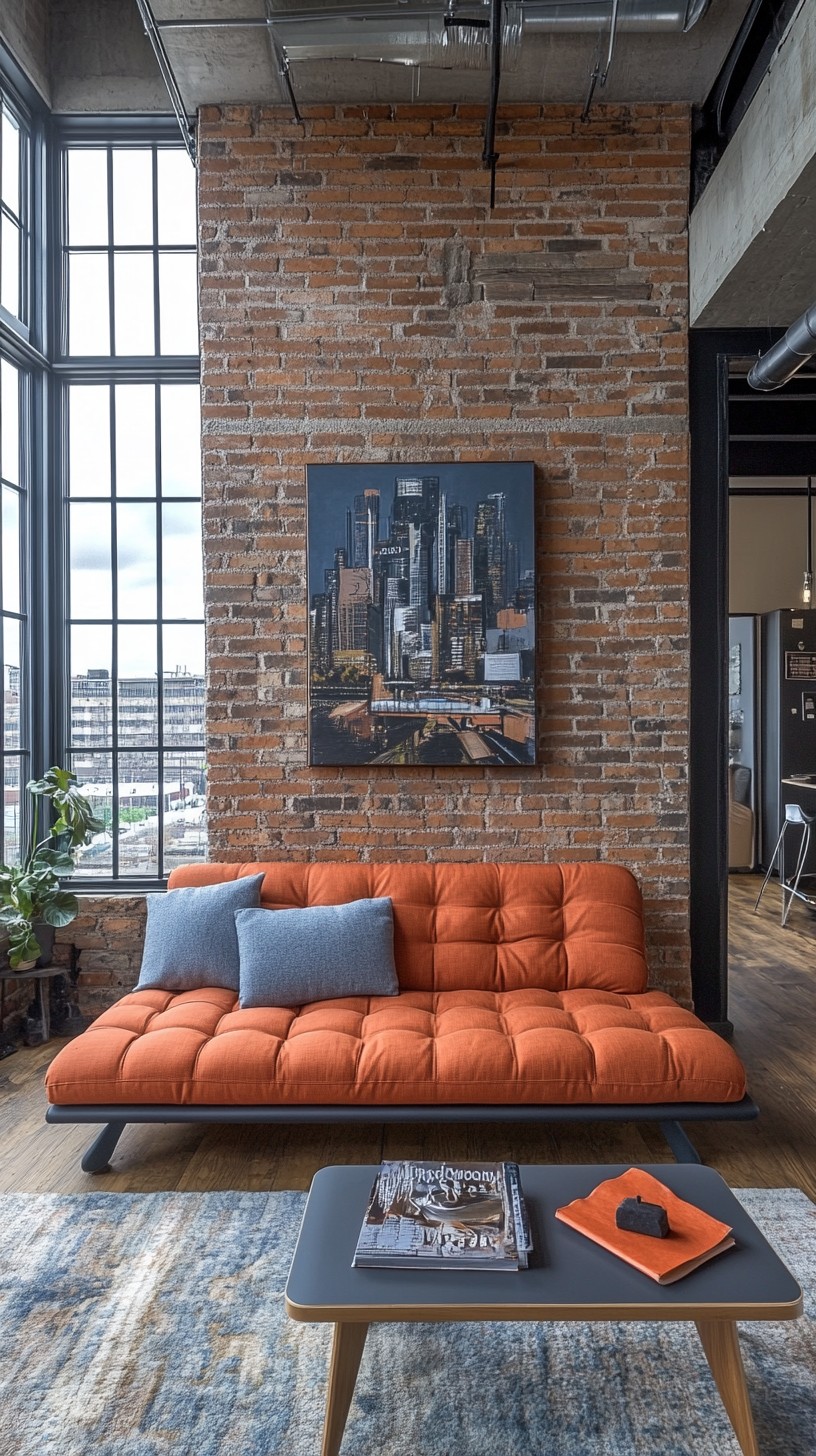
A loft with brick, steel, and a bold sofa shows how industrial rooms stay livable when one warm element carries the space.
Industrial Architecture: History, Features, and Interior Design Ideas
Industrial architecture started with work. Factories, warehouses, mills, power stations, rail sheds. These buildings were built to move goods, hold machines, and keep production going.
That hard-working logic gave the style its visual language: open spans, exposed structure, brick, steel, concrete, big windows, visible services, and very little wasted decoration.
Later, that same language moved into homes, offices, restaurants, and converted lofts. That is where things split. In architecture, industrial means function pushed to the surface. In interiors, it means borrowing that same rough honesty without making the room feel dead.
This page covers both sides: where industrial architecture came from, what makes it distinct, why it still shapes buildings now, and how industrial interiors work when the balance is right. If you want the room-by-room decorating page, go next to Industrial Interior Design.
What industrial architecture is
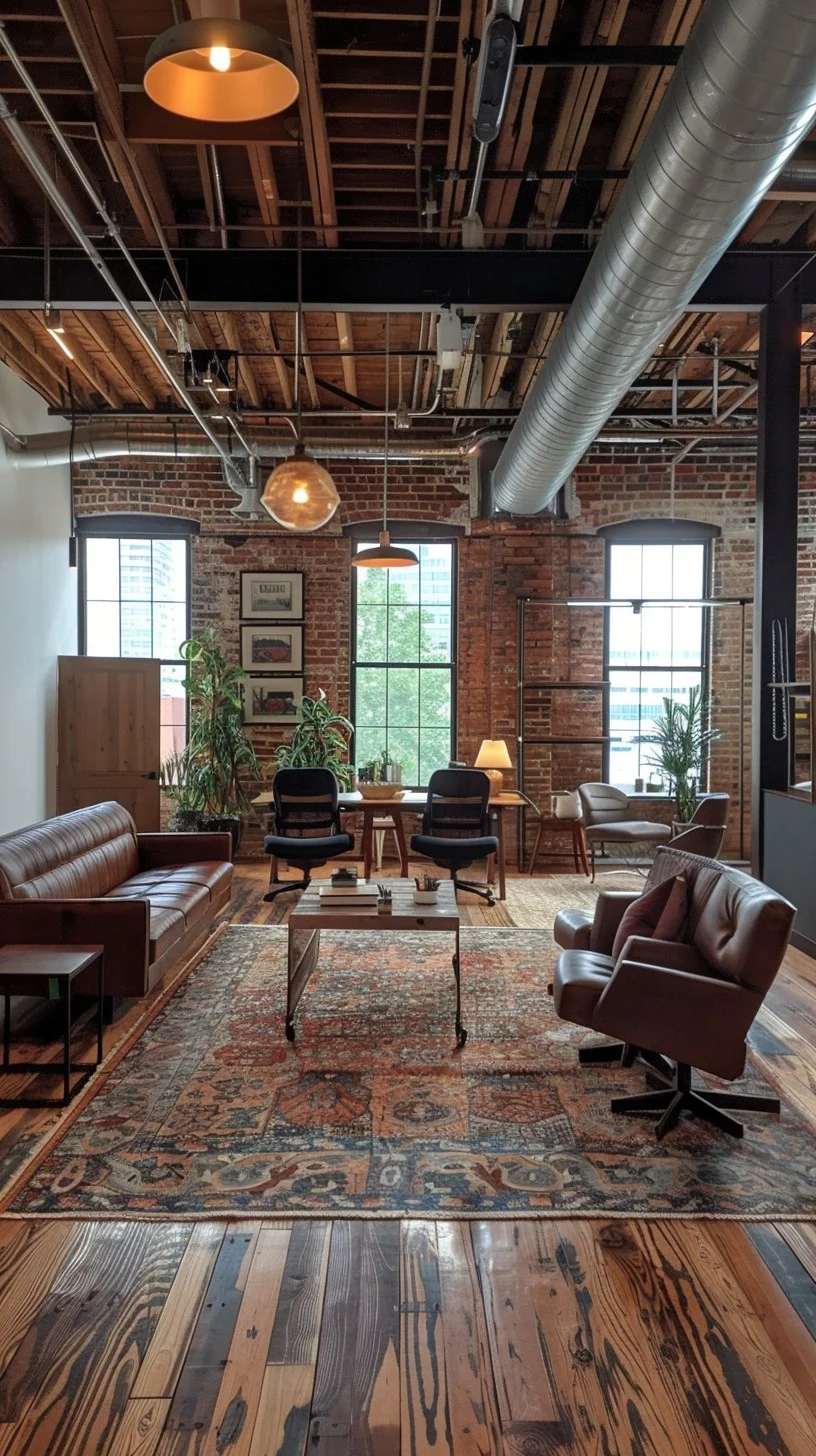
Industrial office spaces work best when the raw shell is balanced by daylight, wood, and enough softness to keep the room usable all day.
Industrial architecture is architecture shaped by production, storage, transport, and engineering. It is less concerned with ornament and more concerned with span, durability, light, circulation, and cost.
That does not mean it lacks character. It means the character comes from the building system itself.
| Part of the building | Industrial answer | What you see |
|---|---|---|
| Structure | Carry bigger loads with fewer interruptions | Steel frames, trusses, concrete bays, long spans |
| Light | Bring daylight deep into work areas | Large windows, sawtooth roofs, clerestories |
| Materials | Use hard-wearing, repairable systems | Brick, steel, concrete, timber, glass |
| Plan | Keep movement and production flexible | Open floors, fewer walls, simple circulation |
| Services | Keep systems accessible | Exposed pipes, ducts, cable runs, visible joints |
That plainness is part of the appeal. The building reads clearly. You can tell what holds it up, what brings in light, and how the inside is meant to work.
Where it came from
Industrial architecture took shape during the Industrial Revolution, then expanded hard through the 19th and early 20th centuries. New materials changed what buildings could do. Iron, then steel, then reinforced concrete opened up larger spans, taller structures, bigger windows, and faster construction.
Factories and warehouses drove that change, but train stations, mills, bridges, and power buildings mattered too. Once industry demanded new building types, architecture had to respond.
Brick and timber still mattered early on, but steel framing and bigger glass areas changed the game. That shift is one reason industrial buildings sit so close to the birth of modern architecture. The engineering logic started to push past older masonry habits and toward cleaner structural expression.
If you want the wider timeline around that shift, the history page on the evolution of architecture places industrial-era building in the larger story cleanly.
The features that matter most

Brick, height, and visible structure are some of the clearest industrial signals.
Exposed materials
Brick, concrete, steel, timber, and glass are often left visible instead of wrapped in decorative layers. That is part economy, part honesty, part maintenance logic.
Open plans
Industrial buildings were built to handle machines, people, goods, and changing layouts. Open floors made that easier. Later, that same openness became one of the most desirable things in loft living and creative workspaces.
High ceilings
Height helped with light, heat, air, equipment, and movement. In domestic spaces, that same height now creates drama. It can also create acoustic problems and make a room feel hollow if the furnishings are too light.
Big windows
Daylight mattered in work buildings long before “industrial loft” became a lifestyle image. Large steel-framed windows remain one of the strongest visual markers of the style.
Structure as image
Beams, trusses, ductwork, pipes, braces, rivets, and joints often stay visible. In good projects, that reads as confidence. In weak ones, it turns into fake roughness or decorative “industrial” parts that are doing nothing.
This part overlaps naturally with texture in architecture and contrast in architecture, because industrial spaces lean heavily on both.
Why this style still works
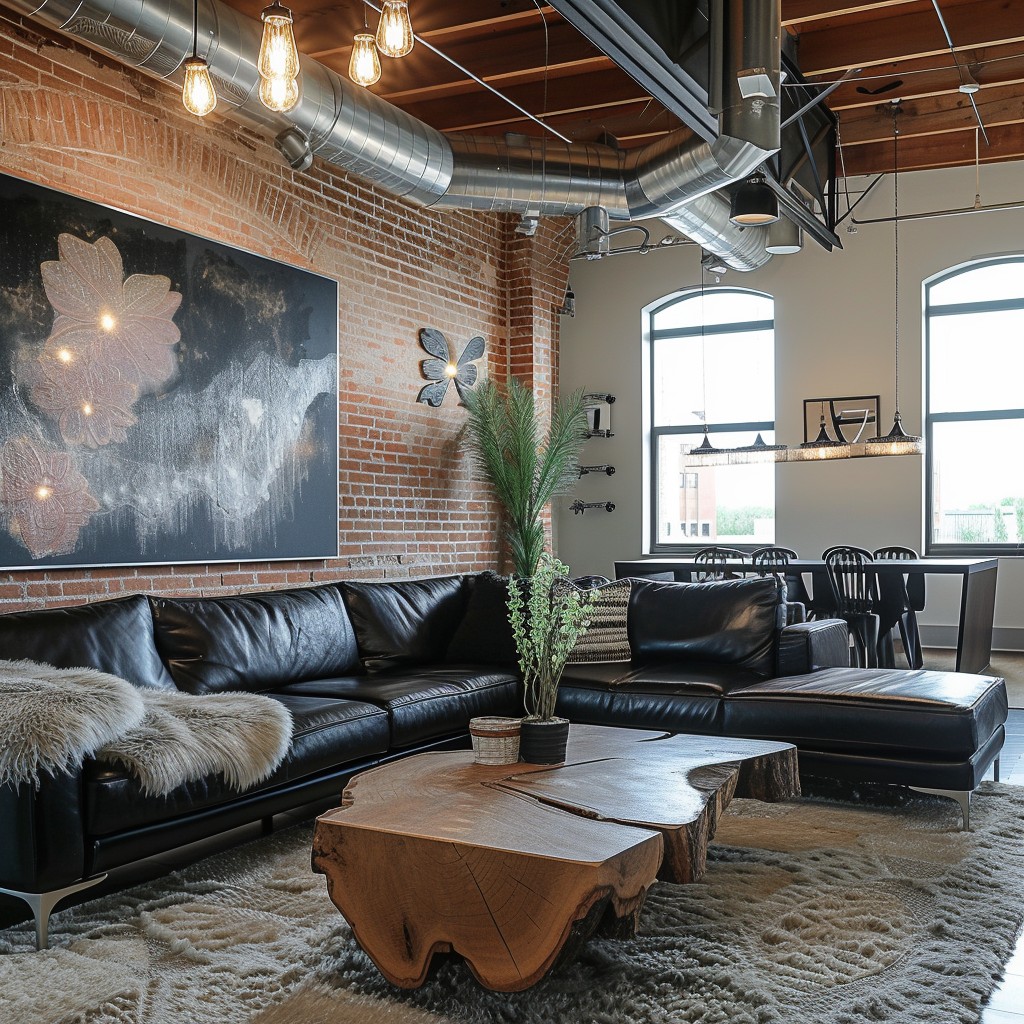
Leather, wood, and raw structure are a strong industrial mix because one side warms what the other side hardens.
Industrial architecture still matters for three reasons.
It solves practical problems clearly
Long spans, open plans, easy maintenance access, and durable materials still make sense in many building types.
It adapts well
Old factories and warehouses convert into homes, galleries, offices, hotels, and mixed-use projects because the bones are generous. High ceilings, big windows, and structural grids give designers room to work.
It gives modern interiors something harder to fake
Real brick, real steel, real concrete, and real patina bring weight and age to a room. That is why industrial interiors keep coming back. They feel grounded when the building shell is honest enough to carry them.
From industrial buildings to industrial interiors

Industrial interiors work when the shell stays rough but the furnishing plan stays controlled.
The interior version of industrial style took shape when old work buildings became homes and studios. Exposed brick walls, concrete floors, visible beams, and factory windows were already there. Furniture and lighting had to respond to that shell.
That is the key difference people miss. Good industrial interiors begin with the building. Bad ones try to paste the style onto a room that has none of the logic behind it.
| Do this | Instead of this | Why |
|---|---|---|
| Use one or two raw materials strongly | Cover every surface in brick, pipe, metal, and concrete | The room stays readable instead of turning into a theme set. |
| Warm the shell with wood, leather, wool, and softer lighting | Keep everything hard and gray | Industrial rooms need warmth or they go cold fast. |
| Let structure and window openings be the statement | Add fake distressed props everywhere | The building should carry the character first. |
| Use lighting in layers | Rely on one dim pendant and call it mood | Industrial rooms need depth, not gloom. |
| Keep furniture simple and weighty | Mix in glossy plastic and random trend pieces | The material language needs consistency. |
The full decorating side lives on Industrial Interior Design, but the short version is simple: raw shell, controlled palette, better lighting, and enough texture to keep the room human.
The main industrial looks now
Modern industrial
Cleaner, sharper, and more controlled. Think polished concrete, black steel, larger glass areas, cleaner cabinetry, and less visible clutter. It keeps the structure but trims back the nostalgia.
Rustic industrial
More wood, leather, patina, and warmth. Brick reads softer here because the room is carrying more brown, tan, and aged finishes.
Scandinavian industrial
The industrial shell gets lighter and calmer. White walls, pale wood, black metal, and a stripped-back furniture plan take the edge off without losing the rawness. That version is covered more directly in Scandinavian Industrial Minimalism.
Industrial coastal
This one works when the shell is industrial but the palette and air feel lighter. Weathered timber, black metal, linen, salt-softened colors, and better daylight keep the space from getting too heavy. For that crossover, use Industrial Coastal Style.
Compact urban industrial
Smaller apartments cannot carry the full warehouse look. They need restraint: fewer dark finishes, less visual clutter, stronger storage, and a tighter furniture layout. That is where HDB Modern Industrial Interior Design becomes relevant.
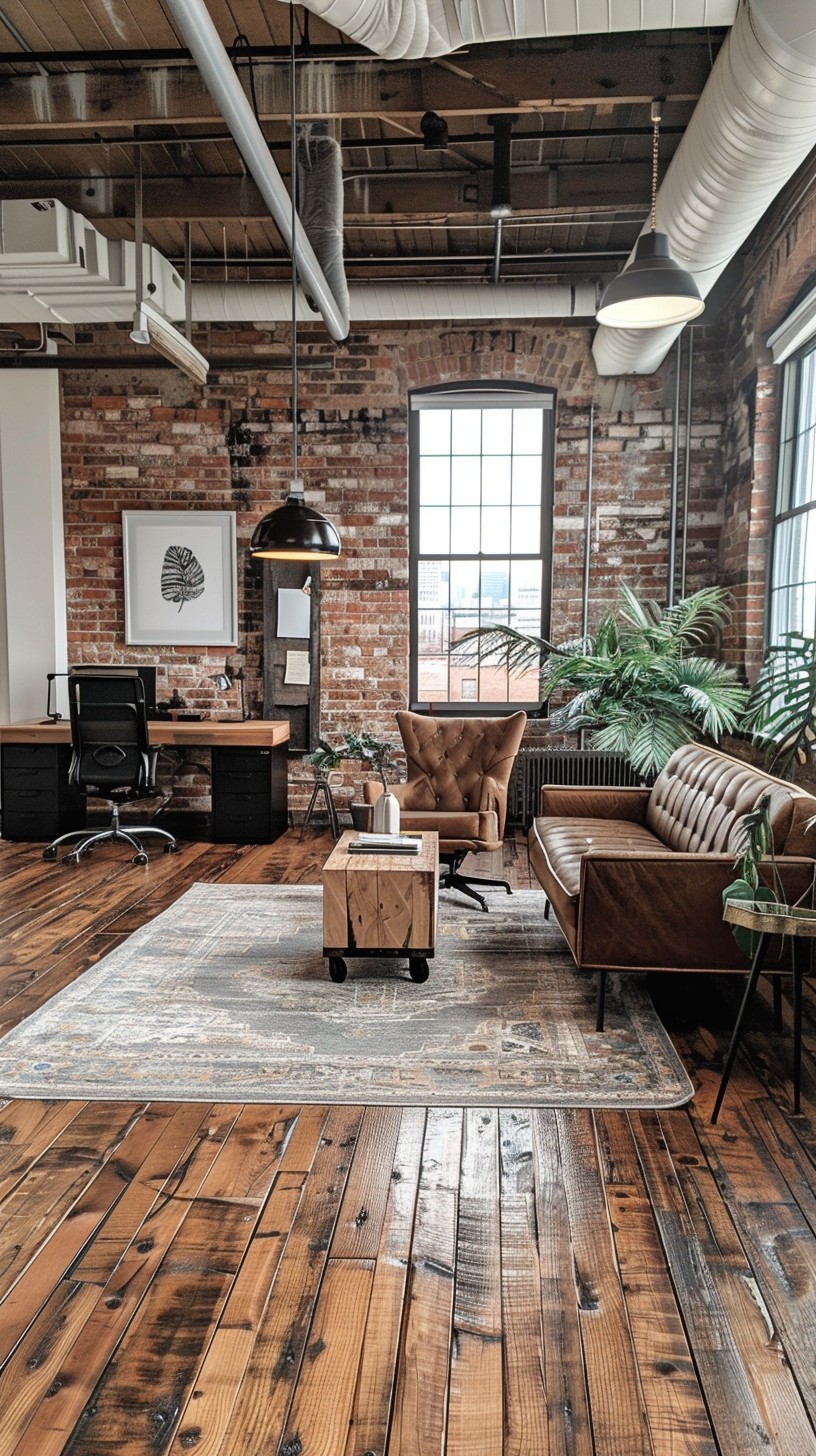
Industrial chic works only when the luxury pieces do not drown the raw shell underneath them.
Steel changed the whole language
Steel is one reason industrial architecture hit so hard. It made bigger spans and lighter structural systems possible. That meant fewer load-bearing walls, more open interiors, and more flexibility in plan.
Later, steel did something else. It stopped being just structure and became part of the visual language. Beams, frames, rivets, stairs, railings, and exposed connections all became readable as architecture instead of hidden background.
That shift runs forward into High-Tech architecture too, where exposed services and engineering become part of the image of the building. Industrial architecture helped make that possible.
Buildings worth knowing
You do not need a long list of famous buildings to understand the type, but a few examples help.
Fagus Factory, Germany

The Fagus Factory is one of the clearest early links between industrial building and modern architectural thought.
Walter Gropius used large glass areas and a cleaner, lighter expression than many earlier factory buildings. It is often treated as a turning point because it shows industrial logic edging toward modernism.
Albert Kahn’s Ford factories, United States
Kahn mattered because he pushed factory design toward larger, more efficient, reinforced-concrete and steel-framed spaces built around workflow, daylight, and industrial productivity.
The High Line, New York

The High Line shows how industrial infrastructure can be reused without wiping away its history.
This is less about factory form and more about adaptive reuse. It proves that industrial leftovers can become civic space without pretending they were never industrial.
Tate Modern, London

The Tate Modern keeps the industrial shell and proves how strong those volumes still are when reused well.
A former power station turned museum, it is one of the best-known cases of an industrial building getting a second life without losing the force of its original scale.
Zeitz MOCAA, South Africa

Zeitz MOCAA shows how aggressive transformation can still respect industrial material memory.
The grain silos were radically reshaped, but the project still draws its power from industrial mass, structure, and material history.
The office version
Industrial style keeps showing up in offices because it fits open planning, durable surfaces, simple furniture systems, and visible infrastructure. But office versions need more acoustic control, better task lighting, and clearer zoning than the home version does.
That is where a lot of copied loft-office work falls apart. The room looks sharp in photos but sounds bad, feels harsh, and does not support focus.
For the tighter office-specific page, use Creating the Perfect Industrial Look for Your Office Space.
What people get wrong
- They confuse raw with unfinished. Good industrial rooms feel deliberate, not abandoned.
- They overdo the materials. Brick, concrete, steel, black metal, old wood, Edison bulbs, factory clocks, pipe shelving. All of it at once is too much.
- They forget warmth. Hard materials need wood, fabric, rugs, and better lighting to stay livable.
- They fake the patina. Artificial distressing reads cheap fast.
- They ignore how the room works. Industrial style only lands when layout, storage, acoustics, and circulation still make sense.
FAQ
What defines industrial architecture?
Industrial architecture is shaped by function, durability, open spans, exposed materials, and utility-first planning. It grew from factories, warehouses, mills, rail buildings, and other structures built around production and storage.
What is the difference between industrial architecture and industrial interior design?
Industrial architecture refers to the building type and construction logic. Industrial interior design borrows that language for domestic, office, and hospitality spaces.
Can industrial design work in small spaces?
Yes, but it has to be tighter and lighter. Small spaces need fewer dark finishes, cleaner storage, and better control over clutter.
Why do industrial interiors sometimes feel cold?
Too many hard surfaces, weak lighting, not enough textile softness, and too much gray or black can flatten the room fast.
Is industrial design sustainable?
It can be, especially when it reuses existing buildings, reclaimed wood, recycled steel, and durable low-maintenance finishes.
Read This Next
Want the decorating page? Go to Industrial Interior Design.
Want the lighter crossover styles? Open Scandinavian Industrial Minimalism or Industrial Coastal Style.
Working with a smaller urban apartment? HDB Modern Industrial Interior Design is the better next stop.
Planning a workspace instead of a home? Use Creating the Perfect Industrial Look for Your Office Space.