
Traditional Southern Interior Design: Simple Style That Feels Like Home
I learned Southern design in real houses in Charleston, Atlanta, and New Orleans, not from slides or mood boards. When a room feels right in the South it is because the bones are honest and the welcome is real. The plan reads clean, the light is kind, the furniture invites you to sit, and the story of the house shows up in details you can touch.
You can use any software you want, you can test every material on earth, yet the rooms that hold up still follow the classic rules that built the region. Balance, proportion, rhythm, and comfort first. That is the method I teach juniors on site, and it is the method this guide puts into plain words.

Quick orientation
If you want the broader context first, take a short look at how classic home styles hold together. When you want a fast map of the traditional family itself, skim the main branches of traditional design. Those two pieces keep labels honest so your rooms stay on track.
What Southern Rooms Actually Feel Like
Order with warmth
Southern interiors do not try to impress you with tricks. They are calm, ordered, and generous. A believable center sets the plan. Trim belongs to the house, not the catalog. Wood feels like wood and stone feels like stone. The light is flattering at dusk. You can sit down without moving pillows. Nothing shouts. Everything adds up.
Hospitality in the layout
Every choice supports conversation and hosting. You see this from Savannah parlors to Dallas family rooms. Seating pulls toward the center, not the walls. Circulation routes are clear so guests do not squeeze past knees. Lamps live where people sit, not just where cords reach. The plan does the welcoming before the color even starts.
The porch sets the promise
Porches and entries are not decoration in the South, they are social rooms. Rockers, a swing, a fan, and ferns are not props, they are signals. Inside, the first view repeats that calm order. A console that fits the wall, a mirror that returns the room, two lamps at eye level. If the front of house needs quick guardrails, pull a few checks from a straightforward front plan and carry that promise inside.
A Short, Useful History You Can Design With
Colonial and early craft
Early homes from the Lowcountry to the Chesapeake solved heat and bugs first. Tall windows, cross ventilation, shutters you can actually use. Interiors used pine, brick, and simple joinery. Lessons you still use today are scale and air. Let windows breathe, repeat one profile, keep the floor plan honest.
Antebellum order
Greek Revival and Classical influences set the tone for symmetry and measured trim. Columns outside, paneled doors and mantels inside, high ceilings that let heat rise. The takeaway is not grandeur. It is rhythm. Align heads, keep casing sizes consistent, and center the room on a believable point.
Victorian layers
With industry came pattern and plush. Heavy drapery, tufted pieces, and floral wallpapers arrived. The useful lesson is restraint. Use one floral or figure, one stripe, and one calm solid. You keep the charm without the weight.
Modern adaptation
Twentieth century life simplified the envelope but the classic logic stayed. Today we borrow the best parts. Real materials, gentle symmetry, and a plan that hosts people without fuss. If you want the clean comparison between old and new forms, this quick primer helps translate intent into lines you can build: how building form shifts from classic to modern.
The Bones: Trim, Materials, Light, And Color

Set one trim language
Base, casing, crown, and any paneling should feel like one family. In Raleigh we rescued a living room where thin vinyl casing sat next to a proud base. We swapped the casing for a profile that matched the house era and ran that line through the first floor. The same furniture suddenly looked expensive because the bones finally spoke the same language. If head heights and alignments confuse you, glance at a plain elevation checklist and you will see where lines want to land.
Choose believable surfaces
Linen and cotton breathe. Wool rugs wear in, not out. Oak and heart pine read like time. Honed stone softens light. When you trade those for shiny lookalikes the room loses gravity. You do not need museum pieces. You need honest surfaces used more than once.
Light people, not just surfaces
Southern rooms feel kind at night because the light is kind to faces. Give yourself one ceiling statement that declares the center. Add sconces to lift the walls. Place lamps at shoulder height near seats. Use warm bulbs around twenty seven hundred to three thousand Kelvin. This three part mix settles a room faster than paint ever will.
Build a palette that ages well
Start with a quiet base that flatters your daylight. Add one deeper note that shows up in small touches. Cream with soft olive. Warm stone with navy. Tobacco with ivory. North light needs warmth. South rooms can hold calmer whites if wood and fabric add tone. If you want a human guide to how color affects mood without jargon, the quick overview here helps, how color choices change how a room feels.
Room By Room: How It Actually Gets Done
Entry and stair
The first five seconds do more than any Instagram gallery. In Charlotte we centered a simple console and mirror, placed two lamps at eye level, and let a sisal runner carry up the stair. The house felt honest, not staged. Keep baskets for shoes, not piles. Hang art people can see at standing eye height, not above the door.
Living room
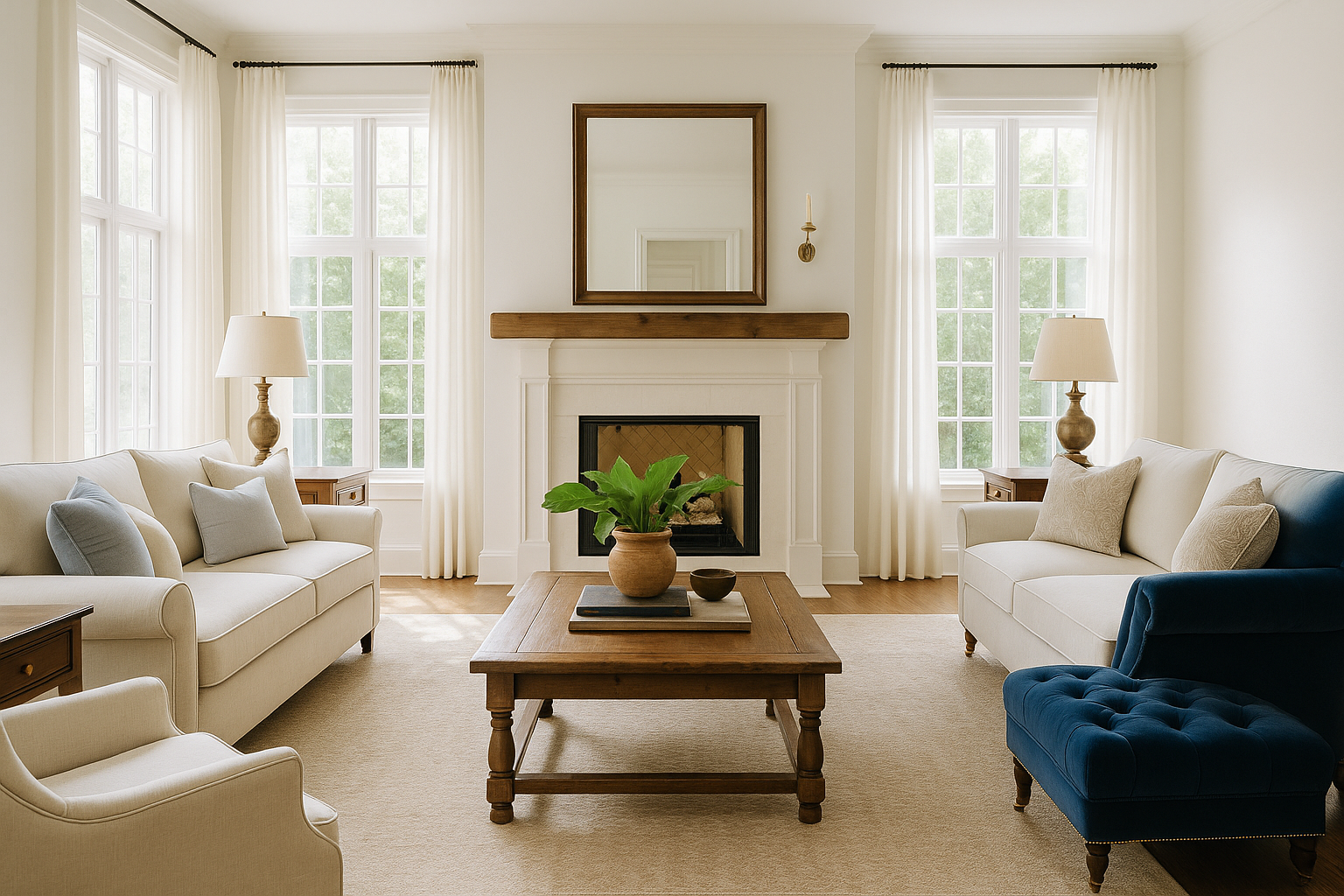
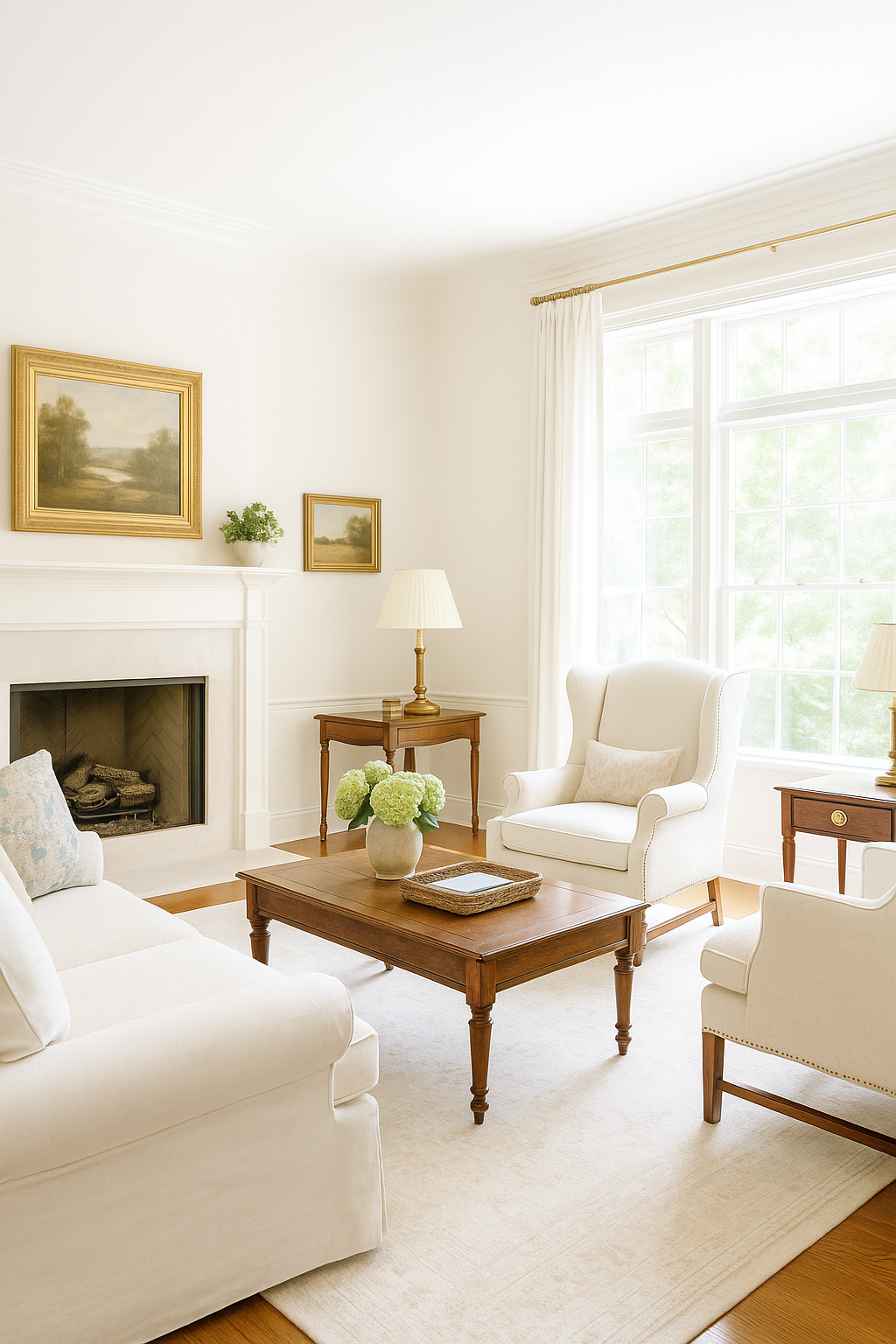
Pull seating toward the center. The rug belongs to the group, not the coffee table. Front legs on fabric at minimum. Repeat one pattern one more time in the room so it feels like a choice. If the fireplace sits off center, create a borrowed center on the wall you actually face and align the rug, main fixture, and seating to that point. The eye believes the floor and the light.
Dining room
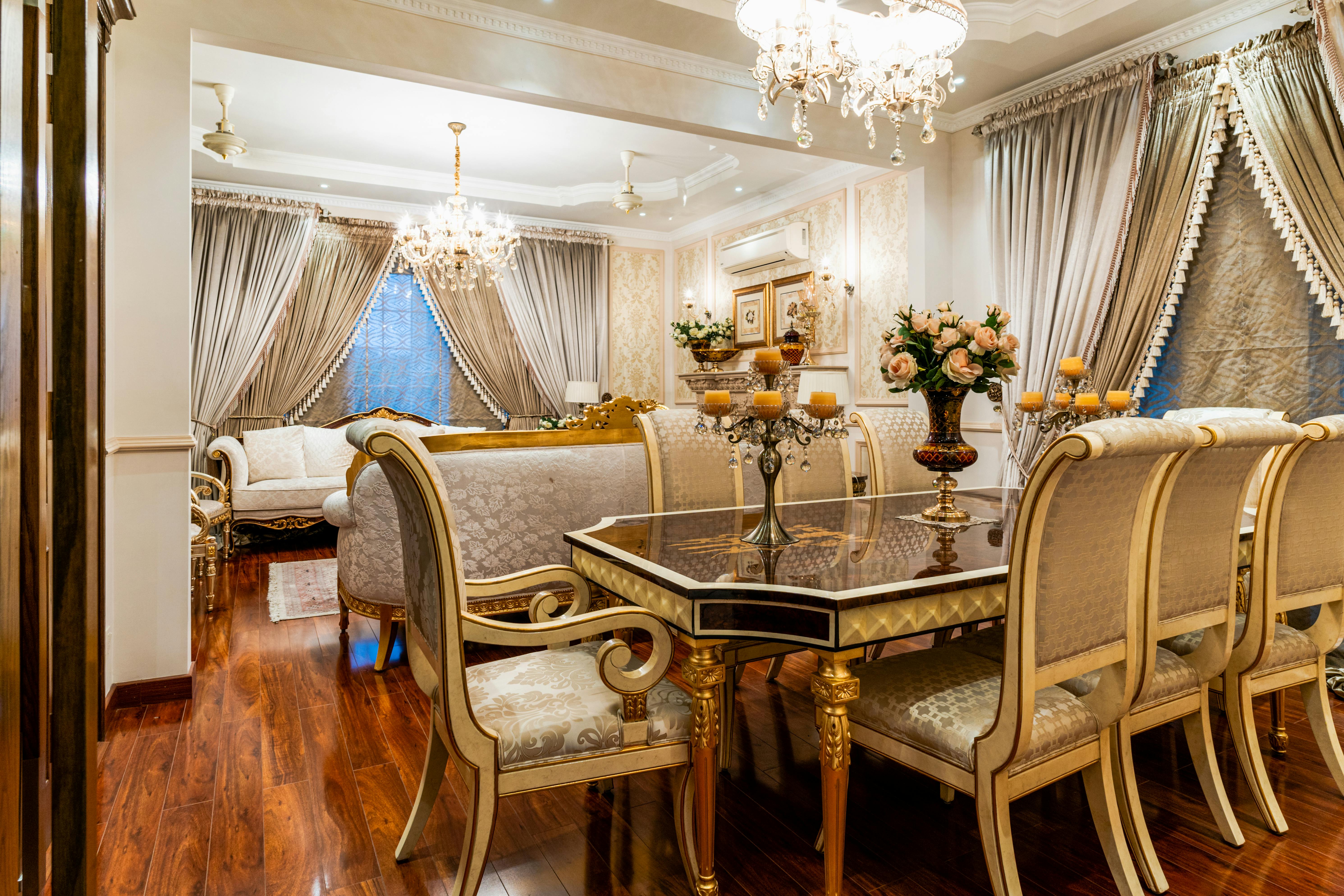
Center the table and hang the fixture low enough to gather the zone. Chair height should be friendly to any wainscot. In Savannah we layered slipcovered captain chairs with simple wood sides so dinners feel comfortable and formal nights still work. Use a quiet rug that lets chairs slide, not a thick pile that fights every move.
Kitchen that shakes hands with tradition
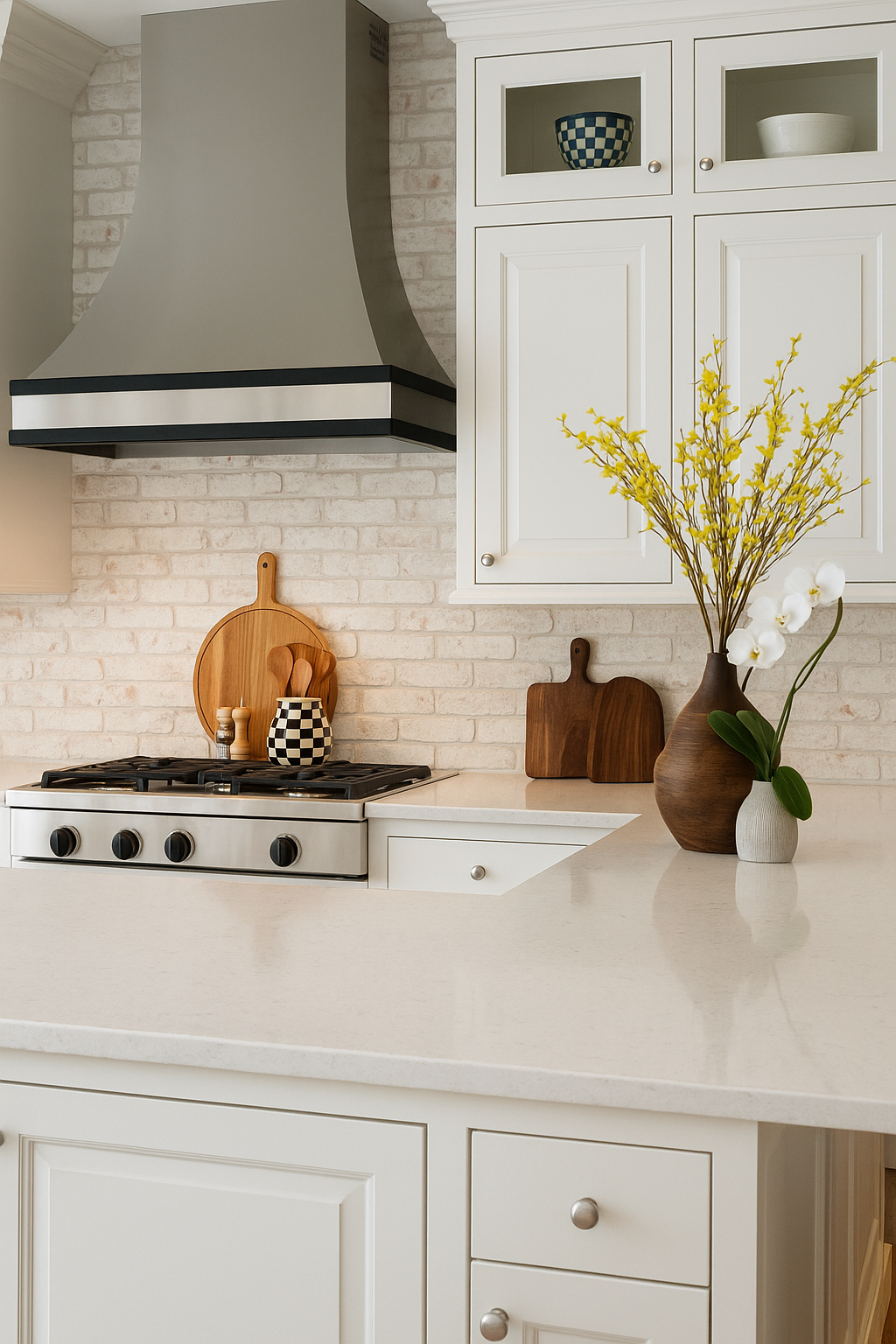
Use framed doors with simple rail and stile. Keep hardware quieter. Align outlet heights so the backsplash does not turn into a billboard. Panel large appliances where sightlines need calm. When the living room is open to the kitchen, share wood tone and color temperature so the spaces read like one thought. If you want to sanity check long view palettes, these kitchen notes save arguments and still fit a traditional shell, color choices that keep kitchens from dating fast.
Bedrooms that actually rest
Center the bed wall. If windows misbehave, borrow symmetry with drapery or a paneled headboard wall, then let matched lamps finish the equation. Use layered bedding that can change with the season. Let drapery touch the floor. That last detail completes the room in a way no accent pillow can.
Baths that keep their manners
Tile scale matters more than brand. Use small hex or square on the floor, rectangles on the wall, and keep metals in one family. Place sconces at face height and give yourself one ceiling light to wash the room. The best baths feel calm in the morning and forgiving at night.
Porches, Gardens, And Outdoor Rooms
The porch kit that never fails
Rockers, a swing if the structure allows it, a small table between every two seats, ceiling fan for August, and one lantern style fixture that looks good at night. In Nashville we painted the porch floor a soft gray blue, added ferns and a brass bell pull, and the house found its voice before you opened the door.
Outdoor dining that gets used
Choose a table that wipes clean and chairs that stack. Add string lights only where they do not glare into windows. Keep a covered bin for cushions so summer storms do not own your schedule. Southern gardens love magnolia, hydrangea, and boxwood, but pick for your microclimate and your hose reach, not for photos.
Color And Textiles In Southern Rooms
Pattern as rhythm, not noise
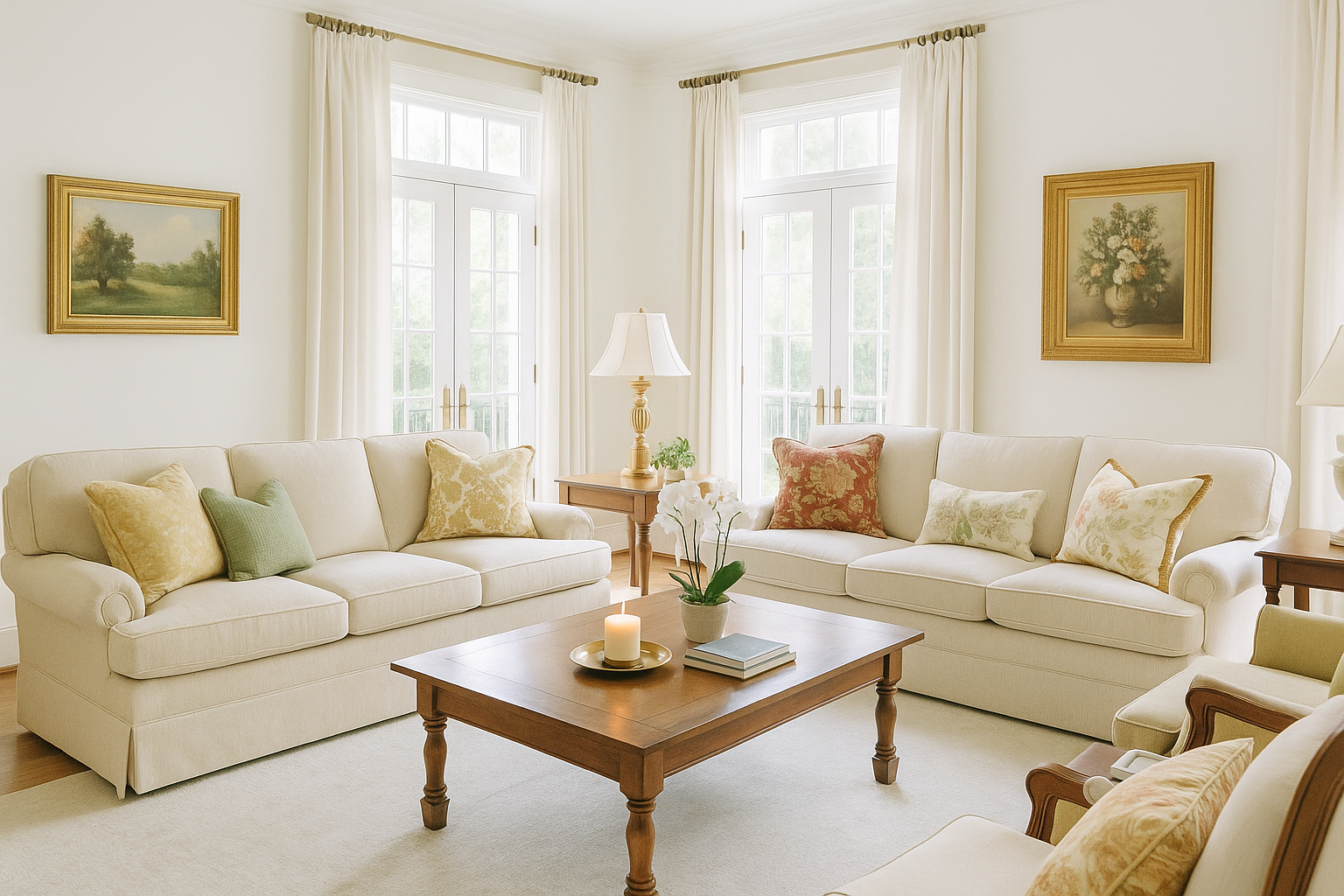
Use three at most. One floral or figure, one stripe, one quiet solid. Share one hue across all three so the eye understands the relationship. In Baton Rouge we repeated a tobacco stripe on pillows and roman shades, let a single floral live on a chair, and kept the sofa in a durable plain weave. The room felt layered instead of busy.
Summer and winter switch
Southerners change rooms with the season. Light quilts and gauzy drapery in July. Heavier throws and wool rugs in January. You can run the same room all year, but small textile swaps make homes feel alive without a full reset.
Furniture, Antiques, And Mixes That Work
One antique with a job
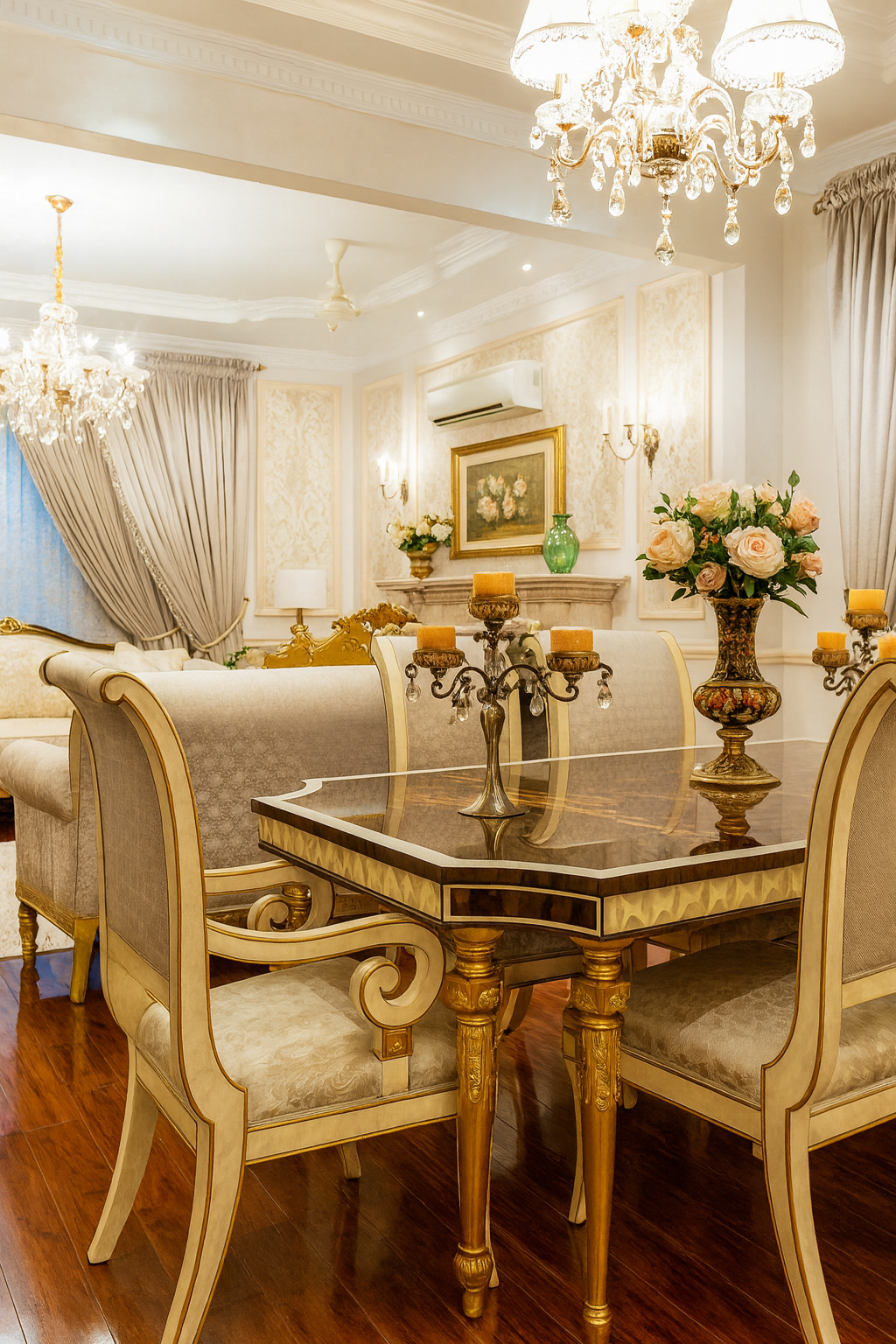
A real piece of wood with a story calms a new shell in a way modern furniture cannot. In Houston we paired a glass coffee table with a tufted roll arm sofa and let a humble pine sideboard bring age into the group. The room felt grounded, not themed.
Comfort over pedigree
People remember comfort. Choose sofas with cushions you can sit in, not on. Chairs that hold you without tipping. Tables you can reach with a glass in hand. If a chair looks great but nobody sits in it, it fails the Southern brief.
Two Field Moves That Save Awkward Rooms
Borrowed center
Long rooms in newer houses often have a mathematical midpoint that nobody uses. Choose the wall your group faces, install a shallow mantel or centered art with a picture light, then center the rug and main fixture on that point. The room stops behaving like a corridor and starts acting like a place to be together.
Quiet crown for low ceilings
Heavy crown on an eight foot ceiling feels like a tight hat. Build a two piece crown that relies on shadow more than profile. Corners soften, walls read taller, and the room keeps a finished edge without compression. That single change has saved more rooms for me than any accent wall ever has.
Small Homes And City Apartments With Southern Calm
Scale and repetition do the work
Choose slimmer arms and taller legs so air moves under pieces. Use one generous rug rather than two small rugs. Run the same wood tone across rooms. Repeat one metal finish. In a New Orleans shotgun we used a narrow bench with drawers under a window, gained storage, and kept circulation clear. Calm reads as space. That is your best friend in small plans.
Light and sightlines in tight plans
In Atlanta condos I center the main fixture on the seating group, not the room geometry, place two lamps at eye level, and use a mirror to return daylight across the space. I never follow the builder’s outlet locations blindly. The plan comes first. Wiring follows.
Regional Notes From Real Jobs
Charleston, South Carolina
Humidity and salt push you toward finishes that accept wear. Painted floors on porches, shutters that move, and light fixtures that look good after a storm. Interiors stay pale and cool without feeling thin. Brass warms the shadows at night.
New Orleans, Louisiana
High ceilings, tall doors, and rooms in a row ask for rhythm. Keep the trim consistent through the suite and let art and textiles carry color room to room. Pattern can be bold here but it still needs discipline.
Atlanta, Georgia
Renovations often mean unifying additions from different decades. Repeat one casing profile, align head heights, and run a single wall color through connecting halls. The house will feel like one story again.
Austin, Texas
Sun and stone dominate. Lean on plaster tones, leather that can take a scratch, and iron that looks forged by a person. Keep modern edits in the objects. Let the envelope stay calm and classic.
Toronto, Canada
Cold light for much of the year means warmer bases inside. Walnut, brass, and off white palettes soften the season. Southern logic still works here because it is about comfort and rhythm more than region.
Project Sequence You Can Actually Follow
Walk the shell
Find a believable center. Confirm casing widths and head heights. Decide what stays and what changes. Set one trim package and repeat it until the house reads as one thought.
Rough the light
Choose the ceiling statement, sconce positions, and lamp locations before paint. Wiring is cheaper than regret. Place outlets where lamps will actually live.
Finish floors and paint
Do this before you audition fabric. If the envelope is quiet and coherent, textiles become simple. Choose a calm base and one deeper note. Stop there.
Place anchors and edit once
Sofa, chairs, main rug, coffee table. Live with it a week. Edit once. Then add drapery, pillows, art. One edit saves money and keeps the room from turning into a collage of second thoughts.
Shopping Shortlist That Finishes Rooms
Rugs that behave
Loloi II Layla Printed Rug is thin enough for door swing and reads vintage without the worry. Ruggable solves pets and kids. Use eight by ten as a minimum for most living rooms. Size up for sectionals.
Lamps that soften evenings
The Trinity arc floor lamp gives you three pools of light from one footprint. Add two table lamps with fabric shades for faces. Warm bulbs photograph better and feel better.
Mirrors that widen rooms
An arched full height mirror in a corner returns daylight and lifts a low wall. Angle it toward a window, not at people.
Simple sofa choices
Rivet Revolve for clean lines that play with anything. Stone and Beam Chesterfield when you want the classic anchor. Pair either with a simple wood or stone table at seat height.
Common Mistakes And Simple Fixes
Undersized rugs
Small rugs under coffee tables make big rooms feel mean. Buy the larger rug once and be done. Front legs on fabric at minimum. The group will finally read as a group.
Light grids and no lamps
Ceilings full of cans make surfaces bright and faces tired. Keep one ceiling statement and let sconces and lamps do the people work.
Theme shopping
Buying a look in one weekend is how rooms feel like showrooms. Build the skeleton, then layer a few good pieces that will survive trends.
Trim that does not belong
Do not paste Victorian crown into a modern shell and hope it passes. Keep the envelope honest and warm it with materials. If you need a clean map of home ideas to avoid bad mixes, this primer helps, a simple map of housing concepts.
Three Field Stories With Moves You Can Steal
Give a new house a spine in Dallas
We walked into a white box with a grid of downlights and expensive pieces that had nothing to do with each other. We set a shallow mantel to declare a center, broke the ceiling into a quiet coffer that matched the plan, and replaced the light grid with one lantern, two sconces, and real lamps. The rug grew to fit the group. One old sideboard brought age into the conversation. Nothing was flashy. Everything was directional. The family started using the room every night.
Let a small bungalow remember itself in Jacksonville
Thin casing and hollow doors had erased the voice. We found one surviving profile in a closet and matched it through the house. Sheen dropped to satin so surfaces did not glare. A simple mantel returned, and the furniture practically placed itself. The home felt ten years older in the best way. Solid again.
Pattern without clutter in Memphis
The brief was traditional without busy. We kept the envelope classic, made the modern moves in glass and art, and used one stripe to set rhythm on shades and pillows. The room read calm and current with very little figure.
Books, Tools, And Pieces I Actually Recommend
MUST READ
The Interior Design Handbook
Clear diagrams for scale, proportion, and rhythm. I hand this to interns and homeowners because it turns fuzzy ideas into simple rules you can use.
FIELD PICK
The New Design Rules
Straight numbers for lighting heights, rug sizes, and layouts. It keeps fights short and decisions quick.
RECOMMENDED TOOL
Bosch GLM 20 Laser Measure
One button accuracy. It saves returns and wrong rugs. Keep it in your pocket on every site visit.
Learn the family, then design
If you want a simple starting primer before you place a single chair, read traditional basics in plain language. When you want to see how Southern choices relate to the larger American story, try real world American traditional moves. If your living room project leans modern traditional, this focused walk through avoids common mistakes, how to get the balance right.
FAQ
What defines Southern interior design
Calm order, believable center, trim that fits the house, honest materials, and layered light that flatters people. It puts hospitality first and lets the room feel lived, not staged.
How do I mix modern pieces without losing the Southern feel
Keep the envelope traditional. Make one modern move per view. A clean coffee table, a bold canvas, or a simple pendant is enough. Hide tech and repeat metal finishes so the room reads like one thought.
Where should I spend first on a tight budget
Spend on the skeleton. Base, casing, crown, and one ceiling fixture that sets intent. Next buy the right size rug and a comfortable sofa. Lamps and drapery can finish the room later.
Can this work in a small apartment
Yes. Use slimmer furniture, one larger rug, full height drapery, and repeated finishes across rooms. Borrow symmetry with matched lamps or a paneled headboard wall. Keep pattern count low and thread one color through them.
Is traditional Southern style outdated in twenty twenty five
No. It is not a trend. It is a method that solves for comfort and longevity. With better performance fabrics and hidden tech it is easier than ever to keep it current.
Know What To Do Tomorrow
Make one real move
Pick your center and commit. Set your trim language and repeat it. Choose a quiet base color and one deeper note. Add one statement fixture and place two lamps where people actually sit. Buy the rug that fits the group, not the coffee table. If you still need orientation, take five minutes with a simple primer on traditional basics and come back ready to finish the room.