
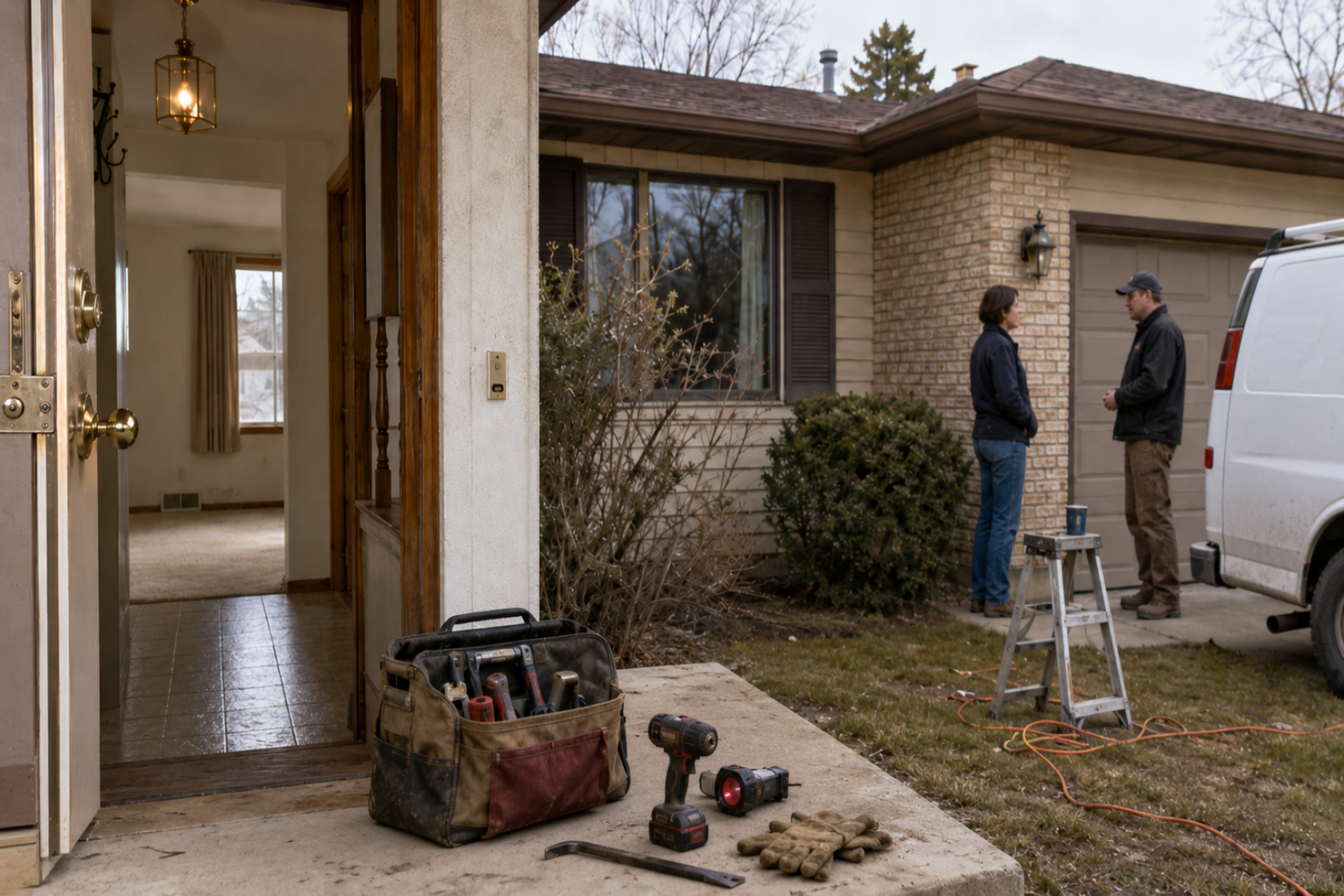


A 1980s house can look easy to update.
The oak trim is dated. The brass fixtures are tired. The carpet is worn. The kitchen lights look flat. The bathroom tile may be ugly, but still working.
That is the easy part.
The real work usually shows up behind those finishes. A kitchen soffit may be hiding ductwork. A bath fan may dump air into the attic. An old skylight may have stained the ceiling. A half-wall may carry outlets, low-voltage wiring, or an air return. The garage may still overpower the front of the house after new paint.
Do not start with the prettiest change.
Check the parts that affect cost first: soffits, wiring, venting, flooring layers, moisture stains, appliance openings, wall repair, and anything buried behind the surfaces. The 1980s look is loud. The expensive problems are usually quieter.
For the broader style background, start with 1980s house styles. For kitchen-specific sequencing, cabinet decisions, soffits, flooring height, appliance openings, and venting, use 1980s kitchen remodel.
What makes a 1980s house hard to renovate
Most 1980s houses are not precious old houses, and they are not new houses either.
That middle age is what makes them tricky.
They often have drywall, open family rooms, attached garages, larger kitchens, decent bedrooms, sliding doors, and central systems. That makes the house feel easy to work on. But many also have dated finish packages, weak exterior detailing, tired windows, old bath fans, aging skylights, layered flooring, patched siding, and years of smaller repairs from the 1990s, 2000s, and 2010s.
The original 1980s work may not be the only problem. Later updates may be worse.
Before you plan finishes, figure out which version of the house you are dealing with:
- Mostly original: loud finishes, but fewer hidden remodel layers.
- Partly updated: some rooms look newer, but the work may not follow a clear plan.
- Flipped or patched: fresh paint may be hiding bad sequencing, water damage, weak repairs, or cheap materials.
- Expanded: additions, enclosed porches, converted garages, and opened walls need closer inspection.
A clean 1980s renovation starts by separating style problems from repair problems.
The surface problems are obvious
The surface problems usually announce themselves in the first five minutes.
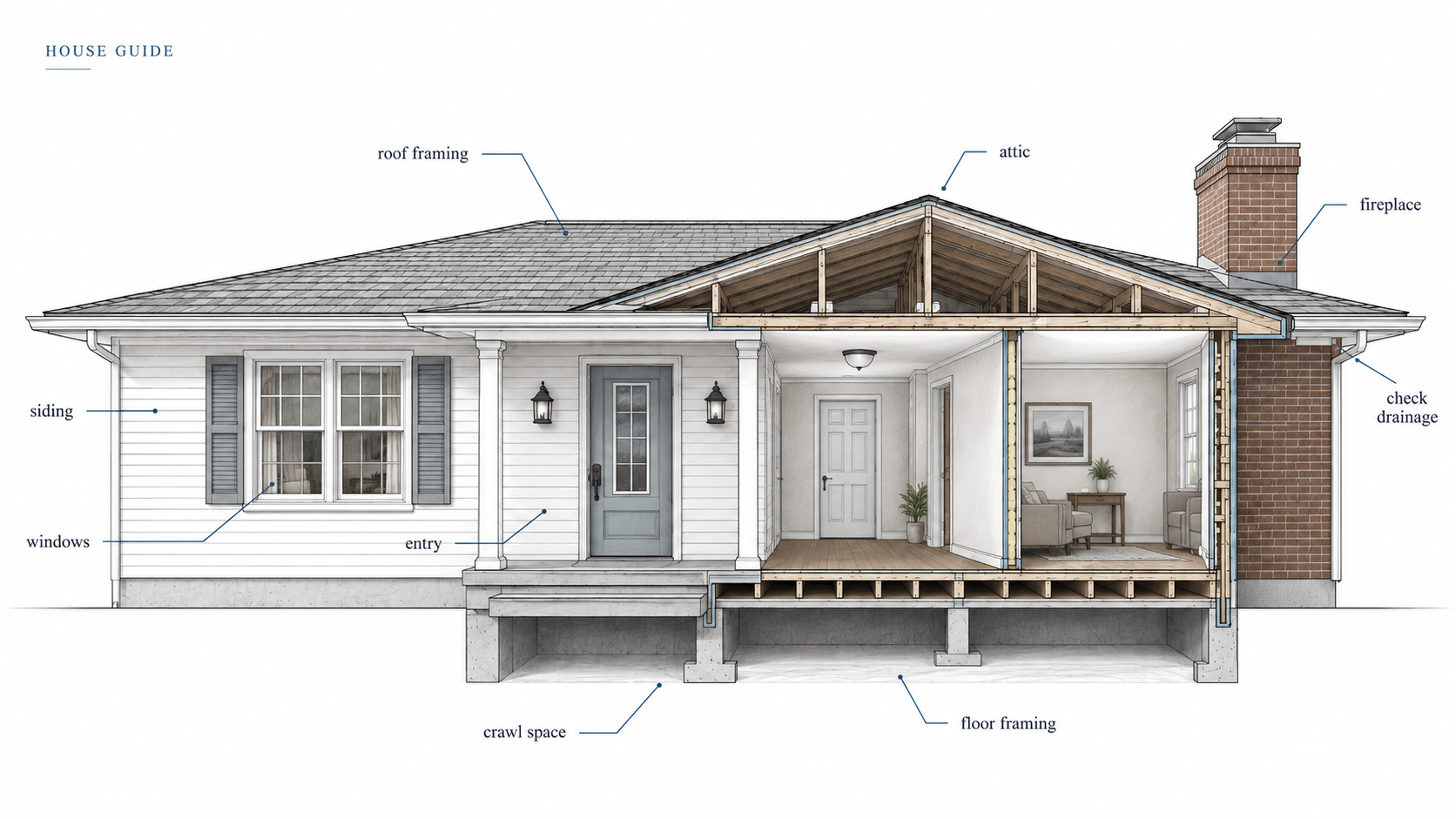
Oak cabinets. Oak casing. Oak stair rails. Brass knobs. Brass lights. Beige carpet. Mirrored closet doors. Textured ceilings. Mauve tile. Glass block. Vertical blinds. Fluorescent kitchen boxes. Almond outlets. Heavy fireplaces. Front doors with half-round glass.
That list is why people want to start fast.
But surface work should still have an order. If you paint trim before deciding flooring, the baseboards may get damaged. If you replace counters before deciding whether the cabinets stay, you may pay twice. If you install new lights before ceiling repairs, the fixtures may have to come down again.
Finishes are not separate from the renovation. They are the last layer of it.
The hidden problems matter more
The hidden problems are less exciting, but they decide whether the renovation holds up.
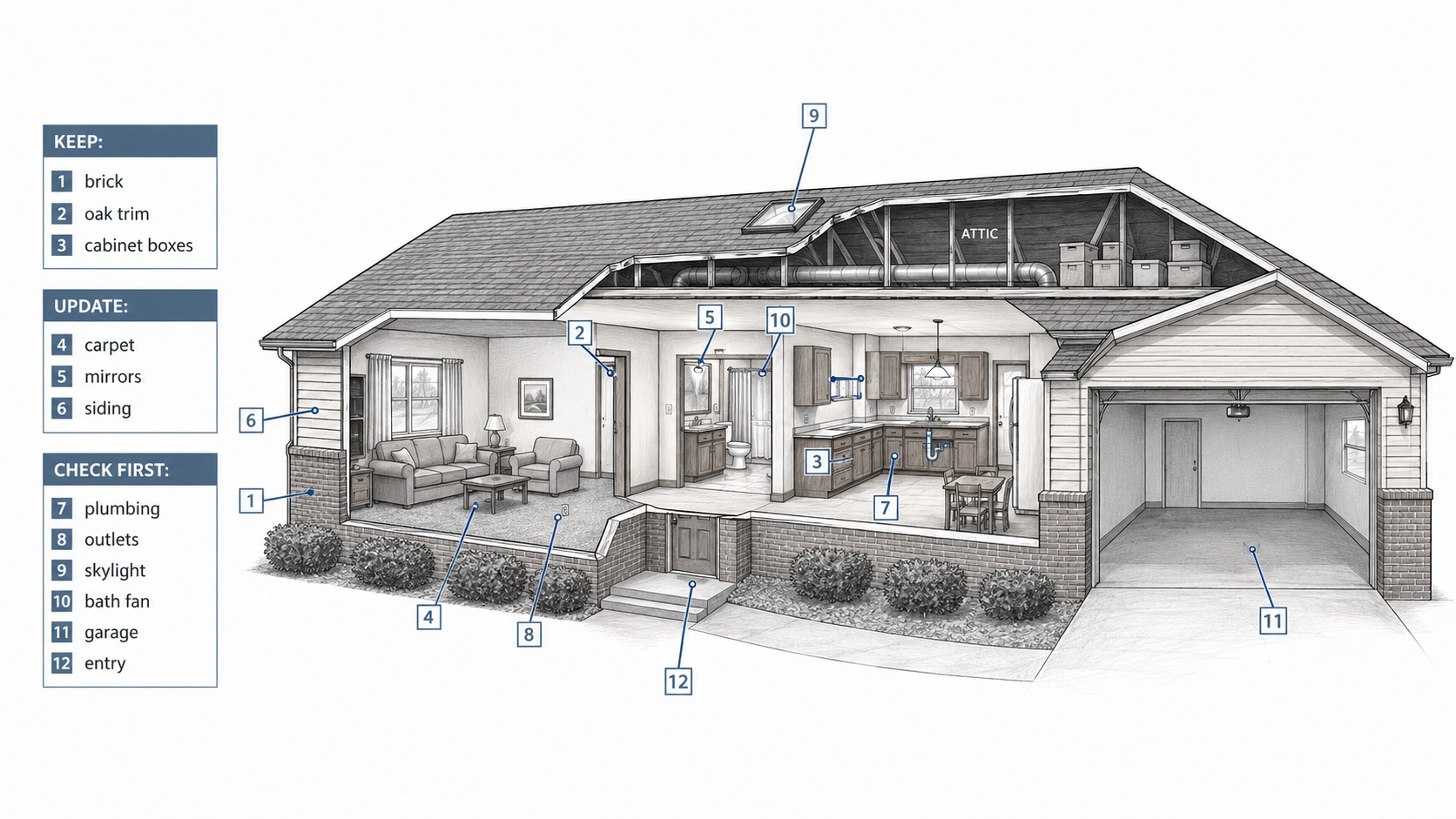
In a 1980s house, check these before committing to a finish plan:
- Bath fans: Make sure they vent outdoors, not into the attic.
- Skylights: Look for staining, failed seals, roof patches, and cracked drywall.
- Windows: Check for fogged glass, soft trim, drafts, condensation, and bad flashing.
- Plumbing: Identify pipe type, old shutoff valves, swollen sink bases, and past leaks.
- Electrical changes: Look for added outlets, old fans, kitchen lighting changes, and wall openings that may contain wiring.
- Moisture: Check siding bottoms, window corners, bathroom floors, laundry areas, basement walls, crawl spaces, and garage returns.
These checks change the budget. They also change the order of work.
If the roof edge is leaking, exterior paint can wait. If the bath fan dumps moisture into the attic, the tile choice can wait. If the kitchen sink base is swollen, cabinet paint can wait.
What to fix before the pretty stuff
The first pass through the house should not be about taste.
It should be about risk.
| Check first | Why it matters | What happens if you skip it |
|---|---|---|
| Roof edges, gutters, skylights, and siding | They control water before it reaches walls and ceilings | Rot, stains, peeling paint, failed drywall repair |
| Bath fans and kitchen venting | They move moisture, grease, and odors out of the house | Mold, attic moisture, peeling paint, stale rooms |
| Cabinet boxes and sink bases | They decide whether paint, refacing, or replacement makes sense | Wasted money on finishes over damaged cabinets |
| Floor layers and transitions | They affect doors, stairs, appliances, and room-to-room flow | Bad thresholds, trapped appliances, uneven floors |
| Walls you want to open | They may carry load, wiring, plumbing, or ductwork | Change orders, permits, delays, patched-looking repairs |
That table is not glamorous. It is the part that keeps the job from going sideways.
Kitchen first or exterior first?
There is no single answer.
The right first project depends on what is failing.
If the exterior has water problems, roof-edge issues, failed siding, leaking windows, or bad grading, start outside. A new kitchen does not matter much if the wall behind it is getting wet.
If the exterior is dry and serviceable, the kitchen often becomes the first interior money project. It touches cabinets, lighting, counters, flooring, appliance openings, soffits, outlets, venting, and sometimes walls. A bad kitchen sequence can disturb half the main floor.
Use this simple rule:
- Water first. Roof, siding, flashing, windows, drainage, and leaks beat finishes.
- Systems second. Venting, plumbing, electrical, HVAC, and insulation beat surfaces.
- Layout third. Openings, walls, stairs, kitchens, baths, and circulation beat decor.
- Finishes last. Flooring, paint, hardware, fixtures, and trim should follow the messy work.
If the house is dry and safe, the kitchen can lead the interior work. If the shell is failing, the exterior goes first.
For kitchen-specific decisions, see 1980s kitchen remodel.
What to keep
A good 1980s renovation does not erase the whole house.
Some features are worth keeping because they give the house space, light, or character. Others are worth keeping because replacing them would waste money without improving the plan.
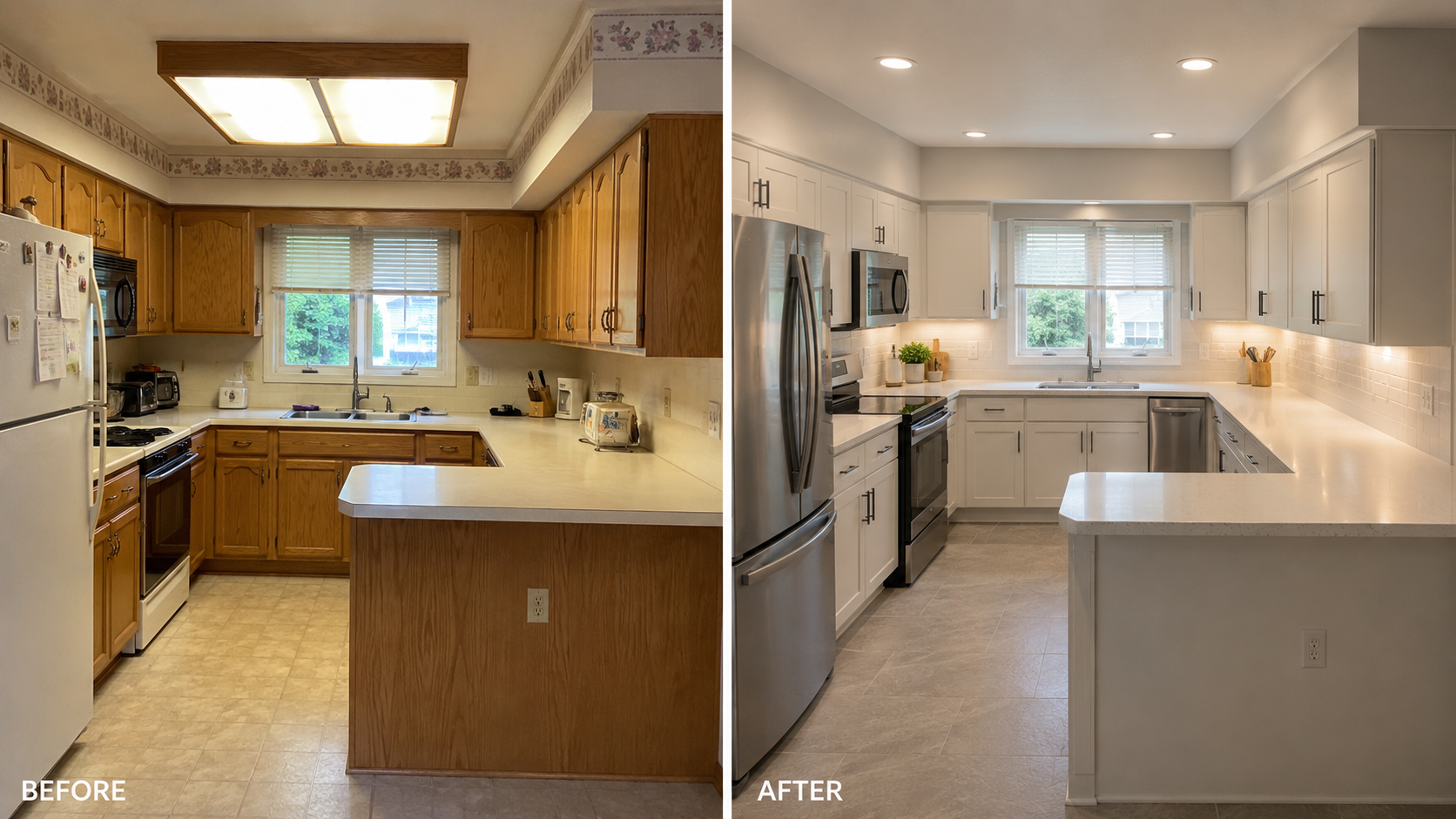
Look twice before removing:
- Brick fireplaces that anchor the family room.
- Vaulted ceilings that give volume and natural light.
- Useful built-ins with good proportions and real storage.
- Sound brick veneer that can work with better siding and trim colors.
- Existing window openings if the size and rhythm already work.
- Solid cabinet boxes if the layout still functions.
Keeping something does not mean leaving it untouched. A brick fireplace may need a simpler mantel. Oak cabinets may need paint, refacing, or new hardware. A vaulted room may need better insulation and lighting.
Keep the part that works. Fix the part that dates it.
What to replace
Replace the parts that are damaged, unsafe, failing, or so poorly planned that finish work will not save them.
That may include swollen cabinet bases, failed windows, bad bath fans, worn flooring, undersized exterior lighting, loose railings, rotted siding, leaking skylights, dead-end kitchen layouts, or doors that no longer seal.
Do not replace things only because they are from the 1980s.
Replace them because they fail one of four tests:
- They let in water.
- They do not function.
- They block the layout.
- They make future work harder or more expensive.
That is a cleaner way to spend the budget.
What to test before demolition
A 1980s house is newer than the houses most people associate with lead paint and old hazardous materials, but demolition still deserves care.
Do not grind, sand, scrape, or tear out unknown materials without thinking.
Check old floor layers, ceiling texture, patching compounds, older siding products, duct wrap, and any material that may have been installed before the house was built or added during later repairs. You cannot identify asbestos by sight. If suspect material will be disturbed, testing should happen before demo.
Lead paint rules are mainly aimed at pre-1978 housing. A standard 1980s house is after that cutoff, but older reused doors, salvage trim, additions, or unknown painted components can change the caution level.
The practical point is simple: test before you make dust.
Ranch, split-level, Colonial, or contemporary?
The house type changes the renovation order.
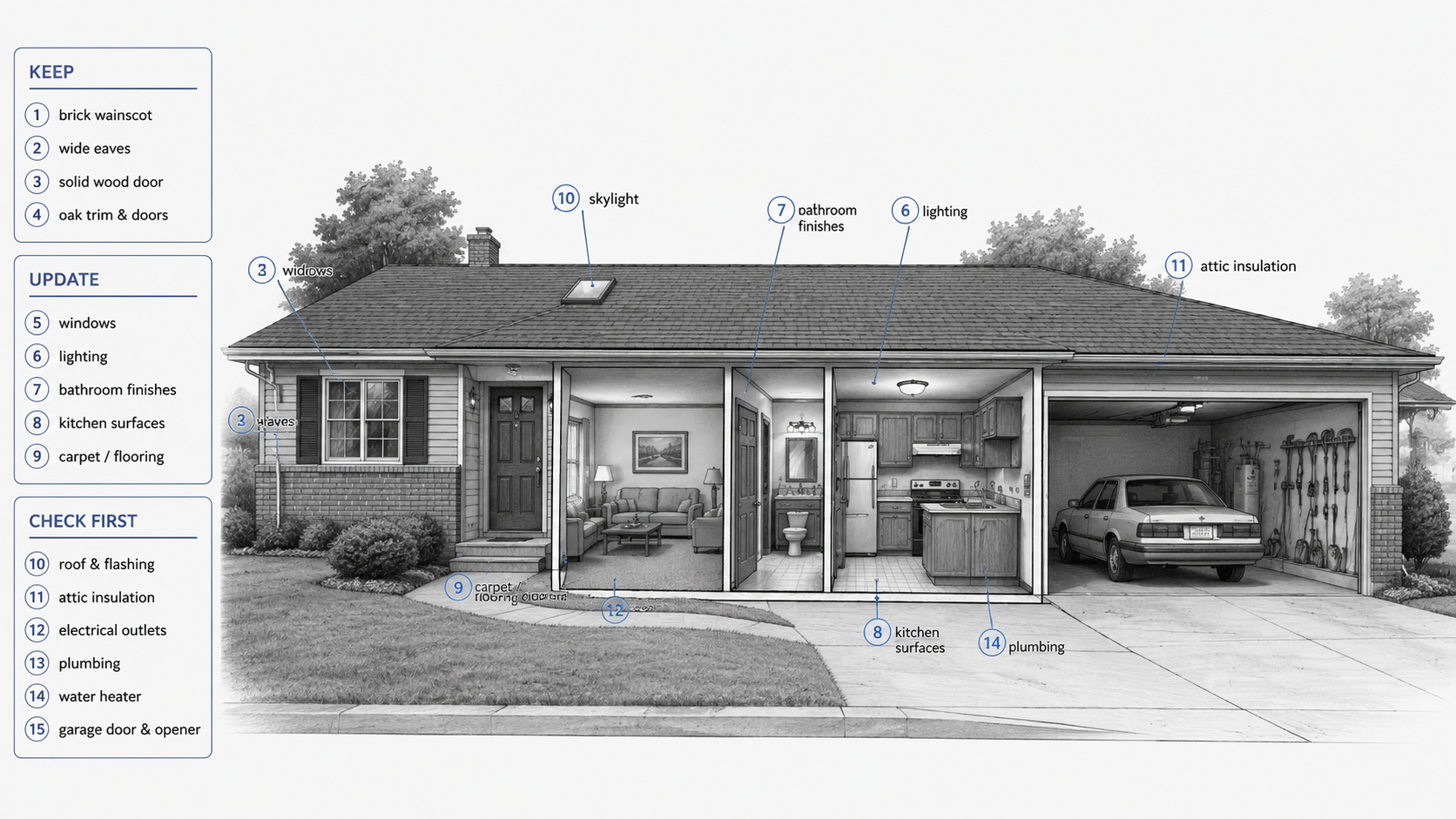
1980s ranch houses
A 1980s ranch often has a long low profile, front garage, brick-and-siding exterior, sliding doors, and a practical family-room layout. The exterior may look plain, but the floor plan can be easier to work with than it first appears.
Watch the garage face, entry, kitchen connection, flooring transitions, and roof edge. If it is a raised ranch, the stair and entry sequence matter even more.
For related work, see raised ranch remodel.
1980s split-level houses
A split-level renovation usually starts at the entry.
The stairs, railing, flooring, lighting, and sightline decide how the house feels. Opening walls can help, but only if the structure, ductwork, wiring, and floor patches are planned first.
The mistake is treating a split-level like a flat ranch. The half-levels are the house. Work with them.
1980s Colonial Revival houses
The 1980s Colonial Revival house usually needs proportion control.
The box may be fine. The shutters, front door, garage, trim, and window color may not be. Inside, these houses often have larger kitchens and family rooms than older Colonials, but the front rooms can feel formal and underused.
Do not force modern farmhouse details onto it. Fix scale, entry, window trim, lighting, and kitchen flow first.
1980s contemporary houses
A 1980s contemporary house may have angles, skylights, vertical siding, big glass, vaulted rooms, and unusual rooflines.
These houses often fail when updates fight the geometry. Fake shutters, rustic trim, heavy stone, and random farmhouse details can make the house look worse.
Keep the shape clean. Fix siding, windows, skylights, lighting, and roof-edge details with restraint.
Exterior updates should protect the house first
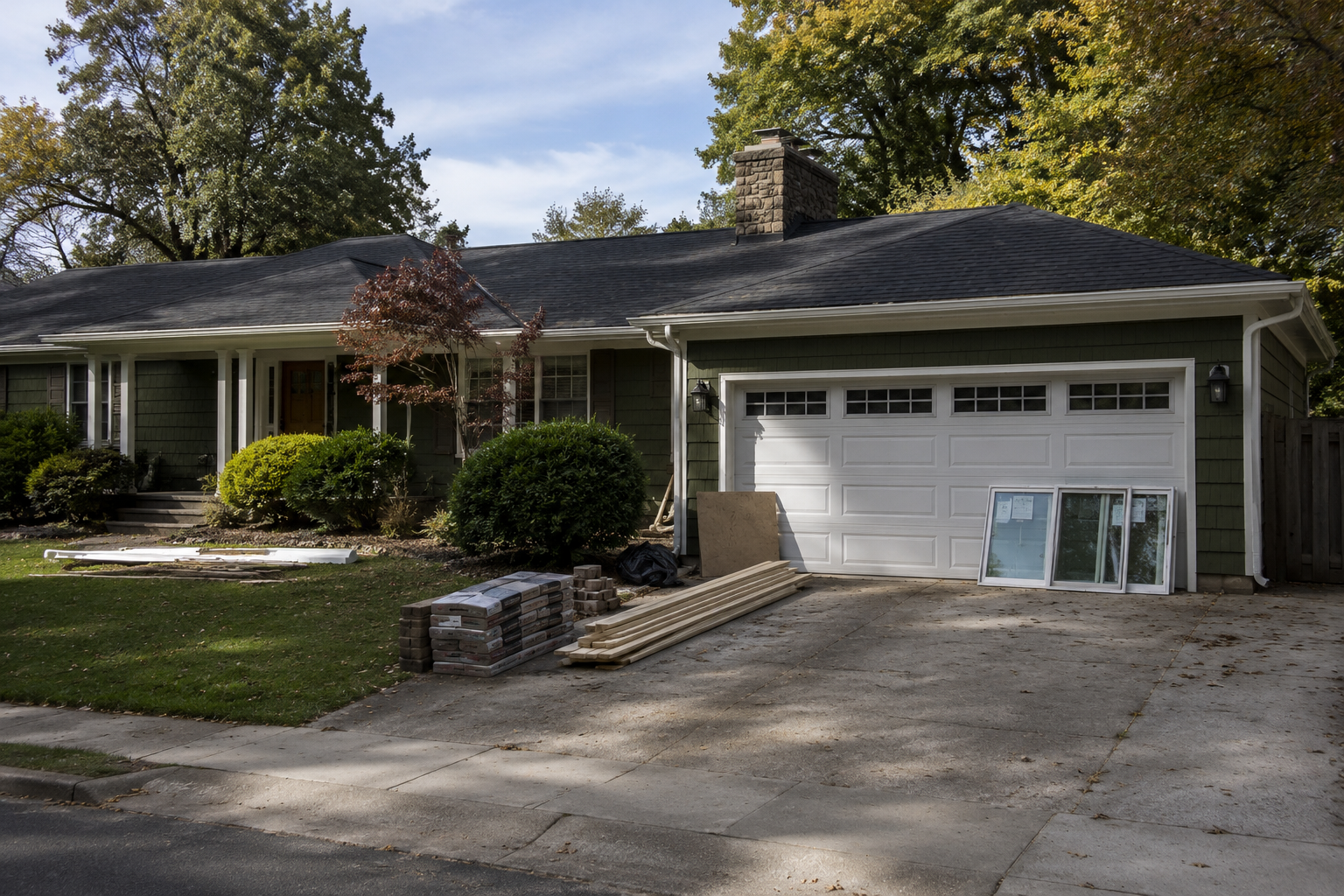
A dated exterior is not always only a visual problem.
Old siding, weak flashing, bad gutters, failed window seals, poor grading, and tired trim can create water problems. If you cover those with paint, they come back.
Start with the exterior walkaround:
- Check the bottom 12 inches of siding.
- Look at garage corners and door thresholds.
- Check window trim and sill areas.
- Look for roof water hitting walls.
- Check shrubs that trap moisture against siding.
Then make design decisions.
For the full exterior sequence, see how to update a 1980s house exterior.
Kitchens can pull the whole house apart
A 1980s kitchen is rarely just a cabinet job.
Painted oak can look good if the boxes are sound and the layout works. But if the soffit hides ductwork, the ceiling needs repair, the floor does not run under the old cabinets, the appliance openings are too small, and the range venting is weak, the cabinet decision becomes a larger remodel.
Do the kitchen in this order:
- Inspect cabinet boxes, sink base, soffits, flooring, lighting, and appliance openings.
- Decide whether to keep, paint, reface, or replace the cabinets.
- Plan electrical, lighting, venting, and plumbing changes.
- Then price counters, backsplash, flooring, and finish work.
A kitchen remodel gets expensive when the pretty choices are made before the rough decisions.
Bathrooms hide moisture problems
1980s bathrooms often look dated because of color: brass shower doors, cultured marble, mauve tile, large mirrors, and weak lighting.
The bigger concern is moisture.
Check the bath fan, fan duct, toilet flange, tub edge, shower valve, vanity shutoffs, and subfloor. If the fan vents into the attic, fix that before tile. If the floor is soft near the toilet or tub, do not cover it with new finish flooring.
Keeping the same bathroom footprint can control cost. Moving the toilet or tub turns the job into a larger plumbing and framing project.
Interiors need less theme and more order
The inside of a 1980s house often feels dated because everything repeats.
Oak trim repeats. Brass repeats. Beige carpet repeats. Mirrored doors repeat. Ceiling fans repeat. Almond switches repeat. Every room may have a different flooring edge.
Start with the fixed pieces:
- Lighting.
- Flooring.
- Trim and doors.
- Hardware and switches.
- Paint.
Furniture comes after that.
A new sofa will not fix a hallway full of orange oak casing, brass knobs, beige carpet, and tired switches. The house needs a cleaner base first.
Open concept is not always the right fix
Many 1980s houses are already partly open.
That does not mean every wall should come down.
A half-wall may be easy to remove, or it may contain outlets, ductwork, plumbing, low-voltage wiring, or structural work. A full wall may need a beam. A beam may need posts. Posts may need support below.
Even when the wall is not structural, the repair still matters. Flooring patches, ceiling texture, lighting, trim, and cabinet edges can make the room look scarred if they are not planned together.
Open the house where the opening improves function. Do not open it just because the house is from the 1980s.
For related layout mistakes, see open concept kitchen mistakes.
The renovation order that usually works
Every house is different, but most 1980s renovations behave better when the work follows this order.
| Step | Work | Why it comes before finishes |
|---|---|---|
| 1 | Inspect roof, siding, windows, drainage, attic, bath fans, plumbing, and electrical changes | Finds water, air, moisture, and safety problems before money goes into surfaces |
| 2 | Decide what stays | Protects useful brick, layout, cabinets, fireplaces, windows, and trim from unnecessary removal |
| 3 | Fix water and envelope problems | Stops rot, leaks, failed paint, mold, and damaged drywall from coming back |
| 4 | Plan layout changes | Walls, kitchens, stairs, entries, and openings affect structure, wiring, flooring, and budget |
| 5 | Remodel wet rooms | Kitchens, bathrooms, laundry, plumbing, and venting create the most disruption |
| 6 | Update the exterior face | Entry, garage, siding color, lighting, and planting work better after repairs are settled |
| 7 | Finish interiors | Flooring, paint, trim, hardware, lighting, and decor should not be damaged by earlier work |
This order is not slow. It is protective.
What people discover three weeks in
The first three weeks of a 1980s renovation usually teach the real scope.
The carpet comes up and the floor heights do not match. The kitchen light box comes down and the ceiling repair is larger than expected. The vanity comes out and the shutoff valves do not close. The soffit is opened and it is not empty. The exterior trim is pulled and the sheathing behind it is soft.
None of that means the house is a disaster.
It means the house needed a renovation plan, not a shopping list.
Build a 10 to 20 percent contingency into the early work if the house has layered finishes, old leaks, questionable siding, textured ceilings, or several previous owner repairs. The cheaper the house looked at purchase, the more likely that money gets used.
That is the difference between a controlled renovation and a string of surprises.
Before-and-after mistakes to avoid
A good before-and-after should look like the same house after better decisions.
The bad ones look like a different style was forced onto the old frame.
- Do not erase every original feature. Keep one or two strong pieces if they still work.
- Do not chase black windows blindly. Some brick-and-siding houses need softer contrast.
- Do not paint cabinets before checking the layout. Bad cabinets stay bad under good paint.
- Do not replace flooring before wall and kitchen decisions. Patches and height changes can ruin the finish.
- Do not landscape before drainage is understood. Pretty planting can hide moisture problems.
The best updates feel edited, not disguised.
FAQ
Is a 1980s house worth renovating?
Yes, if the structure, roof, drainage, windows, plumbing, and major systems are reasonable. Many 1980s houses have useful space and practical layouts. The mistake is spending too much on finishes before checking hidden problems.
What should I renovate first in a 1980s house?
Start with inspection: roof, siding, windows, drainage, attic, bath fans, plumbing, electrical changes, and moisture. After that, fix water and system problems before kitchens, baths, exterior appearance, and interior finishes.
Should I renovate the kitchen first?
Only if the house is dry and the exterior is not failing. A 1980s kitchen is often the first big interior project, but water, roof, siding, drainage, or window problems should come first.
What are common problems in 1980s houses?
Common issues include dated oak and brass finishes, tired flooring, weak bath fans, old skylights, fogged windows, worn siding, garage-heavy exteriors, poor venting, and hidden damage from later remodels.
Should I remove all the oak trim?
Not always. If the trim is solid and well installed, you may paint, stain, or reduce the amount of oak rather than remove it all. The problem is usually too much matching oak everywhere.
Should I open walls in a 1980s house?
Maybe. First confirm whether the wall is load-bearing and what wiring, plumbing, or ductwork is inside. Also plan ceiling, flooring, trim, lighting, and patching before demolition.
Are 1980s bathrooms easy to remodel?
They can be if the layout stays the same and the subfloor, plumbing, fan, and shower or tub area are sound. Moving fixtures or fixing moisture damage makes the project larger.
Can I modernize a 1980s exterior without replacing everything?
Yes. Remove weak fake details, quiet the garage, strengthen the entry, repair siding and trim, update lighting, and simplify the color palette before replacing major materials.
Should I worry about asbestos in a 1980s renovation?
Do not guess. Some materials or later repairs may be suspect. If flooring, texture, patching compounds, siding, or other materials may contain asbestos and will be disturbed, test before demolition.
How do I avoid making a 1980s house look generic?
Keep useful volume, brick, built-ins, fireplaces, or window openings when they work. Then simplify the dated parts. Do not force farmhouse, mid-century, or luxury-modern details onto a house that cannot carry them.
References
Sources used for this article
- U.S. Environmental Protection Agency: Lead Renovation, Repair and Painting Program
- U.S. Environmental Protection Agency: Remodeling and Asbestos in Building Materials
- U.S. Environmental Protection Agency: How to Know if a Material Contains Asbestos
- ENERGY STAR: Windows, Doors, and Skylights Climate Zone Finder