

A 1980s house is easy to spot once you know where to look. A front-facing garage. A brick lower wall with siding above it. A tall entry window, a split-level stair, a vaulted family room. Oak cabinets, brass fixtures, glass block, skylights, and beige carpet that somehow made it into every room.
Some of that is worth keeping. Some of it has to go before the house reads as anything but 1986. The catch is that the good and the bad usually sit right on top of each other — the room size is useful, the window placement is smart, the fireplace anchors the living room, and then the same room has shiny brass, heavy carpet, mirrored walls, and a ceiling fan dragging the whole thing backward.
So these houses should not be stripped blind. They should be sorted, and the sorting is most of the work.
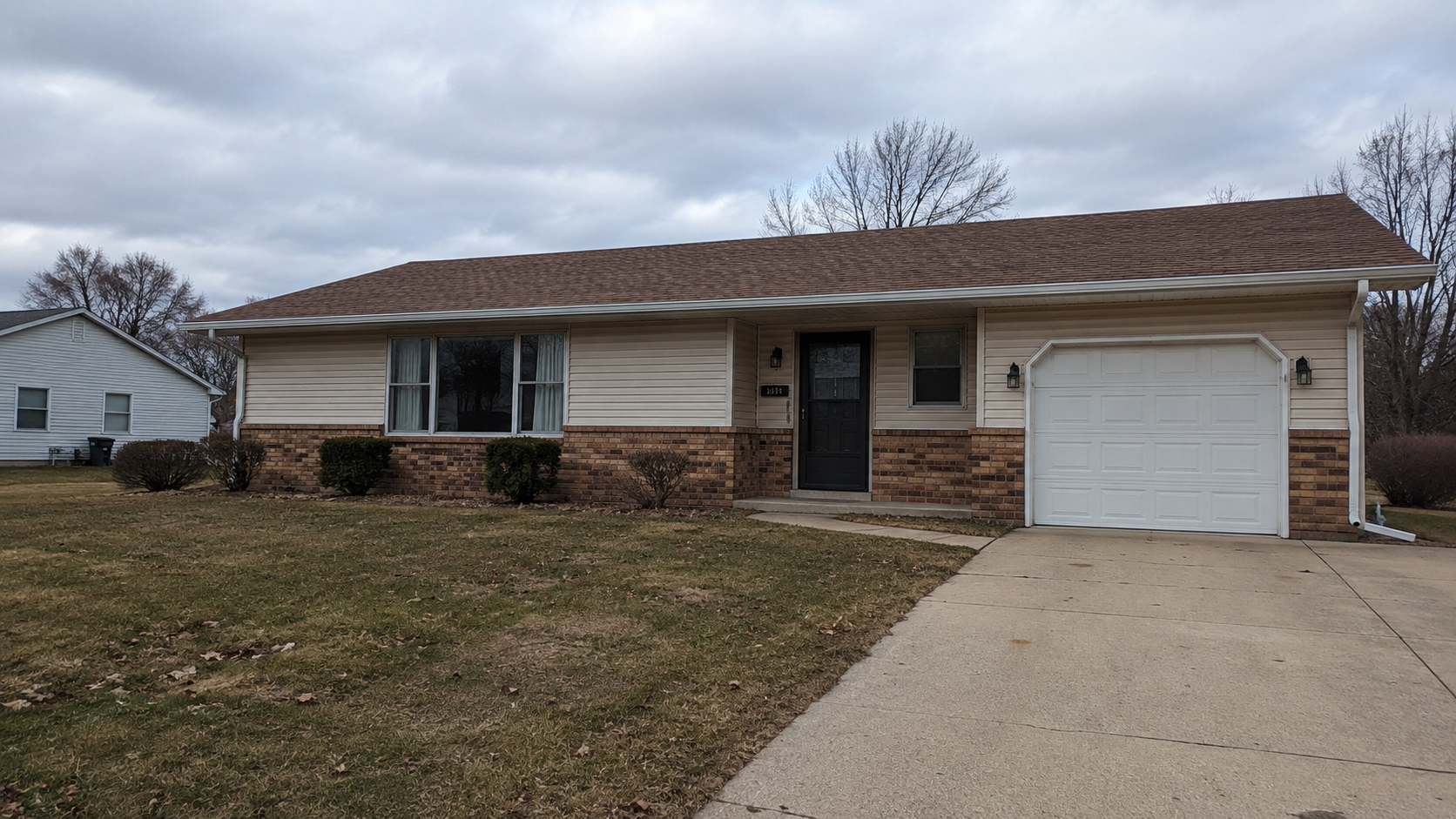
What makes a house look 1980s
The 1980s did not produce one neat house style. It produced a lot of mixed ones.
A builder might borrow a colonial front, add a big family room, attach a two-car garage, install oak kitchen cabinets, cut in a skylight, and finish the entry with brass lights and ceramic tile. Another might go contemporary — angled roofs, vertical siding, glass block, big windows, vaulted ceilings. Both are 1980s houses, because the decade shows up in the combination more than in any single style:
- Large family rooms tied to kitchens
- Front-facing garages that take over the elevation
- Oak trim, oak cabinets, oak rails, and more oak
- Brass hardware, mirrored walls, glass block, skylights, and beige flooring
That mix is why these homes can look loud even when the architecture underneath is plain.
What to keep, update, and check first in a 1980s house
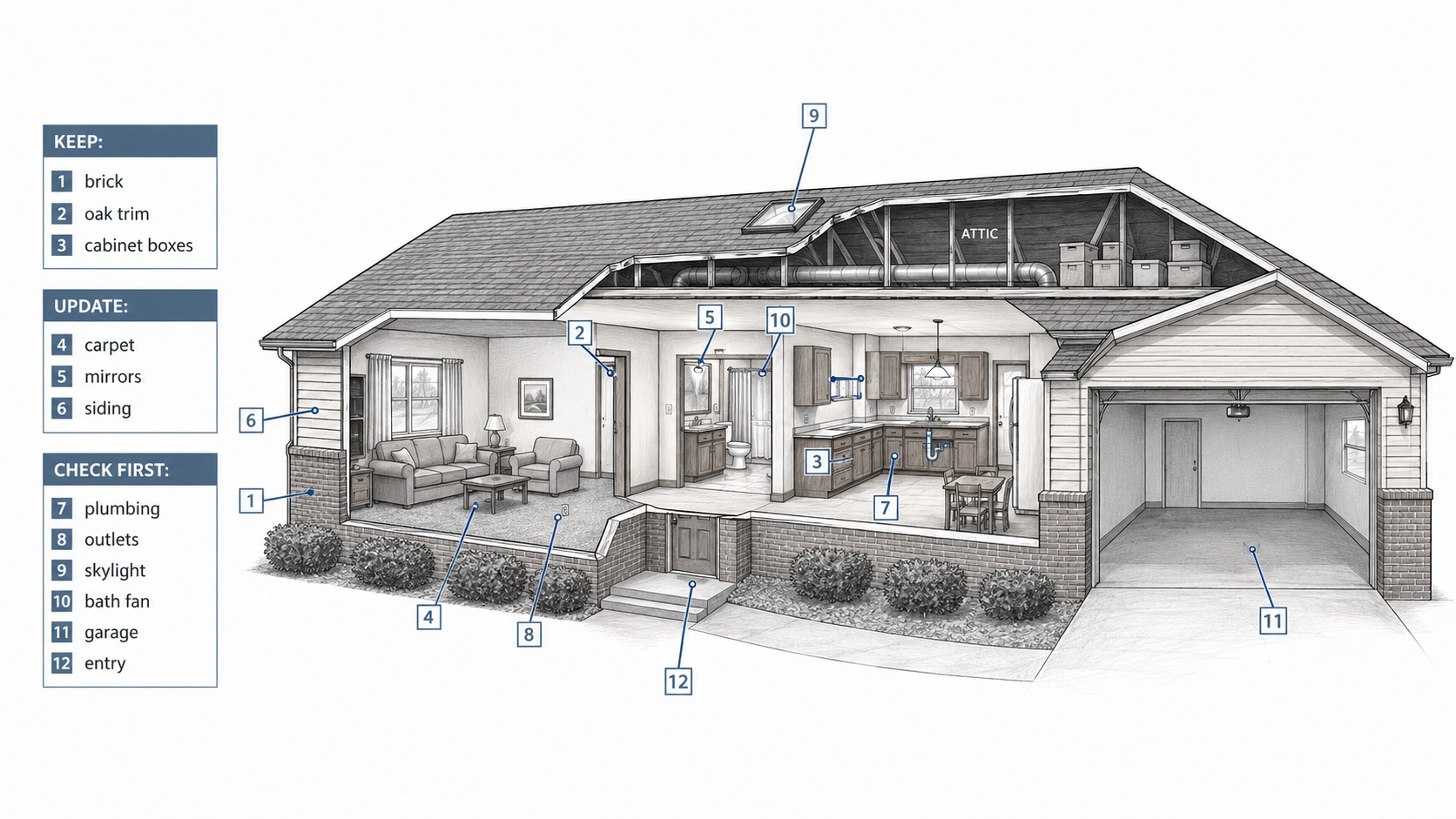
The first mistake is treating every old-looking surface the same. A brick fireplace is not the same problem as a leaking skylight. Oak cabinet doors are not the same problem as a swollen sink base. A split-level entry is not the same problem as a loose stair rail. One is style, one is repair, one is layout — and they get fixed at completely different prices.
So sort the house before you price the work.
| Keep | Update | Check first |
|---|---|---|
| Good brick, useful built-ins, vaulted rooms, strong window openings | Lighting, flooring, cabinet finish, hardware, paint, landscaping | Skylights, bath fans, plumbing, siding damage, roof leaks, electrical changes |
That one step keeps a remodel from turning into a pile of random purchases. You are not just modernizing. You are deciding what has value, what is only dated, and what could fail if it gets ignored.
What the 1980s house got right

The best thing about a 1980s house is usually space. These homes were built for families who wanted bigger kitchens, attached garages, larger bedrooms, open family rooms, and some connection to the backyard. Next to a lot of older houses, they feel less chopped up.
That does not mean every layout works. Some split entries are tight. Some kitchens are boxed in by peninsulas. Some vaulted rooms are hard to light. But the starting point is usually better than the finishes make it look, so before planning a remodel I go looking for the parts that still earn their place:
- Room size: Many 1980s living rooms, kitchens, and primary bedrooms are already generous enough.
- Light: Big windows, sliding doors, skylights, and clerestory glass can still pull their weight if they are sound.
- Flow: Kitchen, dining, and family-room connections are often easier to improve than older closed-off plans.
- Structure: Many houses from this period are ordinary wood-framed homes, which makes selective remodeling possible once the load path is understood.
The house may not need a full reinvention. It may just need the cheap-looking parts removed so the useful parts can show.
Where the 1980s look goes wrong
Oak is usually the first thing people notice, then brass, then carpet.
The problem is not one oak cabinet or one brass fixture. It is repetition. Oak cabinets, oak casing, oak doors, oak stair rails, oak vanities, oak built-ins, and oak fireplace trim can make every room feel like the same room. Brass does it too, once it lands on the hinges, the knobs, the lights, the faucets, the shower doors, and the fireplace. Then the surfaces pile on — textured ceilings, ceramic tile counters, almond switches, mauve tile, mirrored closet doors, vertical blinds, wall-to-wall carpet.
None of those are bad on their own. They are just too much together. Fixing a 1980s house usually means turning down the number of competing signals: keep the strong parts, quiet the rest.
The main 1980s house types
Start with the shape of the house before you judge the finishes. Paint colors and cabinet hardware change fast and cheap. The roofline, the garage, the stair position, and the window rhythm are what you are actually stuck with.
1980s contemporary houses
A 1980s contemporary house tends to have angles, tall glass, vertical siding, skylights, asymmetrical rooflines, and open interior volume. These houses can age well when they are cleaned up, and age badly when someone bolts on fake traditional details that fight the original shape.
Good updates keep the geometry plain. Replace rotted siding, repair bad trim, cut the number of exterior colors, fix fogged glass, keep the entry simple. Do not bury the house under farmhouse shutters, heavy stone, or decorative brackets that were never part of its logic.
1980s Colonial Revival houses
The 1980s Colonial Revival house is usually boxier and bigger than an older colonial — a centered door, symmetrical windows, shutters, a two-car garage, and a larger family room out back. The trouble is almost always scale. The shutters are too narrow for the windows. The front door looks thin. The garage carries more weight than the entry. The window spacing makes sense from inside and looks awkward from the street.
I would not start with a trendy color here. I would start with the entry and the fake trim. If the shutters do not fit the windows, take them off. If the entry is weak, give it better door proportions, real lighting, decent steps, and a path that means something.
1980s ranch houses
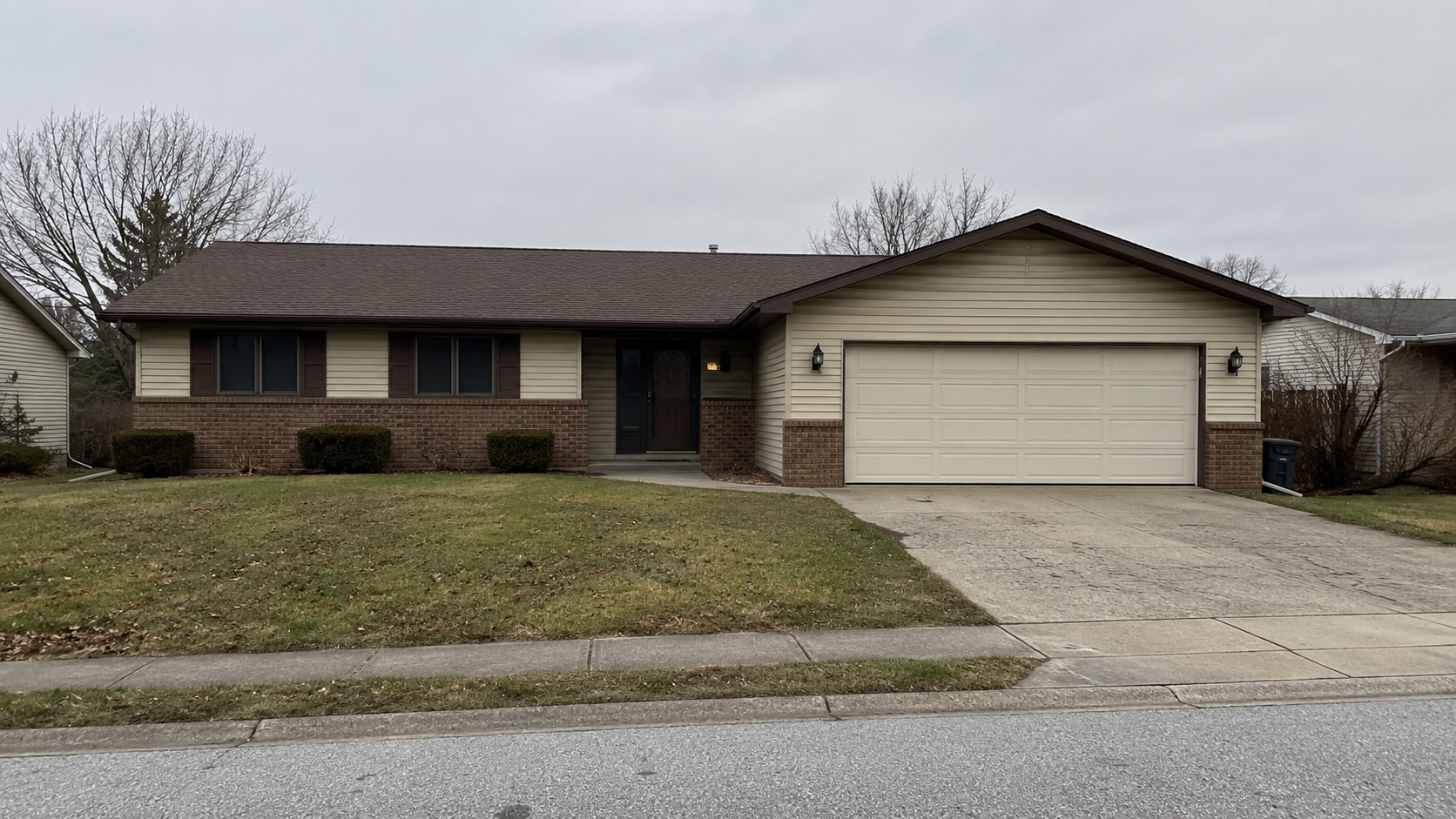
A 1980s ranch house is usually long, low, and practical — brick veneer, siding, a front garage, a sliding door to the backyard, and a family room that does most of the work. It can look flat from the street even when the plan behind it is fine.
The best updates sharpen the entry, calm the siding, improve the windows, and tie the living spaces back to the yard. If the brick is sound, working with it usually beats covering it. For deeper ranch-specific work, see raised ranch remodel.
1980s split-level houses
A split-level from the 1980s is built around short stair runs — living, sleeping, garage, and lower-level rooms separated by half-levels instead of full floors. That can be efficient, and it can also make the entry feel cramped.
The problem is rarely the split itself. It is the tight foyer, the heavy railing, the dark stairwell, a different flooring on every level, and a front door with no presence. So good split-level updates start at the entry — the rail, the lighting, the stair finish, the door, the sightline — before anyone spends money on the bigger moves.
Exterior details that date the house

A 1980s exterior usually looks dated because too many small things are trying to dress up a plain house. Fake shutters. Skinny trim. Busy siding joints. Arched glass. Decorative timbering. An oversized garage door. Random brick patches. A tiny porch light marooned on a large wall.
All of it pulls attention off the parts that matter: the entry, the garage, the roofline, the windows, and the material breaks. Before changing everything, look at what the house is actually doing from the street.
- If the garage dominates, make it quieter.
- If the entry disappears, make it stronger.
- If the siding is broken into too many shapes, simplify it.
- If the brick is good, let it anchor the house instead of fighting it.
A 1980s exterior should not be forced into a style it never had. A cleaner version of the same house almost always looks better than a costume.

The garage is usually too loud
Many 1980s houses put the garage right out front. That was practical, but it rarely did the elevation any favors.
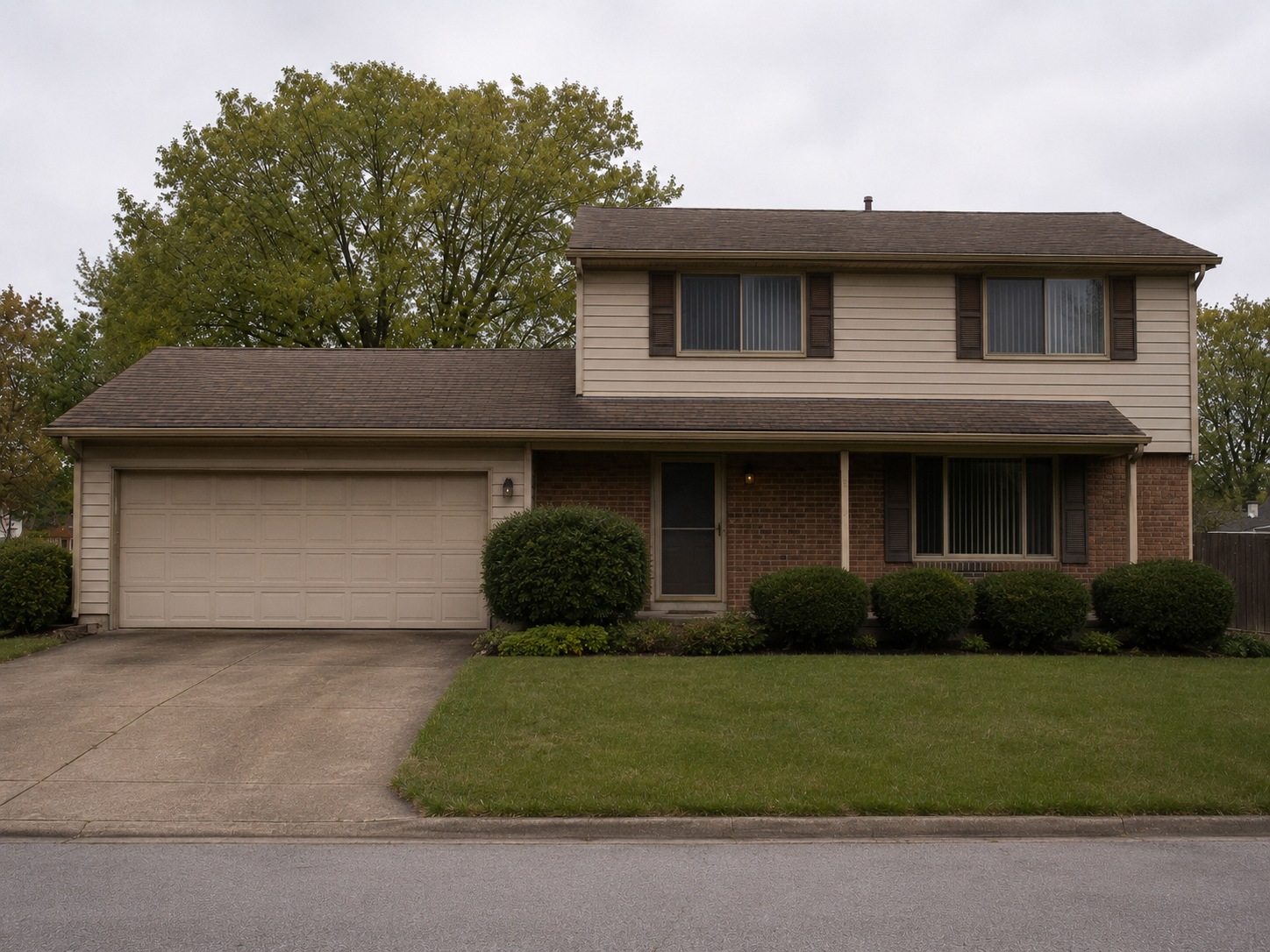
If the garage door is bright, paneled, arched, or just heavier-looking than the front door, the house reads as garage first and home second. Painting it close to the siding color helps. So does a plainer door, better trim, a stronger front path, or planting that walks the eye toward the entry.
What does not help is solving a garage-heavy front by adding more decoration — that only makes the elevation busier. Make the garage quieter and the entry clearer, and most of the problem goes away on its own.
Inside the house: what usually still works
The good interior parts are usually structural or spatial. A vaulted ceiling can still be useful. A brick fireplace can still anchor a room. A built-in can still hold things. A glass block window can still bring in light where you want privacy. A sunken living room can still work if the step is safe and the flooring is handled well.
Keep the parts that do a job, and change the parts that only announce the decade. A good 1980s interior update might keep the fireplace, simplify the mantel, swap the brass doors, change the lighting, and lay down calmer flooring — which is a very different thing from ripping the whole feature out and leaving a blank wall.
Inside the house: what usually needs work
Most 1980s interiors have a repetition problem. Too much oak. Too much brass. Too much beige. Too many ceiling fans, too many mirrored doors, too many small flooring changes between rooms.
So start where the house keeps repeating itself:
- Lighting
- Flooring
- Trim and doors
- Hardware and switches
Those four change how the whole house reads. A new sofa will not rescue a hallway full of tired carpet, brass knobs, almond switches, and orange oak casing. Do the fixed parts first; decor comes later.
Reworking a 1980s kitchen
The 1980s kitchen is usually the room that decides the house. For the cabinet, lighting, soffit, flooring, and venting decisions, work through 1980s kitchen remodel before you buy any finishes.
It may have a decent footprint. It may also have a fluorescent ceiling box, oak cabinets, laminate or tile counters, soffits, a peninsula that blocks circulation, and appliances that no longer fit their openings. Either way, do not start with cabinet color. Start with the boxes and the layout.
If the boxes are solid, the drawers run, the sink base is dry, and the clearances are decent, you can often keep the cabinets and update the room through paint or refinishing, hardware, counters, lighting, backsplash, and appliances. If the boxes are swollen, the drawers sag, the sink cabinet is damaged, or the refrigerator blocks a walkway, painting them only postpones the real repair.
Soffits are the same kind of gamble. Some are empty. Some hide ducts, wiring, or plumbing. Open one carefully before you promise yourself a clean ceiling line.
Bathrooms from the same decade
A 1980s bathroom usually looks tired because of color — mauve tile, seafoam tile, cultured marble, brass shower frames, giant mirrors, glossy light bars. But the expensive problems are behind the finish, not on it.
Check the fan first; a bath fan venting into the attic pushes moisture exactly where you do not want it. Then check the toilet flange, the floor around the tub, the vanity shutoffs, and the shower valve before you order a single tile. If the footprint works, keeping the toilet and tub near their current spots controls cost. Moving plumbing can be worth it, but it turns a finish update into a much larger job. Water damage does not care what decade the tile came from.
Skylights, windows, and light
Skylights were a big part of many 1980s houses. Some are still doing their job. Others leak, fog, overheat the room, or stain the drywall around the opening.
Do not pull a good skylight just because it looks dated — natural light may be one of the best things the house has. But do not wave off staining, failed seals, cracked drywall, or roof patches around it either. ENERGY STAR-certified windows, doors, and skylights are tested for energy performance and meant to be chosen for the right climate zone, which matters on a 1980s house because any window or skylight change moves comfort, drafts, condensation, and cooling load with it.
What to check before you start tearing out finishes
A 1980s house is not the same risk profile as a pre-1978 house, but demolition still earns some caution.
Lead-paint rules are mainly tied to pre-1978 housing, so a typical 1980s house falls after that cutoff. Older reused doors, salvage trim, additions, or uncertain painted components can still change that, though. Asbestos is a separate question. The EPA lists possible asbestos-containing materials in older building products — vinyl floor tiles, sheet-flooring backing, ceiling and floor tiles, roofing and siding products, textured paint, patching compounds — and says suspect materials should be tested by a qualified lab if they are damaged or if a renovation will disturb them.
None of that means every 1980s house has asbestos. It means you do not sand, grind, scrape, or demo unknown material just because the house feels modern enough. The rest of the checks are more ordinary:
- Bath fans that do not vent outdoors
- Old skylights with stains or failed seals
- Cabinet sink bases with swelling
- Garage doors, siding, and trim with water damage
None of those are exciting. They are the ones that keep a repair from failing six months later.
What shows up after the first weekend
1980s houses make people overconfident. The walls are drywall. The rooms are big enough. The house does not feel ancient. So the first plan becomes paint, floors, counters, lights, done.
Then the sequence starts pushing back. The fluorescent kitchen box comes down and the ceiling needs a bigger drywall repair than anyone planned. The carpet comes up and the old tile height will not meet the new flooring. The vanity comes out and the shutoff valves will not close. The half-wall opens up and it is full of outlets, ductwork, or low-voltage wiring. The skylight trim comes off and the stain is larger than it looked. I have watched a clean paint-and-floors plan turn into real drywall and electrical work the same afternoon the first ceiling came down.
That is where the budget starts moving — not because the house is bad, but because the first plan only saw the surface. Walk the project in order: ceiling, walls, floor, trim, electrical, plumbing, then finish. A 1980s house is forgiving when the work is sequenced. It gets expensive when every room is opened at random.
Keep, update, or remove
| Feature | Usually keep | Usually update | Usually remove |
|---|---|---|---|
| Brick fireplace | If it anchors the room and the masonry is sound | Mantel, lighting, doors, hearth edge | If it blocks the plan or has failed repairs |
| Oak cabinets | If boxes, drawers, and layout still work | Finish, hardware, lighting, counters | If boxes are swollen or the layout fails |
| Glass block | If privacy and light still matter | Surrounding tile, trim, wall color | If it leaks, cracks, or fights the room |
| Skylights | If newer, dry, and useful | Flashing, trim, glass, shading | If repeatedly leaking or overheating the room |
| Wall-to-wall carpet | Only in bedrooms if clean and intentional | Better carpet or hard flooring transitions | If stained, musty, loose, or in main spaces |
| Mirrored walls | Rarely, as one controlled feature | Frame, reduce, or relocate | If they dominate dining rooms, halls, or bedrooms |
How to update the house without erasing it
The best 1980s updates do not hide the house. They edit it.
Keep the volume. Keep the light. Keep the useful floor plan. Keep one strong feature if it earns its place. Then quiet down the things that repeat too loudly — fewer flooring changes, better lighting, less oak where it covers every surface, new metal where the brass looks thin and shiny, siding repaired before any paint trend gets chased, and an entry that finally beats the garage.
A 1980s house does not need to become a farmhouse, a mid-century house, or a white-box modern remodel. It usually just needs a cleaner version of itself.
FAQ
What are common 1980s house styles?
Common 1980s house styles include contemporary homes, split-levels, ranch houses, Colonial Revival homes, and builder homes that mix traditional fronts with larger family-room layouts.
What makes a house look like the 1980s?
Oak trim, brass fixtures, mirrored walls, beige carpet, skylights, glass block, textured ceilings, front-facing garages, and mixed brick-and-siding exteriors are common clues.
Are 1980s houses worth updating?
Yes, if the layout, roof, structure, windows, and systems are in reasonable shape. Many have good room sizes and practical family layouts. The mistake is spending money on finishes before checking hidden issues.
Should I paint 1980s oak cabinets?
Only if the cabinet boxes are solid and the layout works. Paint will not fix swollen sink bases, bad drawers, poor appliance openings, or a kitchen that blocks circulation.
Should I keep a 1980s brick fireplace?
Often, yes. A sound brick fireplace can anchor the room. Try improving the mantel, lighting, hearth edge, and surrounding finishes before removing or painting it.
Are 1980s skylights bad?
Not automatically. A dry, well-placed skylight can be one of the best features in the house. Stains, failed seals, cracked drywall, and bad flashing are the warning signs.
What is the fastest way to make a 1980s interior feel better?
Fix lighting first, then flooring continuity, trim, hardware, and switches. Furniture alone will not overcome tired fixed finishes.
Should I remove a sunken living room?
Not always. If the step is safe and the room works, keep it. Better flooring, cleaner rails, and improved lighting may be enough.
What should I fix first on a 1980s exterior?
Start with the entry and garage balance. If the garage dominates, quiet it down. If the front door disappears, strengthen the path, lighting, door, and trim.
Is 1980s style coming back?
Parts of it are. Strong geometry, glass block, warm wood, brick, built-ins, and bold color can work again. The full time-capsule look is harder to live with.
Read This Next
Read how to update a 1980s house exterior if the outside looks garage-heavy, busy, or stuck under old siding and trim.
Use 1970s house style if the house has earlier split-level, ranch, or warm wood features mixed into the remodel.
Read 1960s house style if you are comparing older ranches, split-levels, brick exteriors, and lower-ceiling layouts.
Use raised ranch remodel for deeper work on split entries, lower levels, stairs, and ranch-style updates.