
Home
Studying it · Building it · Renovating it — Free since 2008

Main navigation

  • Home
  • Architecture
  • Construction
  • Renovation
  • Materials
  • Interiors
  • Calculators

Breadcrumb

  1. Home
  2. European Architecture History: Did We Steal Our Architecture?

European Architecture History: Did We Steal Our Architecture?

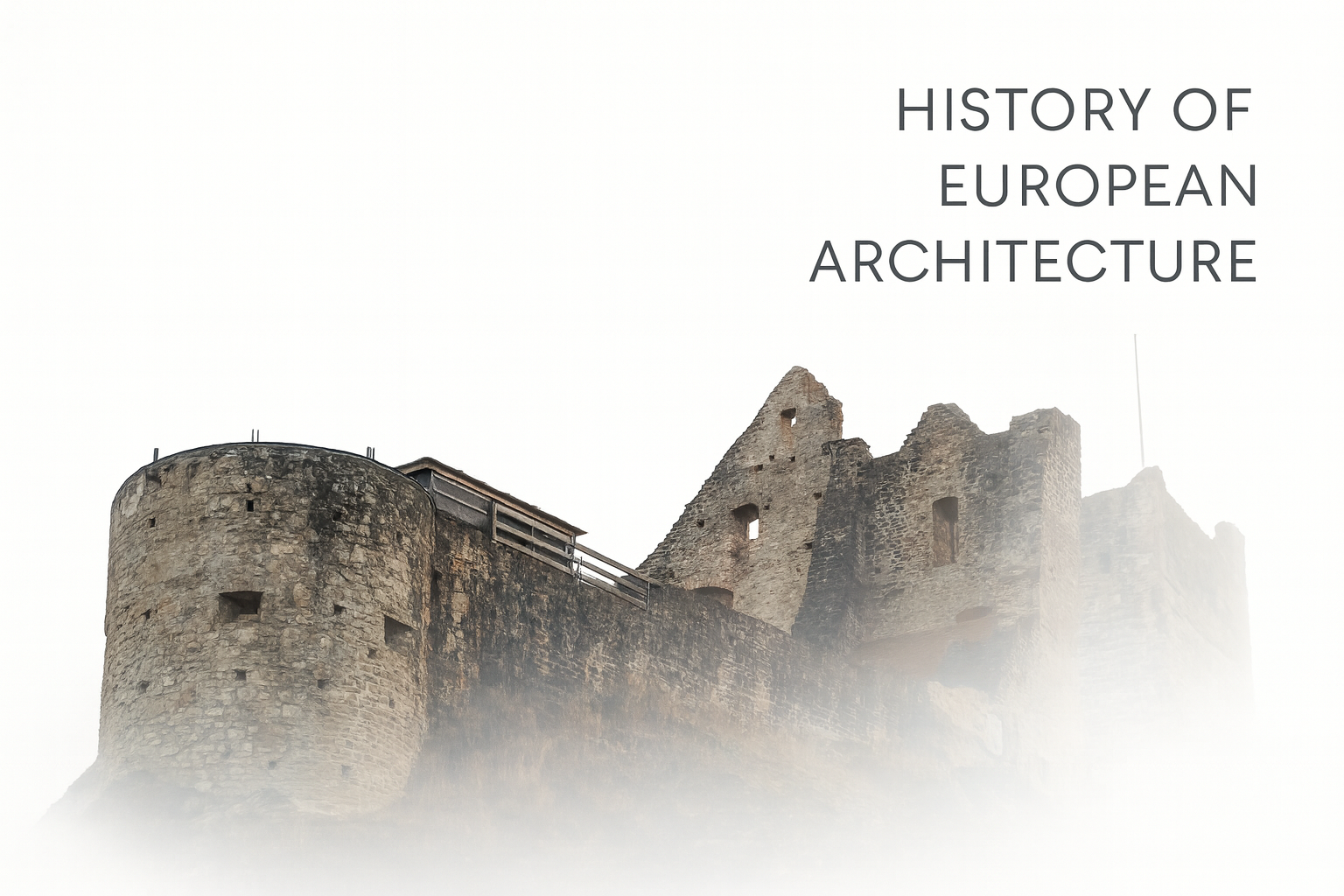
Historic European stone castle.

What Europe Took, Changed, and Perfected: How We Built Everything We Know

Where Modern Design Really Began
Every major European style starts with someone else’s idea. The Greeks borrowed from Egypt. Rome copied Greece. The Renaissance dug up Rome. Modernism pulled structure and light tricks, and much more, from Islamic Spain. Nothing in architecture grows alone. It’s all trade, imitation, and argument built in stone.

If you walk through Paris, Florence, or London, you’re looking at a long relay: ideas passed, tweaked, and rebuilt across borders. Corinthian capitals carved softer. Domes stretched taller. Vaults turned into factories. Europe’s story isn’t invention in isolation. It’s how copying became craft, and how influence turned into identity.

What we call “European architecture” is really a conversation that never stopped. Every era claimed it was new, but each one stood on another’s foundations. That’s not theft. That’s architecture.


How Europe’s architecture grew from borrowed ideas to world-shaping design movements.

A real look at European Architecture History: who built what, who copied who, and why it still matters.


How Borrowing Built Europe
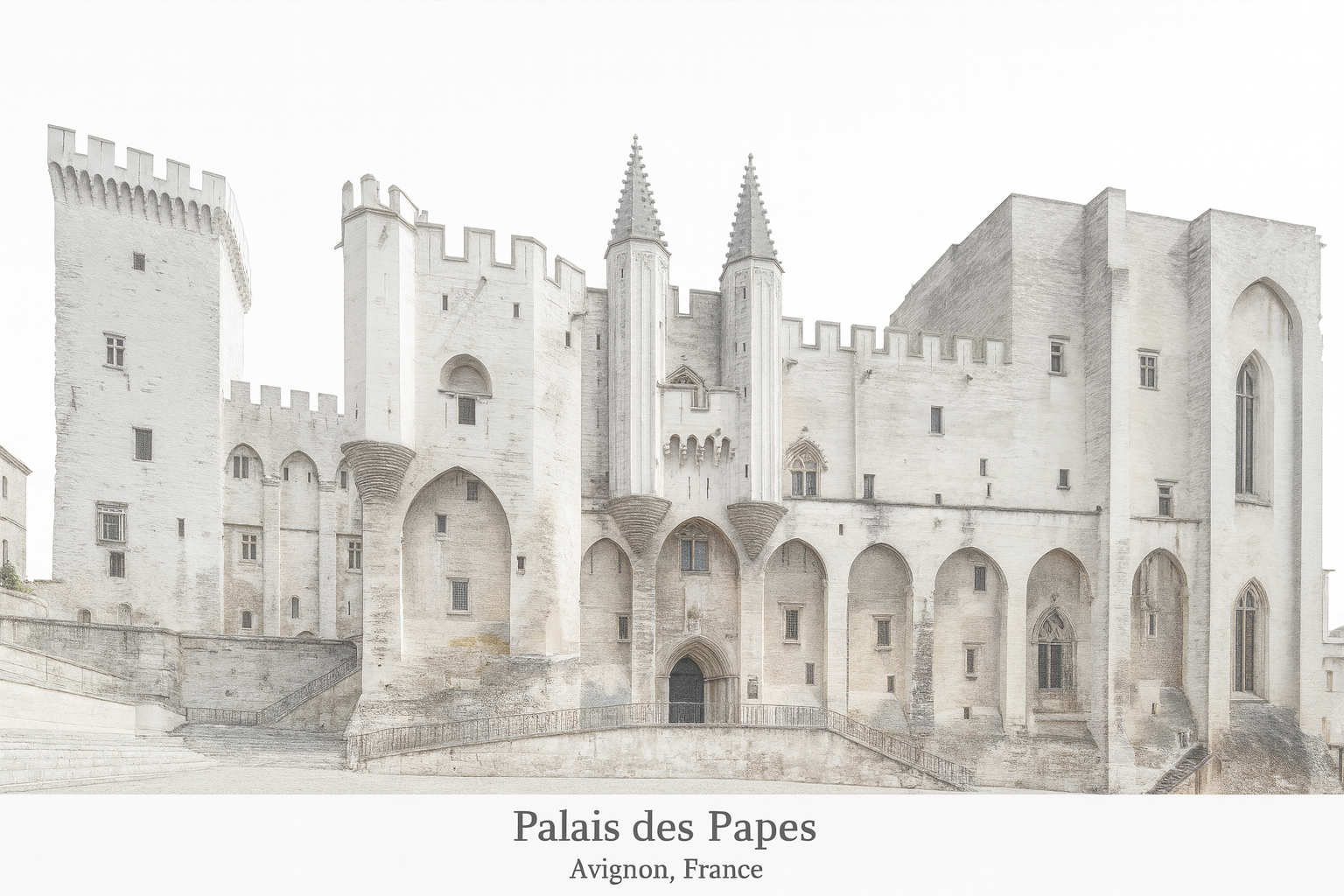
The Palais des Papes in Avignon, France: a monumental Gothic palace and symbol of papal power, shown from a clear perspective.

I teach architecture, but I learn most when I’m on my feet. On a recent sprint through Europe, I made myself a rule: don’t lecture, just look. On site, the story reads different. You see the seams. Blocks meeting at strange angles. Patterns that don’t belong but somehow work. You feel the edits layered in over centuries. It’s obvious up close—Europe didn’t invent in a vacuum; it assembled from everywhere, refined, then exported back as “style.”

Think of Europe as a studio pin-up wall. Fragments from across the Mediterranean, North Africa, and Asia get taped up, traced, and re-worked until a new language forms. If you need a quick primer on the sweep before we go deep, this European timeline overview is a good companion, and for the wider context beyond Europe, this compressed world history of styles keeps you oriented, and don't miss Traditional Homes Explained: The Details That Make Them Special.

MUST READ

Architecture: Form, Space, and Order – Francis D.K. Ching
The clearest diagrams in the field. When you’re standing in front of a façade wondering why it “clicks,” Ching’s sections and proportions explain the feeling.


From Egypt to Greece to Rome: The First Remix
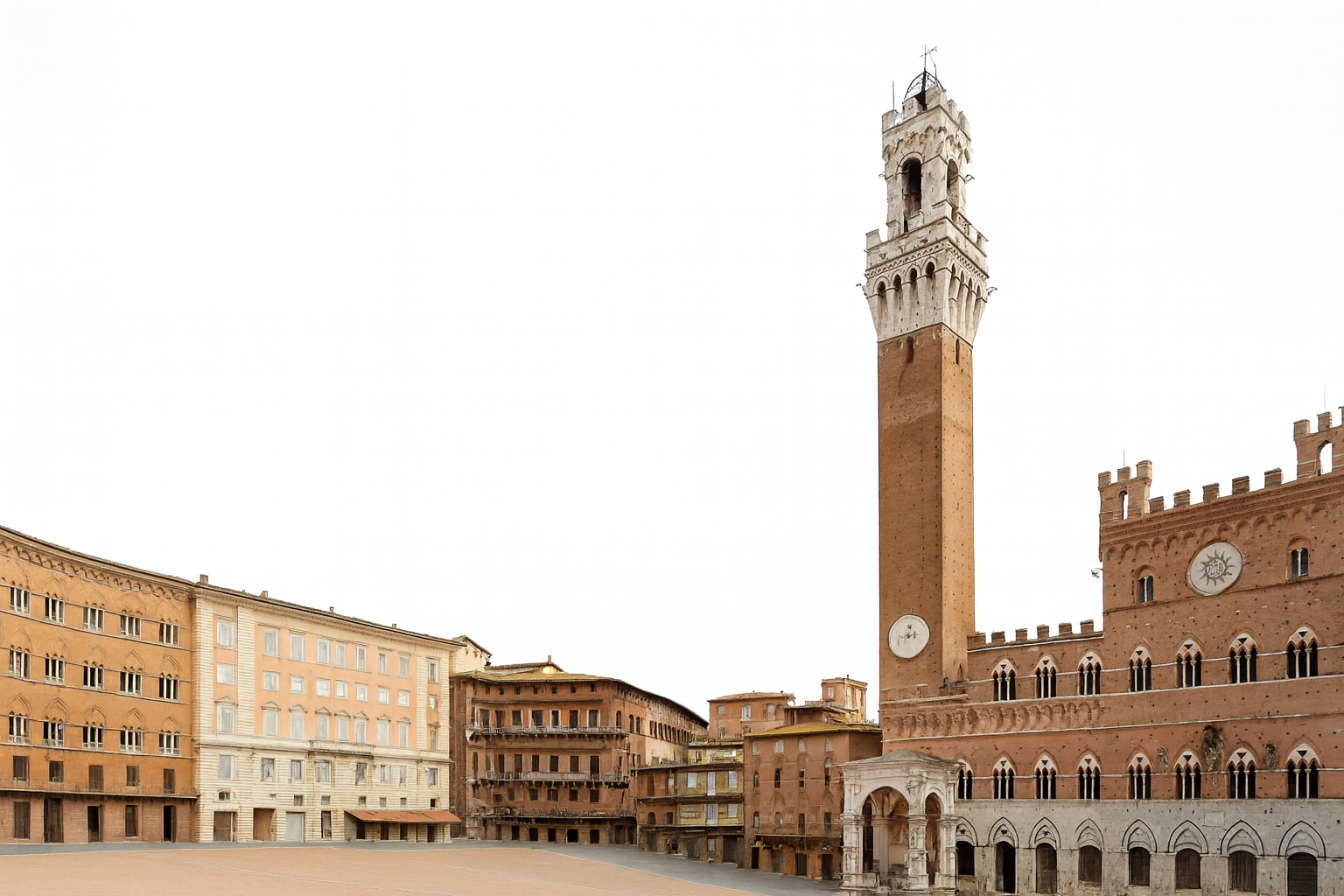
Palazzo Pubblico in Siena, Italy; one of the most famous examples of medieval urban architecture, showing balanced civic design and historical city planning principles.

On paper, Greece is the “start.” In the street, you see the earlier DNA. Stacked stone logic, axial procession, solar thinking—ideas moving north from the Nile and east from Mesopotamia long before any column order had a name. Greece takes massive stone grammar and edits it down to human rhythm—span, column, beam—in a way that still teaches us how to draw force lines.

Rome then copies the clarity and changes the tool set: arches, vaults, concrete, infrastructure. What looks like “style” is actually logistics. Roads, water, courts, markets—an operating system for daily life. If you want a quick dive on how that engine worked, read the Roman build logic and match it against the classical playbook. It’s less about columns and more about systems.
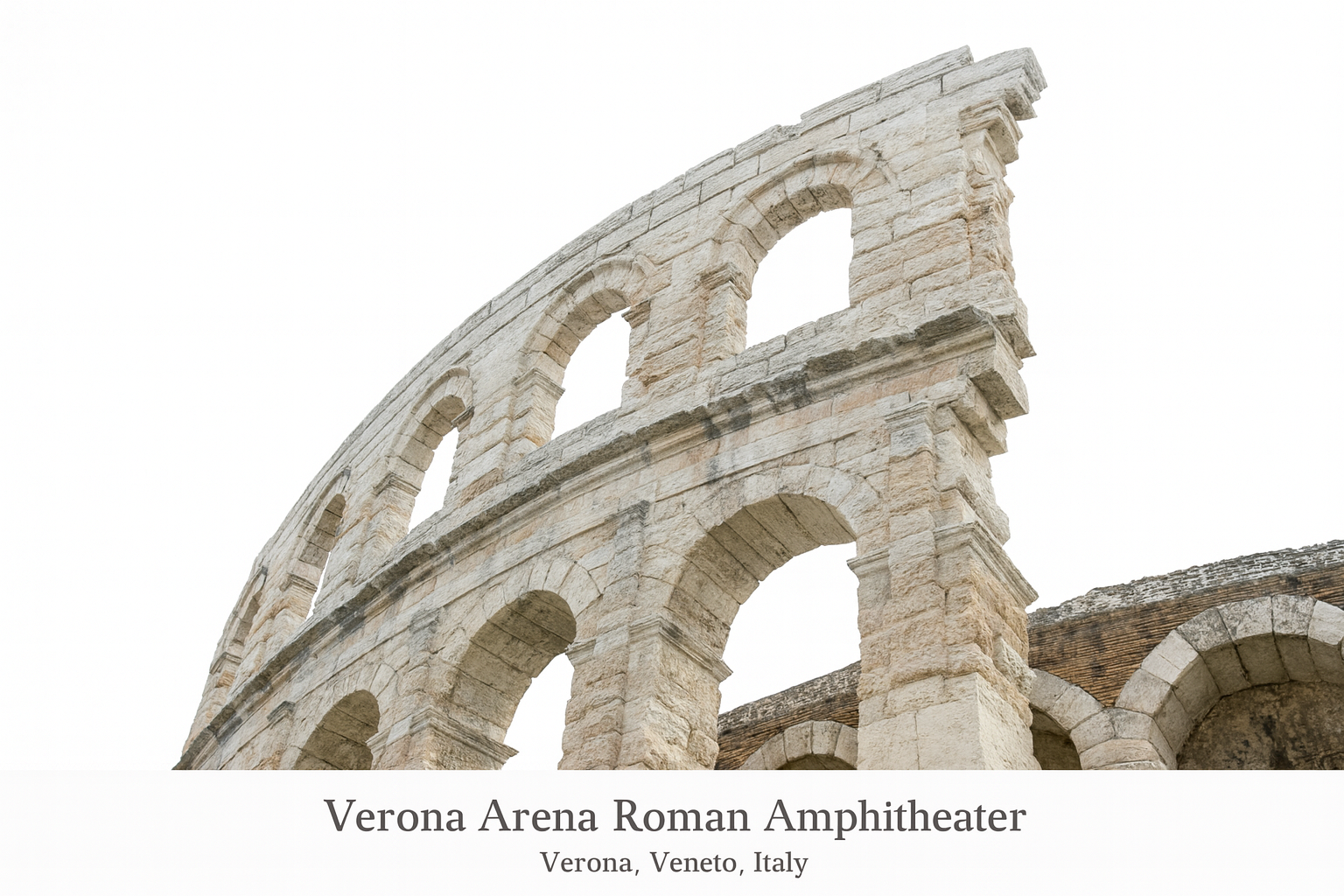
The Verona Arena Roman Amphitheater in Verona, Veneto, Italy, a preserved Roman structure known for its limestone arches and monumental design, captured from a new perspective.

Field note: in northern Italy I kept seeing colonnades used as climate tools more than decoration—shade, drip lines, wind breaks. That functional streak is the thread Europe never dropped: copy the look, but keep the purpose.


Islamic Light and Logic: The Mediterranean Upload

Elegant Islamic wall carvings.

Europe’s biggest upgrade came across the water. Geometry that cools air. Screens that filter light. Courtyard massing that stabilizes temperature. I first felt it in southern Spain, where shade, water, and proportion work like passive engineering more than ornament. The lesson wasn’t just aesthetics; it was problem-solving baked into form.

Three big transfers shaped Europe’s “new” languages:

  • Light control as structure. Screens, lattices, layered façades. They read as pattern, but they perform as climate devices. See historical primers on Islamic architecture’s systems view and the focused look at mashrabiya design.
  • Geometry as load path. Ribs, webs, interlocking bays—drawn first as math, then realized as space. That logic gave Europe confidence to go taller and lighter without piling on mass.
  • Urban cool. Narrow streets, layered thresholds, courtyards. Microclimate as an urban plan, not a garnish. Europe copies the comfort and wraps it in its own stone and brick.

Field note: a stone screen along a sunny plaza in Lisbon delivered soft, usable shade the entire afternoon. It wasn’t “decorative”—it was the reason the space worked. That mindset traveled far.

FIELD PICK

Roman Architecture – Frank Sear
Use it to see how “borrowed ideas” became networks and public life. Pairs well with field sketches.


Gothic and Renaissance Were Rewrites, Not Revolutions

Strip the labels and look at the moves. What we call “breakthroughs” were targeted edits to earlier playbooks:

  • Vertical ambition from structural clarity. Lighter webs, more daylight, tighter joints. You’re looking at math and material catching up to desire.
  • Human proportion reintroduced. The Renaissance didn’t just “rediscover” classical forms; it re-proportioned them for new briefs: urban palaces, universities, civic halls.

If you want a clean baseline before you walk a historic quarter, this Renaissance guide and a quick refresher on high-detail stone craft help you see the tweaks, not just the trims.

Field note: in a small Tuscan town, a modest civic hall used a quiet rhythm of bays and a shaded loggia. It read “classical,” but the real trick was thermal comfort and eye-level scale. Again: function first, form follows with manners.


From Baroque Showmanship to Neoclassical Grammar
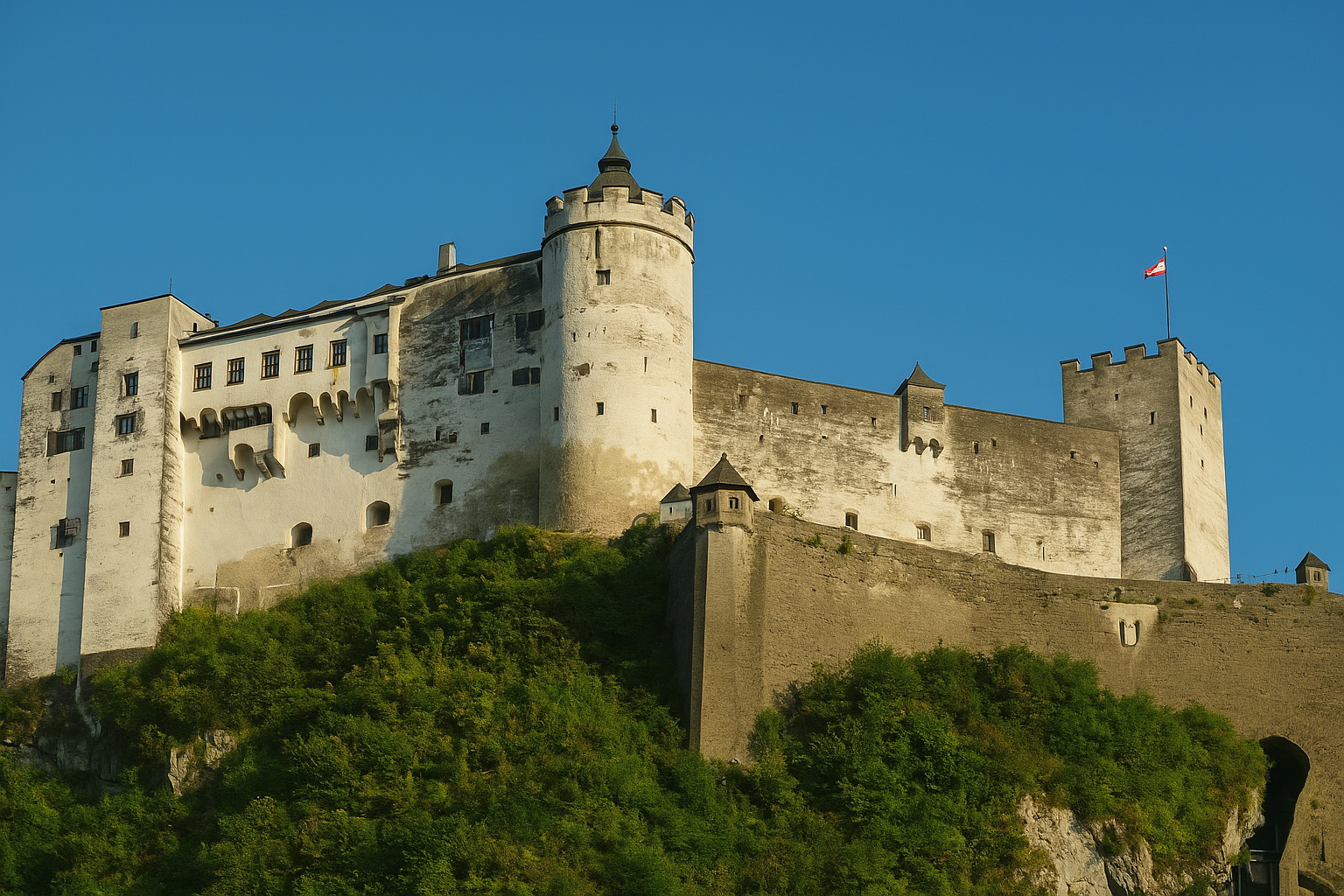
Hohensalzburg Fortress in Salzburg, Austria, photographed from a new angle showcasing its medieval walls and towers in vivid detail.

Europe then does two opposite things at once: turns architecture into theater and also into grammar. Curves, sequences, and light tricks on one hand; restraint, clarity, and civics on the other. Both are edits of the same sources: just tuned for different politics and publics.

For a fast orientation, skim the Baroque explainer and the Victorian survey. You’ll notice familiar tools placed into new programs: courts become rail hubs; courtyards become galleries; façades carry services behind them.

Field note: in Potsdam I traced a façade that looked purely ornamental until a local pointed out the water management built into cornices and ledges. The “show” was doing work.

MUST READ

A Global History of Architecture – Ching, Jarzombek, Prakash
Keeps Europe in conversation with the rest of the world so you can see the exchanges, not just the trophies.


Industrial to Modern: Material Speeds Up the Conversation

Steel, glass, concrete: suddenly the conversation goes wide-band. You can span farther, light deeper, build faster. But the smartest Modern work still borrows older climate sense: deep shade, cross-ventilation, thermal mass. Europe’s “new” boxes kept a lot of “old” wisdom—just hidden in section instead of carved on the front.

When you read the origin story of Modern architecture alongside the metal-in-architecture brief, the through-line is obvious: performance sets the form, not ideology.

Field note: in northern Europe, older brick mills converted to co-working keep their original thick walls and tall windows. The retrofit is a climate win wrapped as heritage. Europe didn’t discard its past, it wired it for present use.


Field Notes: Walking the Borrowed City

Lisbon. Stepped plazas, stone screens, and wind channels. Hot sun, soft light. You can feel Atlantic air being harvested, not fought. That lesson traveled inland and shows up in arcades and galleries across the continent.

Florence. Stone streets taught to behave: tight shade, sudden pockets of space, façades that signal order without shouting. When people say “proportion,” this is what they mean: comfort before composition.

Paris. A grid that isn’t a grid. Boulevards as air pipes. Corners choreographed. The city reads like a section cut—layers of time compacted into one continuous walk.

For a clean sweep of how these edits accumulate, this eras-at-a-glance guide helps you connect street experience to long timelines.


What Europe Took, Changed, and Perfected (A Quick Map)

European architecture with modern and classical design balance.
  • Solar orientation & massing → adapted from older desert and Mediterranean know-how; perfected into urban block typologies.
  • Courtyard logic → comfort engine first, then social space; recast as cloisters, palazzi, and modern atria.
  • Screen and shade → from lattice and carved stone to awnings and double skins; performance hidden in “style.”
  • Geometry as structure → proportional systems travel from math texts into ribs, webs, and trusses.
  • Infrastructure urbanism → routes, water, and markets drawn together; the city as the project, not just the building.

Want more on the cross-civilization current behind these moves? Start with this overview of Islamic architecture’s global impact and the comparison piece on ancient systems across regions.


What Architects Should Do With This Now

  1. Borrow openly, perform honestly. Use precedents for their function, not their look.
  2. Start with climate and street. If the old solution solved heat, wind, and water, steal the principle and update the details.
  3. Design the city, not just the object. Europe’s best work treats blocks, corners, and voids as one composition.
  4. Draw the section before the render. Daylight, air, and structure should read in cut. The façade will follow.
  5. Keep a humble palette. Stone, brick, timber, metal. Iterate on junctions, not gimmicks. If you need a primer on color strategy that respects material, see this color-in-architecture guide.

MUST READ

Ten Books on Architecture – Vitruvius
Dry in places, gold in others. Proportion, materials, site—read it as field notes from two millennia ago.


Room-by-Room: Borrowed Moves You Can Use

Streets and Entries

Shallow thresholds, covered edges, and short wind-breaks make microclimates. Copy the principle: create a temperature pause at every door.

See how stone arcades shape comfort here: using color and shade.

Courtyards and Light Wells

Think of them as lungs. Pull air across water or stone mass; push out heat at the top. Europe learned that trick and turned it into urban typologies.

Compare ancient climate craft across regions in this materials timeline and performance brief.

Façades and Screens

Layered façades are performance first, pattern second. A modern double skin is just a metal mashrabiya with ducting.

Start with precedent logic: mashrabiya essentials.

Rooms and Proportion

Use ratios to place openings and mass, but test with daylight and sound. Europe’s “beauty” holds because comfort comes first.

FIELD PICK

The Seventy Wonders of the Ancient World – Chris Scarre
Less theory, more “how they did it.” Great for seeing technique before style.


Europe in Nine Buildings: The Real Story of Design Power

European Architecture Timeline

1. Ancient Rome – The Politics of Space
Forget temples. The real story starts in Rome’s forums, baths, and amphitheaters. The Colosseum wasn’t only for entertainment. It was a lesson in hierarchy, flow, and concrete innovation. The Baths of Caracalla showed how to move thousands through light, water, and stone. These buildings turned engineering into civic life. Every modern stadium and public plaza still borrows that logic.

2. Renaissance Italy – Architecture Learns to Behave
When Florence’s merchants replaced bishops as patrons, architecture changed tone. The Palazzo Medici Riccardi was quiet outside but ordered inside. Proportion replaced preaching. The Palazzo Pitti scaled that calm into confidence. These palaces taught how control, repetition, and restraint could project power. Students should study how those walls feel heavy yet precise.

3. Baroque Courts – Architecture as Control
Monarchs took the church’s stagecraft and made it political. Versailles, Schönbrunn, and Madrid’s Royal Palace used light and symmetry to choreograph obedience. Corridors became instruments of power. Each turn and threshold was deliberate. The lesson is still useful: people follow order when a plan leads them with rhythm.

4. Industrial Europe – Machines Change the Room
When iron and glass arrived, everything opened. The Crystal Palace in London made prefabrication beautiful. Train stations like St. Pancras and Gare du Nord became cathedrals of movement. These were the first buildings where structure itself was spectacle. Students should study how clarity of construction became a kind of ornament.

5. The Beaux-Arts Age – Civic Order and Confidence
By the late 1800s, Europe wanted visual order. Paris under Haussmann, Vienna’s Ringstrasse, and buildings like the Paris Opera showed how geometry, sequence, and ceremony could guide entire cities. The Opera’s staircase taught that architecture could stage public life without religion or royalty. It is still one of the best examples of plan as performance.

6. Modernism – When Architects Claimed the Future
The early 1900s swept away decoration. The Bauhaus in Dessau, the Villa Savoye near Paris, and the Barcelona Pavilion all treated structure and light as design language. The Villa Tugendhat in Brno remains a masterclass in balance between machine precision and human comfort. Every student should learn how Mies van der Rohe used framing, glass, and proportion to control feeling without ornament.

7. Mid-Century Europe – Concrete, Honesty, and Need
After the war, the focus shifted from beauty to survival. Cities needed homes fast. The Unité d’Habitation in Marseille showed how to stack private and public life into one structure. London’s Barbican and Eastern Europe’s housing estates carried that lesson in rough concrete. The honesty of those buildings lies in what they don’t hide.

8. Late 20th to Now – Identity and Recovery
When steel and glass became ordinary, meaning had to come from experience. The Centre Pompidou in Paris exposed its structure and systems. The Guggenheim Bilbao turned form into economic revival. The Oslo Opera House invited people to walk on the roof and own the building with their feet. Mies’s Neue Nationalgalerie in Berlin remains a calm reminder of restraint and precision.

9. The Present – Buildings That Breathe and Adapt
Today the best European work focuses on systems, reuse, and social purpose. Hybrid timber towers in Vienna, passive office blocks in Scandinavia, adaptive reuse in Berlin. London’s King’s Cross redevelopment and Copenhagen’s CopenHill waste plant show how architecture now earns its beauty through performance, not polish.

What Students Should Learn From It

The thread running through European architecture is control, adaptation, and exchange. Each generation inherited ideas and reworked them. From Rome’s public order to Florence’s proportion, from Paris’s ceremony to Bilbao’s spectacle, the same questions keep returning.

How do we shape behavior through space?
How do we show power without decoration?
How do we make ideas survive material change?

That’s what every studio project should test. Draw plans that move people clearly. Sections that explain structure. Details that show care. The buildings above are not relics. They are your first teachers.


So, Did We Steal Our Architecture?

We borrowed, we learned, we edited, and we built better for our place and time. Europe’s strength isn’t purity—it’s synthesis. If there’s one takeaway from walking the cities: copy the logic, not the look. Solve the real problem at hand—light, heat, span, sound—and let the form show the solution. That’s how the Mediterranean became a classroom and Europe became a studio.

If you want the bigger mosaic, zoom out with this eras overview and keep checking your on-site notes against the global currents in world architecture history. The conversation never stopped. Neither should we.


FAQ

Questions I Get From Students

Is European architecture original? Original in the way jazz is original—riffing, quoting, pushing. The value is in the edit and the execution.

Did Europe “steal” from the Islamic world? Europe learned aggressively from it—light, math, climate tools—and then naturalized those moves. That exchange is the heart of architectural progress.

Why does everything still feel cohesive? Materials, climate logic, and urban grain tie it together. Stone and brick help; so does drawing to human scale.

What should I look for on site? Joints, shade lines, drain paths, and how a corner turns. The small decisions reveal the real design.


Further Reading and Internal Guides

  • Why architectural history matters for practice
  • Baroque explained in plain language
  • Islamic architecture’s global impact
  • What actually started Modern architecture

MUST READ

Modern Architecture Since 1900 – William J.R. Curtis
A steady map from early experiments to present day—helps you file what you see on the street.

Mid-century modern house exterior in Palm Springs with clean lines, flat roof, and expansive glass windows.​
1950s Houses: What They Are, What Works, What Doesn’t
Ranch house kitchen renovation with older cabinets, exposed wall areas, rough-in work, and protective floor covering.
Ranch House Kitchen Layout Problems and Better Fixes
Aluminum window frame overview showing glazing, thermal break, multi-chamber frame, slim sightlines, finishes, and key considerations.
Aluminum Window Frames: Pros, Cons, and Where They Make Sense
Architecture graduate studying drawings, models, and exam materials in a studio workspace.
How to Become a Licensed Architect: School, Hours, and Exams
Installed crawl space vapor barrier with taped seams, wall turn-up, and wrapped piers.
Cost to Install a Crawl Space Vapor Barrier: Where the Money Goes
Modern dark A-frame cabin with a metal roof and side wing set in a pine forest.
A-Frame Tiny Houses: What the Triangle Gets Right and What It Steals
King and jack stud framing diagram showing header, rough sill, and bottom plate.
King and Jack Stud Framing: What They Do and Where They Go

Get practical architecture and renovation guides. No spam. Just useful project planning, design, cost, and construction advice.

ArchitectureCourses.org

Practical architecture, construction, and renovation guides for real projects.

Explore

  • Architecture
  • Construction
  • Renovation
  • Materials
  • Interiors
  • Reviews
  • Calculators

Company

  • Home
  • About
  • Privacy Policy

© 2026 ArchitectureCourses.org. All rights reserved.

As an Amazon Associate, we earn from qualifying purchases at no extra cost to you.