

DIY Triple Roll-Away Nest Box for Backyard Chickens
Step-by-Step: Build a 3-Box Chicken Nest That Collects Eggs for You
Plans for a Durable 3-Hen Roll-Away Nesting BoxStep-by-step guide to building a durable 3-box chicken nest that keeps eggs clean, protected, and easy to collect.
Want fewer broken eggs? This 3-compartment roll-away nesting box design is easy to build and made to keep hens happy and eggs safe.
Best Design for a 3-Compartment Egg-Laying Nest Box (with Egg Tray)
Triple Chicken Nest Box with Roll-Out Trays: Build It Yourself

Here’s a simple, step-by-step guide to build a 3-compartment roll-away chicken nest box like the one shown in the image above:
Materials You’ll Need
-
Galvanized metal sheets or plywood (for frame and walls)
-
Plastic nesting trays or food-safe bins (for egg collection)
-
Smooth surface (PVC, metal, or laminate) for roll-away slope
-
Hinges and screws (preferably stainless steel)
-
Perforated flooring or mesh (optional, for airflow/drainage)
-
Optional handle or grip insert (for egg basket)
-
Basic tools: saw, drill, screwdriver, tape measure
Top Roll Away Chicken Nest Boxes
Each of these nest boxes is designed to keep eggs clean, reduce breakage, and make your daily egg collection easier—whether you’ve got 3 hens or 30.
1. 6-Compartment Green Metal Nesting Box
2. ASDJAKZP Roll-Out Nest Box with Perch
Step-by-Step Build Instructions
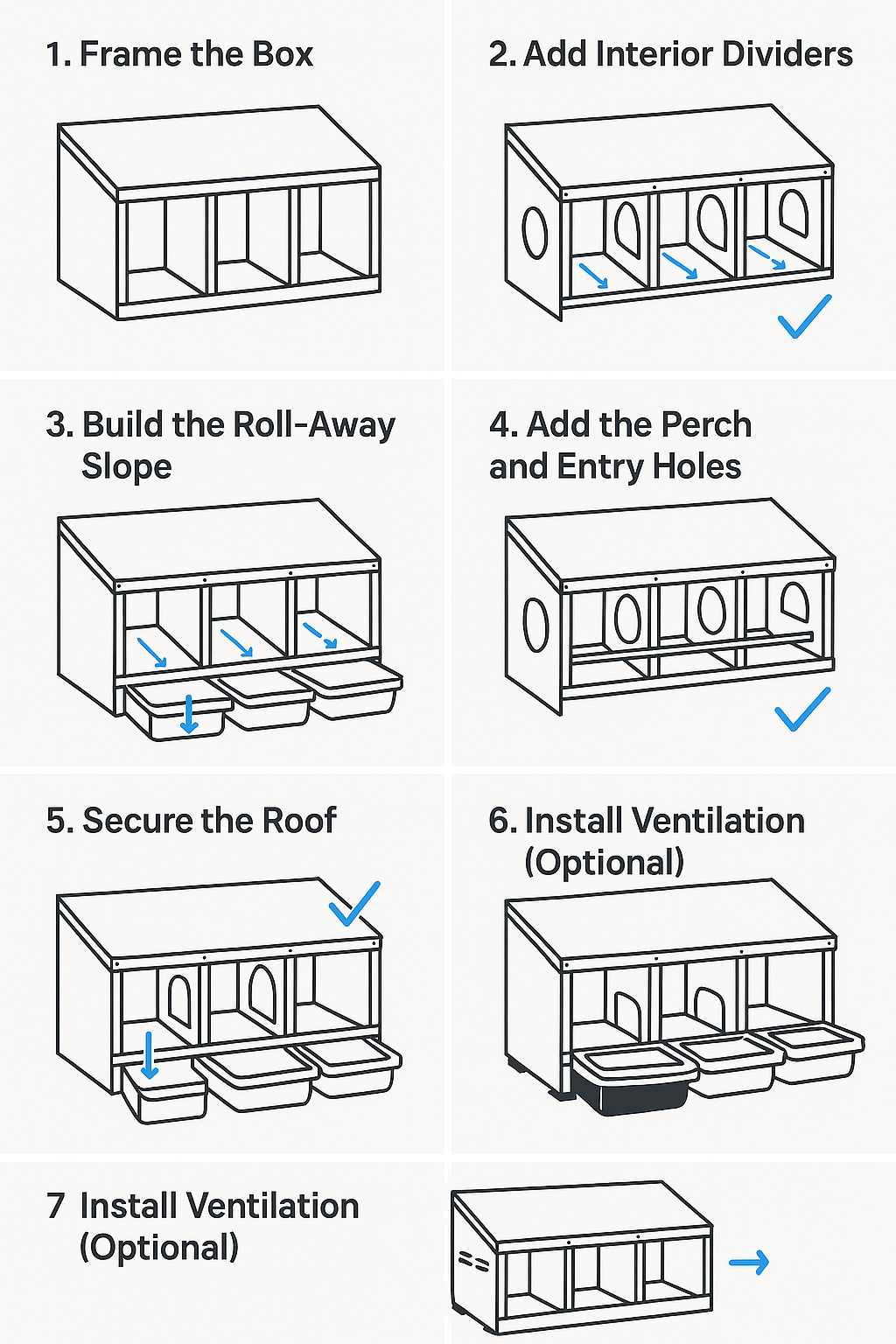
Step 1: Frame the Box
-
Cut your top, sides, and base panels from galvanized metal or plywood.
-
Assemble the outer shell using screws. Keep it rectangular and slightly sloped from back to front.
Step 2: Add Interior Dividers
-
Measure and add 2 dividers to form 3 separate compartments.
-
Space evenly and attach securely to the base and top.
Step 3: Build the Roll-Away Slope
-
Cut a smooth sloped base for each compartment (approx. 5–7° angle).
-
Ensure the eggs roll gently toward the front without hitting walls.
-
Fasten the slope to the base panel using screws or adhesive.
Step 4: Fit the Collection Trays
-
Place shallow trays or bins under the slope (like the egg basket shown).
-
Ensure each bin is easily removable and covered with a lid if needed (as seen on 2 trays in the image).
Step 5: Add the Perch and Entry Holes
-
Create entry openings with rounded edges at the front.
-
Add a small perch ledge or lip (optional) to encourage hens to enter.
Step 6: Secure the Roof
-
Attach the slanted roof panel to prevent roosting and protect from rain.
-
Keep the roof removable or hinged for easy cleaning access.
Step 7: Install Ventilation (Optional)
-
Cut small vent holes on the sides for airflow.
-
Cover with mesh to prevent predators from entering.
Clean Egg Collection Made Easy: DIY 3-Compartment Nest Box
Pro Tips
-
Use lightweight but strong plastic for egg trays to make cleaning easier.
-
Add a removable partition if you want to turn a box into storage or extra nesting space.
-
Always test the egg roll before finishing the assembly. Use a golf ball as a test egg.
IN FOCUS: What You’re Building
You’re building a 3-compartment roll-away nest box—a setup that allows three hens to lay eggs, with a sloped floor that gently rolls each egg into a covered tray out of reach. It’s cleaner, safer, and easier to collect from—whether you’re a backyard keeper or small-scale farmer.
Key Materials:
-
Plywood or melamine-coated board
-
Vinyl/rubber mat or artificial turf
-
Hinges, screws, and handles
-
Plastic trays or shallow containers
-
Optional: lid, perch rail, exterior egg access door
Core Benefits:
-
Protects eggs from pecking and breakage
-
Keeps eggs cleaner = less washing
-
Lets you collect eggs without disturbing hens
-
Works well in coops with limited space
FAQ
Q: How big should each nest compartment be?
A: Aim for about 12"x12"x12". It’s enough space for most laying breeds to settle comfortably.
Q: What angle should the floor slope be?
A: 10–15 degrees is usually perfect. It’s enough to roll the egg without sending it flying.
Q: Can I collect eggs from the back of the box?
A: Yes—just install a hinged rear panel or top lid for easy egg access.
Q: What do I line the floor with?
A: Use rubber matting or turf to soften the roll and prevent cracks. Avoid slick plastic.
Q: Will hens use it without nesting material?
A: Many will, but adding a soft fake liner or thin bedding helps them settle faster.
Q: How many hens can this serve?
A: About 9 to 12 hens total—each box can serve 3–4 hens comfortably.