
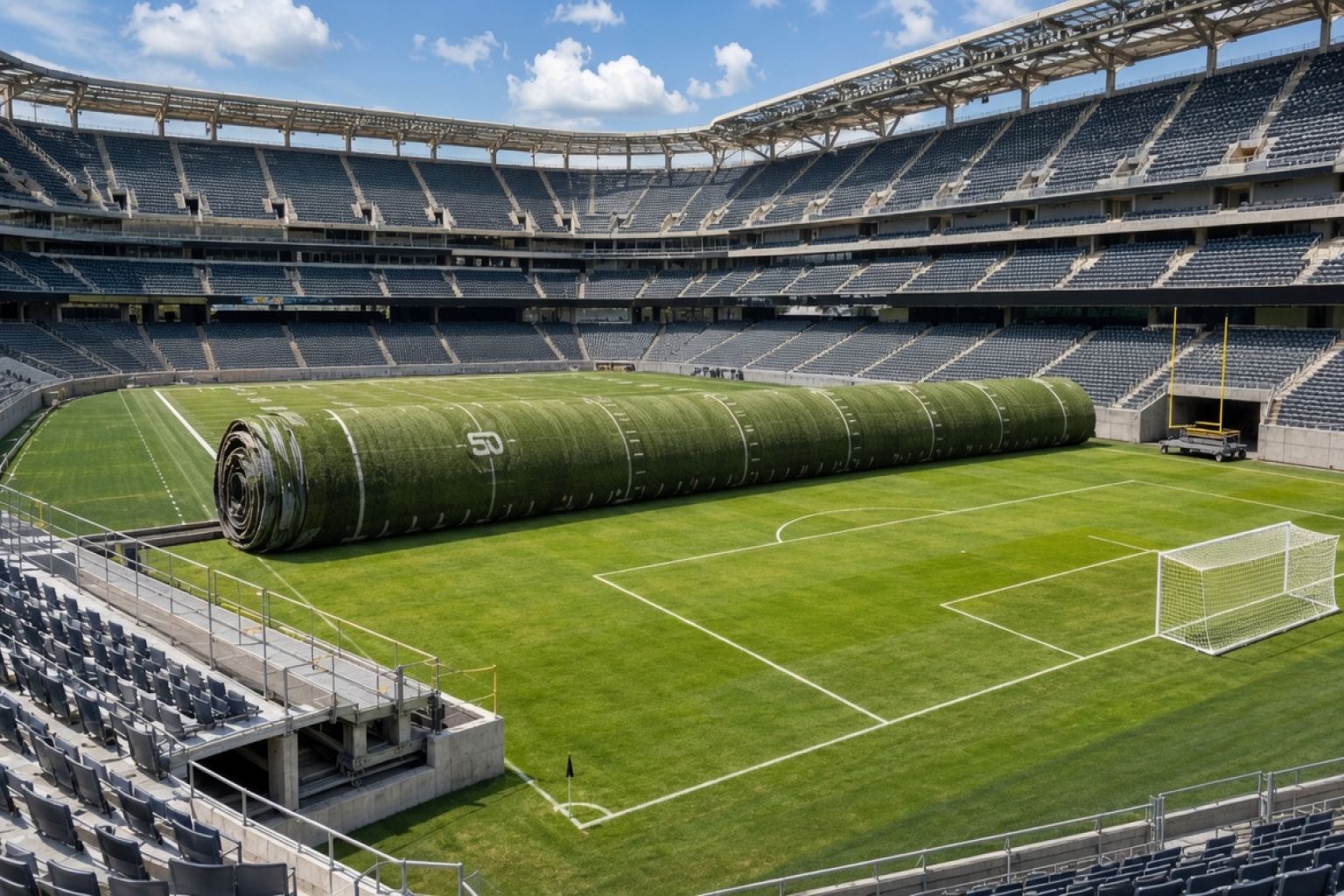
The biggest World Cup ever is using 16 existing stadiums and did not commission a single new venue. The work focused on wider fields, temporary grass, seating changes, media space, crowd routes, and building upgrades.
Across Canada, Mexico, and the United States, 48 teams are playing 104 matches. Every host stadium had a permanent use before the tournament arrived. The challenge was adapting those buildings for World Cup soccer without leaving the host cities with new stadiums to maintain.
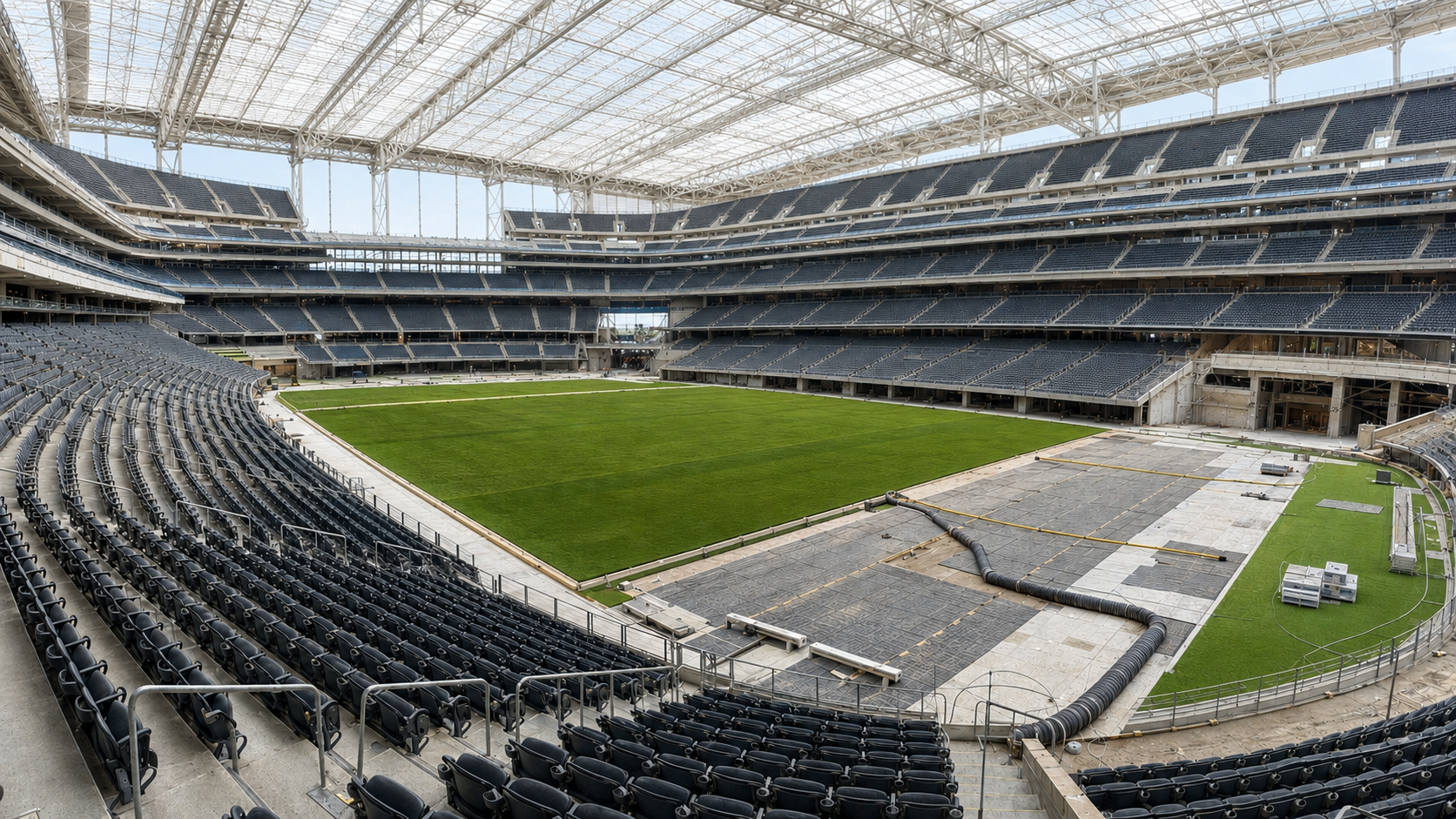
The tournament shows the value of stadiums that can change use without being rebuilt.
No Stadium Was Built for the 2026 World Cup
Several venues received major construction, and SoFi Stadium in Los Angeles was completed only in 2020. But SoFi was built for the NFL's Rams and Chargers, not for the World Cup. None of the 16 host venues was built specifically for the tournament.
| Host country | Venues | What the tournament used |
|---|---|---|
| United States | 11 | Existing or independently planned NFL and multipurpose stadiums |
| Mexico | 3 | Existing soccer stadiums that received renovations and tournament upgrades |
| Canada | 2 | Existing stadiums expanded or upgraded for tournament use |
The 2026 plan differs from events that depend on purpose-built stadiums. North America already had large venues with permanent teams, concert schedules, staff, and operating budgets.
The design problem was making buildings created for football or other sports work for international soccer, then allowing them to return to regular use.
An NFL Stadium Does Not Automatically Fit Soccer
Capacity alone does not make a football stadium ready for international soccer. The playing field, safety runoff, advertising boards, photographers, and broadcast crews all need more width. Seats and field-level suites placed close to an NFL sideline can block that space.
The surface creates another conflict. Several North American venues normally use artificial turf, while the World Cup required a consistent natural-grass playing surface. Stadium roofs can also limit the sunlight and air movement needed to keep grass healthy.
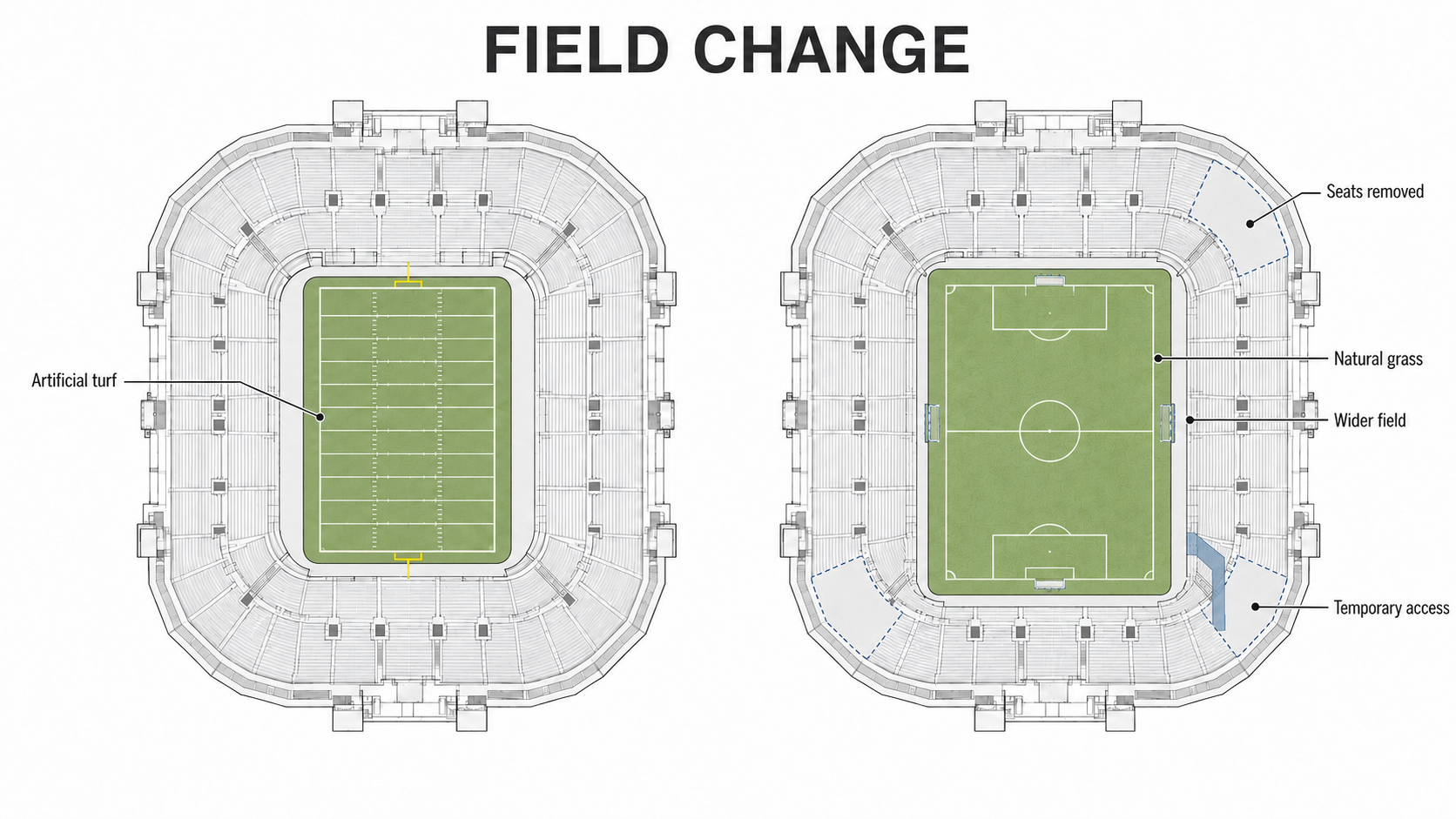
Raising or widening a field can change sightlines from the first rows. Removing corner seats can expose concrete edges that need new rails and circulation routes. Media workers need routes that do not cross team areas. Accessible routes, emergency exits, and security lines must also work with the revised layout.
Parts of the Seating Bowl Had to Move
At SoFi Stadium and AT&T Stadium, field-level seating was removed to make room for the wider pitch and the photographers and camera operators working around it. AT&T Stadium also lost corner suites at field level. Other lower-level suites became broadcast rooms because the raised soccer surface changed their view of the field.
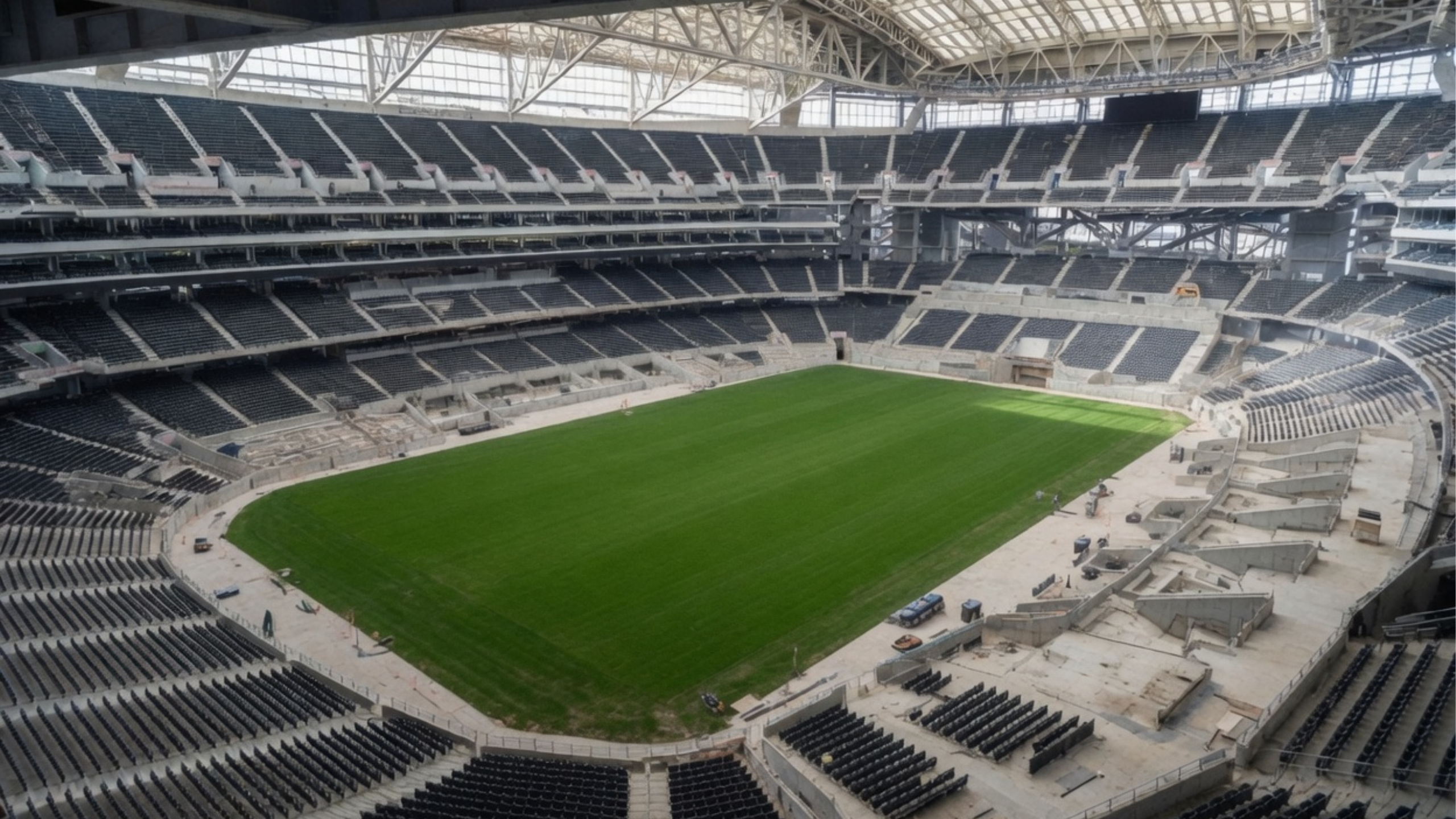
Temporary seating and platforms still need safe connections, guardrails, exits, and crowd routes. They must perform safely under a full crowd even though they will later be removed.
Toronto used the same approach at a larger scale. The stadium received permanent upgrades to lighting, sound, video boards, hospitality, and fan amenities. Temporary seating increased tournament capacity to approximately 45,000 without leaving the city with a permanently oversized stadium.
The Grass Became a Building System
The most difficult conversion was often under the players' feet. FIFA's pitch team spent five years preparing 16 stadium fields and 77 training fields across different climates, elevations, roof conditions, and event schedules.
Natural grass could not simply be placed over artificial turf and watered. Covered stadiums needed engineered layers that could support roots, drain water, and move air. Some venues used deep trays filled with sand, soil, irrigation lines, and aeration pipes. Grow lights supplied light where the roofs cast long shadows.
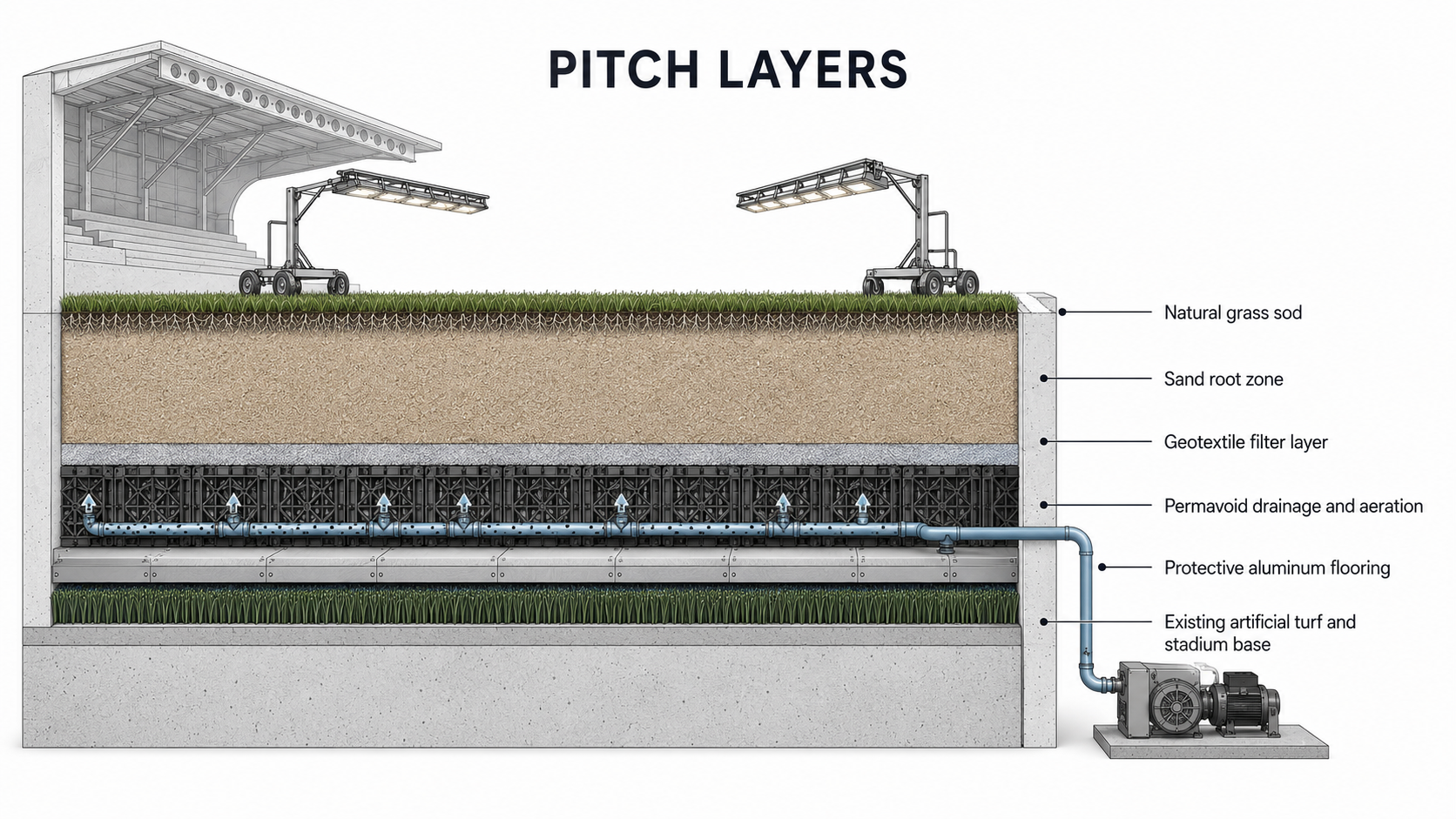
At the Dallas venue, the new pitch sat about two feet above the normal football field. That depth created room for water pipes and air ventilation. The raised surface then affected suites, cameras, access routes, and sightlines.
Houston used a different installation sequence. Crews placed a geocell base, irrigation pipes, and roughly 25 centimetres of sand before laying and stitching the grass. The event schedule gave the pitch team little more than a month of access. The temporary field had to perform like a built floor assembly under elite sport and live television.
The Retrofit Went Beyond the Field
The grass and seating were the most visible changes, but the conversion affected almost every part of the stadium.
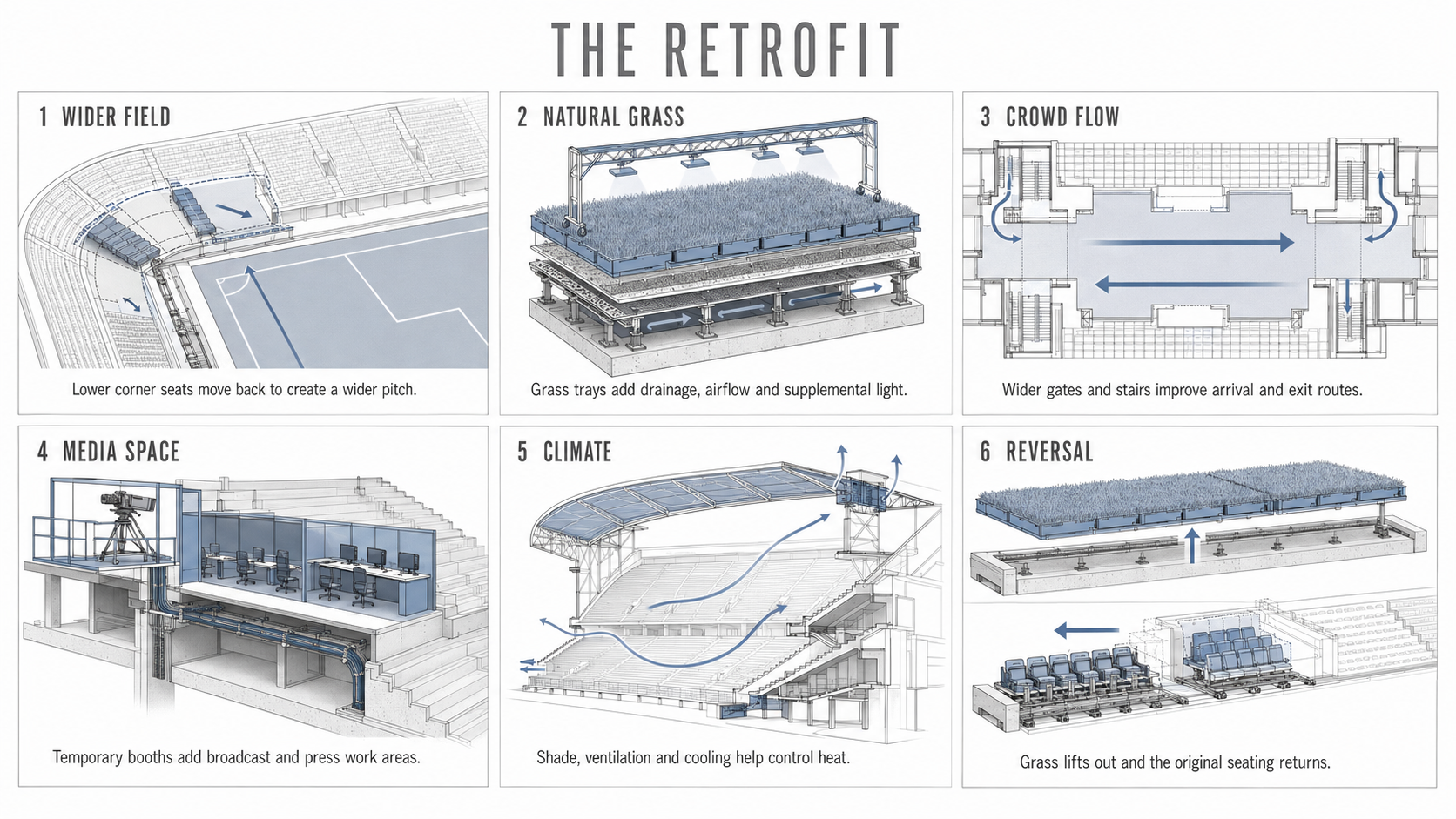
- Structure: removable seats, temporary decks, rails, and modified suites
- Building systems: irrigation, drainage, aeration, lighting, power, and cooling
- Movement: wider concourses, revised gates, accessible routes, and emergency exits
- Broadcasting: camera positions, commentary areas, cable routes, and workrooms
- Operations: team areas, security zones, deliveries, and temporary signage
- Public space: transit connections, fan areas, roads, and pedestrian routes
Mexico City Stadium shows that reuse did not mean minor work. The stadium opened in 1966 and hosted the 1970 and 1986 World Cups. Its 2026 modernization added a hybrid field, new seating, relocated dressing rooms, LED screens, Wi-Fi, and solar panels while keeping the familiar stadium form. Work around the site included roads, bicycle routes, and public transportation improvements.
The existing stadium kept its history and established location while gaining the systems needed for a modern tournament.
The Work Shifted From New Construction to Retrofit
Reusing stadiums did not remove architectural and engineering work. It moved the work into existing buildings.
The projects required structural engineering, temporary works, landscape architecture, field science, mechanical systems, accessibility planning, crowd modelling, transportation, and digital infrastructure. Contractors had to work inside operating venues with fixed event schedules and firm tournament deadlines.
Work will continue after the tournament. Seats must return, temporary platforms must be removed or stored, and grass systems must be reused, recycled, or replaced. Permanent lighting, concourse, and accessibility upgrades will remain.
These projects do not guarantee an economic return for every city. Deadlines can increase costs, and some spending may serve hospitality areas more than public needs. The stronger case is a stadium that already has teams, events, staff, and a maintenance budget after the tournament ends.
Stadiums Designed to Change
The 2026 conversions show why adaptability should be planned before a major event arrives.
Seats can be designed for removal without damaging the bowl. Service zones can accept temporary media and hospitality uses. Floors can provide enough depth and capacity for different playing surfaces. Power, data, drainage, and ventilation can include connection points for equipment added later. Public areas can handle different crowd patterns without rebuilding the full concourse.
SoFi Stadium was designed with removable seats that could help widen the field for events such as the World Cup. That made the conversion part of the original stadium plan instead of a later emergency change.
The same approach applies to convention halls, schools, offices, and housing. Buildings last longer when their structure and services can accept new uses.
Reuse Did Not Remove the Environmental Cost
Avoiding 16 new stadiums reduced the need for additional concrete, steel, and long-term stadium maintenance. It did not erase the tournament's environmental impact.
The host cities are spread across a continent, and teams, media, and supporters often had to fly between them. One estimate reported by Reuters placed the tournament's footprint at 7.8 million metric tons of carbon dioxide equivalent, with air travel responsible for most of it. The exact total may be debated, but stadium reuse and tournament travel affected the result in opposite directions.
Heat created another problem. Roofs, shade, air movement, and cooled interiors protected some spectators and players, but outdoor routes and open venues remained exposed. Future stadium upgrades will need to treat heat protection as part of the basic infrastructure.
Reusing the stadiums was a better construction decision. It could not cancel the effects of travel, tournament size, and the distance between host cities.
What Will Remain After the Final
Some of the most visible work was designed to disappear. Temporary grass will be removed, artificial turf will return, seats and suites will be restored, and broadcast compounds, signs, and security barriers will come down.
Other work will remain:
- Improved lighting, sound, and video systems
- Better concourses, gates, and accessible routes
- Modernized dressing rooms and media infrastructure
- New hospitality and service areas
- Permanent energy, water, and connectivity upgrades
- Experience that operators can use for future large events
SoFi's temporary grass has worked for the tournament but is not practical as its normal year-round surface. The stadium will continue hosting football, concerts, and the 2028 Olympics. Returning it to its regular layout is part of the conversion plan.
What the Tournament Leaves Behind
The architectural legacy of the 2026 World Cup may be the decision to adapt existing stadiums instead of commissioning new ones.
The tournament still required expensive work, temporary materials, and continent-wide transportation. It did not solve every environmental or economic problem tied to major events. But it has shown that the world's largest sporting event can use 16 existing venues, change them deeply, and later return them to regular use.
Future stadium design may place more value on removable seating, flexible field systems, stronger climate control, and buildings that can change sports without becoming obsolete.
Sources used for this article
- World Football Summit: The World Cup That Built Nothing
- FIFA: World Cup 2026 Stadiums in Canada, Mexico and the United States
- FIFA: Pitch Management Team Reaches the Last-Stitch Milestone
- HKS: From NFL to World Cup—How Stadiums Are Built to Transform
- Gensler: How the 2026 World Cup Is Rethinking Sports Infrastructure
- FIFA: Toronto Stadium Completes Major Upgrades
- FIFA: Mexico City Stadium Reopens After Modernization
- Reuters: SoFi Stadium's World Cup Conversion and Future Events
- Reuters: Climate Cost of the Expanded World Cup
- NC State University: World Cup Sustainability and Travel Emissions