
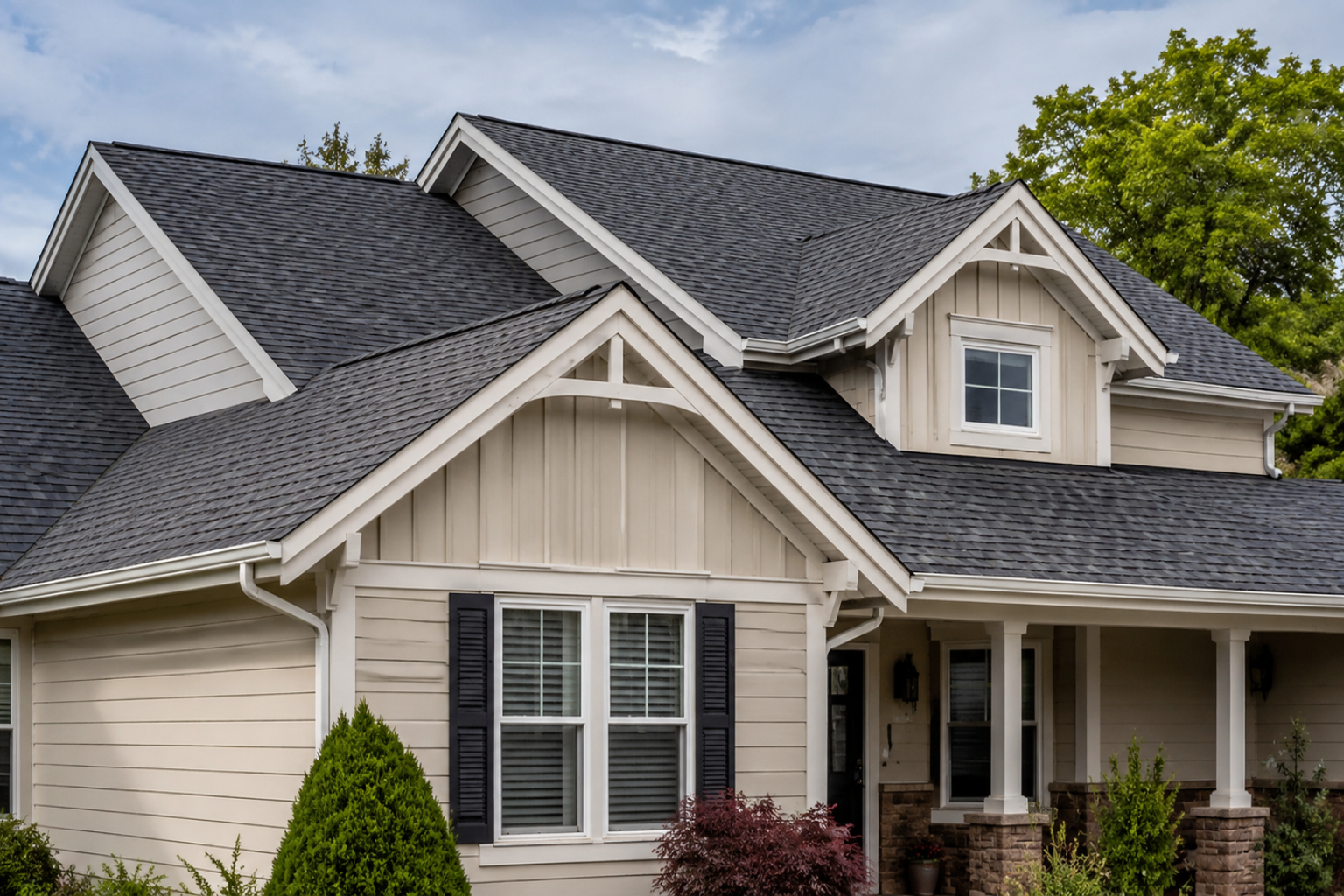
Gable roofs fail from bad details, not bad geometry. The shape is simple. The problems come from overhangs that dump water where they should not, gable ends that never get braced properly, and ridges treated like structural members when they are not. If you want the layout basics first, skim gable roofline basics.
How a Gable Works

Illustration by ArchitectureCourses.org. A gable roof works because two sloped planes meet at a ridge, shed water toward the eaves, and leave an attic space that needs proper ventilation and edge detailing.
Three forces run every gable roof decision: gravity, wind, and water. Rafters carry gravity to the walls. Gable ends catch wind and need real bracing from the ceiling plane and roof diaphragm. Every intersection above the wall line is a water path, so valleys and penetrations need your best flashing. Ventilation only works when intake matches exhaust. If you need the structural terminology lined up before framing, see this introduction to roof structures.
Worth having nearby.
The NRCA Roofing Manual is still one of the better references when a valley, edge, or flashing detail gets questioned in the field. More useful than guessing from product photos once the roof gets complicated.
Where sagging usually starts
A gable roof does not sag because it is a gable roof. It sags because the load path got weakened somewhere the crew thought was minor.
Sometimes it is undersized rafters. Sometimes a missing tie, or a ridge detail doing less than assumed, or water getting in long enough to rot sheathing and soften framing. On older roofs, the problem is usually cumulative. A little movement, a little moisture, a little deferred repair. Then the roof line starts showing it.
The expensive move is treating the visible dip as a cosmetic problem. Find out whether the sag is coming from framing size, ridge behavior, wall spread, water damage, or a weak gable end before pricing repairs. Diagnosis first.
Gable Roof Types

End Gable
Straight ridge, two clean planes, triangular end walls. It frames quickly, flashes cleanly, and shows up everywhere from New England saltboxes to modern cottages. Keep overhangs consistent so the shadow line reads as one band across the elevation.

Reverse Gable
A short gable projecting from a longer roof, usually above an entry, to pull light deeper into the plan. Where it meets the main roof, you have drawn a small valley. Give that joint continuous metal flashing and a clear drainage path or it traps water fast.
Cross Gable
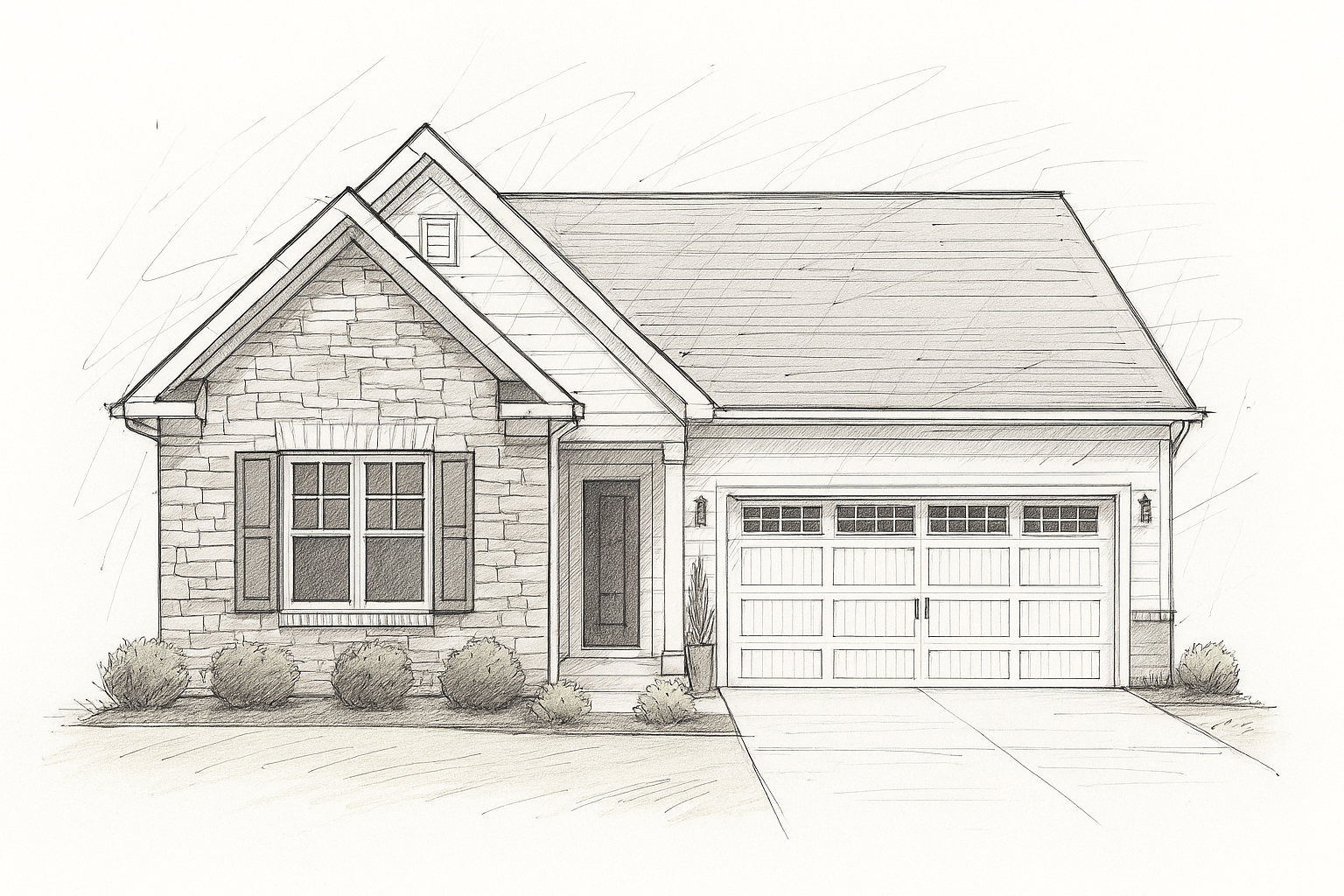
Two gables crossing at right angles work well when the plan has distinct wings. The cost is more valleys. Match pitches deliberately and run valley metal uninterrupted to daylight. For assemblies that stay true in weather, review roof trusses.
Multi-Gable
A cluster that breaks a large mass into smaller roof forms. Draw the roof like a drainage diagram so every valley finds an exit. Complexity without a water plan is an expensive leak waiting for a storm.
Half Gable
Also called a clipped or jerkinhead end. Shaving the peak reduces wind loads at the ridge ends and reads as traditional. Frame the rake ladders stoutly so the cut end never flutters in wind.
Asymmetrical Gable
Unequal pitches on each side, useful when you want more headroom on one side or more shade on a hot wall. The design can look fresh. The gutters are where the laziness shows up if the eave heights are mismatched and drainage was never thought through.
Curved Gable
A soft sweep at the eave or ridge, often used on porches and entries. Use laminated members or carefully kerfed boards so the curve holds through seasonal movement. Flash in continuous sheets, not short stitched pieces that invite leaks at every joint.
Dutch Gable Roof
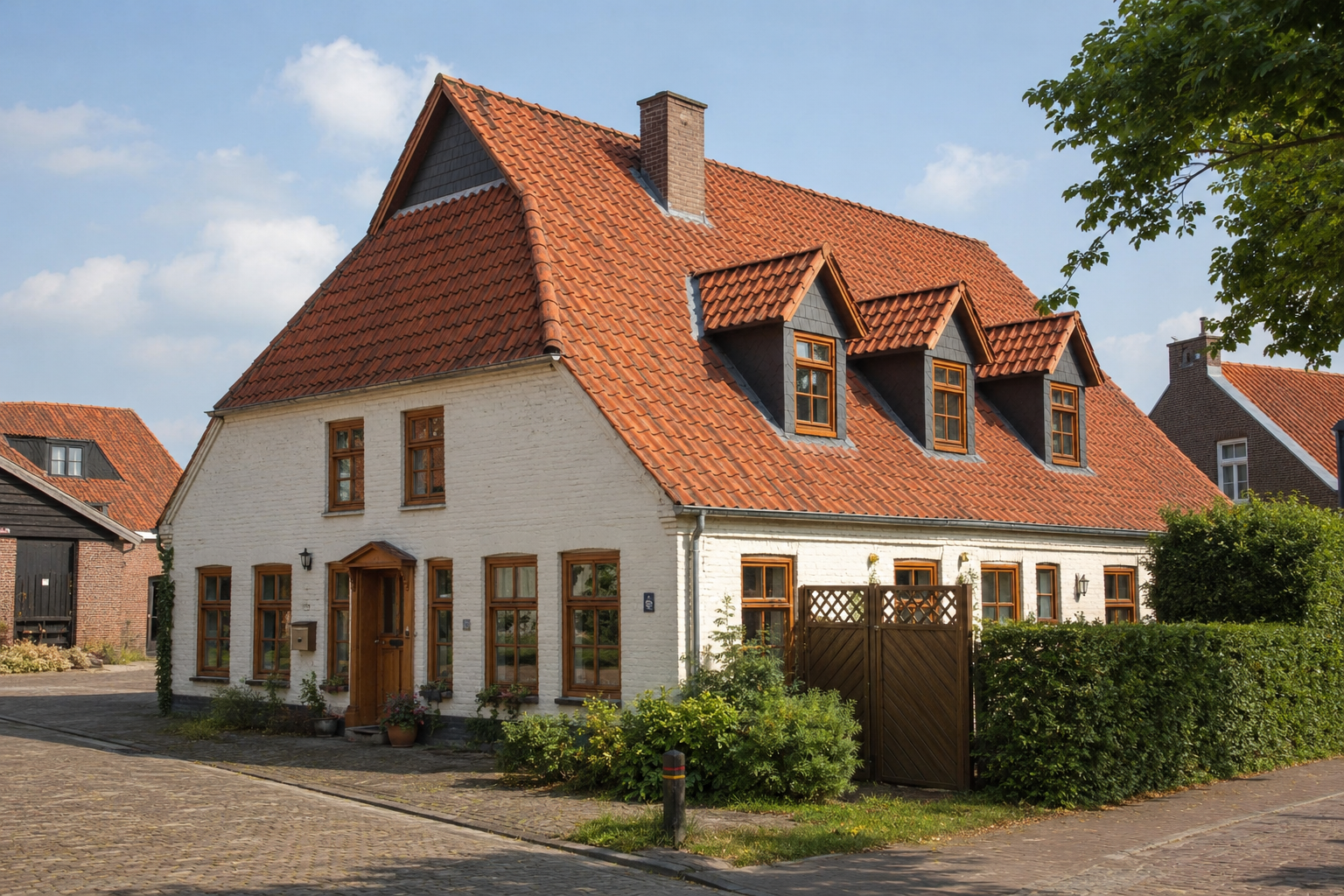
A hip roof with a small gable near the ridge. The hips shed weather. The gable helps vent and light the attic. The hip-to-gable junctions are the danger zone — flashing work there has to be exact or the junction becomes a slow leak.
Hip and Gable Combined
Hips on the main mass, gables on wings, or the reverse. Common on additions. Keep pitches compatible and align ridges where the plan allows. Misaligned heights create fussy valleys and wasted metal. For the fuller comparison, see hip and gable roof combinations.
Flat and Gable Combined
A short flat section hidden behind a gable face can host mechanicals or a small deck. Taper for drainage, build a cricket at every obstruction, and treat the joint like a miniature roof of its own. Trapped water starts here when the hidden flat section gets treated as an afterthought.
Gable with Valleys
Any intersection that creates a trough. Open metal valleys are durable where pitch is moderate or debris is common. Woven shingles have real limits at low pitches. Ignore the pitch and shingle rules and you create trapped water instead of drainage.
Modern Gable
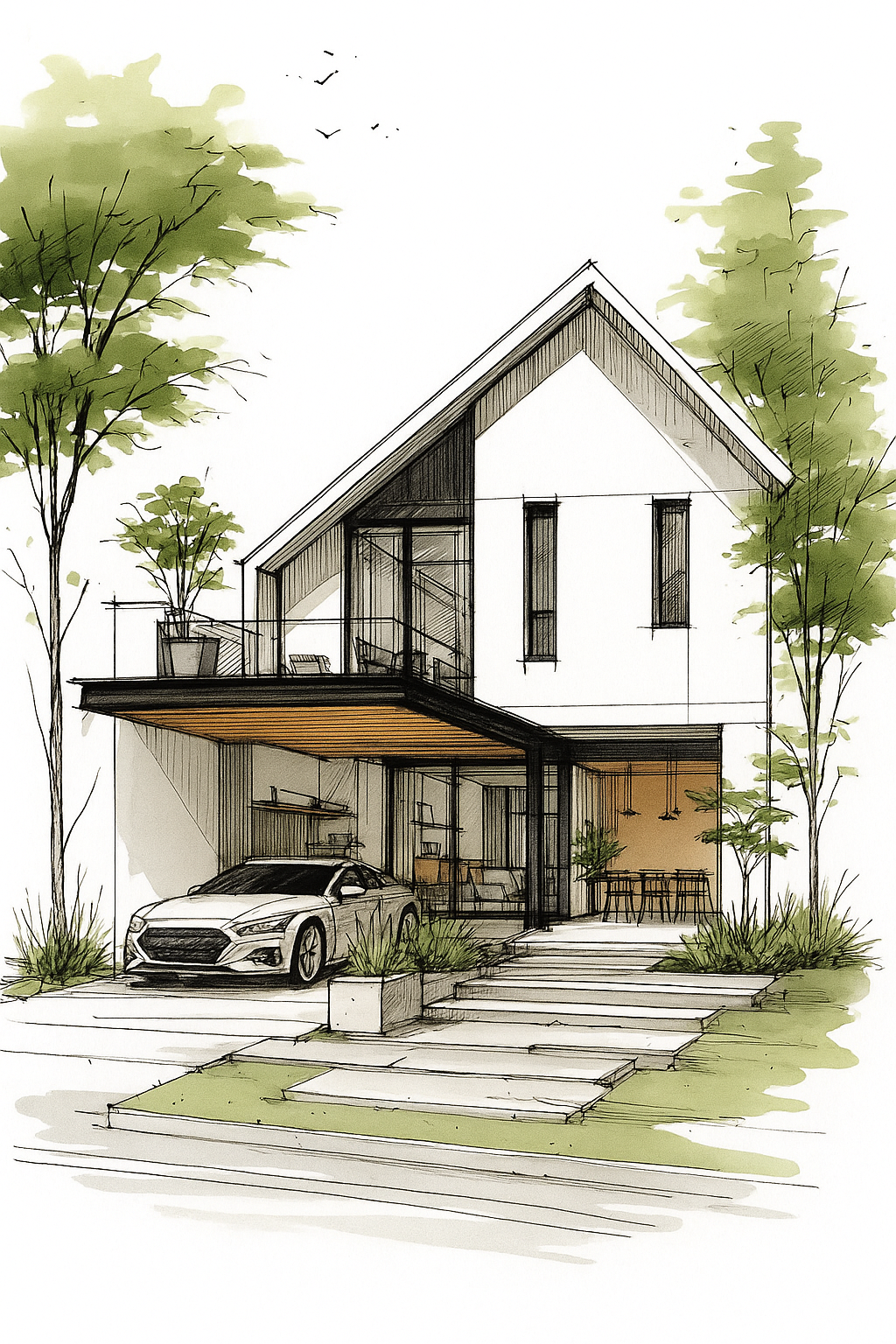
Clear ridge, crisp eaves, thin edges. Large glass in the gable end is common. If gutters are hidden inside the fascia, plan for service access before they are buried. Minimal details are usually expensive when the maintenance path disappears.
Craftsman Gable
Low pitch, broad eaves, exposed rafter tails, heavy porch piers. The pediment often carries shake patterns or decorative vergeboard. Keep bracket spacing even and align rafter tails with window mullions where you can — the rhythm across the elevation is what makes the style read correctly.
Contemporary Gable
Natural cladding, large openings, tidy ridge. Inside, ceilings often follow the roof slope. Control glare with deeper eaves on the sunny side and high windows on the shade side. For climate-driven pitch choices, see steep roofs.
Gable Roofs vs Other Roof Types
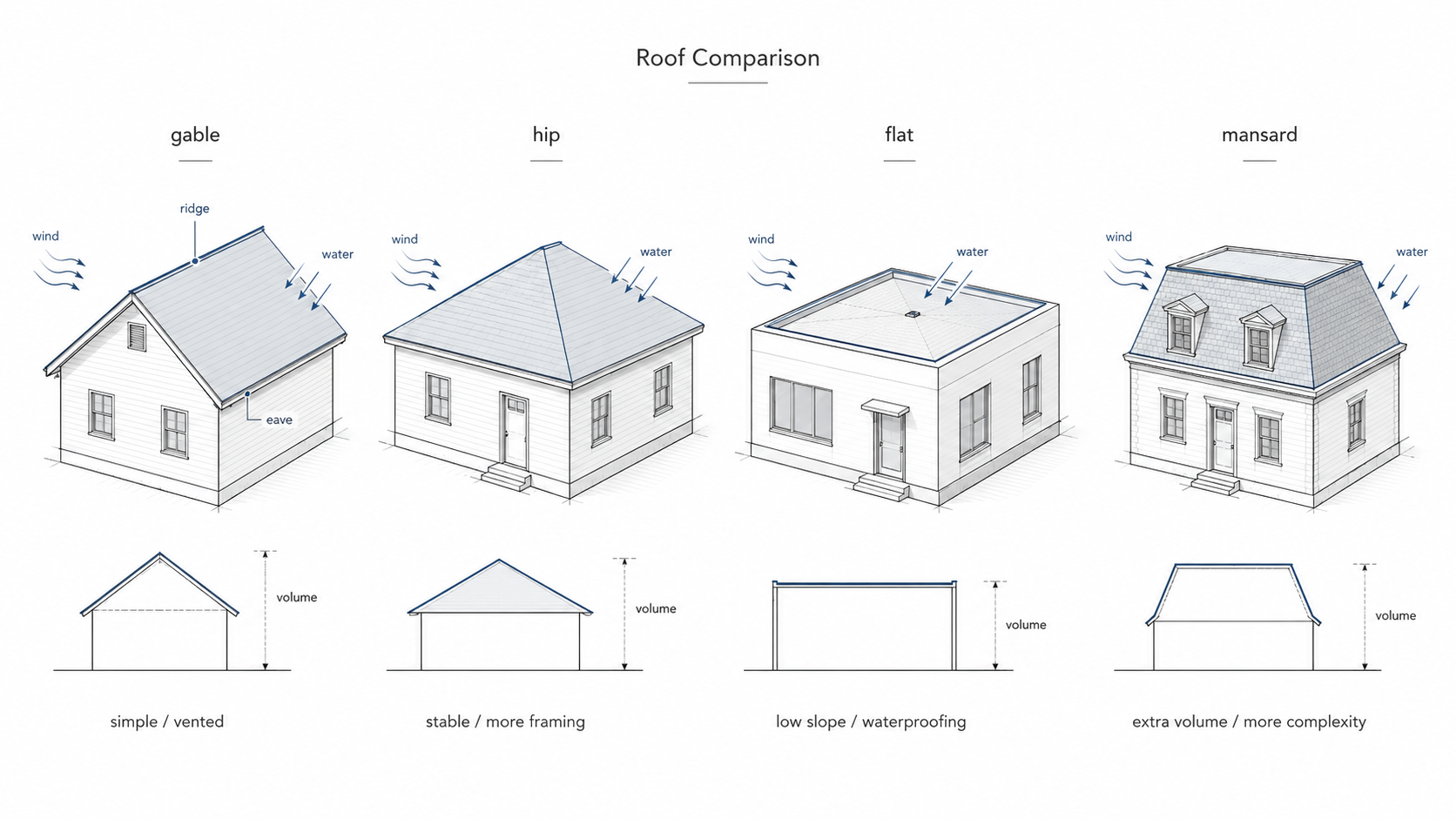
Every roof shape solves a different problem. Gable roofs do it with simplicity. Two planes meet at a ridge and move water away fast. That is why they dominate wet and snowy regions — easy to frame, easy to vent, and usually easier to repair than more complex forms.
Hip roofs pull that logic tighter. All four sides slope, so there are no exposed gable ends catching wind. You lose some attic space but gain stability in high-wind and coastal sites. The trade-off is time and cost: more cuts, more framing, more metal at joints. See hip roof line for the fuller breakdown.
Flat roofs work on the opposite principle. Minimal slope, full control of drainage when detailed well. Good for modern houses where roof decks or solar matter. But flat roofs demand better waterproofing and regular inspection — water stays longer and small failures turn into leaks faster. For the material side, see flat roofing materials.
Mansard and gambrel roofs trade the shape for volume. They hide extra floors behind the pitch break, which is useful for traditional or European-style houses, but heavier on framing and load transfer. A basic gable avoids most of that complexity.
| Roof type | Best for | Main trade-off |
|---|---|---|
| Gable | Simplicity, attic ventilation, lower cost, snowy or rainy regions | Gable ends exposed to wind |
| Hip | Wind-prone and coastal sites, calmer eaves all around | More framing, more cost, less attic volume |
| Flat | Rooftop living, solar, hard modern horizontals | Higher waterproofing standard, regular inspection required |
| Mansard / Gambrel | Extra floor volume, traditional European character | Heavier framing, more complex load transfer |
Framing, Installation, and Common Mistakes
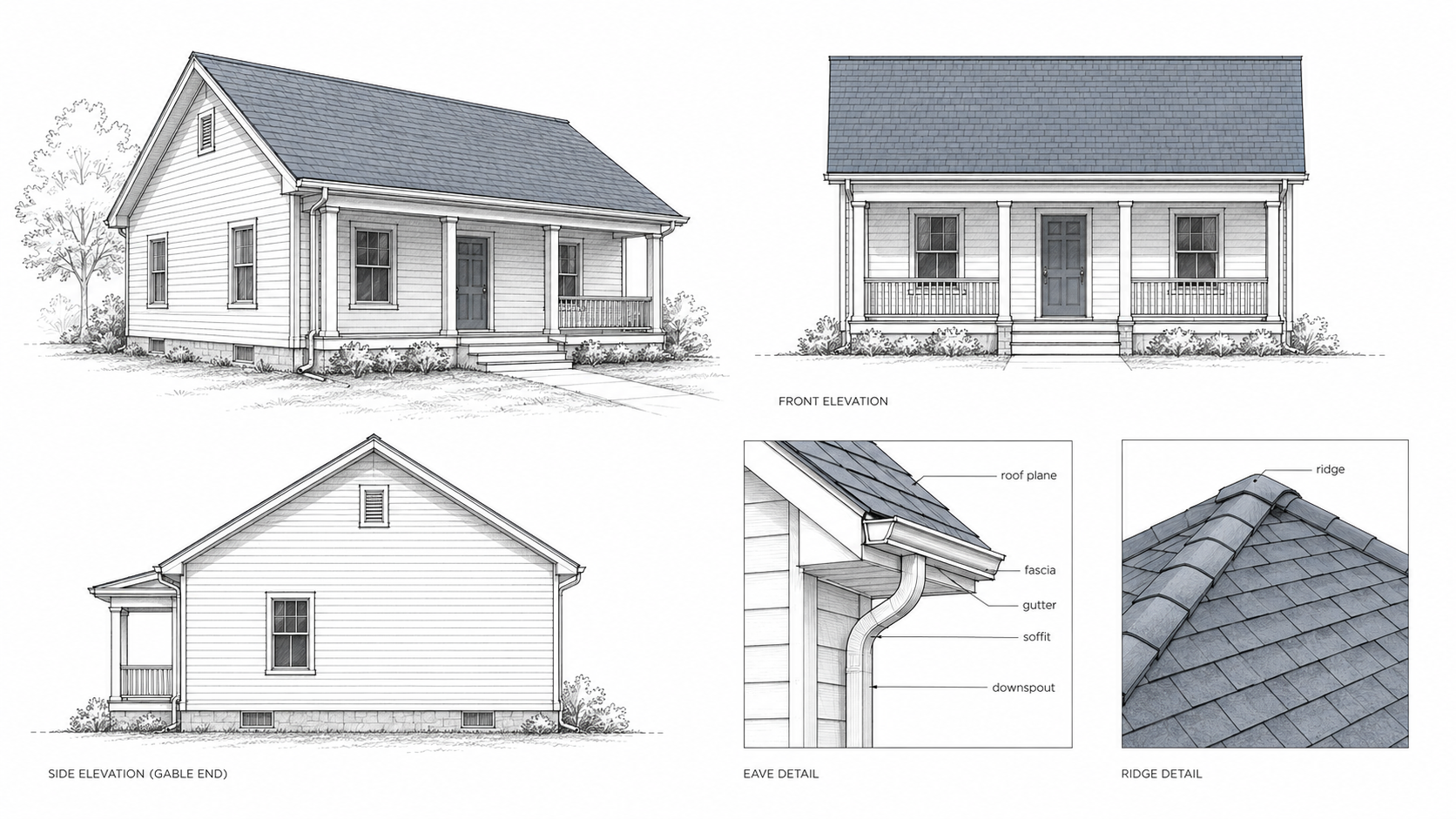
Set ridge height first, then lock common rafter length and birdsmouths with one template. Check square at every stage. Sheath in long runs so seams land on framing, not in the air between rafters.
Use hurricane clips at every rafter seat in wind zones. At eaves, run drip edge over the underlayment. At rakes, drip edge usually tucks under — but follow the manufacturer sequence, not the crew's habit. Ridge vents need soffit intake or they circulate nothing. For bracing logic that keeps the roof straight instead of letting the gable end rack, see truss bracing and roof support systems.
If trusses are part of the plan, compare the layout against residential roof truss design before framing starts.
Adding a gable to an existing roof
Stitch new rafters into the existing ridge and extend sheathing across the joint so the diaphragm acts as one sheet. If a new valley appears, set the metal first, then weave or trim shingles to it. Do not frame a reverse gable until the down-slope water path is mapped. This is where leaks start when the geometry gets drawn before the drainage gets drawn.
Changing a hip to a gable
Remove the hip rafters at one end, frame a new gable wall under the ridge, and extend commons. The roof works differently after the change — plan new bracing at the end wall and stitch the ceiling plane so racking loads have a path. Check the logic against hip roof line before cutting into the old roof.
Joining two parallel gables
A saddle or cricket between them is not optional. Set fall both ways and flash it like a small roof of its own. Vent both attic spaces so one side does not trap heat and moisture while the other breathes.
Materials
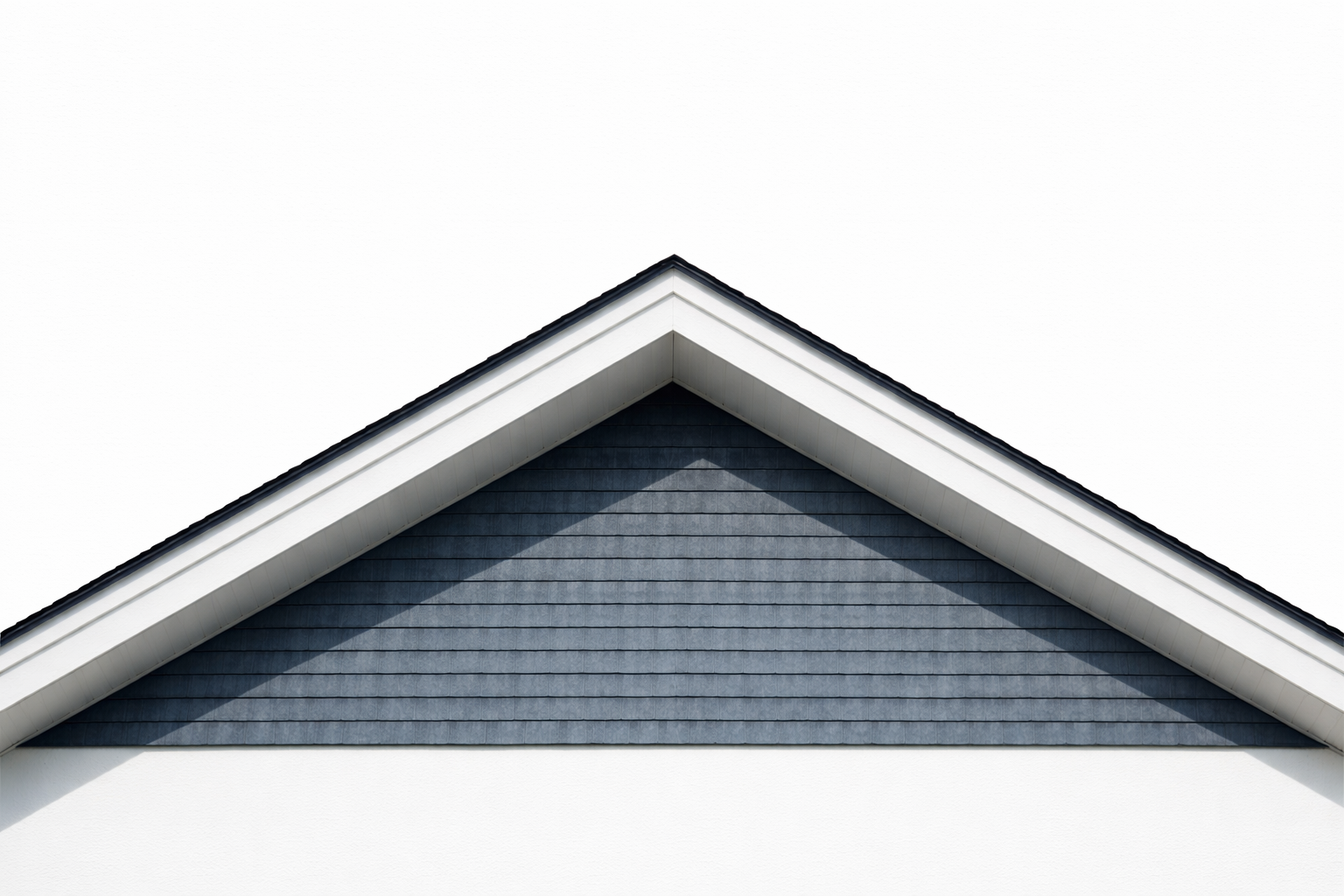
Cedar shakes breathe and look right on gable roofs. They need pitch and air underneath. Use open metal valleys, space sheathing where required, and keep fasteners stainless. Align material choices against a broader building materials list before ordering if the project mixes cladding types.
Colorbond and coated steel are strong, light, and clean. Follow the minimum pitch for the profile and vent the underside to avoid condensation. A cold damp underside is not just a stain risk — it is fastener trouble and trapped moisture over time.
Metal standing seam offers long life and clean lines. Back every penetration with formed boots. Add snow guards where sliding snow could hurt people or tear gutters off the wall below.
Cost and Planning
Simple end gables are still one of the most economical pitched roof choices. Every valley, dormer, and pitch change adds labor, metal, and more chances to leak. Hip-to-gable conversions are structural work — budget for engineering, bracing, and new finishes at the end wall. Good drawings save money because the crew is not guessing through ridges, valleys, and tie details on the job.
Field checklist
- Draw the water path before framing. The pencil valley you sketch is the metal valley you will install.
- Balance attic air. Soffit intake has to match ridge exhaust or the ventilation does nothing.
- Size overhangs for climate. Deep shade in hot sun, tighter eaves in high wind.
- Keep one pitch family on one house unless the contrast is doing real work.
- Protect every cut with metal or mineral surface. Caulk is not a roof strategy.
FAQ
What is a gable roof?
A gable roof is a pitched roof with two sloping sides meeting at a ridge. It sheds water quickly, vents well when detailed correctly, and is one of the simpler roof forms to frame.
What are the main types of gable roofs?
Common forms include end gable, cross gable, Dutch gable, reverse gable, half gable, and modern or contemporary versions. See hip and gable roof combinations for examples that mix roof families.
Is a gable roof good for heavy snow?
Yes, when the pitch is steep enough and the framing is sized for the load. Shallow gables hold snow longer and invite sagging if the structure is undersized. Review steep roofs for pitch guidance.
How does a gable roof compare to a hip roof?
Gable roofs are usually cheaper and faster to build, but less stable in high wind because the end walls take more pressure. Hip roofs cost more to frame but behave better on exposed or coastal sites. See hip roof line.
Can you add a gable to an existing roof?
Yes, but only after checking load paths, drainage, and tie layout. Adding a gable changes how water leaves the roof and how framing pushes into the walls. Read introduction to roof structures first.
What mistakes do builders make with gable roofs?
Overspanning rafters, skipping ties, mismatching ridge heights on cross gables, and drawing valleys without thinking through the water path. Study truss bracing and roof support systems before framing anything complicated.
Should I DIY a gable roof?
Only if you understand slope math, load paths, and local code. Misaligned valleys, weak bracing, or bad flashing turn a simple roof into a leak and rework problem fast.