
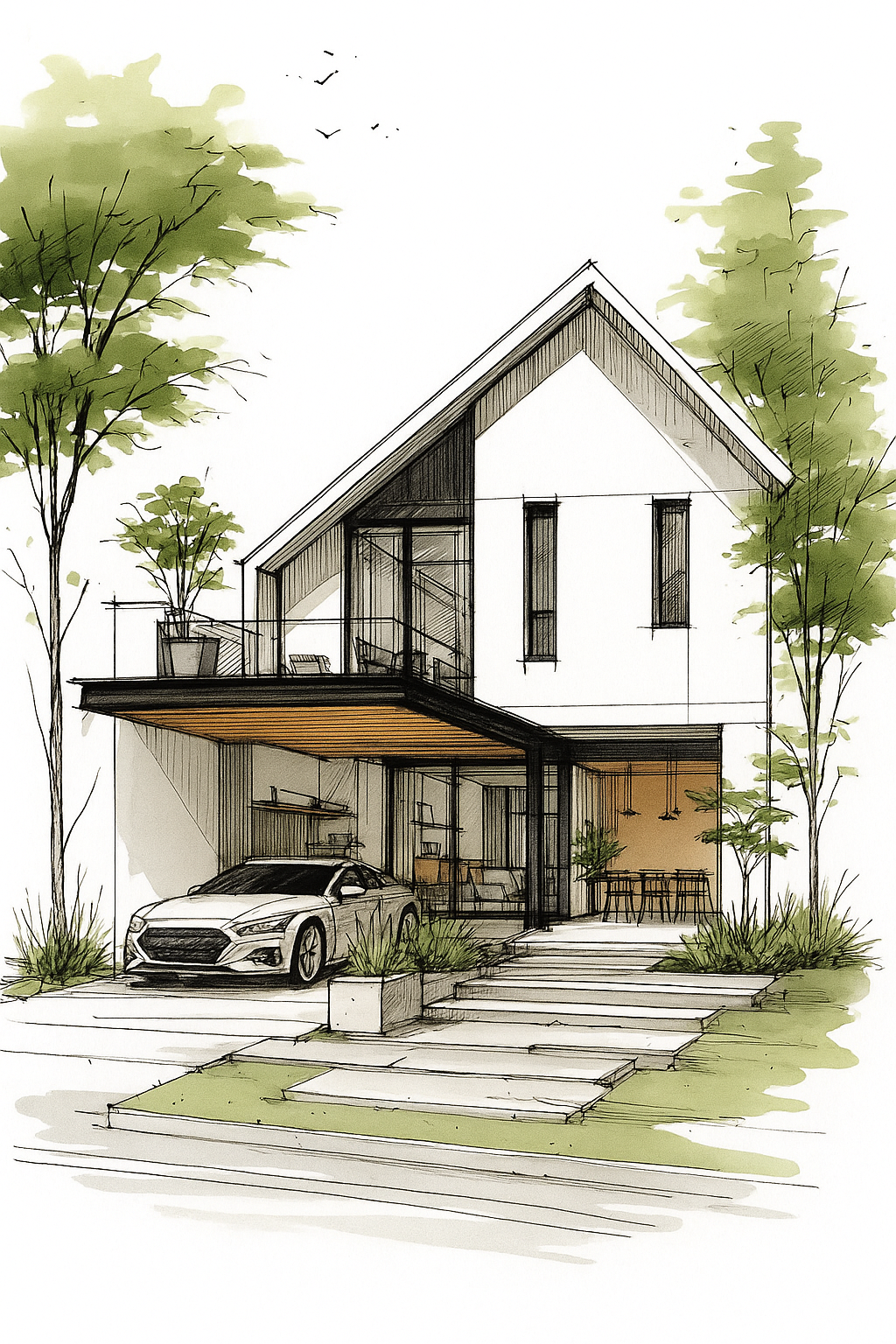
Designing the Gable Roofline: A Field Guide for Builders, Architects, and Homeowners
A good gable roof keeps water out. A great gable roofline makes the whole house feel inevitable. What you see from the street is not the truss or the sheathing but the cut of the silhouette, the thickness of the edge, the way the soffit throws a shadow at four in the afternoon. This guide reads like a site notebook. It is written for juniors on their first setout, for homeowners who care about proportion, and for pros who have been burned by one bad rake detail and never want to repeat it.
If you need a primer on how roof structures work before you go deep on rooflines, skim this overview of roof structure basics and keep it nearby while you read. When you are ready to compare roof families beyond the gable, this short survey of common roof line types is a quick reference.
Gable Rooflines 101: What Actually Makes Them Work
From first sketch to installation, we show you how to detail a gable roofline that reads clean from the street and lasts through real weather.
What a Roofline Actually Is

The roofline is the visible outline of the roof where it meets the sky and the walls. On a gable, that is the ridge at the top, the sloped rakes that run down to the eaves, and the horizontal eave line that caps the façade. We are shaping how the roof reads from the street and how it throws light and shadow over the wall.
The trick is to think in edges and planes, not just parts. Every cut shows up as a shadow or a glare. Every thickness becomes a line weight. A millimeter gained or lost at the eave gets multiplied by sunlight.
Anatomy of a Gable Roofline

Here is the minimum you need to sketch and defend the detail on site. Ridge height drives the profile and the pitch tells you the story of the house. Rake boards or bargeboards form the line that your eye follows to the ground. The eave puts a brim on the elevation. Fascia is the clean edge you read from the street. Soffit depth controls shade and helps the wall feel anchored. The verge projects past the wall to shed water clear of the face. At the corners the returns and frieze tie the roofline back to the façade.
When you set these out, draw the section first. Mark the wall build up, then layer the roof assembly from the inside out. Place the air barrier where it can be continuous. Only then push the finished lines until the thickness looks right in elevation.
Pitch and Proportion: The First Call You Have To Get Right

Pitch is mood. A shallow pitch relaxes the profile and reads modern. A steep pitch tightens the rhythm and speaks in older dialects. Most houses feel honest between 6:12 and 9:12. Drop to 4:12 and you are flirting with a different language and a different flashing regime. Climb past 10:12 and the house gets more vertical than the site can usually carry.
Set pitch with climate and story, then check proportion. A ridge that sits too low for the width makes the house feel heavy. A ridge too high for the wall height looks jumpy. I like to test three options on trace. Half step changes in pitch are enough to change the character without breaking structure. If you are dealing with snow or intense rain, review the practical limits in this short guide to steep roof design before you lock anything in.
Eave Depth: The Cheapest Shade You Can Buy

The eave is a climate device that frames the face of the house. In hot sun, a deeper eave lowers interior loads and keeps water off the wall. In wet wind, projection plus drip edge protects joints. In cold bright winters, a modest eave lets low sun in and blocks high sun in summer.
Start at twelve to eighteen inches for small houses and stretch to two feet where sun is harsh. Anything deeper should earn its keep with outdoor rooms and covered entries. Keep the underside simple. Vent where you must, not everywhere. A few well placed vents beat a perforated soffit that cheapens the edge.
Rakes, Verges, and Returns: Where Craft Shows
Most rooflines fail at the rake because nobody owns it early. Decide whether you want a thin, crisp edge or a thicker, traditional one. A thin rake needs tight framing and clean metal. A thicker rake wants a layered board build up with a clear shadow groove. Both work when they are intentional.
Returns matter on front elevations. A short classical return can calm a busy wall. A full return that wraps the gable into the eave can feel heavy unless the house has the mass to carry it. When in doubt, mock it at full size in cheap material and look at it from the street. The eye will tell you.
Gable Variations and What They Do

Cross gables break up long volumes and help big houses feel like groups of rooms. A Dutch gable softens a pure gable with a small hip at the peak, useful for wind. Half gables crop the face for tight streets. A curved gable is rare outside specific traditions and demands careful flashing that most budgets do not love.
Modern work often uses an asymmetrical gable to put the ridge off center and slip program under the lower side. This can be beautiful when the window logic supports it. It feels forced when the façade does not follow the roofline’s lead.
How Roofline and Façade Talk to Each Other
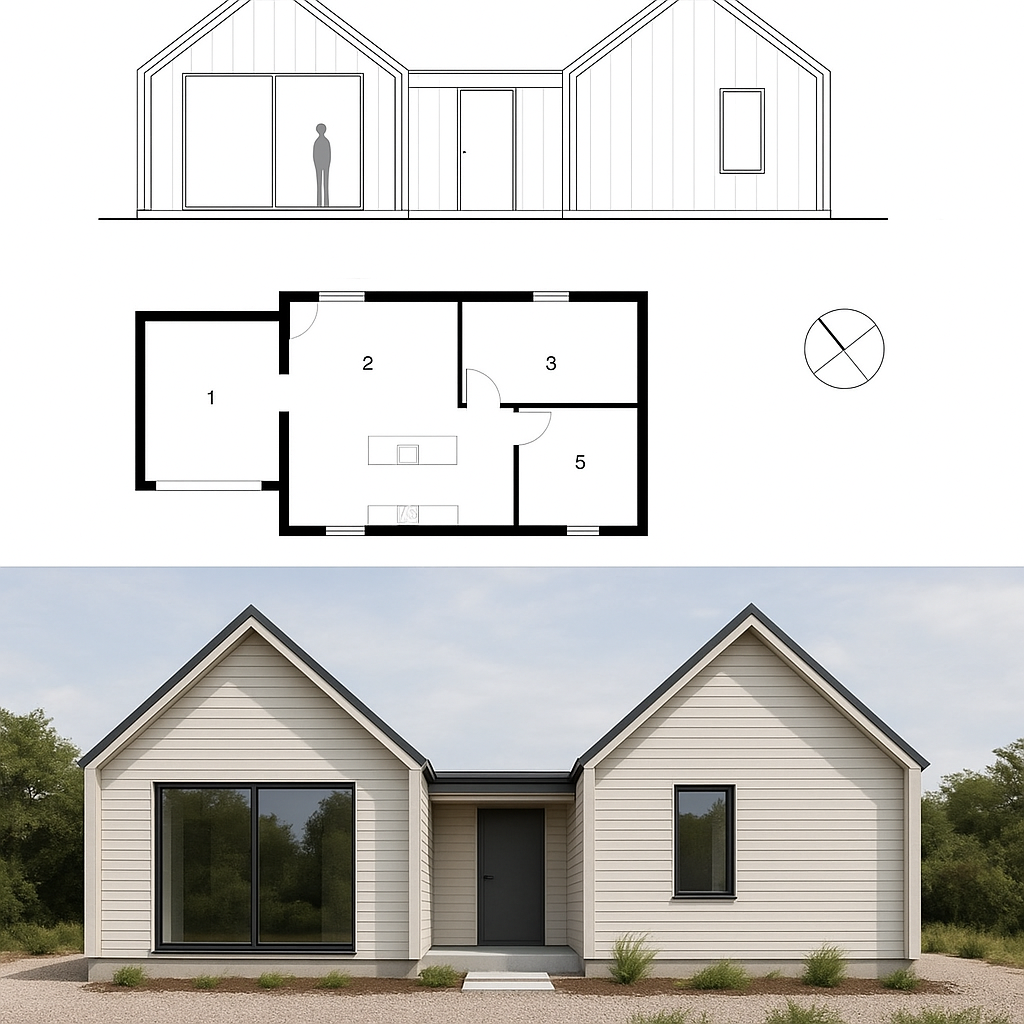
A good elevation reads as one thought. The roofline sets the headline. Windows and doors are the sentences. If the eave is strong, keep window heads disciplined. If the rake is expressive, calm the trim elsewhere. Align window heads with the soffit where you can. A few consistent lines will make the whole face feel composed.
I try to echo the roof pitch in the dormer cheeks or in the rhythm of verticals on the façade. Even a subtle echo helps the eye connect roof and wall. If you are adding a gable porch to a simple box, use the same pitch or a clearly different one. Near misses look like mistakes.
Light, Shadow, and the Daily Test
Walk the site at nine in the morning, noon, and late afternoon. Watch where the eave shadow lands and how the rake reads against sky. Change the projection on paper and imagine the moved shade. A paint fan deck is less useful here than a phone with the compass app and a pencil. The roofline earns its keep when it makes the wall work better through the hours.
Materials That Make or Break the Edge
Shingle, tile, metal sheet, standing seam, and even fiber cement trim can all make a fine gable roofline when detailed with the right thickness and flashings. What ruins edges is not the material but the stack up. Thick laminated shingles run proud at the rake unless you recess the drip. A crisp standing seam wants a simple fascia and a precise hem. Clay tile needs room to breathe and a return detail that hides the cut tile without bulking the line.
Before you specify, look at this short roofing materials list and note the weight and thickness of each system. Design the edge to the material, not the other way around.
Water Management Is Design
The most beautiful rake is worthless if it soaks the wall below. Kick water off the roofline on purpose. Use a drip edge that throws clear. Flash the rake under the finish, not as an afterthought. Keep gutters straight and sized to the real storm, not a brochure storm. If you are in snow country, ice dam logic governs the first six feet from the eave inward. Do not guess.
MUST READ
When you want the code standard and details that pass inspection, the NRCA Roofing Manual is the reference crews actually carry in trucks. Use it to sanity check edge metal and underlayment transitions before you draw them.
Framing Tolerances Show Up in the Sky
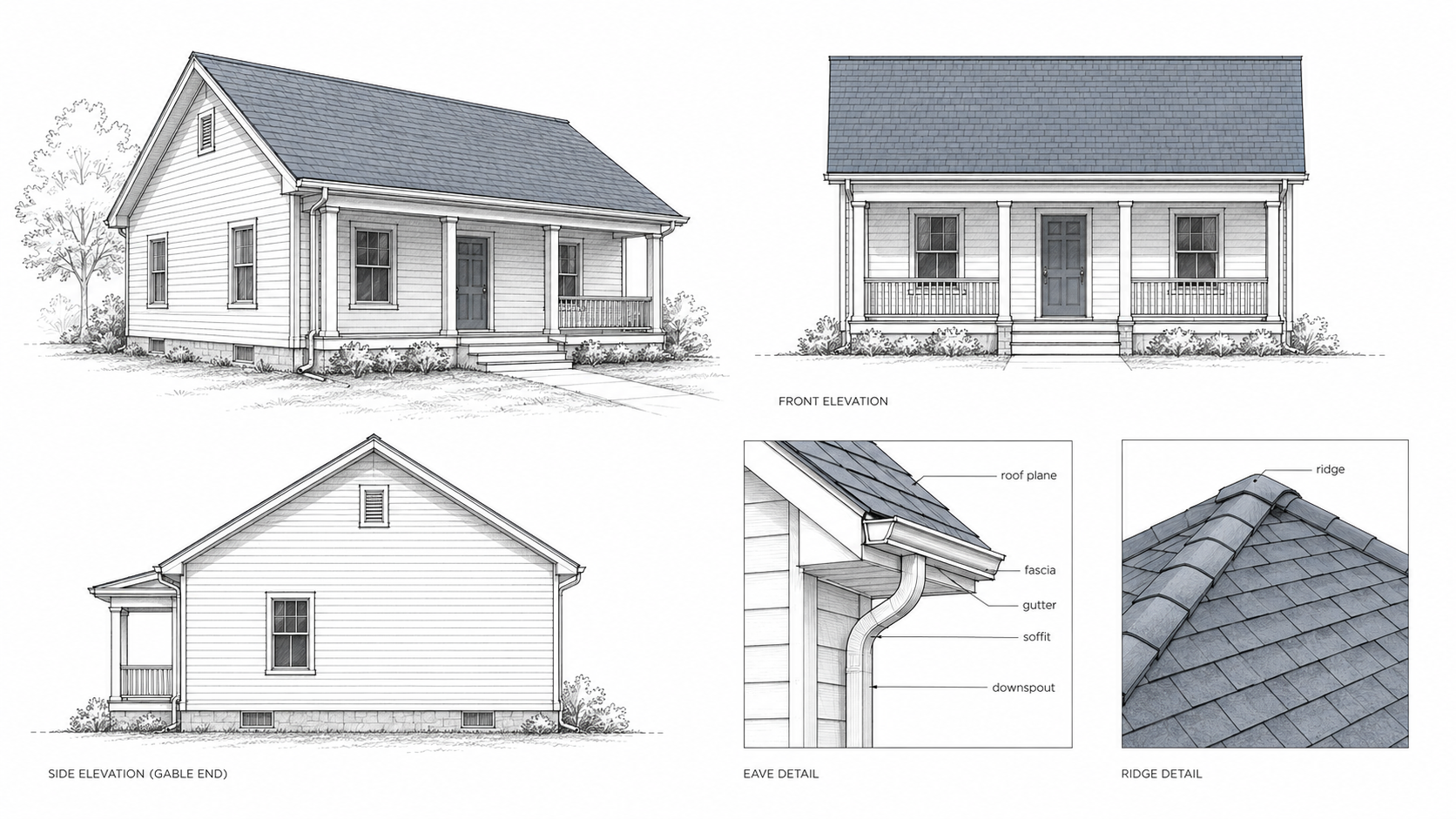
Rooflines reveal framing mistakes more than any other part of a house. A bowed ridge reads from the street. A wavy rake tells on the rafter tails. Before finish, sight the ridge, string the rakes, and plane or shim until the line is true. This half day costs less than living with a crooked silhouette for twenty years.
If you are mixing trusses and stick framing, decide where you take up the mismatch. Never ask fascia to hide a structural step. That is how you get gutters that will not drain and soffits that look like they were hung on a Friday at four.
Dormers in a Gable Field
Dormers are small roofs that talk loudly. Keep them narrow and keep their heads below the main ridge unless the house is large. Line their cheeks with the main pitch or a clearly intentional variation. Set them back from the front wall so the main eave still reads as one continuous edge.
On cottages and Cape houses, one dormer too many will tip the composition from calm to chattery. Test fewer first. You can always add one on paper. Removing them on site is not popular.
Modern Gable Rooflines Without Losing Warmth

The clean modern gable is a joy when it respects thickness. Thin edges are not no edges. Even the lightest standing seam hem needs a deliberate line. Let the roof and wall meet in a reveal that draws a dark line around the house. This keeps minimal from feeling mean.
If you glaze the gable end, give the glass a structure that echoes the pitch. A single big pane might look brave on renderings, but the frame that holds it in wind is what you will live with. Show mullions that make sense from inside and out.
Comparing Gable Rooflines to Hip and Flat Profiles

Hip rooflines are humble. They turn corners softly and sit down into wind. They also lower the amount of daylight that hits the top of walls because eaves run everywhere. Gables are bolder from the street. They put a face on the house and offer a big wall for windows under the peak. Flat and low rooflines recede in landscapes and interlock volumes easily, but they ask for more discipline at parapets and edges.
When you need both openness and weather sense, consider the mix described here: hip and gable combinations. Use the hip where wind punishes and the gable where you want a strong entrance or a room with lift.
Adding a Gable Roofline to an Existing House
Retrofits succeed when the new roofline looks like it was always part of the house. Match pitch or choose a clearly different one that is subordinate to the main. Push the addition back a step so the original mass stays legible. If you are adding a gable porch, carry the eave height from the main body and keep the ridge below the primary ridge.
Structure comes first. Know where the loads are going and check the foundation under any new lines. If you are tying into a hip, plan valleys that are short and easy to flash. Long valleys collect leaf litter and regret.
FIELD PICK
For step-by-step sequences and pricing logic on small to medium roof jobs, the field favorite is Roofing Construction & Estimating. It is not pretty, but it saves mistakes on dormers and porch ties.
Ventilation and the Edge You Can’t See
A dry roofline is a quiet roofline. Use a continuous ridge vent only when the attic volume and intake can support it. Starved ridge vents pull conditioned air from the house instead of outside air through the soffit. On small gables, controlled, discrete vents at the eave can be better than a swiss cheese soffit. Whatever you choose, draw the air path as a loop, not a dot.
Insulation Thickness and Apparent Edge
Deep insulation at the roof deck pushes finish lines down the pitch and can make a chunky roofline if you do not plan for it. Consider raised heels at trusses or a vented service cavity that keeps the exterior edge thin. If you go unvented, be honest about thickness in the detail and let the outside line be simple and crisp. Do not ask the fascia to hide your R values.
Color and Texture at the Roofline
Color is a structural decision at the edge. Dark rakes recede and make the gable read as pure shape. Light fascias show every joint and need top shelf carpentry. Texture will either sharpen or blur the roofline. Smooth metals draw razor lines. Heavy architectural shingles soften the silhouette and can be right on larger suburban houses. On coastal work, cedar at the rake and shingle fields can bind roof and wall into a single skin if you detail the drip correctly.
Energy, Water, and the Hidden Work
The roofline is where energy and weather cross. Set underlayment slips, ice protection, and membranes before you chase pretty lines. In snow and freeze thaw zones, two courses of protection at the eave are cheap insurance. Read through this practical guide to roofing systems with an eco lens to choose membranes and insulation that will not fight each other.
RECOMMENDED TOOL
Ice dam country demands belt and suspenders. Grace Ice & Water Shield at eaves and valleys is expensive, but it stops the slow leaks that ruin plaster and trim.
Detail Library: Five Reliable Rake and Eave Moves
- Thin metal rake with concealed hem set over a continuous plywood backup. Clean, modern, and wind ready when the hem is tight.
- Traditional layered rake with subfascia, fascia, and a slim bargeboard separated by a shadow kerf. Paint the kerf dark and the boards body color for depth.
- Open eave with exposed tails planed to a chalk line and sealed on all sides. Works on Craftsman and simple farmhouses when the tails are consistent and honest.
- Vented soffit with hidden intake using a slot behind the fascia and baffle above insulation. Avoids the look of a perforated grill.
- Classical short return that turns the gable into the eave for one board length then stops. Calms a front elevation without adding weight.
Common Mistakes You Only Make Once
- Letting fascia try to hide structural steps. Fix structure first and the line will behave.
- Over venting small soffits. You only need enough intake to match your exhaust. More holes do not mean more air.
- Dormers that ignore the main pitch. They look like hats from another house.
- Returns that are too deep for the wall. The gable starts looking like a cap on a different building.
- Ignoring gutters during design. The prettiest rake can be ruined by a last minute K gutter that has nowhere to go.
Regional Notes from the Road
On coasts with big wind, I keep the verge tight and the eave restrained. Less sail, fewer callbacks. In dry high sun, deep eaves earn their shade every day and save interiors from bleaching. In snowy places, I keep penetrations far from the eave and choose simple, short valleys. In earthquake country, I make the fascia a true straightedge because waviness reads louder under strong light and long shadows.
For projects that look to East Asian precedents, mind how rooflines embrace courtyards and frame views. This quick look at Japanese exterior logic is a good reminder that rooflines are about space as much as shelter.
RECOMMENDED TOOL
Underlayment that grips boots and stays flat makes cornice work safer and cleaner. Tyvek Protec 200 is a reliable mid tier choice for small crews and owner builders.
Workflow: From Sketch to Site Without Losing the Line
- Draw the section at the eave and at the rake. Decide where air and water live before you pick trim.
- Choose pitch with climate and story in mind. Test three options on trace, half step changes only.
- Pick the edge language. Thin and crisp or layered and traditional. Match the material to the language.
- Set soffit depth for shade and proportion. Mock it in cardboard at full size if the elevation is sensitive.
- Align window heads and fascia wherever possible. The façade will feel composed even before color.
- Detail dormers as guests of the main roof, not rulers. Keep them narrow and back from the front plane.
- Walk the site at different hours. Adjust projection to move shadow where it helps comfort and reading.
- On framing day, string lines. Straighten tails and plane shims before any finish touches wood.
- Install underlayment and ice protection with care. Pretty lines leak if the layers under them are sloppy.
- Hang gutters as part of the composition, not as an afterthought. Choose profiles that fit the edge language.
Case Snapshots: What Works and Why
Small cottage on a tight street. We kept the pitch at 8:12 to give the rooms lift without towering over neighbors. A short classical return calmed the front. One narrow dormer centered on the entry kept the gable face clean. The soffit measured just under sixteen inches to dodge a street tree and still shade the top of the window trim.
Farmhouse addition. The new gable wing sat back a step and used the same pitch as the original. We kept the ridge lower to let the old house lead. The rake matched the old board thickness but added a hidden kerf for a shadow line that made the new work feel crisp without shouting “new”.
Modern infill. The gable ran the full length of a narrow lot. We used a thin metal hem at the rake and a ninety millimeter reveal at the roof to wall joint. Window heads lined with the soffit and mullions echoed the pitch. The house felt simple but not flat because the shadow line wrapped the whole perimeter.
Cost, Schedule, and the Reality Check
Spend money where the eye lands and water falls. A crisp metal edge, straight fascia, and good membranes do more than an extra paint color or a complicated return. If the budget is tight, choose a simple layered rake that carpenters can execute well over a thin metal hem that needs a specialist and may still wave in heat if the sheathing is not perfect.
Add time where alignment matters. One hour aligning window heads with fascia saves you from living with visual noise forever. Write it into the schedule. Someone has to own the line.
When to Break the Rules
Break pitch conventions when the site is flat and wants a long, calm horizon. Break symmetry when a view or a tree demands it and the plan follows. Break thickness expectations when you want a modern cut, but let the cut be consistent and deliberate around the whole house. Break nothing just to be different. Rooflines have long memories and neighbors have long sightlines.
Where to Read Next
If you want to step from roofline to full roof system and anatomy, this builder level walkthrough of gable roof types and details will fill in structure and sequencing. For a wider look at simple solutions that keep small houses honest, this note on straightforward roof design for compact homes is a good second stop.
FAQ
Gable Roofline Decisions
How deep should my eave be on a gable façade?
Start between twelve and twenty four inches. Choose depth by climate and wall height. Deeper eaves help in sun and rain but can look heavy on short walls. Mock it at full scale and check the shadow at mid afternoon.
Do gable rooflines cost more than hip rooflines?
The line itself costs about the same. Complexity comes from valleys, dormers, and edge language. Hips may save on wind bracing but add eave length. A pure gable often wins on simple framing and fewer valleys.
Can I add a gable roofline to a ranch without it looking tacked on?
Yes. Keep the new ridge lower than the main and step the addition back. Match pitch or change it clearly. Align fascia heights. Let the original mass read first and the new gable read as a respectful wing.
What pitch looks modern without leaking?
Many modern houses sit between 4:12 and 6:12 with careful flashing and continuous membranes. Go shallower only if your climate and system are chosen for it and details are drawn precisely.
Should gutters be part of the roofline design?
Always. Pick a profile that matches the edge language and give it a destination. No one enjoys a pretty rake feeding a downspout that dumps on a porch step.
Is a glazed gable end worth it?
It can be wonderful for light and sky, but frame it with mullions that echo the pitch and plan for summer shading. Full glass to the peak will magnify heat if the eave is shallow.
What is the single site habit that keeps rooflines straight?
String the line. Plane the tails. Check in the morning light. Do not let finish carpentry fix framing sins. The sky is honest and will show every wave.
One Page Checklist
- Pick pitch with climate and story in mind, then test half step changes.
- Choose an edge language and match materials to it.
- Set soffit depth for shade and proportion rather than habit.
- Align window heads with fascia where the façade needs calm.
- Draw the water path and the air path before you pick trim profiles.
- Keep dormers subordinate unless the house is large.
- Walk the site at three hours and adjust projection for real light.
- String, plane, and shim before any finish hits the cornice.
- Install membranes like leaks are your money. They are.
- Choose gutters early and let them belong to the composition.