
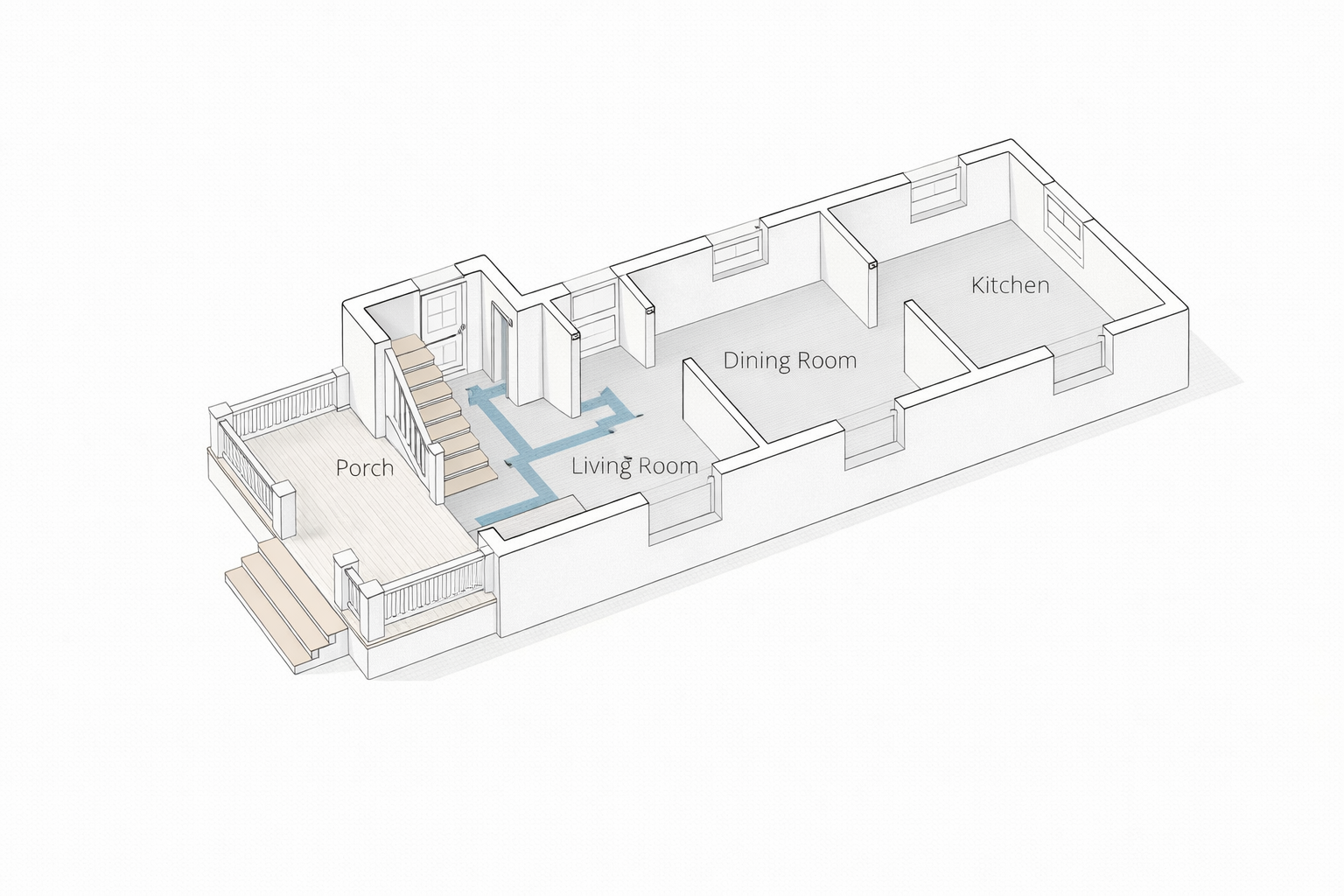
Illustration by ArchitectureCourses.org. Cutaway plan of a typical 1910s house showing porch, entry hall, living room, dining room, and kitchen in sequence.
How 1910s Houses Usually Flow
A lot of 1910s houses still feel easy to move through. The rooms line up clearly, and the plan usually makes sense fast.
You come in from the porch, pass through a small hall, then move through the living room, dining room, and kitchen. Bedrooms are usually upstairs or pushed farther back. Bathrooms stay small and close to the plumbing.
That layout is a big part of why these houses still work. It also explains why bad renovations can make them feel awkward so quickly.
If you are trying to understand the problems these houses develop over time, start with common problems in 1910s houses. If you are planning renovation work, you should also read how to update a 1910s house without stripping it out. This page focuses on how the floor plans themselves were organized.
The Basic Layout Pattern
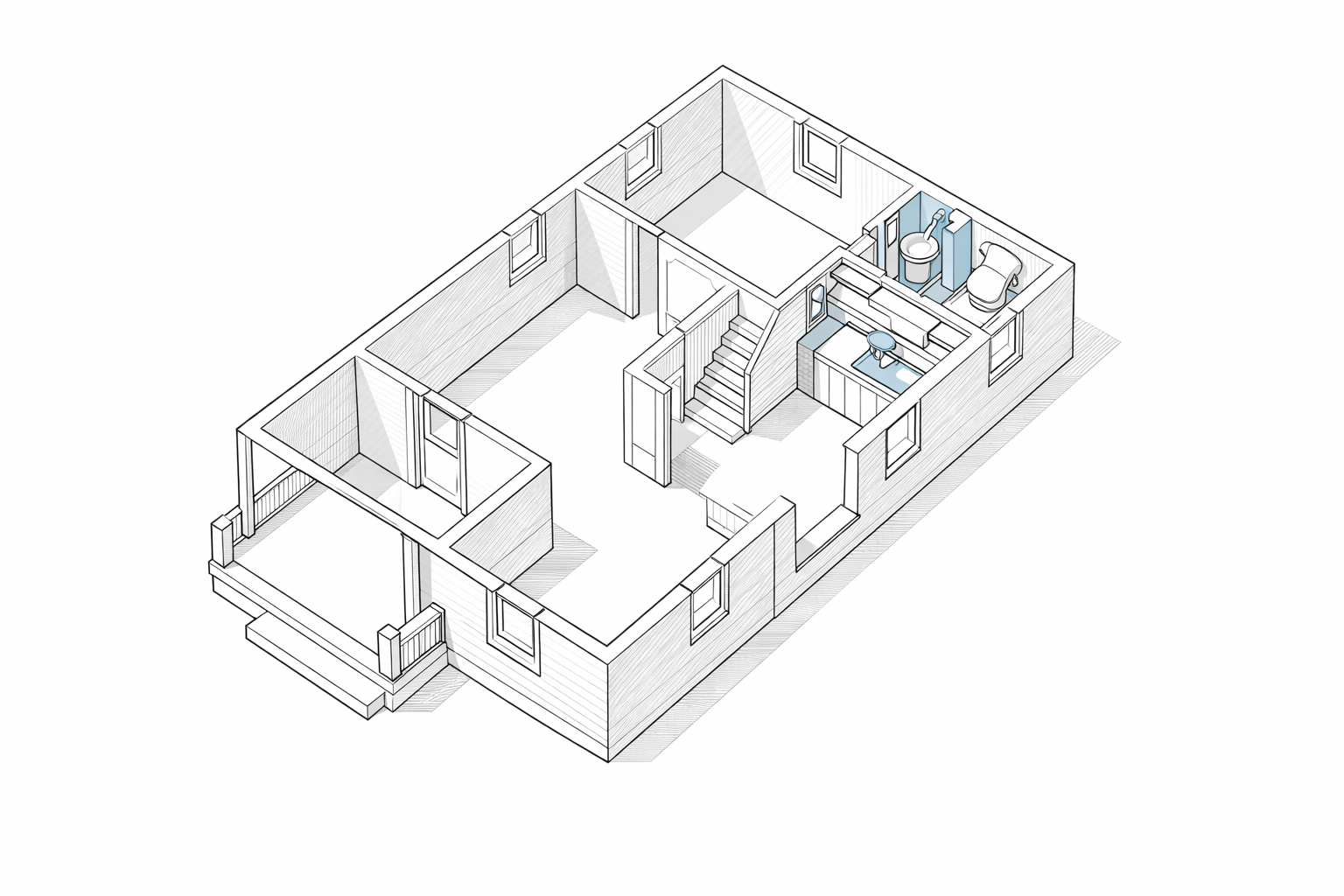
Illustration by ArchitectureCourses.org.
Most 1910s houses followed a fairly predictable layout pattern. The rooms were arranged in a sequence that balanced privacy, circulation, and daily household work.
| Area | Typical Location | Purpose |
|---|---|---|
| Front porch | Front facade | Main entrance and social threshold |
| Entry hall | Immediately inside the front door | Circulation and stair access |
| Living room | Front half of the house | Main gathering space |
| Dining room | Behind or beside living room | Formal meals and family gatherings |
| Kitchen | Rear of the house | Work-focused service room |
| Bedrooms | Upper floor or rear zones | Private sleeping areas |
| Bathroom | Near plumbing stack | Compact hygiene space |
This layout might look simple, but it was carefully organized around circulation and household work patterns.
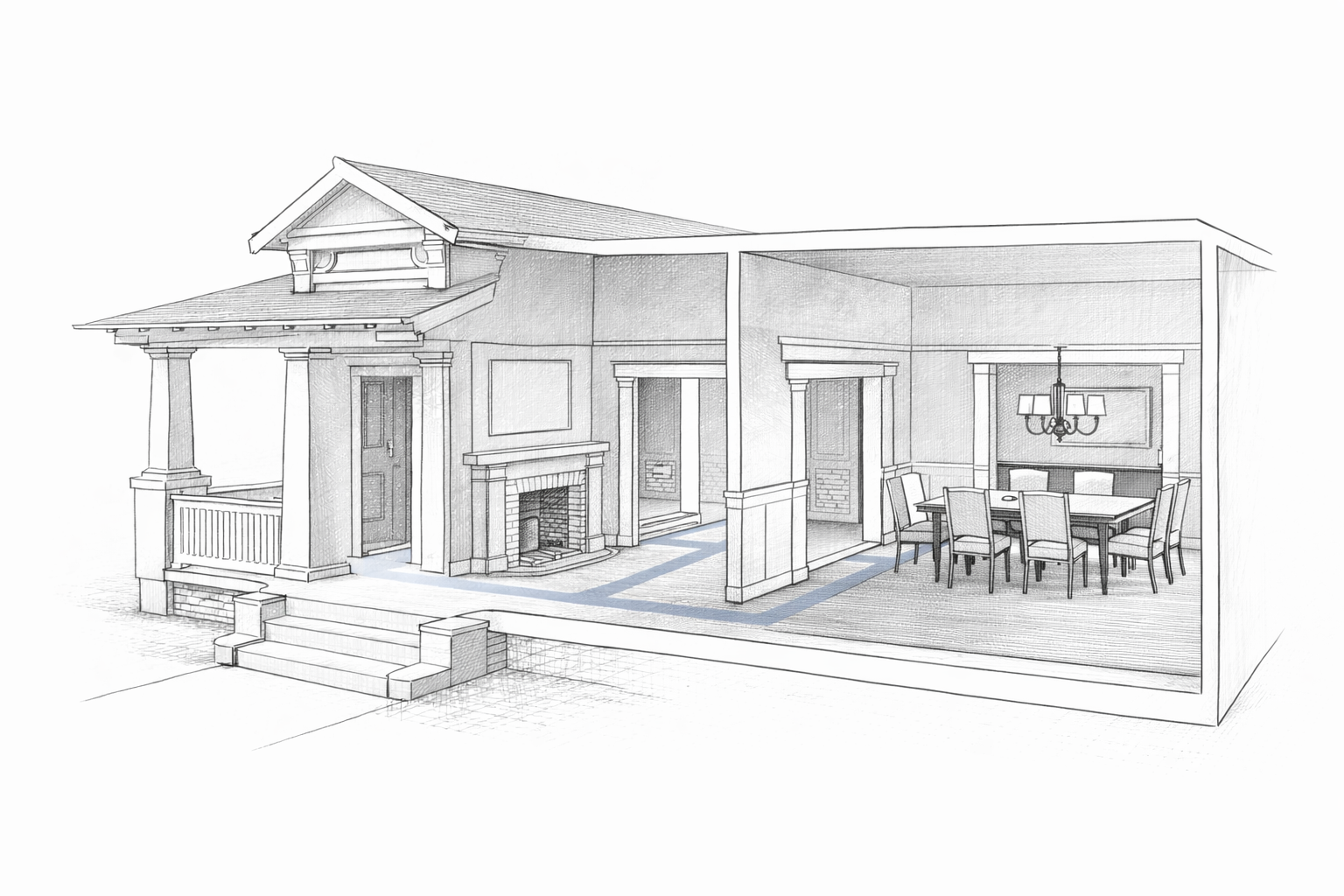
Illustration by ArchitectureCourses.org. This cutaway shows how many 1910s houses moved from porch to entry hall to main public rooms in a clear, ordered sequence.
Why These Plans Still Work Today
Unlike some later open-plan houses, 1910s homes rely on clear room separation. Each room has a defined job.
- The living room centers around a fireplace wall.
- The dining room sits close to the kitchen for practical service.
- The stair hall provides circulation without cutting through other rooms.
- The kitchen remains a work-focused space rather than a large entertaining area.
Because of that structure, the house maintains a rhythm as you move through it. Removing too many walls can break that rhythm quickly.
This is one reason renovation guidance often recommends selective updates rather than complete interior gutting.
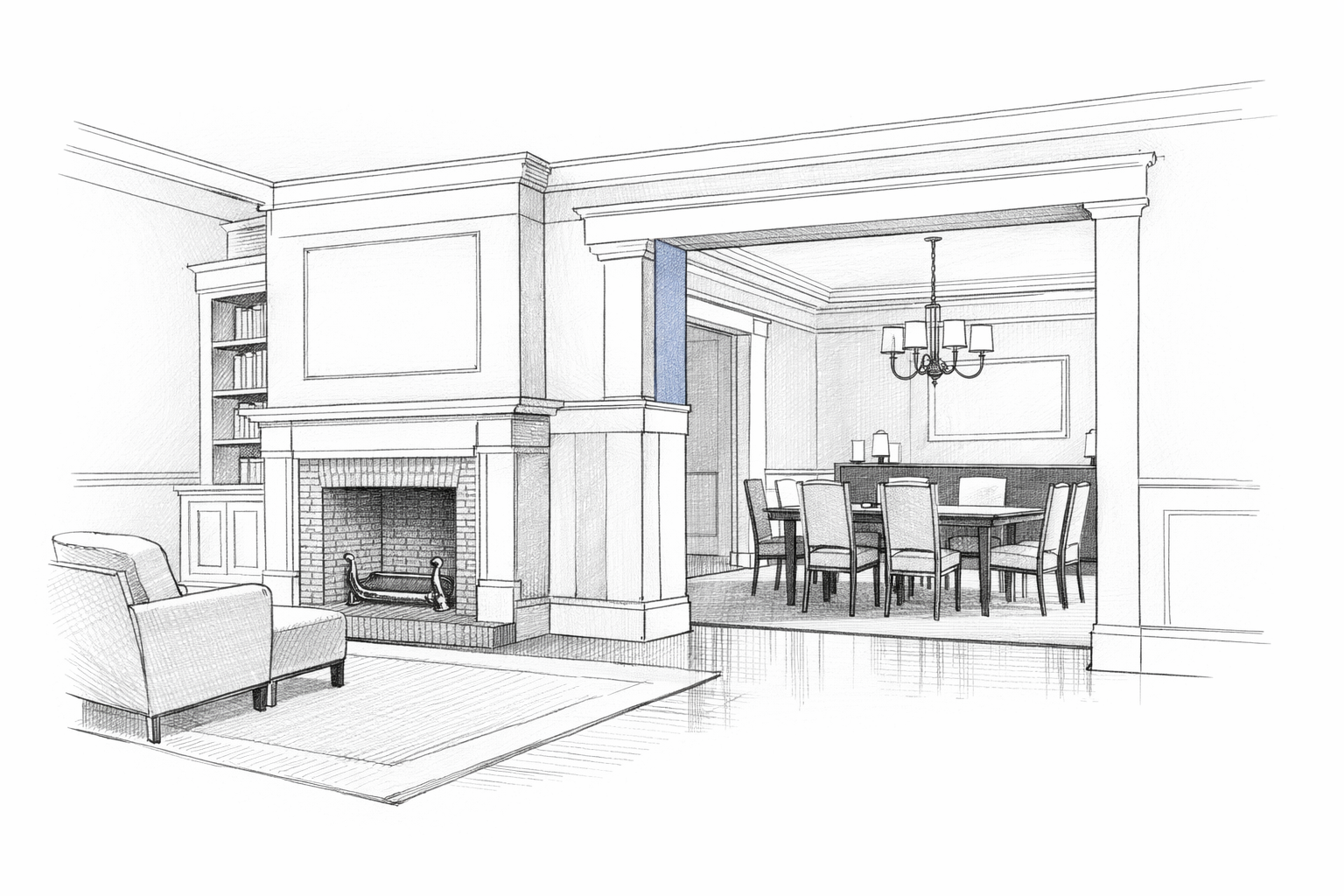
Illustration by ArchitectureCourses.org. This diagram shows how many 1910s houses linked living and dining rooms without fully opening them into one space.
Where Bathrooms Were Placed
Bathrooms in 1910s houses were usually compact and placed near the main plumbing stack.
This minimized pipe length and simplified drainage systems, which were much more limited at the time.
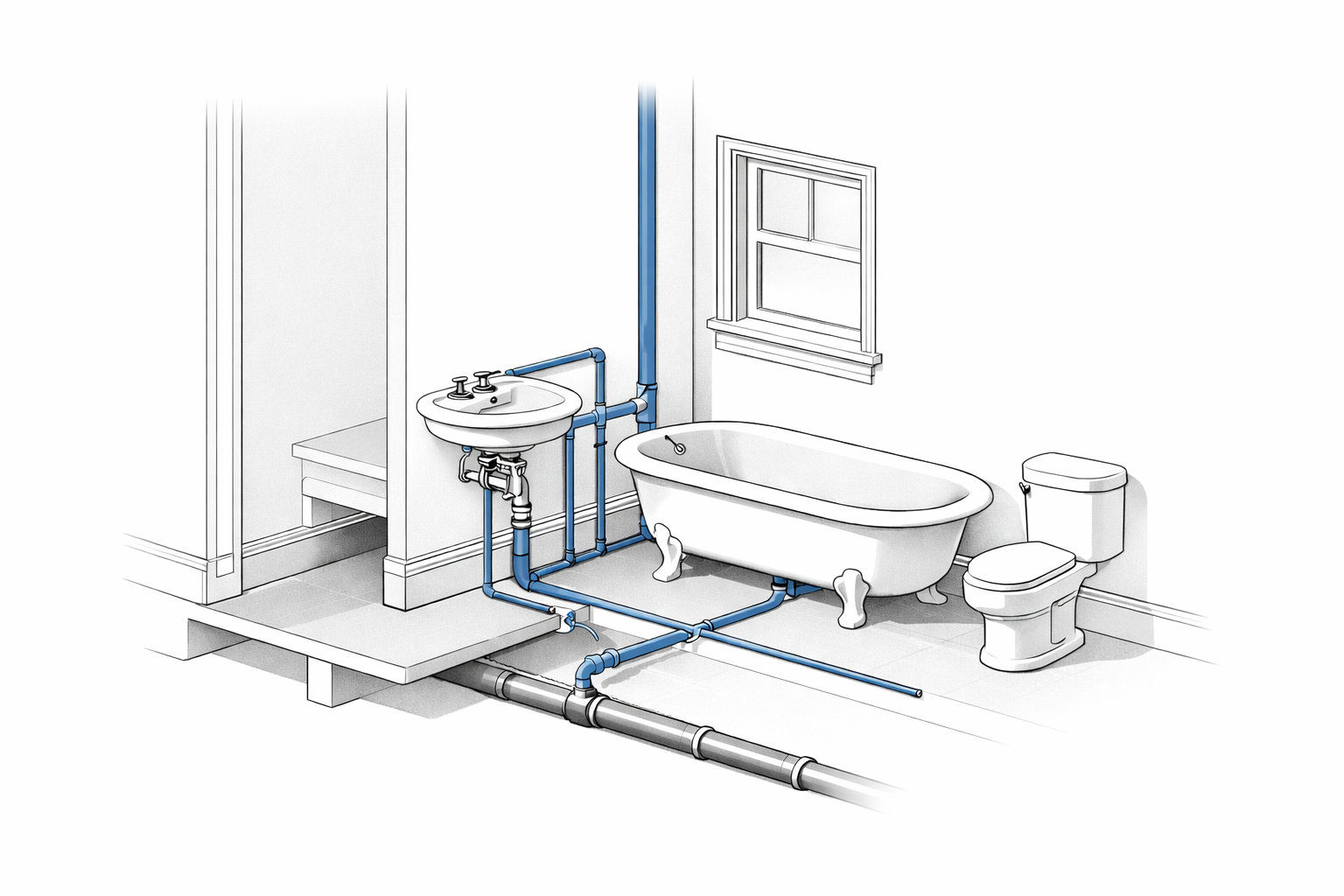
Illustration by ArchitectureCourses.org. A typical 1910s bathroom grouped fixtures close to one plumbing stack to keep waste and supply runs short and practical.
Because of that constraint, bathrooms were often located:
- between two bedrooms
- off a small hall
- above the kitchen or service areas
Trying to relocate bathrooms far from those areas usually creates much more complicated plumbing work.
Kitchen Placement and Work Zones
Kitchens in the 1910s were primarily workspaces. They were not designed as large open gathering rooms.
Typical kitchen characteristics included:
- one primary working wall
- close access to the dining room
- pantry or storage cabinets
- direct access to a back porch or yard
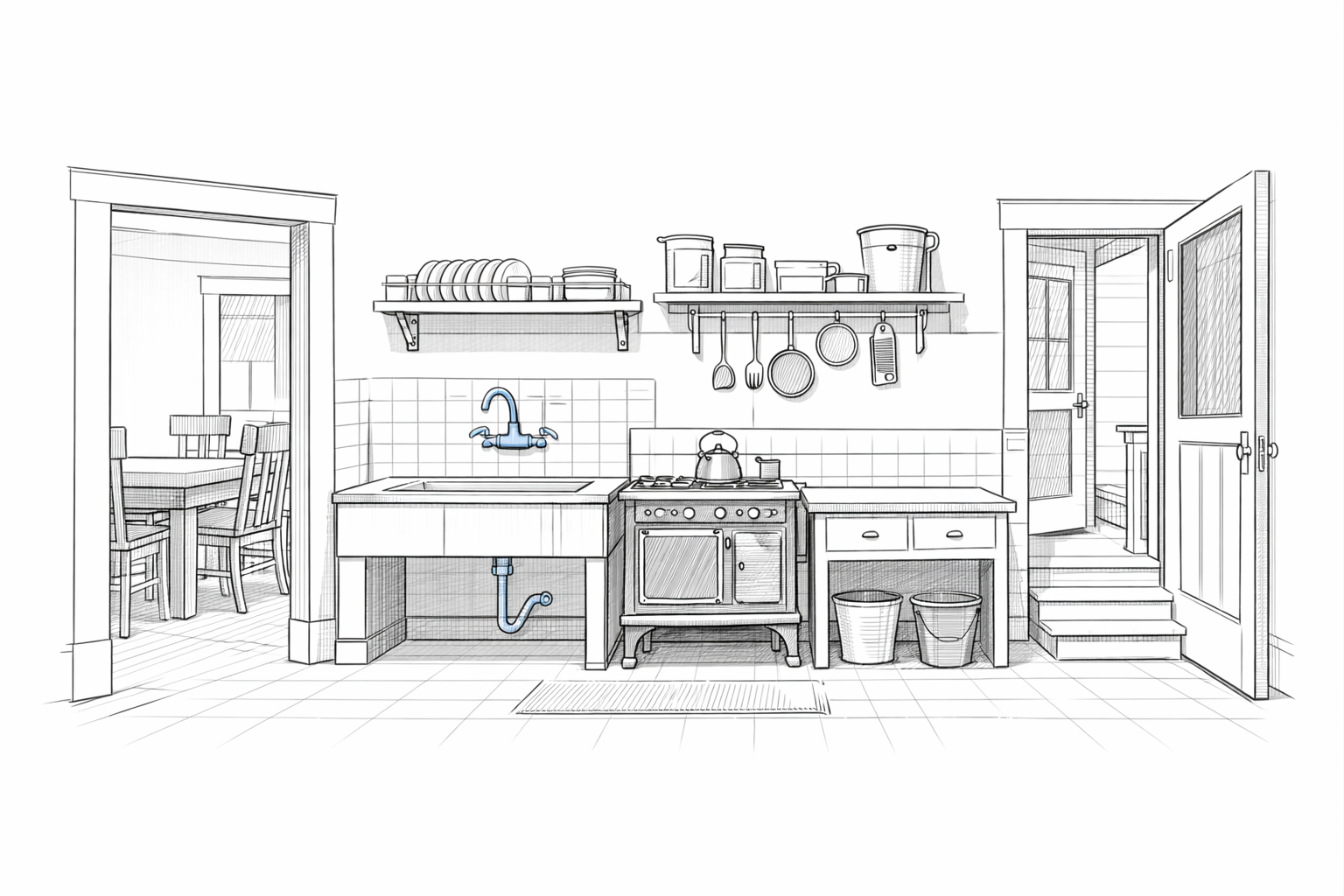
Illustration by ArchitectureCourses.org.
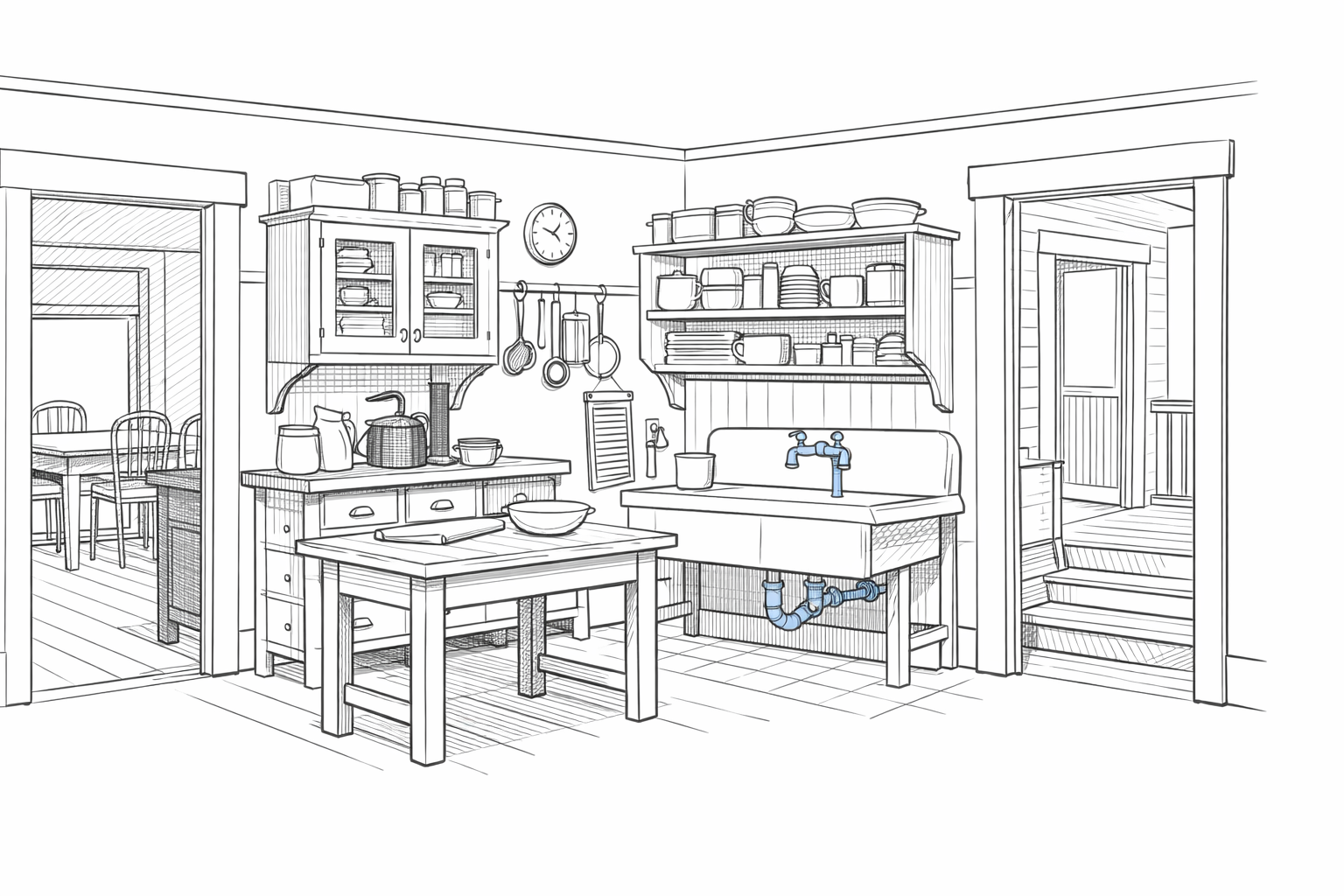
Illustration by ArchitectureCourses.org.
When kitchens are modernized, the best results usually respect that working logic instead of fighting it.
Living Rooms and Dining Rooms
The living room and dining room form the social center of most 1910s houses.
These rooms are often connected by:
- a wide opening
- partial columns
- built-in cabinetry
- trimmed openings
This arrangement allowed the spaces to feel connected while still maintaining distinct rooms.
It is also one of the defining spatial characteristics of early-20th-century houses, particularly those influenced by Craftsman bungalow planning.
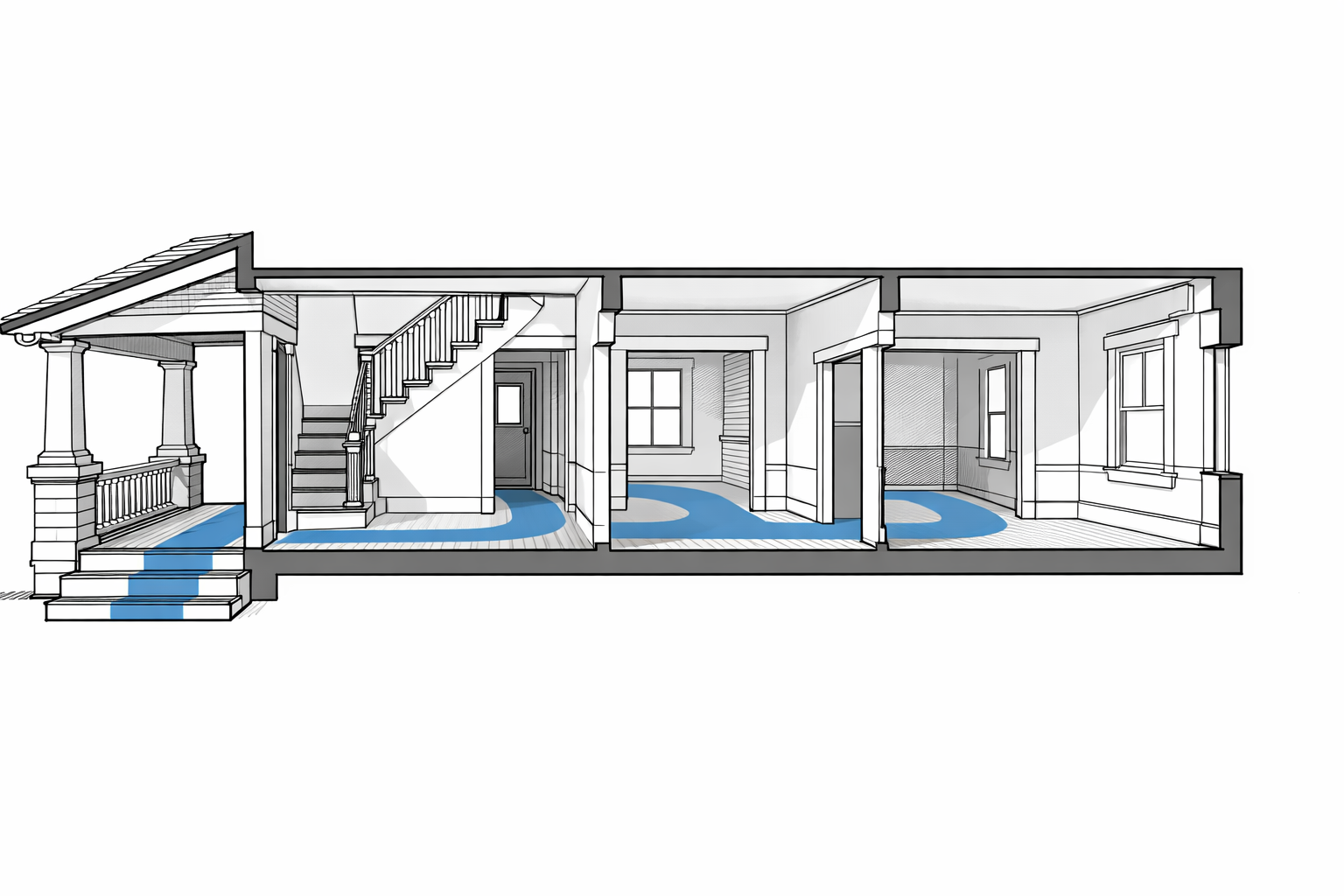
Illustration by ArchitectureCourses.org.
Why Many Renovations Disrupt These Plans
When homeowners remove walls without understanding the original layout logic, the result often feels less functional.
Common mistakes include:
- removing dining room boundaries entirely
- cutting stair halls into open living spaces
- moving kitchens far from their service zones
- adding oversized bathrooms that disrupt circulation
These changes may create larger rooms, but they often weaken how the house flows.
Recognizing an Authentic 1910s Plan
Even with renovations, you can often identify the original plan by looking for a few key clues.
| Feature | What it indicates |
|---|---|
| Central stair hall | Original circulation structure |
| Living room fireplace wall | Primary social room |
| Dining room near kitchen | Original service relationship |
| Compact bathroom near bedrooms | Plumbing stack organization |
| Back porch access from kitchen | Service entrance pattern |
Even if the house has been remodeled, these elements often reveal how the house originally functioned.