

Baroque Architecture Examples Every Architect Should Know
The best Baroque architecture examples matter less for fame than for the design move each one teaches.
Some teach procession. Some teach light. Some teach stair design, garden axes, city planning, acoustics, climate control, or how service spaces hide behind grand rooms without breaking the plan.
For the broader style overview, use Baroque architecture. For a fast checklist of traits, use Baroque architecture characteristics.
How to Read These Examples
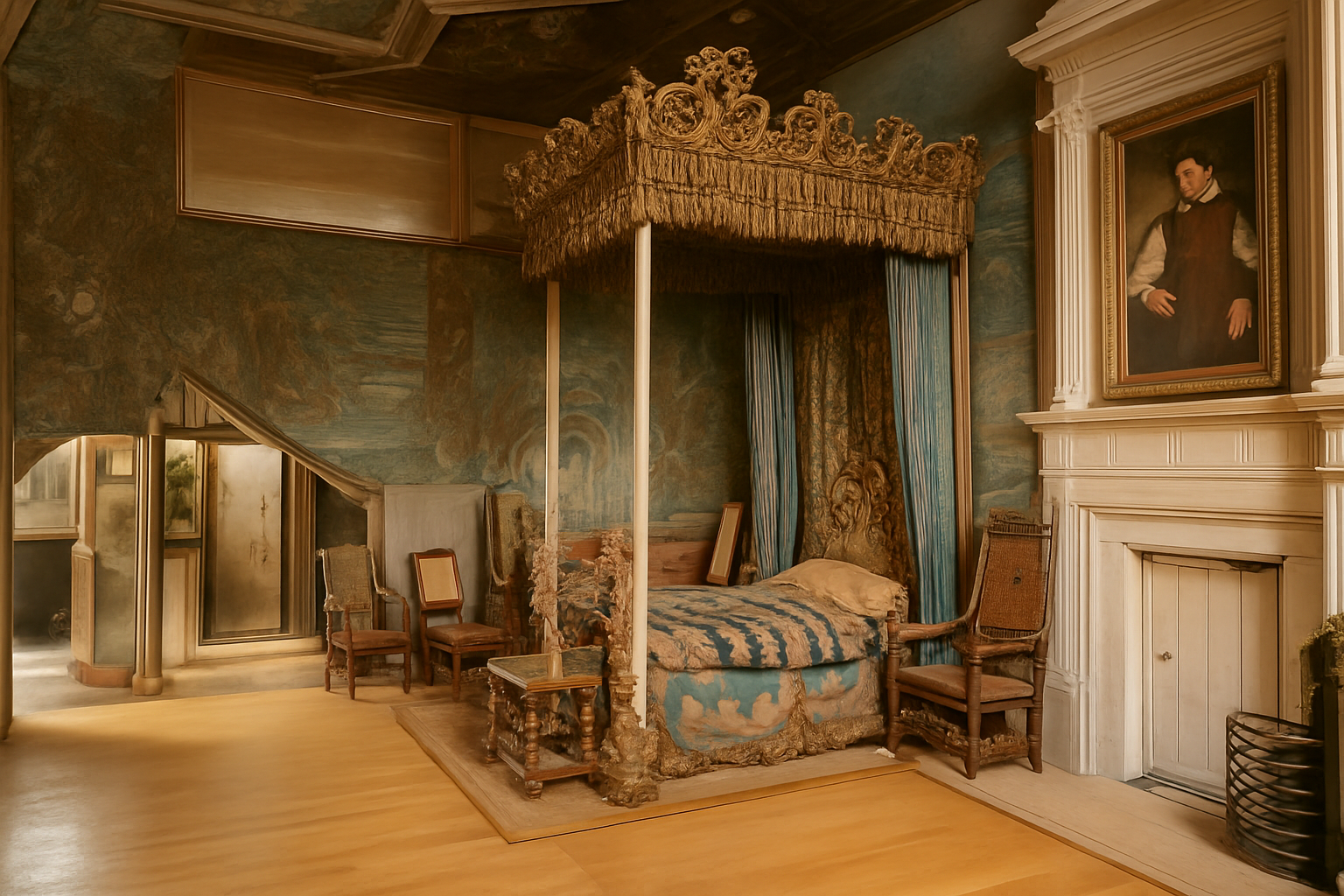
Do not start with gold, carving, or ceiling paintings. Start with what the building makes people do.
Does the approach slow down before the main entrance? Does a stair turn the body at the right moment? Does a garden axis extend the building into the landscape? Does light land on one surface while another stays quiet? Does the plan separate visitors, staff, service, and private rooms without making the building feel broken?
Those questions make Baroque examples much more useful than a simple list of famous buildings.
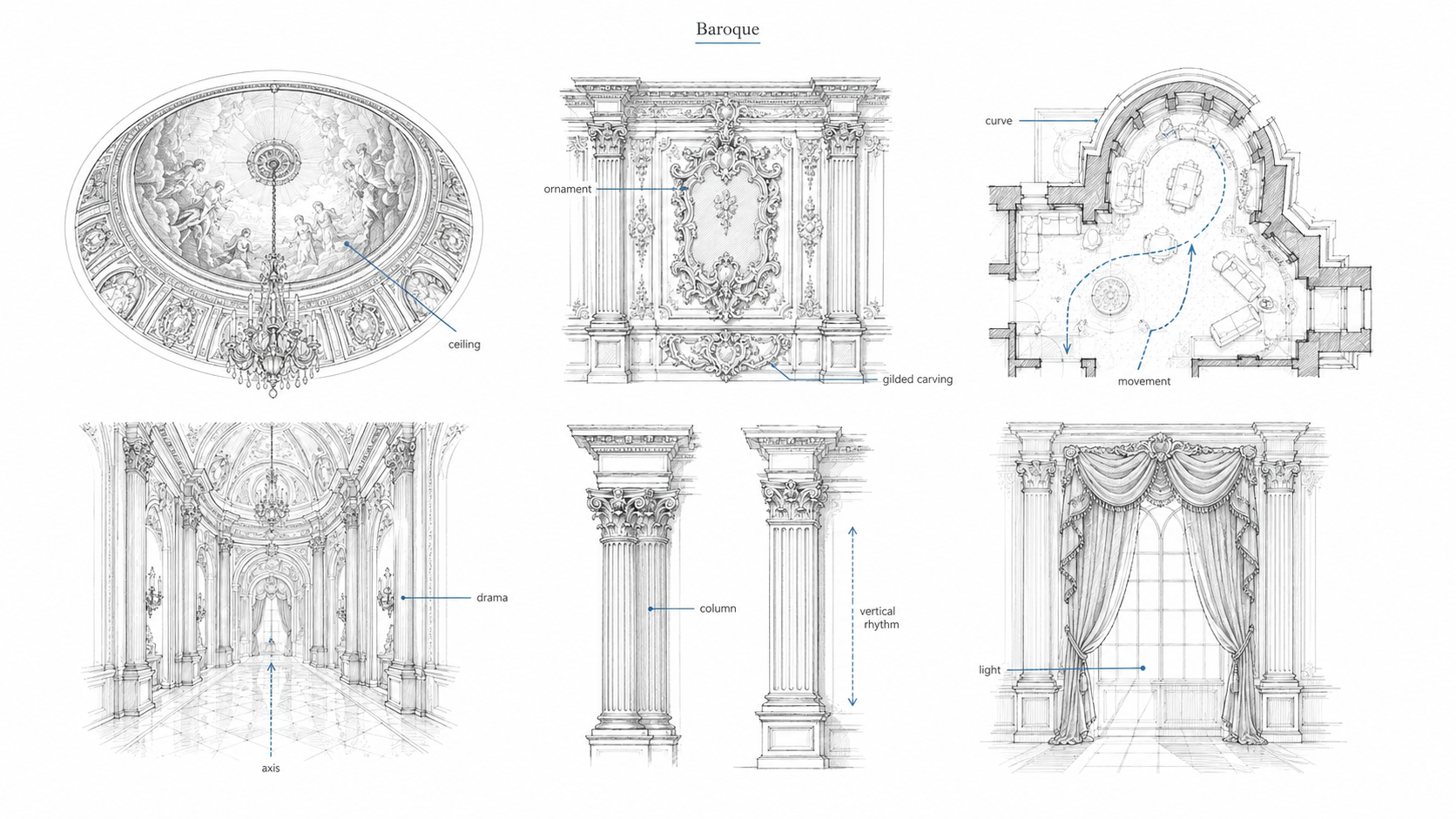
| Example type | What to study | Best design lesson |
|---|---|---|
| Palaces | Approach, gardens, state rooms, service routes | Power is planned through movement |
| Stair halls | Turns, landings, rail height, light, sound | Circulation can become the main event |
| Theaters | Sightlines, volume, timber, acoustic shape | The section controls performance |
| Libraries | Shelves, climate, light, floor material, air movement | Beauty and environmental control can work together |
| Squares and city axes | Facades, corners, porticoes, fountains, approach | Urban space can be choreographed |
Palaces, Courts, and Large Residences

Palace of Versailles, France
Versailles is the Baroque example most people know, but the useful lesson goes beyond scale or luxury.
The building, gardens, mirrors, window rhythm, state rooms, service doors, and long axes work together. The Hall of Mirrors doubles light, extends views, and turns interior movement into part of a larger landscape sequence.
Look for the backstage logic too. Service doors, secondary circulation, and hidden routes keep the public rooms clean and controlled. That is one reason Versailles matters as architecture, not only as spectacle.
Vaux-le-Vicomte, France
Vaux-le-Vicomte is smaller and easier to read than Versailles. The oval salon anchors the house and connects the interior to the garden axis.
The important lesson is compression and release. The approach prepares the body. The central room opens the plan. The garden extends the experience beyond the walls. It shows how one strong volume can organize an entire estate.
Würzburg Residence, Germany
Würzburg Residence is one of the best examples for studying stair movement, ceiling scale, and acoustics.
The stair does more than connect floors. It slows the body, opens the view, and changes sound. The stucco, ceiling surface, and large volume help break echo and make the space feel grand without becoming unreadable.
Zwinger, Dresden
The Zwinger reads like a palace court but works as an open-air gallery and urban room.
Arcades pull shade over visitors. Pavilions stage views across the court. The height stays controlled so the courtyard belongs to people rather than walls. The lesson is scale discipline.
Belvedere, Vienna
Belvedere uses slope as part of the design.
The upper and lower palaces share a long spine. Terraces turn grade into theater. The garden is not leftover space between buildings. It is the system that makes the two buildings read together.
Schönbrunn Palace, Vienna
Schönbrunn is useful for studying comfort, shade, garden planning, and long approach.
Deep routes, tree allees, stone, garden paths, and interior sequences work together. The most comfortable movement often follows shade and surface, not only the formal axis.
Nymphenburg and Schleissheim, Munich
These Bavarian palaces are useful for studying enfilades and near-aligned rooms.
Doorways may pull the eye forward without aligning too perfectly. The slight shift keeps the body moving and makes the sequence feel alive instead of mechanical.
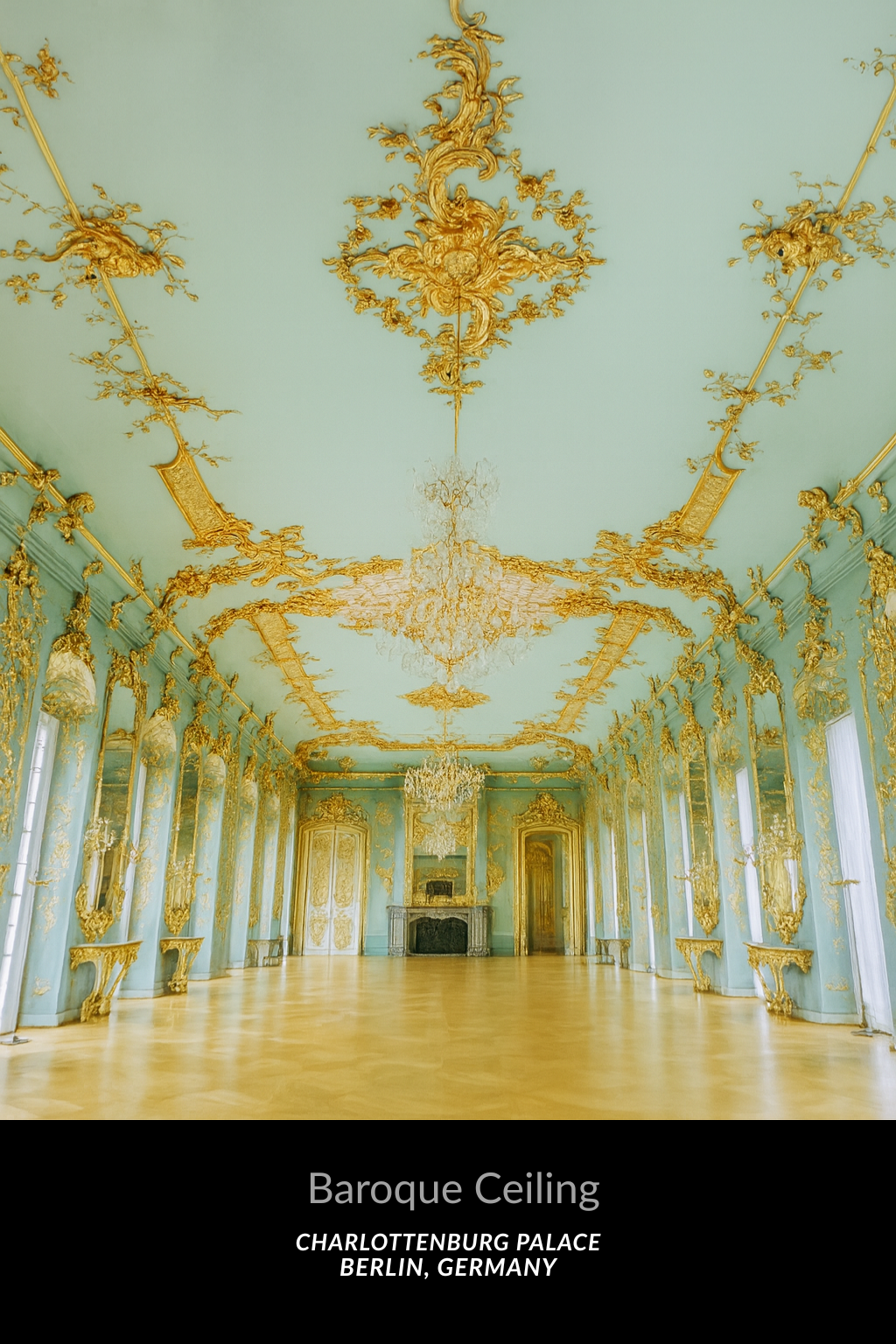
Charlottenburg, Berlin
Charlottenburg shows how a compact palace can still build a strong sequence.
Oval halls splice into rectangular rooms. Transitions do the heavy lifting. The lesson is not size alone, but how room shapes change the pace of movement.
Castle Howard and Blenheim Palace, England
English Baroque often feels heavier, more restrained, and more architectural than decorative.
Castle Howard and Blenheim are useful because their lessons sit in more than fronts and domes. Look at service yards, long fronts, circulation, and the relationship between state rooms and working spaces. You can often understand the supply chain from the plan.
Royal Palace of Madrid, Spain
The Royal Palace of Madrid teaches mass, stone, heat, and rhythm.
Heavy masonry, small service openings, and clear wall rhythm make the building feel controlled. The useful lesson is how mass and repeated openings can manage climate and scale at the same time.
Peterhof, Catherine Palace, and Winter Palace, Saint Petersburg
Russian Baroque examples respond to long winters and low light.
Glazed galleries harvest thin light. Color keeps facades legible in snow glare. Gilding and mirrors warm the interior effect. The room sequence often reads like a slow river: narrow passages, broad rooms, sudden openings, then long views.
Wilanów Palace, Warsaw
Wilanów Palace is useful because it handles Baroque language at a more intimate scale.
Pocket courtyards, garden axes, and controlled rooms show how smaller moves can still create hierarchy and comfort.

Rundāle Palace, Latvia
Rundāle Palace is a strong example of Baroque estate planning beyond the main rooms.
Kitchens, stables, gardens, orchards, and service routes are not afterthoughts. They are placed so work can happen without breaking the main approach. Logistics become geometry.
Urban Palaces and Civic Rooms

Palazzo Barberini, Rome
Palazzo Barberini is useful because two different stair experiences exist inside one building.
One stair feels public and theatrical. The other is more compact and inward. The building teaches social rules without signs: who moves where, how quickly, and through which kind of space.
Palazzo Spada and the Perspective Gallery, Rome
Palazzo Spada’s forced perspective gallery is more than a clever trick.
Narrowing side aisles, rising floor, and controlled sightline make a short corridor appear far deeper than it is. It shows how Baroque design can manipulate perception with geometry, not just decoration.
Palazzo Carignano and Palazzo Madama, Turin
These Turin examples show brick and curve working together.
Curved surfaces catch low light, ease corners, and give the street a sense of movement. They also show that Baroque does not require marble everywhere. Brick can carry drama when the geometry is strong.
Quirinal Palace, Rome
Quirinal Palace is useful for studying how buildings step with topography.
The mass is arranged in planes that work with the hill. Procession is mapped onto ground level, approach, and height.
Royal Naval College, Greenwich
Greenwich shows how Baroque planning can shape wind, river frontage, and civic presence.
Courts, colonnades, spacing, and river edges work together. The open composition lets the site breathe while still feeling formal.
Grand-Place Guildhalls, Brussels
The Grand-Place guildhalls show commerce and display sharing one urban room.
The facades are theatrical, but delivery, drainage, doors, and rooflines still matter. The square works because pageantry and everyday use are held in the same stone frame.
Louvre East Facade, Paris
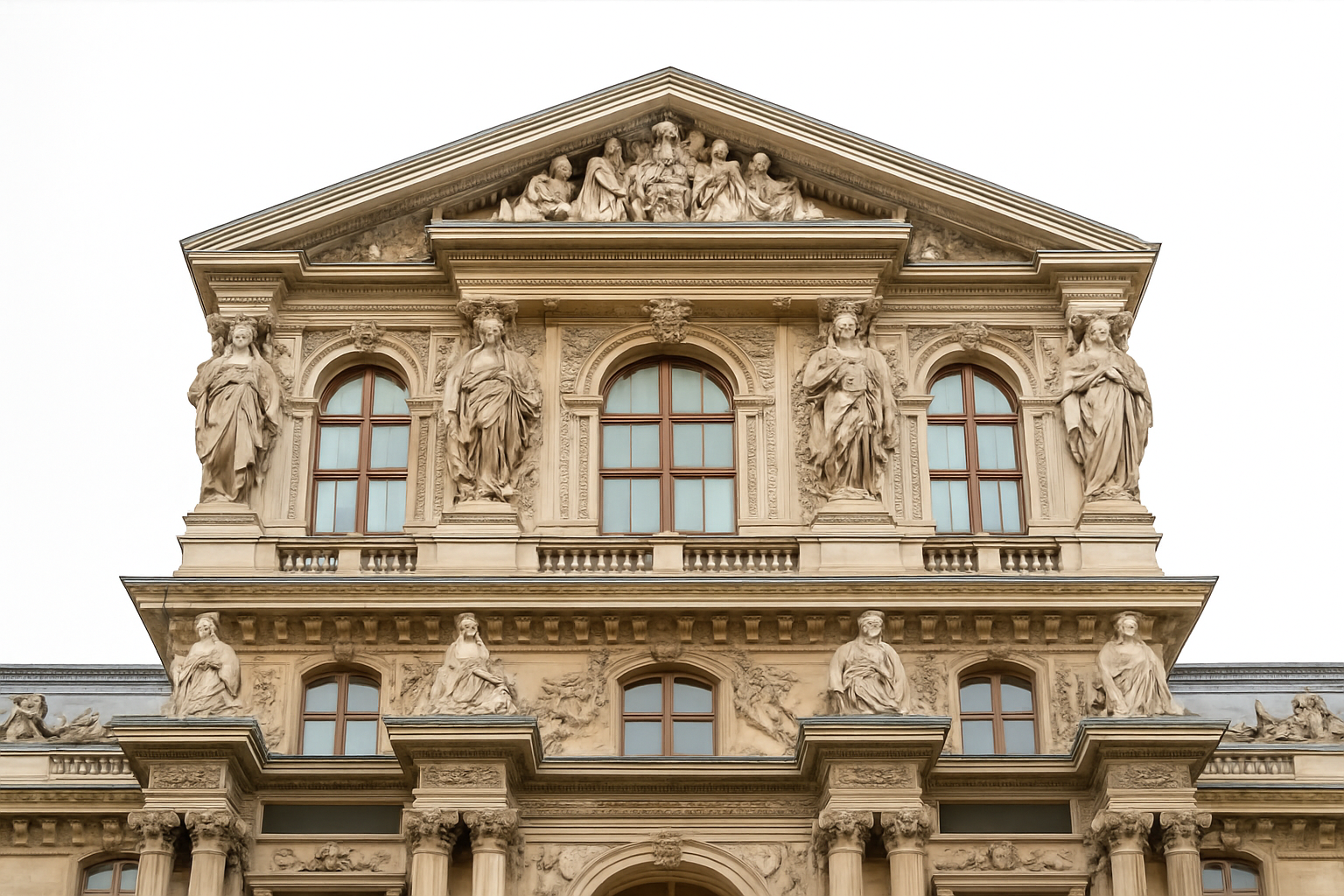
The Louvre east facade is a boundary example. It belongs to the same seventeenth-century world of court power and public image, but its lesson is restraint rather than restless movement.
The colonnade shows how rhythm, repeated shadow, and a long civic front can create authority without heavy surface drama. Use it as a comparison point when Baroque energy begins to settle into French classical order.
Theaters, Halls, Libraries, and Museums
Teatro Farnese, Parma
Teatro Farnese is a timber room dressed with architectural ambition.
Its value is in the section. The bowl shape, stage line, timber, and volume pull voice outward and upward. You can understand the building by studying where sound wants to travel.
Teatro Bibiena, Mantua
Teatro Bibiena shows how plan shape affects listening.
Its box arrangement and room geometry make the theater feel alive before any performance begins. The plan is part of the sound.
Biblioteca Joanina, Coimbra
Biblioteca Joanina is one of the best examples for studying Baroque environmental control.
Heavy shelves, dense wood, marble floors, limited light, and controlled interior conditions protect books while creating a rich room. The ornament rides on top of practical climate logic.
Hermitage, Saint Petersburg
The Hermitage works as a museum because palatial rooms already understood sequence.
Enfilades make exhibition movement possible. Large works can sit in high-light rooms. Smaller works can live where corridors slow and breathe.
Villas, Hunting Lodges, and Garden Machines

Palazzina di Caccia di Stupinigi, Turin
Stupinigi is a hunting lodge planned like a compass.
Radiating galleries make the surrounding landscape part of the plan. Low wings protect movement. Roof form, smoke control, service, and approach all work together. The building is useful because it proves that a leisure building can still be highly disciplined.

City Squares, Axes, and Civil Engineering
Turin’s porticoes and piazzas
Turin’s porticoes are weather machines.
A person can move through the city in rain or hard sun with shelter. The rhythm of columns sets the walking tempo. Even when shops are closed, the street still works as architecture.
Place Vendôme, Paris
Place Vendôme shows how uniformity can create a strong urban room.
The facades behave as one body. Roof shapes, cornice lines, windows, and repetition work together so the square can breathe without visual chaos.
Aranjuez and La Granja, Spain
These royal sites show hydraulic planning disguised as pleasure gardens.
Terraces, rills, slopes, fountains, and water movement turn engineering into landscape design. Follow the water and you can read the whole site.
Baroque Examples in the Americas and the Atlantic World
Palacio de Iturbide and Casa de los Azulejos, Mexico City
These buildings show Baroque massing adapted to heat, street life, and material surface.
Tile skins handle grime and light. Courtyards act like lungs. The temperature changes as you move from street to portal to patio.
Palacio Torre Tagle, Lima
Palacio Torre Tagle is useful for studying deep wooden balconies.
The balconies allow shade, privacy, airflow, and street observation at the same time. A single carpentry element does several architectural jobs.
Cabildo of Buenos Aires
The Cabildo works through civic frontage.
Arches give scale to public gathering. Depth keeps speakers in shade. The building and street meet in a way that supports public life rather than simply decorating it.
Ouro Preto townhouses and civic rooms, Brazil
Ouro Preto shows Baroque profiles scaled to steep streets and mining-town conditions.
Raised stone thresholds, shaped fronts, and drainage-aware entries make the building work with rain, slope, and street pressure.
Auberge de Castille, Valletta
Auberge de Castille faces hard sun with deep relief.
Carved stone throws long shadows. Corner treatments soften wind. The facade is not only display. It is climate response.
Queluz and Mafra, Portugal
Queluz and Mafra are useful because they show very different scales of court planning.
One feels lighter and more elegant. The other is monumental. In both, service spines, kitchens, laundries, stables, and movement routes matter as much as formal rooms.
Drottningholm Palace, Sweden
Drottningholm responds to northern light, water, and long seasonal change.
Pale interiors, reflective floors, bridges, and island approach all shape the experience. The building controls arrival through landscape before the visitor reaches the rooms.
The Pattern Most Example Lists Miss

Many Baroque example lists stop at names and dates. The more useful pattern is service and comfort.
The most impressive rooms were not always the most practical rooms. The best working rooms often sat off to the side, with cross-ventilation, quieter light, easier repair, and better access. Service corridors, kitchens, yards, stables, back stairs, gutters, and shaded rooms did as much work as the grand hall.
That is the part worth stealing today. Baroque buildings often looked theatrical from the public side, but the good ones also had strong logistics behind the image.
What These Examples Teach Designers Now
| Lesson | Baroque example type | Modern use |
|---|---|---|
| Sequence matters | Palaces, courts, garden axes | Design entries, lobbies, halls, and transitions as one route |
| Stairs can control pace | Würzburg, Palazzo Barberini, civic halls | Use landings, rail height, turns, and light to guide movement |
| Light should land somewhere | Versailles, libraries, galleries | Use daylight to mark walls, floors, artwork, or arrival points |
| Service routes matter | Rundāle, Blenheim, Mafra, Schönbrunn | Keep storage, staff, kitchens, deliveries, and utilities out of the main experience |
| Climate is part of style | Turin, Madrid, Saint Petersburg, Valletta, Mexico City | Use shade, reveal depth, courtyard air, stone mass, and reflective surfaces deliberately |
A Short Roll Call by Building Type
- Grand residences: Versailles, Vaux-le-Vicomte, Würzburg Residence, Zwinger, Belvedere, Schönbrunn, Nymphenburg, Schleissheim, Charlottenburg, Blenheim, Castle Howard, Royal Palace of Madrid, Peterhof, Catherine Palace, Winter Palace, Wilanów, Rundāle, Drottningholm.
- Urban palaces and civic facades: Palazzo Barberini, Palazzo Spada, Quirinal Palace, Palazzo Carignano, Palazzo Madama, Grand-Place guildhalls, Royal Naval College Greenwich, Auberge de Castille, Palacio de Iturbide, Casa de los Azulejos, Palacio Torre Tagle, Cabildo of Buenos Aires, Louvre east facade as a Baroque-era French classicist comparison.
- Theaters and libraries: Teatro Farnese, Teatro Bibiena, Biblioteca Joanina, Hermitage galleries.
- Garden and landscape machines: Stupinigi, Aranjuez, La Granja, Turin porticoes and piazzas, Place Vendôme.
FAQ
What are the best Baroque architecture examples to study first?
Start with Vaux-le-Vicomte for clear planning, Versailles for scale and sequence, Würzburg Residence for stair movement, Palazzo Barberini for circulation, and Place Vendôme for urban order.
Are there non-church Baroque examples?
Yes. Palaces, theaters, libraries, civic halls, government buildings, garden complexes, urban squares, villas, and public institutions all used Baroque planning, light, movement, and ornament.
What is the most useful Baroque palace example?
Vaux-le-Vicomte is one of the clearest to study because the house, central salon, approach, garden axis, and room sequence are easy to read as one system.
Which Baroque example is best for studying stairs?
Würzburg Residence and Palazzo Barberini are strong choices. Würzburg shows stair volume and ceiling drama. Palazzo Barberini shows how two stair types can organize different kinds of movement.
Which Baroque examples show city planning?
Place Vendôme, Turin’s porticoes and piazzas, Greenwich, and the Grand-Place guildhalls are useful because they show how facades, streets, weather, crowds, and public movement work together.
Are there Baroque examples outside Europe?
Yes. Mexico City, Lima, Buenos Aires, Ouro Preto, Valletta, and other Atlantic-world cities have important Baroque or Baroque-influenced civic, domestic, and urban examples.
What should students sketch from Baroque examples?
Sketch the approach, stair, room sequence, light source, service route, garden axis, and section. Do not start with ornament. The useful lesson is usually in the movement and section.
The Better Way to Study Baroque Examples
Do not memorize Baroque examples as a list of monuments.
Study what each one solves. Versailles teaches sequence and image. Vaux teaches clarity. Würzburg teaches stairs and volume. Palazzo Spada teaches perspective. Teatro Farnese teaches section and sound. Biblioteca Joanina teaches climate and storage. Turin teaches weather and urban rhythm.
Once you read the examples that way, Baroque stops being a style label and becomes a set of design tools.