

Someone paints the brick, swaps the picture window, and adds a porch that fights the roofline.
That is how a mid-century remodel starts to lose the house.
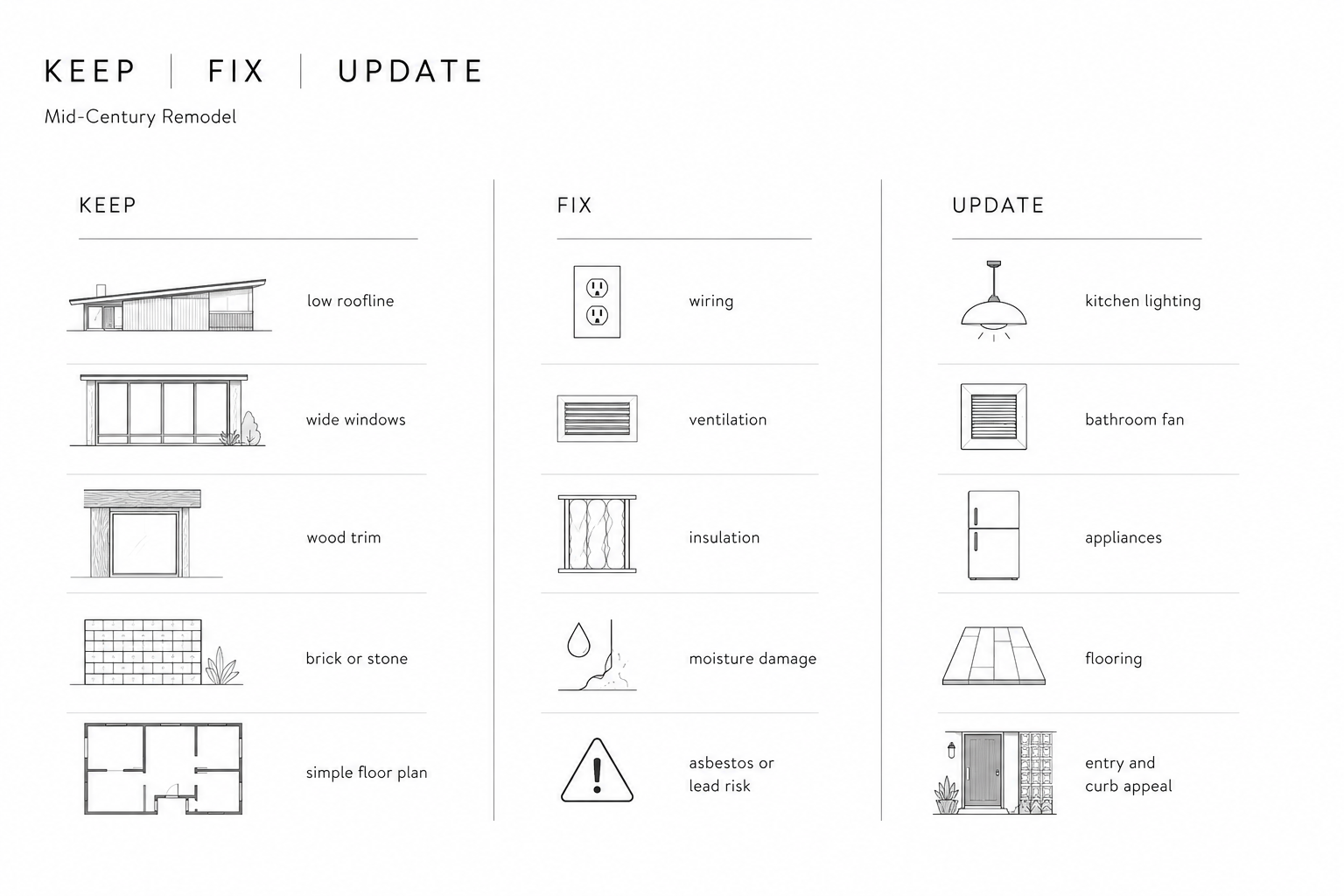
Keep the parts that still do the work: roofline, glass, brick, wood, fireplace, low profile, and backyard connection. Repair the worn systems and bad later changes without covering the pieces that still carry the house.
The houses that remodel well are the ones where someone stopped and asked what the house is actually good at. The light. The roofline. The connection to the backyard. The warmth of the original materials. Those things are worth protecting before a single cabinet is ordered.
This guide covers what makes mid-century houses different to remodel, where they usually need real work, and how to make decisions in the right order.
Why mid-century houses are different to remodel
A mid-century house is not just an old house. It has a specific logic that most other postwar styles do not share.
The low roofline is not incidental — it is the whole exterior argument. The large windows are not decorative — they are how the house gets light into rooms that might otherwise feel dark. The open plan is not a trend — it is how the house connects cooking, eating, and living without the hallways and closed rooms of earlier decades. The connection to the backyard is not a nice feature — it is often the reason the living room works at all.
This matters during a remodel because decisions that seem neutral can damage those relationships without anyone noticing until the work is done. Replace the picture window with a smaller unit and the living room gets darker. Remove the kitchen wall without checking the ceiling and the room feels exposed instead of open. Paint the brick to modernize the exterior and the house loses the one material that was anchoring the front elevation.
Mid-century houses punish careless remodeling more than simpler postwar styles do. The design is tighter. The relationships between rooms, light, and materials are more deliberate. When one of them breaks, the whole house can feel off.
If the house is from the 1950s, start with the broader 1950s houses guide before deciding whether it is truly mid-century modern or a postwar house with a few period details. The distinction matters because the remodel logic is different.
What to keep before anything else
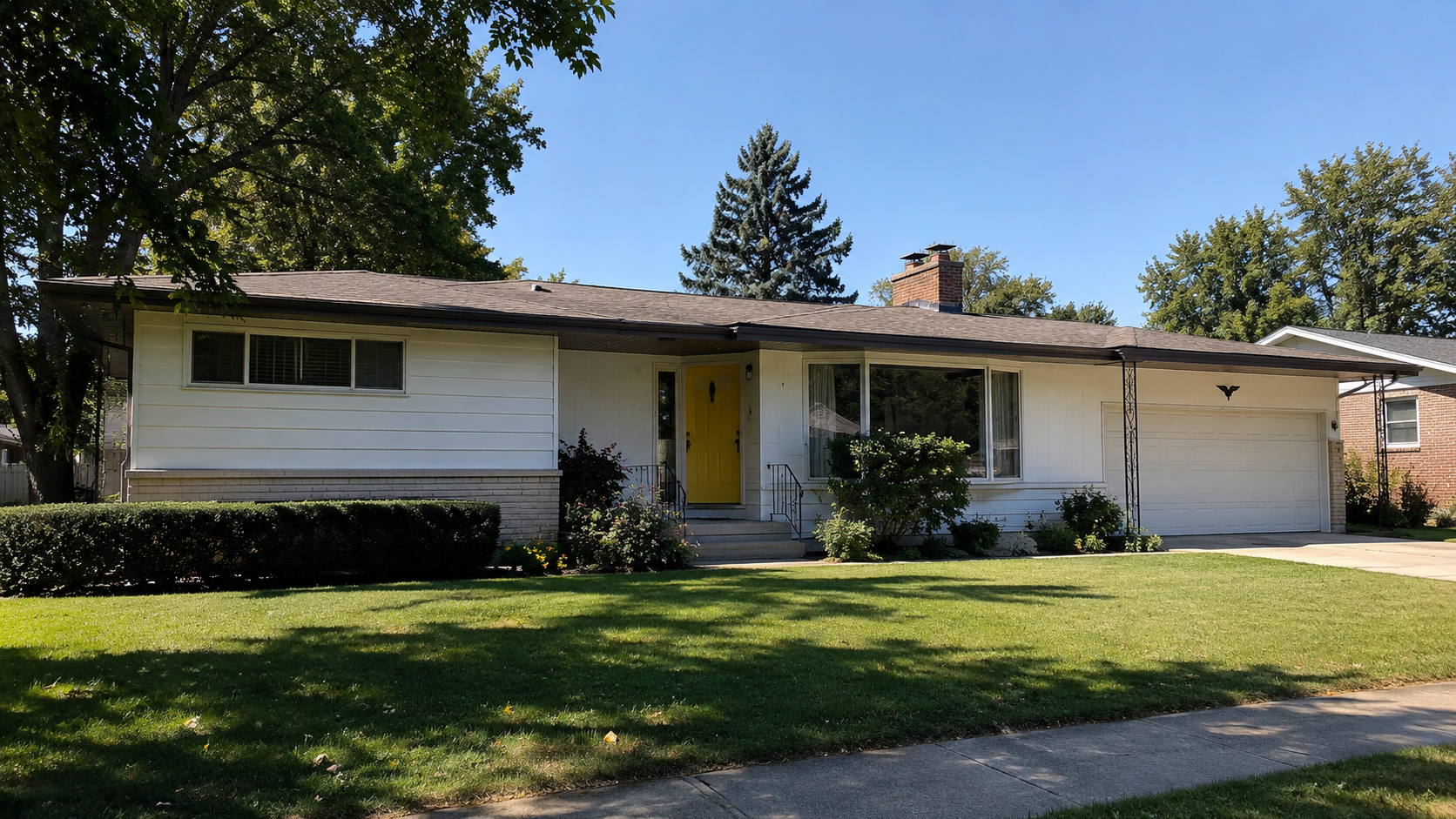
The best parts of a mid-century house are often already there. They may just be buried under old carpet, bad paint, cheap replacement fixtures, or years of small updates that did not understand the house.
The roofline and horizontal shape
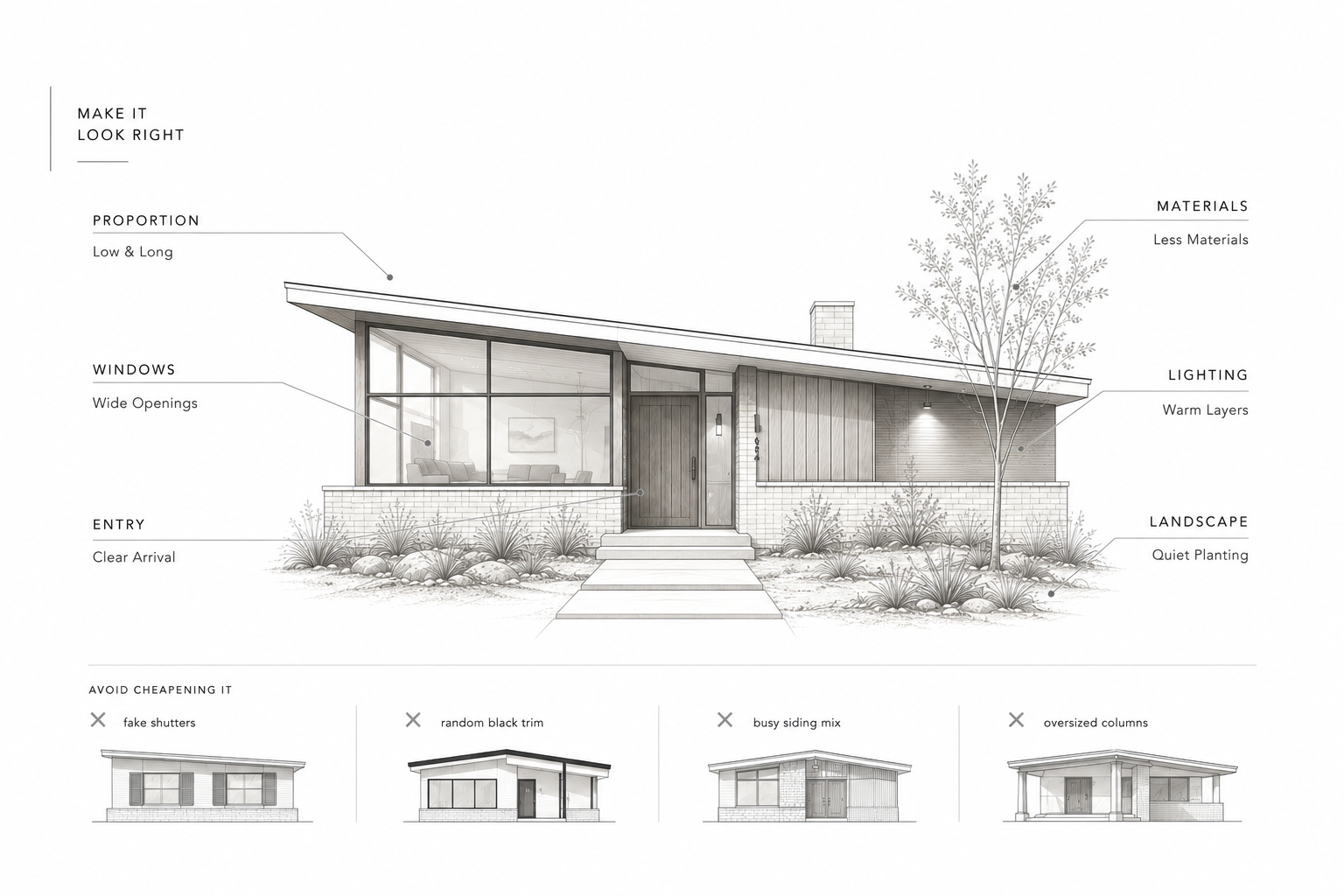
The low roof is the main reason these houses look the way they do. Before adding dormers, fake gables, tall porch structures, or heavy trim, look at the original shape from across the street. A bad roof addition does not just look wrong — it changes the whole exterior argument of the house and cannot be easily undone.
Large windows and daylight
Picture windows, corner windows, clerestory windows, and sliding glass doors are often part of what makes the house worth living in. Replacing them with smaller, cheaper, or poorly divided windows can make the house feel wrong very quickly — darker inside, heavier outside, and somehow smaller than it actually is.
That does not mean every old window must stay. Some are drafty, damaged, or unsafe. But the size, rhythm, and horizontal feel should be respected when replacements are chosen.
Wood, brick, stone, and built-ins
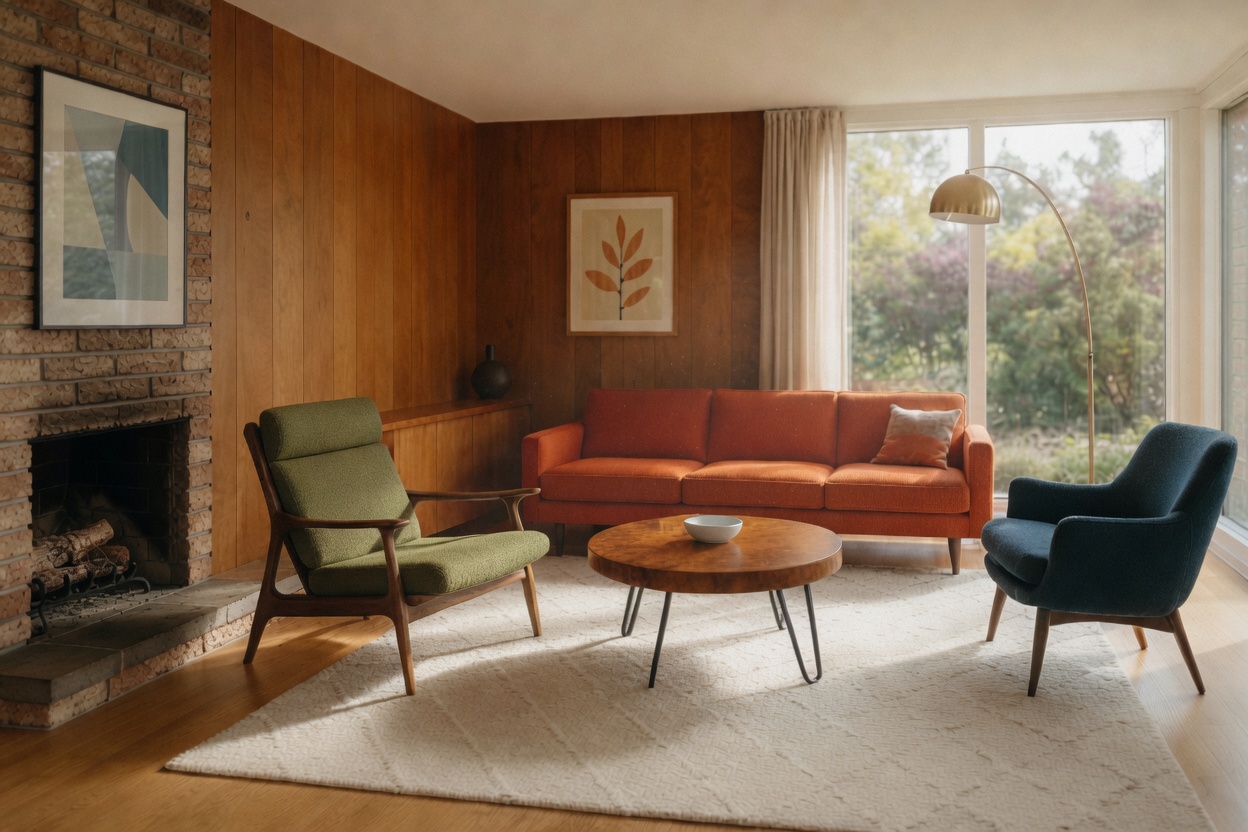
Original wood trim, paneling, shelving, masonry, and built-ins give the house warmth that is very hard to recreate once it is gone. If they are sound, it is usually better to clean, repair, refinish, or simplify around them than to gut everything and start over with materials that will never quite feel the same.
Once these features are removed, the room may look newer for a few years. Then it starts to look like a renovation instead of a house.
Where these houses actually need work
The character of a mid-century house is usually intact. The systems are usually not.
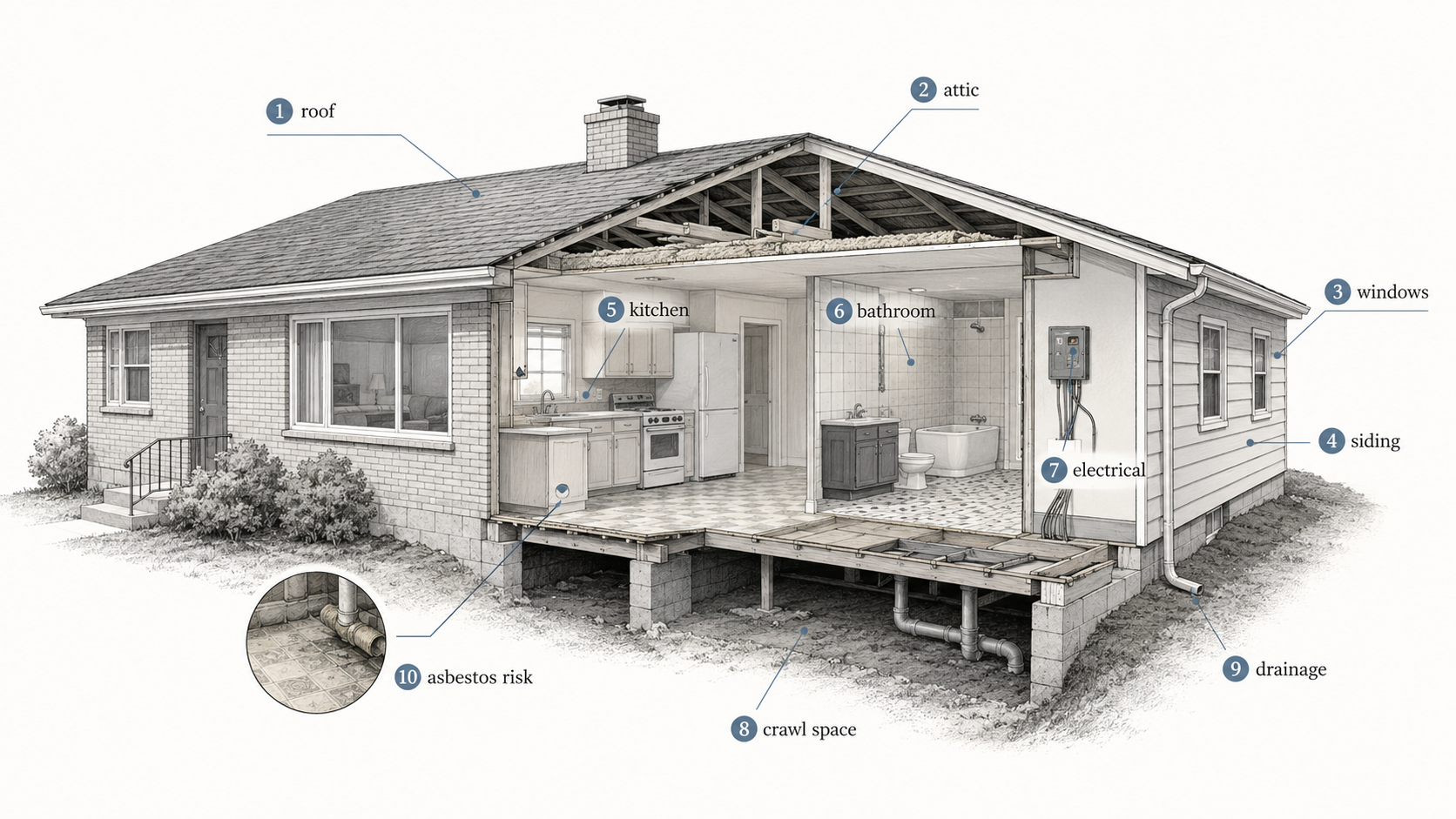
These are houses built seventy years ago for different appliance loads, different ventilation standards, and different expectations about insulation, moisture, and electrical capacity. The living room may still feel right. The wiring behind it may not be safe for a modern kitchen, a home office, and a charging station running at the same time.
Electrical
Many mid-century houses were not built for today's loads. A kitchen remodel that adds new appliances without checking the electrical system can become a problem fast — tripped breakers at best, a fire risk at worst. Plan circuits, outlets, and panel capacity before finishes are chosen.
Ventilation and moisture
Old bathrooms often have weak fans or no proper exhaust. Kitchens may have range hoods that vent into the wall instead of outside. Attics may have been insulated without enough attention to air sealing. A remodel that looks clean but leaves moisture trapped inside the house is not really finished — it is just hiding the next repair.
Asbestos and lead
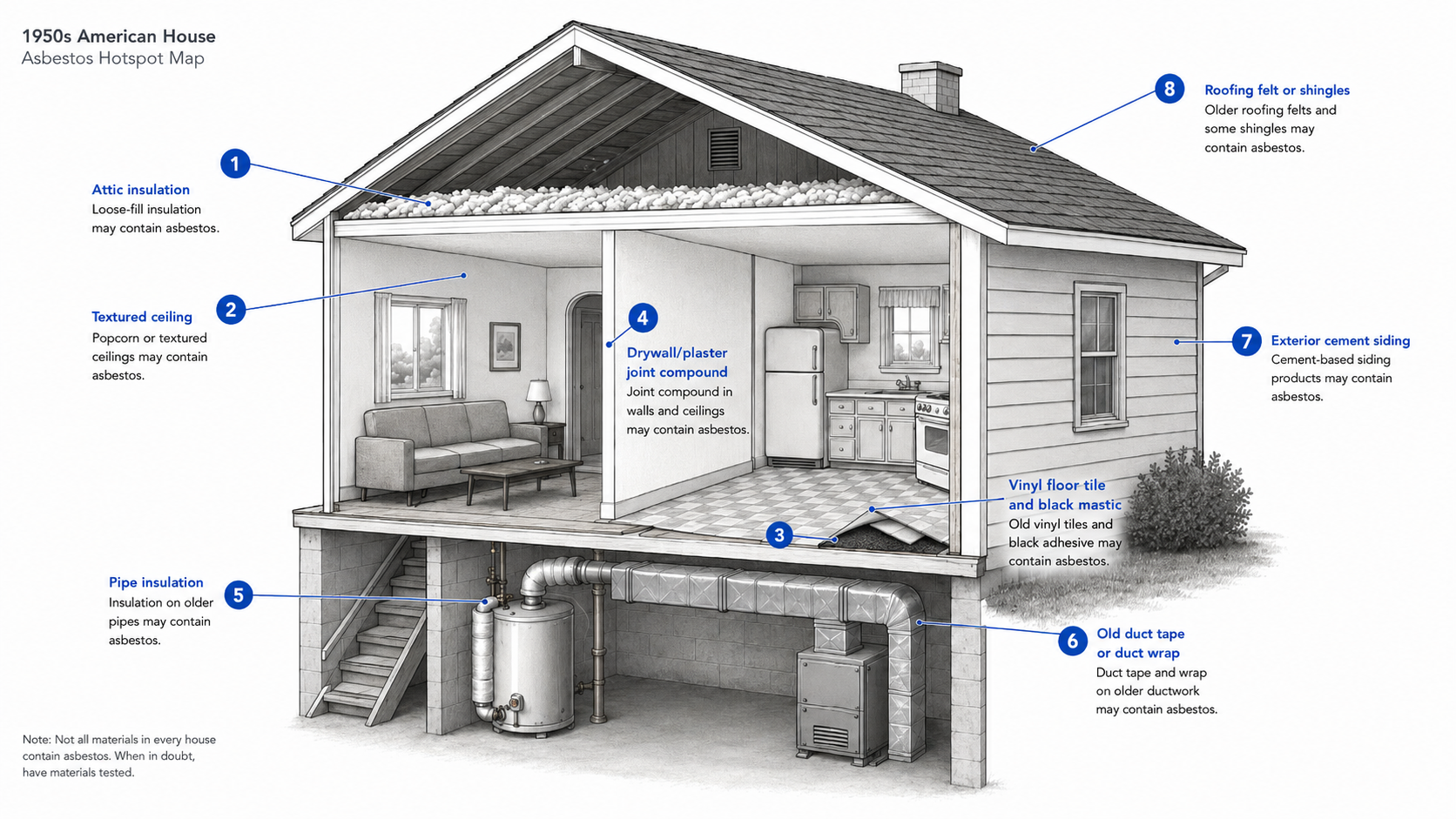
Mid-century houses can contain asbestos in old flooring, mastics, pipe insulation, textured coatings, duct materials, siding, roofing, or joint compound. Lead paint may be present in older finishes. Do not sand, grind, scrape, or demolish suspect materials without testing first, especially before kitchen, bathroom, flooring, ceiling, or siding work.
For a full safety check, read asbestos in 1950s houses before demolition starts.
The kitchen
The kitchen is usually where the money goes first and where the most character gets lost.
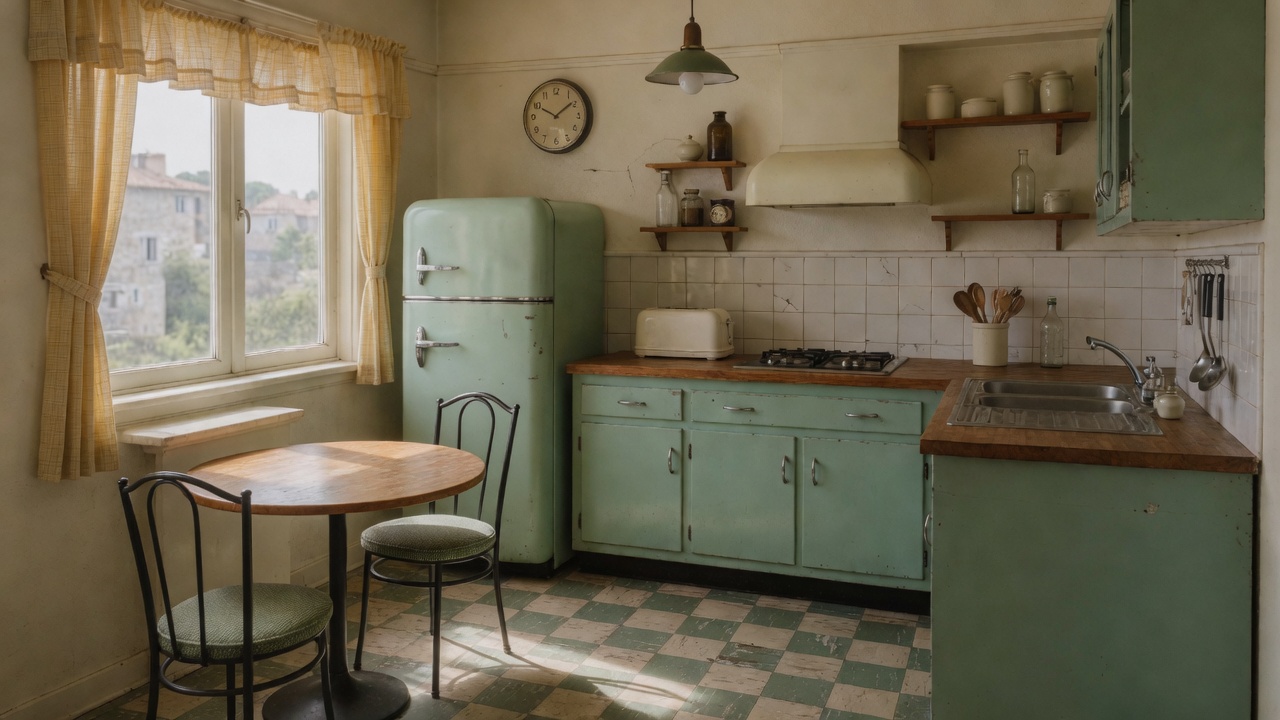
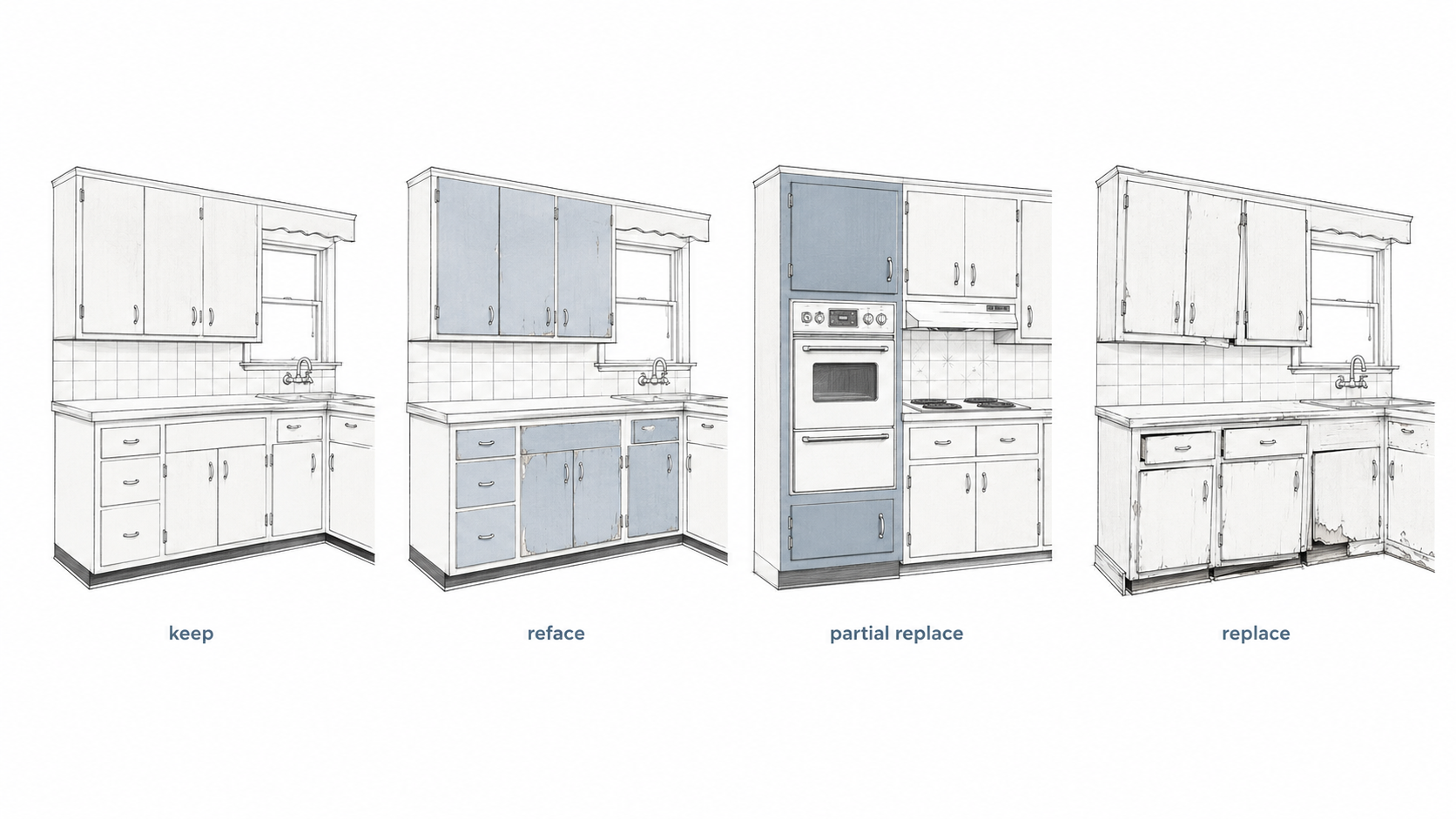
Mid-century kitchens were compact and practical. That is not always a weakness. Some have solid cabinets, a good sink wall, decent daylight, and a layout that only needs better lighting, ventilation, safer wiring, and an honest appliance plan. Others have failing boxes, wrong-sized appliance openings, bad electrical, and floors that hide three layers of old material.
The decision is not gut or keep. The decision is what is actually failing and what only looks dated.
For the full kitchen guide, use 1950s kitchen remodel. For budget planning, use 1950s kitchen remodel cost before ordering cabinets or appliances.
The bathroom
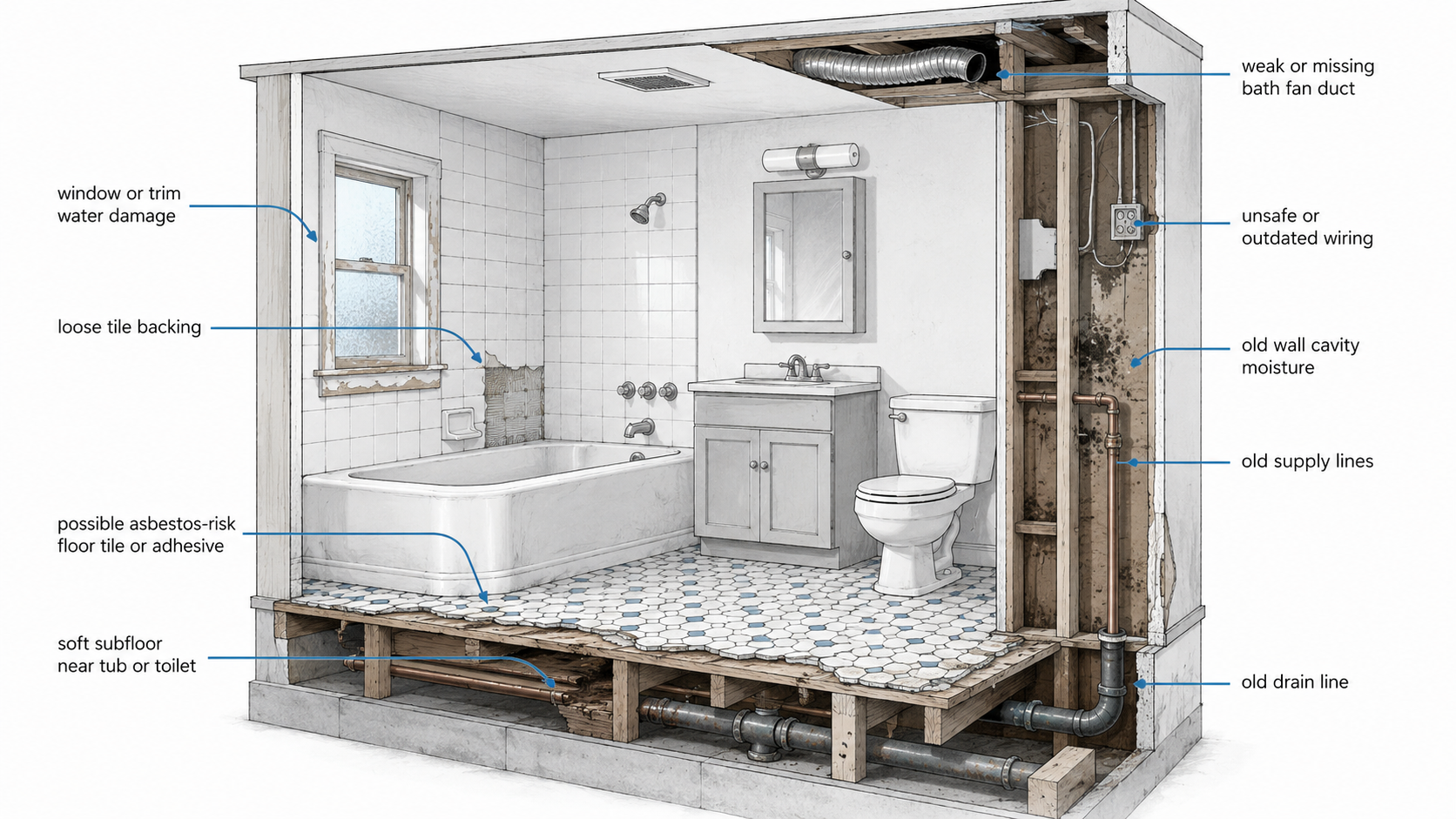
Mid-century bathrooms are more durable than people expect. Some still have good tile, solid walls, and a layout that works fine. The problem is usually not the tile. It is the fan that vents into the ceiling, the plumbing that has been slowly failing behind the wall, or the subfloor that softened years ago and nobody noticed.
A careful refresh can save a bathroom that looks worse than it is. A full gut is the right call when the room is failing behind the surface — not just because the style is old.
For the full bathroom guide, read 1950s bathroom remodel.
The exterior
The exterior of a mid-century house fails in one specific way: someone adds details from the wrong house. Fake shutters. Heavy columns. Busy trim. A farmhouse porch under a flat roofline. Random black window frames on a house that was never designed around contrast. The house ends up looking like it is wearing a costume.
The better move is always quieter. Keep the horizontal shape. Fix what is actually failing — fascia, gutters, flashing, siding rot, window frames. Make the entry clearer. Quiet the garage. Use fewer materials than you think you need.
For the full exterior guide, see 1950s house exterior remodel.
Living rooms and interiors
Mid-century interiors rely on proportion more than decoration. Low furniture, long walls, simple fireplaces, large windows, and warm materials usually matter more than buying every recognizable chair shape from the period.
The room should not feel like a furniture catalog. It should feel calm, useful, and connected to daylight. That means keeping the floor area open, the furniture low, and the material choices restrained. One or two period references are enough. A room that hits every mid-century note at once starts to feel like a set.
Color works the same way. Mid-century does not require orange, teal, avocado, or mustard. Wood, brick, off-white walls, warm gray, muted green, ochre, clay, and black accents often age better than a full period color scheme.
Where costs actually grow
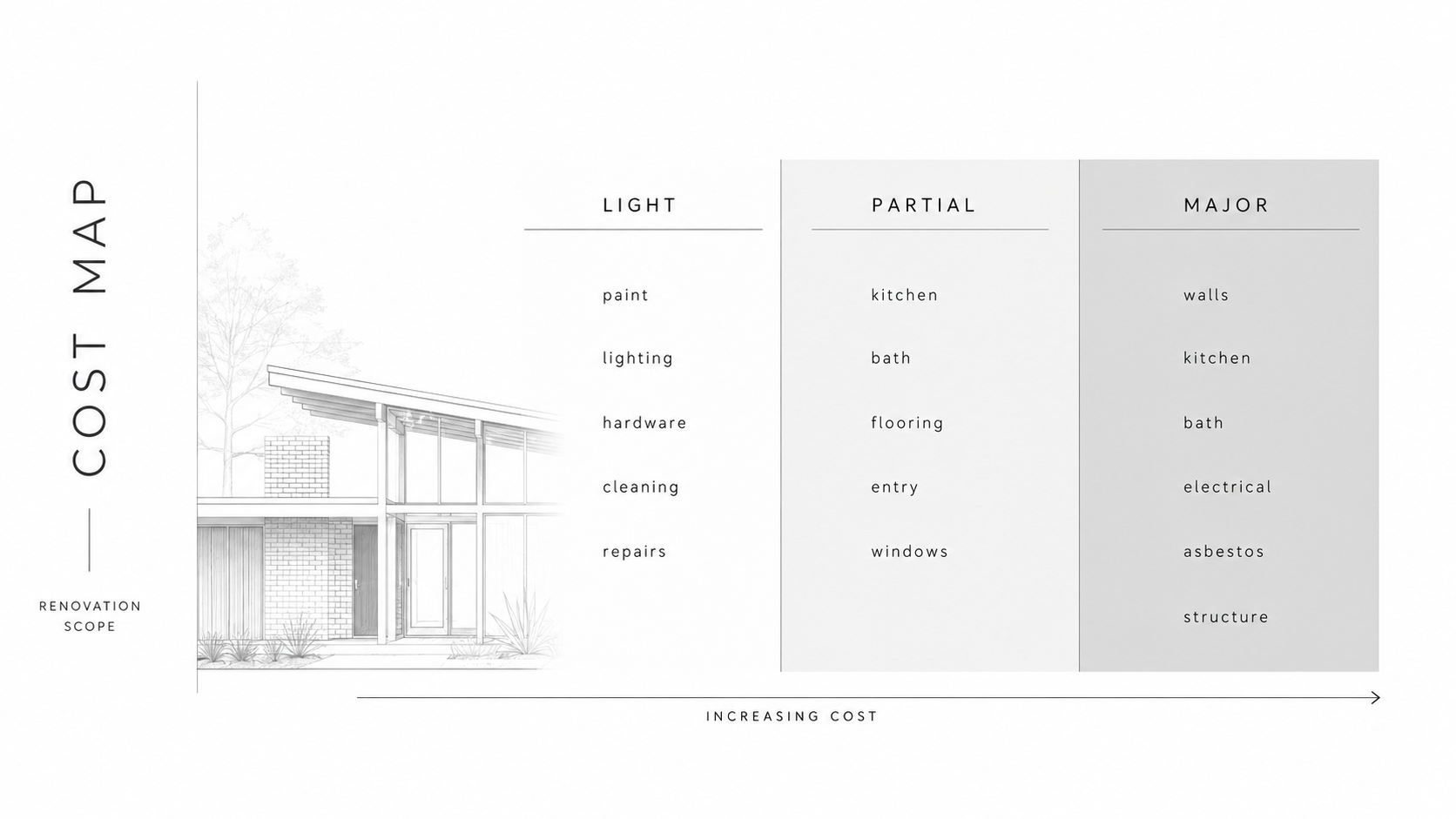
The cheapest mid-century remodels stay close to the existing layout. The expensive ones move plumbing, remove walls, replace all windows, upgrade electrical systems, gut kitchens and bathrooms, or uncover hazardous materials during demolition.
The pattern that costs the most is spending on finishes before knowing what the walls hold. A kitchen remodel that hits asbestos-containing flooring, galvanized plumbing, and an undersized electrical panel mid-project is a different job than the one that was planned. The contingency is not pessimism — it is how old houses work.
The right order
The sequence matters more than most people realize. A remodel done in the wrong order wastes money twice — once on work that gets damaged by the next phase, and once on finishes chosen before the real scope was known.
- Inspect structure, moisture, electrical, plumbing, roof, and hazardous materials. Find the real problems before anything is ordered.
- Decide what original features are worth keeping. Roofline, windows, wood, brick, built-ins, and room proportions should be evaluated before demolition.
- Fix safety, moisture, ventilation, and electrical problems. These are not optional. They are the foundation the rest of the remodel sits on.
- Plan kitchen and bathroom scope. Layout, appliance fit, plumbing location, and ventilation before cabinet selection.
- Repair the exterior envelope. Roof edges, flashing, windows, siding, and drainage before paint or new materials.
- Update lighting, finishes, flooring, and built-ins. After the hard decisions are settled.
- Furniture, color, and decor last. They should respond to the house, not drive it.
FAQ
Is it worth remodeling a mid-century modern house?
Yes, if the house has solid structure, good proportions, and original features worth keeping. The remodel should fix weak systems and dated rooms without removing the character that gives the house its value.
What should I keep in a mid-century remodel?
Usually keep the low roofline, large windows, wood trim, brick or stone details, simple fireplace, built-ins, and open connection to daylight — when they are in good condition.
Should I gut a mid-century kitchen?
Only if the layout, cabinets, wiring, plumbing, or appliance fit are genuinely failing. If the cabinets are solid and the layout works, a careful update usually gives better results than a full gut.
Should I keep original bathroom tile?
Keep it if the tile is sound, cleanable, and not hiding moisture damage. Replace it if walls are soft, tile is loose, plumbing is failing, or the room has serious ventilation problems.
Can I open up a mid-century house?
Sometimes, especially in ranch layouts. But wall removal should be checked carefully for structure, mechanical runs, ceiling patching, flooring transitions, and what the room actually loses when the wall comes out.
What is the biggest mistake in a mid-century exterior remodel?
Adding details from the wrong house style. Fake shutters, heavy porch columns, busy trim, oversized gables, or random black accents all fight the low horizontal form that makes these houses work.
Do mid-century homes have asbestos?
Some do. Suspect materials can include old flooring, mastic, pipe insulation, textured coatings, siding, duct materials, roofing, and other products common to the era. Test before disturbing questionable materials.
What adds the most cost?
Full kitchen remodels, full bathroom guts, wall removal, electrical upgrades, plumbing changes, window replacement, structural work, and asbestos or lead abatement. Most of them cost more when they show up as surprises mid-project than when they are found and priced before demolition starts.
Read Next
- 1950s Houses: What They Are, What Works, What Doesn't
- 1950s Kitchen Remodel: Layout, Cabinets, Appliances, and What to Keep
- 1950s Kitchen Remodel Cost: What Changes the Price in an Old Kitchen
- 1950s Bathroom Remodel: What to Keep, Replace, and Check First
- 1950s Ranch House Remodel: What to Fix, Keep, Open Up, and Avoid
- Asbestos in 1950s Houses: Where It Hides Before Renovation
- 1950s House Exterior Remodel: What to Keep, Fix, or Stop Faking