

A 1950s bathroom is not always asking to be gutted.
The tile may be loud, but solid. The tub may be heavy and still good. The sink may be small, but usable. Sometimes the worst part is the fan, the shutoff valves, the wiring, or the floor around the toilet.
Look there first.
Check the tile, grout, tub, plumbing access, fan, wiring, toilet flange, and soft spots in the floor. Then decide how far to go.
Some rooms need new fixtures and careful repair. Some need the walls opened. The color should not make that decision.
If the bathroom is part of a larger old-house project, it also helps to understand the bigger picture of 1950s houses so the remodel fits the house instead of fighting it.
Quick answer: what should you keep in a 1950s bathroom?
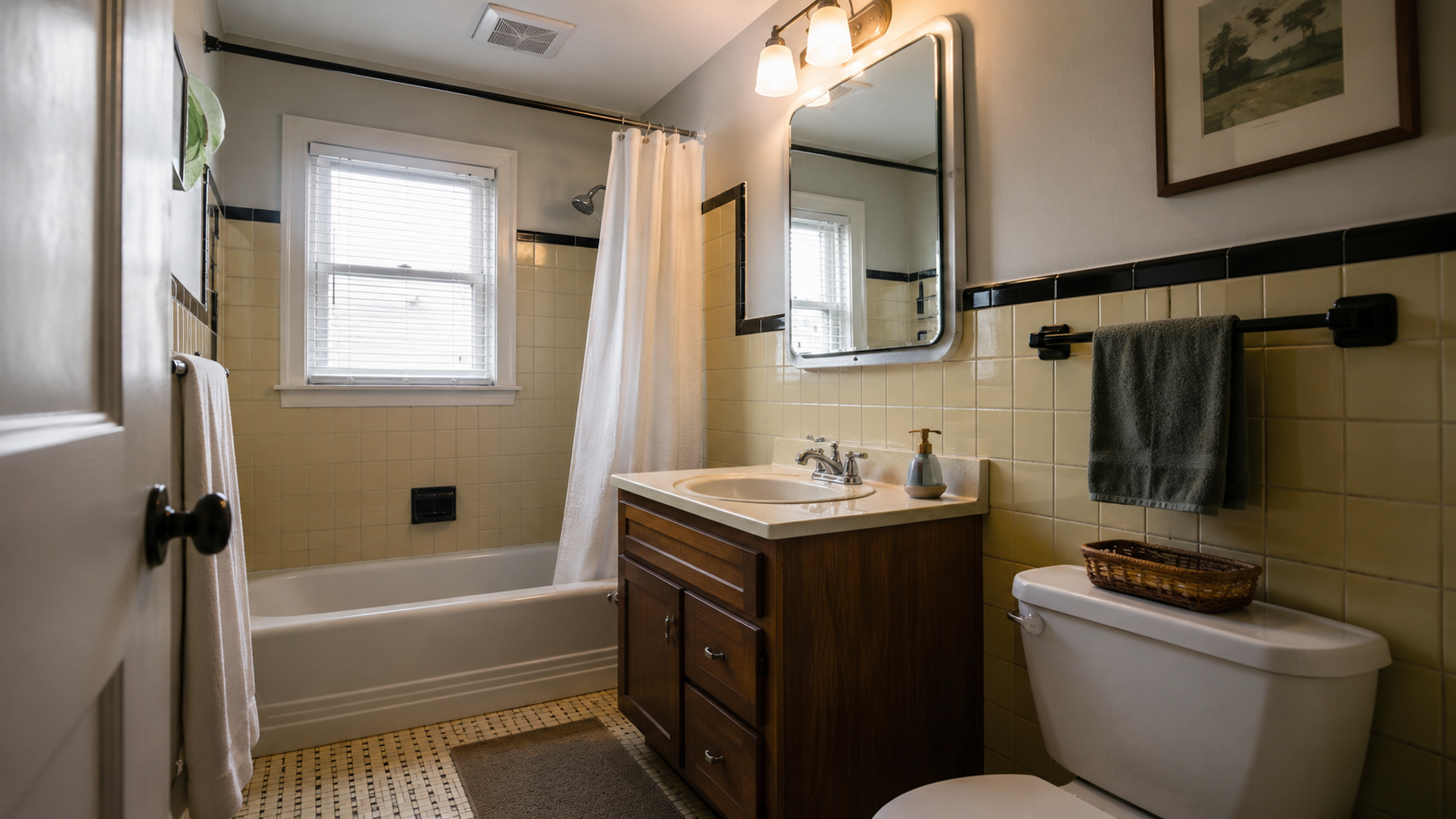
Keep the parts that are solid, dry, safe, and still useful. Replace the parts that are leaking, loose, unsafe, badly damaged, or making the room harder to use.
| Feature | Keep it if... | Replace it if... |
|---|---|---|
| Wall tile | It is sound, bonded well, and the wall behind it is dry. | It is loose, cracked, bulging, or hiding moisture damage. |
| Cast iron tub | It is solid, cleanable, and not leaking around the drain or wall. | It is badly chipped, rusted through, unstable, or tied to hidden damage. |
| Vanity or sink | It still works, fits the room, and is not badly water-damaged. | It is swollen, leaking, poorly placed, too large, or too far gone to justify repair. |
| Floor tile or flooring | It is stable, safe, and not being disturbed. | It is loose, damaged, uneven, moisture-stained, or needs removal for proper repair. |
| Medicine cabinet | It is useful, solid, and still fits the room. | It is rusted, damaged, sharp, or tied to unsafe wiring. |
| Light fixture | It is safe and gives enough light. | It is dim, badly placed, outdated, or part of unsafe electrical work. |
| Bath fan | It works and actually vents outside. | It is weak, missing, loud but ineffective, or vents into the attic or wall cavity. |
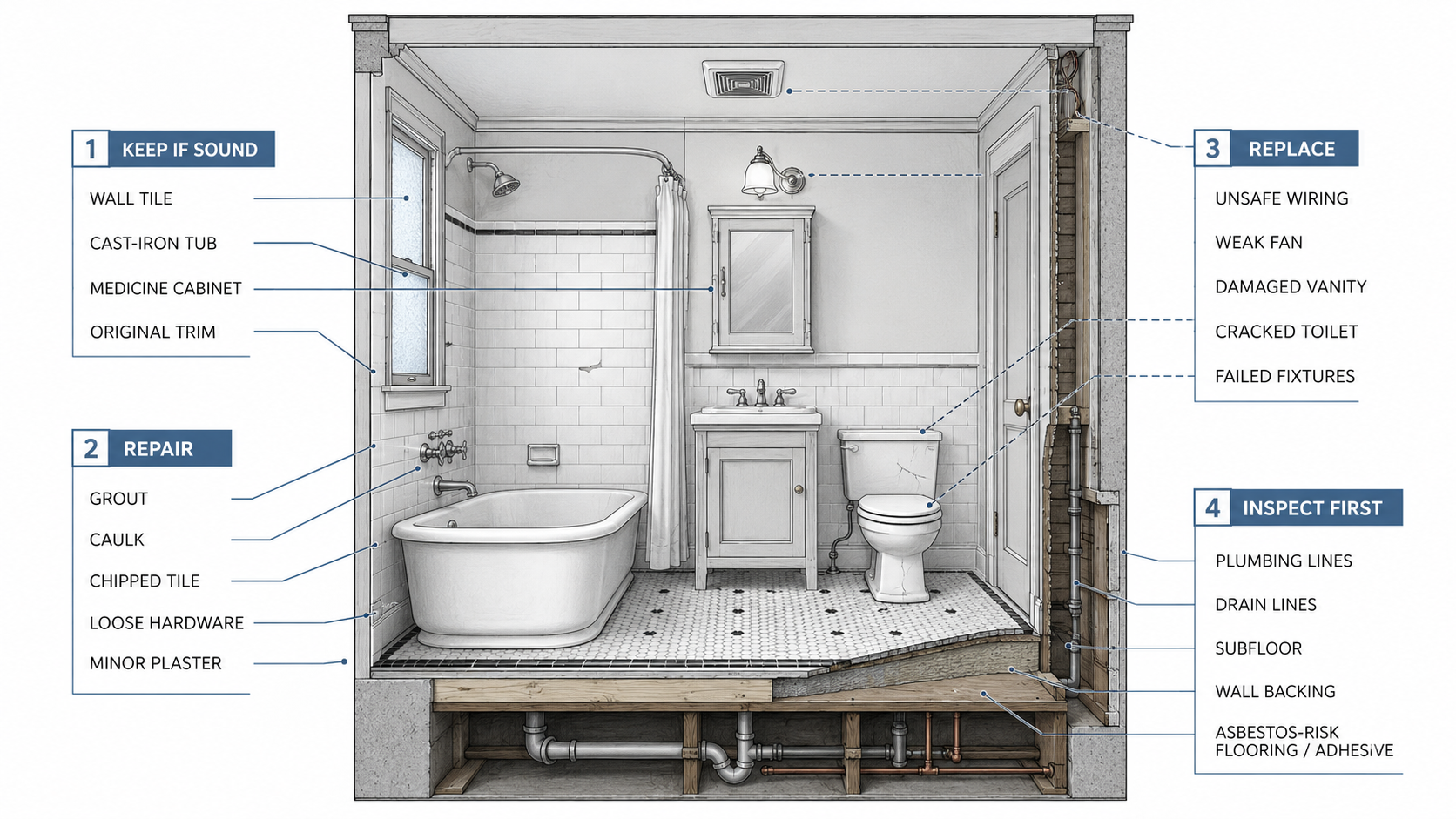
The best remodel is usually not “save everything” or “gut everything.” It is a controlled remodel that keeps what still works and fixes what quietly fails.
Start with the bathroom you actually have
Most 1950s bathrooms were compact. They were designed around a tub-shower alcove, a toilet, a small sink or vanity, a medicine cabinet, and durable finishes that were meant to last. The room may feel dated now, but that does not mean the whole thing is wrong.
The real question is whether the room still works structurally and practically.
Before you think about new finishes, check these basic conditions:
- Does the floor feel soft near the toilet, tub, or vanity?
- Is the wall tile still firmly attached?
- Does the fan vent outside?
- Are the outlets and wiring safe for a wet room?
- Are the plumbing lines old, corroded, or leaking?
- Could old flooring, adhesive, or other materials need careful handling?
- Does the layout still work, or is the room fighting daily use?
Those answers shape the remodel much more than the color of the tile.
1950s bathroom problems that hide behind the tile
The visible finish is often not the expensive part. The expensive part is what the old bathroom has been hiding for years.
Old plumbing
Many 1950s bathrooms still have aging supply lines, older drain lines, or a mix of old and patched-in repairs. Galvanized supply lines can corrode and restrict flow. Old drains can rust, clog, or fail around joints. Once the wall is open, this is the time to deal with it.
Weak ventilation
A fan that only makes noise does not solve the problem. The fan should move moisture out of the room and vent outside. If it vents into the attic or wall cavity, the remodel may still leave you with dampness, peeling paint, and mold risk.
Outdated electrical work
Older bathrooms were not built for modern use. Hair dryers, electric toothbrush chargers, grooming tools, added lighting, and powered fans all put more demand on the room than it was originally designed for. A bathroom remodel is the right time to correct outlet protection, grounding, and other electrical safety issues.
Soft subfloor near wet areas
A toilet leak or a long-term tub leak does not always show itself dramatically. Sometimes it just softens the floor over time. If the floor moves, smells musty, or feels weak underfoot, the room needs repair before it needs pretty finishes.
Old material layers
Bathrooms often collect layers over time: new flooring over old flooring, paint over older surfaces, patching over damaged walls, quick repairs over hidden problems. That layered history is part of why a “simple update” can suddenly become a deeper remodel.
Pink, blue, yellow, and green tile: keep it or remove it?
Colored 1950s tile is not automatically a problem. In some bathrooms, it is the best thing in the room.
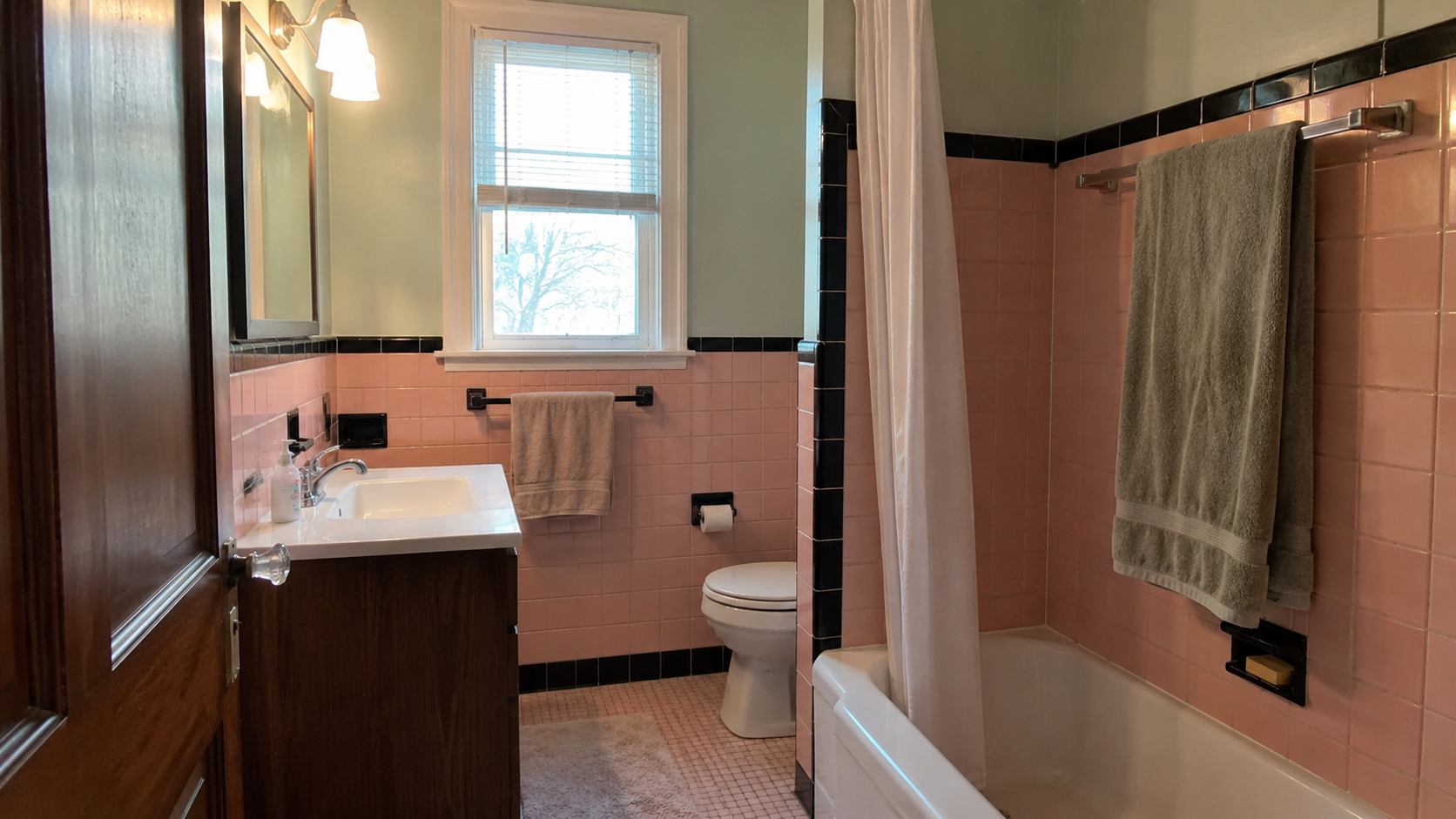
If the tile is sound, the wall behind it is dry, and the room can be updated around it, keeping the tile can save money and preserve character. The mistake is assuming old always means bad.
At the same time, old tile is not sacred. If it is loose, cracked, leaking, bulging, or tied to failed wall backing, remove it and fix the real problem.
When keeping the tile makes sense
- The tile is firmly bonded.
- The grout can be repaired.
- The wall behind it is dry and stable.
- The color can work with simple updates.
- The rest of the room can be improved without forcing a full tear-out.
When removing the tile makes more sense
- The wall behind it is failing.
- The tub surround leaks.
- The tile is loose or visibly damaged.
- The room needs a deeper plumbing or wall repair anyway.
The best old-tile bathrooms usually stay calm. They do not need fake retro styling piled on top. Better paint, better lighting, cleaner lines, and a simpler vanity often do more than a themed remodel.
Small 1950s bathroom remodel ideas that work
Most 1950s bathrooms are small, so the best remodels usually improve use more than size.
Keep the tub location if possible
Moving a tub usually triggers more plumbing work, more wall repair, and more cost. If the tub location still works, keeping it can save a lot of money.
Use a vanity that fits the room
A vanity that is too deep can make a small bathroom worse. In many 1950s bathrooms, a smaller vanity, wall-hung sink, or carefully sized cabinet works better than trying to force more storage into the room.
Improve the mirror and lighting together
Better light at the mirror can make the room feel more usable right away. This is one of the simplest upgrades that can make an old bathroom feel less tired without blowing up the budget.
Fix storage quietly
Recessed medicine cabinets, simple shelves, and well-placed wall storage often work better than bulky storage pieces in a tight room.
Use simple finishes around strong original features
If the tile is bold, let the rest of the room calm down. Clean paint, simple hardware, better lighting, and restrained fixtures usually work better than trying to compete with old tile using five other design ideas.
In some ranch houses, small bathroom decisions also connect to the bigger 1950s ranch house remodel, especially when the bathroom layout is part of a wider hallway or bedroom rework.
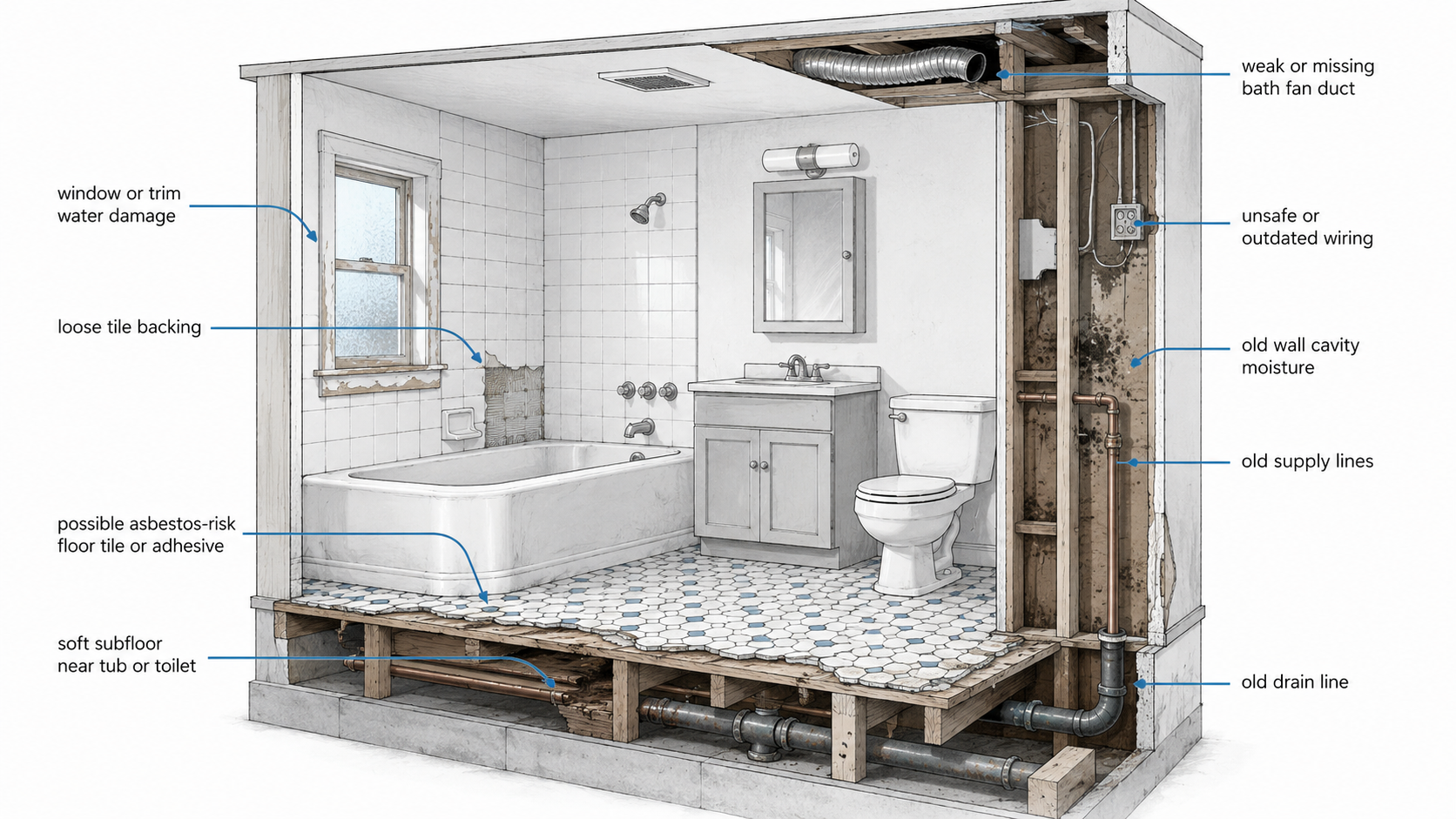
Plumbing, wiring, ventilation, and floor problems
These are the parts that decide whether the remodel stays under control.
Plumbing
Keeping the sink and tub where they already are usually saves money. Once you start moving plumbing across the room, the job becomes more invasive. Old supply and drain lines also need to be judged honestly. A nicer faucet does not fix bad old plumbing.
Wiring
Bathrooms need safe outlet protection, good lighting, and proper fan wiring. This is not the place to ignore electrical corrections. Wet rooms need safe electrical work, not just cosmetic improvement.
Ventilation
Without proper exhaust, moisture keeps doing damage long after the room looks “finished.” A quiet, effective fan that vents outside is one of the most practical upgrades in the whole remodel.
Floor condition
Bathroom floors can hide old water damage, uneven underlayment, or multiple layers of earlier remodeling. If the floor needs to be opened, treat that as part of the real scope, not a side note.
Asbestos, lead paint, and old bathroom materials
The danger in an old bathroom is often not that materials are old. The danger is disturbing them carelessly.
Older homes may contain materials that need to be handled thoughtfully during renovation. That can include old flooring layers, adhesives, pipe insulation, and painted surfaces. The bathroom is a small room, but it is still part of an older house, and older houses often come with material risks that deserve caution.
For the broader safety side, see asbestos risks in 1950s houses before removing old flooring, adhesive, pipe insulation, or other suspect materials.
1950s bathroom remodel cost traps
What makes these remodels expensive is usually not the visible finish package. It is the hidden work behind it.
Common cost traps include:
- Opening the walls and finding plumbing problems.
- Discovering soft or damaged subflooring.
- Fixing bad ventilation.
- Upgrading electrical work.
- Removing more old material layers than expected.
- Moving fixtures when the old layout could have stayed.
- Trying to force oversized new fixtures into a tiny old room.
If the house is getting a kitchen update too, compare the bathroom spending to the wider cost picture in 1950s kitchen remodel cost so the whole renovation budget stays realistic.
The cheapest remodel is not always the one with the cheapest finishes. It is the one that avoids unnecessary layout changes and fixes the hidden failures before the room is closed back up.
Before and after: what a smart remodel changes
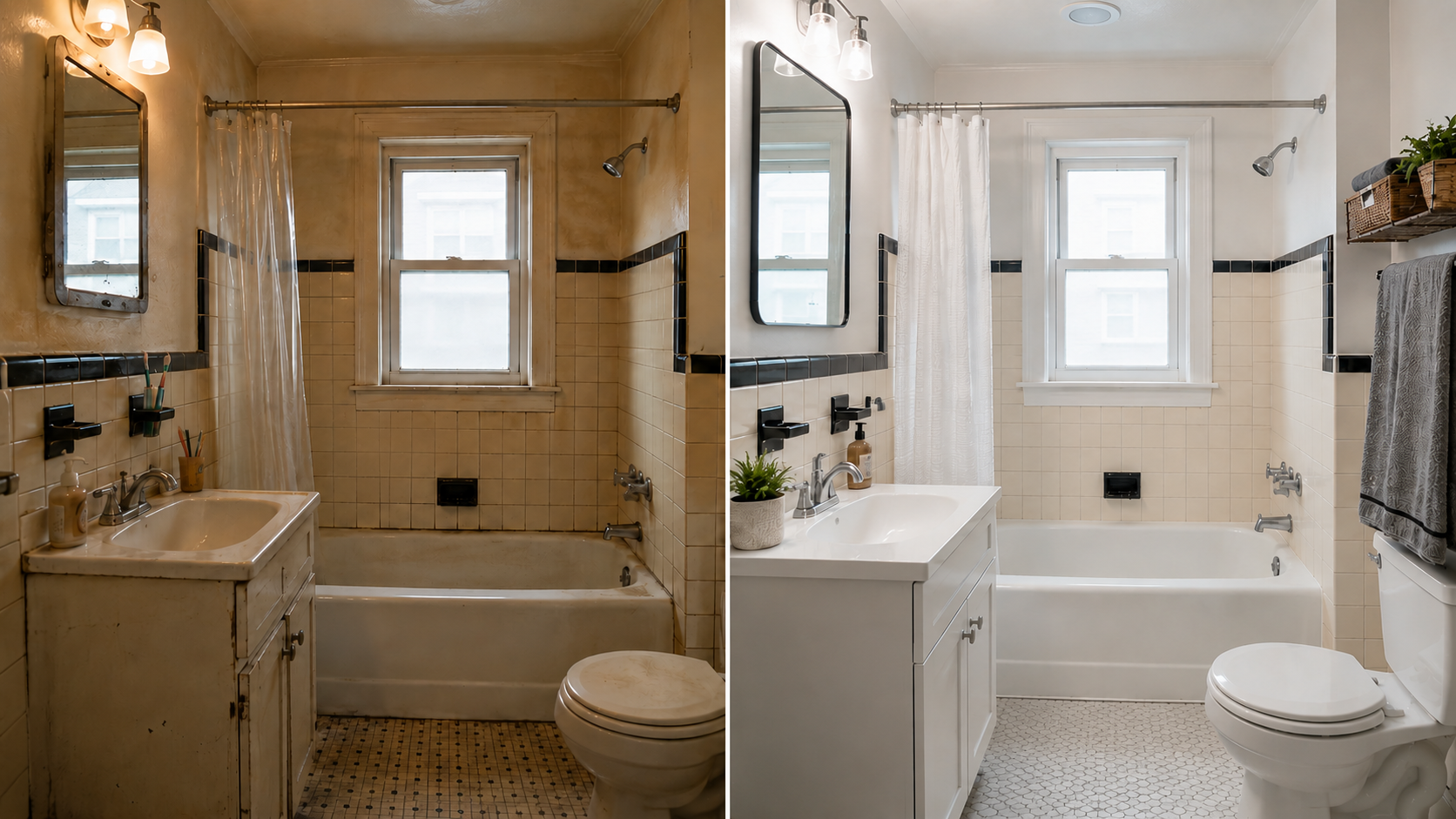
A smart before-and-after remodel does not need to erase the 1950s.
The “before” bathroom may have tired lighting, a worn vanity, stained caulk, old hardware, and a room that feels dated or cramped. The “after” version usually improves the things that affect daily life most: lighting, fan performance, storage, electrical safety, cleaner surfaces, better paint, repaired tile or grout, and a vanity that actually fits the room.
The best result often looks cleaner, calmer, and more useful — not bigger, flashier, or fake.
What not to do in a 1950s bathroom remodel
- Do not start demo before understanding what the room is made of.
- Do not cover a soft floor and pretend the problem is gone.
- Do not vent the fan into the attic or wall cavity.
- Do not remove sound original tile just because it looks old.
- Do not spend the whole budget on finishes while ignoring plumbing, wiring, and ventilation.
- Do not force a giant vanity or oversized features into a tiny old room.
- Do not turn the bathroom into a fake retro theme set.
1950s bathroom remodel checklist
- Check tile condition in wet areas.
- Check for soft floor near the toilet, tub, and vanity.
- Check whether the fan vents outside.
- Check outlet safety and electrical condition.
- Check supply lines and drain lines.
- Check for signs of long-term water damage.
- Measure fixture clearances before ordering new pieces.
- Decide what original features are worth keeping.
- Plan storage before buying bulky fixtures.
- Leave budget room for hidden work.
FAQ
Can you remodel a 1950s bathroom without removing the original tile?
Yes, if the tile is sound, the wall behind it is dry, and the room can be updated around it. Old tile is often worth keeping when the real problem is elsewhere.
Should I keep a pink 1950s bathroom?
Sometimes, yes. If the tile is in good condition and the room can be improved with better lighting, paint, fixtures, and repairs, keeping it can save money and preserve character.
What is the biggest hidden cost in a 1950s bathroom remodel?
Plumbing, floor damage, ventilation fixes, electrical corrections, and hidden wall problems are usually the biggest cost surprises.
Is a small 1950s bathroom cheaper to remodel?
Not always. Small bathrooms use fewer materials, but they can still be expensive because everything is packed tightly together and the room still needs labor from multiple trades.
Should I move the tub or toilet?
Only when the payoff is clear. Keeping fixtures near their original locations usually saves money and reduces disruption.
Is it worth remodeling a 1950s bathroom?
Usually yes, if the work makes the room safer, drier, easier to use, and better suited to daily life. The best remodels fix the hidden problems and keep useful character where it still makes sense.
Read This Next
For the broader house type and style background, read 1950s houses.
If the bathroom is part of a wider one-story remodel, read 1950s ranch house remodel.
If the kitchen is also being updated, use 1950s kitchen remodel cost to keep the whole renovation budget realistic.
Before opening old floors, walls, or pipe chases, check asbestos risks in 1950s houses.