

A 1950s exterior remodel goes wrong when the house gets dressed up before anyone reads the house.
The expensive mistakes are easy to spot later: fake shutters on wide windows, tall replacement windows where the old facade needed horizontal lines, heavy porch columns under a low roof, stone veneer hiding a bad foundation edge, and a garage door that becomes the loudest thing on the street.
Most 1950s houses do not need a costume. They need the weak parts fixed without flattening the parts that still work. The roofline, window rhythm, brick, siding breaks, garage position, entry scale, and water path should decide the remodel before paint colors do.
The Short Answer
Keep the massing. Fix the water. Respect the windows. Quiet the garage. Make the entry easier to find. Use fewer materials than you want to use.
That is the whole exterior problem in plain language. A 1950s house usually looks worse when the remodel adds noise: extra trim, fake stone, random black windows, a farmhouse porch, busy siding, or a color scheme that ignores the roof and masonry.
The best updates are not timid. They are disciplined. They make the existing shape sharper instead of pretending the house is something else.
Read the House Before Changing It
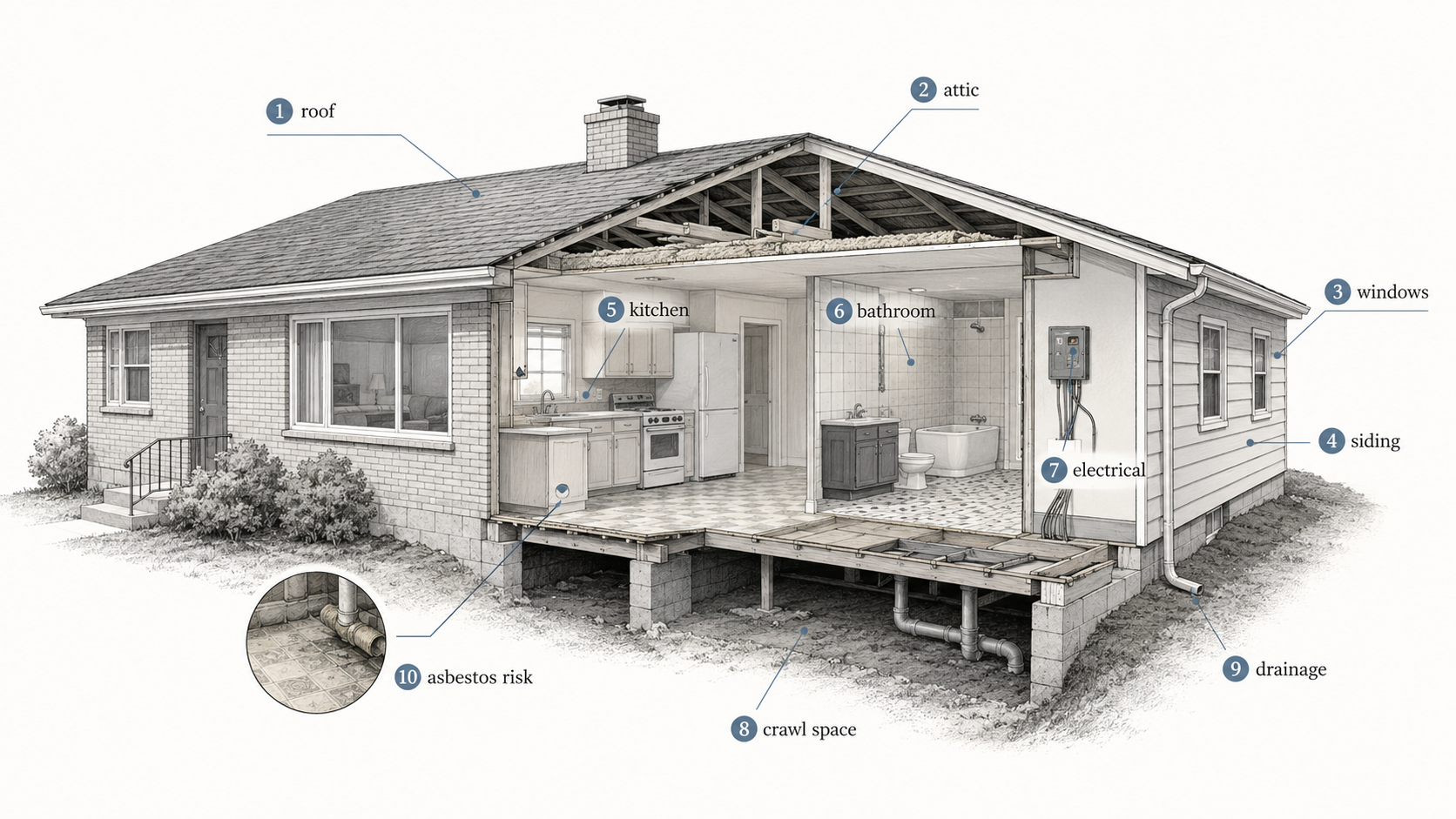
Stand across the street before you choose anything. Draw a mental line along the eave. Draw another through the window heads. Look at the sill heights. Look at the garage. Look at where the entry sits. Look at whether the chimney, brick, porch, or carport already gives the house an anchor.
A good remodel strengthens those lines. A bad remodel fights them and then tries to hide the conflict with more trim.
The low shape is not a flaw
Many ranches, ramblers, and split-levels depend on a low horizontal shape. That shape can look plain when the paint is tired and the landscaping is wrong. But plain is not the same as weak.
Clean fascia, quieter gutters, repaired siding, better window proportions, and one clear entry move often do more than a new porch or fake gable.
Not every 1950s house wants mid-century modern details
Some 1950s houses are true mid-century modern. Many are not. A 1950s Cape Cod, Colonial Revival, split-level, brick ranch, or modest cottage needs its own logic. Cedar slats and black windows can look sharp on one house and forced on the next.
Before and After: Same House, Better Decisions
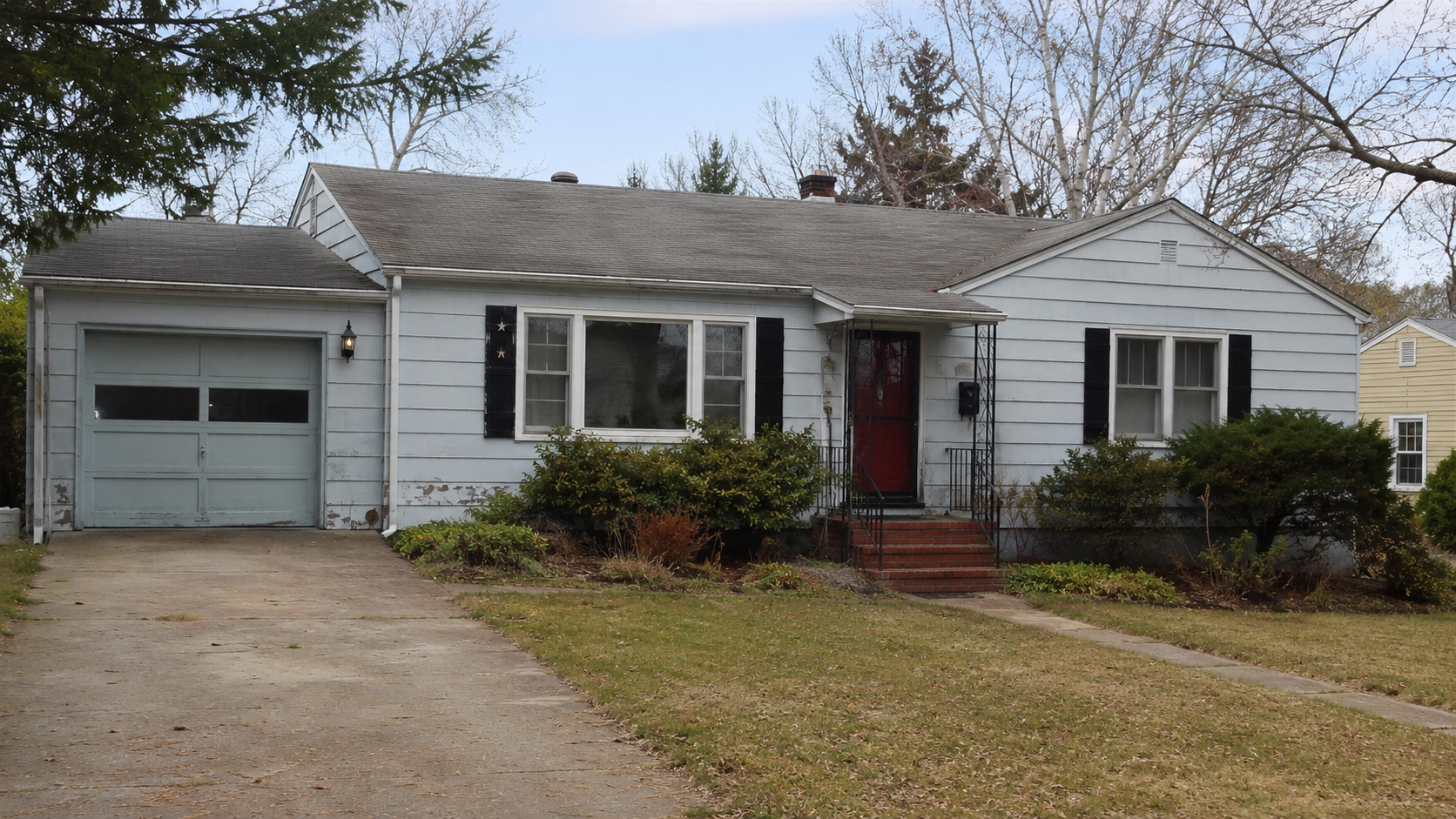
Before
After
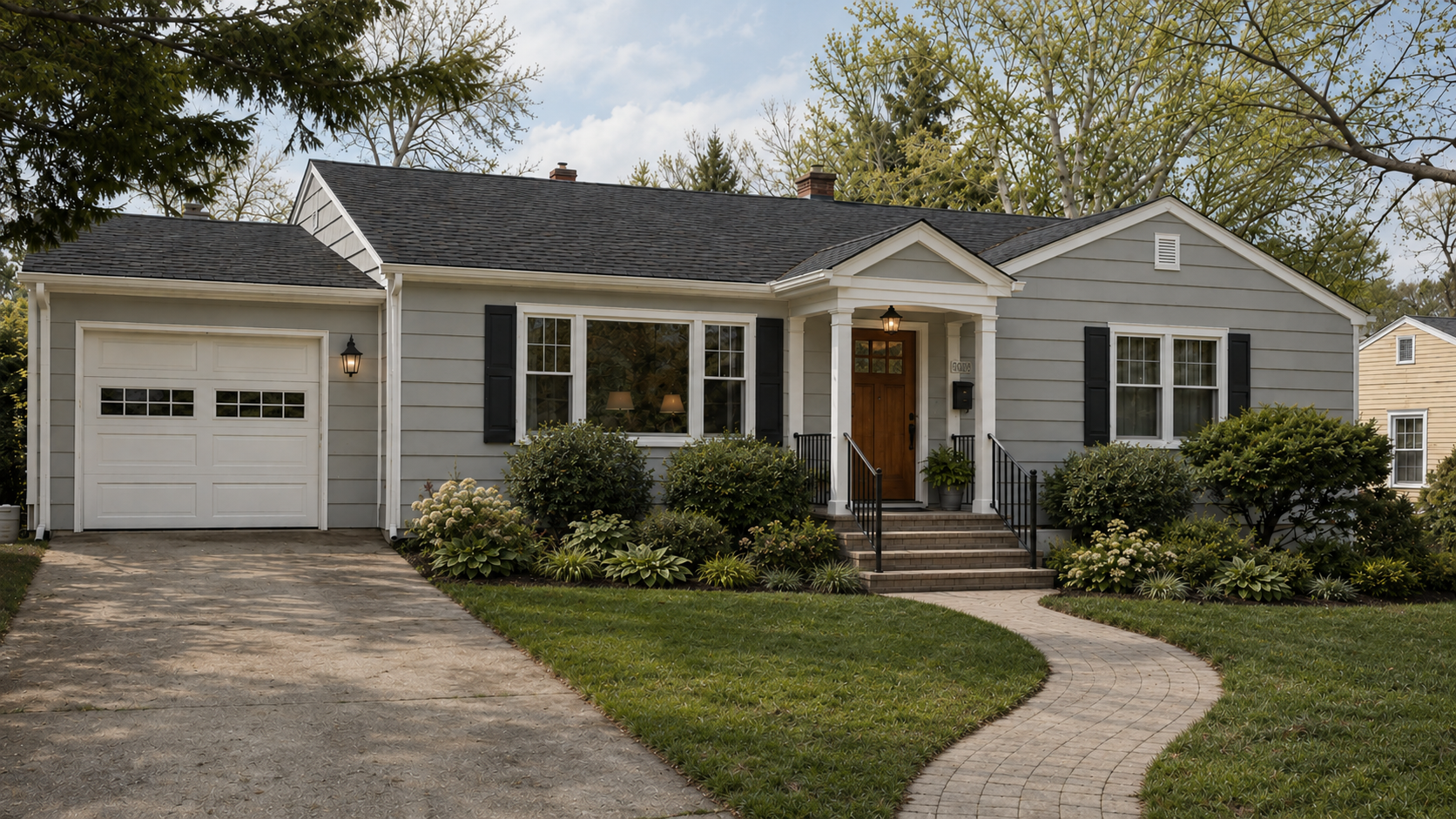
The before version usually has the same problems: tired paint, fake shutters, undersized inserts, a weak entry, a loud garage door, random stone or siding, and planting that hides the house instead of framing it.
The better version does not redesign the building. The roof stays. The garage stays. The entry stays. The windows stay in the same places. The improvement comes from better proportions, cleaner materials, quieter color, a clearer path to the door, and fewer fake details.
The Fix Nobody Prices First
The visible remodel is paint, siding, windows, lights, and landscaping. The real cost often starts where water has been working for years.
Check the roof edges, fascia, gutters, window frames, siding bottoms, stoop slope, downspouts, and the grade at the foundation before choosing finishes. If water is running toward the house, staining the brick, rotting trim, or sitting at the entry landing, a cosmetic remodel only hides the next repair.
This is where cheap updates fail. New paint over wet trim peels. New siding over bad flashing traps the problem. New stone veneer over a damp base turns a repair into a cover-up. New windows installed into damaged openings make the wall worse, not better.
What to Keep, Fix, or Stop Faking
| Exterior part | Keep | Fix | Stop faking |
|---|---|---|---|
| Roofline | Low shape, simple eaves, original proportions | Fascia, soffits, gutters, flashing, drainage | Fake gables, oversized porch roofs, decorative peaks |
| Windows | Opening rhythm, head lines, sill lines | Failed frames, water damage, bad inserts, air leaks | Tall narrow units, false grids, shutters that cannot work |
| Brick or masonry | Sound brick, block, chimney mass, original texture | Mortar, staining, cracks, water exposure | Thin fake stone pasted over problem areas |
| Siding | Clean original patterns when sound | Rot, buckling, failed corners, missing flashing | Random board-and-batten or fake texture everywhere |
| Entry | Modest scale and original position | Door, landing, lighting, walkway, canopy if it fits | Heavy columns, ornate glass, oversized trim |
| Garage | Low, quiet relationship to the facade | Door color, lighting, driveway edge, trim balance | Making the garage the main feature |
Windows Change the Whole Face
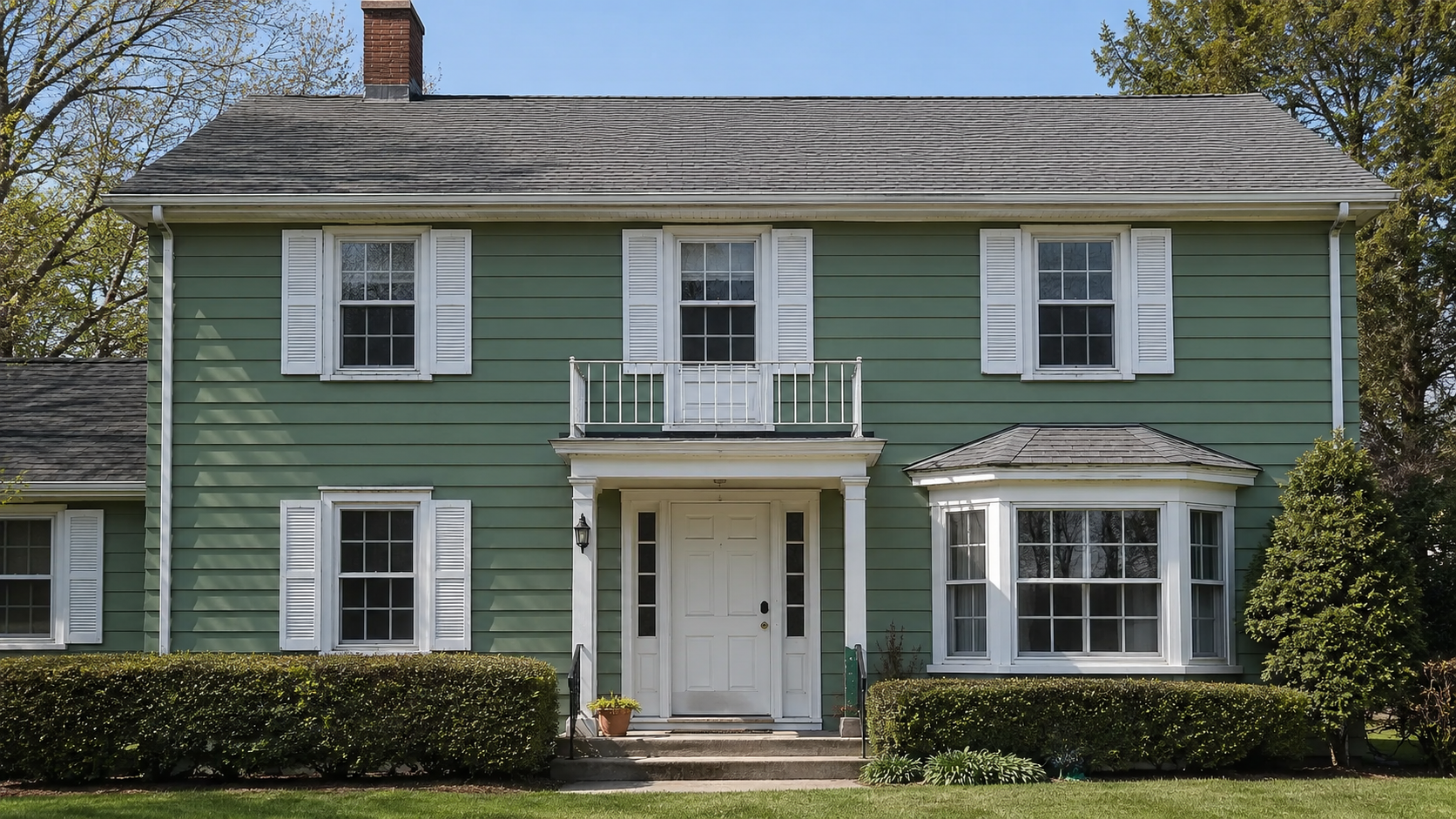
A bad replacement window can make the entire house look cheap even when the window itself was expensive.
The common failure is not just color. It is proportion. Wide openings get filled with tall narrow units. Thick insert frames shrink the glass. False grids make a simple facade busy. Fake shutters get added to windows where shutters would never close.
If the windows are being replaced, keep the opening logic. Watch the head height, sill line, wall spacing, and trim thickness. Full-frame replacement may cost more than inserts, but it can preserve proportion and expose hidden water damage instead of trapping it.
Rooflines, Eaves, and Water
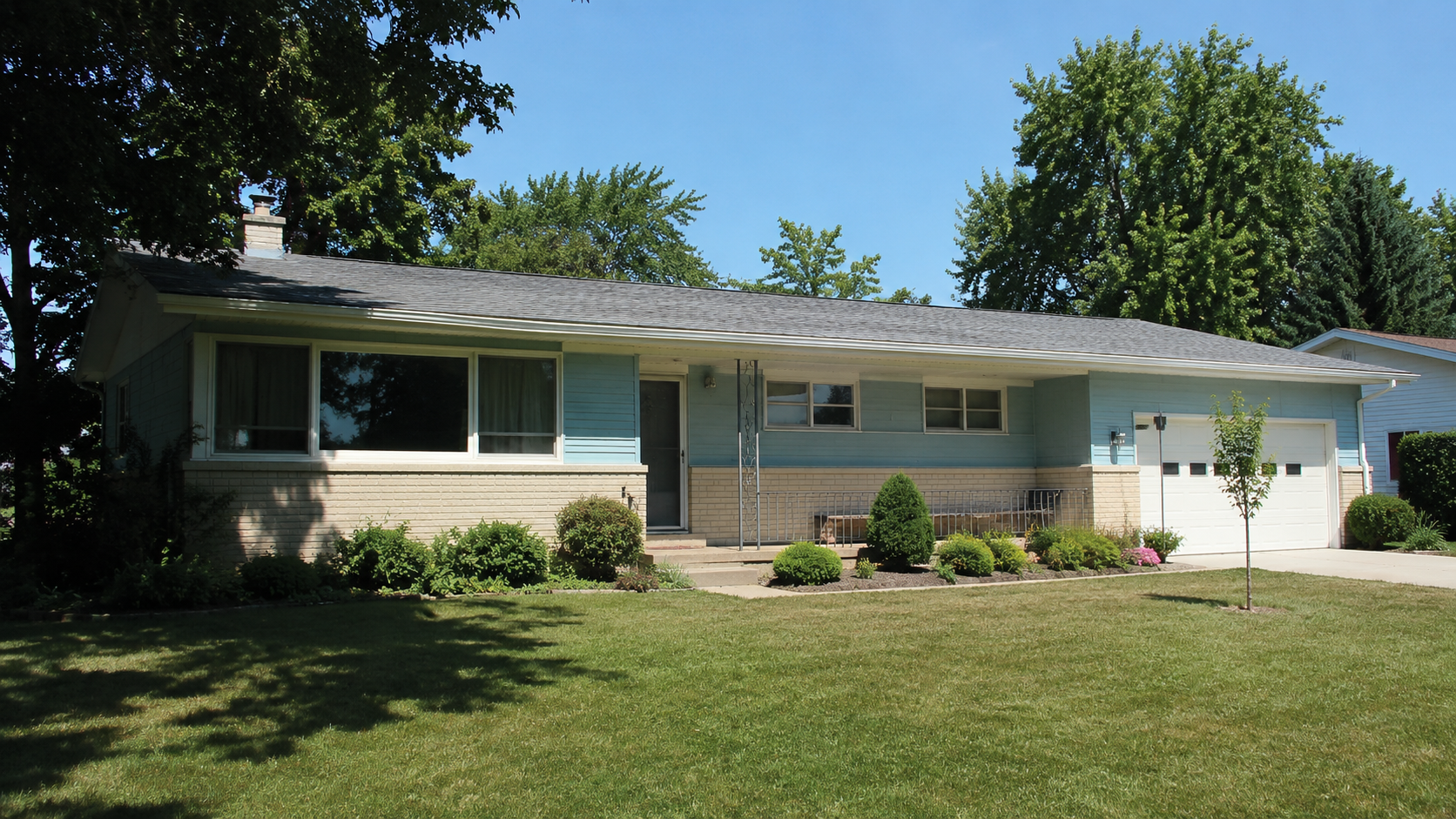
Roof changes are not decorative. A new porch roof, canopy, or fake gable has to carry load and shed water. If it does neither cleanly, it becomes a leak dressed as curb appeal.
Many 1950s houses look better with quieter roof-edge work: repaired fascia, cleaned-up gutters, modest soffit repair, better downspout placement, and an entry improvement that fits under the existing eave.
If a canopy is added, it must slope away from the wall, flash correctly at the house, and drain at the front edge. A beautiful flat slab that sends water back into the wall is not an upgrade.
Brick, Siding, and Paint
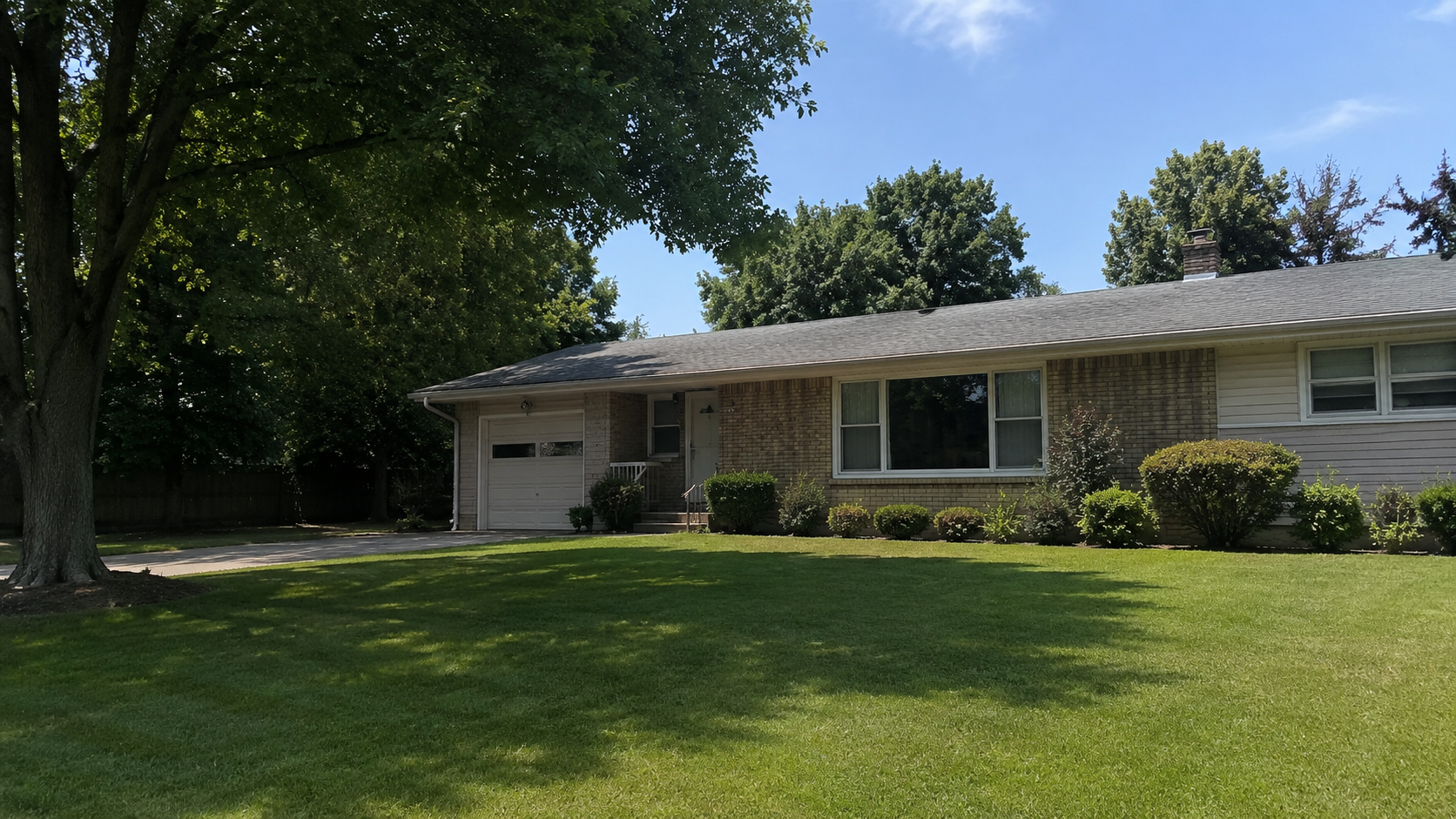
Original brick and block can be the strongest part of a 1950s exterior. Do not cover it because the rest of the house is tired. Often the brick is the anchor and the surrounding trim, paint, gutters, or landscaping are the problem.
Siding needs the same discipline. If it is sound, repair and paint may be enough. If it is rotten, buckled, or hiding moisture, replacement may be justified. The goal is not to add texture everywhere. The goal is to make the wall planes read clearly again.
Painted brick is a permanent maintenance decision
Painting brick can work, but it is not a casual color choice. Check the brick, mortar, moisture exposure, and drainage first. Once painted, it becomes a maintenance surface. If the brick is already trapping moisture or showing damage, paint can make the problem harder to read.
Entry and Garage Hierarchy
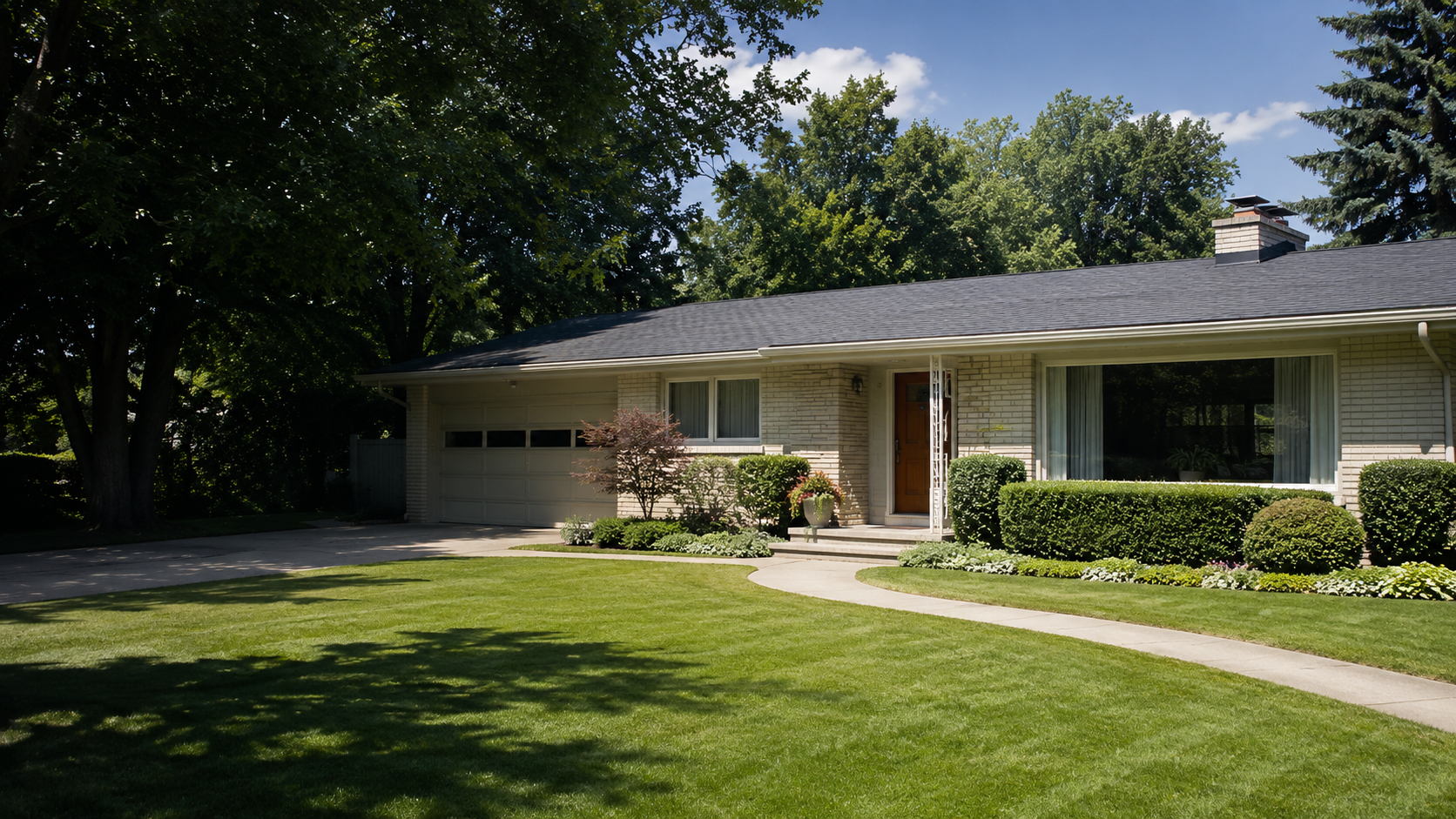
Many 1950s houses put the garage or carport close to the front. That is not automatically bad. It becomes a problem when the garage gets the strongest color, the loudest door pattern, the heaviest trim, and the best lighting while the front door disappears.
The better fix is usually simple: a quieter flush door, color that reduces the garage weight, a clearer walkway, better door lighting, and one modest entry feature that fits the roofline. Do not bolt a farmhouse porch onto a low 1950s house unless the roof, scale, drainage, and structure can actually support it.
What People Discover After the Remodel Starts
The old exterior often tells the truth only after work begins.
Shutters come off and reveal patched siding. Old trim comes down and shows rot around a window. A stoop slopes toward the threshold. A garage door replacement exposes a weak header or bad flashing. A new paint plan suddenly makes mismatched window sizes more obvious.
This is why the first exterior budget should not go straight to finishes. Hold money for repair: fascia, rot, flashing, window openings, siding edges, masonry, gutters, and the entry landing. That money does not show well in a before-and-after photo, but it decides whether the remodel lasts.
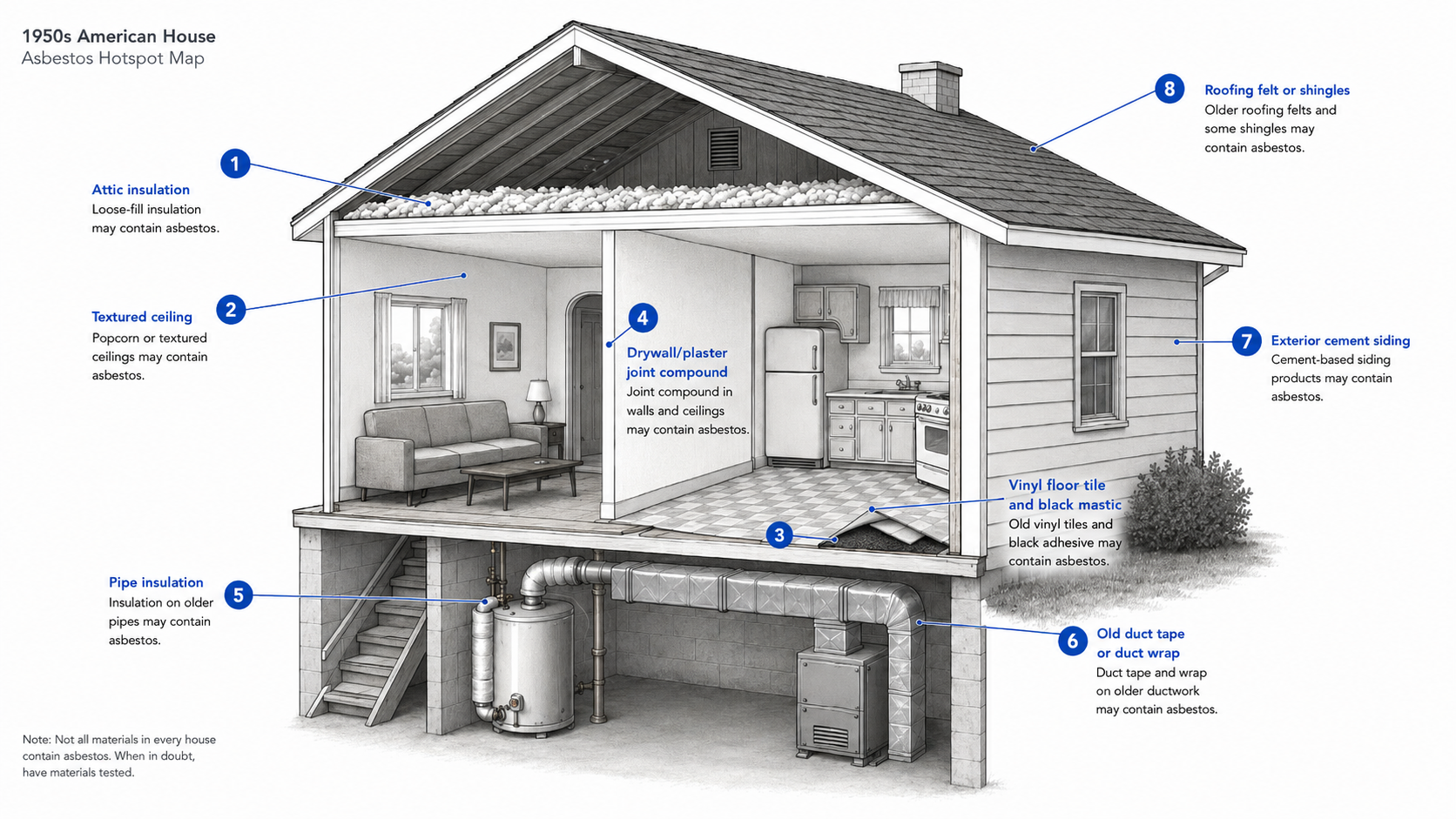
If exterior work will disturb older siding, roofing, textured materials, pipe chases, or floor layers near the entry, check asbestos in 1950s houses before demolition starts.
Exterior Strategy by House Type
| 1950s house type | What usually works | What usually fails |
|---|---|---|
| Ranch or rambler | Stronger entry, quieter garage, horizontal window rhythm, repaired brick or siding | Tall trim, fake shutters, oversized porch roof, random stone |
| Split-level | Clear material breaks, better stair or entry focus, controlled color, repaired siding | Busy siding patterns that make the levels look more chopped up |
| Cape Cod Revival | Clean siding, repaired dormers, better windows, simple entry repair | Forcing mid-century modern details onto a traditional shell |
| Colonial Revival | Better proportions, cleaner shutters if they belong, repaired entry, balanced paint | Removing all formal balance and pretending the house is a ranch |
| True mid-century modern | Large glass, low planes, simple materials, careful roof and drainage repair | Decorative trim, fake traditional details, poor flat-roof drainage |
For one-story exterior updates where the entry, garage, roofline, and kitchen opening all affect each other, use the 1950s ranch house remodel guide with this exterior checklist.
A Smarter Order of Work
- Photograph the house straight on. Mark the roofline, window heads, sill lines, entry, garage, and siding breaks.
- Check water first. Look at roof edges, gutters, downspouts, grading, window leaks, siding rot, and the entry landing.
- Decide what stays. Keep sound brick, good window proportions, useful eaves, and original massing when they still work.
- Fix damaged assemblies. Repair siding, trim, flashing, gutters, windows, doors, and drainage before cosmetic upgrades.
- Choose one main exterior move. Entry focus, window correction, garage quieting, siding repair, or material cleanup should lead the design.
- Then choose color and details. Paint, lighting, house numbers, railings, and planting should support the house, not become the whole remodel.
Good reference: Atomic Ranch: Midcentury Interiors and Exteriors is useful for period-sensitive examples, especially when you want clean exterior ideas without copying fake retro details.
FAQ
What is the best way to update a 1950s house exterior?
Start by reading the roofline, window proportions, entry, garage, and materials. Repair water and siding problems first, then use color, lighting, windows, and landscaping to sharpen what is already there.
Should I remove shutters from a 1950s house?
Remove fake shutters when they do not fit the window size or the house style. Some Colonial Revival homes can handle shutters, but many ranches and mid-century exteriors look cleaner without them.
Can I paint brick on a 1950s house?
Sometimes, but inspect the brick, mortar, drainage, and moisture exposure first. Painted brick becomes a maintenance surface, and reversing it is difficult.
Are black windows good for a 1950s exterior?
They can work, but window proportion matters more than frame color. A badly sized black window still looks wrong.
Should I add a front porch to a 1950s house?
Only if the roofline, structure, drainage, and scale support it. Many 1950s houses need a smaller entry canopy, better lighting, and a clearer walkway instead of a full porch.
How do I make a 1950s ranch exterior look better?
Quiet the garage, strengthen the entry, keep horizontal lines, repair brick or siding, replace bad windows carefully, and avoid details that fight the low roofline.
What is the biggest mistake in a 1950s exterior remodel?
Adding style parts from another house type before fixing proportion, water, windows, siding, and entry hierarchy.
Read Next
- 1950s Kitchen Remodel: Layout, Cabinets, Appliances, and What to Keep
- 1950s Kitchen Remodel Cost: What Changes the Price in an Old Kitchen
- 1950s Ranch House Remodel: What to Fix, Keep, Open Up, and Avoid
- 1950s Houses: What They Are, What Works, What Doesn’t
- Asbestos in 1950s Houses: Where It Hides Before Renovation
- 1950s Bathroom Remodel: What to Keep, Replace, and Check First