
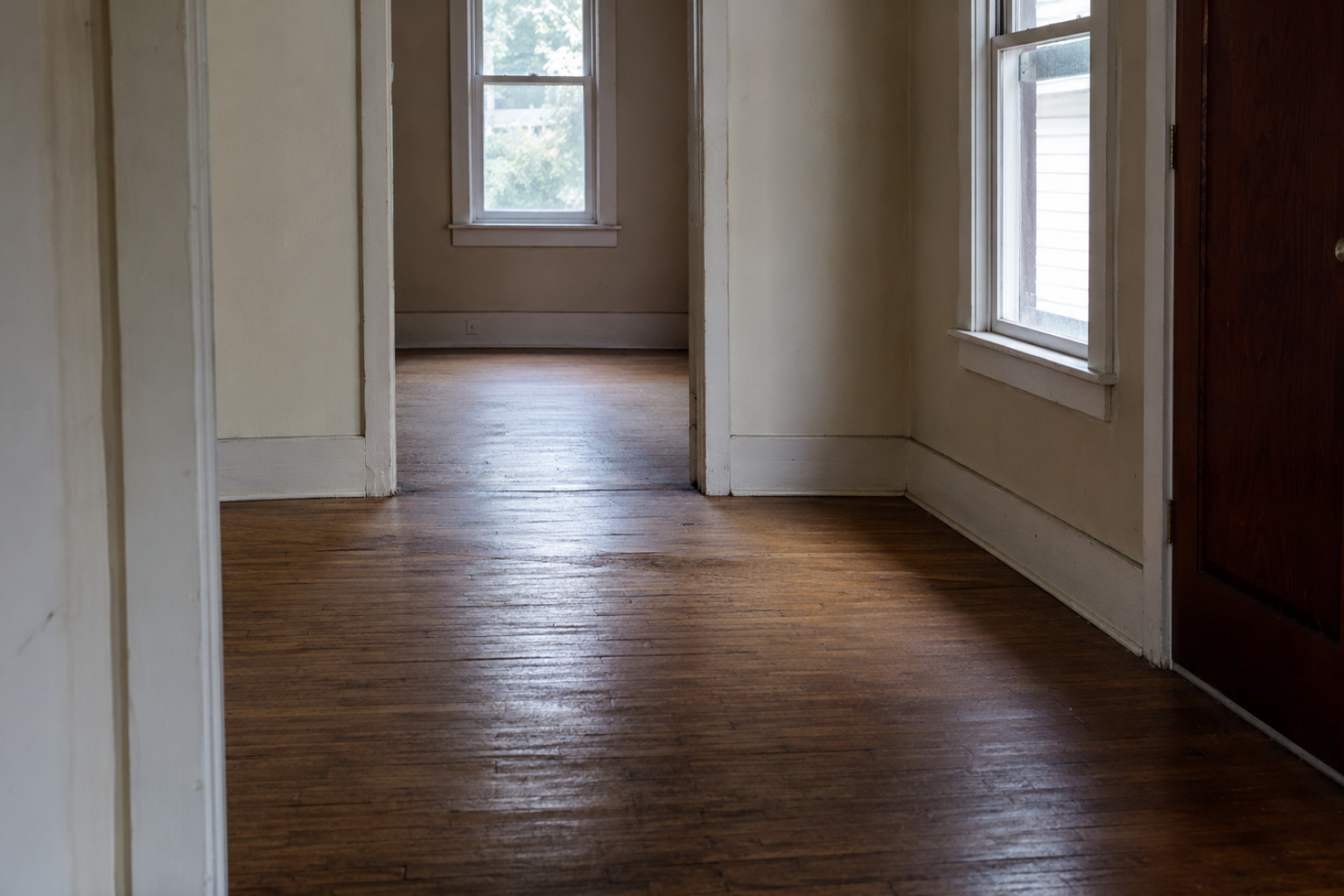


A floor usually gives you one symptom at a time — a squeak, a soft spot, a cracked tile, a slope toward one wall. The cause can sit anywhere from the finish down to the joists, beams, supports, or moisture below, and where the symptom sits is the best first clue.
Start by marking where the problem begins and ends. A soft area beside a toilet points to a different cause than a broad sag across the middle of a room.
Finish Problem or Floor-System Problem?
Some problems stay in the finish layer. A loose transition strip, scratched board, or small vinyl gap may not affect the floor below.
These signs need a closer look:
- A dip, hump, or slope that crosses a room.
- A soft area that moves under normal foot pressure.
- Tile or grout that cracks again after repair.
- A new squeak, bounce, or vibration.
- Gaps opening near baseboards, doors, or exterior walls.
- Staining, musty odor, or visible moisture below the room.
The finish sits over joists, beams, subfloor, and support walls. See how floor construction works before treating the surface as the whole problem.
Uneven Floors in Older Houses
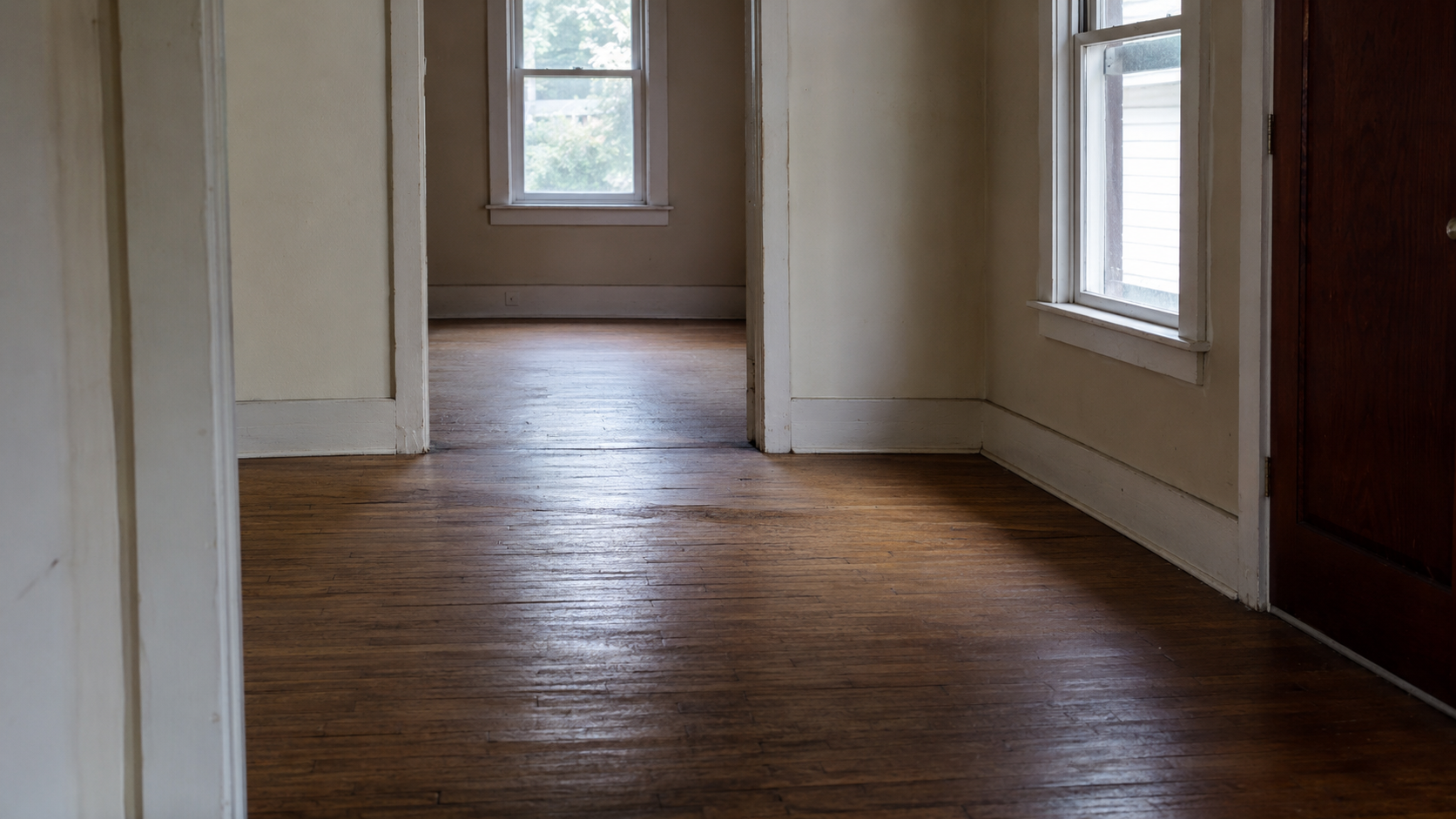
Many older floors are not level. A broad slope that has stayed the same for years may be old settlement rather than active failure.
A new or growing slope needs more attention, especially when it comes with sticking doors, fresh wall cracks, bounce, soft areas, or gaps at the baseboard.
The direction and shape of the slope help narrow the cause. See uneven floors in an old house for the full old-house diagnosis.
What Common Floor Symptoms Mean
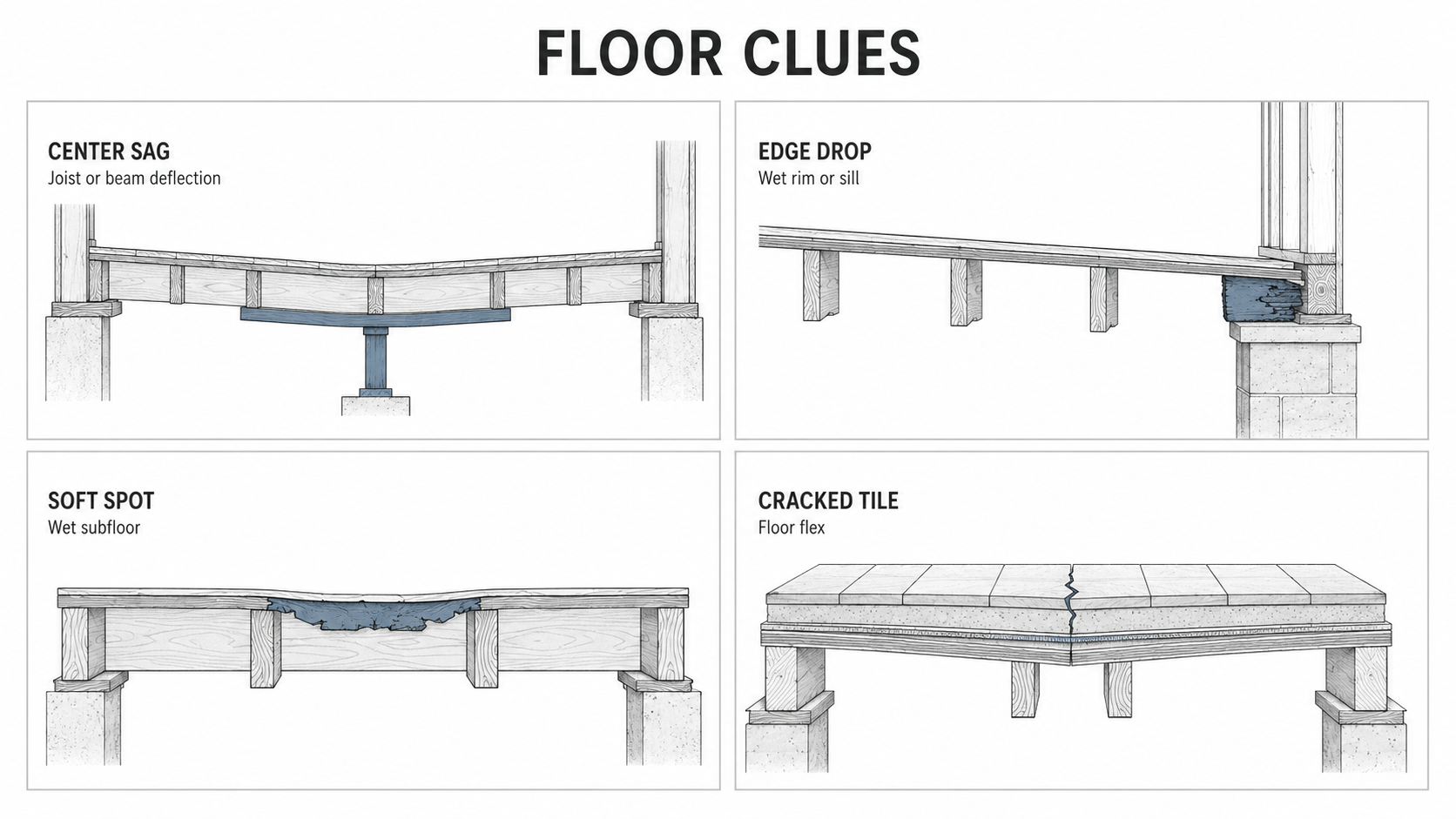
Center Sag or Broad Dip
A long, shallow dip near the middle of a room can point to joist deflection, a settled beam, or a post that is no longer carrying its share of the load.
From the basement or crawl space, look for bowed joists, a beam with a visible sag, leaning posts, damaged connections, or posts sitting on weak footings.
Beam size, span, connections, loads above, and support below all affect the result. A removed bearing wall, heavy tub, or stone island can also change the floor load.
Edge Drop Near an Exterior Wall
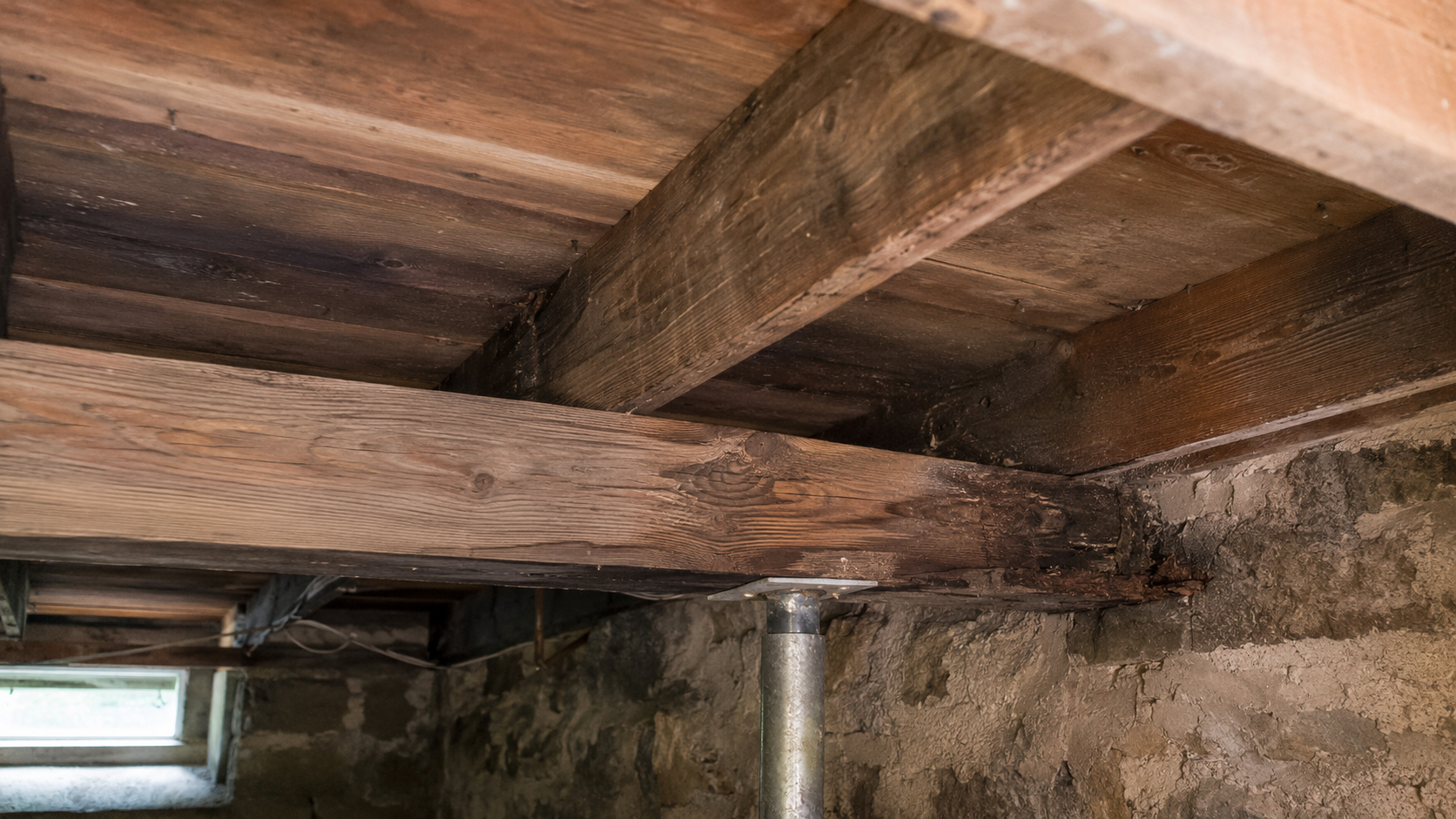
A floor that drops toward an outside wall needs a moisture check. Joist ends, rim framing, sill plates, and subfloor edges can rot where water enters through bad grading, leaking windows, failed flashing, overflowing gutters, or plumbing near the wall.
Look for dark wood, soft or crumbling areas, insect damage, damp insulation, and staining before covering the floor.
Soft Spot or Spongy Floor
A soft spot often means the subfloor has lost strength, usually after repeated water exposure. Bathrooms, kitchens, laundry rooms, exterior doors, and refrigerator water lines are common starting points.
The largest patch of rot I've cut out of a bathroom came from a toilet seal that had seeped for years while the vinyl above it still looked fine.
The repair normally requires opening enough of the floor to find solid material, stopping the leak, and replacing damaged panels and framing. See the subfloor guide for the layer directly below the finish.
Squeaks, Pops, and Movement
A squeak comes from parts rubbing together. The source may be a loose subfloor panel, a moving fastener, finish flooring rubbing on the subfloor, or a pipe passing through framing with too little clearance.
One old squeak in a stable floor is often a repair issue. A new squeak with bounce, separation, cracking, or a soft spot needs a wider inspection.
Check and fasten the base before installing new flooring. That work belongs in flooring installation prep.
Cracked Tile, Grout, or Stone
Tile and grout crack when the surface below moves or when the tile assembly is not suited to the floor.
A straight crack that returns after repair or crosses several tiles may follow a subfloor seam, weak underlayment, excessive joist movement, or a transition joint.
Check flatness, stiffness, and the full layer sequence before replacing the finish. Different types of flooring handle an imperfect base differently, but none repair a weak floor.
Why a Floor Can Pass Code and Still Crack Tile
Residential code allows floor joists to deflect up to 1/360 of their span under live load. On a 12-foot span that is a hair over 3/8 inch of movement, and the floor still meets code. Wood and resilient flooring tolerate that much flex. Hard finishes often do not: ceramic tile guidance generally sits at the same L/360 minimum with no margin, and natural stone calls for L/720 — a floor twice as stiff as code requires.
That gap between "meets code" and "stiff enough for the finish" explains a large share of recurring tile and grout cracks, especially in older houses with long joist spans. The fix is stiffness, not grout: closer support, sistered or blocked joists, a thicker subfloor, or an uncoupling membrane rated for the assembly. Regrouting a floor that flexes past what the finish tolerates buys one season, sometimes two.
Moisture Changes the Repair
Water can damage both the finish and the wood below it. Repeated wetting can swell panels, loosen fasteners, rot joist ends, and attract insects.
Decay fungi need wood above roughly 20 percent moisture content to get established; framing that stays drier than that essentially does not rot. A moisture meter is a $30 answer to whether a stain is old history or an active problem.
Find the source before repairing the floor. Check supply lines, drains, appliances, showers, exterior doors, windows, roofs, gutters, grading, crawl spaces, and foundation walls; a floor repair will fail again if the leak stays active.
How to Inspect the Problem
- Map the area. Mark where the slope, squeak, crack, or soft spot starts and ends.
- Check nearby finishes. Look at doors, baseboards, drywall seams, tile, cabinets, and adjoining rooms.
- Inspect below. Look from the basement, crawl space, access opening, or ceiling below.
- Measure it. Use a long level or straightedge and record the change instead of guessing.
- Take photographs. Record cracks, stains, framing, supports, and damage before opening the floor.
Write the numbers down and date them. Memory flattens a floor within a week, and a dated measurement is the only way to prove whether anything is moving.
Floor loads travel through joists, beams, walls, posts, and foundations. See structural floor systems before adding a post, beam, sistered joist, or other support.
When to Call for Help
Call a qualified carpenter, structural engineer, or foundation contractor when:
- The floor is dropping or changing quickly.
- A soft area feels close to breaking through.
- A beam, post, or joist is visibly moving.
- Joists are rotten, split, or heavily cut.
- Active water is reaching structural wood.
- There is pest damage at the rim, sill, joists, or beams.
- Large tile cracks keep returning.
After a renovation, do not remove more walls or add more weight until the load path is checked. This is important before installing heavy tile, a tub, a stone island, or a new hardwood floor. See how to install hardwood flooring for wood-floor preparation.
Repairs That Do Not Fix the Cause
- Leveling compound over a moving floor: It smooths the surface but does not stop rot, deflection, or settlement.
- New flooring before fixing the leak: The new material can fail in the same place.
- A random jack post: A post needs a proper footing and load path. Lifting in the wrong place can crack walls and floors.
- Ignoring a soft bathroom floor: Damage may extend into nearby panels, joists, walls, and finishes.
- Calling every old slope a structural failure: Stable settlement and active movement are different.
Floor Problem Checklist
- Is the problem new or getting worse?
- Is it near water, plumbing, an exterior wall, or a heavy load?
- Does it follow a clear direction or have a sharp edge?
- Are doors, trim, tile, or nearby walls changing too?
- Can you inspect the framing below?
- Has the moisture source been fixed?
Frequently Asked Questions
Are squeaky floors a structural problem?
Not by themselves. Many squeaks come from friction between panels, fasteners, framing, or finish flooring. A new squeak with bounce, cracking, or a soft spot needs more attention.
Can a sagging floor collapse?
Most sagging floors do not collapse without warning. Risk rises when rot, pest damage, failed supports, heavy framing cuts, or active movement are present.
Can new flooring hide a soft spot?
It may hide the appearance for a short time, but it will not restore the missing strength. Repair the damaged subfloor and framing first.
Should an old floor be leveled?
Only after the cause of the slope is understood. Some stable old floors can stay as they are. Others need structural work before the surface is leveled.