
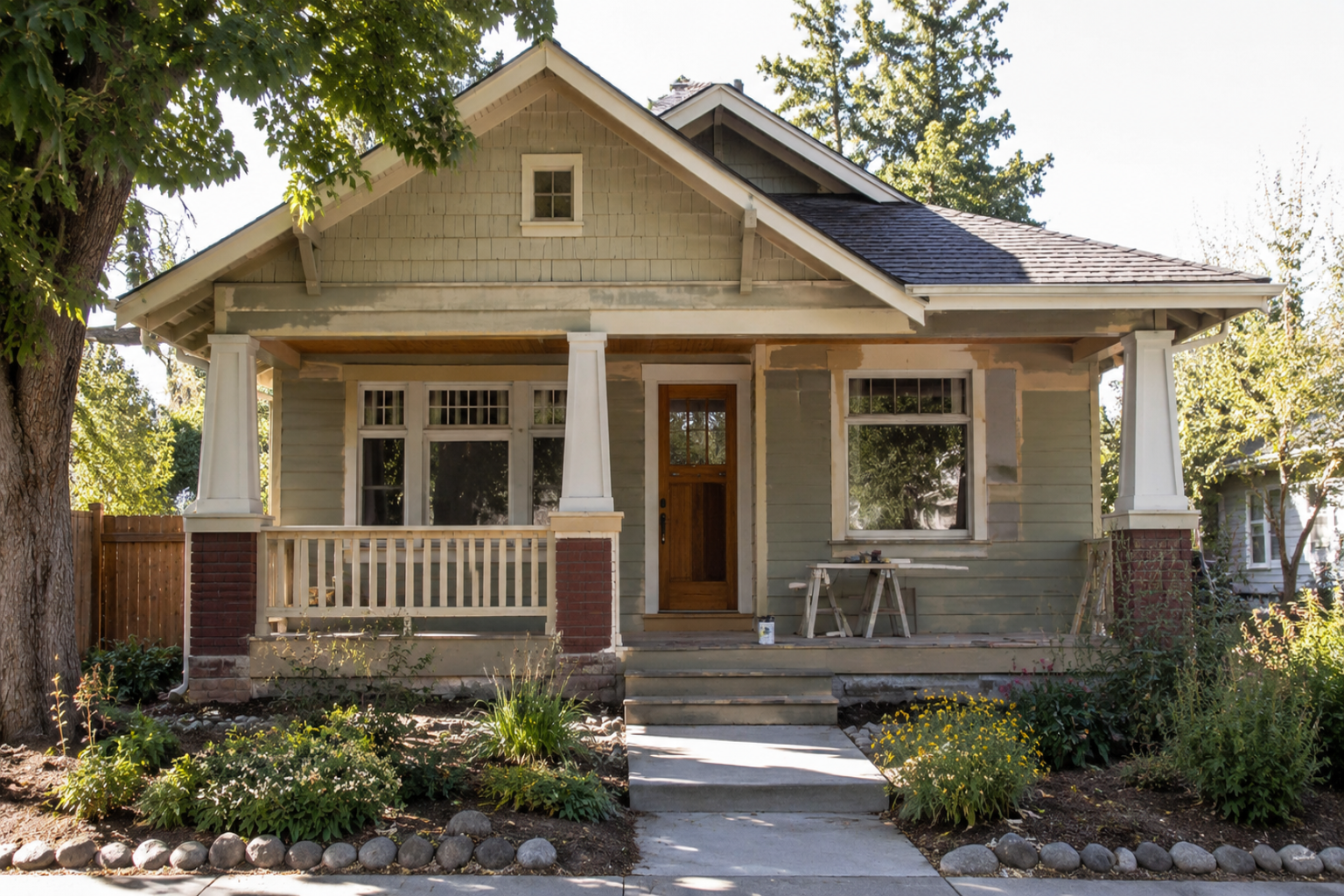


Porch, Siding, Windows, Trim, and Curb Appeal.
A tired-looking Craftsman exterior can be a cheap fix or an expensive one. The trouble is telling them apart before you start spending.
Peeling paint, weak lighting, overgrown shrubs, a dull front door, a cluttered walkway — those are small fixes. Rotten porch columns, bad drainage, undersized replacement posts, damaged siding, flat vinyl windows — those are different. Those change the house.
Start any Craftsman exterior remodel by separating curb appeal from repair. Fix the water, the porch, the siding, the trim, the windows, and the roof edges first. Then use paint, lighting, planting, and hardware to make the house look cared for again.
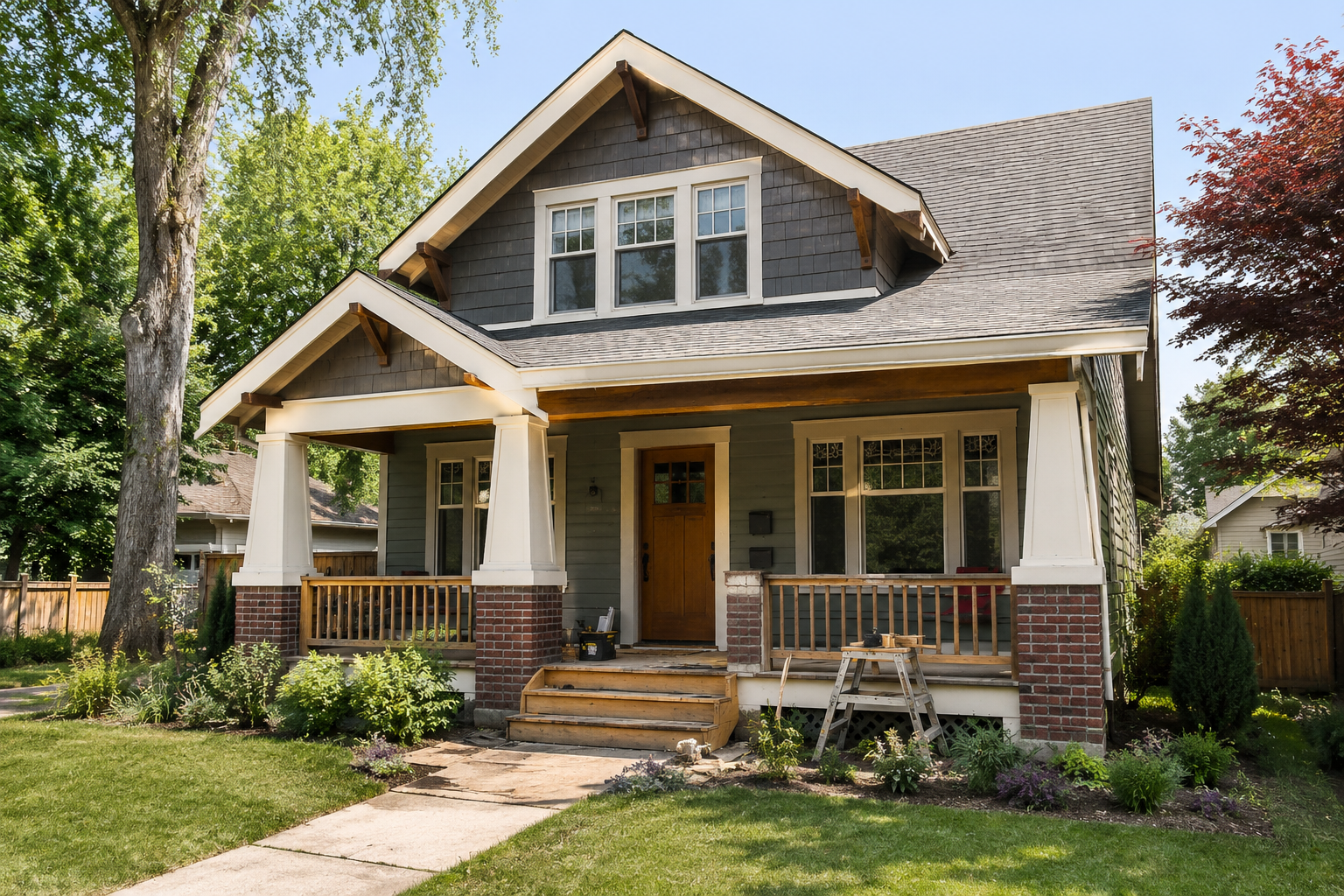
Here's a repair-first plan for the porch, siding, windows, trim, paint, and curb appeal — plus the mistakes that make a Craftsman look generic.
Quick Answer: What to Fix First on a Craftsman Exterior
The features that matter most are the porch, the low roofline, the deep eaves, the rafter tails, the front steps, the tapered columns, the siding, the window trim, the front door, and how the porch roof meets the main roof.
If money's tight, spend it in this order:
- Fix the roof, gutters, drainage, and water-entry problems.
- Repair the porch structure, stairs, railings, and column bases.
- Repair or correct siding, window trim, fascia, and rafter tails.
- Undo bad decisions from a previous exterior remodel.
- Choose paint colors once the repair work is settled.
- Upgrade lighting, door hardware, landscaping, and walkway details last.
Paint doesn't remodel a Craftsman exterior. It just shows whether the proportions and the repairs underneath are right.
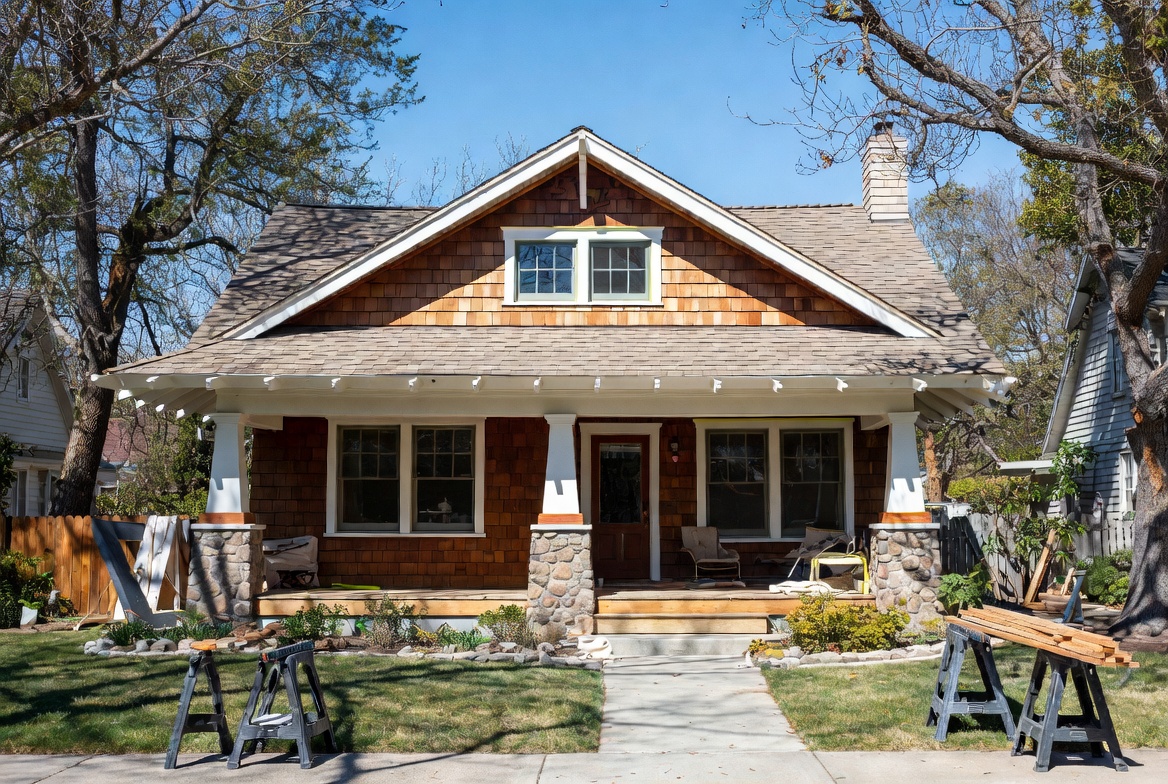
Start by Reading the House, Not the Paint Color
Before you pick a siding color or a porch light, look at the house as a set of connected parts. A Craftsman exterior runs on horizontal weight, shelter, shadow, wood texture, and a strong front porch. Thin posts, skimpy trim, flat vinyl windows, and oversized modern doors work against all of that.
Not sure if your house is a true Craftsman, a bungalow, or a later bungalow-inspired build? Compare it against the main features of a Craftsman bungalow. You don't need to copy every original detail, but don't erase the house's basic shape either.
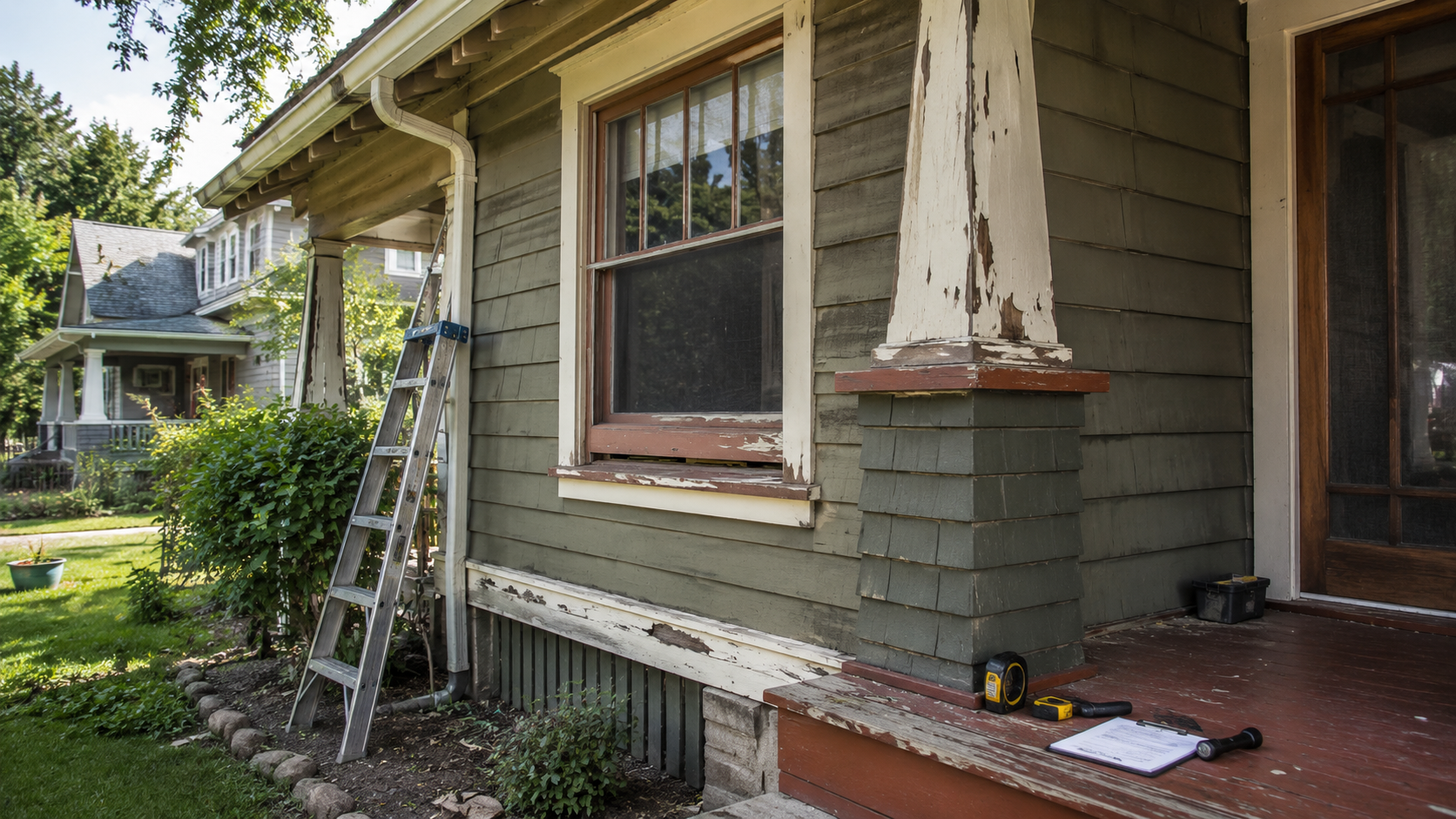
A good remodel starts with inspection. Look at where water lands, where paint is failing, where wood meets masonry, where the porch boards meet the columns, and where trim has already been patched. Those details tell you more than any color chip.
The Porch Is the Main Exterior Feature
On a lot of Craftsman houses, the porch basically is the exterior. It's the first thing people see, and it sets the scale for the whole house. The roof, columns, stairs, railings, floor boards, beam, and front door all need to work as one piece.
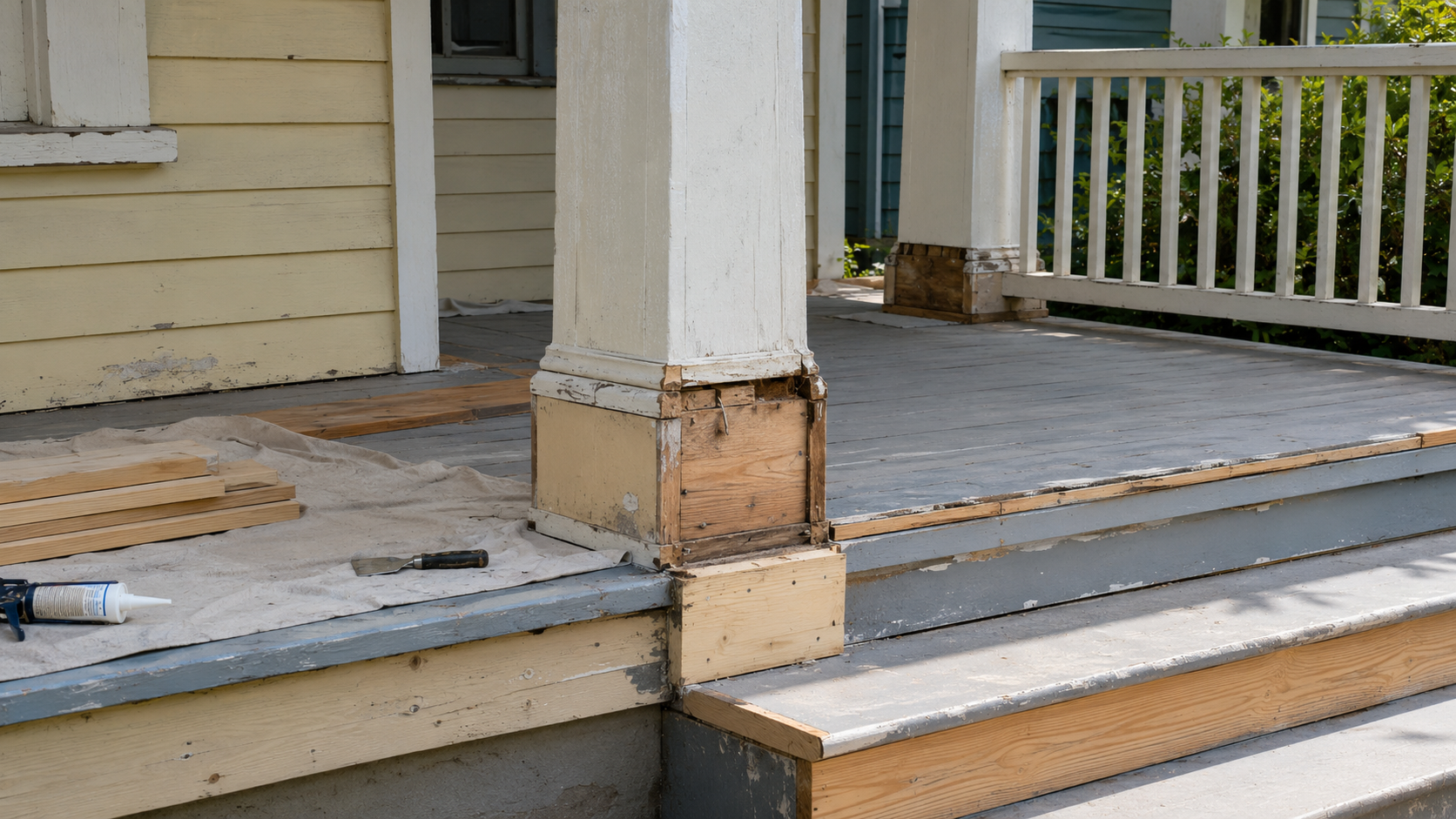
Start a porch remodel with condition, not decoration. Check the column bases, stair stringers, deck boards, railing connections, porch roof, piers, flashing, and how water moves around the steps.
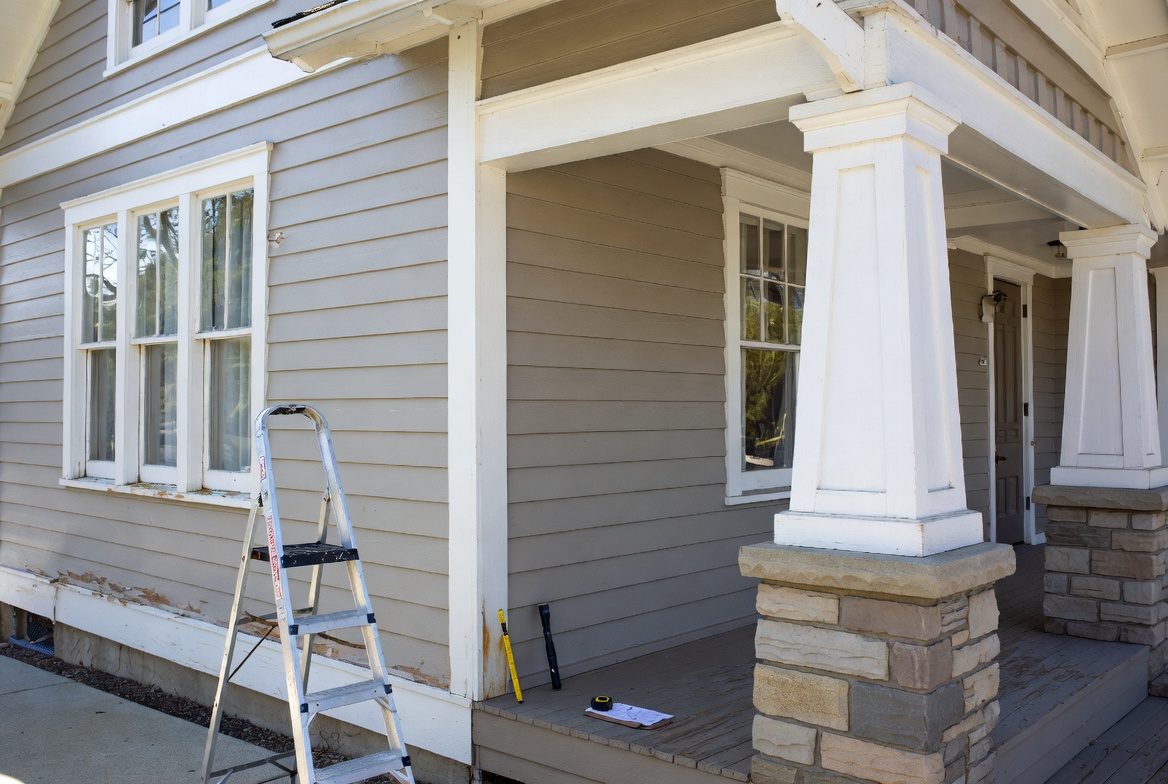
Porch details worth protecting
- Tapered columns or heavy porch supports
- Low porch roof and deep overhangs
- Wide steps that meet the house naturally
- Simple wood railings at the right scale
- Original porch flooring where it can be saved
- Beam, fascia, brackets, and trim details
- The entry sequence from walkway to steps to front door
The biggest mistake is swapping heavy Craftsman porch supports for thin generic posts. The porch might end up structurally fine and still look wrong from the curb.
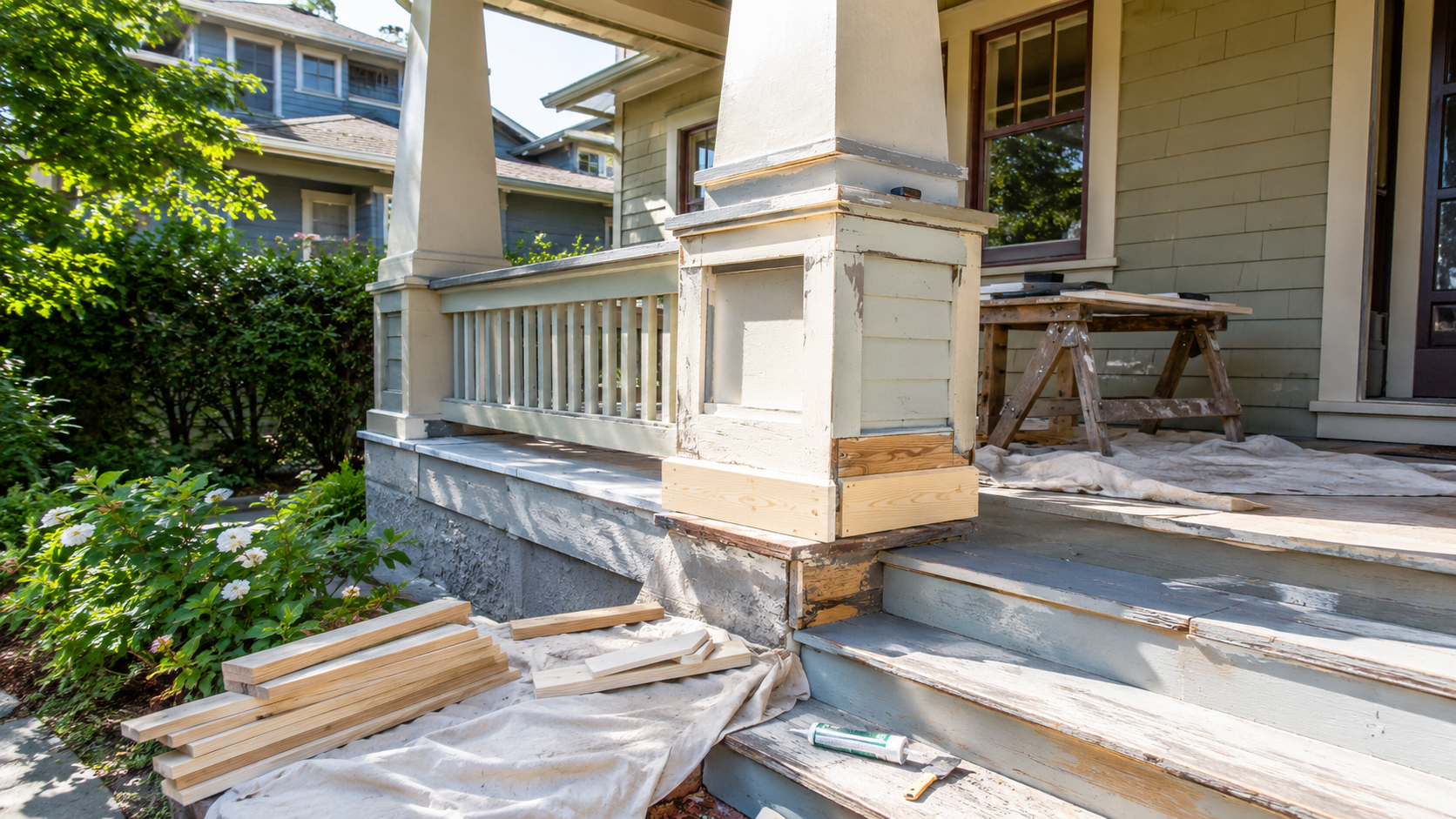
Column scale carries the visual weight of the roof. A brand-new porch can still look off if the posts are too thin, the railings too light, or the stairs feel out of line with the door.
Before you touch a column base, find out what's actually holding up the roof
A Craftsman porch column is one of two things: the real post holding up the roof, or a tapered box built around a smaller structural post hidden inside. From the street they look the same. The repair is not the same.
If the tapered column is just a sleeve, you can often pull the damaged boards off while the hidden post keeps carrying the load. If the column itself is structural, cutting into the base without supporting the roof first can let it sag, crack the trim, or shift the whole porch out of square.
Before anyone cuts rot out of a column base, open a small inspection area or check from underneath to see if there's a hidden post. If the column is structural, or you're not sure, the roof needs temporary support — planned by someone who's done old-house porch work before. This isn't the spot to guess.
That one check can change the whole scope of the job. A simple trim repair at the base might stay small. A structural column repair can mean shoring the roof, new post material, base flashing, porch floor repair, and fixing the drainage so the rot doesn't just come back.
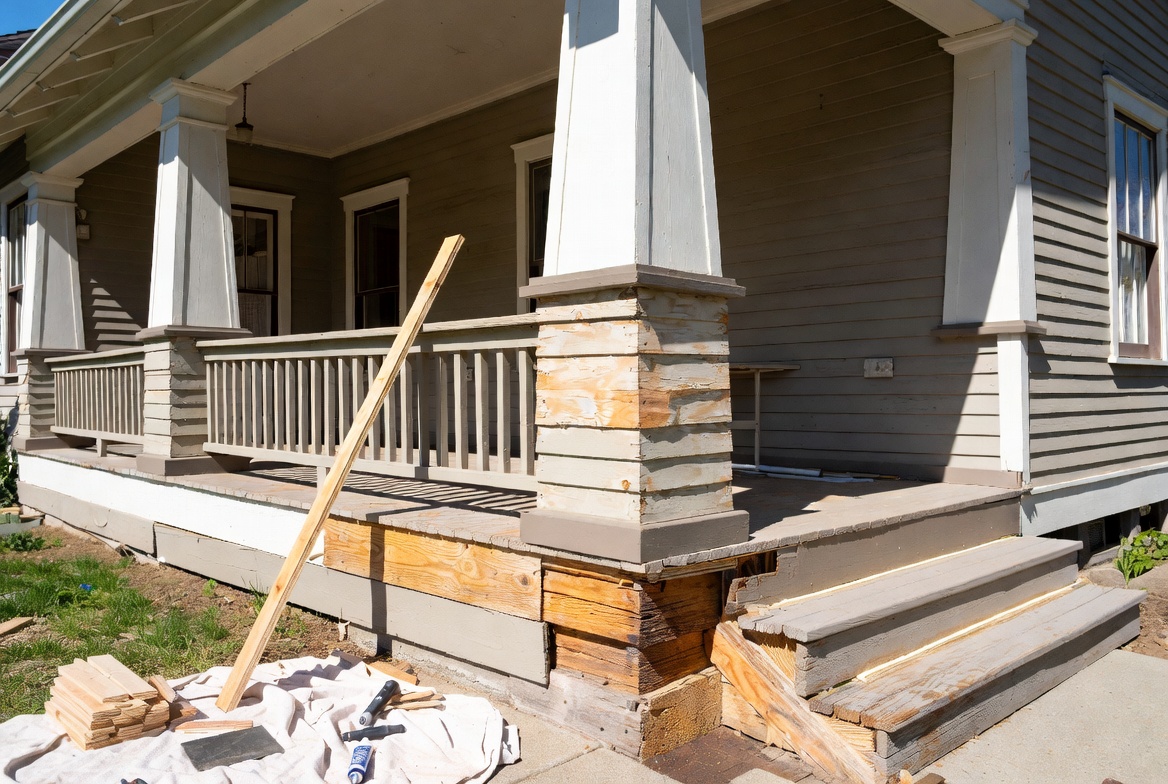
Railings: check code before you copy the old look
Most homeowners want a porch railing that matches the old Craftsman look. That is the right instinct, but a rebuilt railing still has to meet the code used in your area. Older porches often had lower rails, wider baluster gaps, or stair handrails that would not pass a modern inspection.
Before rebuilding, check the required guard height, baluster spacing, stair handrail height, and load requirements with your local building department or contractor. This is especially important when the porch floor is well above grade or the stairs need a graspable handrail.
The goal is not to make the porch look new. The goal is to keep the Craftsman scale while rebuilding the railing so it is safe, inspectable, and not likely to be torn out later.
On the wood itself, do not judge rot by paint alone. Probe suspect areas with an awl or flathead screwdriver. Sound wood resists the point. Rotted wood lets it sink in with little pressure. If the damage is only shallow, repair may be possible. If the wood is soft through the full thickness, plan on replacing that section.
Bad Previous Remodels Are Often the Real Problem
A lot of Craftsman exteriors have already been altered once. The original siding got covered. The windows got swapped for something cheap. The porch columns got replaced with something skinnier. The trim got stripped and replaced with boards that belong on a different house entirely.
Before you spend money on new finishes, figure out what previous work actually made the house worse.
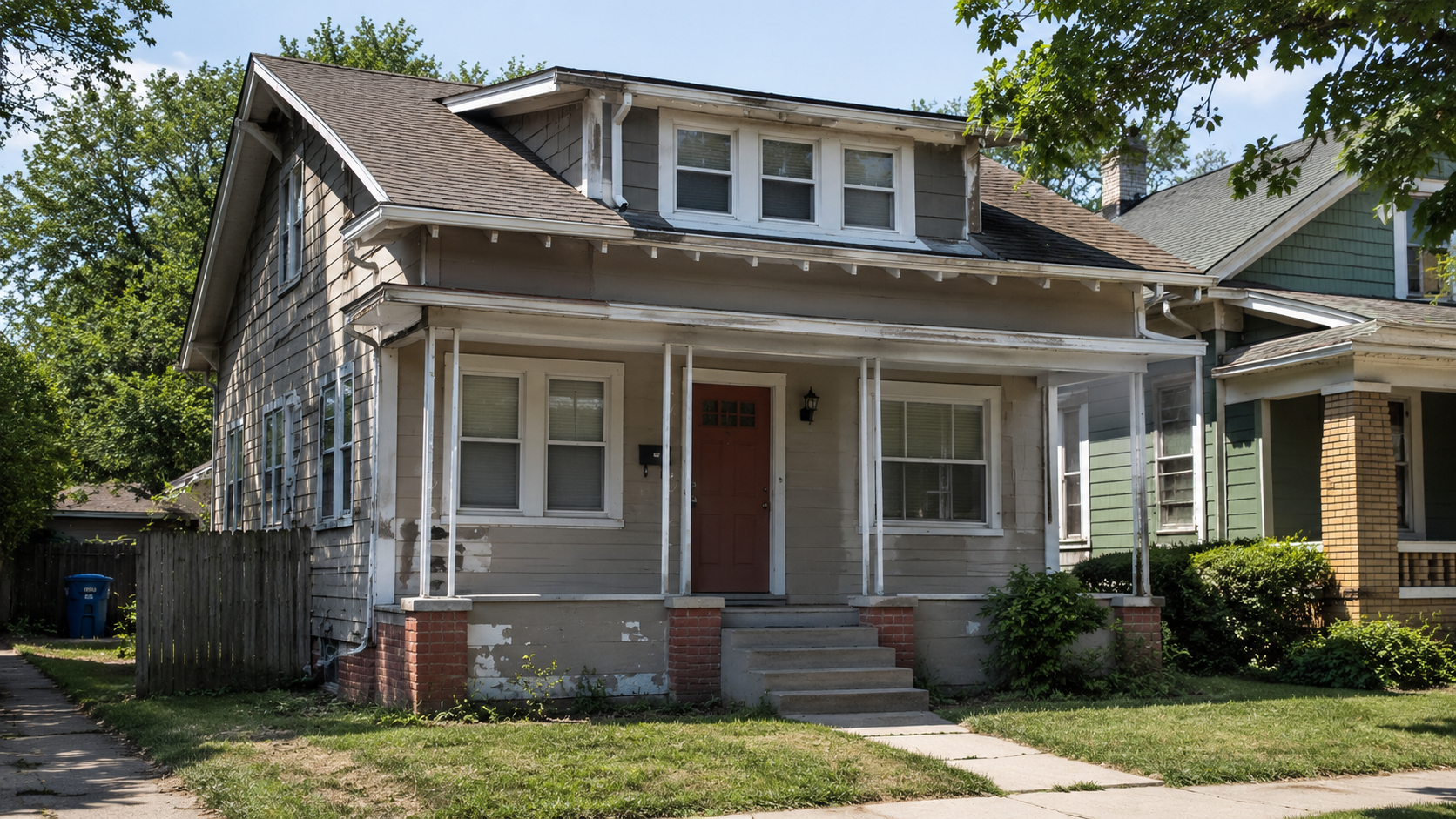
Signs of a bad Craftsman exterior remodel
- Thin porch posts where heavier supports should be
- Flat replacement windows with weak trim
- Vinyl siding covering original wood details
- A front door style that doesn't match the house
- Generic porch railings with the wrong height or spacing
- Missing rafter tails, brackets, or fascia details
- Patchy siding repairs that don't line up
- Paint colors trying to hide proportion problems
- Lighting and hardware that look too modern or too decorative
You don't always need to restore everything back to museum condition. You need the scale and the relationships between parts to be right again.
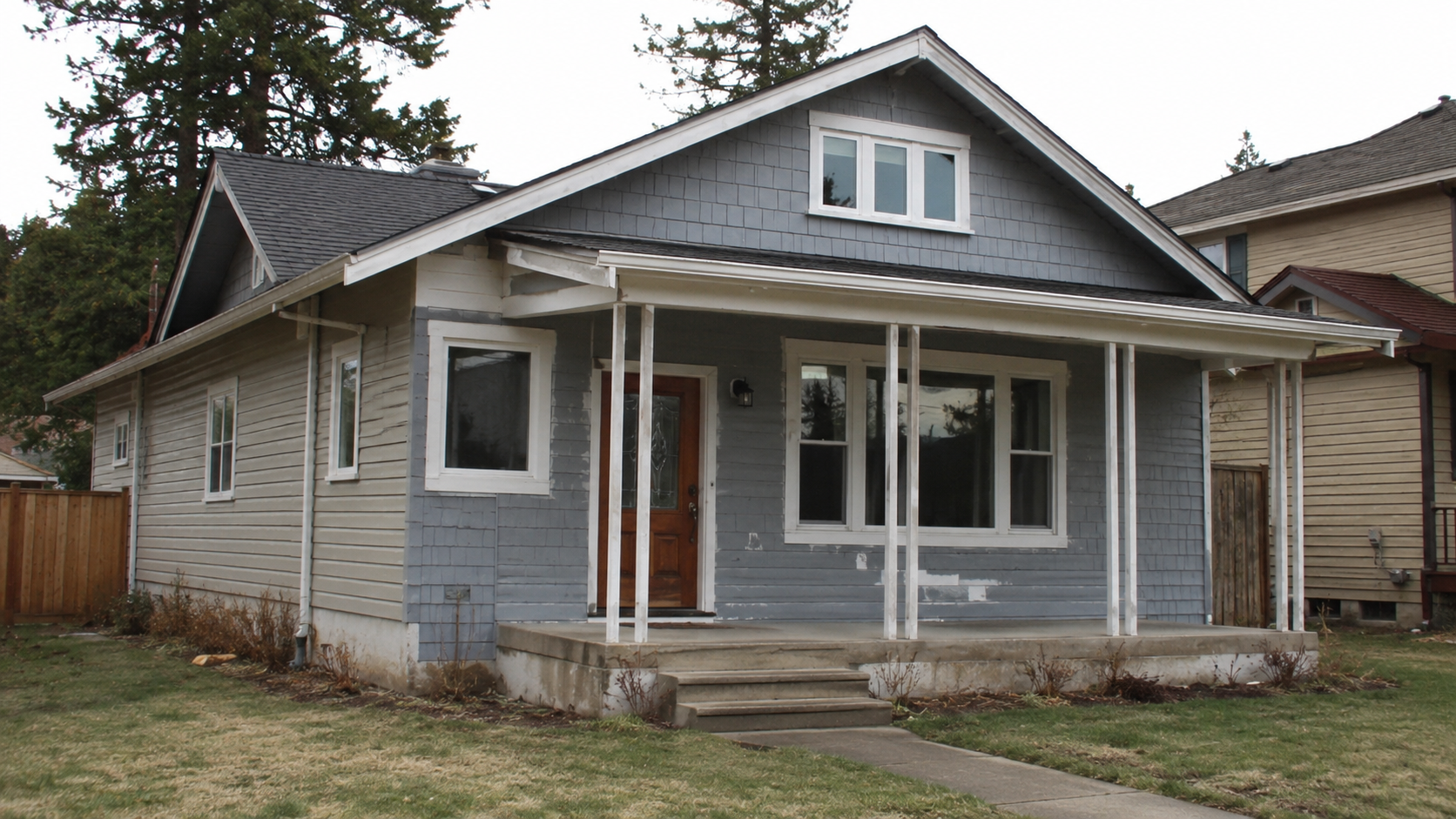
Siding: Repair Before You Cover Everything
Craftsman houses turn up with clapboard, wood shingles, stucco, mixed materials, or later replacement siding. The first question isn't "what new siding should I buy." It's "what's already there, and what shape is it in."
Original siding can often be repaired section by section. Local rot, a few missing boards, failed paint, and water damage don't automatically mean the whole exterior needs to be covered up. Covering old siding can also hide trapped moisture, damaged sheathing, missing trim, and bad flashing you'll wish you'd caught first.
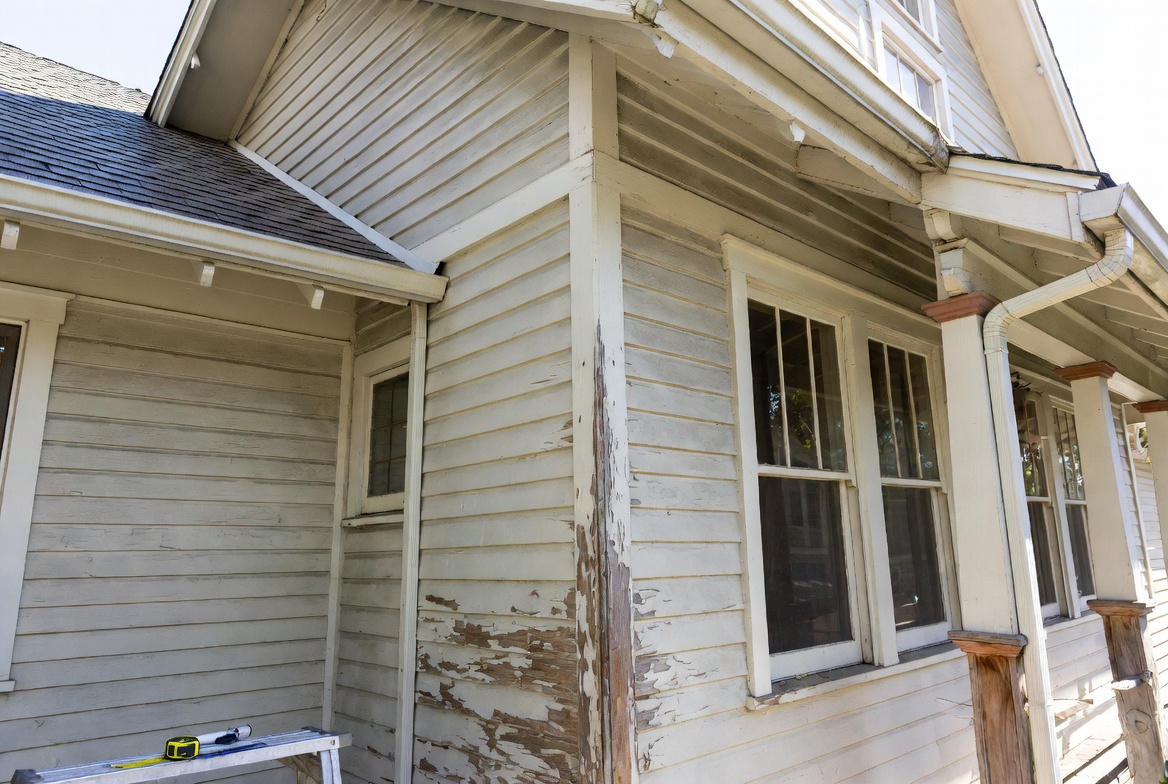
Check these siding areas first
- Lower boards near grade
- Siding around porch floors and steps
- Window sills and trim edges
- Areas under gutters and roof valleys
- Transitions between old and new additions
- South and west walls with heavy sun exposure
- Paint failure that may point to moisture, not just age
If the siding is wood, the repair strategy matters more than the paint color will. New boards should match the exposure, thickness, texture, and shadow line as closely as you can get. A board that's close in color but wrong in profile still reads wrong from the street.
Windows and Trim: Don't Flatten the Face of the House
Windows carry a lot of the Craftsman character. Original wood windows tend to have divided lights, deeper frames, thicker trim, and shadow lines that flat modern replacements usually lose.
That doesn't mean every old window has to stay. Rotten, missing, unsafe, or already-ruined windows may need replacing. But choose the replacement carefully — the wrong window makes the whole house look thinner and flatter than it is.
What to check before you replace a window
- Are the original openings still intact?
- Can the sash be repaired, weatherstripped, or reglazed?
- Are storm windows an option instead?
- Will the replacement match the old proportions?
- Will the exterior trim stay deep enough to cast a shadow?
- Will the new window sit flat and cheap-looking inside the old opening?
- Does the trim need lead-safe handling before you scrape, sand, or cut it?
Don't treat window trim as an afterthought. Thin trim around a replacement window can weaken the whole facade, especially next to a heavy porch and deep eaves.
Rafter Tails, Fascia, Gutters, and Roof Edges
Deep eaves and exposed rafter tails are part of what makes a Craftsman a Craftsman. They also take the brunt of the water, sun, clogged gutters, and roof leaks. Before you paint, check the fascia, soffits, rafter tails, gutter boards, and roof edge flashing.
Don't let a painter scrape and coat rotted wood without a repair plan first. Paint can seal in a problem for a while. It won't rebuild wood that's already failed.
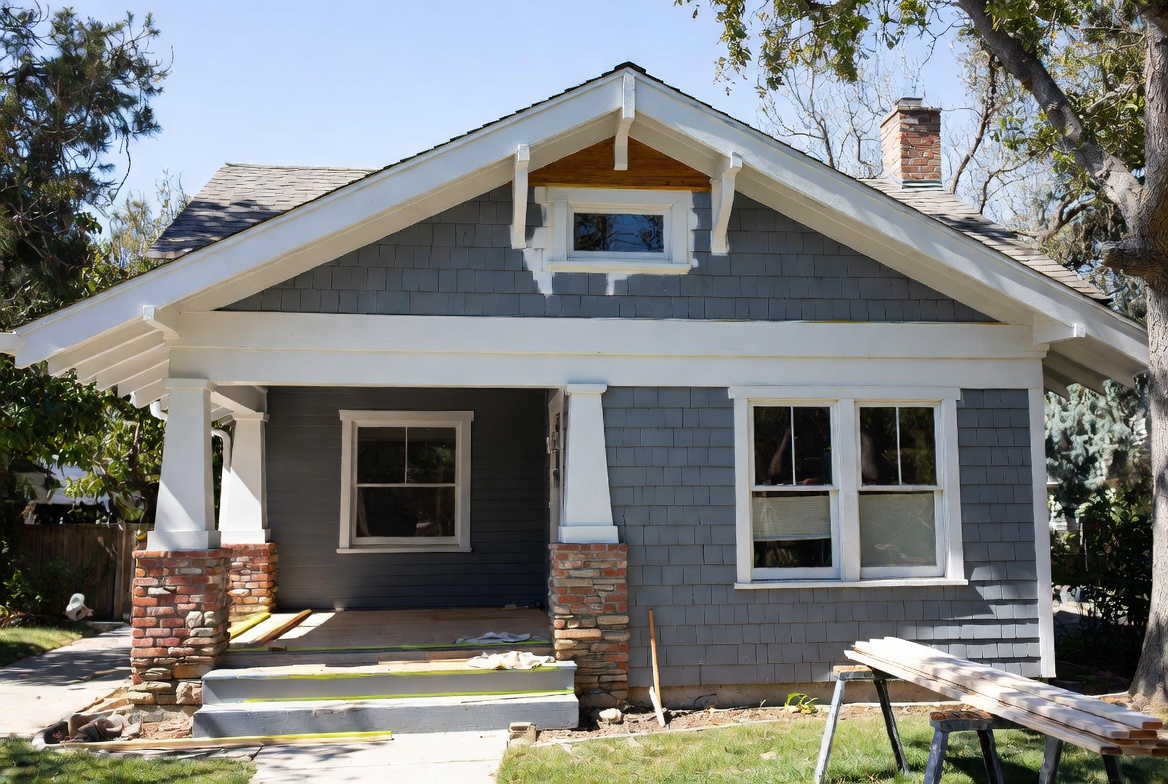
If the roof is getting replaced, check the roof deck too. Older houses often have board sheathing underneath the roofing, and gaps, split boards, old leak damage, or brittle planks can change the whole reroofing plan. For more on this, see the guide to roof planking and old roof boards.
Paint Color Comes After Repair
A good Craftsman paint palette helps, but paint can't fix bad proportions. The prettiest color scheme in the world won't solve skinny porch posts, damaged siding, flat windows, missing trim, or rot at the steps.
Pick colors once the repair plan is settled. Treat the siding, trim, porch columns, sash, front door, and foundation as separate layers — not one flat block of color.
Paint choices that work better
- Use the body color to support the siding and massing.
- Use the trim color to show shadow lines and frame openings.
- Keep porch columns visually strong, not lost in the wall color.
- Let the front door stand out without looking unrelated to the rest.
- Avoid color contrast that draws attention to bad repairs.
- Test colors in daylight and shade before you commit to the whole house.
Earthy colors, muted greens, warm grays, soft browns, deep blues, cream trim, and natural wood tones all work well on a Craftsman. The right palette depends on the roof color, the siding material, the neighboring houses, the landscape, and how much original detail is left to work with.
The Cheap Curb Appeal Pass Before the Big Remodel
Not every Craftsman exterior needs a major project right away. Sometimes a house looks worse than it actually is because all the small, visible things are tired at once.
Do a cheap curb appeal pass before you commit to siding, a porch rebuild, or new windows. Clean the walkway. Cut the shrubs back from the porch. Wash the siding gently. Replace the porch light. Paint or refinish the front door. Fix the loose house numbers. Add one simple planter or a low bed near the steps. Clear out dead vines, broken pots, and random porch clutter.
None of that repairs rot, stops water, or fixes bad replacement windows. But it changes the first impression fast. A Craftsman house lives or dies on whether the entry feels cared for. Clear the path, fix the porch light, put color on the door, and let the planting frame the steps instead of hiding them — the house starts to look intentional again before the expensive work even begins.
| Small fix | Why it helps | When it is not enough |
|---|---|---|
| Trim shrubs away from porch and windows | Shows the porch shape, steps, and trim again | Rot or siding damage is hidden behind the plants |
| Paint or clean the front door | Gives the eye one clear entry point | The door is warped, leaking, or the frame is soft |
| Replace porch light and house numbers | Makes the entry feel maintained without changing the house | The porch wiring is unsafe or outdated |
| Repair loose steps or railing parts | Improves safety and first impression together | The porch framing or piers are failing |
| Add low planting near the walkway | Frames the entry without hiding the architecture | Mulch or soil is trapping moisture against wood siding |
This is the step a lot of homeowners skip. They jump straight from "the house looks tired" to "we need new siding." Sometimes they do. But sometimes the first $500 to $1,500 buys enough breathing room to plan the bigger repairs calmly instead of panic-buying a full exterior package.
Front Door, Lighting, Hardware, and Walkway
Small exterior updates can boost curb appeal, but they shouldn't fight the house. A Craftsman front door should feel solid and simple. Lighting should be warm and practical. Hardware shouldn't look too shiny or too delicate for the porch it's sitting on.
The walkway matters too. A narrow or awkward path makes the entry feel like an afterthought. A clear path, repaired steps, a better porch light, and planted edges usually do more than trendy decor ever will.
Good curb appeal upgrades
- Repair the front steps before you decorate them.
- Use porch lighting that fits the scale of the entry.
- Choose a front door with simple panels or glass, not fake grandeur.
- Keep house numbers visible and understated.
- Use planting to frame the porch, not hide it.
- Keep the walkway aligned with the entry.
- Fix drainage before adding mulch near siding or porch wood.
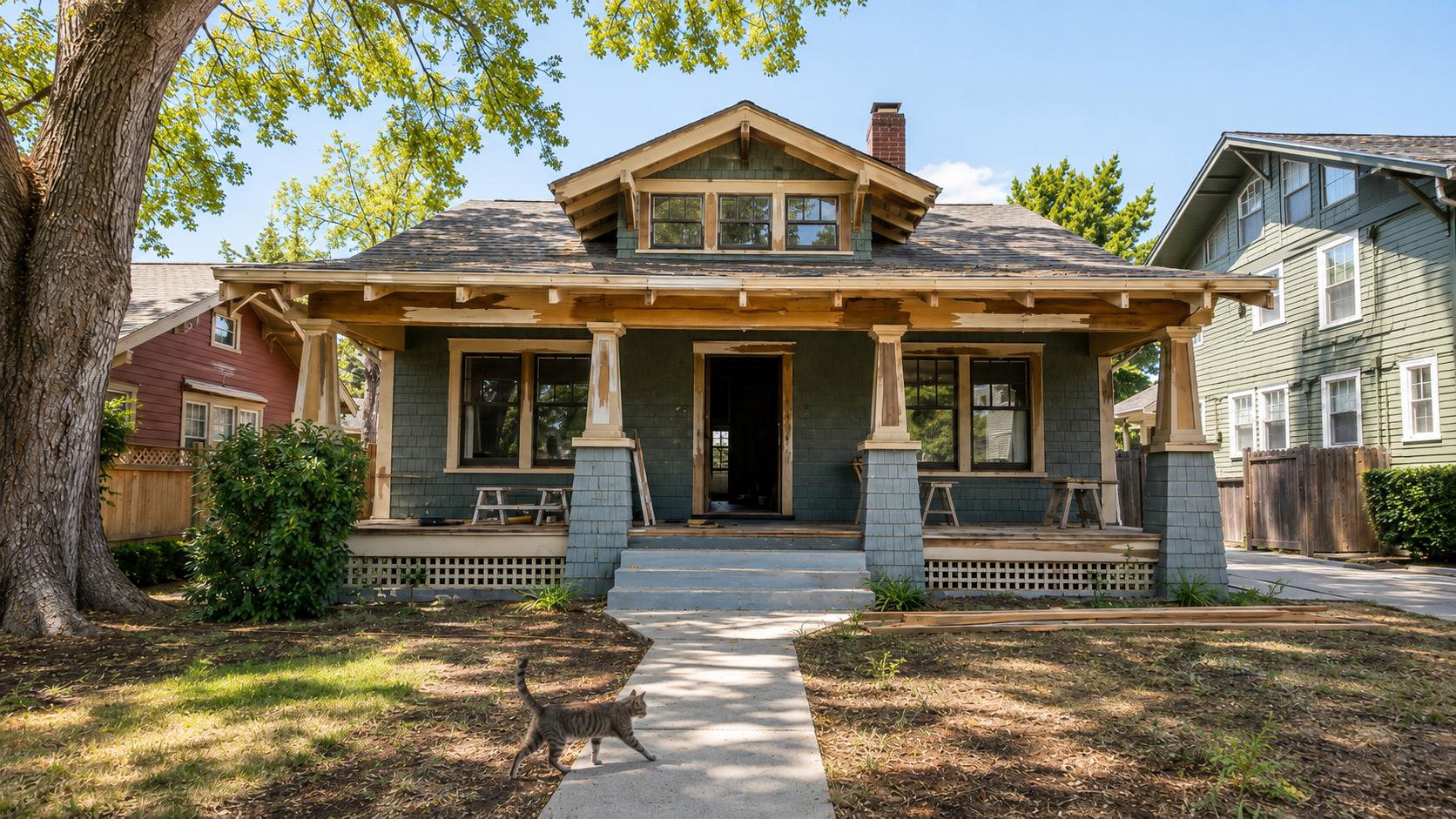
What Gets Expensive in a Craftsman Exterior Remodel?
The expensive parts are the ones that combine structure, water control, custom trim, and old-house repair know-how. Paint is what you see, but the real cost is usually underneath it.
| Exterior area | Why it gets expensive | What to check first |
|---|---|---|
| Porch | Rot, piers, stairs, columns, railings, roof structure, code issues | Column bases, stair framing, deck boards, drainage, porch roof |
| Siding | Matching old profiles, hidden rot, paint failure, moisture behind boards | Lower walls, windows, gutters, porch edges, sun-exposed walls |
| Windows | Repair labor, custom sizing, storms, trim work, lead-safe work | Rot, sash condition, sill damage, opening size, trim depth |
| Trim and rafter tails | Custom profiles, overhead work, decay at roof edges | Fascia, soffits, gutter boards, exposed tails, flashing |
| Paint preparation | Scraping, repair, containment, old paint layers, weather timing | Lead risk, failed paint, moisture source, bare wood exposure |
| Bad previous remodels | Undoing wrong windows, posts, trim, siding, and patched work | What was removed, covered, cut, or replaced badly |
A cheap bid usually covers paint and surface work only. A better bid separates repair, prep, safety, carpentry, and finish, so you can actually see what your money is doing.
Exterior Remodel Order
A Craftsman exterior remodel should follow a repair-first order. It protects the house and cuts down on rework later.
- Document the existing exterior: Photograph porch columns, railings, siding, trim, windows, rafter tails, steps, and front door.
- Check safety and materials: Identify old paint, possible lead risk, suspect materials, and anything that needs testing before you disturb it.
- Fix water problems: Roof leaks, gutters, downspouts, grading, porch drainage, and splashback come first.
- Repair structure: Porch framing, steps, railings, piers, and column bases need attention before any finish work.
- Repair siding and trim: Replace damaged sections with matching profiles wherever you can.
- Handle windows and doors: Repair, restore, or replace carefully so the openings keep their depth and proportion.
- Prep for paint: Scrape, sand, prime, caulk, and contain old paint safely where required.
- Paint and finish: Apply the final palette once the repair work is done.
- Add curb appeal: Lighting, house numbers, planting, walkway repair, and porch furniture come last.
Questions to Ask an Exterior Contractor
A Craftsman exterior remodel needs a contractor who understands old houses, not just siding and paint. Ask direct questions before work starts.
- Have you repaired old wood porches before?
- Will you repair or replace damaged column bases?
- How will you match siding exposure and trim profiles?
- How will you handle old painted surfaces on a pre-1978 house?
- Do you test or refer out for lead and asbestos concerns before disturbance?
- Will you check gutters, flashing, and drainage before painting?
- How will you protect original windows, doors, and trim?
- Can you show examples of old-house exterior work, not just new siding jobs?
- What happens if you find rot after opening up porch boards or trim?
A good contractor should be able to walk you through the repair sequence without hesitating. If the answer to every problem is "we'll just cover it," be careful.
What Not to Do to a Craftsman Exterior
Most bad Craftsman exterior remodels come from treating the house like a flat surface. This style runs on depth, shadow, massing, and detail.
- Don't replace tapered porch columns with skinny posts.
- Don't flatten window openings with cheap replacement windows and thin trim.
- Don't cover original siding without checking moisture and condition first.
- Don't paint over rot and call it restoration.
- Don't remove rafter tails, brackets, or fascia details without a real reason.
- Don't use porch railings that look too thin, too high, or too generic.
- Don't make the front door look grander than the house around it.
- Don't choose paint before the repair decisions are settled.
- Don't bury drainage problems under landscaping.
A Craftsman exterior doesn't need to be fancy. It needs to be proportioned, repaired, and honest to the house.
Is a Craftsman Exterior Remodel Worth It?
A Craftsman exterior remodel pays off when the work protects the porch, siding, windows, trim, and roof details — the parts that give the house its street presence and its long-term value.
It's a bad investment when the project only adds surface polish while leaving rot, water damage, bad windows, porch settlement, and old bad remodels in place underneath.
If you're planning the whole house, start with the broader Craftsman house renovation plan first. The exterior should connect to the kitchen, bathroom, systems, additions, and interior woodwork — not get treated as a separate facelift.
What's Next
Use this exterior plan alongside the bigger renovation picture, especially if the porch, kitchen, bathroom, roof, or old systems are part of the same project.
- Craftsman house renovation
- Craftsman bungalow features
- 1920s house renovation
- Roof planking and old roof boards
Sources used for this article
- U.S. EPA: Lead Renovation, Repair and Painting Program
- U.S. EPA: Lead-safe renovations for DIYers
- U.S. EPA: Asbestos information for renovation and demolition
- National Park Service Preservation Brief 45: Preserving Historic Wood Porches
- National Park Service: Preservation Briefs index
- 2021 International Residential Code: Guards and Handrails (R312, R311.7.8)
- This Old House: How to Repair a Rotted Porch Post