

Scandinavian industrial rooms look easy online.
A brick wall. A concrete floor. Black metal shelves. Pale wood. White walls. Maybe one gray sofa and a plant in the corner.
Then the same idea lands in a real home and the room feels cold by dinner time. The concrete makes sound bounce. The black fixtures look harder than expected. The open shelves collect the things people actually own. The “minimal” room has nowhere to hide shoes, cables, mail, pans, toys, dog stuff, cleaning bottles, or the small ugly things that make a home work.
That is the real problem with Scandinavian industrial interior design. The style is not hard to understand. It is hard to keep livable.
The industrial side gives the room weight: brick, metal, concrete, exposed structure, rough edges, hard surfaces. The Scandinavian side has to make it usable: wood, fabric, daylight, storage, softer light, plain shapes, and enough warmth that the room still feels good at night.
Some people call this Scandinavian industrial minimalism. Fine. But the room should not feel empty, cold, or unfinished. The better test is simple: can someone cook here, sit here, store things here, clean it, live with the lighting, and not feel like they moved into a café after closing?
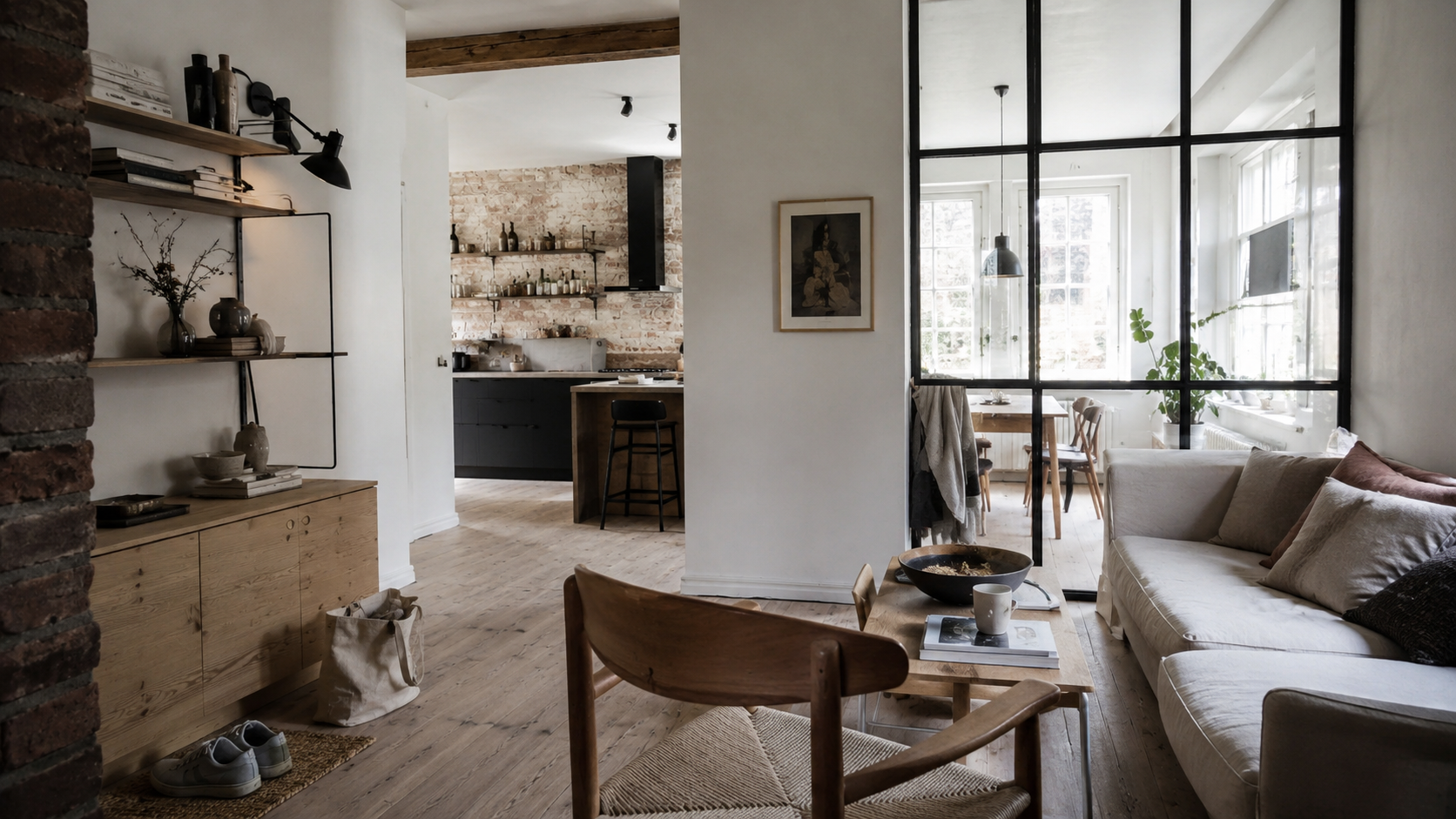
What Scandinavian Industrial Interior Design Means
This style is not a warehouse theme pasted into a house.
It is not black pipe shelves, fake brick panels, gray paint, and a metal pendant over everything. That is the cheap version, and it gets tired fast.
The Scandinavian part should bring light, function, storage, simple furniture, natural wood, and calm surfaces. The industrial part should bring texture, weight, black metal, brick, concrete, exposed structure, or utilitarian details.
The good rooms do not let either side win completely. Too much Scandinavian and the room can feel pale, thin, and underfurnished. Too much industrial and it starts to feel like a cold coffee shop, a basement bar, or a fake loft.
For the building-history side, see industrial architecture style. This page is about the inside of the house: what works in kitchens, living rooms, apartments, bathrooms, and normal rooms with normal mess.
The Room Comes Before the Style
Start with the room, not the shopping list.
Look at the daylight first. Then the ceiling height, floor color, wall texture, storage, sound, and traffic path. A tall loft with big windows can take more concrete, black steel, and brick. A small living room with one north-facing window cannot carry the same weight.
This is where online photos mislead people. The room in the photo may have ten-foot ceilings, old factory windows, no children, no cords, no coats, and no real storage problem. Your room may have low ceilings, one small window, a TV wall, a radiator, a dog bed, and nowhere for shoes.
Before choosing finishes, ask these questions:
- Does this room already feel dark?
- Does sound already bounce around?
- Is there enough closed storage?
- Are the floors already hard or cold?
- Will black fixtures make the room feel sharper or heavier?
If two or more answers are yes, the room needs more Scandinavian warmth and less industrial weight.
The Warmth Rule
The whole style comes down to this: every cold or hard thing needs a warmer thing near it.
Concrete needs wood, fabric, or warm light. Black metal needs pale surfaces nearby. Brick needs simple furniture or quiet walls so it does not turn into visual noise. Open shelves need closed storage close by. Otherwise the room starts to look busy, even when you bought everything carefully.
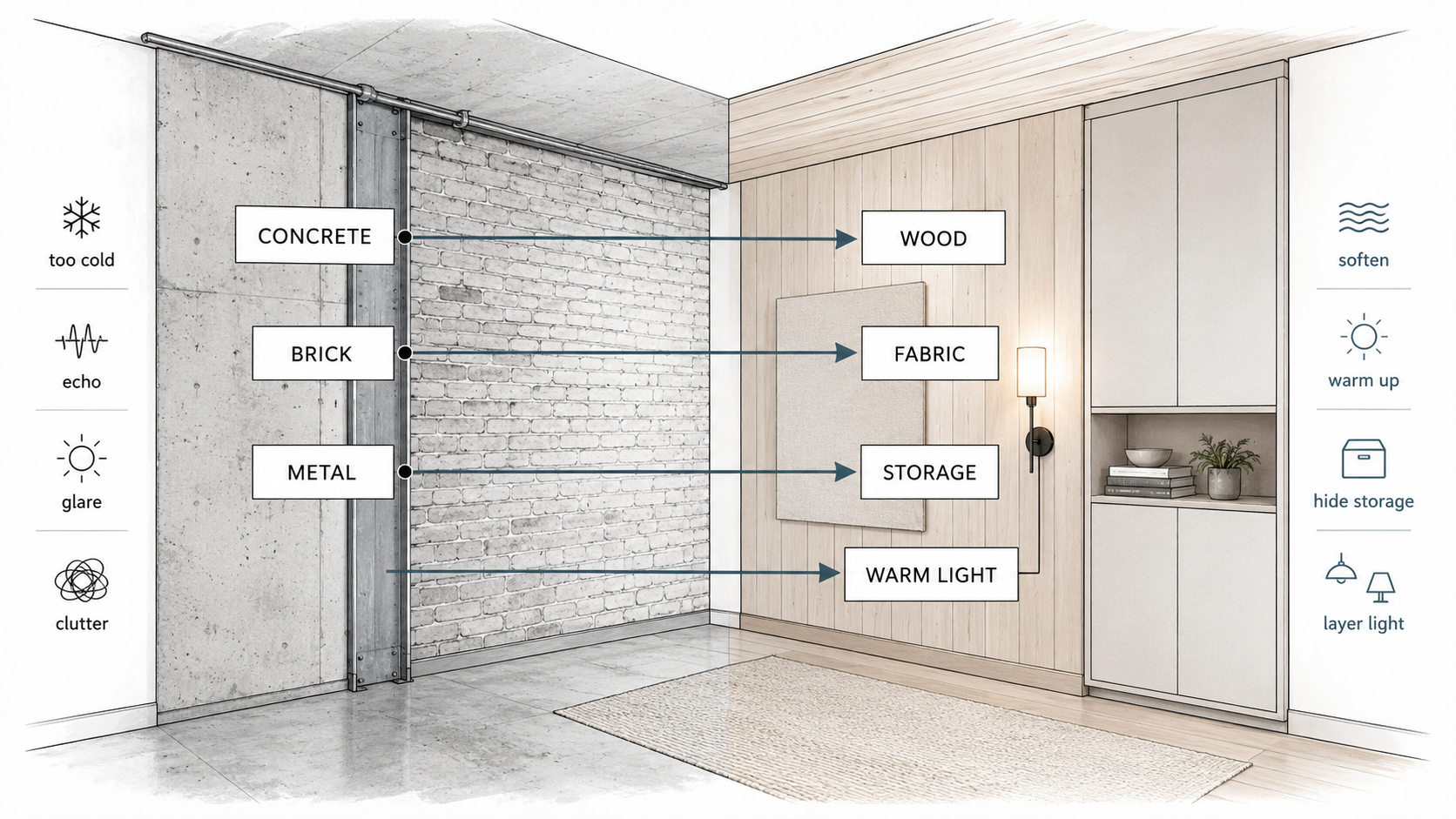
| Cold or raw element | What it can do to the room | What balances it |
|---|---|---|
| Black metal shelving | Can feel heavy, sharp, or visually busy | Pale wood, warm walls, fewer objects, closed storage |
| Concrete floor or wall | Can feel cold and make sound bounce | Rug, fabric seating, curtains, warm bulbs |
| Exposed brick | Can make a small room feel crowded | Plain walls, simple furniture, soft light |
| Black faucets and hardware | Can show marks and feel harsh | Wood vanity, light tile, good mirror lighting |
| Open shelves | Can collect clutter, dust, oil, and visual noise | Drawers, tall cabinets, pantry storage, fewer displayed items |
Where This Style Works Best
Scandinavian industrial interiors work best when the room already has one good raw feature.
That might be real brick, a concrete floor, steel windows, old timber, exposed beams, a plain open-plan shell, or a simple square room with good daylight. Then the design has something honest to work with.
The style works well in kitchens because wood, black hardware, pale cabinets, stone, concrete-look counters, and simple lights can sit together naturally. It can also work in small apartments, but only when the industrial side stays controlled and storage does most of the work.
Living rooms, entries, mudrooms, home offices, and bathrooms can also handle it. But the smaller and darker the room is, the less industrial material it can take.
If the room has poor light, low ceilings, dark floors, and no storage, start with interior design basics before pushing the style harder. Layout, light, and storage matter more than black hardware.
Where It Goes Wrong
The common failure is not bad taste. It is too much of the same pressure.
First comes one brick wall. Then black shelves. Then black pendants. Then gray concrete-look tile. Then black window frames. Then a dark sofa. Each choice looks fine by itself. Together, they drag the room away from Scandinavian calm and into heavy industrial theme room.
The other failure is fake minimalism.
The room looks calm in photos because no one is living in it. No coats. No shoes. No mail. No small appliances. No cables. No toys. No cleaning supplies. Then the homeowner moves in and the room falls apart in a week because there was never enough storage.
A good room should not need to be cleared like a photo shoot before it looks decent.
The Style Is a Balance System, Not a List of Objects
Beginners often think the style is made from a checklist:
- black shelf
- brick wall
- concrete surface
- pale wood table
- gray sofa
- white wall
That is not how the better rooms work.
Think of the room as having pressure. Black metal adds visual pressure. Concrete adds coldness and sound pressure. Brick adds texture pressure. Open shelving adds clutter pressure. Pale wood, fabric, soft light, and closed storage lower the pressure.
That is the part most pretty articles miss. Scandinavian industrial design is not only a look. It is a pressure balance. Add too much weight and the room becomes hard. Remove too much and it becomes thin.
The Kitchen Is Where Mistakes Cost More
Kitchens are the most expensive place to get this style wrong.
A Scandinavian industrial kitchen might use pale cabinets, black hardware, simple counters, wood floors, metal lights, and maybe brick or concrete. That can look excellent. The risk is choosing materials for the photo instead of the way the kitchen is used.
Open shelves are the obvious trap. They look clean with six plates and one nice bowl. In a working kitchen, they collect oil, dust, mismatched cups, medicine bottles, kids’ things, and small appliances. If there is no closed storage nearby, the kitchen starts looking messy fast.
Black hardware is another place where cheap choices show. Low-quality black pulls can scratch around the grip points. Matte black faucets can show water spots, especially in hard-water areas. Black pendants can glare if the bulb is exposed and hung too low over an island.
Pale wood cabinets are often safer than dark industrial cabinets because they keep the room warmer. But they still need good lighting, enough drawers, and careful proportions. Otherwise the kitchen looks bare instead of calm.
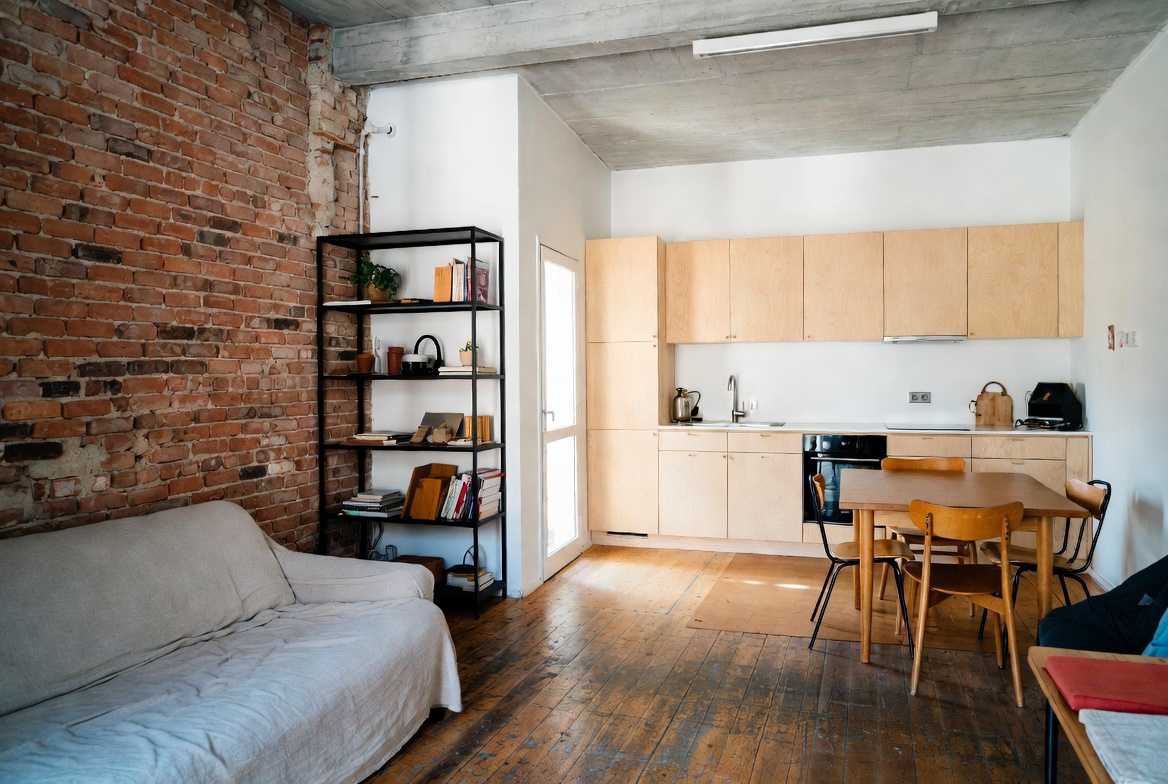
Living Rooms Need Softness, Not More Metal
A living room is where this style often becomes uncomfortable.
It may look sharp in a photo and still feel hard after twenty minutes.
Hard floors, brick, concrete, metal shelves, and bare windows all reflect sound. Add a TV, children, guests, or an open kitchen nearby, and the room starts to echo. The fix is not more decor. The fix is softness where it matters.
Use a rug large enough to sit under the front legs of the sofa and chairs. Use fabric seating instead of all leather or metal-framed furniture. Add curtains if the windows feel bare. Keep black metal to a few clear pieces: a shelf, lamp, table frame, rail, or door handle.
A good Scandinavian industrial living room should still feel like a place to sit, talk, read, and rest. If it feels like a coffee shop, the industrial side has gone too far.
Bathrooms Need More Care Than People Think
Bathrooms are tricky because the basic materials already feel cold: tile, glass, metal, stone, mirror, and concrete-look surfaces.
A black faucet with gray tile and a concrete-look floor may look strong in a product photo. In a small bathroom, it can feel hard and dim. It can also show water marks, dust, fingerprints, and soap residue more than expected.
The safer version is simple: light tile, wood or wood-look vanity, one or two black accents, warm mirror lighting, and storage that hides the daily mess.
If the bathroom has no window, be careful with dark grout, dark walls, black ceiling fixtures, and heavy concrete-look tile. The room needs light first. The industrial mood can come later.
Small Apartments Need Storage Before Style
Scandinavian industrial design can work in small apartments, but only if storage comes first.
A small apartment cannot carry too many exposed things. Open shelves, coat racks, visible shoes, hanging pans, black frames, and metal racks all add visual weight. They may seem practical, but they can make the room feel busy.
Use closed storage wherever life gets messy: entry, kitchen, bedroom, laundry corner, media wall, and cleaning supplies. Then use the industrial details in smaller doses.
One black shelf is enough. One brick wall is enough. One concrete-look surface may be enough.
For small-space planning, this overlaps with small apartment space planning and small apartment storage. The style will not save a bad layout.
Lighting Decides Whether It Feels Warm or Harsh
Lighting is where many Scandinavian industrial rooms fail at night.
Daylight forgives a lot. At night, the room depends on bulbs, fixture height, shade shape, and where the light lands. A black pendant with an exposed bulb can look good over a table and still feel harsh when someone sits under it.
Use layers instead of one strong ceiling light. A room needs task light, soft side light, and background glow.
In a kitchen, that means under-cabinet light, island or table light, and general ceiling light. In a living room, it means floor lamps, table lamps, wall lights, or soft light near shelves.
Warm light matters, but not yellow cave light. The goal is soft and clear. If the room has concrete, brick, or black metal, the light should help the wood, fabric, and warm surfaces show up.
For the general lighting principles behind this, see lighting design.
The Materials That Hold Up Better
Some materials fit this style because they can handle daily use without making the room feel fake.
- Pale oak or ash: good for floors, tables, shelves, vanities, and cabinets.
- Warm white paint: better than cold white in rooms with concrete or black metal.
- Matte or satin black metal: useful in small amounts, but quality matters.
- Brick: strongest when it is original or believable, not cheap thin panels everywhere.
- Concrete-look surfaces: best as one accent, not the whole room.
- Wool, linen, cotton, and textured fabric: needed to stop the room from feeling hard.
The mistake is treating every “raw” material as equal. Rough wood, fake brick, gray vinyl, black plastic, concrete-look laminate, and thin metal furniture can make a room feel cheap if too many are used together.
Material choice is not only visual. It affects sound, touch, cleaning, glare, and how the room ages. For broader material basics, see materials and textiles in interior design.
What to Spend Money On
Spend money where the room has to work every day.
- Lighting: good fixtures, good bulb quality, dimmers, and layered placement.
- Cabinet and drawer storage: especially in kitchens, entries, and small apartments.
- Durable hardware: cheap black hardware can age badly.
- Wood surfaces: floors, cabinets, tables, shelves, or vanities that add warmth.
- Rugs and fabric: not decoration only; they control sound and comfort.
- Paint quality: marked-up flat walls can ruin the calm look fast.
Save money on things that only announce the style. Fake pipes, wall signs, extra shelves, decorative crates, factory-style objects, and too many black accessories usually make the room worse.
The Part Nobody Sees in the Photo
Photos show the brick, the chair, the pendant, and the nice clean counter.
They do not show the noise, the fingerprints, the water spots, the dusty shelves, the cold floor, the hard sofa, the bad bulb, or the lack of a cabinet for the ugly things.
That is where this style succeeds or fails.
A room can have all the right materials and still be wrong if the person living there has to fight it every day. If the shelf needs styling every night, it is not storage. If the pendant hurts your eyes, it is not good lighting. If the concrete floor makes the room echo, it is not calm. If the black faucet looks dirty every morning, it is not low-maintenance.
The best Scandinavian industrial rooms are not the most dramatic ones. They are the ones that still work when the laundry basket is out, someone is cooking, the lights are on, and the room is being used.
When to Avoid a Heavy Version of the Style
This style is not right for every room.
Avoid a heavy Scandinavian industrial look if the room has low ceilings, poor daylight, dark floors, small windows, or too many hard surfaces already. Be careful if the home feels cold before you start. Be careful if you hate visible clutter.
Also think about resale. A light Scandinavian base with small industrial accents is safer than a strong factory look. Most buyers can live with warm white walls, wood, good lighting, simple black hardware, and a little brick. Fewer buyers want heavy concrete, black walls, fake pipe details, and dark metal everywhere.
In older homes, be even more careful. Covering walls with fake industrial finishes can hide moisture, trap problems, or make later repairs harder. A room with real brick, real beams, or worn floors may need less styling than you think.
A Better Order for Planning the Room
Start with the warm base, then add the raw details.
- Fix layout and storage first.
- Keep walls light unless the room has strong daylight.
- Use wood where hands and feet meet the room: floor, table, cabinets, shelves, vanity.
- Add black metal in controlled places.
- Use brick or concrete as one strong surface, not every surface.
- Add fabric before the room starts to echo.
- Check the room at night before adding more dark details.
This order keeps the room practical. It also stops the common mistake of buying industrial pieces first, then trying to soften the damage later.
Scandinavian Industrial Checklist
Before calling the room finished, check it like someone who has to live there:
- Can the room hide normal clutter?
- Does it still feel warm at night?
- Is there enough soft material to control echo?
- Are black details accents, not the whole story?
- Does the room have one main raw feature instead of five competing ones?
- Are the lights comfortable when seated?
- Do the materials make sense for cleaning and daily use?
- Would the room still work without the decorative objects?
If the room only works when it is perfectly cleaned and staged, the design is too fragile.
Read This Next
- Industrial interior design
- Industrial architecture style
- Interior design basics
- Small apartment storage
- Small apartment space planning
- Lighting design
FAQs
What is Scandinavian industrial interior design?
It is an interior style that mixes Scandinavian warmth and simplicity with industrial materials such as brick, concrete, black metal, exposed structure, and harder surfaces. It works best when raw materials are balanced with wood, fabric, warm light, and useful storage.
Why do Scandinavian industrial rooms often feel cold?
They feel cold when the industrial side takes over: too much concrete, black metal, gray tile, bare windows, open shelving, and hard flooring. Wood, rugs, fabric, warm bulbs, curtains, and closed storage help bring the room back into balance.
Is Scandinavian industrial the same as minimalism?
Not exactly. It can be minimal, but it should not feel empty. A good room still needs storage, soft materials, comfortable seating, and enough light. Empty rooms photograph well but often fail in daily use.
Does this style work in small apartments?
Yes, but only in a controlled way. Small apartments need storage first. Use light walls, pale wood, good lighting, and one or two industrial accents. Too much black metal, open shelving, and concrete-look material can make a small room feel crowded and dark.
What is the biggest mistake with Scandinavian industrial kitchens?
The biggest mistake is choosing the look before solving storage and lighting. Open shelves, black hardware, concrete-look counters, and industrial pendants can look good, but they cause problems if the kitchen lacks drawers, task lighting, easy-clean surfaces, and enough closed storage.
What colors work best with Scandinavian industrial interiors?
Warm white, soft gray, pale wood, muted beige, charcoal, black accents, brick red, and natural fabric tones work better than cold white, flat gray, and black everywhere. The room should feel calm, not frozen.