
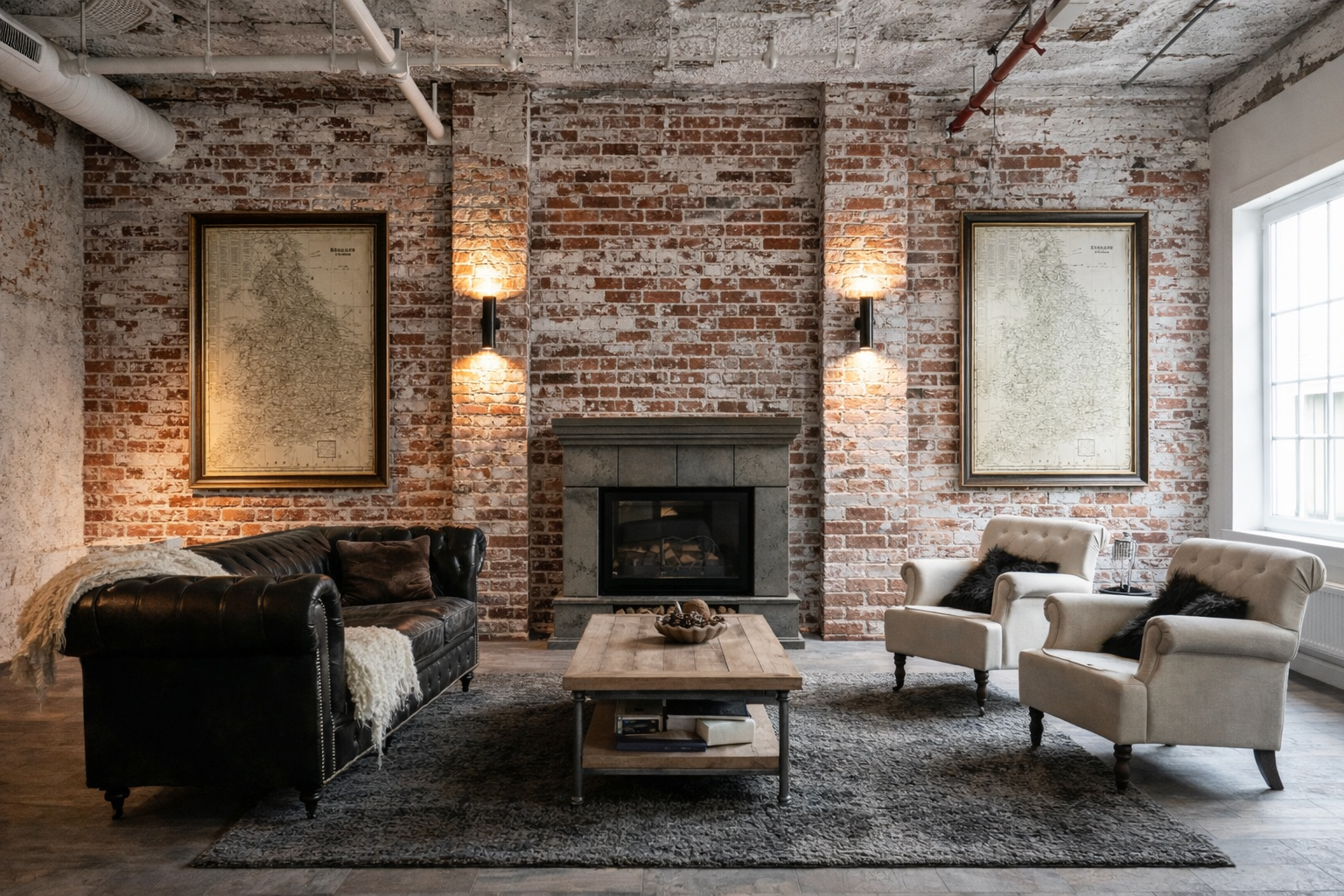
Oh yeah — industrial style looks easy when you see it in cafés: brick, black steel, a couple of big pendants. Done. And it looks so good a lot of people try to copy it at home.
Then they do… and the room turns into an echo chamber with harsh lighting and furniture that feels like it belongs in a loading bay. The first week is usually when it hits: the sound, the glare, the cold vibe, and the fact that every fingerprint suddenly has a spotlight.
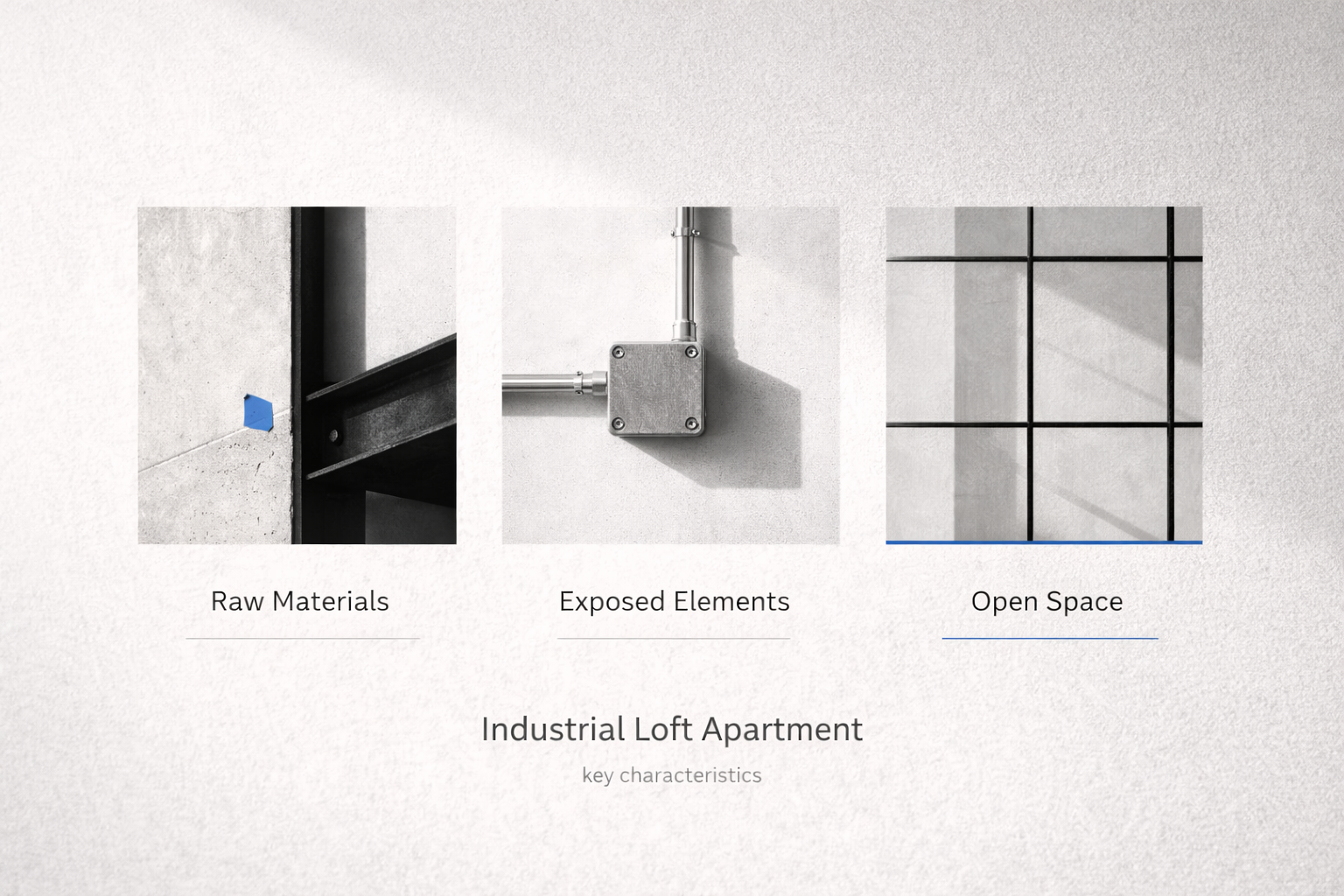
The style itself isn’t the issue. The mistakes are predictable: too much grey, too much black, not enough soft surfaces, and “industrial” details that don’t connect to anything real in the room.
This guide is the usable version: what industrial interior design is, what makes it work in real houses and apartments, and the common failures people notice once they’ve lived with it for a week.
What Industrial Interior Design Actually Is
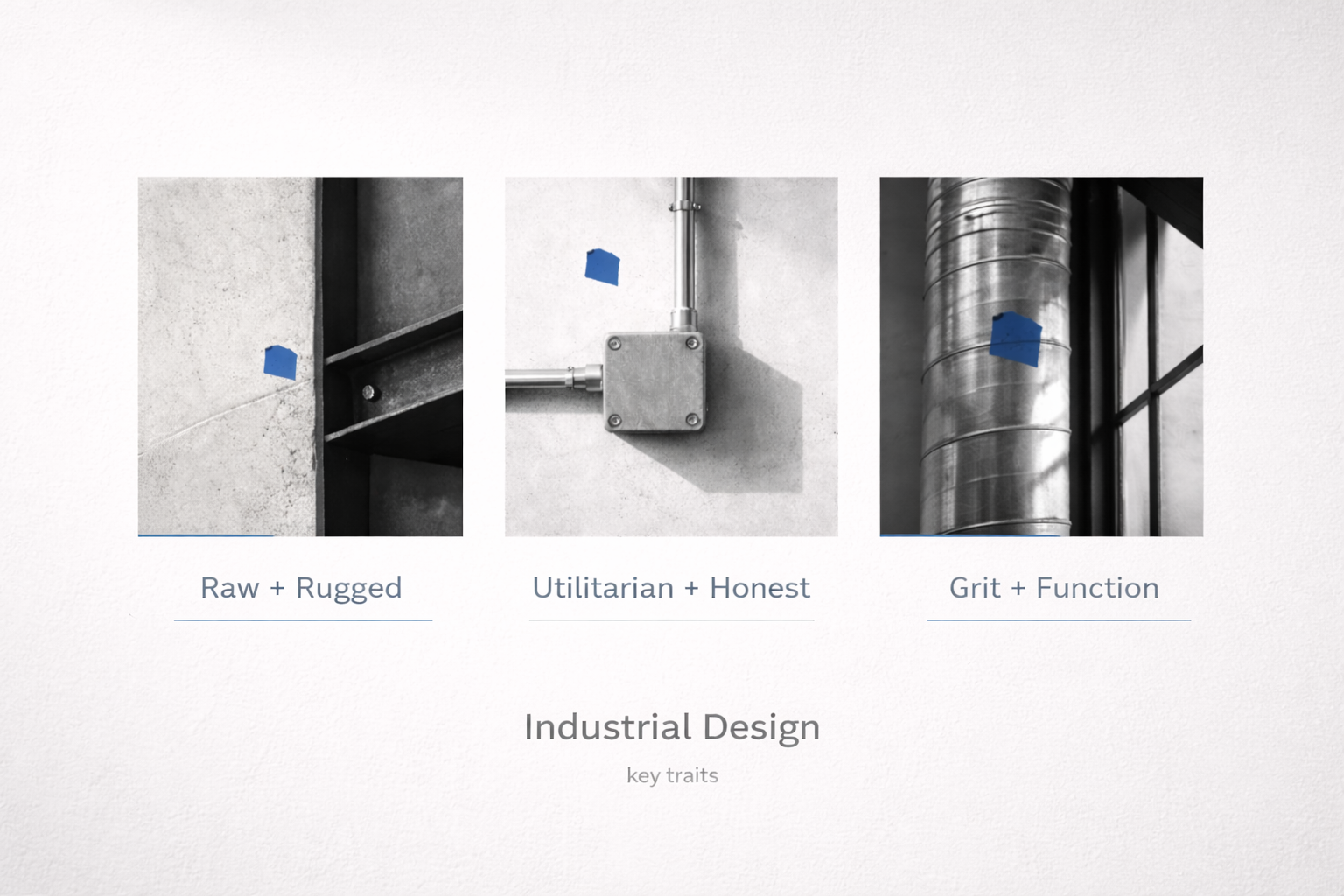
Industrial interiors borrow from real industrial buildings: factories, warehouses, workshops. The look comes from structure and utility becoming the finish—brick, concrete, steel, big spans, simple forms.
If you want the architectural roots (not just the décor), park this in a tab: industrial architecture style guide. It helps you separate “industrial as a building logic” from “industrial as themed décor.”
The Mistakes People Keep Making
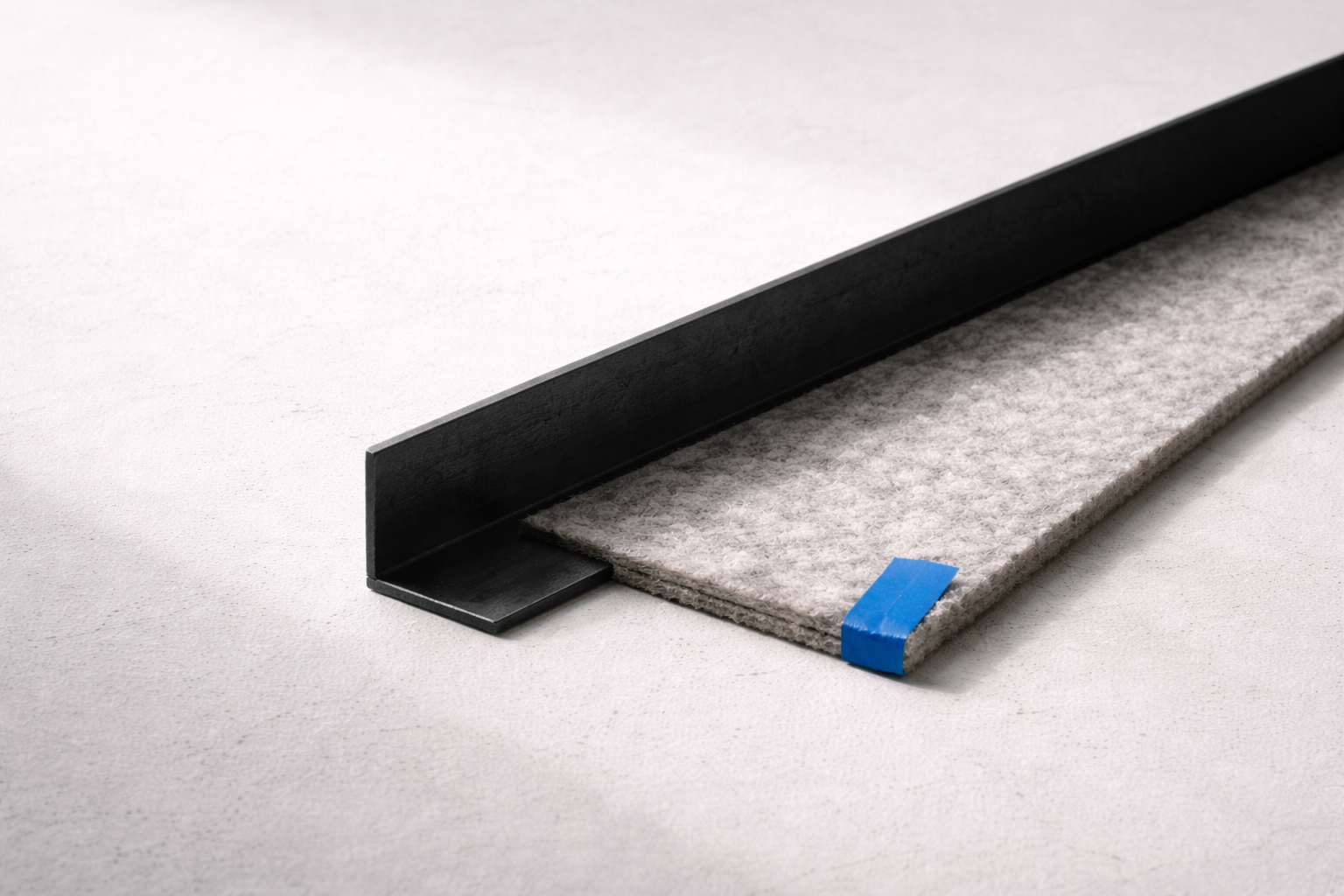
1) Copying the “look” but skipping comfort
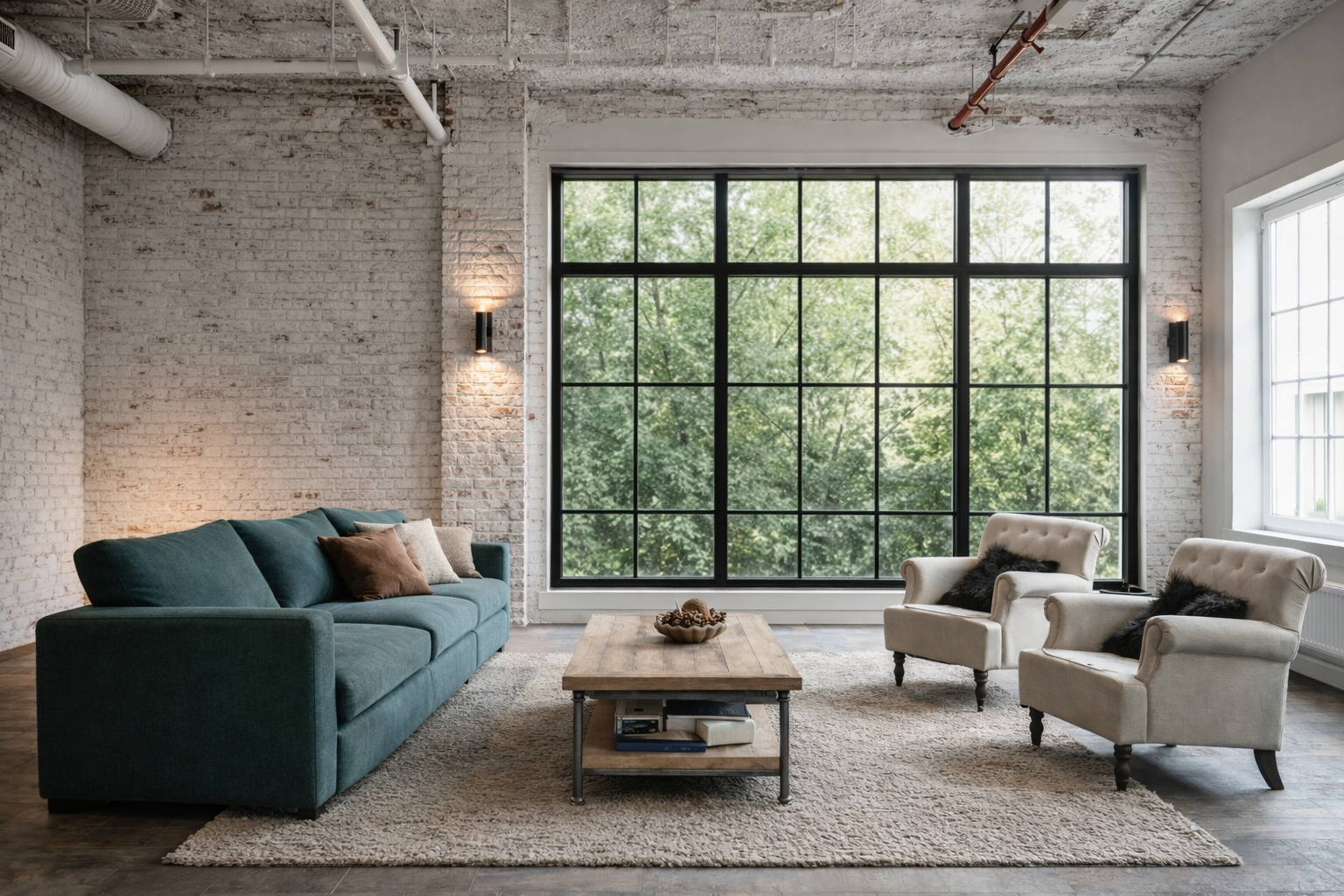
Industrial rooms need softness on purpose. Without it you get harsh sound, harsh light, harsh everything.
- Fix: one large rug, fabric curtains (or at least textured blinds), and upholstered seating. That alone changes the room.
2) Fake industrial details
Decorative pipes and random gears can read like a costume fast. People usually regret this because it dates quickly and feels busy.
- Fix: keep the “industrial” story tied to real materials: steel, timber, concrete, brick, glass. Let hardware, lighting, and joinery do the work.
3) Too much black
Black metal is a great accent. It’s also the fastest way to make a small room feel smaller.
- Fix: use black as a line, not a wall: legs, frames, handles, rails. Keep big surfaces lighter.
4) Open shelving everywhere
Open shelves look great in photos. In real life, they collect dust and turn “minimal” into “messy” if you have a busy household.
- Fix: do one open zone (coffee station, a short run of shelves) and keep the rest closed storage.
The Core Industrial Materials
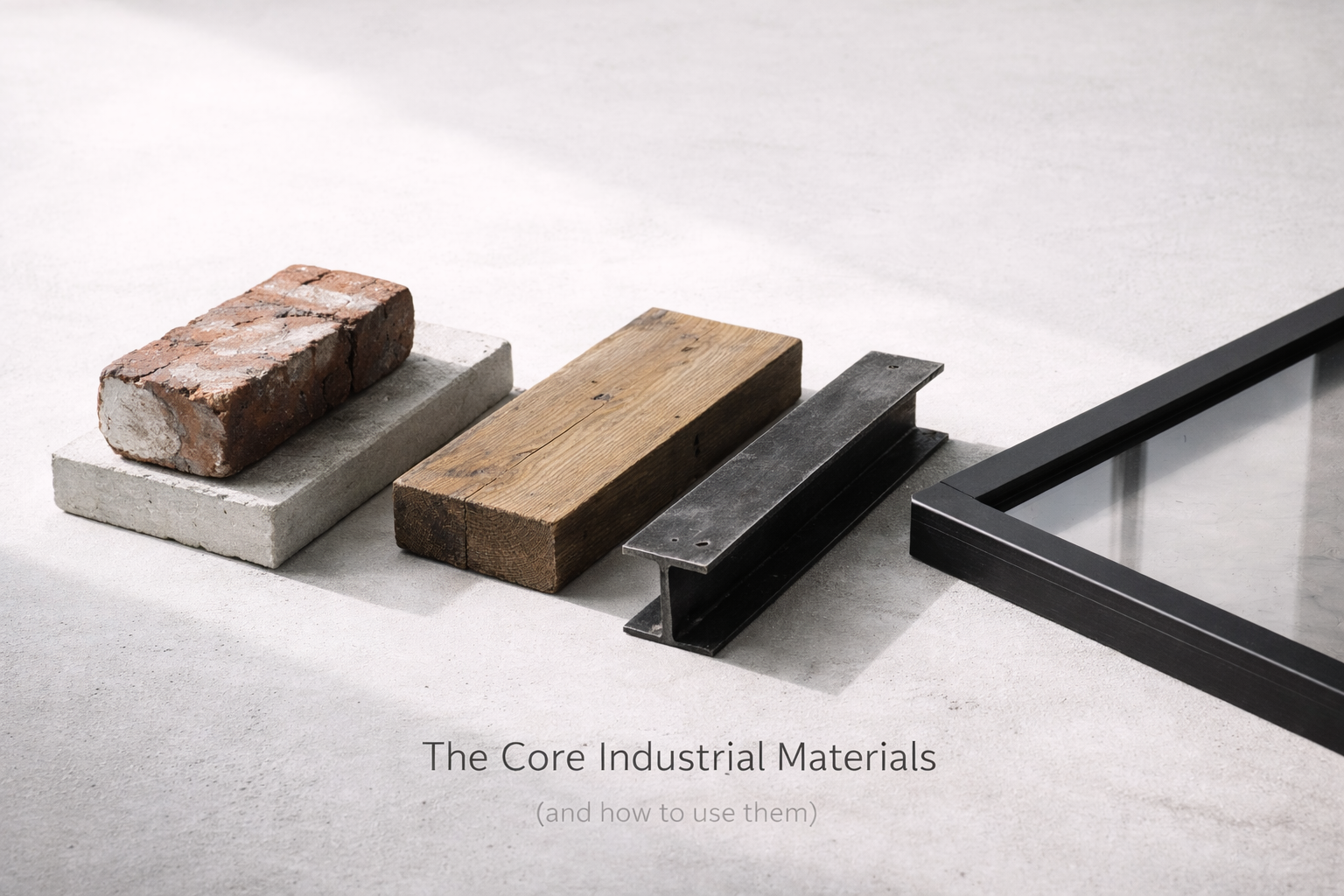
(and How to Use Them)
Brick
Exposed brick is the classic. If your brick is rough or heavily patterned, keep the rest quieter so the room doesn’t get visually loud.
Concrete
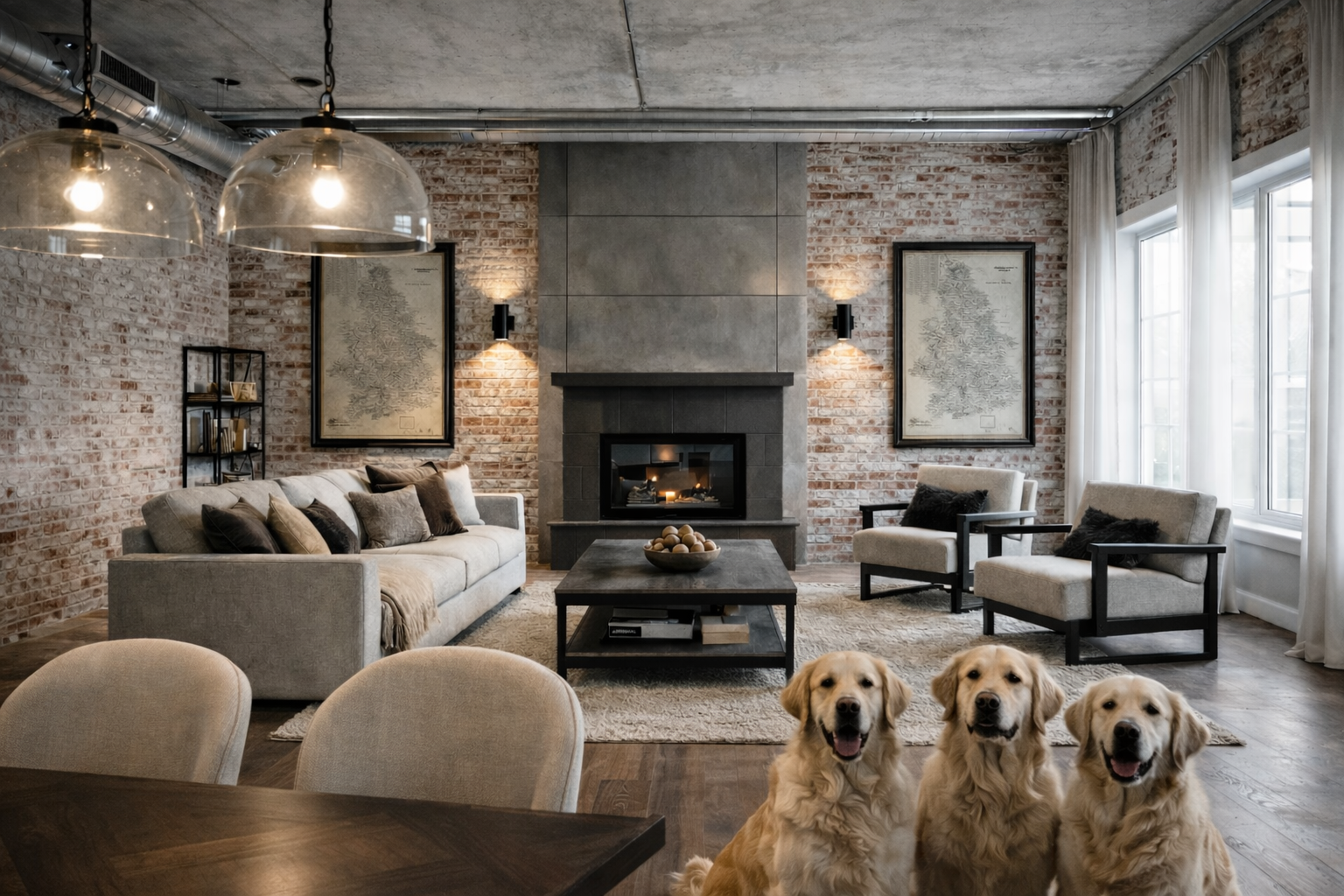
Concrete reads industrial immediately. The trap is using concrete everywhere. One concrete element (floor, countertop, or a feature wall) usually hits harder than five.
Steel and black metal
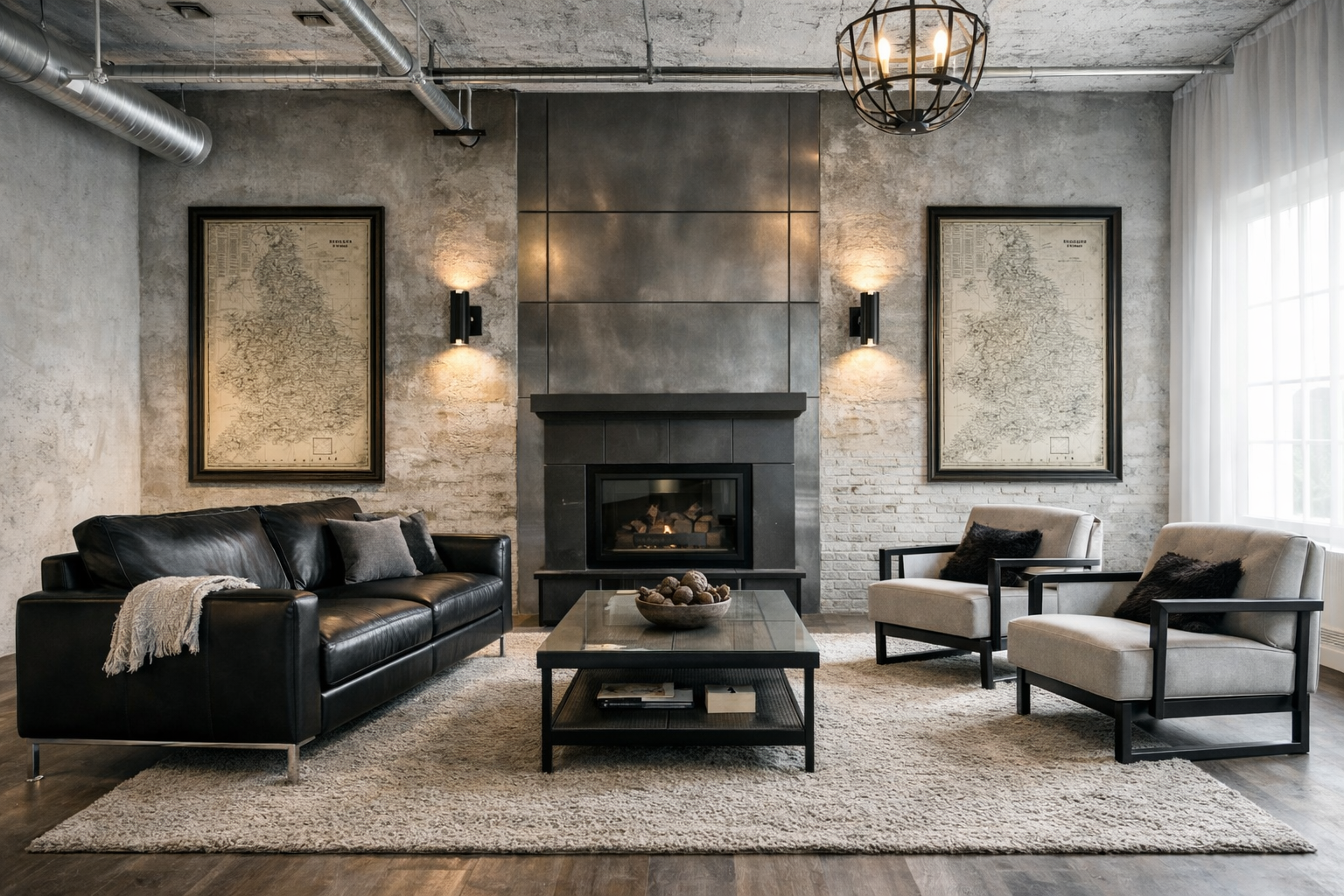
Steel works best as structure and trim: table frames, shelving brackets, door hardware, lighting. Thin lines look sharp. Chunky metal can feel heavy fast.
Wood
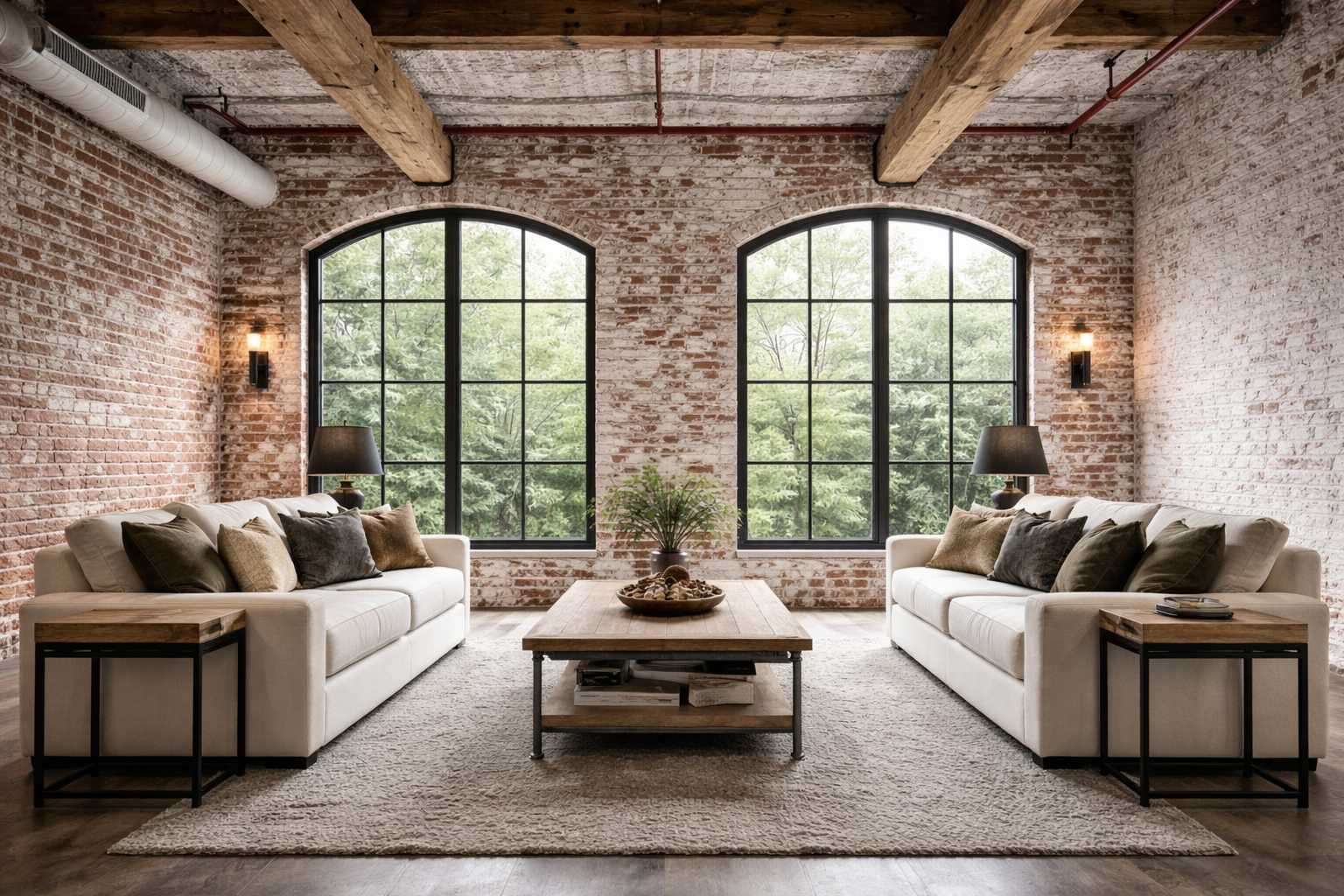
Wood is what stops industrial from feeling cold. Reclaimed, matte, slightly imperfect timber works better than glossy “new” finishes.
Glass
Glass partitions (especially black-framed) give an industrial vibe without sacrificing light. Great for home offices and small apartments.
Colour Rules That Keep Industrial From Feeling Sterile
Industrial palettes are usually neutral: greys, off-whites, warm browns, black accents. The mistake is going all-grey with no warm anchor.
- Start with a warm neutral (warm white, light greige) for walls if the room gets cold light.
- Add black as a detail, not the main surface.
- Pick one warm material and repeat it (oak, walnut, leather, warm tile). Repetition makes it feel designed, not random.
Lighting: The Difference Between “Moody” and “Dim”
Industrial rooms often look good during the day and rough at night. That’s usually lighting.
- Layer your light: ceiling + task + a couple of low lamps. One big pendant alone won’t carry the room.
- Use warm light in living areas. Cool bulbs make concrete and grey paint feel blue and flat.
- Aim light at textures: brick and wood look better with grazing light. Flat overhead light kills the depth.
Industrial Interior Design by Room
Living room
- Do: a big rug, a leather or fabric sofa, one metal-and-wood coffee table, simple black frames.
- Avoid: all-metal seating and tiny rugs (it makes the room feel like a waiting area).
Kitchen
- Do: metal stools, simple pendants, matte cabinet fronts, one strong surface (concrete-look counter or warm timber).
- Avoid: “industrial clutter” on every counter. The style is better when surfaces stay clear.
Bedroom
- Do: keep it softer than the rest of the house: textured bedding, curtains, warm lamps.
- Avoid: too much black and too many hard surfaces. Bedrooms shouldn’t feel like a studio set.
Bathroom
- Do: matte black fixtures, simple tile, a wood vanity or wood shelf to warm it up.
- Avoid: unsealed brick or raw porous finishes in wet zones.
Home office
Industrial works well for offices because it’s naturally clean and functional. If you want the office-specific version (and how to keep it from feeling cold), use: industrial office design tips.
5 Industrial “Recipes” That Work in Real Homes
1) Warm industrial (most people’s sweet spot)
Warm white walls + black accents + wood furniture + one industrial feature (brick, concrete, or steel frame shelving).
2) Rustic industrial
More timber, more texture, fewer shiny finishes. If you want room-by-room moves that don’t feel themed: rustic industrial interior ideas.
3) Scandinavian industrial
Light wood + warm whites + black lines. Cleaner, brighter, less “warehouse.” This is the best path if you’re scared of industrial feeling heavy: Scandinavian industrial minimalism.
4) Industrial coastal
Industrial structure, but softer colours and materials (linen, light wood, quieter metals). Done right, it feels calm instead of gritty: industrial coastal style rules.
5) Small-apartment / HDB-friendly industrial
This version is less about brick walls and more about smart storage, light control, and durable finishes. Good breakdown here: HDB modern industrial design guide.
Budget Notes (What’s Worth Paying For)
- Spend on: lighting, one good sofa, and one strong surface (countertop or floor). These are the “reads-from-across-the-room” items.
- Save on: décor. Industrial rooms look better with fewer objects anyway. Buy less, buy heavier.
- Rental-friendly move: swap hardware, add a big rug, change lighting (if allowed), and use a metal/wood shelf unit instead of “fake brick wallpaper everywhere.”
Quick Checklist
- Do you have at least one soft surface absorbing sound (rug, curtains, upholstered seating)?
- Is black only an accent (frames, legs, handles), not the whole room?
- Did you pick one warm material (wood/leather/warm tile) and repeat it?
- Are you avoiding fake “industrial” props that don’t relate to the space?
- Is your lighting layered (not just one overhead fixture)?
- If you’re doing open shelving: is it one zone, not the entire kitchen?
FAQ
How do I make industrial interior design feel cozy?
Add softness deliberately: a large rug, warm lighting, and one warm material (wood or leather). Industrial needs contrast to feel livable.
Can industrial work in small apartments?
Yes, but keep big surfaces light and use black as thin lines. Too much dark metal in small rooms reads heavy.
What colours work best for industrial interiors?
Warm whites, greiges, charcoal accents, and natural wood. All-grey schemes are the most common regret because they feel flat.
Is exposed brick required?
No. One honest industrial signal is enough: metal frames, concrete texture, factory-style lighting, or black-framed glass.
How do I avoid the “warehouse” look?
Don’t overdo the raw materials. Keep one feature raw, then balance it with clean finishes and comfortable furniture.
Does industrial design “go out of style”?
The themed version does. The material-based version lasts longer because it’s built on structure and honest finishes, not trends.