
Kenneth Frampton's Real Impact on Architecture
What Is Critical Regionalism? How Does Kenneth Frampton’s Critical Regionalism Shape Modern Architecture?
What Exactly Is Critical Regionalism?
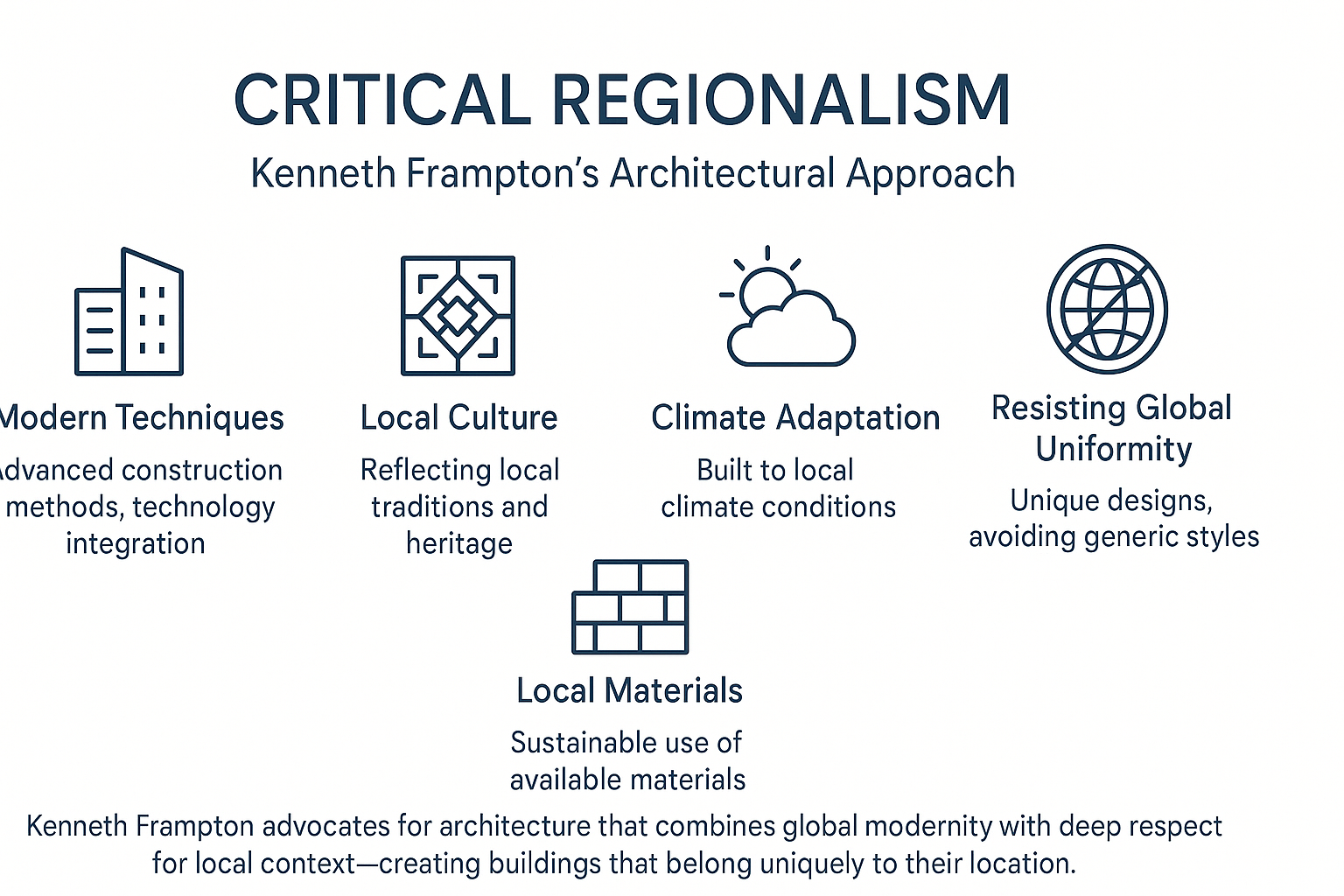
Kenneth Frampton introduced Critical Regionalism as a design strategy to blend modern architecture with local traditions. It’s about creating buildings that feel authentic because they connect with their specific location's climate, materials, and culture.
Frampton argued against two extremes:
- Global uniformity: Generic buildings looking the same everywhere.
- Blind traditionalism: Buildings copying historical styles without innovation.
Critical Regionalism sits right in the middle, using modern techniques but rooted deeply in local character.
Why Kenneth Frampton’s Ideas Matter in Real Life

Many architects today face a challenge: creating buildings that respect both modern standards and local heritage.
Here’s why Frampton’s approach actually matters:
- It prevents architecture from losing local identity.
- It helps buildings respond naturally to local climate and geography.
- It maintains cultural authenticity without nostalgic imitation.
Example: Tadao Ando’s Church of the Light in Japan uses modern concrete but creates deeply spiritual spaces reflecting local traditions.
Recommended Reading on Critical Regionalism
- Modern Architecture: A Critical History by Kenneth Frampton (Essential for understanding theory).
How to Apply Critical Regionalism (Real Steps)
Learn how Critical Regionalism, proposed by Kenneth Frampton, guides architects to create authentic, culturally rich buildings.
Frampton outlined clear ways architects can implement his theory practically:
- Use local materials: Stone, timber, or brick specific to the region.
- Respect local climate: Design buildings that naturally adapt to temperature, wind, and sunlight.
- Understand local culture: Include design elements meaningful to the community.
Example: Glenn Murcutt’s Australian houses blend modern designs with sustainable features suited to Australia's hot climate.
What Makes Critical Regionalism Different from Regionalism?
Simple question, clear answer:
- Regionalism: Often means replicating historical styles directly.
- Critical Regionalism: Uses modern design language but critically engages with local elements.
In short, Critical Regionalism adapts—doesn't copy.
Example: Luis Barragán’s architecture in Mexico integrates bold modernism with traditional colors and natural materials without directly copying historical forms.
Can Critical Regionalism Save Architecture from Globalization?
Kenneth Frampton’s Critical Regionalism, combining modern design with local culture to resist global sameness.
Common Mistakes When Applying Critical Regionalism
From real experiences, here’s what typically goes wrong:
- Ignoring real context: Designing superficially rather than genuinely responding to local needs.
- Overdoing tradition: Creating buildings that feel more nostalgic than modern.
- Neglecting functionality: Prioritizing aesthetics over practicality or sustainability.
Avoid these pitfalls by deeply studying your project's location and community.
Recommended Reading on Critical Regionalism
- Thinking Architecture by Peter Zumthor (Practical examples of Critical Regionalism).
Is Critical Regionalism Relevant Today?
Absolutely. More than ever, architecture risks becoming globally monotonous.
Frampton’s method counters this, offering:
- Environmental Sustainability: Naturally sustainable due to its site-specific approach.
- Cultural Preservation: Helps maintain local identity amid rapid globalization.
- Economic Benefit: Boosts local economies by utilizing local resources and skills.
Real example: Francis Kéré’s Gando Primary School in Burkina Faso demonstrates cultural sensitivity, local resource use, and climatic adaptability.
Practical Tips for Using Critical Regionalism Effectively
From my own architectural experience, these tips really help:
- Start small: Focus initially on a few key local elements.
- Engage locals: Ask community members what resonates culturally and historically.
- Test and refine: Don’t be afraid to revise your design based on local feedback.
Kenneth Frampton's Critical Regionalism: Practical Guide for Architects
Understanding Kenneth Frampton: Is Critical Regionalism the Future?
Recommended Books on Critical Regionalism
- Modern Architecture: A Critical History by Kenneth Frampton (Essential for understanding theory).
- Thinking Architecture by Peter Zumthor (Practical examples of Critical Regionalism).
Real-Life Case Study: Alvaro Siza’s Architecture in Portugal
Alvaro Siza’s designs perfectly capture Frampton’s vision:
- Contextual sensitivity: Designs shaped around local landscapes.
- Local materials: Uses native Portuguese stone and wood.
- Modern aesthetic: Clearly contemporary but rooted in local tradition.
The result? Buildings genuinely loved by local communities and respected globally.
Critical Regionalism in Architecture: Why Kenneth Frampton Still Matters
Does Critical Regionalism Actually Work? Kenneth Frampton's Ideas Explained
In Focus: "Micro-Regionalism" – Making Architecture Hyper-Local
Most discussions about Kenneth Frampton’s Critical Regionalism focus on big cultural ideas and regional identities. But there's a quieter, equally important layer hardly talked about: Micro-Regionalism.
Here’s the deal:
-
Micro-Regionalism isn’t about broad cultural strokes—it's about hyper-specific, local details that most people overlook.
-
It asks: "How can buildings reflect not just a country or region, but even a specific neighborhood or street?"
Think about it this way. When Frampton said architecture should respond to local culture, climate, and materials, he mostly meant big-picture stuff. But what if we took it further?
What Micro-Regionalism Actually Looks Like:
-
Local Memory:
Instead of just mimicking traditional forms, architects could include small references known only locally—like using salvaged bricks from a demolished beloved local café or market. It’s subtle, but deeply meaningful to the community. -
Hyper-Local Materials:
Most regionalism stops at country-wide materials. Micro-regionalism would look closer:-
A small town's unique sandstone
-
Timber from local forests sustainably harvested by nearby residents
-
-
Community Collaboration:
Micro-regional buildings aren't designed by architects alone. Instead, they're co-created through community workshops, involving locals who genuinely understand how the space will be used.
Real-World Example (Hypothetical but Realistic):
Imagine building a library in a small coastal town.
-
Typical critical regionalism: Use wood and stone common to coastal regions.
-
Micro-regionalism: Partner with local fishermen to recycle discarded fishing nets into unique decorative elements, embedding authentic local history and economy into the building itself.
This isn’t just theory—it’s a realistic next step Frampton himself might support, pushing his core ideas to the next logical, practical level.
Why Does This Matter?
-
It keeps architecture genuinely authentic rather than superficially regional.
-
Strengthens local pride and community connection.
-
It's naturally sustainable and genuinely resource-conscious.
Micro-regionalism moves beyond the general concept of Critical Regionalism. It makes architecture truly rooted in real life, not just an intellectual or stylistic choice.
This could be the new lens architects use when designing buildings, blending Frampton’s visionary ideas with a more precise, local perspective that's relatable and deeply meaningful.
This shift isn't happening widely yet, making it a valuable perspective that genuinely adds depth to Frampton’s philosophy.
FAQ
Q: Is Critical Regionalism opposed to modern architecture? A: No, it embraces modern methods but integrates local traditions thoughtfully.
Q: Can Critical Regionalism be applied anywhere? A: Yes, but the approach must genuinely reflect each location’s specific characteristics.
Q: What’s the main benefit of Critical Regionalism? A: It maintains local identity, enhances sustainability, and prevents global architectural sameness.
Wrap-Up
Frampton’s Critical Regionalism focuses on practical, real-world architecture—buildings that are rooted in their surroundings, naturally sustainable, and meaningful to the people who use them.
Focus on your project's place, community, and environment, and you’ll create architecture that genuinely lasts and matters.
Related
Architecture Theory & History
-
Architectural Theory for Beginners: How Ideas Shape Space
A simple intro to how architectural concepts influence the spaces we build. -
Critical Regionalism in Architecture | Definition, Key Features, and Examples
Explore how architecture can reflect local culture, climate, and identity. -
Theoretical Frameworks in Design: From Concept to Construction
Understand how design theories guide the full journey from idea to building. -
The Four Essential Design Frameworks: Descriptive, Explanatory, Predictive, Prescriptive
A quick breakdown of four thinking tools architects use to design smarter. -
Architectural History and Theory
A broad overview of key ideas and moments that shaped architectural thinking.
Architecture, Design Theory & Human-Centered Thinking
-
Human Values and Environmental Studies
Looks at how ethics, sustainability, and environment intersect in design. -
Human-Centered Design and Architecture
Explores design that prioritizes people’s needs, comfort, and experience. -
The Role of Humans in the AI Era: Architecture and Design Perspective
Reflects on how human creativity and judgment remain essential in a tech-driven design world. -
Parametric Brick Facade: A Collaboration Between Human Hands and AI Minds
A real-world example of blending human skill with AI to create expressive architecture.
Color & Interior Design
-
Color Theory
The basics of how color works and how designers use it effectively. -
Color Theory and Application in Interior Design
Learn how color choices shape mood and function in interior spaces. -
Color Harmony Theory: A Practical Guide
A hands-on guide to creating pleasing color combinations in design work.