

Rhythm in Interior Design
Why Some Rooms Flow and Others Don’t
Most rooms that feel wrong are not ugly. They are out of rhythm.
The furniture might be fine. The colors might be safe. The budget might even be decent. But your eye keeps stopping, jumping, or getting tired. That is not a taste problem. That is rhythm failing.
Rhythm in interior design is about visual movement. It is how repetition, spacing, scale, and transition guide the eye through a space without friction. When rhythm works, rooms feel calm and intentional. When it does not, everything feels noisy.
What rhythm actually means in interior design

Rhythm is controlled repetition with variation. Not decoration. Not personality. Control.
If your eye moves smoothly across a room, the rhythm works. If it keeps stopping to figure things out, the rhythm is broken. This is the same logic architects use when organizing space, circulation, and hierarchy, just applied at the interior scale. If you want the broader foundation behind this thinking, start with a simple overview of how architecture organizes space.
Interior rhythm is not abstract theory. It shows up in everyday decisions: where lights are placed, how furniture lines up, how materials repeat, and how spaces connect.
The 5 types of rhythm in interior design
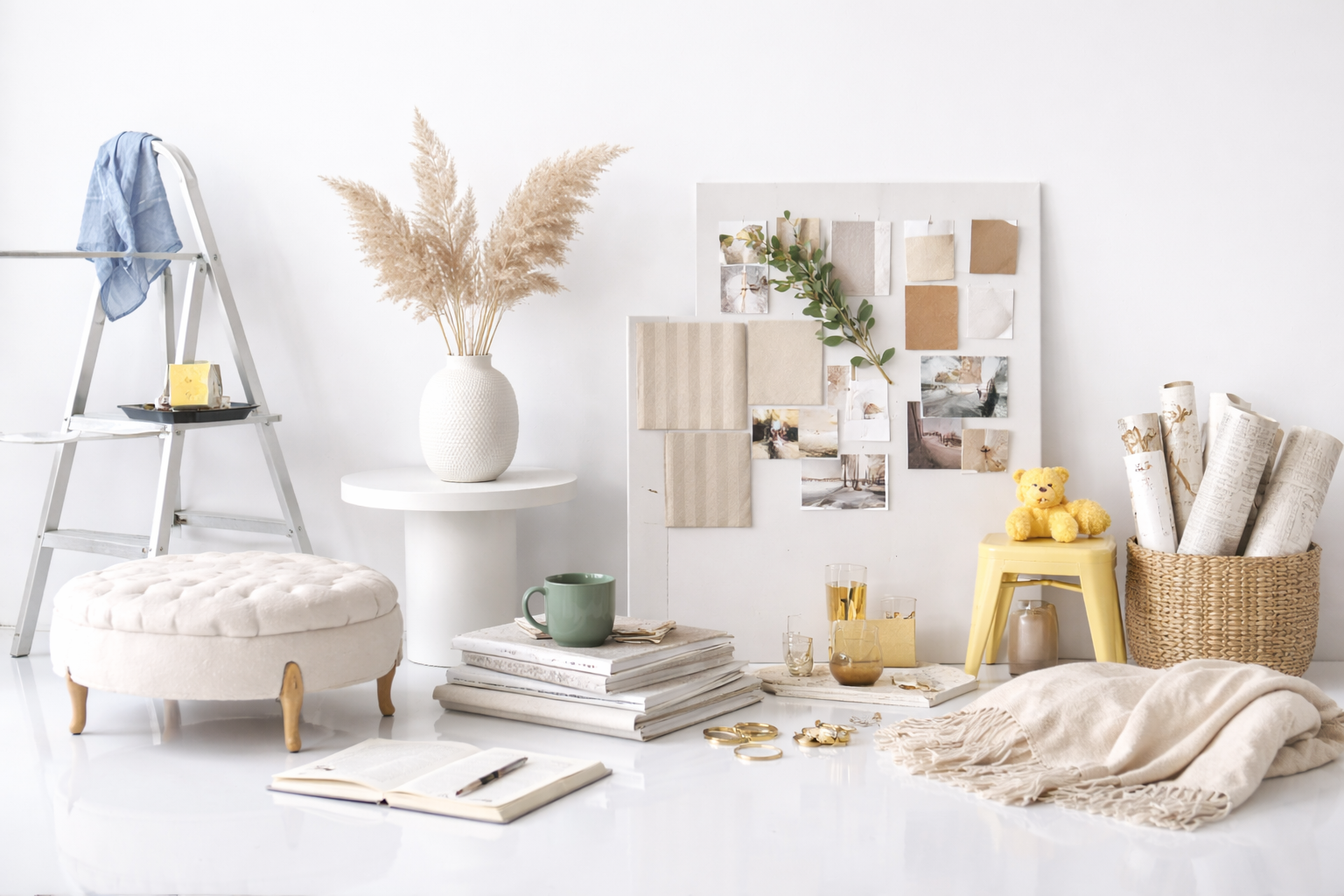
1. Repetition rhythm
Repetition is the most common rhythm and the easiest to misuse.
It means repeating one or two elements so the room feels unified. This could be a wood tone, a metal finish, a shape, or a height. The mistake is repeating everything exactly the same, which makes rooms feel staged instead of lived in.
Good repetition allows small variation. Bad repetition copy-pastes.
2. Alternating rhythm
Alternating rhythm works through contrast: light then dark, solid then void, tall then short.
This rhythm adds energy and works well in kitchens, shelving, and corridors. But too much alternation creates visual ping-pong. If a neutral room still feels busy, alternating rhythm is often the cause. Color contrast plays a big role here, which is why understanding how color psychology affects interiors matters even before furniture comes in.
3. Gradation rhythm
Gradation is slow, controlled change.
Think small objects becoming larger along a shelf, or ceiling heights stepping up across zones. If the change is obvious, it is not gradation. It should feel almost invisible.
Gradation is one of the main reasons expensive interiors feel calm instead of loud.
4. Transition rhythm
Transition rhythm controls how one space leads into another.
Entry to living room. Living room to dining. Public to private. Flooring changes, ceiling shifts, lighting patterns, and furniture alignment all contribute.
Open-plan homes live or die here. When transitions are sloppy, everything feels chaotic. This is the same spatial sequencing logic discussed in how harmonious interiors stop rooms from fighting each other.
5. Progression rhythm
Progression rhythm pulls you forward.
It appears in hallways, staircases, and long rooms where repeated elements guide movement. If progression breaks, spaces feel longer, tighter, or more confusing than they actually are.
Rhythm is where personal expression actually lives

Personal expression is not about expressive objects. It is about how you repeat, vary, and interrupt patterns.
Two people can use the same sofa, the same colors, and the same budget and end up with completely different rooms. The difference is rhythm control.
This is why interiors feel personal without being chaotic when rhythm is handled well.
Common rhythm mistakes that break rooms

- Random accent pieces with no repetition
- Inconsistent spacing between furniture and lighting
- Mixing scales without hierarchy
- Using too many rhythm types at once
If a room feels noisy, it is rarely a color problem. It is almost always rhythm.
How rhythm works in real rooms
Living rooms

Living rooms rely heavily on repetition and progression. Seating heights, lighting levels, and furniture alignment should relate to each other. When every piece has a different scale, the eye cannot settle.
If you want to see how this logic applies across different house types, look at how layouts evolve in traditional versus modern housing concepts.
Bedrooms

Bedrooms want calm rhythm. Symmetry helps, but repetition of texture and soft gradation matter more. If a bedroom feels restless, the rhythm is doing too much.
Kitchens
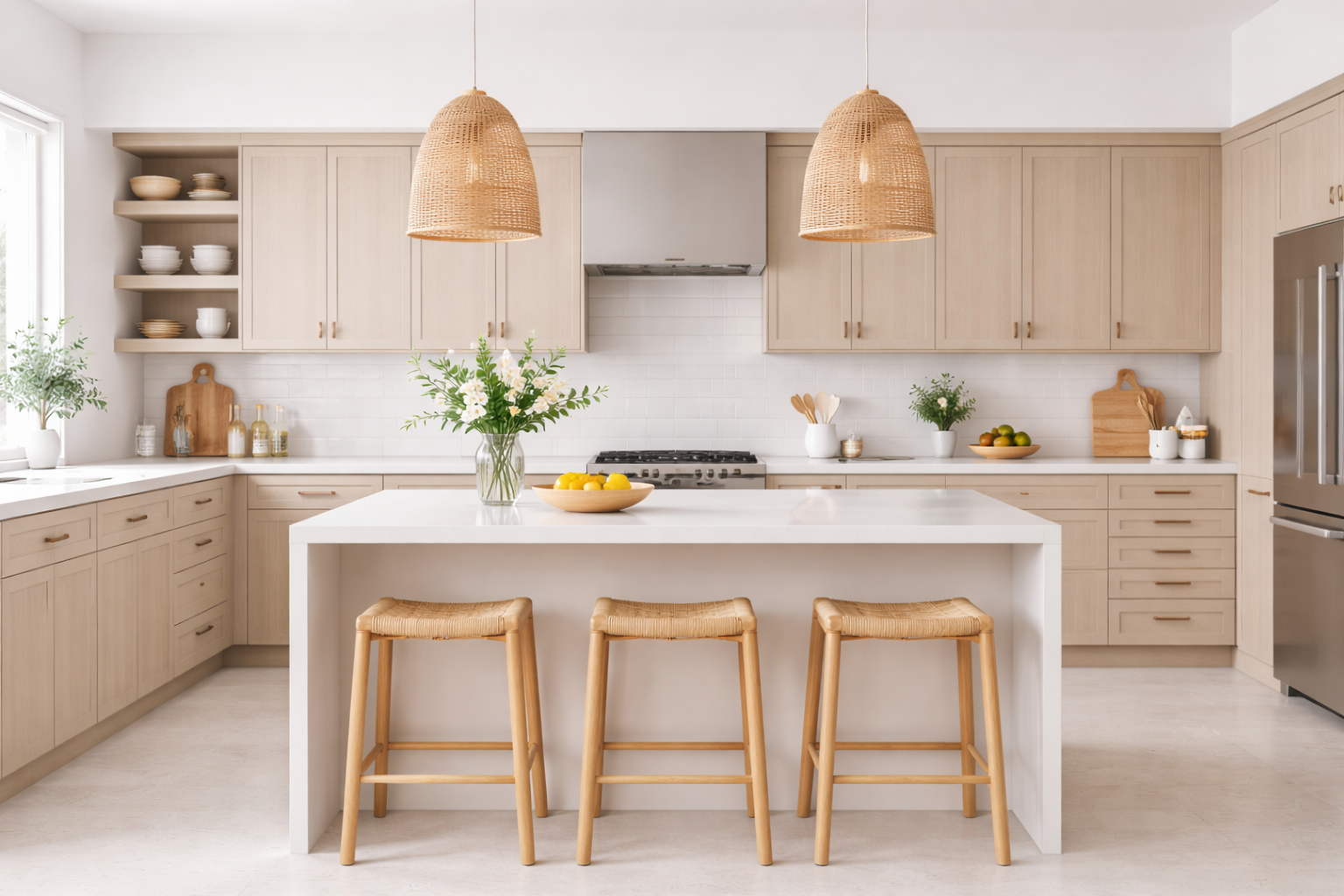
Kitchens love rhythm more than almost any other room. Cabinet widths, hardware spacing, and lighting alignment matter more than finishes. When kitchens feel chaotic, it is rarely the appliances. It is broken repetition.
Rhythm, hierarchy, and balance work together
Rhythm does not work alone. It relies on hierarchy and balance to make sense.
Hierarchy decides what dominates and what supports. Rhythm decides how your eye moves between them. If hierarchy is unclear, rhythm collapses. This relationship is explained clearly in how hierarchy tells you what matters in architecture.
Balance keeps rhythm from tipping into chaos. Whether symmetrical or asymmetrical, balance prevents repetition from becoming noise.
Why rhythm matters more than style
Style changes. Rhythm does not.
Traditional, modern, minimalist, or eclectic interiors all rely on the same rhythm principles. This is why some rooms feel timeless even when the furniture dates itself.
If you want to explore interiors from different eras through this lens, studying recognizable house styles helps you see how rhythm survives trends.
How Rhythm Supports Harmonious Interior Design
(And Stops the Room From Fighting Itself)
Here’s the connection most people never make:
A room can be “harmonious” in color and materials and still feel wrong if the rhythm is broken.
Harmony handles the relationships.
Rhythm handles the movement.
When rhythm is off, even good choices start competing.
You see it all the time:
-
three different chair styles in the same sightline
-
wall art hung at random heights
-
shelves spaced inconsistently
-
lighting fixtures that don’t align with anything
Nothing is technically “bad,” but nothing is cooperating either.
This is where harmonious interior design either holds—or collapses.
Rhythm is what keeps harmony from turning into visual noise.
A simple way to see it:
Harmony decides what belongs together.
Rhythm decides how often and how predictably it appears.
When both are working, the room stops arguing with itself.
That’s why in Harmonious Interior Design Explained: Balance, Rhythm, and Visual Flow, the focus is on control, hierarchy, and editing. Rhythm is one of the main tools that enforces that control without making the space feel rigid or staged.
You don’t need more pieces.
You need fewer decisions, repeated on purpose.
Repeat a material at consistent intervals.
Repeat alignment lines.
Repeat spacing logic.
Once rhythm locks in, harmony becomes easier to maintain. You stop “fixing” the room every six months because the structure underneath actually supports change.
If harmony is the system, rhythm is the engine that keeps it running smoothly.
The part no one talks about..
Rhythm is measured in mistakes, not objects
Here’s the uncomfortable truth most design advice skips:
You don’t “add” rhythm.
You expose it by removing mistakes.
In real interiors, rhythm already exists. It’s created by:
-
stud spacing
-
window alignment
-
ceiling height changes
-
door locations
-
circulation paths
-
daylight direction
Most rooms fail because furniture and decor fight the building’s existing rhythm instead of riding it.
That’s why copying a beautiful room online often fails in real life. The photo works because the objects were placed in sync with the room’s underlying structure. When you paste the same sofa into a different shell, the rhythm collapses.
Shocking but useful rule:
If a room feels wrong, stop buying things.
Start lining things up.
Before color. Before style. Before personality.
Fix alignment first:
-
align lamps to window mullions
-
center rugs on circulation, not sofas
-
repeat heights already set by doors and cabinets
-
let daylight dictate focal points
Once alignment locks in, rhythm appears automatically.
That’s why professionals seem “effortless.” They’re not decorating. They’re syncing.
This is also why expensive interiors feel calm even when they’re minimal — nothing is arguing with the structure.
Final takeaway
Rhythm is not optional.
You can ignore it, but your room will not. Once rhythm is right, colors calm down, furniture makes sense, and spaces feel intentional without effort.
Get rhythm right first. Everything else becomes easier.
FAQ
What is rhythm in interior design, simply?
Rhythm is how your eye moves through a space.
If your eye flows without stopping, rhythm works.
If it keeps hesitating, rhythm is broken.
What are the main types of rhythm in interior design?
There are five that actually matter:
-
repetition
-
alternation
-
gradation
-
transition
-
progression
Most rooms only need one dominant type and a second in support.
Can a minimalist room still have bad rhythm?
Yes. Minimalism hides mistakes, it doesn’t fix them.
Bad spacing and misalignment are more obvious when there’s less to distract you.
Is rhythm more important than color?
Almost always, yes.
A badly paced room with a perfect palette still feels wrong.
A well-paced room forgives average colors.
How do I fix rhythm without redesigning everything?
Do this in order:
-
Align furniture to architectural lines
-
Reduce the number of repeated shapes
-
Standardize heights (tables, lamps, frames)
-
Let circulation lead layout, not furniture
Stop there before buying anything new.
Why do open-plan homes struggle with rhythm?
Because transitions are ignored.
Without clear visual handoffs between zones, the eye has nowhere to rest.
How do professionals “feel” rhythm so fast?
They don’t feel it.
They check:
-
alignment
-
spacing
-
repetition count
It’s method, not intuition.
Does rhythm apply to small homes too?
Even more.
Small spaces exaggerate rhythm mistakes instantly. Good rhythm makes them feel larger without tricks.
Is rhythm the same as balance?
No.
Balance is weight.
Rhythm is movement.
You need both, but they solve different problems.