

House Design: Costs, Codes, and Materials in New York, Toronto, and London
House Design 2025. Field Notes That Actually Help
Think of this as a site notebook, not a brochure. Plan early or you’ll pay for rework. Get the blower door test done before drywall closes the walls. Count the miles your materials travel, not just the eco-labels stamped on them. Spend on the shell and the systems. Finishes can wait.
Start Here
This guide runs through styles, plans, methods, and cost bands, tied to real conditions in New York, Toronto, and London. Use it the way you work on site: skim for what matters now, skip the rest until the project hits that stage.
House Design: How New York, Toronto, and London Build Differently

New York: Retrofits Under Pressure
Local Law 97 flipped the workflow. Regular owners and co-op boards now ask, “Will this pass LL97?” before they ask about finishes. One Broadway co-op tried to swap fan coils for heat pumps. The interim blower-door exposed stack leakage bleeding winter loads. They pivoted, sealed corridors and apartments, resized the units, and finally made the math work. That’s how the retrofit culture is settling in: envelope first, electrification second. For background on the city’s built identity, see Manhattan Architecture: The Buildings That Built New York’s Identity, New York Architecture History: From Dutch Roots to Skyscraper Kings, and New York City Architecture: From Iconic Skyscrapers to Forgotten Treasures.
Policy sets the tone. LL97 penalties and timelines drive behavior. Architects push airtight shells, mineral wool, and smart controls. Big firms handle towers. Small shops cut the city’s carbon in walk-ups. Community programs and schools push early habits. For the grassroots view, see Sustainable Architecture for Children: Real Lessons From New York and Toronto and How New Yorkers Can Lead the Green Building and Renewable Energy Movement.
Toronto: Timber Speed, Fire Costs
Toronto leans into mass timber mid-rise. Lighter shells cut foundations and speed erection. But the bill for coatings and penetrations shows up later. One school project shaved months on structure, then added $40–60 CAD/m² for fire detailing after approval tweaks. The net stayed positive, but only because early coordination was tight. Crews now budget this “coordination tax” up front instead of hoping for luck.
The Toronto Green Standard forces insulation, airtightness, and lower-carbon material into the design set earlier than many clients expect. Inspectors now call out balcony slab bridges and condensation risks. For everyday families, cellulose and exterior insulation bring the comfort wins. Culture here is practical: crews know why they tape, and they know where it fails.
London: Rules Tight, Planning Slow
In London, the choke point is planning. “Approved” often means months of wait. Savvy designers plan for phasing and partial occupation so jobs keep moving. Regulations now bite on two fronts: Part L demands tighter fabric, Part O forces you to prove you won’t overheat tenants. One terrace retrofit passed energy calcs, then failed Part O because purge ventilation clashed with street noise. The fix was cut openings, glazing swaps, and shading — not another gadget.
Families focus on bills and damp. Cork, wood fibre, and better windows get bought because they make rooms dry and warm. Politicians talk net-zero, but the street buys comfort first. Architects know they have to meet performance once the job finally clears approvals.
What All Three Cities Keep Proving
- Carbon gains die on the road. Write max-mile radiuses and route disclosure into specs for concrete and aggregate.
- Hempcrete punishes you cast in-situ. Prefab blocks and panels cut drying risk and make approvals saner.
- Families act when bills drop or drafts stop. Comfort sells sustainability faster than slogans.
Against these three, Copenhagen and parts of Norway still lead. They align rules, power grids, and trades so that tight envelopes and clean energy are baseline, not premium. The lesson for New York, Toronto, and London: codes that don’t wobble, incentives that match timelines, and training that reaches the small contractors who touch most homes.
From City Lessons to Your Own Build
What Global Cities Teach, What You Apply
Now you’ve seen how New York, Toronto, and London each deal with rules, costs, and delays. That’s the big stage. But every build still comes down to your own plan. What you choose to draw, price, and permit is what actually sets the job in motion. The city sets the tone, but the project lives or dies on your sequence and prep. That’s where we turn next.
📘 Field Pick
Architecture: Form, Space and Order – Francis D.K. Ching
Buy on Amazon »
Still the fastest way for a team to talk the same design language. Clear diagrams, stripped to essentials.
Plan the Project
Turning Big-Picture Rules Into Site Decisions

Start with money and time, not mood boards. A shell-only job moves fast. Add MEP and you double complexity. Finishes drag longest because every delay shows. Always add a contingency buffer—10% if you’re lucky, 20% if you’ve worked in Toronto or New York permitting.
Permits aren’t paper. They shape the build. Toronto’s energy code revisions force insulation upgrades mid-design. New York’s LL97 changes retrofit math overnight. London approvals backlog means “approved” doesn’t mean shovel-ready. Survey lines, setbacks, and energy checkpoints shift details before you draw.
Tools matter more than ideas. A basic 3D model flags stair headroom before a plan examiner does. A site packet with real measurements stops six trades from arguing later. Room-by-room requirements save you when clients forget “wheelchair turning” until drywall is up. If you need layout logic, check Small House Design and Single Floor House Design.
DIY has limits. Paint and fixtures? Fine. Structure, gas, or main electrical? Don’t touch. Waterproofing transitions in basements and wet rooms look easy until insurance says otherwise. That’s hire territory. See House Elevation Design for what professionals handle best.
From Sketch to Final Design
A first sketch is quick and full of ideas. It’s the cheapest stage to make mistakes. Good architects redraw the same plan ten different ways before even touching a render. Every redraw is a filter: what fits the budget, what meets code, what feels right in the room.
Why Your Project Still Comes Down to Sequence
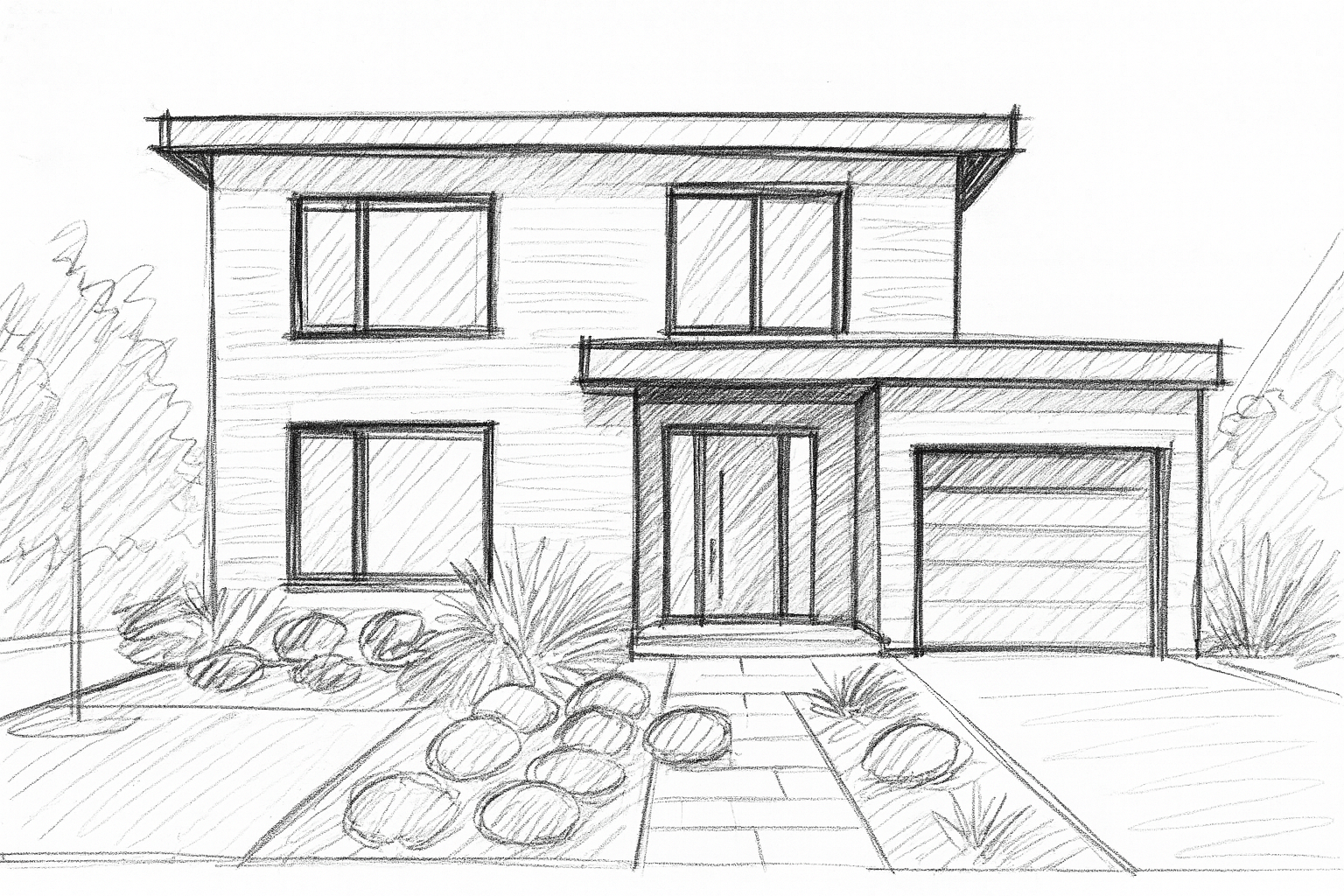
The first hand-drafted sketch is never the last word.
The images here show the real jump: a loose hand sketch, then a tighter digital draft, then the rendered view. Notice how walls shift, openings move, and proportions sharpen each time. That’s not wasted work. Each pass fixes something you couldn’t see before: daylight angles, stair runs, service routes.
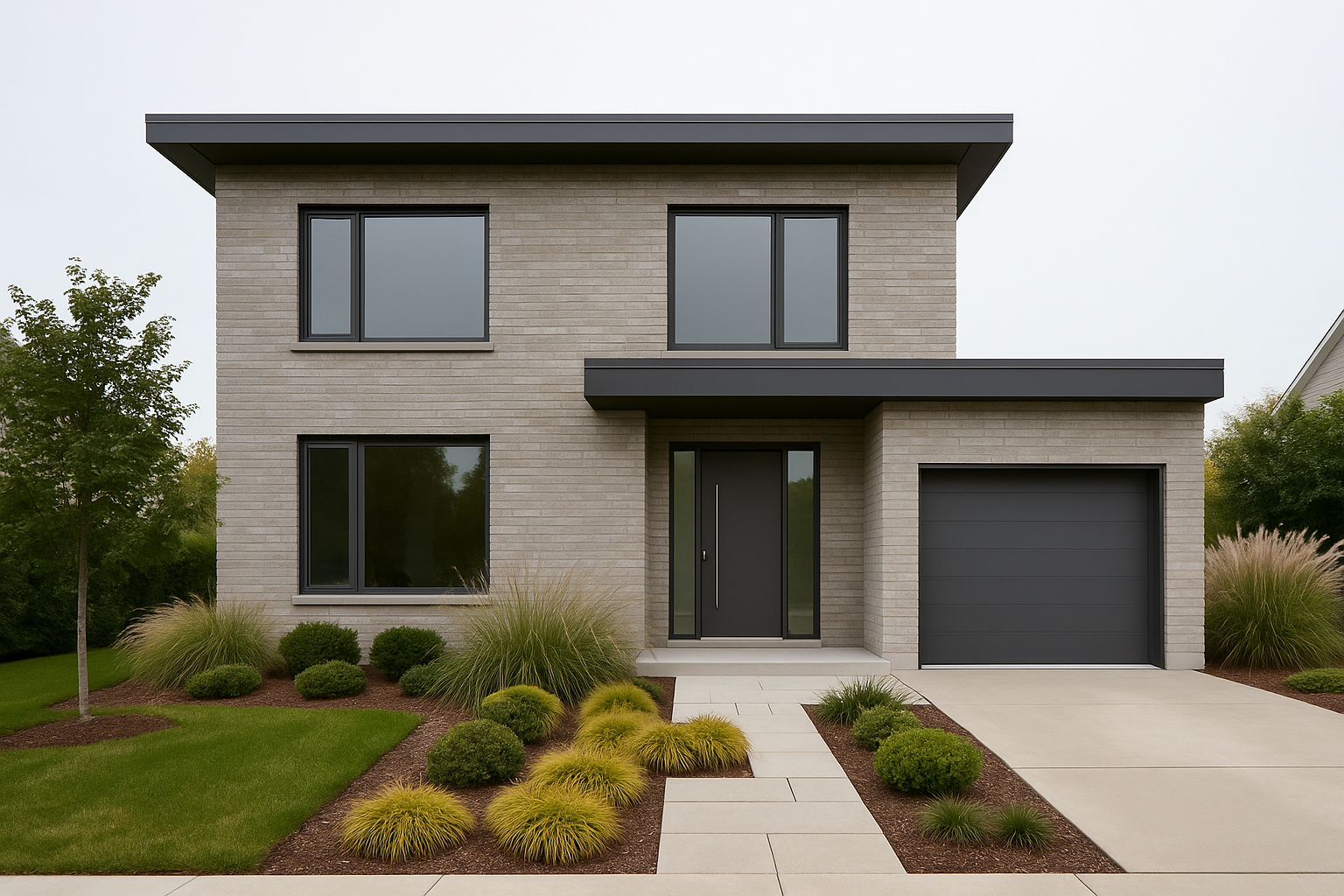
You’ll redraw and shift ideas dozens of times. That’s not failure—that’s the process.
By the time you get to a finished render or a built photo, it often looks nothing like the first sketch. That’s a good sign. Design is meant to evolve. A drawing that never changed is usually a drawing that never got tested.
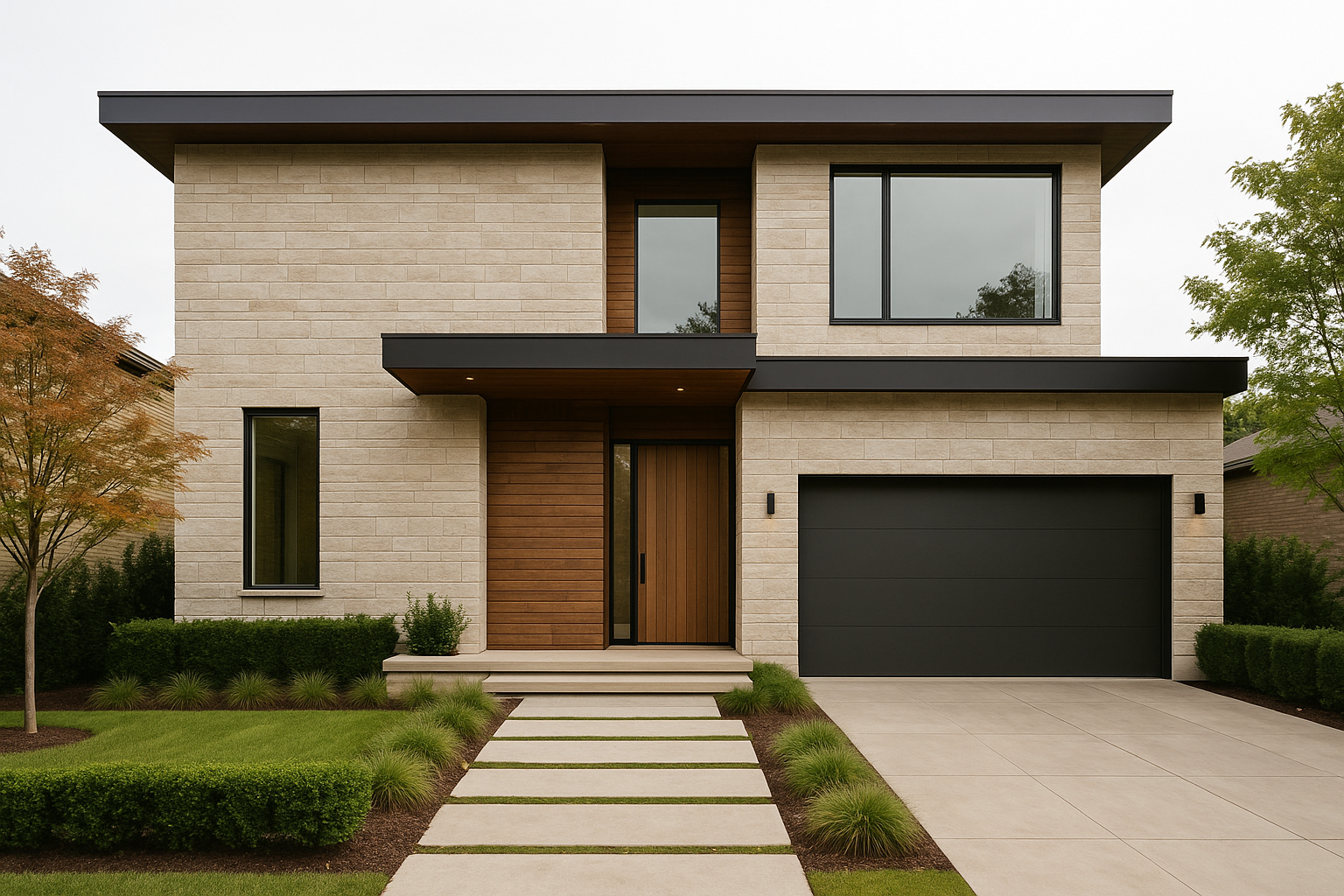
By the time the project reaches a polished rendering or a built photo, it often looks nothing like the first draft.
If you want ideas for how sketches grow into rooms that actually work, see House Ideas: Designing Smart and Stylish Spaces that Work for You and Innovative Housing Concepts and Designs: A Glimpse into the Future.
📘 Field Pick
The Home Renovation Planner
Still the simplest way to keep scope, budget, and sequence on one page. Fewer surprises, fewer excuses.
House Plans and Layouts
Compact living comes down to smart square footage. See Small Houses for practical solutions and Small House Design for layouts that balance cost and comfort.
For single-level accessibility, check Single Floor House Design. Zero-threshold entries and wide circulation paths matter more than style choices when planning for aging in place or mobility needs.
Modern open layouts are covered in Modern House Designs. Expect fewer walls, bigger spans, and more attention to daylight and noise control.
Zoning is where plans succeed or fail: kitchens linked to service entries, living spaces buffered from sleep zones, and storage built where people actually drop their stuff.
📘 Field Pick
The Interior Design Handbook
Clear rules you can apply to plans fast. Turns vague layouts into workable rooms.
Architectural Styles
Styles shape massing, light, and cost. Use this as your overview hub: Types of Houses and Home Styles.
If you want a visual crash course, start with 40 Architectural Home Styles You Should Know by Sight. For modern families, pay attention to massing and glazing choices in Modern House Designs. For traditional families, proportions and roofs still lead the way in Traditional Home Styles.
📘 Field Pick
Modern Architecture Since 1900 – William J.R. Curtis
Buy on Amazon »
Still the best book when you need to explain the “why” of design decisions to clients.
Exteriors and Street Presence

The front elevation is where projects usually get judged first. Entries, porches, and window lines make or break curb appeal.
Colour is where most mistakes happen. Pick shades that survive ten winters, not just the paint deck in the showroom. What works on kitchens often works on doors too. See Color Psychology Basics and Kitchen Colour Ideas That Don’t Age Badly.
Street presence isn’t just visual. Grading and drainage decide if the entry stays dry. Downspouts, permeable surfaces, and a few shade trees handle more long-term comfort than an expensive façade swap. Clients rarely notice, but they feel the difference a decade later.
📘 Field Pick
Simpson Strong-Tie Deck Tension Tie Kit
Buy on Amazon »
Small part, big payoff. Clean, code-tested anchors that keep lightweight canopies and decks from tearing off in storms.
Interiors and Daily Living

A living room works when light cuts through the space cleanly and storage isn’t an afterthought. I’ve seen too many “open” plans collapse under piles of furniture because nobody mapped a path from door to sofa. For small footprints, see Small Minimalist Living Rooms — it shows how less furniture and smarter placement often outlast flashy layouts.

Kitchens run on workflow, not granite. The old triangle rule still helps, but zones are better for families who cook together. Ventilation matters more than most finishes; a quiet hood outlasts any countertop.
Bedrooms and baths need privacy stacked into the plan. If plumbing runs over sleeping spaces, you’ll hear it forever. Put quiet above quiet. Small details like door widths, turning radii, and ventilation clearances keep homes usable when families age or needs change. These aren’t extras, they’re survival details.

For inspiration, I often point people to House Ideas and Innovative Housing Concepts. Both show how ideas move from sketches into rooms that actually work day to day.
📘 Field Pick
The Nesting Place — Myquillyn Smith
Buy on Amazon »
Good reminder that durability beats perfection. Simple moves, layered slowly, tend to stick.
Systems, Comfort, Performance
The envelope runs the show. If you wait until drywall to do the first blower-door, you’ll end up patching holes with tape and prayers. Schedule it early. Catch the leaks while fixes are cheap. Air sealing and moisture control aren’t “green extras.” They’re what keep basements from growing mold and owners from calling you six months later. Sequence matters as much as specs.
Heating, cooling, and ventilation work only if they’re sized to the shell you built. Oversize a system and it short-cycles. Undersize and it dies early. Fresh air strategies are where health and comfort meet. In New York, Local Law 97 is already forcing deep retrofits. The smart firms start with envelope cuts, then electrify. Do it backwards and you’ll be chasing loads forever.
Light and sound are the quiet killers of projects. A room that looks good on paper but glares at 3 p.m. is a failure. Same with acoustics. A basic target for walls and floors saves more headaches than any “soundproof” product pitch. If you need a broader playbook, see Green Remodeling.
The quick wins are simple: swap insulation where it leaks, replace bad windows, use low-carbon concrete in spots where mass actually matters. They don’t get headlines, but they move the numbers.
📘 Field Pick
Cradle to Cradle — William McDonough & Michael Braungart
Buy on Amazon »
Still the most useful lens when you’re forced to pick between materials that all come with baggage.
Construction Methods and Materials
Methods first. Conventional builds are predictable. Prefab wins when you need speed and tight quality control. Panels cut weeks off the schedule, but only if trades are ready to follow. Quality checks save more than they cost: measure openings before windows ship, confirm air barrier continuity before cladding goes up. Rework is what kills margins.
Materials carry their own traps. Mass timber is light and fast but fireproofing and penetrations deserve their own line item, not a hidden contingency. Recycled concrete and steel only pay back if you control haul distance—specify a max radius and make suppliers show routing. Hempcrete is cleaner when you use prefab blocks or panels; cast-in-place works only if curing is protected. Cork, cellulose, and mineral wool all perform, but the right pick depends on fire code, moisture risk, and what the local yard actually stocks. For style comparisons, see Types of Houses and Home Styles.
The mistakes repeat. Mechanical rooms sized too small. Waterproofing transitions guessed at. Daylight orientation ignored until the living room glares all afternoon. Smart water sensors installed but never wet-tested—leaks happen anyway, and the insurer doesn’t care.
Specs don’t need to be encyclopedias, but they must be blunt. Windows: set U-value ranges by climate and room use, not just “energy-efficient.” Roofs: call out warm vs cold roof and vent paths that actually work. For practical detailing, see House Elevation Design.
📘 Field Picks
Visual Handbook of Building and Remodeling – Charlie Wing
Buy on Amazon »
Clear drawings, site-level advice. Reads like something you’d actually take to the job.
📘 Field Picks
Ultimate Guide to House Framing – John D. Wagner
Buy on Amazon »
Cuts the noise and focuses on what crews really face when framing houses.
Special Features and Add-Ons
The extras are where houses win or lose daily comfort. Outdoor rooms need shade and privacy first, not expensive furniture. If the paving holds water, you’ll hate it by the first storm. Manage drainage underfoot before you buy planters or screens.
Inside, the pieces that look small on paper carry the most weight. Entries that store boots and coats keep the rest of the house clean. Stairs double as book walls or storage runs if planned early. A niche or wall recess can earn its keep in a way an oversized room never does.
📘 Field Pick
hOmeLabs Energy Star Dehumidifier
Buy on Amazon »
Cheap insurance for basements and wet rooms. Quiet, reliable, and pulls moisture fast.
Photo and Idea Galleries

Images work best when they’re more than eye candy. Treat them like field notes. A clean front elevation shows proportion and material choices faster than a page of text. See Home Styles by Sight for quick recognition drills.
Concept galleries matter too. They’re where you test combinations: a stair tucked into a wall, a kitchen shifted to the garden side, a roofline pulled lower. For this, browse House Ideas and Innovative Housing Concepts. They’re not just inspiration—they’re working catalogs of what’s been built.
Tiny case notes help ground the visuals. A small renovation that cost fifteen grand and wrapped in three months. A mid-gut that blew past budget because waterproofing was missed. A new build that landed well because the survey and envelope were locked early. Each image should carry a note: cost, duration, one hard lesson. That’s when a gallery teaches instead of decorating.
New Field Angles That Change the Work
Airtightness is the real style now. Stop treating it like an afterthought. Run a blower-door test before drywall closes the walls. Crews hate it, but you catch leaks when fixes are cheap, not after finishes are up.
Mass timber budgets are never just about the structure. The coatings, the penetrations, and the fireproofing details eat the margin. Price them as their own line item. Otherwise you’ll explain later why “green timber” ended up costing more than concrete.
Carbon math dies on the highway. Recycled aggregate that travels two hundred miles is just PR. For heavy materials, set a max-mile radius in your specs and demand route disclosure. Local beats “eco-label” every time. If you want material swaps that actually pay back, see Green Remodeling.
Law is shaping design as much as climate. New York’s LL97 forces deep retrofits in thousands of buildings. That means start with the envelope, then electrify. Skip the sequence and you’ll burn cash on oversized systems.
Moisture beats gadgets. Leak sensors fail, insurance doesn’t care. Wet test your bathrooms, kitchens, and basements. Add manual failsafes. Treat smart tech as backup, not the primary control layer.
Hempcrete has grown up. Cast in place is slow and risky. Prefabricated panels and blocks are winning because they cut drying time and site errors. In London you still fight approvals, but the logistics finally make sense.
Planning paralysis is real. London has hundreds of thousands of homes “approved” but not built. Financing stalls, supply chains wobble, planning backlog grows. Phase your design so partial occupation is possible. Keeps projects alive when everything else slows.
Quality keeps drifting. Teams still treat performance misses like cosmetic defects. Add a glossary to your punchlists: damage, functional defect, failure. It helps owners see why airtightness or acoustic targets aren’t “nice-to-haves.”
📘 Field Pick
EcoHouse Manual – Nigel Griffiths
Buy on Amazon »
Straight, field-tested sustainability details you can use without greenwashing.
FAQ
When should the blower-door test happen?
Run it before drywall closes the walls. Then again at substantial completion. Early test saves rework, late test proves performance.
Is mass timber really cheaper?
The structure goes up fast, so labor drops. But coatings, fireproofing, and penetrations add cost. Budget those as their own line or you’ll miss the real price.
How do I count carbon on recycled mixes?
Always include haul miles. Recycled aggregate only saves carbon if sourced close. Set a maximum source radius in your specs.
Will leak sensors lower my risk?
Only if you still wet test and provide manual failsafes. Sensors fail. Insurance cares about water on the floor, not the gadget installed.
Related
References
- Airtightness sequencing and interim testing — Fine Homebuilding field guide
- Timber fireproofing cost drivers — Timber Finance Initiative (fire coatings, HRR, penetrations)
- Transport distance and aggregate carbon — Building Energy Exchange
- NYC LL97 retrofit pathway — Official Local Law 97 (envelope-first retrofit logic)
- Moisture claims with smart devices — CLM Alliance risk report
- Hempcrete prefab vs cast-in-place — MDPI Sustainability research
- London approvals backlog — City Hall report on housing permissions
- Residential defect taxonomy — MDPI Buildings journal (damage vs functional defect vs failure)