

Biophilic Architecture: Why Businesses Buy Into It
Companies don’t add greenery and daylight to look trendy. They do it because the numbers work. Offices with biophilic design show higher productivity, less sick leave, and stronger staff retention. A row of plants is cheaper than high turnover.
What It Feels Like Inside
Walk into a biophilic office and you’ll notice the shift. Big windows. Natural light. Indoor trees or green walls that break up the monotony of drywall. Maybe even water running nearby. People breathe easier, literally and figuratively.
This isn’t “decor.” It’s a design strategy with measurable returns. Healthier workers. Sharper focus. Spaces that feel less like boxes and more like places you’d actually want to stay in.
The First Time Biophilia Hits You
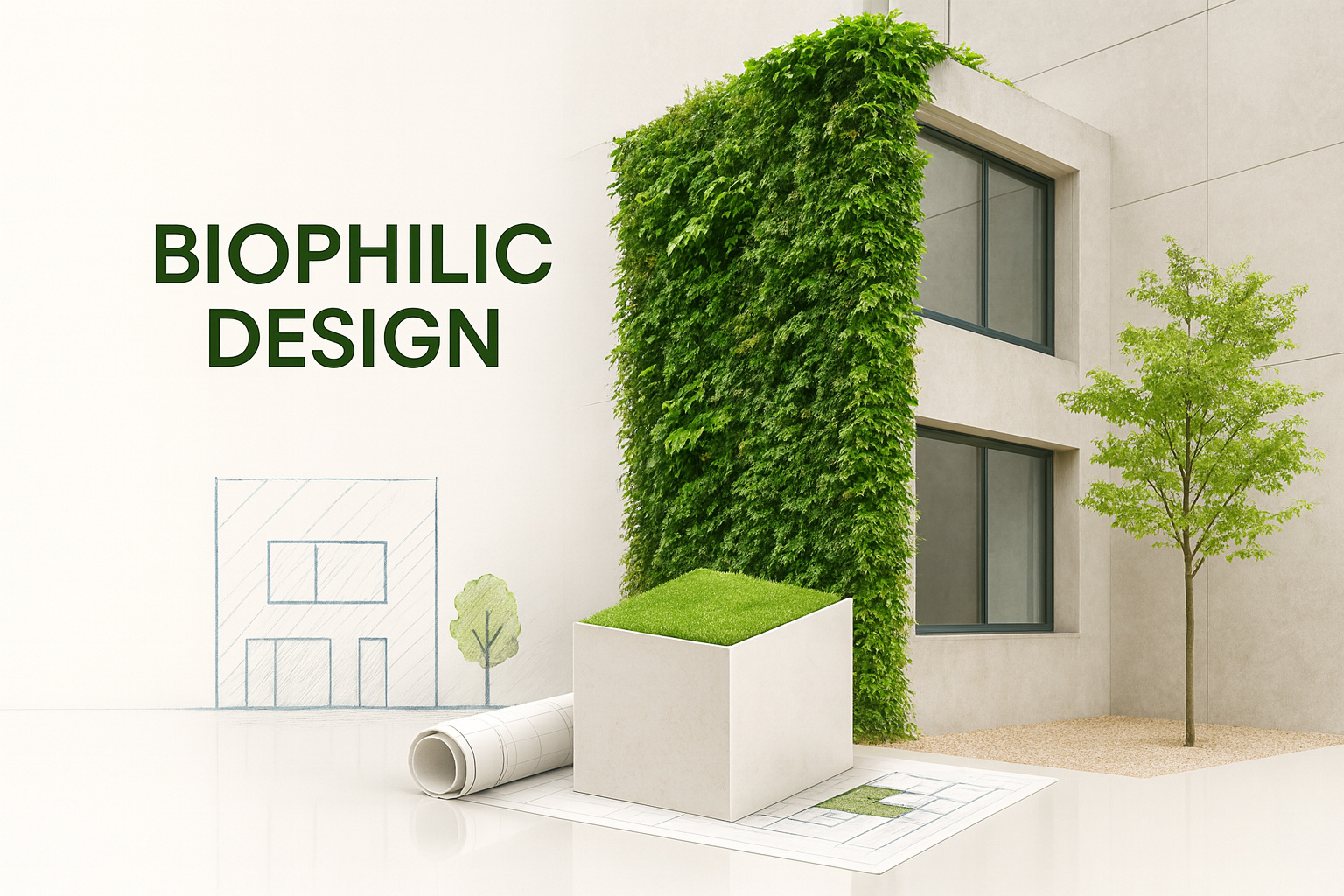
Forget theory for a second. Picture this: you walk into a lobby that looks average from the street. Fluorescent lights, glass doors, the usual. Then you step inside and—bam—the air feels different. You smell soil and leaves. Your eyes catch a green wall climbing four stories high. A skylight throws sunlight on polished stone, and you hear water moving somewhere you can’t see yet.
That’s the moment biophilic design clicks. Not in a book, not in a lecture, but in your gut. It’s the shift from “nice idea” to “this space is alive.”
I remember one site visit in Singapore, Marina One. The developer could’ve filled the atrium with shops and more concrete. Instead, they built a vertical rainforest. Walking in, the humidity drops, birds actually nest, and people sit longer than they planned. That’s biophilia doing real work—climate control, social space, biodiversity—wrapped into one design move.
How Biophilic Architecture Took Root and Grew
Early roots
Old builders worked with what they had. Japanese houses opened directly to gardens. Roman villas wrapped courtyards around fountains. Pueblo homes used thick adobe walls to cool the interior. Nobody called it biophilic design then. It was survival and comfort.
Why Architects Keep Turning Back to Nature
Wilson’s push
In 1984, biologist E.O. Wilson introduced the term biophilia. He argued that humans are wired to seek connections with nature. Architects started listening when office workers began complaining about sick buildings. No windows, bad air, buzzing fluorescent lights. Wilson’s idea explained why those spaces drained people.
Modern rise
By the early 2000s, green design was no longer a niche. Living walls, daylighting, indoor gardens and water features became standard features in showpiece projects. LEED and WELL certifications spread the concept fast. Hospitals used it to speed patient recovery. Schools adopted it to improve focus. Offices leaned on it for productivity. Even airports built in gardens and daylight to calm travelers. What started as a theory now shows up anywhere people spend hours indoors.
You might like: Biophilic: Nature-Inspired Living and the Power of Design
How Biophilic Architecture Actually Works in Buildings
Natural Elements in Action
Biophilic design starts simple: plants, water, air, light. It’s not just about “pretty greenery.” The Bosco Verticale towers in Milan are proof—over 900 trees are integrated into the facade, cutting air pollution and reducing the urban heat effect. Indoor green walls in offices like Amazon’s Spheres in Seattle create measurable improvements in air quality while giving workers an immediate sense of calm.
Quote: “Contact with living systems reduces stress and improves cognitive function,” says Stephen R. Kellert, a Yale professor who spent decades pushing biophilic principles.
Green Walls and Roofs
Living walls are not just eye candy. In Singapore, the Parkroyal Collection Pickering Hotel carries entire “sky gardens” that act as thermal insulation. Green roofs on top of Toronto’s city buildings are now mandatory for new developments. They cut heating and cooling loads by up to 30 percent while absorbing stormwater.
Field note: On one retrofit project in Vancouver, a green roof installation lowered summer office temperatures by 4°C without touching the HVAC system.
See also: Sustainable Offices That Save Bills and Keep Teams Breathing
Natural Light
Daylighting is one of the cheapest and most effective biophilic strategies. Skylights, clerestories, and wide window bands change the mood of a building instantly. At the Bullitt Center in Seattle, floor-to-ceiling glass reduces artificial lighting by almost 80 percent during the day. Workers report higher focus and lower fatigue.
Quote: “A well-daylit classroom can improve student performance by 20 percent,” according to a widely cited Heschong Mahone Group study.
Views of Nature
Even when you can’t walk into a garden, just seeing trees or water changes stress levels. Roger Ulrich’s classic 1984 study proved hospital patients with a window view of nature recovered faster than those facing a brick wall. That research is now baked into design standards for healthcare and office projects worldwide.
Example: At Khoo Teck Puat Hospital in Singapore, patient rooms overlook lush courtyards and ponds. The hospital reports higher patient satisfaction scores and shorter recovery stays.
Natural Materials
Wood, stone, clay, bamboo—these materials don’t just “look warm.” They carry tactile qualities that make spaces human. Norway’s Oslo Airport terminal, lined with locally sourced timber, keeps stress levels lower in one of the most stressful environments: security lines. The tactile honesty of wood calms people in ways synthetic materials can’t.
Field note: In a Toronto condo project, replacing plastic laminate with real veneer instantly shifted buyer response in the sales center. It felt “solid” instead of “cheap.”
See also: Where Wood Belongs in Architecture Today
Natural Forms and Shapes
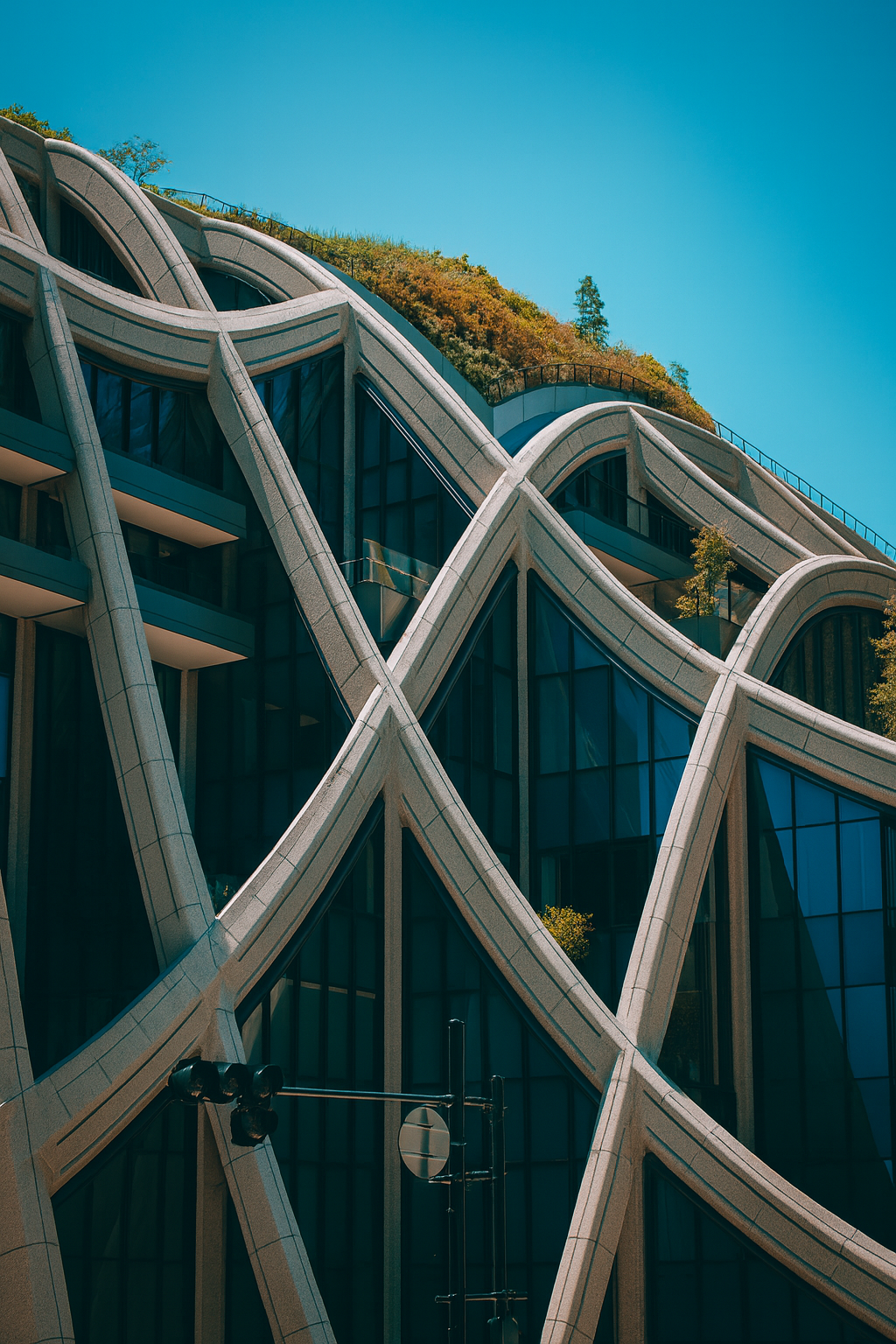
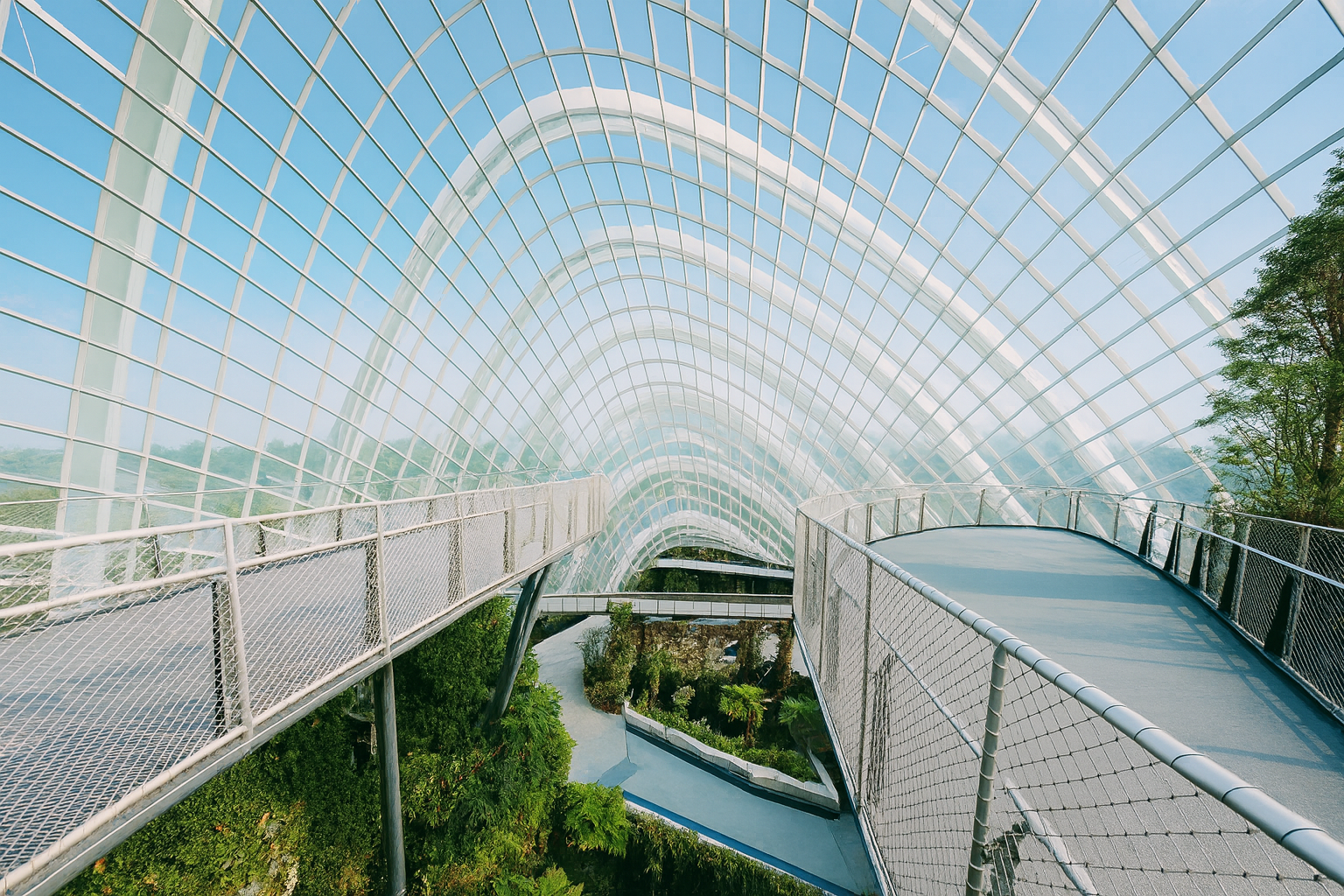
Architecture that mimics organic curves, branching patterns, or cellular structures resonates more with users. Think of Antoni Gaudí’s Sagrada Família—its branching stone columns echo tree canopies. Or the Eden Project in the UK, where geodesic domes look and feel like giant plant cells.
Quote: “Patterns in nature reduce cognitive load,” says Judith Heerwagen, an environmental psychologist. “Our brains process fractals and organic shapes more easily than rigid, abstract grids.”
Why It Works Today
Biophilic architecture is not an add-on anymore. It’s embedded in top certifications like LEED, WELL, and Living Building Challenge. But the real reason it’s growing? Buildings with biophilic features rent faster, sell higher, and reduce sick days. In plain English: it pays back.
Related: Biophilic Design: Transforming Cities with Nature-Inspired Architecture
How to Design and Build With Biophilic Architecture
Contemporary glass building in Seattle, Washington, with a white facade and ivy integration, showcasing principles of Biophilic Architecture.
Start With Core Moves
Forget long lists. Every biophilic project boils down to a few key design levers:
Light. Daylighting done right saves money and changes how people feel. The Bullitt Center in Seattle runs on daylight and users report higher focus.
See also: Natural Lighting in Architectural Design: The Secret to Better Living!
Air. Natural ventilation is not a gimmick. At schools in California, cross-ventilation designs cut cooling bills and improved test scores.
Green surfaces. Living walls and green roofs are not decoration. In Singapore, they are building code strategy to cut urban heat and stormwater.
Water. A small fountain in an office is aesthetics. A courtyard pool in an Indian institute is passive cooling. Know the difference.
Material honesty. Wood, stone, bamboo—materials that register as “alive.” Oslo Airport uses timber to calm travelers.
Where It Works Best
Biophilia is not equal everywhere.
-
Workplaces. Amazon’s Spheres in Seattle function like a greenhouse office. Thousands of species, controlled humidity, and direct worker reports of better concentration.
-
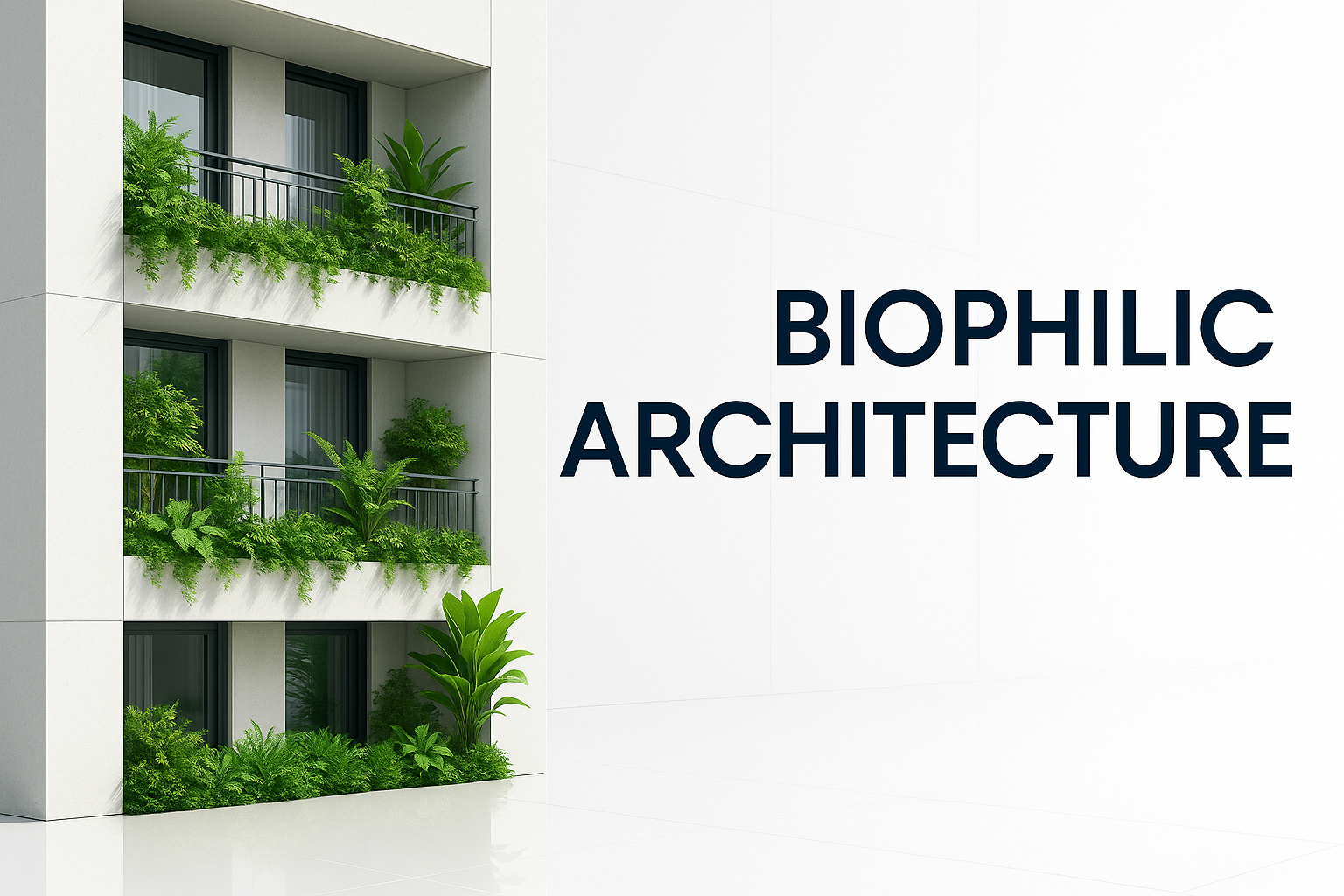
Housing. Bosco Verticale in Milan. Two towers, thousands of trees, and measurable reductions in smog.
-
Mixed use. Marina One in Singapore shows what happens when an entire core is turned into a rainforest atrium.
Pro tip from a Toronto retrofit: green roofs work best when paired with real insulation upgrades. Otherwise they are just expensive gardens on weak envelopes.
See also: Biophilic Office Design: Creating Healthier, Happier Workspaces
Biophilia Inside
You don’t need a skyscraper budget to pull this off. Most of the impact comes from interior choices.
Living walls
Not just decoration. A wall of plants filters air, balances humidity, and changes how people feel in the space. A 40 square meter wall can handle the air load for about 40 people. In one Toronto studio I visited, the wall became a meeting point. Staff said it cut the “stale office” smell.
Daylight done right
The cheapest biophilic move is light. South-facing windows, smart glass, or even light shelves that bounce daylight deeper into the floorplate. Offices that nail daylighting need less artificial light and feel calmer. Bad lighting plans burn energy and attention spans.
Materials and furniture
Reclaimed oak tables, stone counters, and wood finishes create a tactile link to nature. Even small moves—like swapping plastic laminate for bamboo—shift how a space feels. Organic forms in furniture break up the monotony of rectilinear office grids.
Insulation that breathes
Nobody sees what’s behind the drywall, but they feel it. Recycled denim or sheep’s wool insulation regulates moisture and temp far better than fiberglass. One client told me their office “just felt warmer” after a retrofit with wool insulation, even when the thermostat stayed at 20°C.
Biophilia indoors is not about flash. It is about giving people sensory relief. Touch, light, air, and greenery working quietly in the background.
Firms Leading the Charge
Some practices don’t just talk green. They live it in every office they design.
HOK
A global giant, but still setting a bar. Their corporate projects often come with WELL certification baked in from the start. The lesson here is simple. When a firm this big treats wellness as a basic requirement, clients start to expect it. That shifts the whole market.
COOKFOX in New York
Their own studio is half office, half garden. Terraces overflow with greenery, and staff work surrounded by plants. Richard Cook puts it bluntly: “Designing with nature is not indulgence, it’s performance.” The takeaway is clear. Green space is not a luxury finish. It is part of how people think, focus, and stay in the job.
Heatherwick Studio in London
They are known for bold sculptural buildings, but look closer and you see living facades and planted elevations. They show that form and ecology can blend. The lesson is that you do not have to choose one over the other. Architecture can carry both.
Together these firms prove the point. HOK makes green design mainstream. COOKFOX shows it can reshape the workday. Heatherwick shows it can reshape the skyline.
Outside the Building
Biophilia is not just about lobbies with plants. The real test is what happens outside the walls, at the scale of the city. When it works, it changes identity, health, and even policy.
Urban parks
Millennium Park in Chicago shows how a green space can rebrand an entire downtown. It is not just grass. It is landscape tied to art and culture. The lesson: a park can shift how people and investors see a city. Offices nearby lease faster and at higher rates because workers want to be next to it.
Community gardens
In Melbourne, shared gardens are tied directly to housing density. These are not side projects, they are written into policy. Residents living in tighter quarters get open ground to grow food and connect. The insight here is scale. A single rooftop garden matters less than when a city links dozens of them into a network. That is when urban stress drops.
Green roofs
Toronto made them law on large new buildings. Developers pushed back at first. Now the city has over a thousand, covering millions of square feet. The value lesson is hidden: green roofs are stormwater infrastructure. They save the city money by reducing runoff into sewers. For an office developer, it looks like a design cost. For the city, it is climate adaptation.
Biophilia outside the building is not decoration. It is economic, social, and ecological strategy. Cities that weave it in at scale are healthier and more competitive.
Biophilia Inside vs Outside
Inside the Building
The focus is on people at work. Plants on walls, daylight pulled deep into floorplates, natural materials where hands touch tables and rails. Even the insulation matters. Recycled denim or wool inside walls keeps the air steady and the noise down. The payoff shows up in daily focus, health, and comfort.
Outside the Building
The scale shifts to the city. Parks that reset identity, like Millennium Park in Chicago. Shared gardens in Melbourne built into density policy. Green roofs across Toronto acting as stormwater infrastructure. These moves pay off in resilience and civic health, not just in aesthetics.
The Link
Biophilia inside helps individuals. Biophilia outside helps communities. Together they create offices that are more than containers for work. They become part of a living system.
Why It Matters Now
-
Health. Lower stress, faster recovery, better focus. Studies show up to 20% better performance in daylit schools.
-
Sustainability. Plants absorb carbon, walls insulate, daylight cuts loads.
-
Cost logic. Yes, upfront spend is higher. But absenteeism drops, retention rises, energy bills shrink. Firms and cities do not keep funding this because it is “pretty.” They do it because it pays back.
Mistakes I See All the Time
-
Clients think one planter = biophilia. Wrong.
-
Architects forget maintenance. Dead green walls kill morale.
-
Developers cut skylights to save money, then pay more in energy and churn.
One strong daylight strategy beats ten decorative plants.
FAQ
1. What is biophilic architecture?
It’s design that intentionally reconnects people with nature through light, plants, water, views, and natural materials.
2. Who coined the idea?
Biologist E.O. Wilson, in 1984, with his “biophilia hypothesis.” He argued humans are wired to seek nature. Architects later ran with it.
3. How is it different from green architecture?
Green design focuses on efficiency and environmental impact. Biophilic design focuses on human well-being and psychology.
4. Do biophilic buildings cost more?
Yes, usually 5–10% more upfront. But energy savings and productivity gains often offset the cost.
5. What’s the cheapest biophilic move?
Daylight and cross-ventilation. Costs almost nothing if planned right from the start.
6. Can small homes use biophilic design?
Yes. Add a window seat with garden views, a green wall in the kitchen, or natural finishes.
7. Is biophilia only for new builds?
No. Retrofits can add daylighting, plants, and natural materials. Plenty of old offices have been converted this way.
8. What are common mistakes?
Treating it as decoration. Slapping plants in a lobby without fixing light, air, or material choices.
9. How do green walls actually perform?
They work if maintained. Without irrigation and care, they fail fast. You’ll curse it once and never touch it again.
10. What’s an example in the US?
The Amazon Spheres in Seattle. Thousands of plants inside a set of glass domes, functioning like an indoor rainforest office.
11. Example in Europe?
Bosco Verticale in Milan. Two residential towers with over 900 trees planted directly into the facades.
12. Example in Asia?
Marina One in Singapore. Its central “green heart” atrium feels like a rainforest surrounded by towers.
13. What role does light play?
It’s the biggest factor. Daylighting cuts energy bills, reduces eye strain, and improves mood. Offices with daylight record higher productivity.
14. Does it really improve health?
Yes. Studies show reduced stress, lower heart rates, and faster recovery in hospitals with biophilic design.
15. How do architects design airflow?
Cross-ventilation, operable windows, courtyards. Natural airflow reduces reliance on mechanical HVAC.
16. Are water features worth it?
Sometimes. A shallow indoor pond adds humidity in dry climates. In damp places, it can cause mold. Context matters.
17. Do natural materials make a difference?
Yes. Wood surfaces lower stress compared to sterile finishes. Japan’s schools use timber for this reason.
18. What’s biophilic design in schools?
Daylit classrooms, outdoor courtyards, green play areas. Kids focus longer and attendance improves.
19. How does biophilia show up in hospitals?
Views of trees or gardens reduce patient recovery time by up to 8%. A famous study proved it in 1984.
20. Can workplaces measure benefits?
Yes. Firms report lower absenteeism and better retention in biophilic offices. Productivity bumps of 6–15% are common.
21. What software helps design biophilic spaces?
Revit, Rhino, Grasshopper with plugins for daylighting and airflow studies. VR walk-throughs also help.
22. Is biophilic design part of WELL certification?
Yes. WELL and LEED both include metrics on daylight, views, and materials.
23. Do cities regulate this?
Some do. Singapore requires greenery in new developments. Toronto mandates green roofs on large buildings.
24. Can renters apply it?
Yes. Use indoor plants, daylight curtains, natural wood furniture, and balcony gardens.
25. What’s the biggest maintenance issue?
Green walls. They look great in renderings but need irrigation, pruning, and replacement.
26. How does it intersect with climate design?
Biophilia overlaps with passive design: courtyards, shading, and natural ventilation are climate strategies too.
27. Is there pushback against it?
Yes. Some critics call it “greenwashing” when projects add plants for PR without solving bigger issues.
28. What’s the most ambitious biophilic project?
Possibly Singapore’s Jewel Changi Airport. A 40-meter waterfall inside a glass dome surrounded by tropical forest.
29. Who are the leading architects?
Stefano Boeri (Bosco Verticale), Thomas Heatherwick (Garden Bridge concept, Google HQ), and firms like COOKFOX and HOK.
30. What books explain it well?
“Biophilic Design” by Stephen Kellert. “The Handbook of Biophilic City Planning” by Timothy Beatley.
31. How does it change urban design?
Cities are shifting toward “biophilic cities”—more green roofs, community gardens, and tree-lined streets.
32. Does biophilia apply to interiors only?
No. It applies at every scale: furniture, homes, towers, parks, and whole cities.
33. What’s the role of technology here?
Sensors and smart glass manage light and air. Some buildings use apps to adjust user comfort in real time.
34. Is biophilic architecture the future?
It’s not optional anymore. As cities get hotter and denser, connecting people back to nature is becoming survival strategy, not style.