

How Biophilic Office Design Elevates Employee Well-being
More and more companies are asking for offices that feel alive—spaces with plants, daylight, and fresh air built into the design. They don’t just want pretty greenery. They want healthier teams, lower bills, and a workplace people actually enjoy coming to.
Biophilic design delivers that. Studies show it boosts productivity, lowers stress, and even reduces energy costs when it’s done right. At our own projects, the offices that feel welcoming and energetic almost always share one thing: a strong connection to nature.
This isn’t about tossing a few potted plants in the corner. It’s about weaving natural features into the workplace so the whole environment works better for people.
Below, we break down what biophilic office design means, the benefits it creates, and the practical ways you can bring it into any workspace.
Biophilic Offices: How Nature Changes the Way We Work

Introduction to Biophilic Office Design
Most people spend their days inside offices with stale air, artificial lights, and little connection to the outdoors. Biophilic office design flips that. It pulls nature back into the workplace with plants, daylight, water, raw wood, and natural textures. The result is simple: healthier teams, calmer minds, and spaces people actually want to be in.
The idea has roots in ancient building traditions but has taken off again as companies realize its impact on well-being and productivity. A well-placed skylight, a wall of greenery, even the right natural finishes can shift how people feel and work. This guide breaks down the principles, the benefits, and the practical moves that turn a standard office into a space where people breathe easier and perform better.
See also: Sustainable Offices That Save Bills and Keep Teams Breathing
Where Biophilic Design Came From
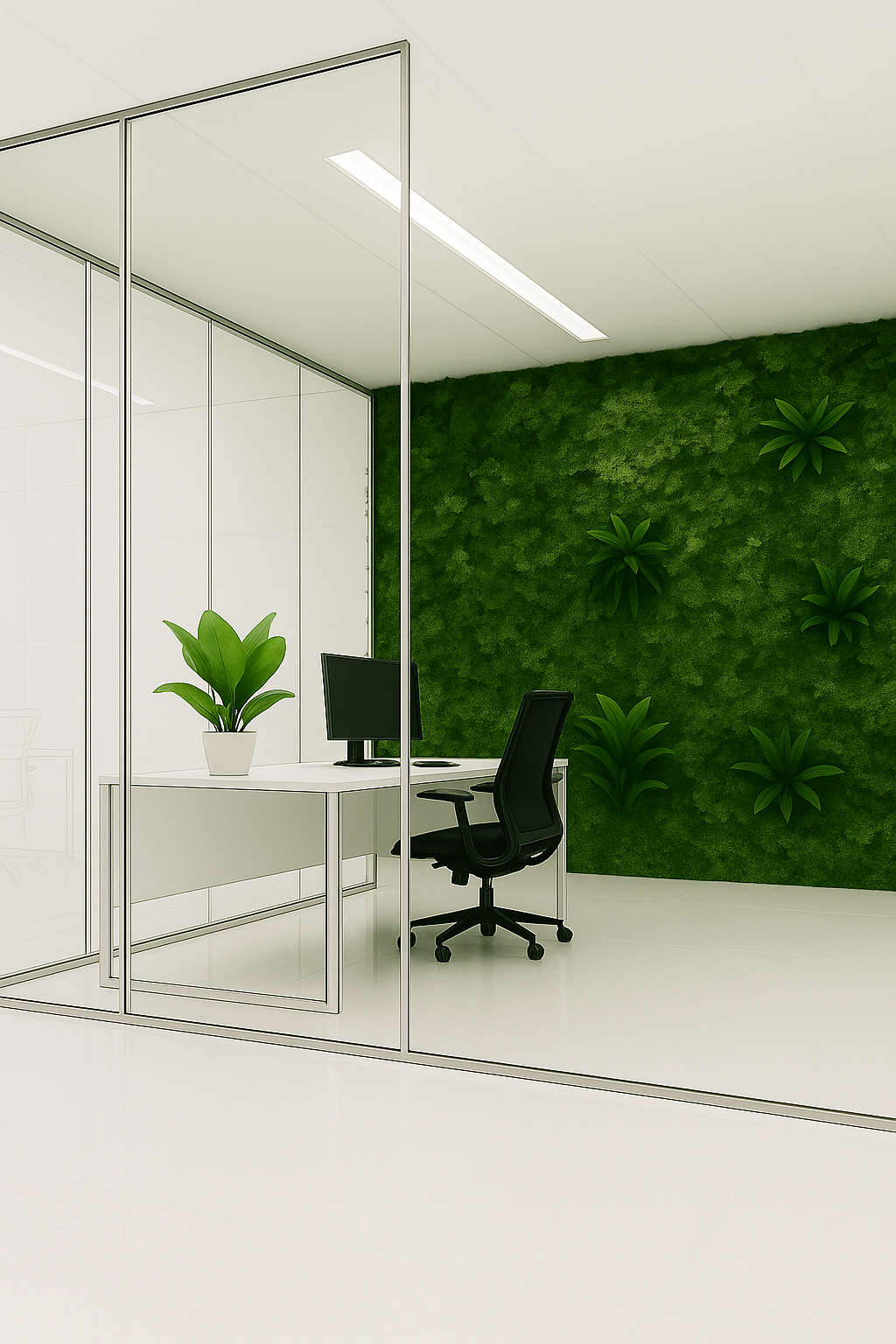
The idea behind biophilic design is simple: people feel better when they are connected to nature. Biologist Edward O. Wilson put words to this instinct in his 1984 book Biophilia. His argument was that our health, focus, and creativity all improve when daily life includes natural elements. That idea became the backbone of what architects now call biophilic design.
From History to Now
This is not a new trick. Ancient builders knew the value of nature indoors. Romans built courtyards into their villas. Japanese homes used gardens to soften interiors and create calm. Across cultures, nature was never seen as separate from architecture.
The Modern Revival
Today, the workplace is where biophilia has made its strongest return. Offices with green walls, natural light, and wood finishes report higher employee satisfaction and sharper focus. What started as instinct has become strategy. Companies see that connecting workers to natural elements is not decoration, it is performance.
Example in Practice
A tech hub I worked with in Toronto swapped sterile white partitions for a central green atrium. Within months, staff surveys reported less stress and more focus. The lesson was clear: nature is not just aesthetic, it is operational.
You might like: Creating the Perfect Industrial Look for Your Office Space
Core Principles of Biophilic Design
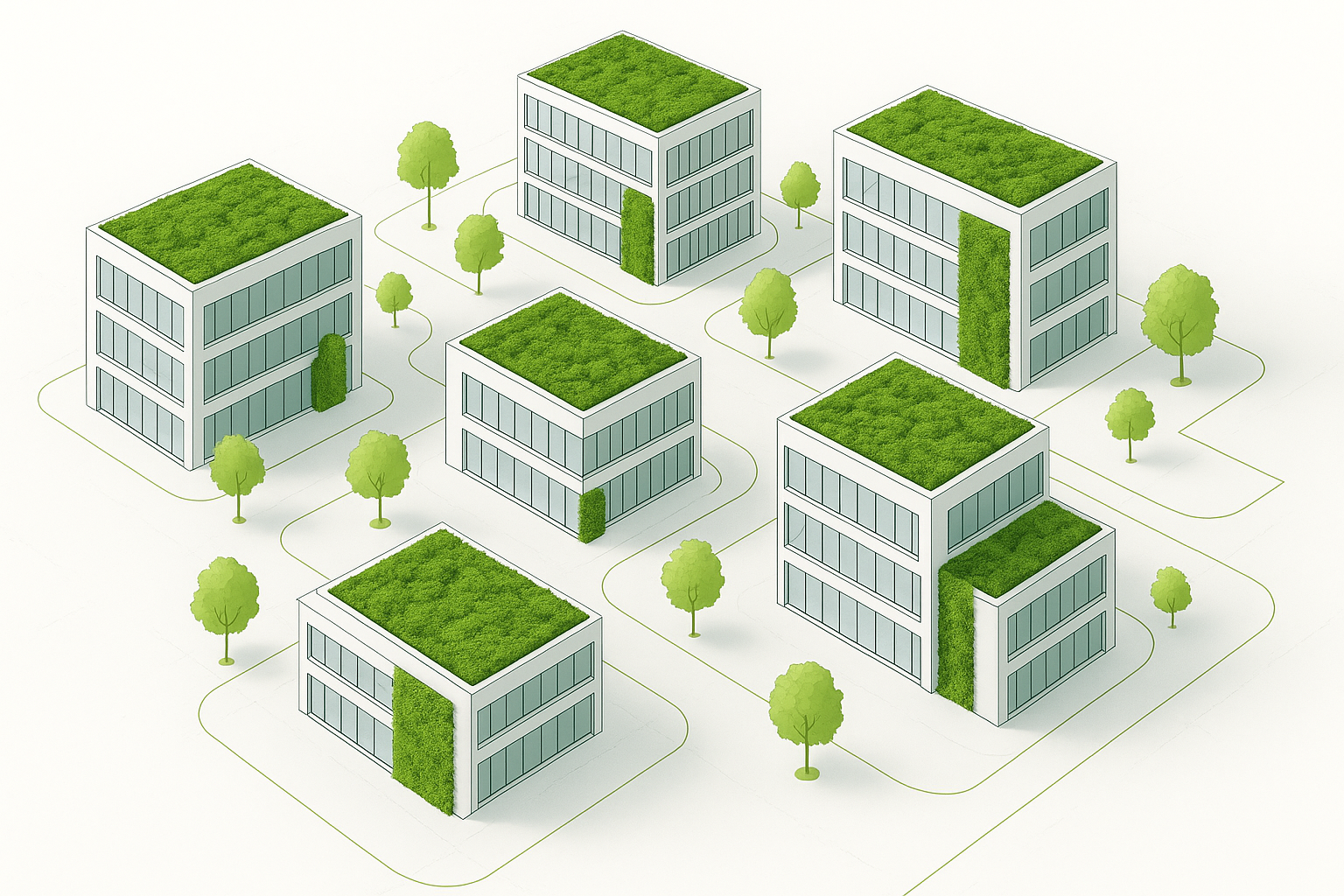
Biophilic design is not just sticking a plant in the corner. It is about weaving nature into the bones of a space so people feel healthier, calmer, and more focused. These are the big principles that make it work.
Direct Nature
Bring real, living elements into the room.
-
Plants: Green walls, potted plants, or even one big tree in the lobby change the air and the mood. I worked on a project where we added a vertical garden to a dull meeting area. It instantly became the spot where people preferred to brainstorm.
-
Water: A small fountain or aquarium softens noise and adds calm. In one office reception, the fish tank was the first thing clients commented on, not the furniture.
-
Natural Light: Big windows and skylights save on electricity and boost energy levels. Teams seated near daylight stay sharper.
-
Views: Looking out at a park or even a small courtyard is proven to reduce stress compared to staring at walls.
Indirect Nature
Use materials, colors, and patterns that echo the outdoors.
-
Materials: Wood floors, bamboo panels, or stone finishes make rooms feel grounded. Reclaimed wood also adds a sustainability edge.
-
Patterns: Nature-inspired textures like flowing lines, leaf prints, or stone-like finishes create a subtle connection.
-
Colors: Greens, browns, blues. They feel safe, calm, and balanced, especially in high-pressure workplaces.
Spatial Flow
Design the space the way nature feels—open but layered.
-
Prospect and Refuge: People need both open areas for teamwork and tucked-away corners for focus. A mix of collaborative tables and small nooks mirrors the balance of a landscape.
-
Complexity with Order: Think variety without chaos. Just like a forest has tall trees, shrubs, and ground cover working together, spaces work best with mixed textures and heights that still feel organized.
Real Example
A Toronto tech office I consulted on went all-in with biophilic design. They built a green atrium in the center, added cozy alcoves lined with plants, and let natural light flood through skylights. A water feature at the entrance set a calm tone. Within months, staff reported less stress and more focus. The design itself became part of the company culture.
Must Read: The Nature Fix by Florence Williams explores how nature impacts well-being and performance. A great read for understanding why connecting with nature makes us happier and healthier.
BIOPHILIC BENEFITS
What Companies Gain from Biophilic Design
Biophilic design in offices is not just about looks. It shapes how people feel, think, and work every day. Natural light, plants, water, and organic materials can shift a workspace from draining to energizing.
Well-being and Mental Health
Offices with greenery, daylight, or nature views lower stress and lift moods. A University of Exeter study found employees in natural settings reported up to 15 percent higher well-being. People simply feel calmer and more satisfied when surrounded by nature.
Productivity and Creativity
Research from Human Spaces showed that biophilic offices saw a 6 percent rise in productivity and 15 percent more creativity. The reason is simple: lower stress levels free up mental space, making focus and problem-solving easier.
Cleaner Air and Healthier Teams
Plants like peace lilies and snake plants absorb indoor pollutants and release oxygen. That means fewer headaches, less fatigue, and fewer respiratory problems. Staff breathe better and stay sharper through the day.
Fewer Sick Days
The American Society of Interior Designers reports biophilic workplaces can reduce absenteeism by up to 10 percent. Healthier air, better moods, and less stress translate into people showing up more consistently.
Why It Matters
Companies that bring nature into the office do more than create a nice-looking space. They build environments where employees feel good, think clearly, and want to stay. The payoff shows in morale, output, and long-term retention.
Must-Read Resource: The Nature Principle by Richard Louv discusses how interacting with nature benefits mental health. It's a great resource for understanding how natural elements can improve day-to-day well-being.
How to Bring Biophilic Design Into Your Office
Add Greenery Where It Counts
Desk Plants
Succulents, pothos, or ferns are low-maintenance and proven to cut stress while sharpening focus.
Green Walls
Vertical gardens in lobbies or open spaces create a dramatic focal point and filter indoor air.
Planters and Containers
Tall plants in big planters can break up open layouts and give natural privacy between work zones.
Let Natural Light Do the Work
Window Placement
Place desks near windows to maximize daylight. Natural light boosts mood and productivity more than any lamp.
Skylights
Perfect for large open offices, skylights bring daylight deep inside without artificial glare.
Glass Partitions
Use glass instead of solid walls so light flows freely and the office feels open.
Use Natural Materials
Wooden Furniture
Desks, shelves, and tables in real wood add warmth and texture.
Stone Features
Reception desks or accent walls in stone ground the design and bring tactile richness.
Natural Textiles
Cotton, wool, or linen upholstery softens the space and reinforces the organic feel.
Create Real Views of Nature
Indoor Gardens
Small gardens or terrariums in break areas give staff an easy, daily connection to green life.
Outdoor Spaces
Terraces or patios let employees step outside for meetings or breaks, boosting energy and well-being.
Window Views
Arrange desks so people face courtyards, trees, or rooftop gardens. Even a framed view of urban greenery helps reset focus.
Must-Read Resource: How to Grow Fresh Air by B.C. Wolverton is a great guide on choosing and caring for plants that purify indoor spaces. This book highlights plants that enhance indoor air quality and provides practical care tips.
Small Biophilic Offices: How to Get It Right (Even in Tight Spaces)
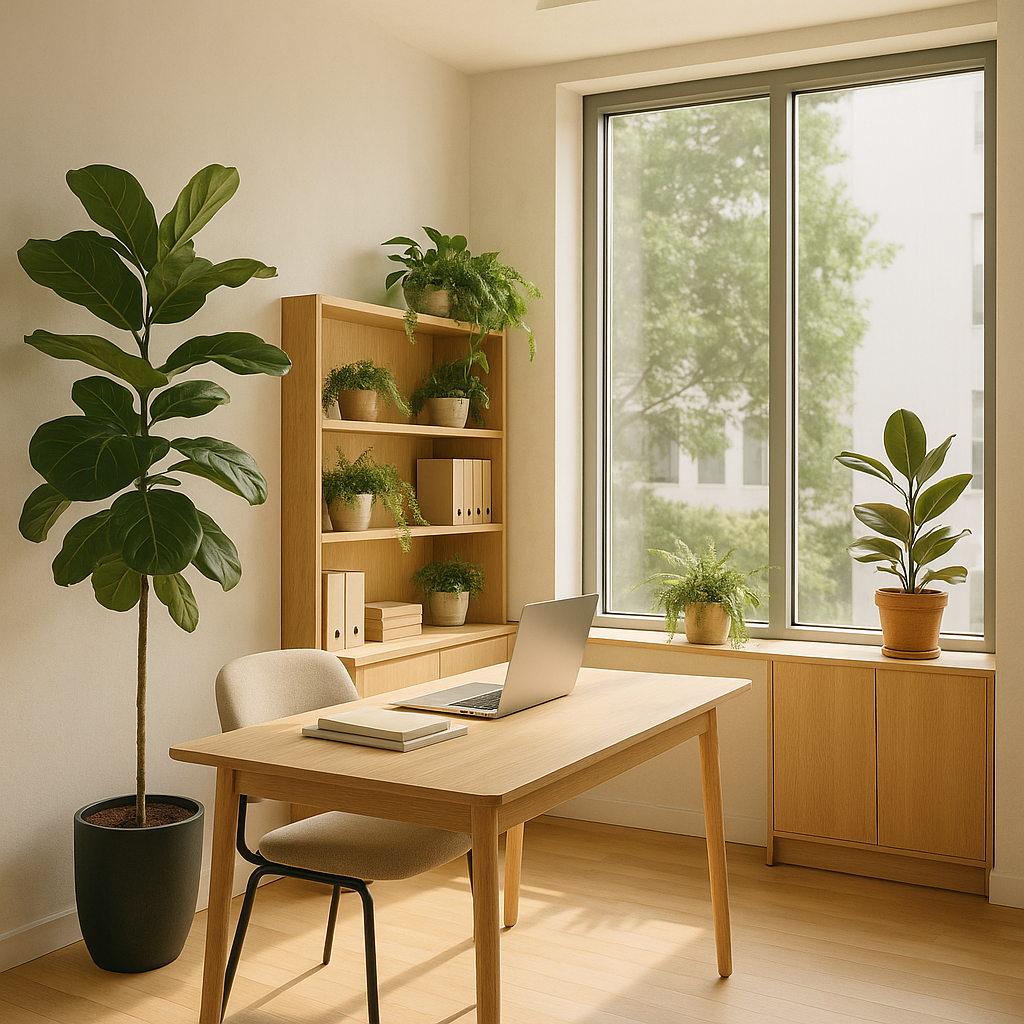
A lot of people think you need a huge space to make biophilic design work. Not true. In fact, small offices are some of the best places to do it — because every element counts more, and you notice every detail.
Here’s what actually matters when you're setting up a small biophilic office:
● Maximize Natural Light
Even if you only have one window, use it.
Skip heavy curtains. Use light-filtering blinds instead.
Position your desk to catch the daylight — it keeps your body clock in check and boosts focus.
● Bring in Real Greenery
One good plant is better than five fake ones.
Pick easy-care options like pothos, snake plants, or ZZ plants.
Place them where you actually see them while you work (not shoved in a corner).
● Choose Natural Materials
Wood desks, stone surfaces, linen fabrics — even small touches like a corkboard or a clay planter can shift the mood.
It’s about texture you can feel, not just stuff that looks "natural" on Instagram.
● Use Earthy Colors
Soft greens, muted browns, deep blues — these colors naturally lower stress.
Paint a single wall if you're renting, or just swap in a textured rug or fabric panel.
● Create a Sensory Break Zone
Even if it’s just a comfy chair with a view out the window, give yourself a spot to reset.
A tiny corner with a plant and a small lamp can make a huge difference in how refreshed you feel.
You might like: Biophilic Design: Transforming Cities with Nature-Inspired Architecture
Real-World Examples of Biophilic Offices
Amazon Spheres, Seattle
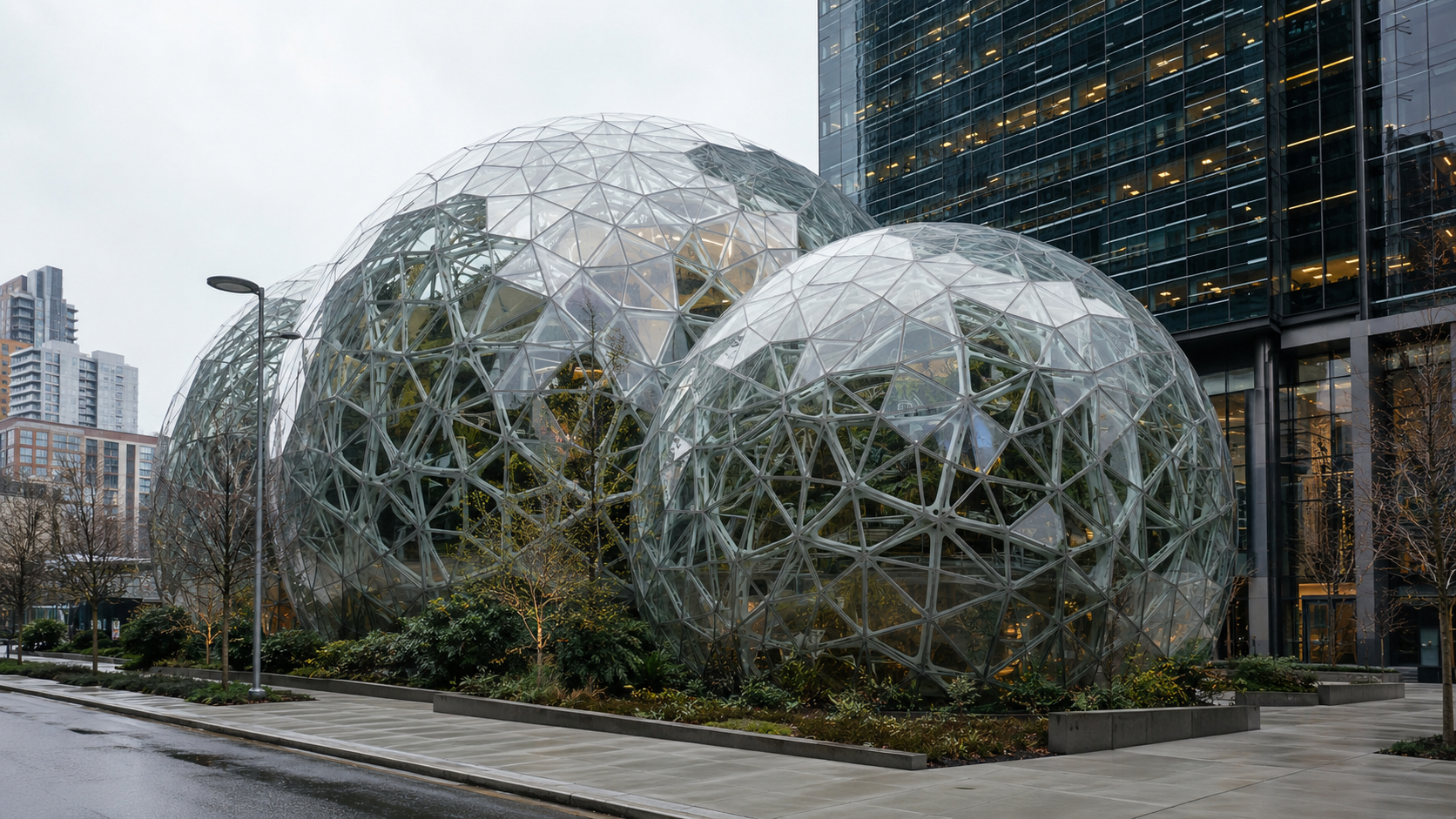
At Amazon’s Seattle campus, three giant glass domes hold more than 40,000 plants from every corner of the globe. The Spheres give employees places to work, walk, or just breathe in a tropical setting in the middle of the city. John Schoettler, Amazon’s VP of Global Real Estate, calls it “a place where employees can think and work differently, surrounded by nature.”
Googleplex, Mountain View
Google’s headquarters in California takes biophilia outdoors. Landscaped courtyards, shaded paths, and indoor-outdoor work zones are built to spark collaboration. Natural light and greenery flow into every wing of the campus. David Radcliffe, VP of Real Estate, has said these spaces are central to Google’s culture of innovation and employee well-being.

Apple Park, Cupertino
Apple Park’s ring-shaped headquarters encircles a 30-acre central park planted with thousands of drought-resistant trees. Walking trails, meadows, and sunlit interiors connect employees to the landscape every day. Tim Cook calls it one of the “greenest buildings on the planet,” designed not just for sustainability but to improve health and creativity.

Takeaway
Each of these projects shows that biophilic design is more than decoration. Plants, light, and landscape change how people feel and work. The lesson is simple: connect teams to nature, and the workplace becomes healthier and more productive.
Biophilic Zones for Work and Well-Being
The smartest way to use biophilic design is not to scatter plants randomly but to carve out distinct zones for different needs. Offices work best when people can choose where to focus, where to team up, and where to recharge. Each type of zone can lean on natural elements to do its job better.
Focus Zones
Quiet corners where people need to think clearly. Use big leafy plants to muffle background noise and wood or bamboo dividers to create a sense of privacy without shutting off light. If there’s no view of nature, bring in wallpaper or imagery that echoes landscapes. Soft, natural-toned lighting helps reduce eye strain and keeps the space calm.
Collaboration Zones
These are the energy hubs. Keep layouts open so daylight reaches everyone. Use greens and blues in furniture or walls to spark creativity. Movable planters work brilliantly here—they can frame a group meeting one day and then be shifted aside when space is needed for workshops. Plants become flexible furniture.
Relaxation Zones
No office runs at full tilt all day. People need spaces to decompress. A small water feature, even a fountain in a corner, can lower stress levels. Furnish with natural textures—wool cushions, wooden benches, cotton throws—to soften the industrial edge of most offices. Low-maintenance aromatic plants like lavender or rosemary add a subtle sensory layer.
Why Zoning Works
Different tasks need different atmospheres. Focus needs quiet and enclosure. Collaboration needs energy and openness. Relaxation needs comfort and calm. Biophilic elements are not decoration here—they are tools to shape how people feel and perform in each space.
Related: Biophilic Office Design: Creating Healthier, Happier Workspaces
Pro Tips for Bringing Biophilic Design Into the Office
Start Small with Desk Plants
Don’t try to build a jungle overnight. Begin with easy desk plants like snake plants, pothos, or succulents. They take little effort and survive even in low light. Once people see the boost in mood and focus, you can scale up to bigger moves like a green wall or indoor garden.
Play with Light Using Mirrors
If your office is short on daylight, mirrors can help. Placed opposite windows, they bounce natural light deeper into the room. This trick not only makes spaces feel brighter and more open but also reduces the need for harsh artificial lights.
Engage More Than Sight
Nature is not just visual. Add a small fountain for sound, or use natural scents like lavender or eucalyptus with essential oil diffusers. Engaging multiple senses creates a calmer, more restorative environment than visuals alone.
Let People Personalize Their Space
Biophilic design works best when it feels personal. Encourage staff to add plants, wooden organizers, or even nature-themed art at their desks. When people shape their own environment, they’re more likely to feel connected to it.
Why It Works
-
Better Well-Being: Natural elements cut stress and lift mood. Happier people stay longer and do better work.
-
Higher Productivity: Plants and daylight sharpen focus and spark creativity.
-
Cleaner Air: Plants filter toxins and improve oxygen, reducing fatigue.
-
Fewer Sick Days: Healthier spaces mean healthier teams, which means fewer absences.
-
Simple to Apply: Even small moves—like a desk plant and smarter light placement—make a visible difference.
FAQ
What is biophilic office design?
It’s the practice of weaving natural elements like plants, light, wood, and water into office spaces to boost well-being and productivity.
Why is biophilic design important in offices?
Because people spend most of their day indoors. Natural elements reduce stress and make work environments healthier.
Who came up with the idea of biophilia?
Biologist Edward O. Wilson popularized the concept in his 1984 book Biophilia.
How does biophilic design help employees?
It improves focus, reduces stress, enhances creativity, and supports overall health.
Is biophilic design just about plants?
No. It includes natural light, ventilation, water features, natural textures, and materials like wood or stone.
What are the core principles of biophilic design?
Direct nature (plants, light, water), indirect nature (patterns, textures, natural colors), and spatial design (open views, cozy refuges).
How can I add biophilic design on a budget?
Start with desk plants, mirrors to amplify light, and wood or stone accents.
Which plants are best for offices?
Snake plants, pothos, peace lilies, and ferns. They are hardy, low maintenance, and improve air quality.
Do green walls really help?
Yes. They filter air, reduce noise, and create strong visual impact.
What role does lighting play in biophilic offices?
Natural light improves mood and sleep. Layered lighting mimics daylight rhythms, keeping people alert.
Can biophilic design reduce absenteeism?
Studies show healthier workspaces lead to fewer sick days—some estimate reductions up to 10%.
Does biophilic design improve productivity?
Yes. Research links biophilic offices to 6% higher productivity and 15% more creativity.
What about air quality?
Plants remove toxins and boost oxygen levels, reducing fatigue and headaches.
How can sound be biophilic?
Running water, rustling plants, or even natural soundscapes reduce stress and mask distracting noise.
Can scent be used in biophilic offices?
Yes. Lavender, eucalyptus, or rosemary scents can create calm or boost focus.
Is biophilic design only for big companies?
No. Even a single desk plant and natural light positioning make a difference in small offices.
How does biophilic design affect creativity?
Natural settings stimulate the brain, helping people problem-solve and think more openly.
Does furniture matter in biophilic offices?
Yes. Use natural wood, bamboo, or recycled materials to create warmth and authenticity.
What colors fit biophilic design?
Earth tones like greens, browns, and blues, with muted accents inspired by nature.
What is a focus zone in biophilic offices?
Quiet areas with plants, soft light, and natural dividers that help employees concentrate.
What is a collaboration zone in biophilic offices?
Open, light-filled spaces with greenery and flexible furniture for group work.
What is a relaxation zone in biophilic offices?
Break areas with water features, natural textures, and plants that help employees recharge.
What are real-world examples of biophilic offices?
Amazon Spheres, Apple Park, and Googleplex all integrate nature heavily into their campuses.
Does biophilic design save money?
Yes. Better air quality and light reduce energy costs and improve employee retention.
Can biophilic offices attract talent?
Definitely. A green, inviting office signals a company values health and sustainability.
Is biophilic design linked to sustainability?
Yes. It often uses reclaimed wood, recycled materials, and energy-efficient design.
What mistakes should be avoided?
Overloading with plants, fake finishes, poor lighting, and ignoring comfort.
How do mirrors help in biophilic offices?
They bounce daylight deeper into spaces, brightening dark corners without more electricity.
What about acoustics?
Plants and natural materials absorb noise. Without them, concrete and steel create echoes.
How do you bring nature into windowless offices?
Use green walls, nature imagery, water features, and natural textures like wood and stone.
Can employees personalize biophilic design?
Yes. Allowing staff to add small plants or natural decor boosts ownership and connection.
What is indirect experience of nature?
When materials, textures, or patterns mimic nature without being living elements.
Do employees notice biophilic design?
Yes. Most report feeling calmer, more focused, and happier in nature-filled offices.
Is maintenance an issue?
Not if you choose low-care plants and durable natural finishes.
Does biophilic design work in urban offices?
Yes. It can turn even high-rise offices into healthier, calmer environments.
Can it be combined with other styles?
Yes. It works with industrial, modern, or even minimalist interiors when carefully balanced.
Is it a passing trend?
No. It’s backed by science and increasingly built into major workplace standards.
Where should a company start?
Begin small—plants, better daylight access, and natural materials—then expand into larger interventions like green walls or outdoor spaces.
Keep Learning
Biophilic Design and Architecture
- Biophilic Design: Enhancing Well-being Through Nature in Architecture and Interior Design
- Biophilic Design: How Biophilic Design is Reshaping Our Cities
- Biophilic Architecture
- Biophilic Architecture vs. Sustainable Architecture
- Biophilic Interior Design: Nature’s Influence on Indoor Spaces
- Biophilic Cities
- Biodegradable Cement: Best Sustainable Alternatives to Traditional Concrete
Recommended Books
Books:
- Biophilia by Edward O. Wilson
Why you should read it: This foundational book introduces the biophilia concept and explores our deep-rooted connections with nature. - The Nature Fix: Why Nature Makes Us Happier, Healthier, and More Creative by Florence Williams
Why you should read it: Gain insights into how incorporating nature into daily life can significantly enhance well-being and productivity. - The Nature Principle: Reconnecting with Life in a Virtual Age by Richard Louv
Why you should read it: Discover practical strategies to bring nature into your life and workspaces for improved health and happiness. - How to Grow Fresh Air: 50 House Plants that Purify Your Home or Office by B.C. Wolverton
Why you should read it: Learn which plants are best for purifying indoor spaces and how to care for them effectively.