
Small Chicken Coop Ideas for Small Backyards
(Plans + Layouts That Don’t Waste Space)
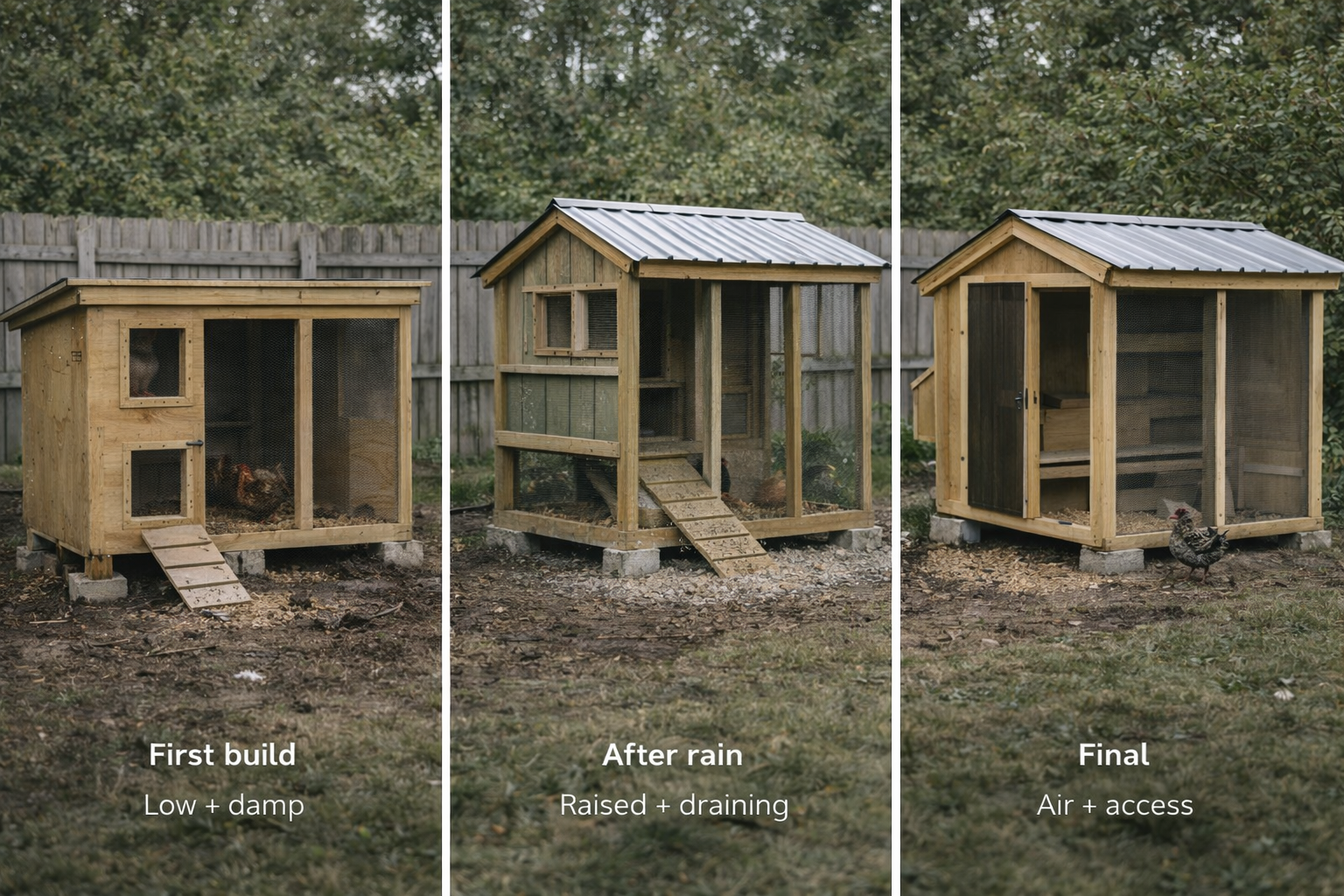
I started with a tiny coop because that’s what the yard allowed. Tight corner, fence on two sides, neighbors close enough that noise and smell mattered. The first version “worked.” Birds slept. Eggs showed up. Then a wet month hit and the whole thing turned into a little damp box you had to crawl into like you were being punished.
The second one took the same footprint but behaved totally different. Roof threw water away. The run stayed drier because it had cover where it needed it. The clean-out door was big enough that you could reach corners without doing yoga. That’s basically the pattern with small chicken coop designs: you don’t win by making it cute. You win by making the boring moves fit a small footprint.
What this covers
- Small chicken coop ideas (from simple to more involved) that actually fit a small backyard
- Compact chicken coop layouts that save space without making cleaning miserable
- Small chicken coop and run ideas: how to keep the run from becoming mud
- Bantam chicken coop tweaks (what changes, what doesn’t)
- Portable / movable small chicken coop plans (when it helps, when it’s a lie)
- Mini chicken coop plans: where “tiny” starts backfiring
The misunderstanding that keeps small coops annoying
People treat “small chicken coop ideas” like it’s mostly about squeezing the box smaller. Then they’re shocked when the box is impossible to clean, smells faster, and the birds ignore half the space.
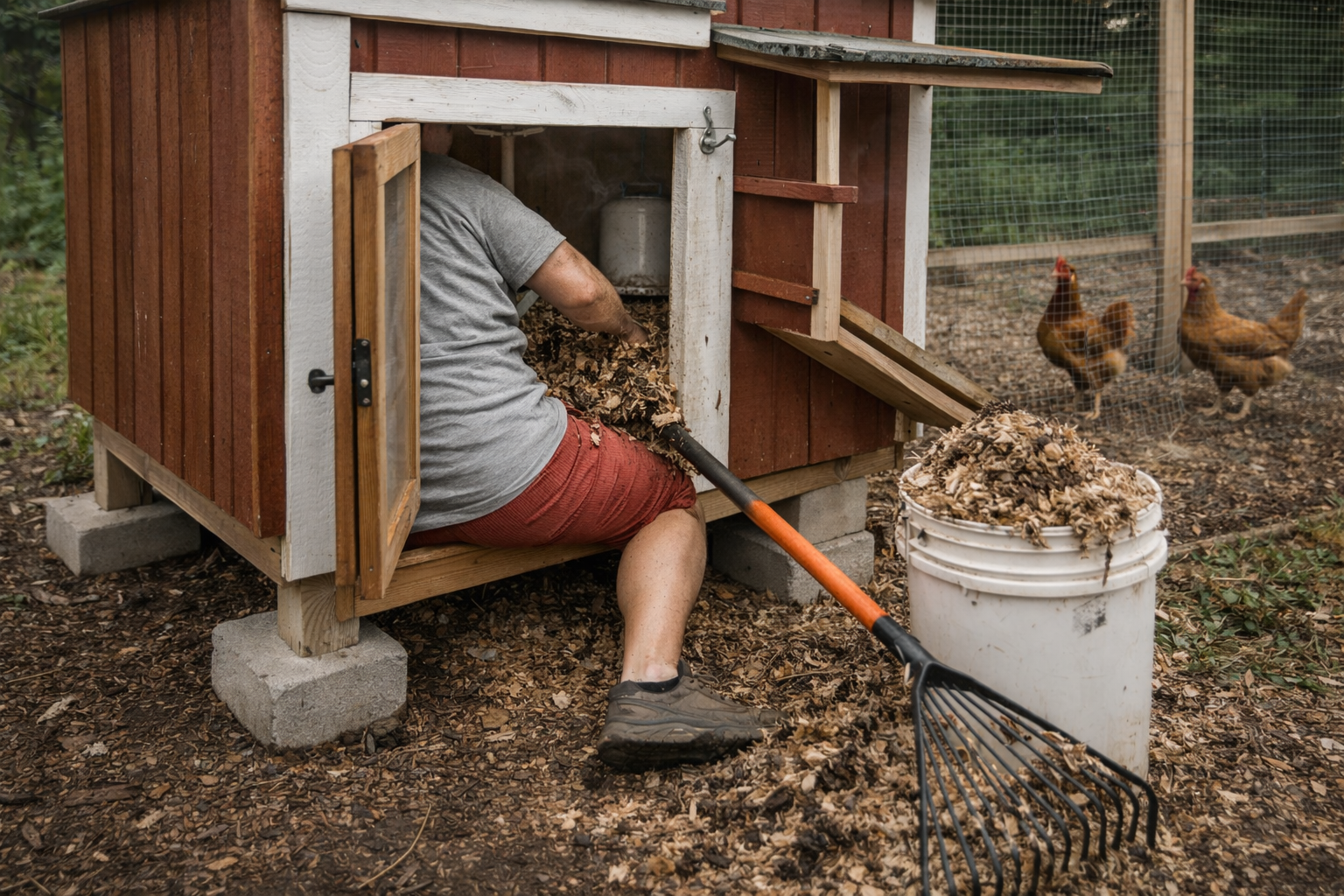
Small coops don’t fail because they’re small. They fail because the maintenance path doesn’t fit. Your body has to fit. A rake has to fit. Bedding has to come out. Air has to move. Water has to get thrown away from the base. If any of that is blocked, the coop turns into a chore.
So the goal isn’t “tiny.” The goal is compact, but serviceable.
See: DIY Chicken Shelter: Build a Safe, Dry Coop Without Overthinking It
Quick sizing reality
(so the plans make sense)
Backyard numbers get argued forever online, but most of the conflict is really about management style: night-only coop with outdoor access daily vs. birds locked in for long stretches, dry climate vs. long wet winter.
A safe baseline you’ll see in multiple extension references is roughly 3+ sq ft per bird inside for typical backyard setups (more if they spend more time inside), and then your run size and run management matter as much as the coop footprint.
Inside layout is where small coops either behave or get gross. The basics that don’t bite later:
- Roost space: plan roughly 8 inches per bird as a starting point, and don’t stack roosts so droppings land on birds below.
- Nest boxes: roughly 1 box per 4–5 hens is a common ratio; more doesn’t hurt, but it eats space fast in a small coop.
- Ventilation: you want air exchange without a direct draft blasting the roost at night.
Small chicken coop layout
The four shapes that keep repeating
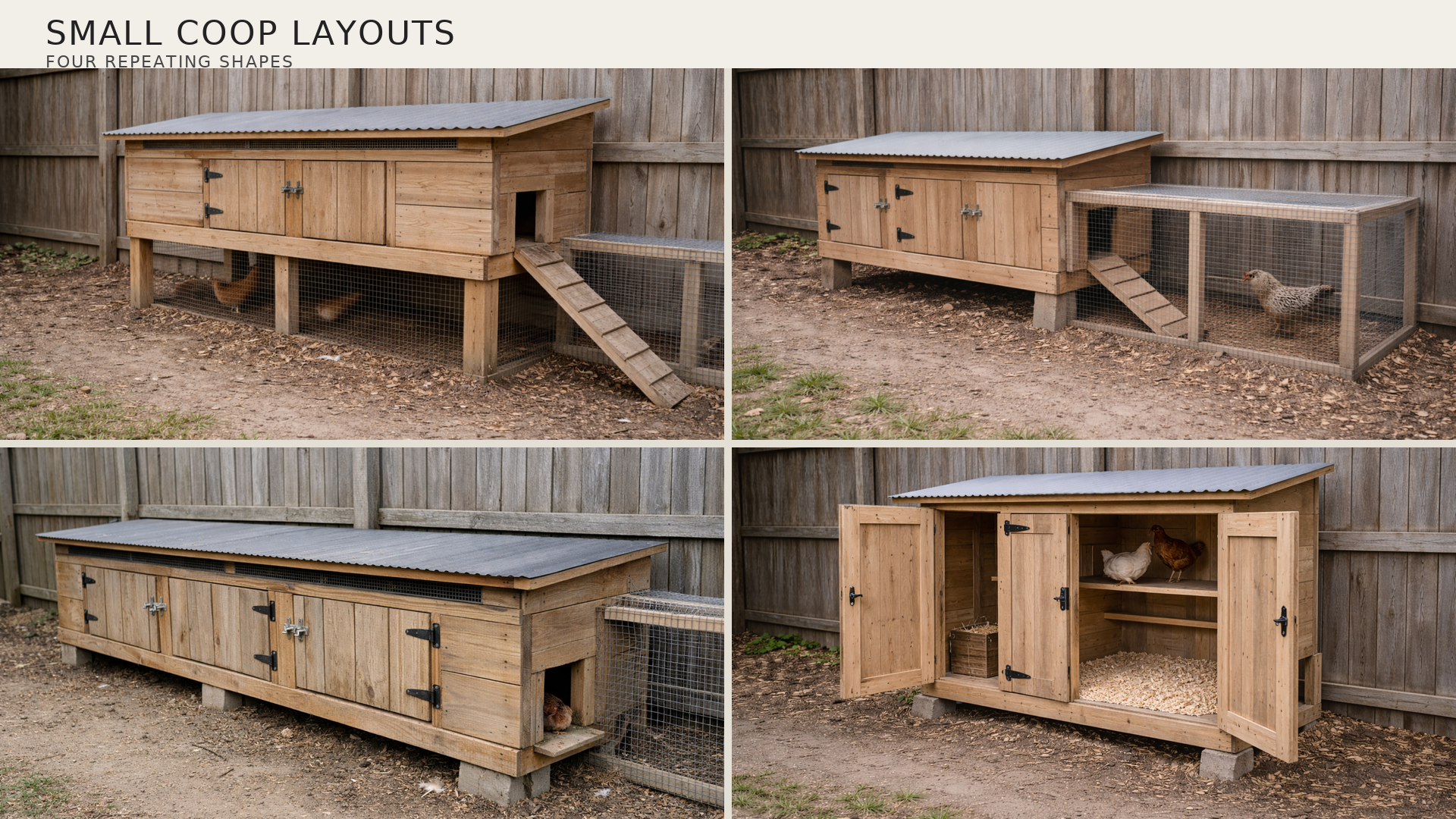
After a few builds, most “small backyard chicken coop plans” fall into one of these shapes. The details change. The shape stays.
Layout A: Raised coop with run underneath
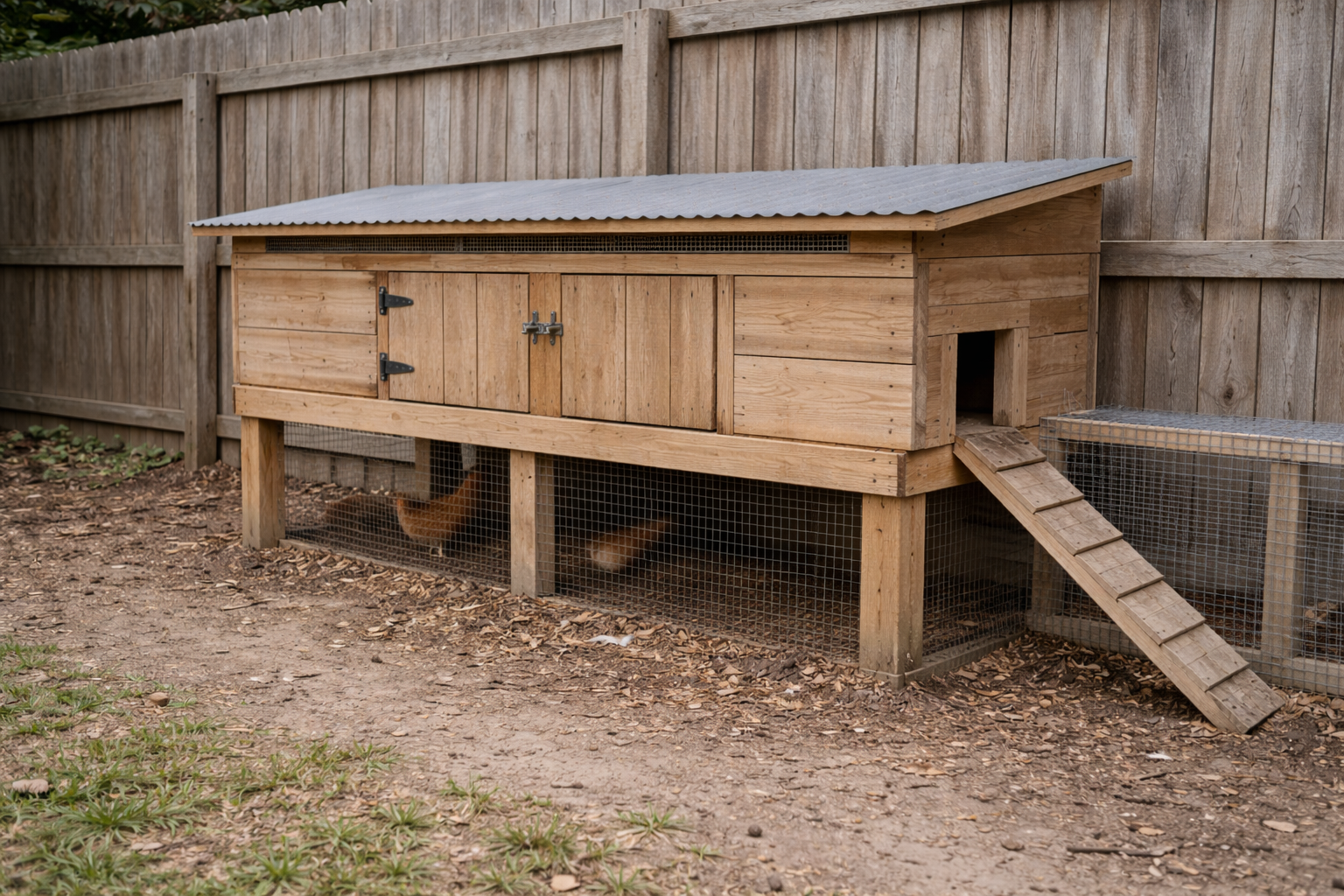
This is the classic small-yard move because it uses vertical space. The run gets shade and rain cover under the coop, and the coop stays off damp ground.
Where it shines: when your run footprint needs to stay tight and you want the birds to have a dry “standing zone.”
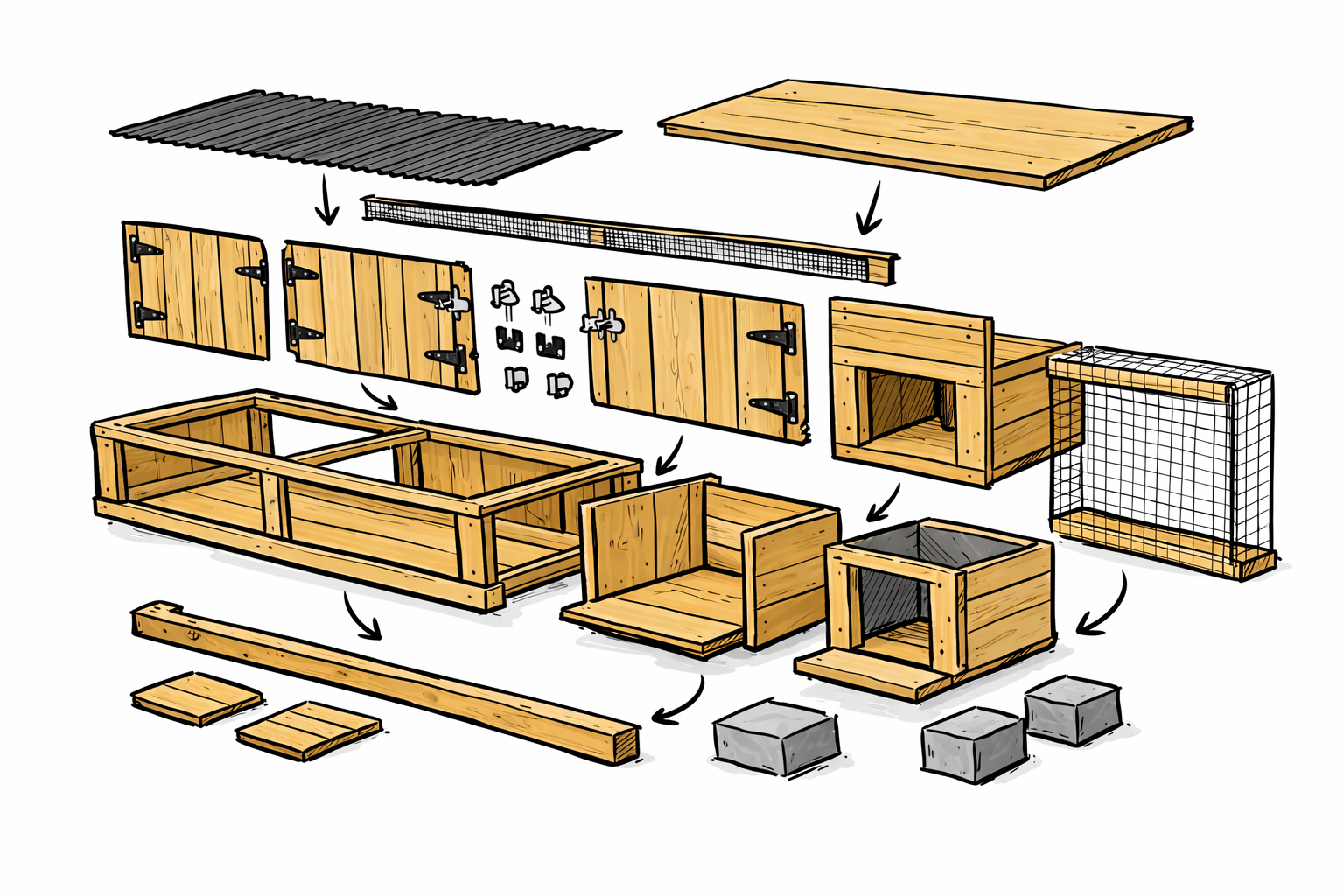
Where it backfires: when the underside becomes a low, wet, airless zone. That’s when you get mud and smell anyway.
Fix that makes “run under the coop” work: treat it like a covered porch, not “the whole run.” It’s the high-traffic strip that gets wrecked first.
-
Keep it rakeable. If a rake can’t reach, it turns into a wet poop trench.
-
Base it on purpose. Chips or sand or gravel—pick one and plan to refresh it.
-
Stop roof water dumping there. Overhang / drip edge / cheap gutter. Move the drip line away.
-
Don’t box it in. Covered is good. Sealed = stale + damp.
Why a separate run helps: under-coop is the “bad weather zone.” The main run is the “daily life zone.” If you make the porch the whole run, it gets trashed and stays trashed.
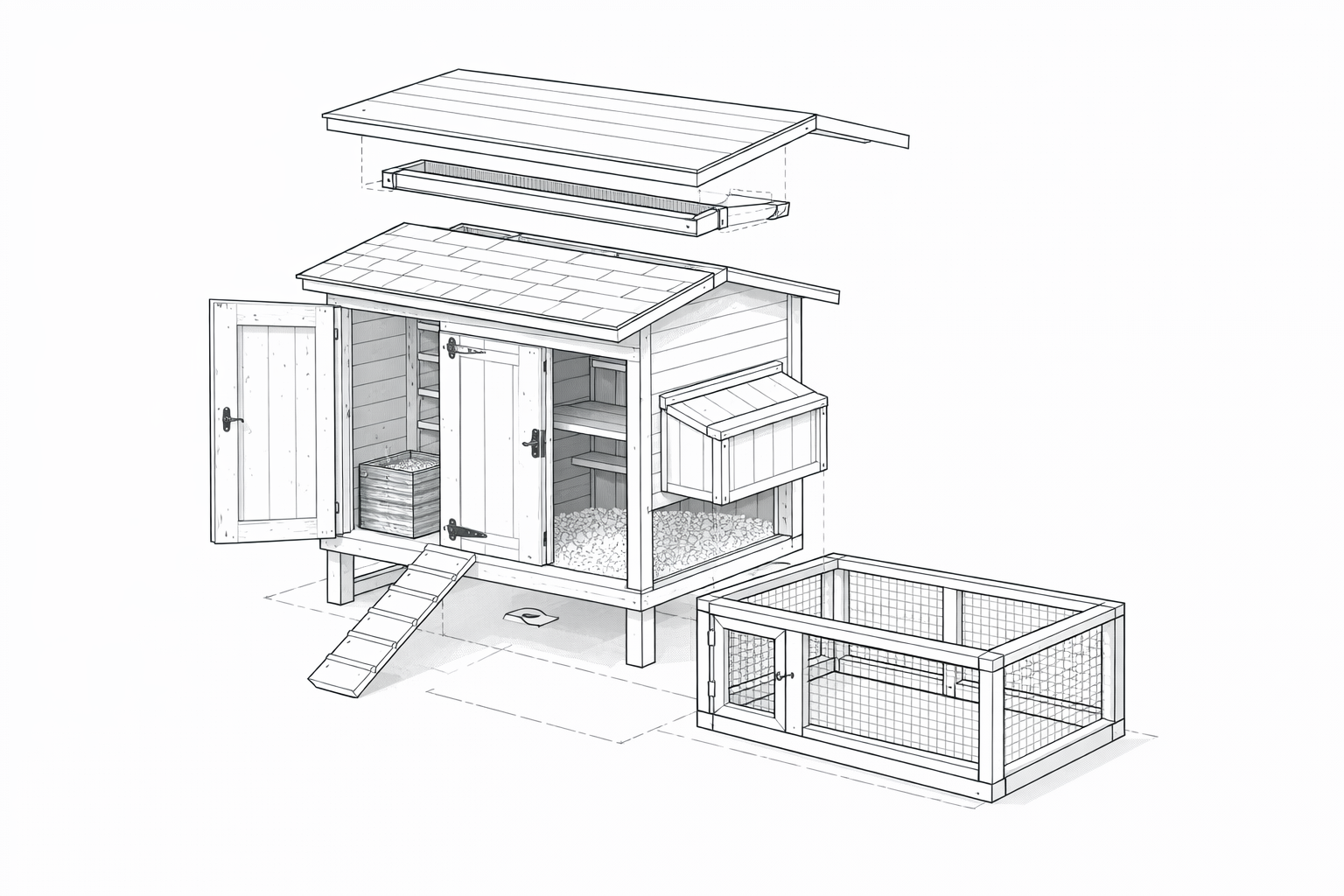
Example (small backyard):
4×6 raised coop. Under it: a 2-ft deep covered strip with chips you can rake. Roof drains to the outside, not into the strip. Then a simple rectangle run beside it (even 4×8) for space. Birds use the porch when it rains, and the main run doesn’t turn into soup.
And yeah—don’t copy a stock plan. Swap the run to the left, flip the roof slope, change door placement. Same logic, different yard.
Layout B: Ground-level coop + attached narrow run

Easier build. Easier access. Harder to keep dry if the run is uncovered and the yard already holds water.
Where it shines: quick builds, simple framing, easy clean-out.
Where it backfires: when the base sits on soil and splashback keeps the bottom edge wet.
Fix that keeps it from rotting: either lift the coop onto skids/blocks, or build a simple dry pad under it. Ground contact is where “cheap coop” becomes “why is the bottom edge always black?”
Layout C: “Slim” coop along a fence (long and shallow)
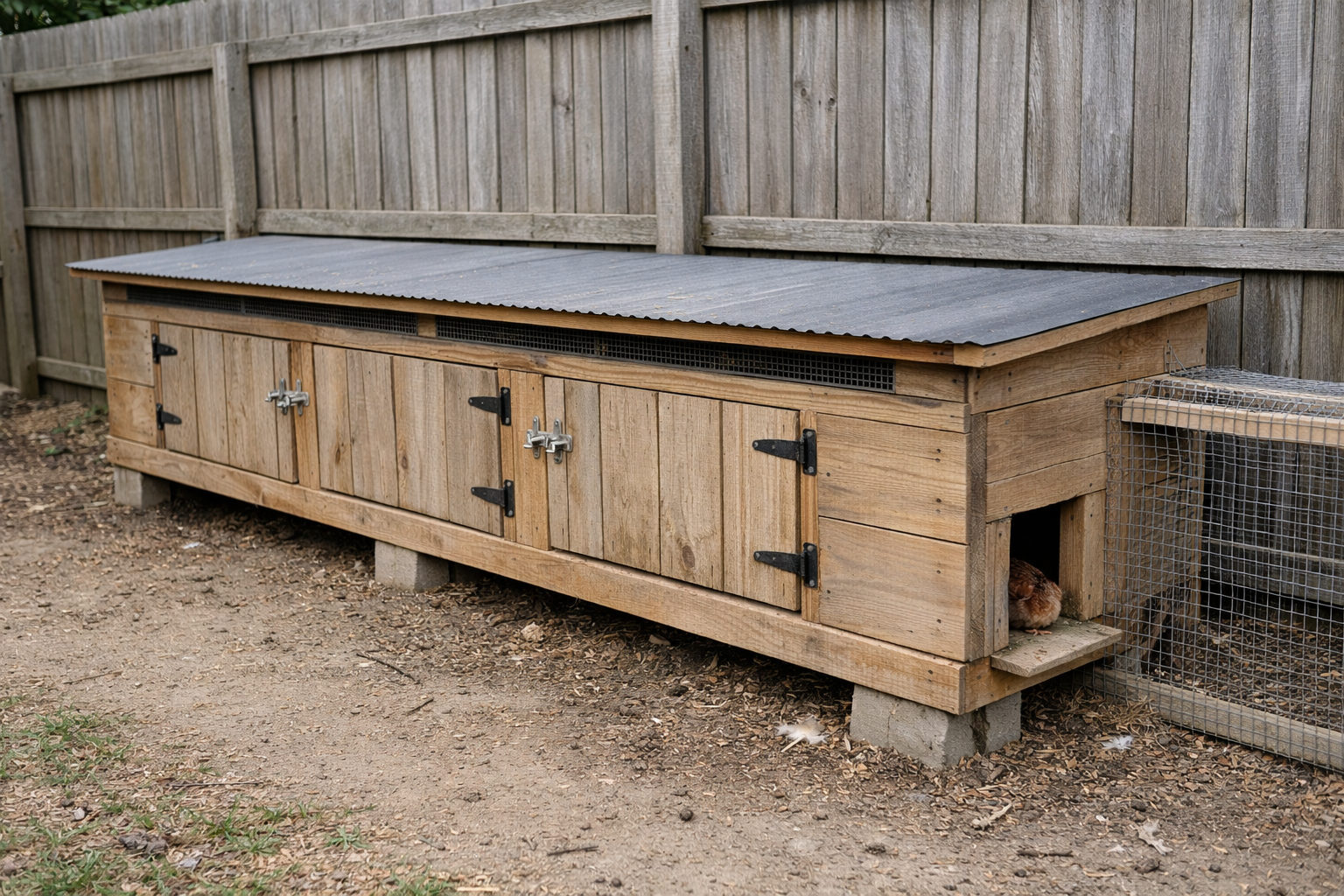
This is the best small-backyard move when depth is the enemy. You keep it shallow so you can reach everything without climbing in.
Where it shines: corners and side yards where you want a long wall for access doors.
Where it backfires: if you make it too narrow for roost spacing and airflow.
Rule that saves this layout: pick your roost plan first. If your depth can’t comfortably fit roost + poop board + clearance, you’re building a headache.
Layout D: Small walk-in chicken coop plans (micro walk-in)
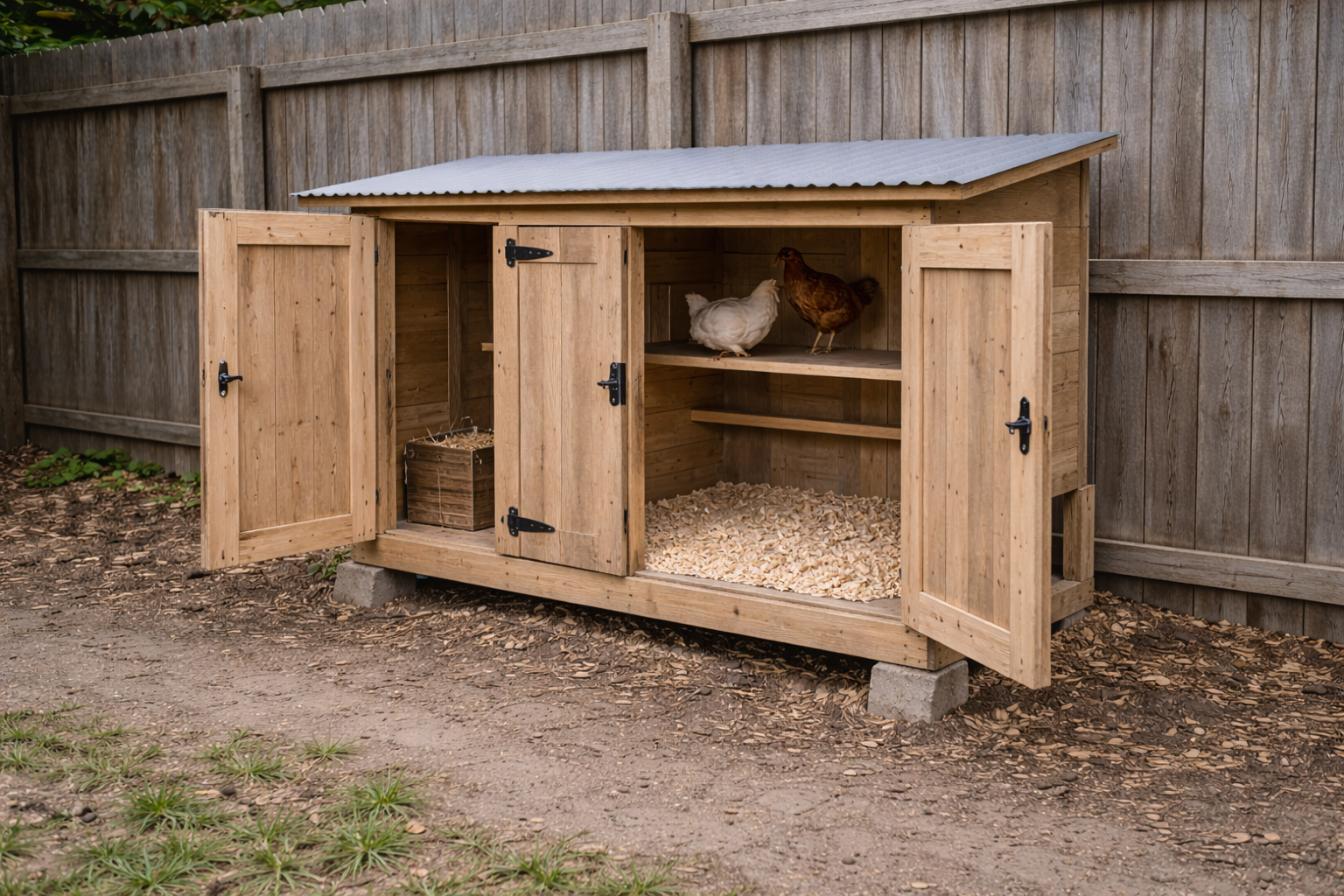
People assume walk-in means “big.” Not always. A micro walk-in can stay compact if you stop wasting volume. The payback is cleaning and access. That’s the whole point.
Where it shines: long-term keeping, winter clean-outs, and not crawling forever.
Where it backfires: when headroom is fake and you still can’t reach corners.
If you can’t stand, at least make the access wall open wide. Small walk-in that isn’t actually walk-in is the worst of both worlds.
RECOMMENDED TOOL
You can absolutely call a book a “tool.” In practice, that’s what it is: a reference you keep open to stop yourself from building the same dumb problems over and over.
If you want one thing that works as a desk + garage reference (planning, basic layout, basic “don’t do that” decisions):
→ Best Chicken coop building book (Amazon )
Three shelter builds that keep showing up
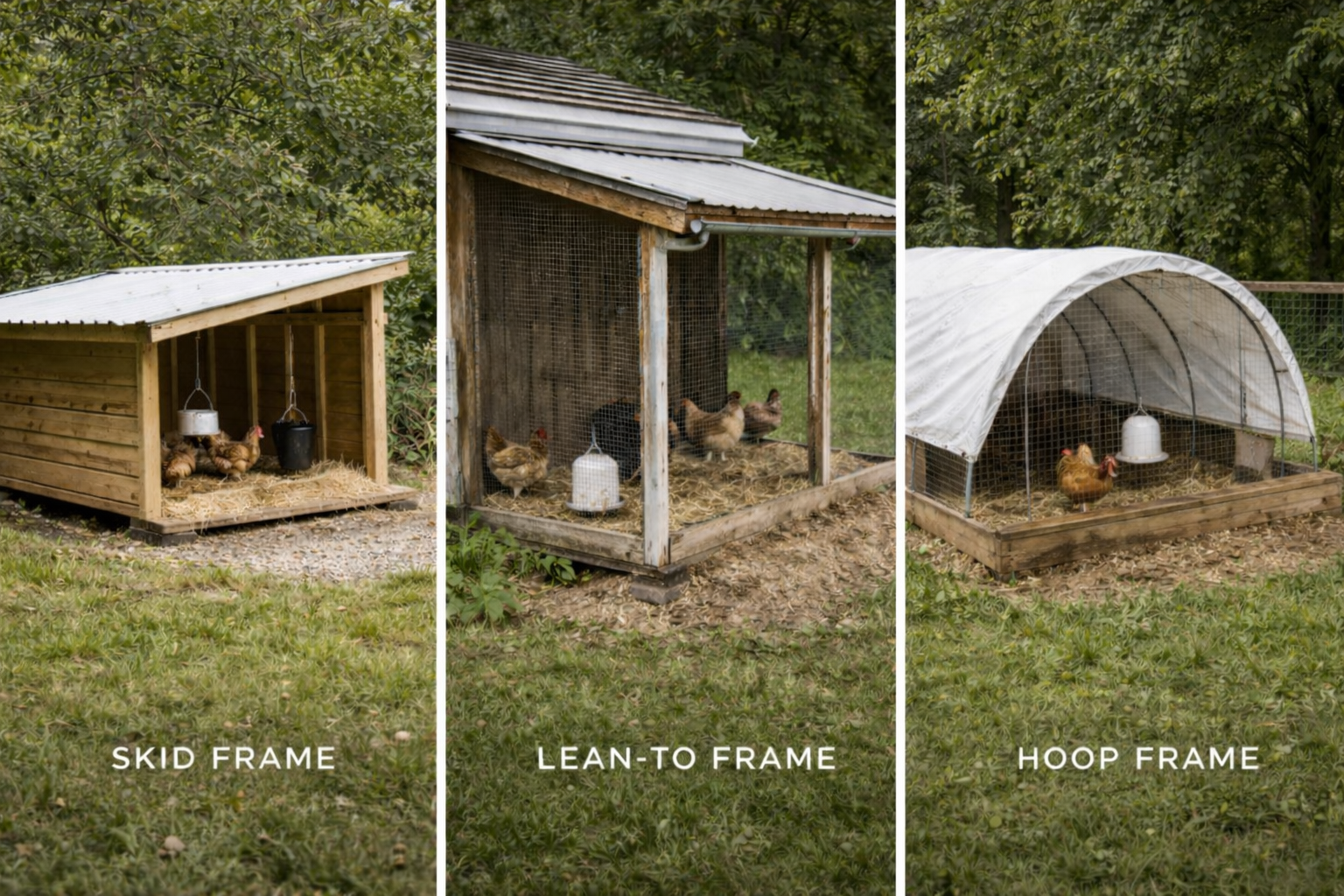
(because they don’t backfire)
After building a few of these in different yards, I stopped thinking “cute coop idea” and started thinking what shape survives the yard. These three frames keep repeating for a reason.
Skid frame — the one that quits fighting mud
The first coop I set straight on soil looked fine… until fall. Entrance stayed damp. Bedding never really dried. On skids, the coop stops caring about uneven/wet ground because air and water can move under it.
The fix I kept making after winters was simple: more roof overhang + a solid step pad so the entry doesn’t turn into a trench.
Lean-to frame — fast, but roof water will punish you
Works great when you’ve got a fence or shed wall to lean off. Goes up quick, stays out of the way. The failure is always the same: roof dumps water into the standing area and you end up with a wet, smelly corner.
The versions that lasted had a roof line (or gutter) that throws water away from the entrance. If your roof drains into the run, you’re feeding the mud pit on purpose.
Hoop frame — quick coverage, only reliable with a real base
Hoops are fine for shade and rotation. The problem isn’t the hoop — it’s the bottom edge working loose in wind over time until something tears.
The ones that stayed put had a wood base frame + solid anchoring. Stakes alone worked… until storms.
For a 2–6 chicken coop, picking the right frame first saves you the “why is this always damp?” rebuild later.
Compact chicken coop plans: 10 small designs
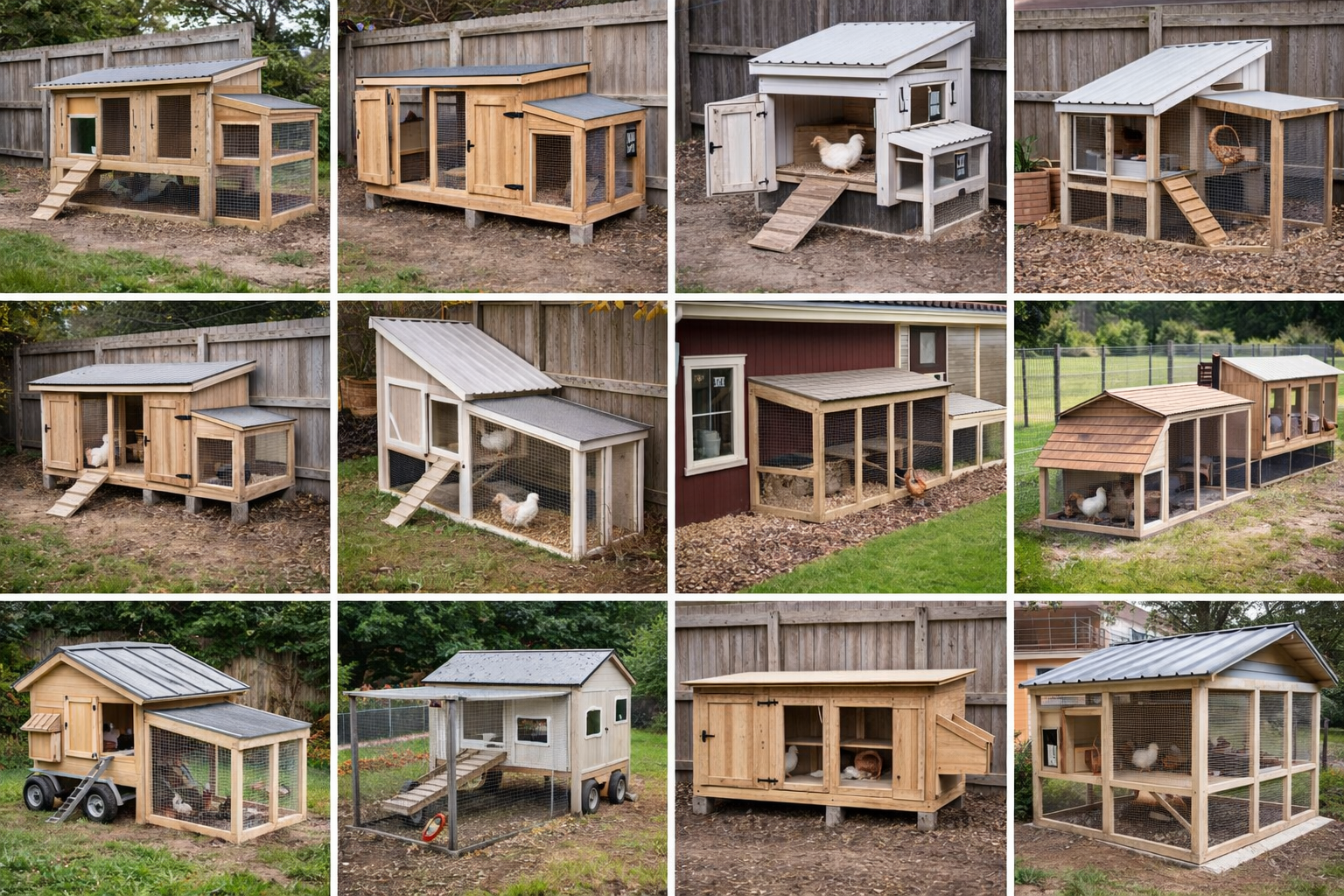
(simple → more involved)
These are “idea-level plans.” Not full blueprints. Enough to pick a direction and sketch your version. Because the yard is always the boss.
1) The 4×6 raised box (simple small chicken coop plan)
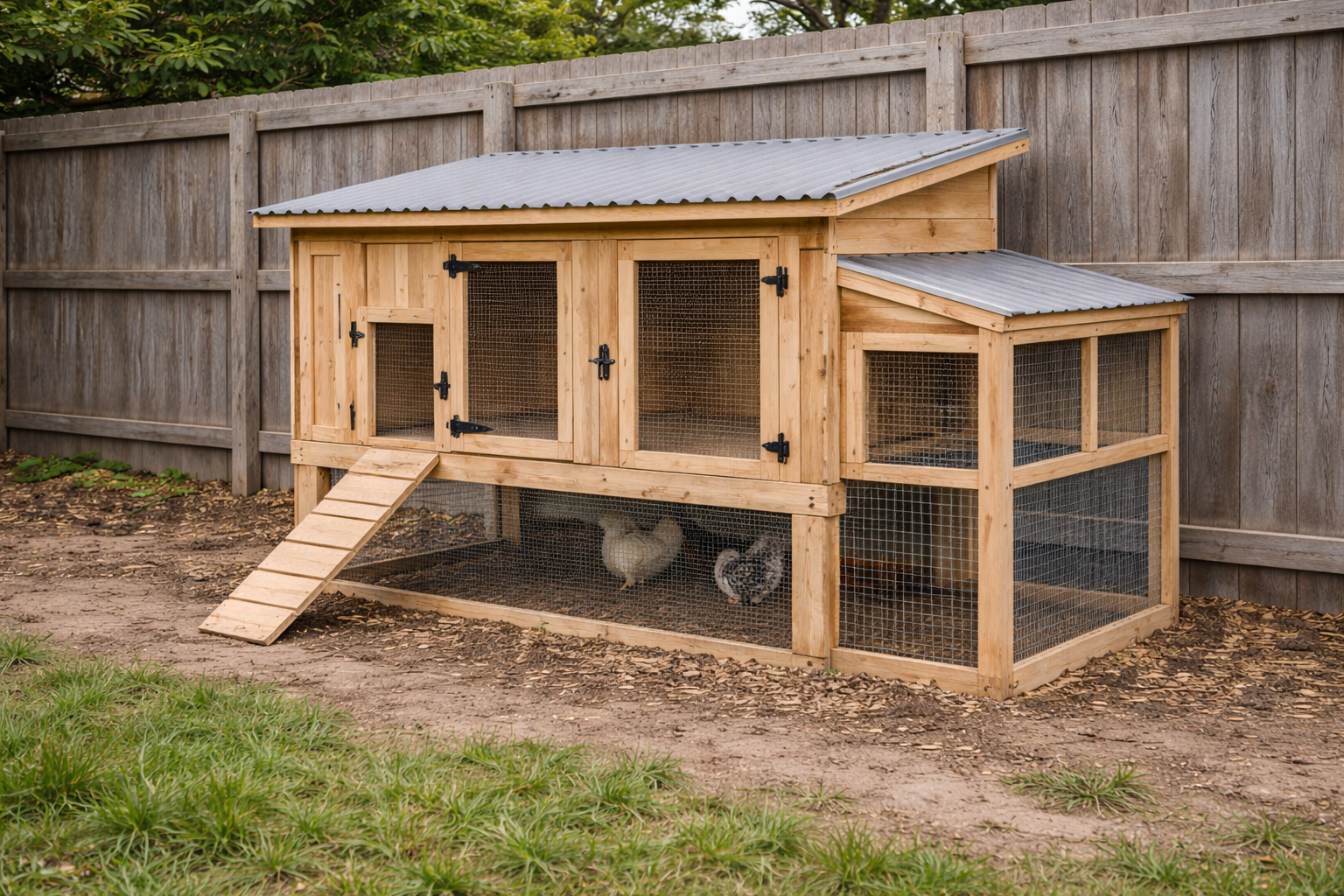
Coop footprint around 4×6, raised on posts or skids, with a run tucked under. Works well for small flocks if you keep access doors big and you manage the run base so it doesn’t become a damp pit.
2) The 4×8 raised box (still compact, less cramped)
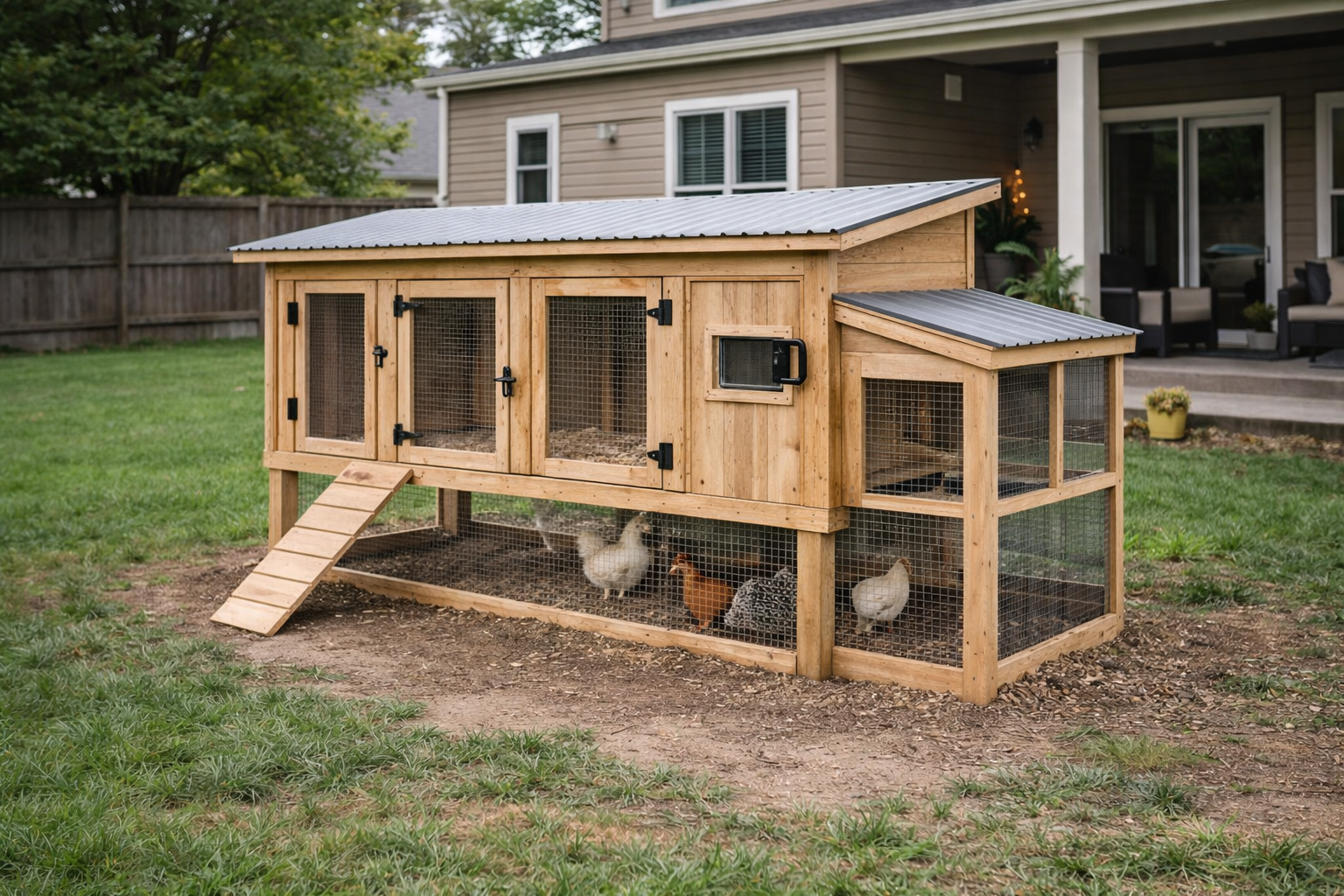
Same concept, just less tight inside. If you’ve ever had to scrape a corner you can’t reach, you stop trying to make everything tiny.
3) Fence-line “slim coop” (reach-everything layout)
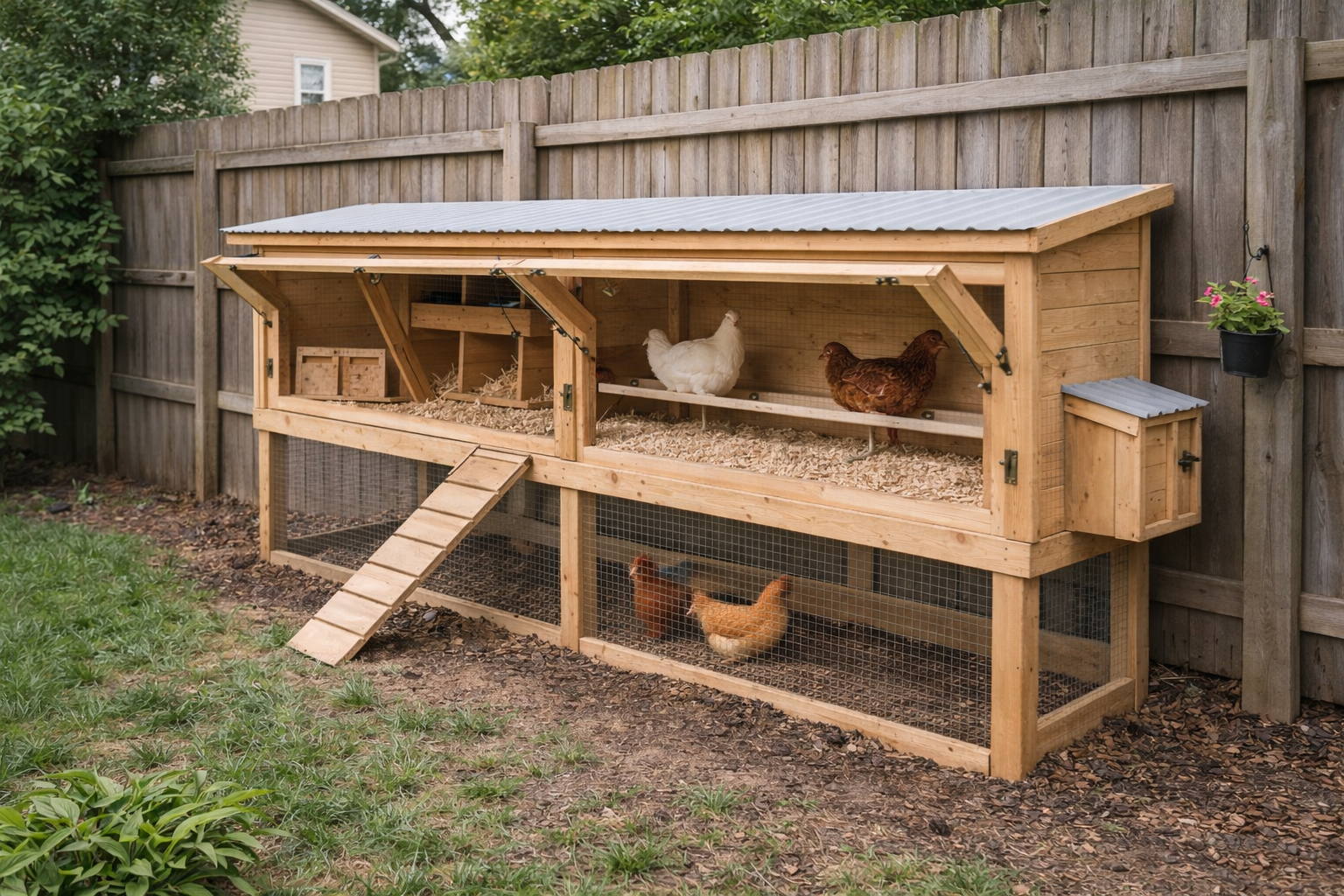
Long, shallow coop (think 18–24 inches deep) near a fence, with a full access wall that opens wide. This is the layout that makes maintenance feel normal.
4) Corner wedge coop
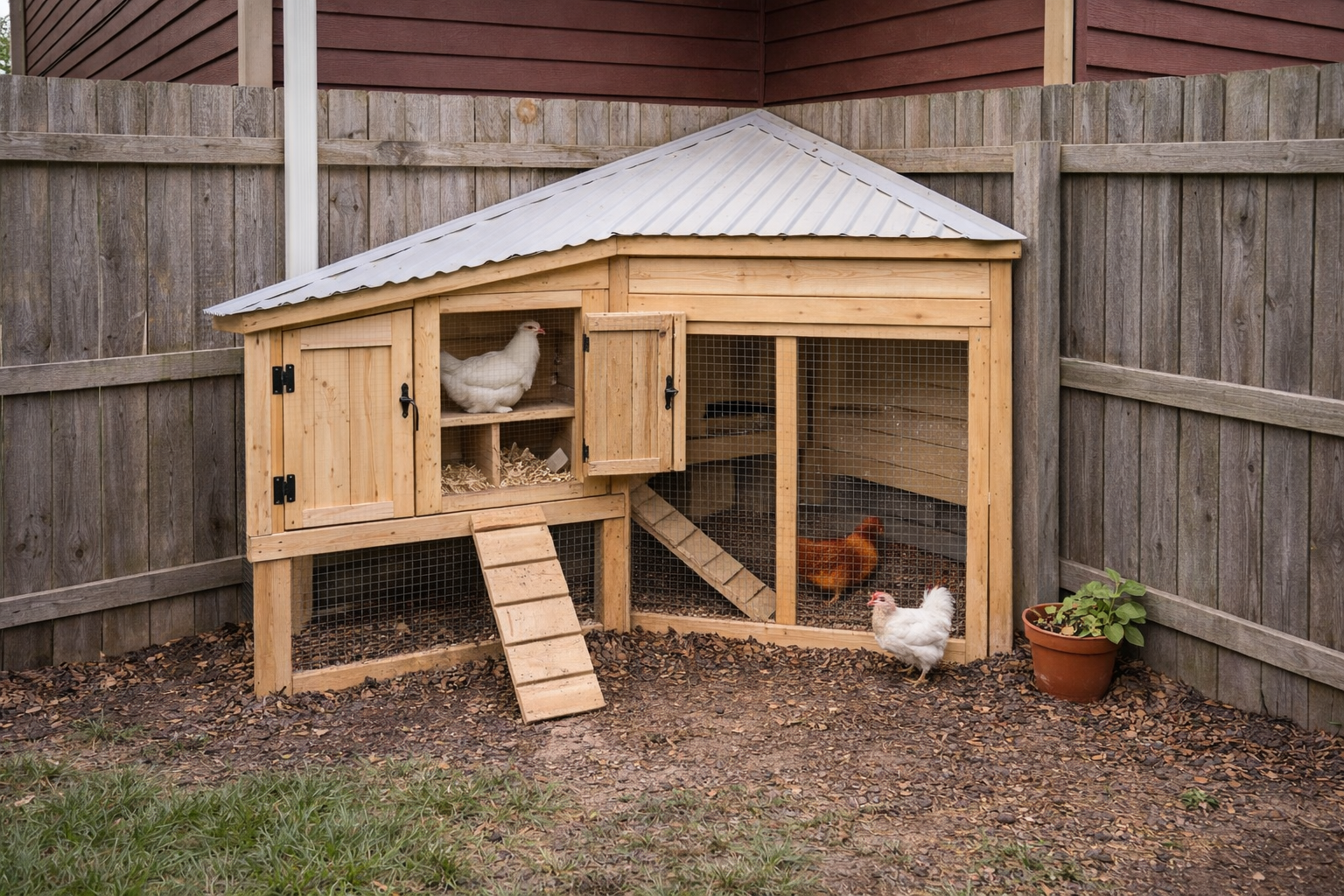
Uses a corner that’s dead space anyway. The trick is keeping roosts and nesting accessible and not trapping airflow in the point of the wedge.
5) Lean-to coop + covered run strip
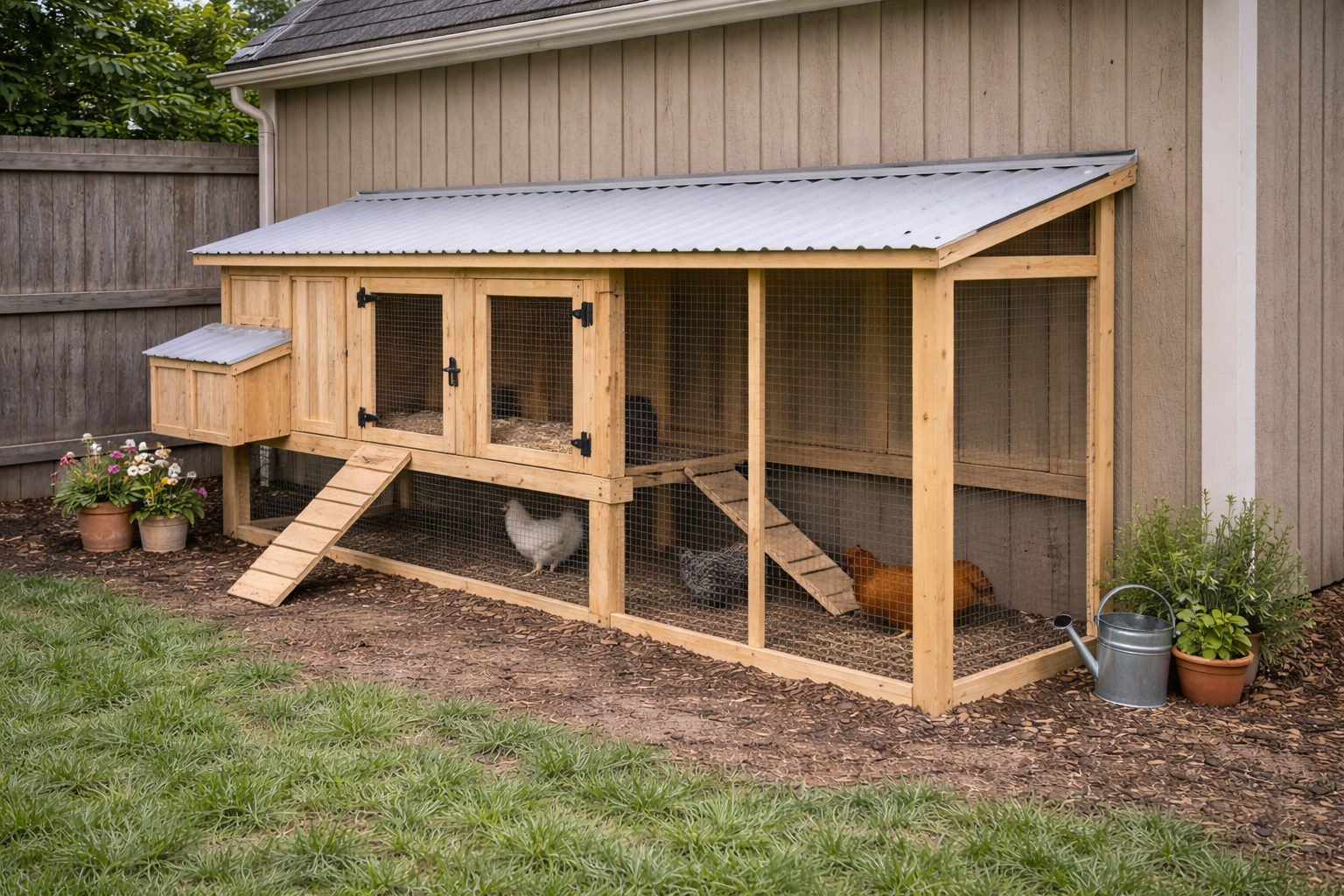
If you can use an existing shed wall, you save framing. The run strip is narrow but covered, which often matters more than width in wet seasons.
6) Mini coop + “run tunnel” to a larger yard pen
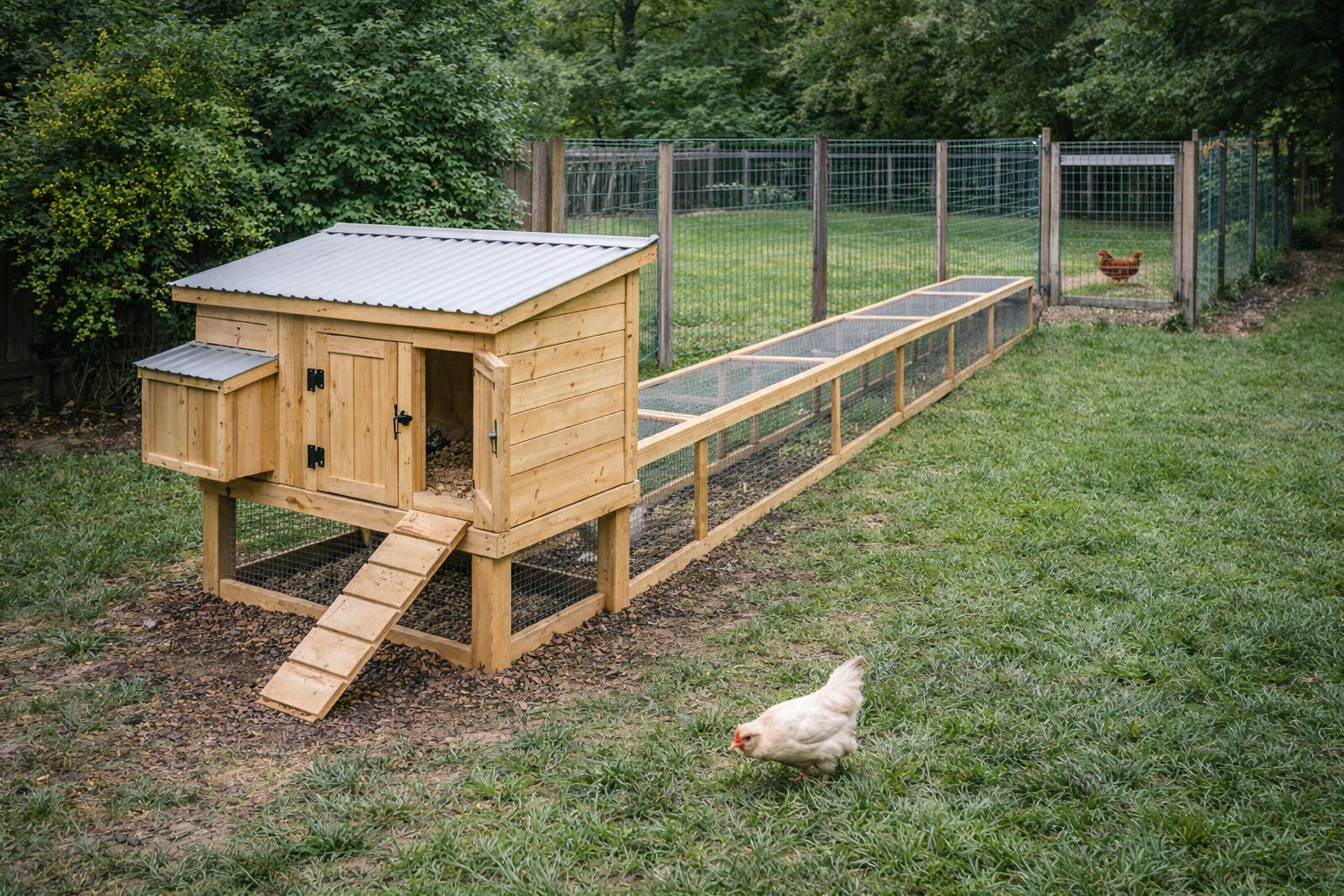
Coop stays compact, and a run tunnel connects to a larger fenced area. Good if you can’t dedicate one big run footprint but still want the birds moving.
7) Small mobile chicken coop plan (light tractor)
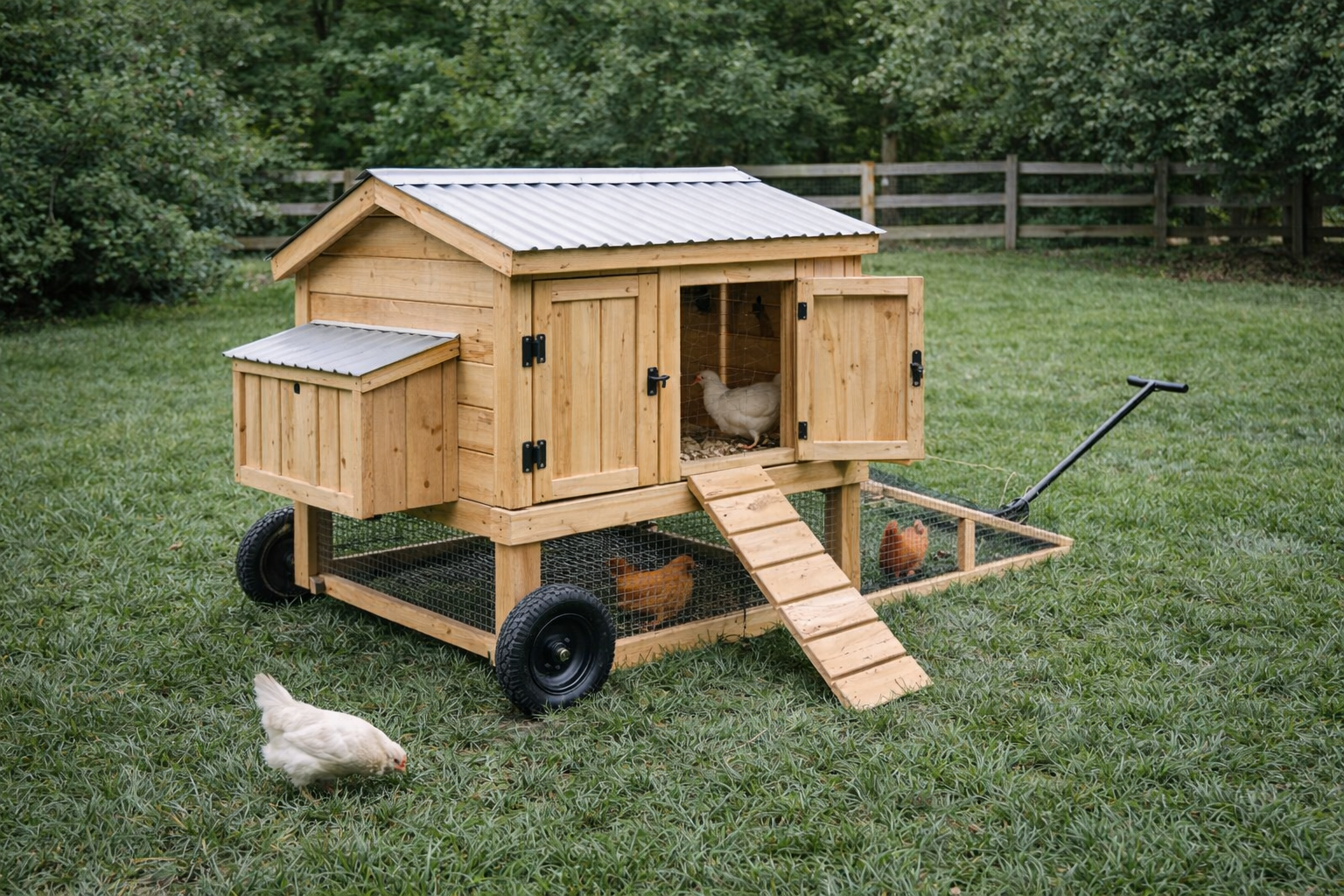
Best for short moves on grass and rotating ground. Bad in high wind yards unless the base is stiff and the “portable” wheels aren’t flimsy.
8) Portable skid-based coop (drag coop)
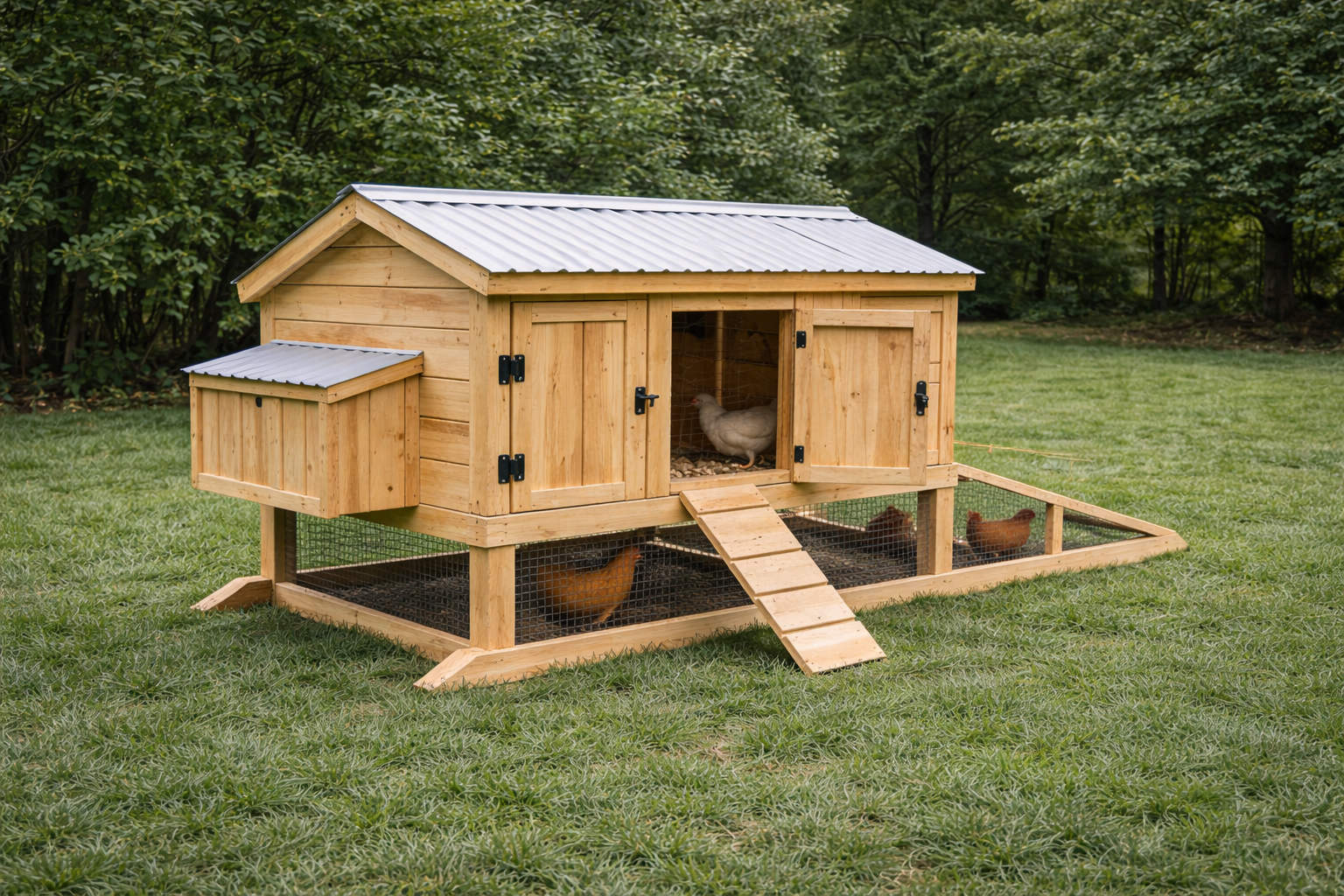
No wheels. Just skids. Two people can drag it short distances. Less hardware to fail than cheap wheels.
9) Split layout: roost side + nest side
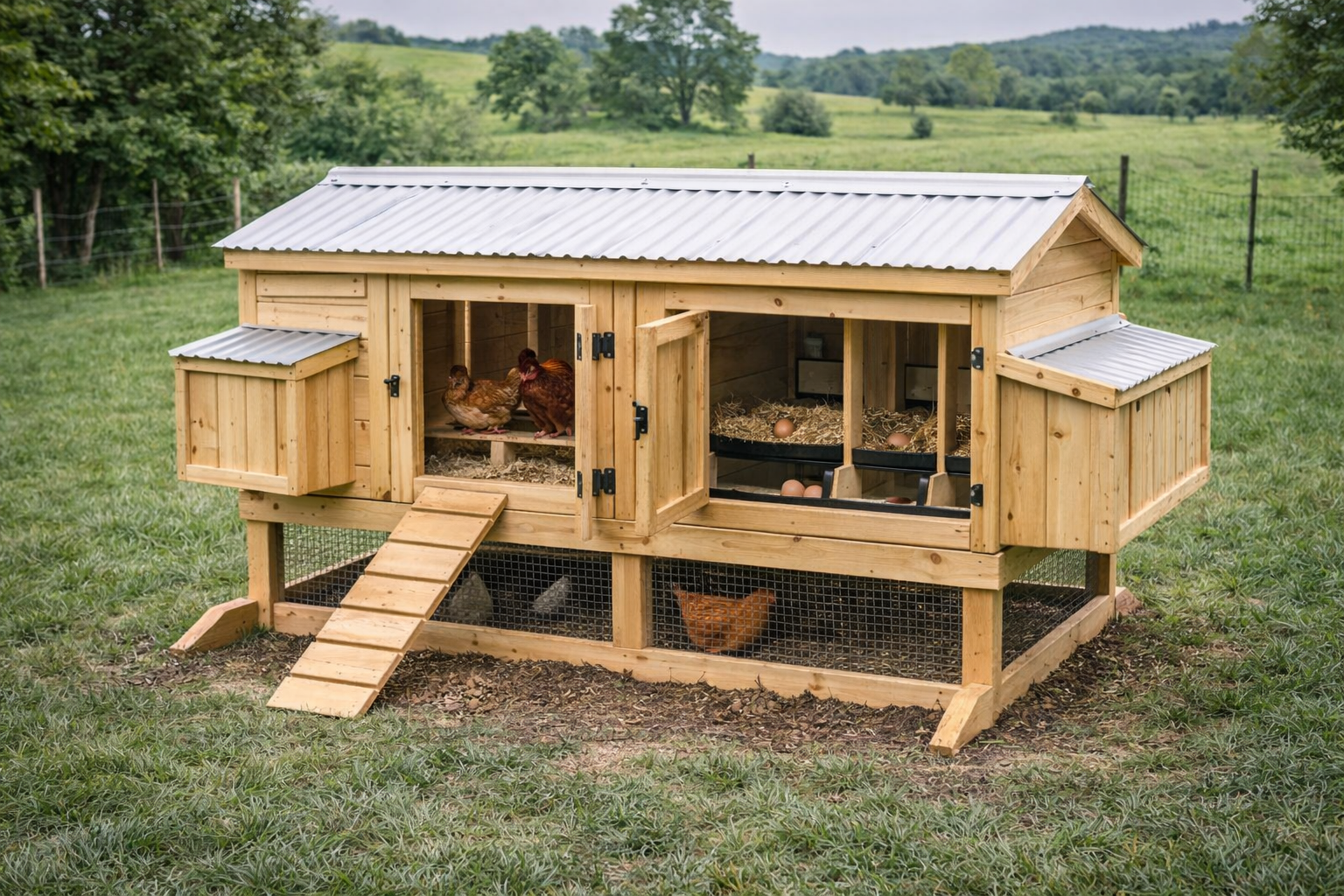
In tiny coops, separating roost and nest zones keeps nests cleaner. Small change, big payoff. Also makes upgrades like roll-away nests easier later.
10) Run-led design (roof the run first, coop fits inside)
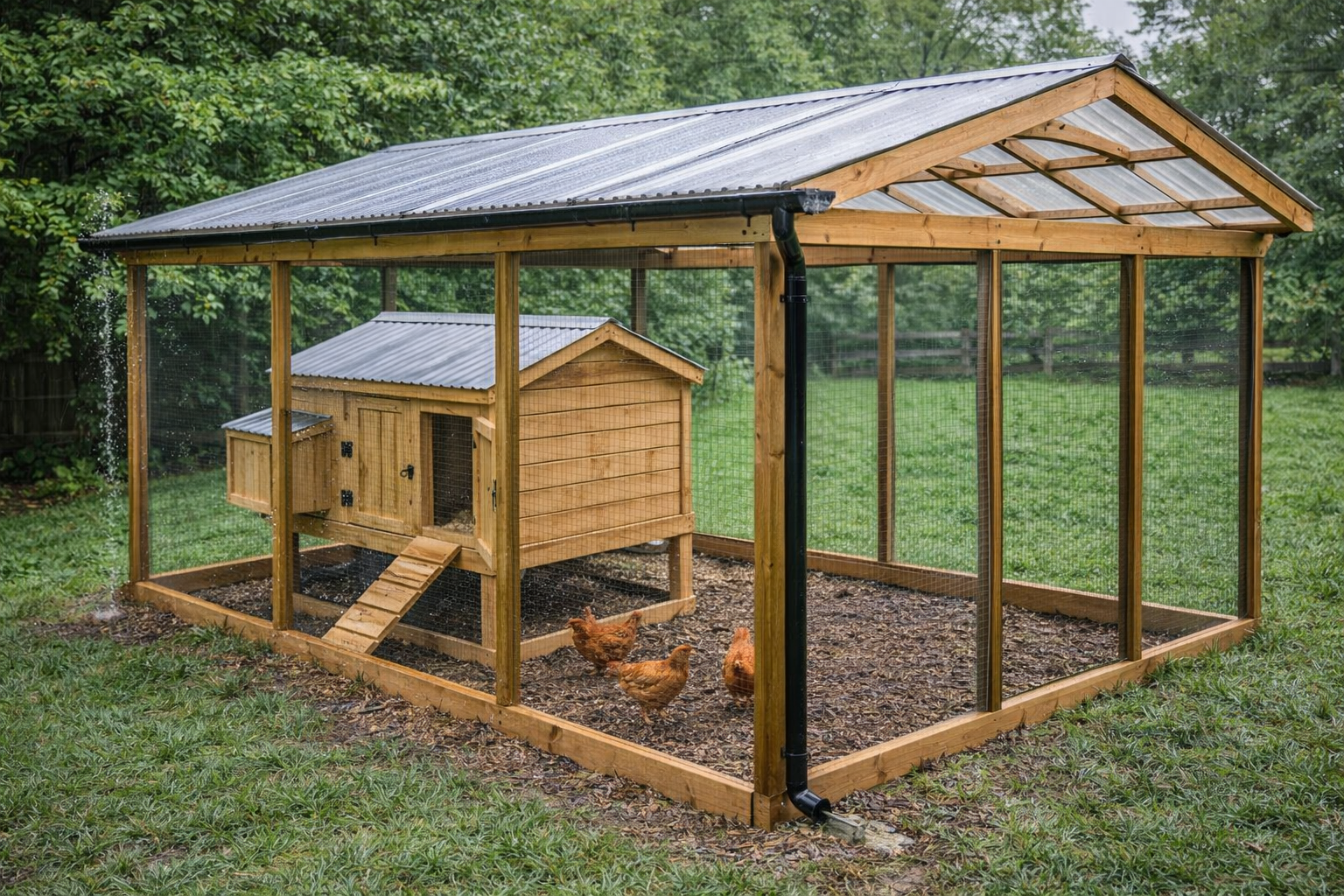
Mindset shift: design the run roof and drainage first, then the coop sits inside that protected zone. This is how small runs stop turning into mud.
Small chicken coop and run plans
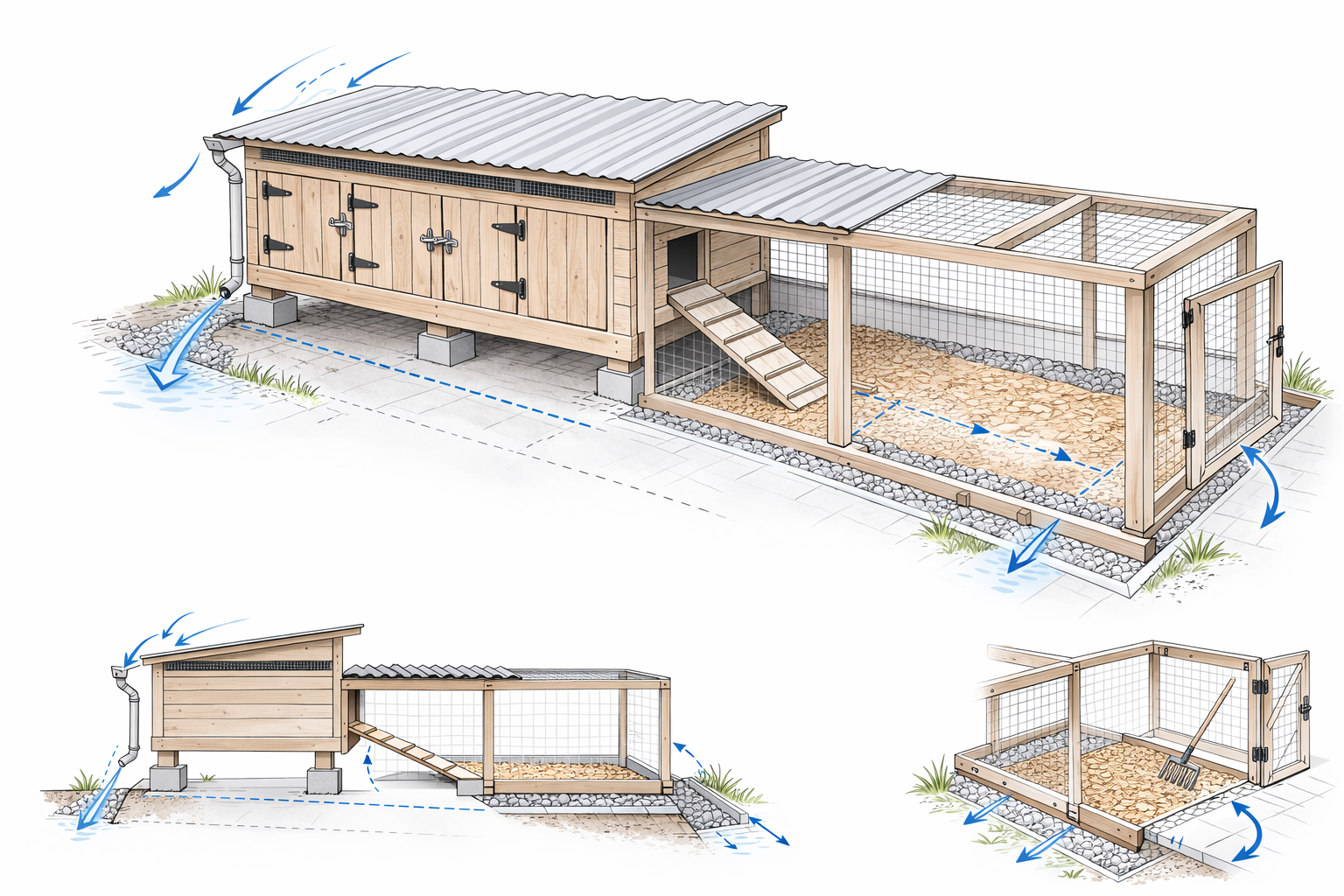
In a small backyard, you don’t have endless “fresh ground.” The run gets hammered. If it’s uncovered and your yard drains poorly, it becomes a mud pen fast. That’s when people think they need a bigger coop, when the real problem is runoff + surface.
The run is where small yards get punished
What I stopped ignoring
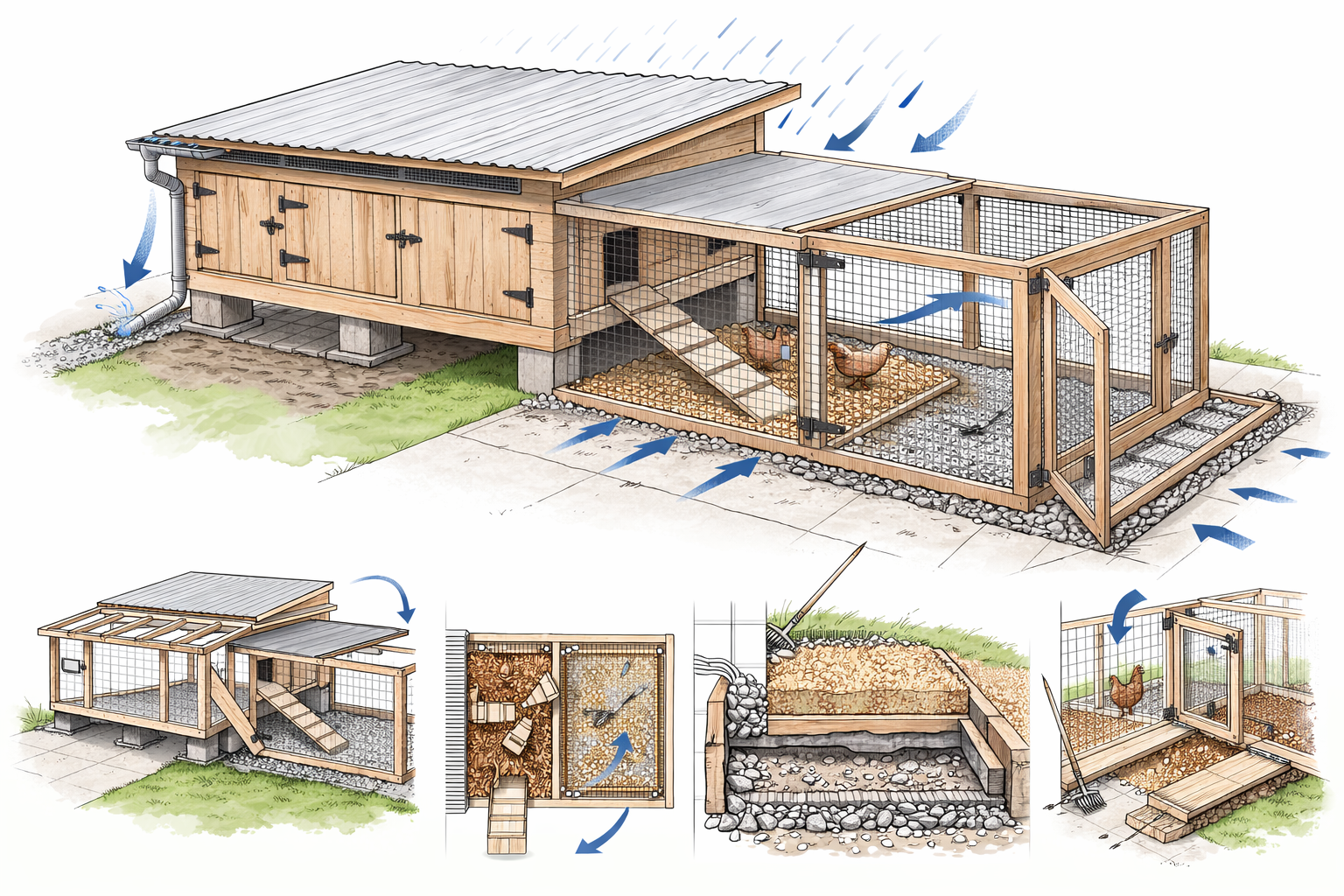
- Roof coverage: even partial cover over the high-traffic zone changes the season.
- Runoff direction: if the coop roof dumps into the run, you’re feeding the mud pit.
- Base layer: bare soil in a small run is a short timeline. You need a surface plan.
- Access: if you can’t get in and rake/refresh, it degrades fast.
If you want a wider idea map before you pick a run strategy, skim this and steal what fits your yard: chicken coop layout ideas.
FIELD PICK
The thing that quietly upgrades almost every small coop: real hardware cloth (not chicken wire) on openings and runs. It’s boring. It’s not cute. It’s what stops “one bad night.”
→ 1/2" hardware cloth (Amazon search)
Ventilation in a small coop
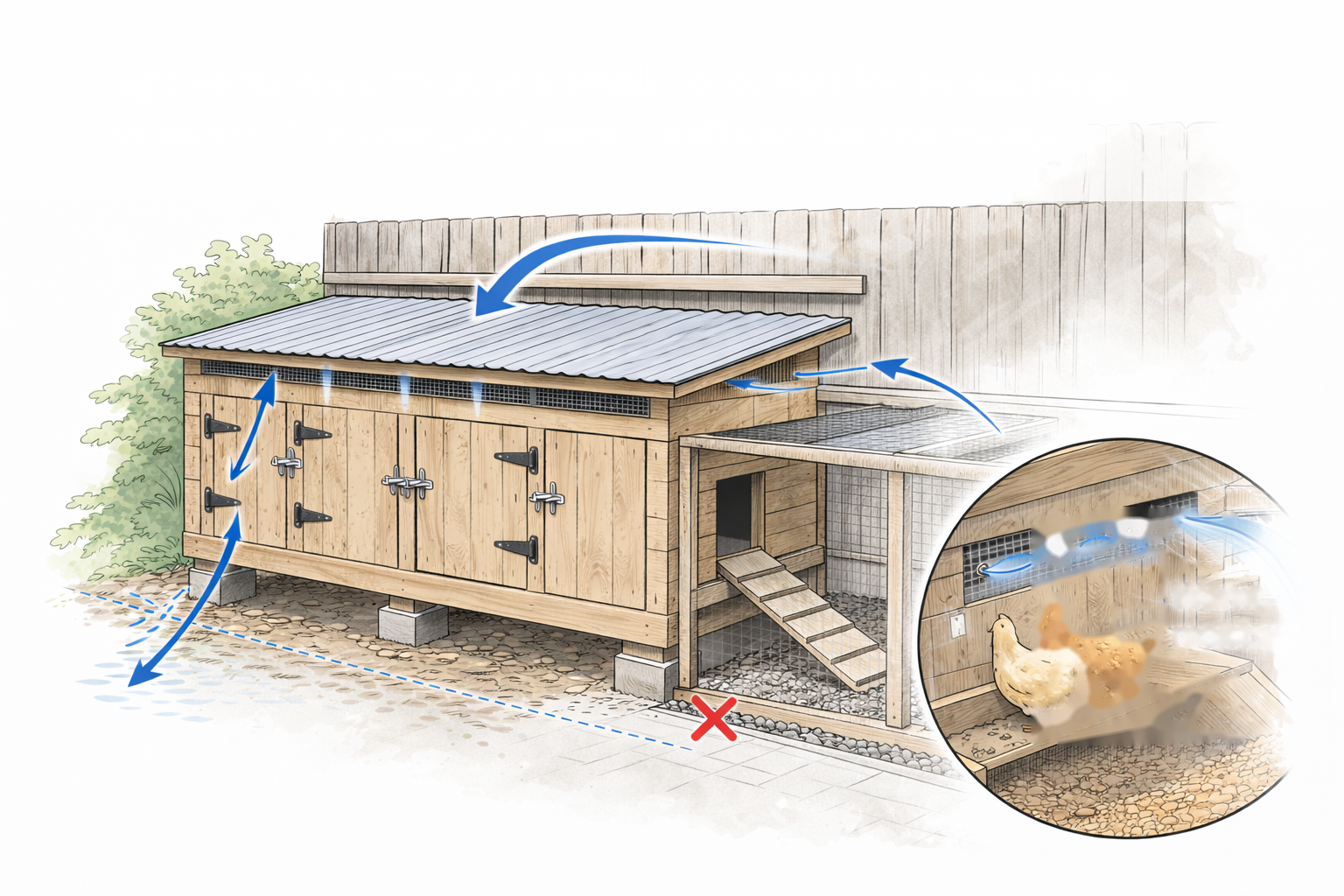
(the part people mess up by trying too hard)
Ventilation is where beginners do one of two wrong things: they either seal the coop like a cooler (stink + moisture), or they cut holes low and create a straight draft across sleeping birds.
A simple rule that holds up: high vents for air exchange, protected from rain, and keep the roost out of the direct airflow path.
If you’re using a slim coop along a fence, ventilation has to be intentional because “long and shallow” can get stagnant fast. Give it a high exit point for warm moist air.
Roost ideas for small chicken coops
Small coop roosts get overcomplicated. The failures are simple:
- Roost too high → birds hit the ceiling or start roosting in places you didn’t plan for.
- Roost stacked wrong → birds poop on birds.
- Roost placed over nests → nests get dirty fast.
- No poop control under roost → floor becomes the cleaning job.
What held up better was boring: one main roost, a simple poop board under it, and enough length that birds aren’t forced into a pile.
Bantam chicken coop ideas
Bantams are smaller, but they’re not automatically “easier.” What I kept seeing:
- They slip through bigger gaps. Openings that feel fine for standard hens can be loose for bantams.
- Some like higher roosts, which turns the ceiling into a roost zone if you give them the chance.
- Mixed flocks get messy unless you give more than one perch option.
So bantam tweaks are mostly: tighten gaps, control the “ceiling roost temptation,” and give a second perch option so they’re not bullied off the only good spot.
Mini chicken coop plans: where “tiny” starts costing you time
Tiny coop plans look smart on paper. Then you try to clean them in February with frozen bedding stuck to the floor, and you realize you built a little box that only a raccoon enjoys.
If you insist on tiny, don’t skip these
- One big access wall (not a cute little door). If you can’t reach corners, corners become the smell.
- Raised base or a dry pad. Ground contact is the slow-rot plan.
- High vents protected with mesh, placed so air moves without drafting the roost.
FIELD PICK
If you’re doing a small yard run and you’re tired of mud and wasted bedding, the best “upgrade” is usually covering a portion of the run where birds stand the most.
Small movable / portable chicken coop plans
Wheels are not magic
Small mobile coops are a good idea when you can move them often and the ground isn’t a swamp. The regret version is the one that’s “portable” in marketing only: tiny wheels, light frame, first windstorm racks it, first wet week sinks it.
The versions that lasted were either skid-based (drag short distances, fewer failure points), or heavier wheel setups with a base that doesn’t twist when you lift one side.
Small duck coop plans
(don’t just copy chicken layouts)
Ducks don’t roost like chickens. They’re messy with water. If you run ducks in a “small chicken coop layout,” you usually end up with wet bedding and ammonia faster. Duck housing wants easy clean-out and water management more than perches.
Short checklist
“does this small coop design stay livable?”
- Can you reach every corner without crawling?
- Does the roof throw water away from the entry and the run?
- Is the base off soil, or is there a dry pad under it?
- Can air move high without a straight draft across the roost?
- Can you remove bedding easily (big door, tray, or open wall)?
- Do you have a plan for the run surface in wet months?
- Are gaps and openings sized for your birds (especially bantams)?
FAQ
(real questions people keep asking)
What’s the best small chicken coop design for a small backyard?
The one that stays serviceable: big access, roof runoff controlled, and a run that has at least some cover where birds stand the most. Raised coops with run underneath are popular because they use vertical space, but they still need a dry base plan.
Do small chicken coop plans need a run roof?
Not always, but in wet climates or small runs, partial cover is what stops the run from becoming mud. If you can only roof one area, roof the high-traffic zone near the door.
How small is too small for a mini chicken coop?
When you can’t clean it without crawling, or when the roost/nest layout forces droppings into nests. Small footprint is fine. No access is not.
How do I keep a small chicken run from turning into a mud pit?
First: stop roof water from dumping into the run. Second: cover at least the high-traffic zone. Third: commit to a surface plan (chips/sand/gravel depending on your yard and drainage). If you do nothing, bare soil will lose.
Are bantam chicken coop ideas different from standard hens?
Slightly. Bantams slip through bigger gaps, and some like higher roosts. In small coops, that means controlling ceiling roosting and tightening openings.
What’s the simplest DIY small chicken coop plan?
A compact ground-level coop with one large clean-out wall and a small attached run. Easy framing. Just don’t skip the dry base and runoff control, or it turns into a damp corner you dread cleaning.
Where do nest boxes go in a small chicken coop layout?
Away from the roost line. In small coops, nests get dirty fast if they sit under perches. Keeping the nest zone slightly lower and separate helps.
Resources
- University of Georgia Extension – Backyard Poultry Housing (PDF)
- Ohio State University Extension (Ohioline) – Poultry housing / management reference
What’s next
- Still browsing layouts? Start with: more chicken coop ideas and layouts.
- If your main constraint is money (but you still want it to last), this stays grounded: cheap chicken coop ideas that don’t collapse.
- And if you hit a specific build problem mid-project (predators, ventilation, run mud, doors), this saves time: chicken coop construction FAQs and fixes.