

Best Chicken Coop Designs: DIY Plans & Ideas That Work
Most “best chicken coop designs” online look great in a thumbnail. Then you build one and learn the real problems: water dumping at the door, a run that turns into mud, vents in the wrong place, and a latch a raccoon can open like it pays rent.
This page is the practical version: what holds up, what fails fast, and what design choices make your daily routine easier. Not “cute coop ideas.” Coops that stay dry, clean, and hard to break into.
What you’ll get from this guide
- What matters most in a chicken coop design (and what’s mostly decoration)
- 5 coop layouts that repeat because they work in real backyards
- Predator-proofing details people skip (then regret)
- Ventilation and cleanup design that keeps the coop from turning nasty
- When buying makes sense vs. when DIY is smarter
Want the complete checklist and decision path? Read Chicken Coop Guide: Build vs Buy vs Upgrade (No-Regrets Path).
Why coop design matters
(the boring stuff that decides everything)
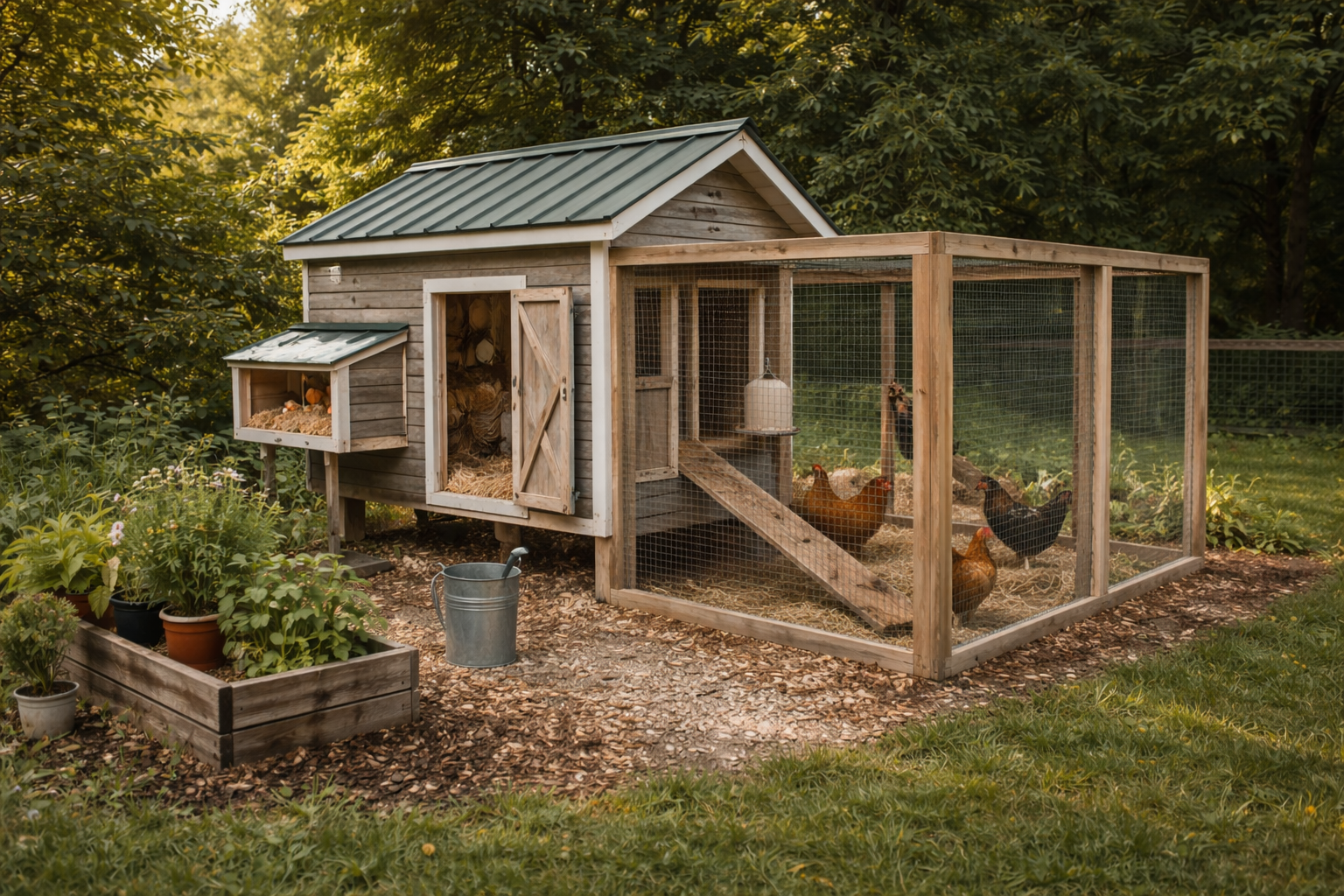
A chicken coop isn’t just “a shelter.” It’s a moisture box, a predator target, and your weekly cleaning routine—wrapped into one structure. When the design is right, chickens stay healthier, eggs stay cleaner, and the coop stays manageable. When it’s wrong, you end up fighting damp bedding and repairs you didn’t plan for.
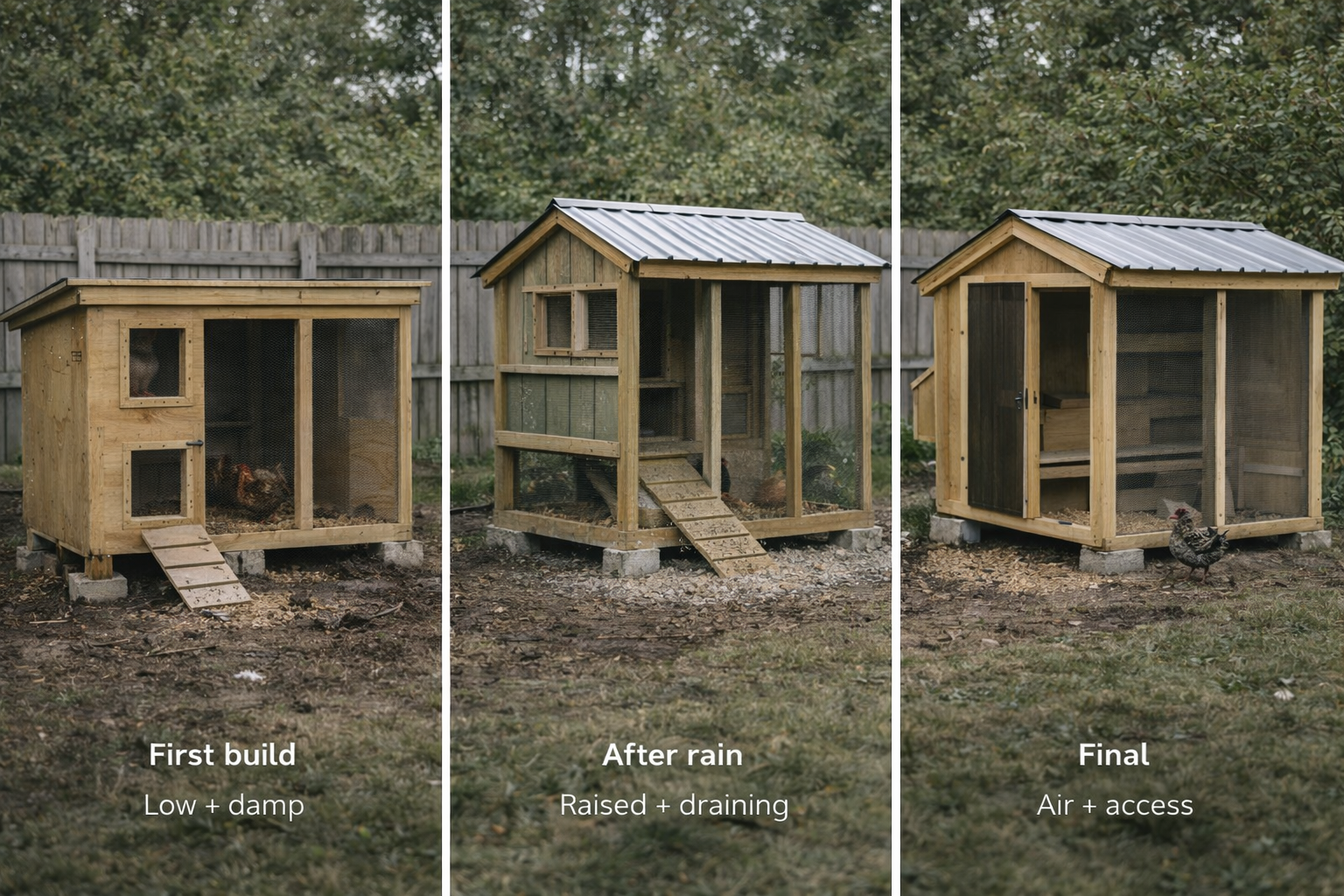
A coop that holds up usually does these four things well:
- It stays dry: roof runoff is controlled, the base isn’t sitting in wet soil, and the entry doesn’t become a trench.
- It breathes: ventilation is high and protected so moisture leaves without drafting the roost.
- It locks like it means it: hardware cloth, solid latches, and no weak corners.
- It’s serviceable: big access doors, easy egg collection, and a clean-out approach that doesn’t punish your back.
If you want a broader layout map first (so you don’t get stuck in one “Pinterest style”), start here: chicken coop ideas and layouts.
The short “evolution” story
(why coops look different now)
Coops didn’t become “modern” because people wanted solar panels. They changed because backyards changed: smaller lots, closer neighbors, more predators, and more wet-weather problems. The trend isn’t really “high-tech.” It’s less guessing and fewer failures.
- Old-school shed coops: worked when birds ranged and the coop was just for sleeping.
- Run-first coops: showed up when people needed containment (and realized the run is where mud starts).
- Service-friendly coops: bigger doors, clean-out trays, external egg access—because nobody wants to crawl in.
- Smart add-ons: automatic doors and timers—mostly to solve one real problem: locking up consistently at dusk.
What makes a great chicken coop design
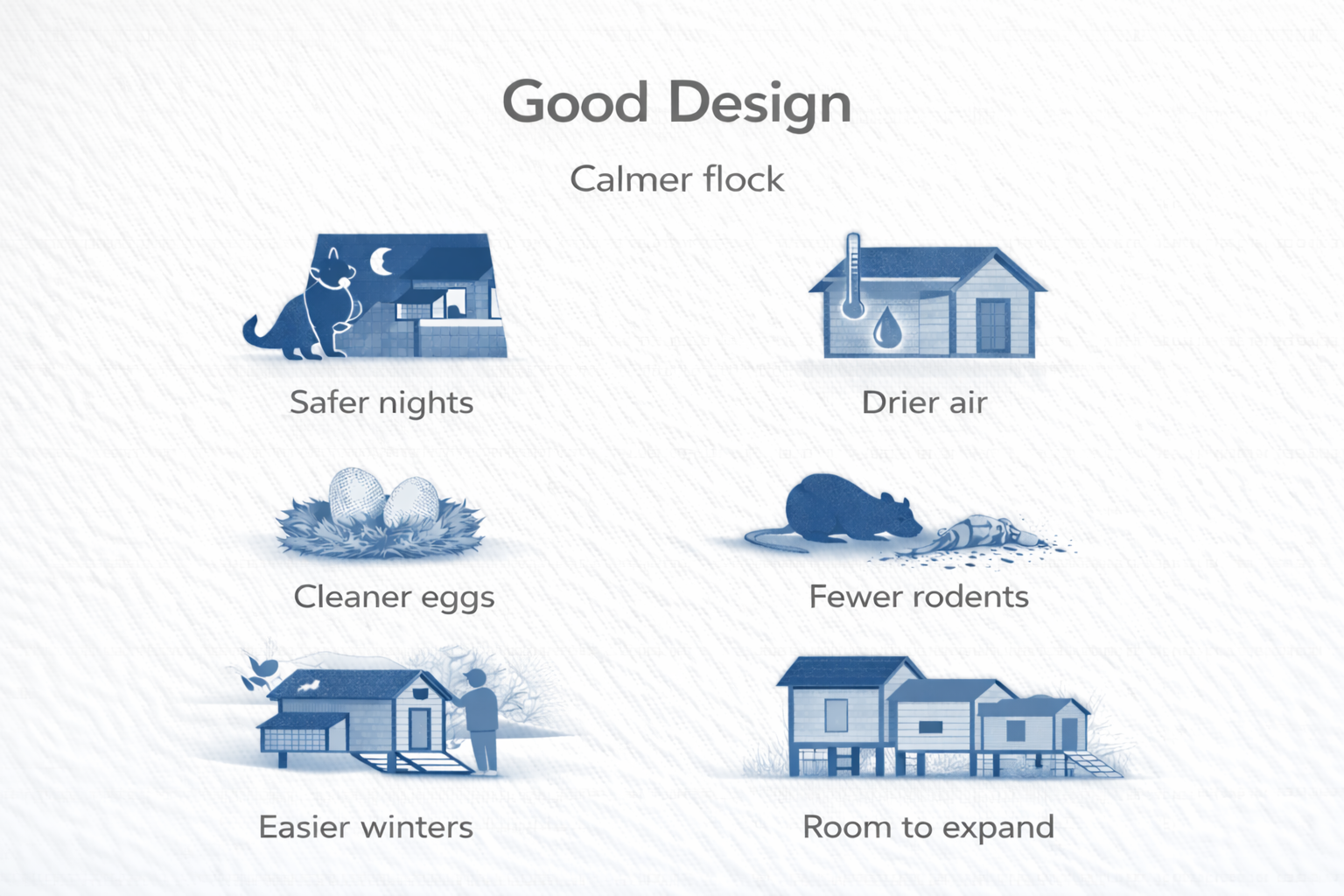
(features that earn their keep)
1) Predator-proofing that’s not pretend
Chicken wire is for keeping chickens in. It is not security. If you’ve ever watched a raccoon work a corner, you stop pretending.
- Hardware cloth on openings and runs (especially lower sections).
- Buried apron or dig barrier (many people do 12" out and down; the goal is “can’t start a tunnel”).
- Two-step latches or carabiner-style backups on doors.
2) Ventilation that doesn’t draft the roost
The goal is moisture out, without cold air blasting birds while they sleep. High vents (protected from rain) work better than low “holes” that turn into a wind tunnel.
3) Space that keeps the flock calm
Most backyard setups do fine when you aren’t cramming birds into a tiny box. Overcrowding is where pecking, dirty nests, and stress show up fast.
4) Nest + roost layout that stays clean
Put roosts above nests and you’ll clean nests constantly. Separate them and your eggs stay cleaner with less effort.
5) Cleaning access (the hidden “quality” feature)
Small coops fail when you can’t reach corners. The best upgrade is usually not a fancy roof—it’s a big access door and a clean-out plan.
If budget is your limiting factor, don’t guess your way through it—this page keeps it grounded: cheap chicken coop ideas that still hold up.
RECOMMENDED TOOL
Hardware cloth is the “tool” most coops should start with. It’s the difference between “this is fine” and “why did I find feathers everywhere.”
→ OverEZ Small Chicken Coop
If you’re buying instead of building, look for solid framing, easy access, and openings that can be reinforced with hardware cloth where needed.
Trending coop designs
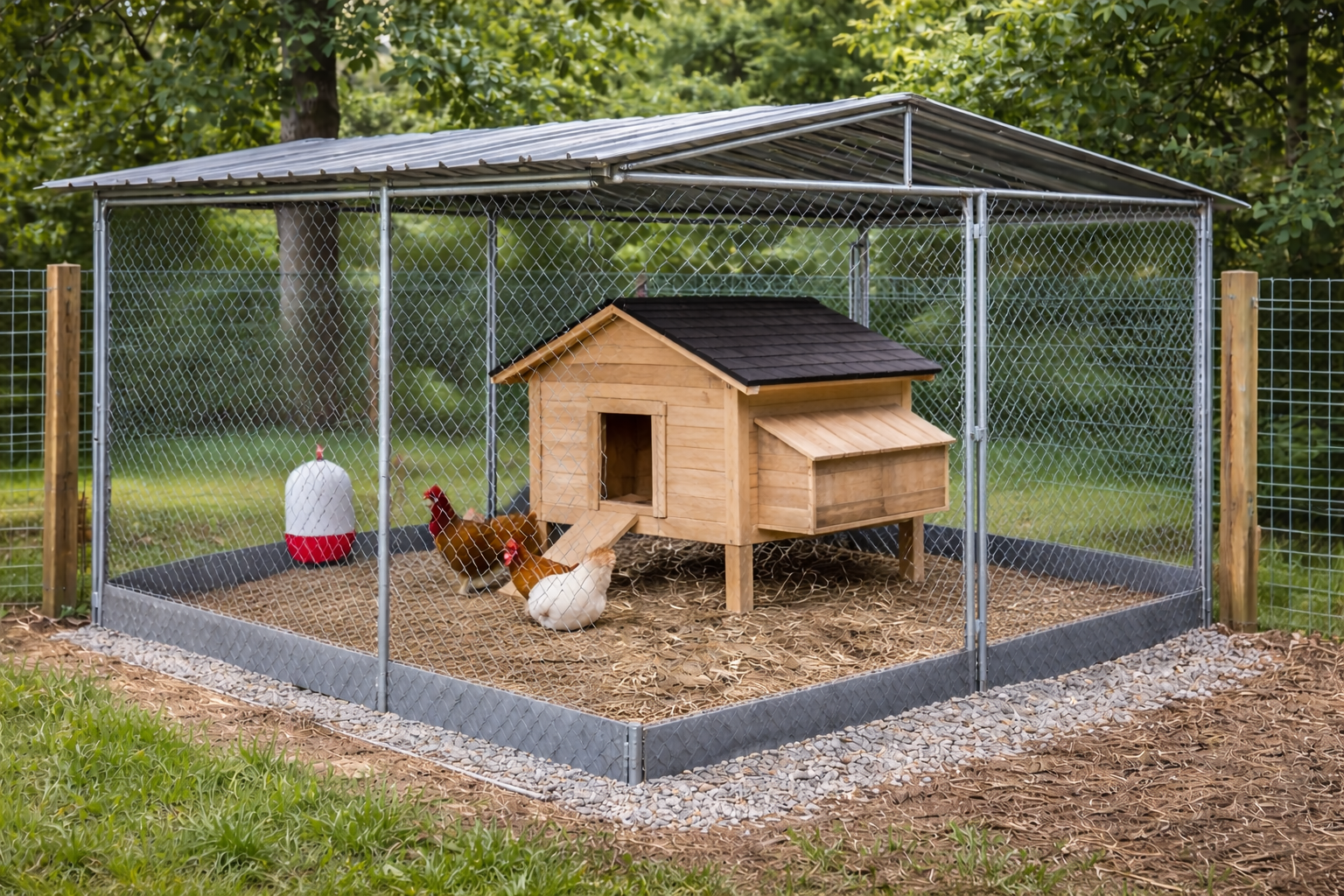
(what’s actually useful)
1) The classic raised coop (dry base + covered standing zone)
The “raised coop” isn’t trendy. It’s practical. Getting the coop off damp soil solves a lot of rot and stink. The run-under area works best when you treat it as a covered high-traffic strip, not a full-time mud pen.
2) The walk-in (or micro walk-in) coop
The reason people go walk-in isn’t luxury. It’s maintenance. If you’re keeping chickens for years, not crawling is a real quality-of-life upgrade.
3) The fence-line “slim” coop
For small yards, long-and-shallow designs are underrated. You can reach everything, and you can build a narrow run strip that’s easier to roof.
4) The tractor (only if it’s built like a tractor)
“Mobile” coops fail when they’re light and flimsy. If you want a tractor coop, it needs a stiff base, real wheels, and a plan for wind.
5) The “run-first” design (roof the run before you decorate the coop)
This is the smartest modern move: design the run roof/drainage first, then fit the coop inside that protected zone. If your run stays dry, everything gets easier.
see: Choosing a Small Chicken Coop Shape Before You Buy Lumber
Top-rated chicken coops on Amazon
(when buying is smarter than DIY)
Buying can make sense when you want a fast start and you’re willing to reinforce the weak points (latches, mesh, and roof edges).
GUTINNEEN Chicken Coop with Wheels
Useful if you truly plan to move it. Just don’t expect “wheels” to fix wet ground or bad drainage. You still need a base plan.
MEDEHOO Expandable Chicken Coop
Expandable coops are handy when you know you’ll add birds later. Watch the run coverage and latch quality.
Want to build your own?

3 DIY coop plans that don’t get cursed later
DIY can be great—if you build for the boring stuff: water, airflow, cleaning, predators. Most “DIY fails” are not craftsmanship. They’re missing the boring moves.
1) A-frame (simple, compact, and honest)
Best for: small flocks and tight spaces.
It’s stable in wind, uses less material, and stays straightforward. The downside is expansion and interior access—so go big on clean-out doors.
2) Walk-in (maintenance-first, long-term happy)
Best for: anyone keeping chickens for years.
The “walk-in” isn’t about size. It’s about service. Plan a poop board, external egg access, and ventilation high and protected.
3) Tractor coop (only if you’ll actually move it)
Best for: rotation and fresh ground.
Biggest mistake is building it too light. The coop twists, doors stop closing, and you start patching forever.
If you want problem-by-problem fixes (predators, ventilation, run mud, doors), keep this page in your back pocket: chicken coop FAQs and fixes.
DIY mistakes that cost the most
(and keep repeating)
Building too small: not “small yard” small—maintenance small. If you can’t reach corners, corners become the smell.
Ignoring drainage: if roof water dumps at the entry or into the run, you’re building a mud problem on purpose.
Bad ventilation: sealed tight is not “warm.” It’s damp. Damp is what causes the real winter problems.
Weak security: chicken wire, simple latches, and exposed corners are where predators win.
No expansion path: most people add chickens. Plan for it, even if it’s just “run can bolt on later.”
Best-selling books for backyard chicken keepers
These are “tools” in the real sense: references you keep open when you’re designing a coop that has to survive weather and mistakes.
MUST READ
Storey’s Guide to Raising Chickens
Solid baseline for coop planning, flock management, and the stuff beginners learn the hard way.
FIELD PICK
The Chicken Chick’s Guide to Backyard Chickens
Practical troubleshooting and modern backyard realities (space, neighbors, predators, weather).
FAQ
What’s the best chicken coop design for a small backyard?
The one that stays serviceable: big access, roof runoff controlled, and a run that has at least some cover where birds stand most. “Small” is fine. “No access” is not.
Do I need a heater in winter?
Usually no. Dry + draft-controlled + ventilated beats “sealed tight and heated.” If you add heat, treat it like a real fire-risk decision and design it safely.
How often should I clean a coop?
Most people spot-clean regularly and do deeper clean-outs on a schedule that matches flock size and bedding method. The real trick is designing the coop so cleaning is easy, not heroic.
What’s the easiest coop to build?
A simple raised box or A-frame with one big clean-out wall. Keep it dry, ventilate high, and don’t cheap out on security.
How do I make a coop predator-proof?
Hardware cloth on openings, dig barrier at the perimeter, and latches that can’t be flipped open by clever hands. Predators don’t need a big gap. They need one weak point.
Final thought
The “best chicken coop design” is the one you can keep clean in a bad month, that stays dry at the entry, and that doesn’t become a nightly predator test. Start with water control, ventilation, access, and security. Then make it pretty.