

A rotted sill plate is not a trim problem.
The sill plate sits at the bottom of the wall where the house meets the foundation. Wall framing, floor framing, exterior sheathing, crawl-space conditions, foundation moisture, anchor bolts, termites, and siding details can all converge at that one narrow piece of wood. A small dark spot may be local. A soft, crushed, or termite-damaged sill plate can mean the bottom of the wall has started to fail.
Before anyone patches, fills, or replaces wood, the repair has to answer three questions: what caused the damage, how far it spread, and what the sill plate is supporting.
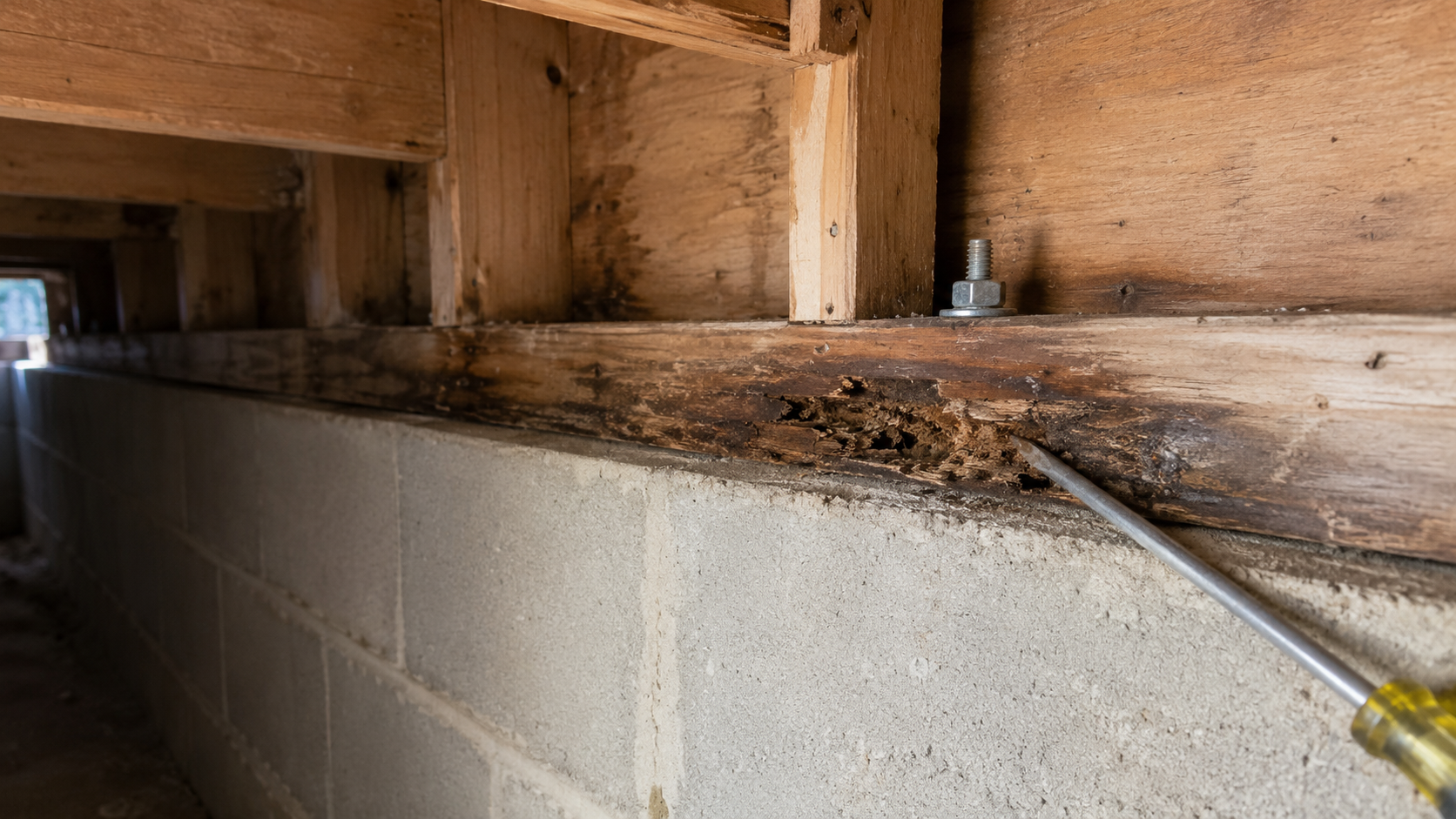
What a Sill Plate Does
The sill plate is the horizontal wood member that sits on top of the foundation wall, stem wall, or slab edge, with the framed wall above it. In many houses, anchor bolts or connectors tie the sill plate to the foundation — which is what makes it different from a rotten fascia board, window trim, or door casing. Those parts may be expensive to fix, but they are not usually the main connection between the wall and the foundation.
The sill plate helps transfer load and keep the wall located where it belongs. Depending on the house it may connect to the foundation wall or slab edge, wall studs and bottom wall framing, rim joists or band joists, floor joists and subfloor edges, exterior sheathing and siding, and anchor bolts, washers, straps, or hold-down connectors. A bad sill plate repair can therefore create more problems than it solves — the repair is not just new lumber, it is support, bearing, anchorage, moisture, and access.
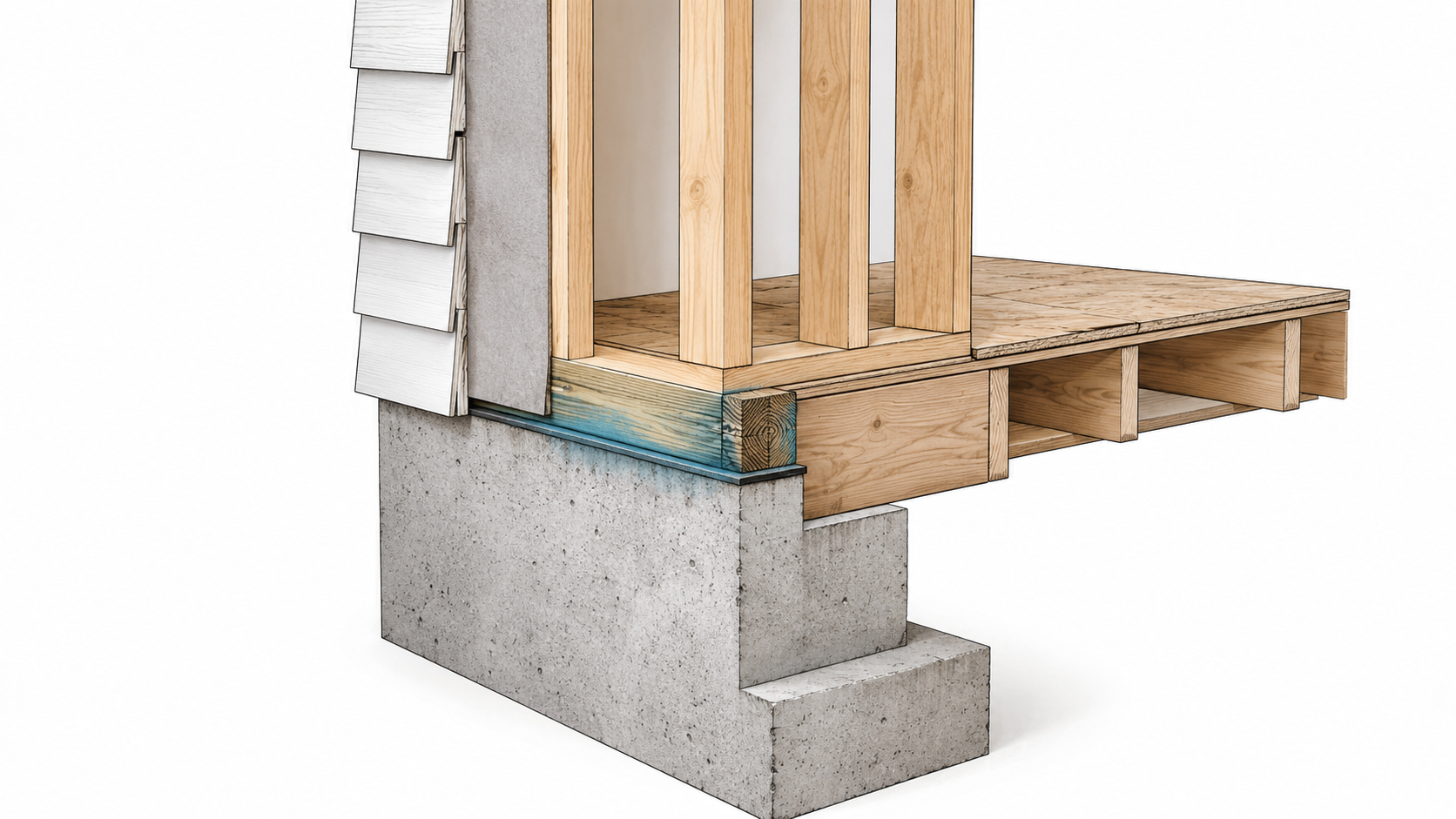
Why Sill Plates Rot
Sill plates rot when wood stays wet long enough for decay to start. Sometimes insects are involved too — termites and carpenter ants often follow moisture, damaged wood, or hidden access paths.
The sill plate is vulnerable because it sits near the foundation edge and can be wetted from outside, below, inside the wall, or through the crawl space. Common causes include crawl-space humidity keeping the floor edge damp, foundation leakage or wet masonry below the plate, exterior grade sloping toward the wall, siding or mulch or soil too close to the wall base, failed flashing at decks, porches, doors, or windows, leaking plumbing near an exterior wall, wet insulation hiding the rim and sill area, and termite or carpenter-ant damage at damp wood.
Old wood can last a long time when it stays dry and can breathe. Sill plates usually fail because the wall base stayed wet, got eaten, or both. Do not blame age alone.
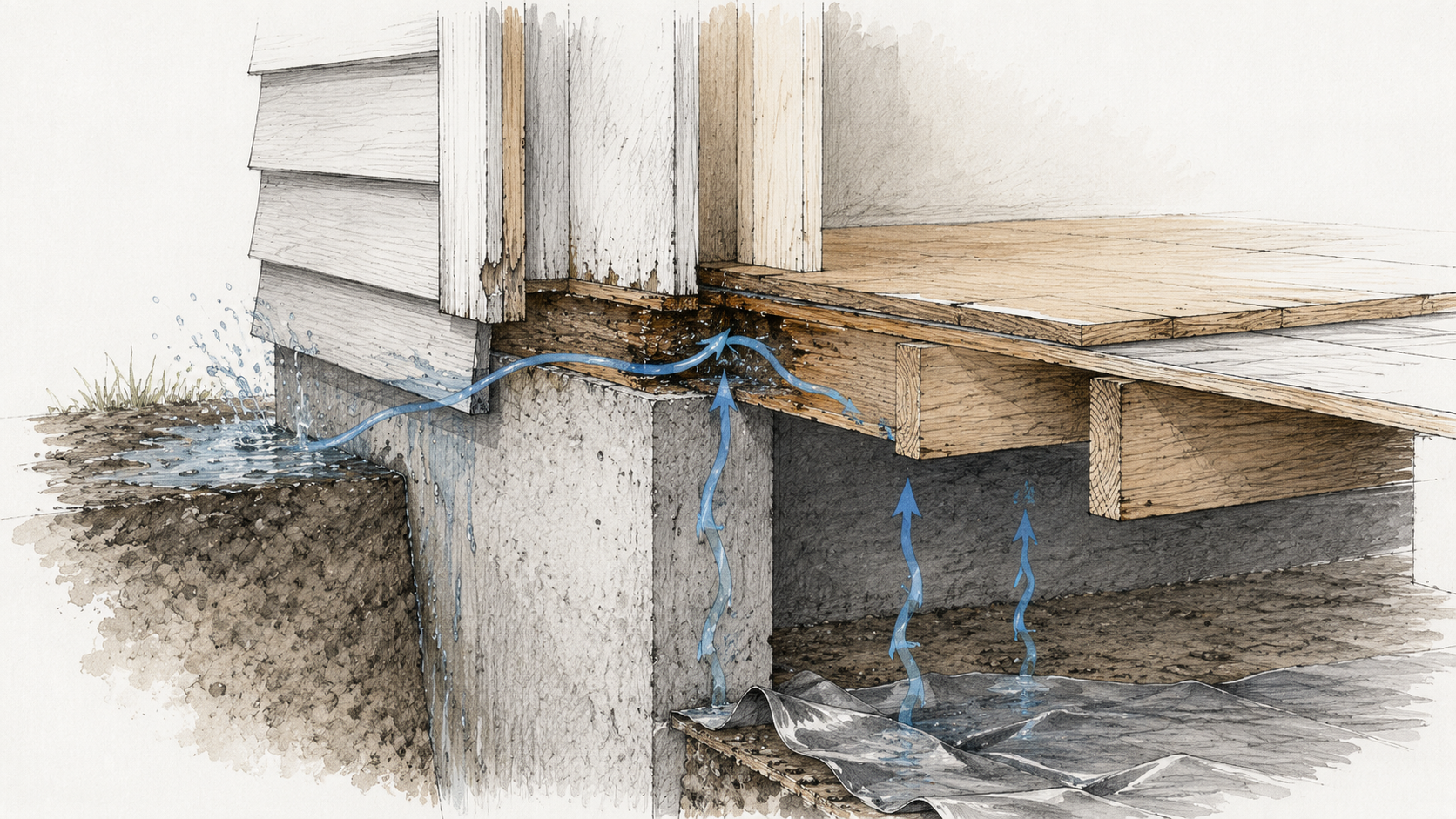
For the broader water-source problem, read home moisture, leaks, and water damage. If the damage is under the house, crawl-space humidity is usually part of the investigation.
How to Tell If the Sill Plate Is Actually Damaged
You may not see the full sill plate without opening something. In an unfinished basement it may be visible at the top of the foundation wall. In a crawl space it may be visible near the floor edge. In a finished house it may be hidden behind drywall, insulation, siding, flooring, or trim.
Warning signs include soft or crumbling wood at the foundation line, dark staining along the sill or rim area, wood that flakes or compresses or lets a probe sink in, mud tubes or hollow wood or insect debris, loose anchor bolts or missing washers or damaged fastener areas, wet insulation at the rim joist or wall base, floor sagging near an exterior wall, a musty smell in the crawl space or basement edge, exterior siding damage close to grade, and doors or windows near that wall starting to bind.
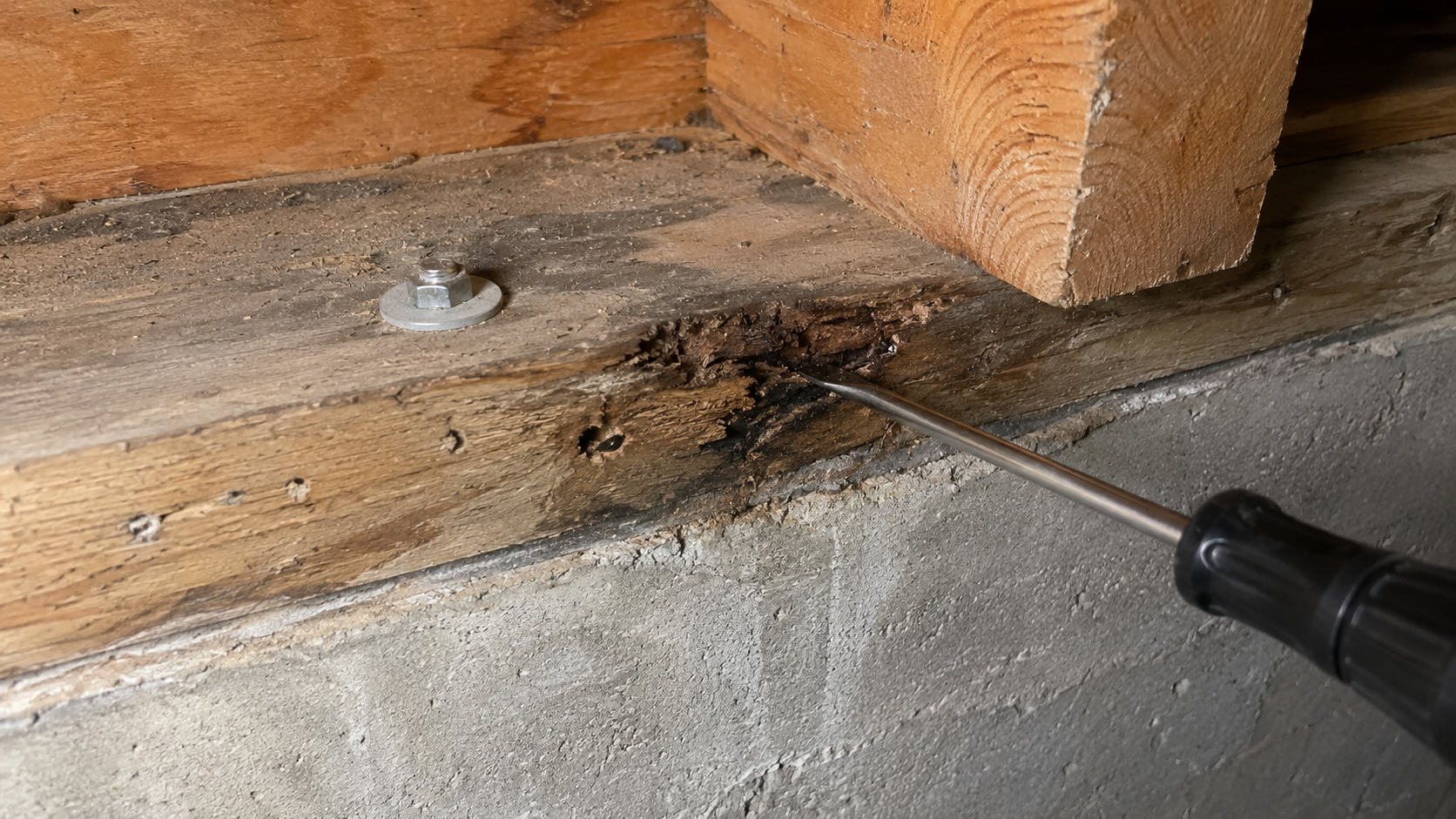
Probe gently. You are checking whether the wood is firm or punky — not trying to tear the house apart with a screwdriver. Good wood resists. Rotten wood gives way. If the tool sinks in easily, the repair has moved beyond stain removal or paint.
Sill Plate vs Rim Joist vs Floor Joist
These parts sit close together and get confused often. The repair scope changes depending on which one is actually damaged.
| Part | Where It Sits | Why It Matters |
|---|---|---|
| Sill plate | On top of the foundation wall or slab edge | Connects the wall base to the foundation and may be anchored |
| Rim joist / band joist | At the outer edge of the floor framing | Ties floor joists together and sits near the sill area |
| Floor joist end | Where the floor joist bears near the exterior wall | Damage here can affect floor support |
| Subfloor edge | Panel or plank layer above the joists | Softness here may mean leaks from above or moisture from below |
| Bottom wall plate | At the bottom of a framed wall | Often confused with the sill plate in finished walls |
A contractor should be clear about which piece is being replaced. "The sill is rotten" is not enough if the rim joist, joist ends, or subfloor are also soft.
When Sill Plate Repair Becomes Structural
Sill plate repair becomes structural when the damaged wood is carrying load, anchoring the wall, supporting floor framing, or sitting below a load-bearing wall section. That is why a serious repair may involve temporary support, shoring, jacking, anchor bolts, engineered judgment, permits, or inspection — those things should not scare you by themselves. They often mean the contractor understands the job.
Structural repair is likely when the sill plate is crushed, hollow, or missing in sections; when the wall above has settled, shifted, or gone out of plane; when joist ends or rim joists are also rotted; when anchor bolts no longer hold sound wood; when termite damage has hollowed the plate; when the damaged section is under a load-bearing wall; or when a long run of plate needs replacement rather than a small local section.
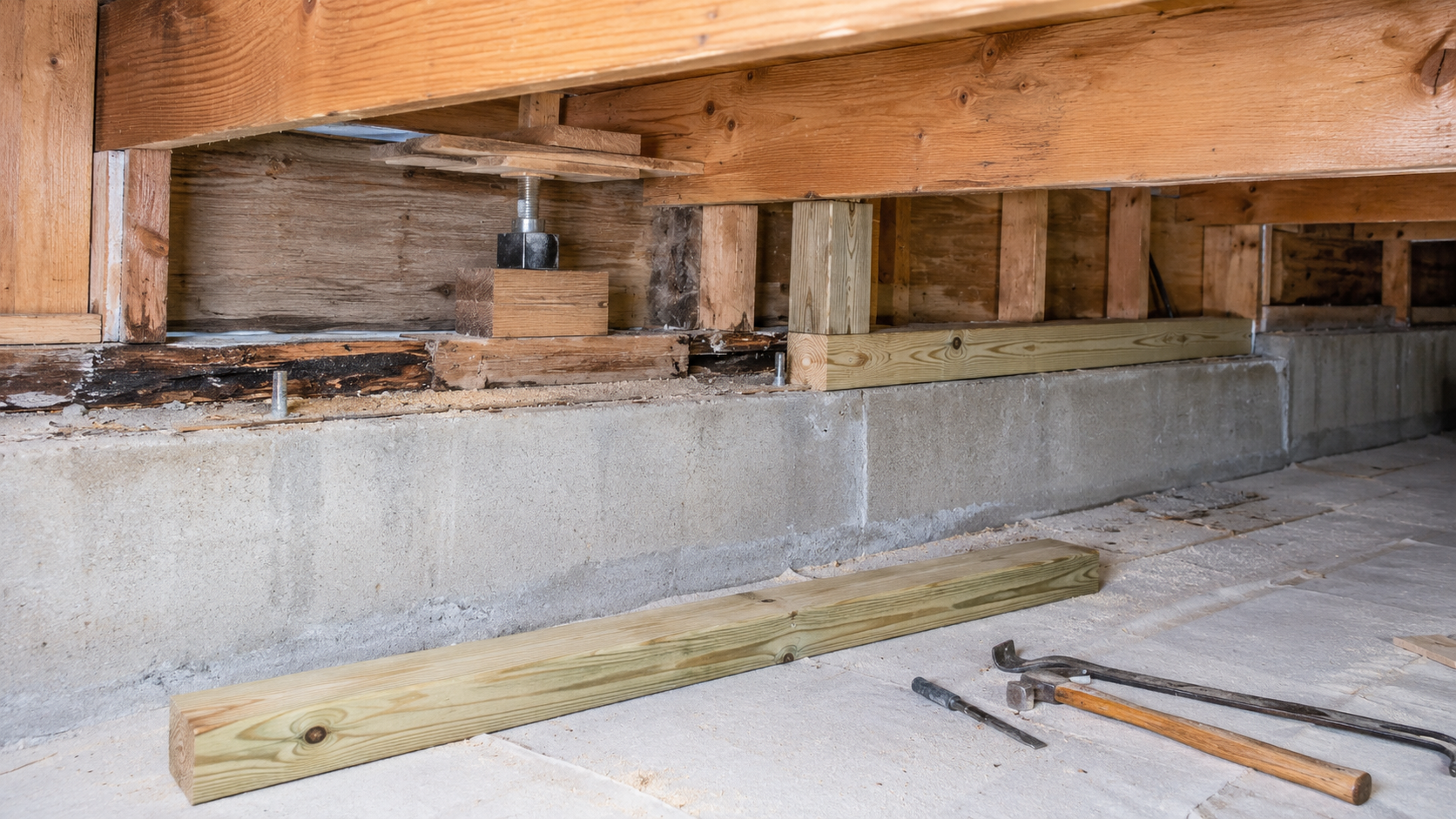
If someone wants to smear filler into a soft sill plate and call it repaired, that is not a structural repair — it is a cover-up. I have seen repairs like that fail within a year when the moisture source was never touched.
Repair Options
There is no single sill plate repair method. The right approach depends on the damage, access, framing, foundation, and moisture source.
| Condition | Possible Repair | Risk |
|---|---|---|
| Small local damage, surrounding wood sound | Sectional sill plate replacement | Moisture source still has to be corrected |
| Damage at sill and rim together | Replace sill section and rim joist section | Floor edge may need temporary support |
| Joist ends are also rotten | Sill repair plus joist repair or sistering | Floor support becomes part of the job |
| Long run of rotten sill | Progressive replacement with shoring or jacking | Higher cost, more access, possible permits |
| Termite damage | Pest treatment plus wood replacement | Closing the repair before treatment can hide active damage |
| Foundation or crawl-space moisture problem | Wood repair plus moisture correction | New wood can rot again if the wetting pattern remains |
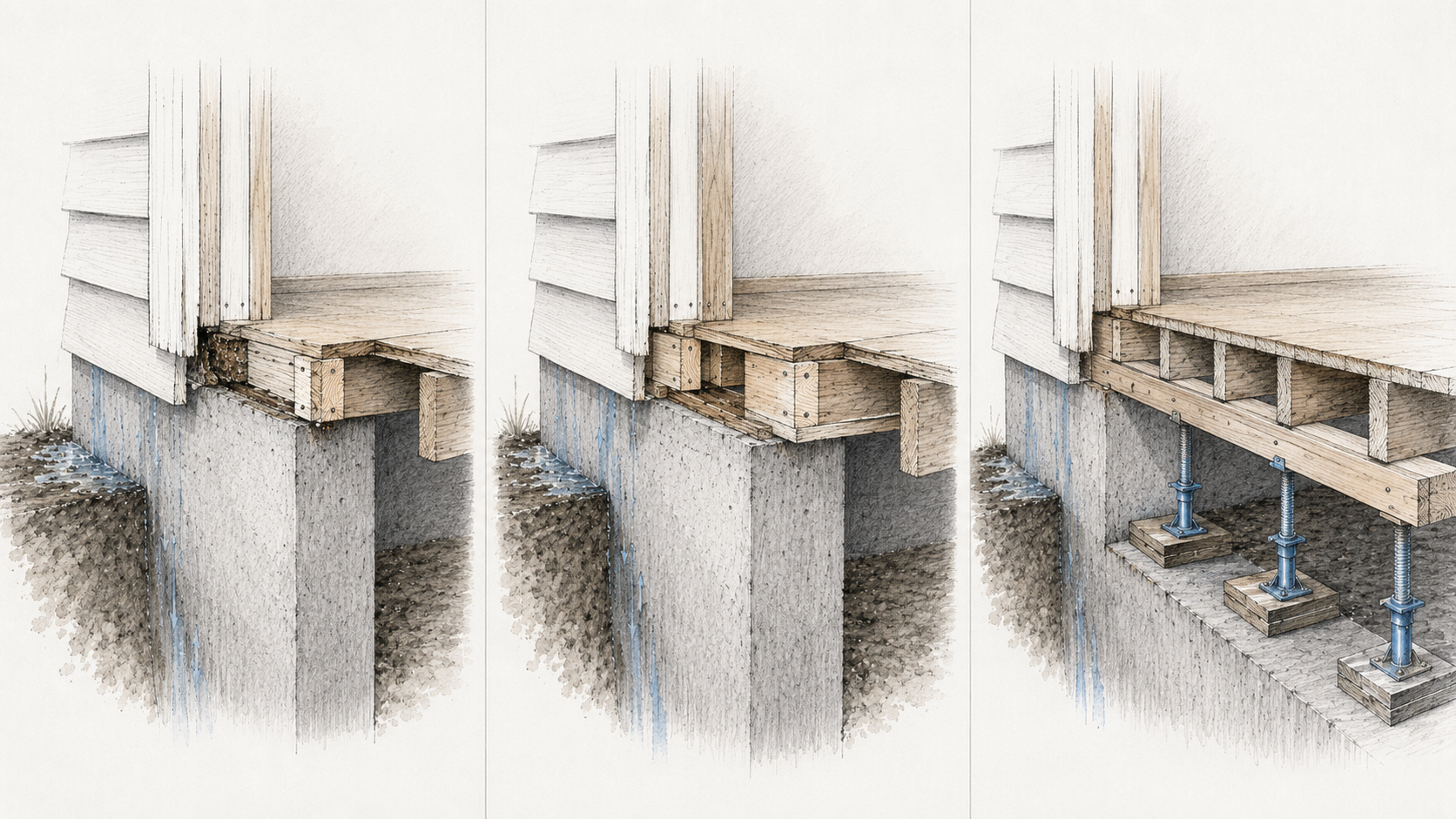
The repair should end with sound wood, proper bearing, restored anchorage where required, corrected moisture, and a wall base that can dry.
What Drives Sill Plate Repair Cost
Sill plate repair cost depends on scope, not the price of lumber. A small accessible section may cost far less than a long structural replacement. Major replacement can become expensive because the contractor may need to open walls, support framing, work in a tight crawl space, replace related rim or joist wood, correct moisture, treat pests, restore anchors, and repair finishes.
| Cost Driver | Why It Changes the Price |
|---|---|
| Length of damaged sill | A short section and a long foundation-wall run are not the same job |
| Access | Crawl spaces, siding, finished basements, decks, porches, and flooring all slow the work |
| Temporary support | Walls or floors may need shoring before damaged wood is removed |
| Related wood damage | Rim joists, joist ends, subfloor edges, sheathing, or studs may also need repair |
| Pest damage | Termite or carpenter-ant treatment may be needed before the repair is closed |
| Moisture correction | Crawl-space humidity, foundation leaks, grading, flashing, or siding clearance may need work |
| Anchorage and inspection | Bolts, washers, straps, treated wood, permits, or inspection can be part of the job |
| Finish restoration | Siding, drywall, insulation, flooring, trim, or paint may need removal and replacement |
For the full cost breakdown — quote traps, jacking decisions, garage cases, crawl-space pricing, and what exclusions to watch for — read sill plate replacement cost.
Crawl Space, Termites, and Moisture
Many sill plate repairs start in a crawl space where the floor edge stays damp, the foundation wall sweats or leaks, soil moisture rises, the vapor barrier is missing or torn, and wet insulation hides the wood. Termites find a damp edge. By the time the homeowner notices, the sill plate, rim joist, or joist ends may already be compromised.
This is why sill plate repair should not be sold as carpentry only. You may need two repairs running in parallel: wood repair (remove and replace damaged sill, rim, joist ends, subfloor edge, or related framing) and moisture repair (correct crawl-space humidity, drainage, foundation leakage, exterior grade, or flashing). If only the wood is replaced, the new sill plate enters the same wet environment that destroyed the old one. If only the crawl space is encapsulated, the damaged structural wood is still there.
For related structural crawl-space issues, see crawl-space foundation repair. If the house has pier or beam support issues, pier-and-beam foundation problems may also be relevant.
Who to Call
Start with a contractor who understands structure and access, not only surface carpentry.
| Problem | Who to Call First | When to Add Someone Else |
|---|---|---|
| Small accessible sill damage | Structural carpenter or experienced repair contractor | If joists, rim, wall movement, or anchorage are involved |
| Crawl-space moisture plus sill rot | Crawl-space repair contractor plus structural carpenter | If one company handles moisture only and not damaged wood |
| Termite damage | Licensed pest-control professional first | Then structural repair contractor after treatment plan is clear |
| Long sill plate replacement | Foundation or structural repair contractor | Engineer or permit office if required locally |
| Siding, deck, or exterior-water source | Exterior repair contractor | Coordinate with structural repair if sill damage is behind it |
The right contractor should be able to explain how the wall is supported during the work. If the answer is vague, get a second opinion before anything is opened.
Questions to Ask Before Hiring
- How much of the sill plate is actually damaged?
- Is this a local section or a longer replacement?
- Is the rim joist, joist end, or subfloor edge also damaged?
- What caused the sill plate to rot?
- Will the wall or floor be temporarily supported?
- Are anchor bolts, washers, straps, or connectors included?
- Is treated wood required or recommended here?
- Do we need pest treatment before the repair is closed?
- Is siding, insulation, drywall, flooring, or trim removal included?
- Are permits or inspections needed?
- What happens if more damage is found after opening the area?
- What prevents the new sill plate from rotting again?
That last question is the one that separates a repair from a reset.
Can You DIY Sill Plate Repair?
Most homeowners should not treat sill plate repair as a basic DIY project. Inspection is different — you can photograph the damage, check for moisture, look for termite signs, probe gently, and improve obvious exterior drainage. But cutting out a sill plate affects support and anchorage in ways that replacing a rotten piece of trim does not.
DIY becomes risky when the wall above needs support, when the plate is anchored to the foundation, when joists or rim joists bear on the damaged area, when the damage runs longer than a small local section, when termites are active or suspected, when the floor or wall has moved, or when you are not sure which member is actually damaged. You can inspect. You can document. You can fix simple drainage. Cutting structural wood without understanding the load path is a bad place to learn by trial and error.
What Good Sill Plate Repair Looks Like
A good repair is not only new lumber. It should include opening enough of the area to find the full damaged section; supporting the wall or floor where needed; removing damaged wood back to sound material; checking rim joists, joist ends, subfloor edges, sheathing, and studs; using replacement material appropriate for the exposure; restoring anchorage or connectors where required; treating pests if insects caused or followed the damage; correcting moisture, drainage, foundation, or crawl-space conditions; and closing the assembly in a way that allows drying. New wood in the same wet wall base is not a finished repair — it is the next failure waiting.
FAQ
Is a rotted sill plate structural?
Often, yes. The sill plate sits at the wall-to-foundation line. If it is soft, crushed, hollow, termite-damaged, or loose around fasteners, treat it as structural until a qualified contractor confirms the scope.
Can a sill plate be repaired in sections?
Yes, in some houses. Sectional replacement may work when damage is local and the surrounding wood is sound. Longer damage may require phased replacement and temporary support.
What causes sill plate rot?
Common causes include crawl-space humidity, foundation moisture, poor drainage, siding too close to grade, failed flashing, plumbing leaks, and termite or carpenter-ant damage.
Can I fill a rotted sill plate with epoxy?
Not for structural sill plate damage. Filler is not a substitute for sound load-bearing wood unless a qualified professional has evaluated the member and determined it is appropriate.
What is the difference between a sill plate and a rim joist?
The sill plate sits on the foundation. The rim joist sits at the outer edge of the floor framing. They are close together, and both can rot when the wall base or crawl space stays wet.
Who repairs a rotted sill plate?
A structural carpenter, foundation repair contractor, or structural repair contractor is usually the right starting point. If termites are active, pest control should be involved before the repair is closed.
Does sill plate repair require jacking?
Sometimes. Small local sections may need limited support only. Longer or load-bearing sections may require shoring or jacking. The contractor should explain the support plan before removing any wood.
Should crawl-space encapsulation be done before or after sill repair?
The sequence depends on the damage and access. The key is that both problems are addressed — damaged wood and the moisture condition that caused it.
Read This Next
For the broader parent guide, read wood rot repair.
For pricing details, read sill plate replacement cost.
If the damage is tied to damp air under the house, read crawl-space humidity.
For structural problems below the house, see crawl-space foundation repair.
If you are tracing the water source first, use home moisture, leaks, and water damage.