



The fastest way to ruin a Cape Cod kitchen is to treat the cabinets as a shopping decision instead of a room-fit decision.
The doors may look dated. The hinges may be tired. The stain may read too orange or too heavy. None of that means much on its own. If the cabinet boxes are dry, solid, and fitted well to the room, tearing them out is often the expensive mistake, not the smart one.
In a compact Cape kitchen, cabinets control more than style. They control the sink window, the work path, the appliance fit, the storage, the light, and whether the room still feels like it belongs in the house.
If this cabinet project is part of a larger Cape Cod kitchen remodel, slow down before ordering a full new package. The old cabinets may be what's holding the room together.
Why Cape Cod Kitchen Cabinets Are Different
A Cape Cod kitchen is often small in a specific way, not just short on square footage. The sink window may sit on the best wall. A doorway may cut through the cabinet run. The stair may steal a corner. A back door, radiator, chimney jog, old plaster wall, or low window sill often decides where cabinets can go before anyone's even picked a style.
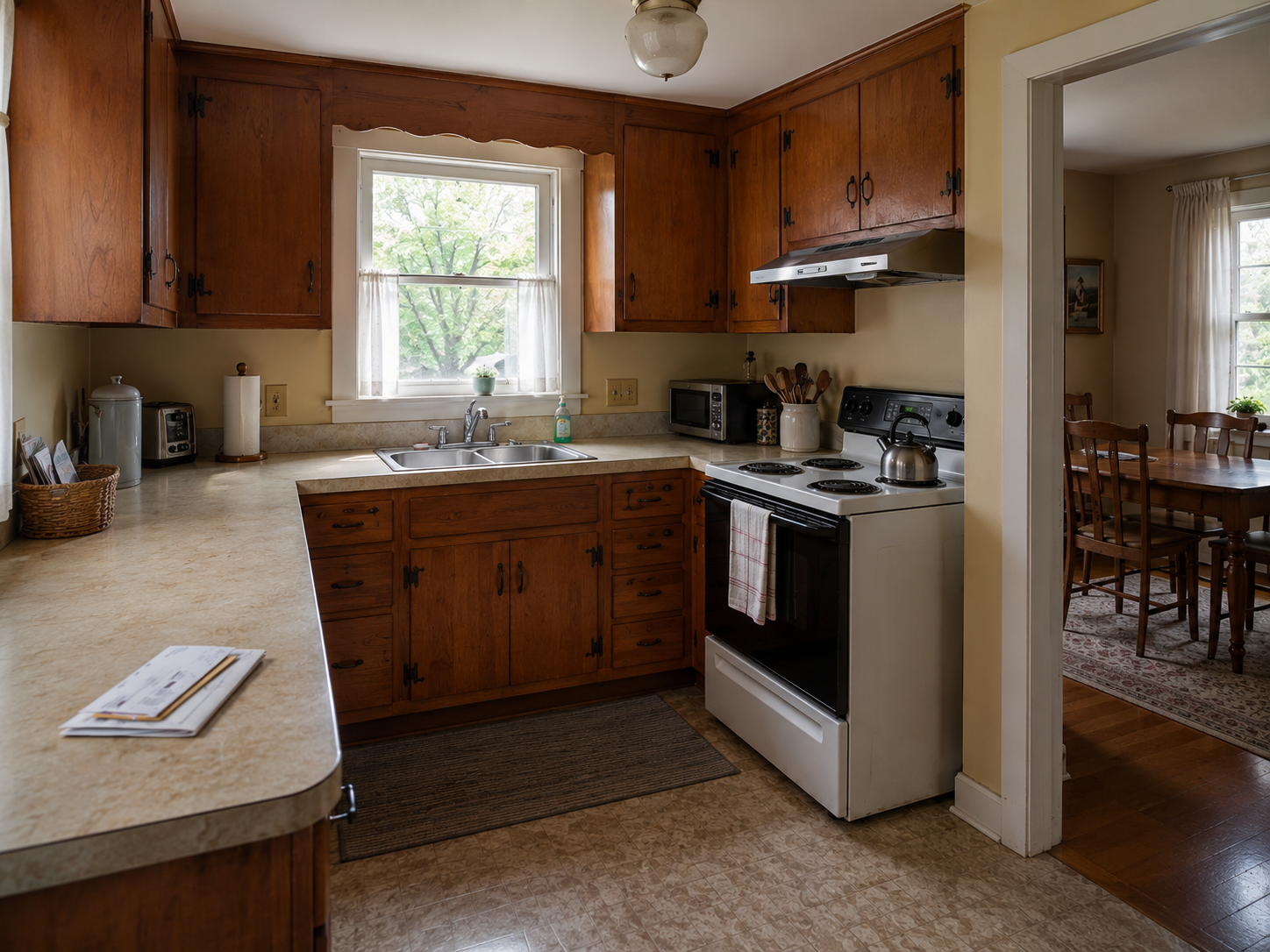
Generic cabinet advice tends to fall apart here. A cabinet package that works fine in a wide-open kitchen can crowd a Cape kitchen fast. Taller uppers darken the sink wall. A deeper fridge blocks the walking path. A bigger pantry cabinet swallows the only spot where a person can turn around.
The real question isn't which cabinets look best in a showroom. It's what can improve without making the room feel heavier, flatter, or less like a Cape Cod house.
Often that answer isn't new cabinets at all — it's repair, paint, new doors, better drawers, cleaner hardware, better lighting, and one damaged section replaced properly.
What to Check Before You Spend Money
Don't start with cabinet color.
Start with the boxes. Open the sink base first — it takes the most abuse of any cabinet in the kitchen. Look for swelling, soft wood, rot, a moldy smell, a loose floor, plumbing leaks, stained bottoms, and old patching. If that section has failed, it may need replacing even when everything else is worth saving.
Then check whether the boxes are still square enough to work. Doors that rub can come from bad hinges, a settled floor, a loose face frame, a swollen panel, or a box that's genuinely twisted over time. Those are different problems. Some are easy fixes. Some mean the cabinet has run out its useful life.
Check the walls and floor before assuming replacement is simple. Older Cape kitchens often have plaster, patched drywall, uneven floors, old finish layers, and flooring that stops right at the toe kick. Pull the cabinets and you may uncover unfinished floor, old wall scars, missing baseboard, abandoned outlet locations, and plumbing routes that have been hidden for decades.
Check the window. The sink-window wall is often the room's best feature even when the cabinets around it look tired. Crowd the window trim with new uppers, or shift the sink base a few inches, and the kitchen can lose the one thing that made it feel like a Cape kitchen in the first place.
Check old paint before sanding or stripping anything. In older homes, painted cabinets, trim, and window parts may involve lead-safe work if the paint predates 1978. Don't dry-sand old painted surfaces until you know what's actually under the finish.
The Cabinets You Already Have May Be the Best Material in the Room
Don't tear out old Cape Cod kitchen cabinets just because the doors look dated.
In many older Cape kitchens, the existing cabinets were built around the room instead of dropped into it. They may fit a short sink wall, an odd plaster corner, a narrow doorway, a low window, or a chimney jog better than any new cabinet package ever will — and the room usually doesn't have wall space to waste on a worse fit.
If the boxes are dry, solid, and well fitted, they're often worth more than they look. Good wood and plywood cabinet boxes can last for generations as long as they stay dry and protected. Wood fails when water, insects, or neglect get to it — age by itself doesn't make a cabinet box useless.
This is where real money gets wasted or saved. Keep the strong boxes, fix the weak drawers, simplify the door style, swap the hardware, add better lighting, and the storage starts working. Tear everything out instead, and you're buying new stock cabinets, losing the old fit, patching the floor and walls, moving outlets, fighting the window trim — and often still ending up with a kitchen that feels generic.
Keeping old cabinets doesn't mean keeping every old detail. If arched doors, heavy grooves, fussy trim, dark stain, or dated hardware are what make the kitchen feel tired, those can all change. The same boxes can support a calmer look with simpler doors, flatter panels, cleaner pulls, and better paint.
How to tell if the boxes underneath are worth keeping
A quick check inside the cabinet tells you more than the door style ever will. Open a lower cabinet and look at an exposed edge — a shelf edge, the back panel, or a corner near the hinge. Layered wood grain running through the thickness means plywood. A speckled, pressed look with no visible layering means particleboard.
Push gently on the back or bottom panel. A rigid, solid feel usually means plywood. A panel that flexes or feels thin and "bendy" is more likely particleboard, and particleboard is the material most vulnerable to swelling if water ever reaches it — check the area under the sink and around the dishwasher first, since that's where it usually fails.
A light knuckle-tap on the side panel can tell you the same thing by sound: plywood tends to give a slightly hollow ring, while particleboard sounds more like a dull thud. It's not a lab test, but it's a fast way to compare cabinets in the same kitchen.
Check how the box is fastened together. Screws that have held for decades without stripping out or pulling loose are a good sign — plywood holds a screw thread far better than particleboard does. If you can see how the drawer boxes are joined, interlocking finger joints (dovetails) usually point to better original construction, even in a builder-grade kitchen from decades ago.
One thing worth knowing before you assume "old means bad": cabinets from the 1980s through the early 2000s were often built with plywood boxes and solid oak doors, which can be sturdier than some of the lower-tier cabinet lines sold new today. Dated doesn't automatically mean lower quality. Check the material, not the decade.
Keep, Reface, Replace, or Rebuild?
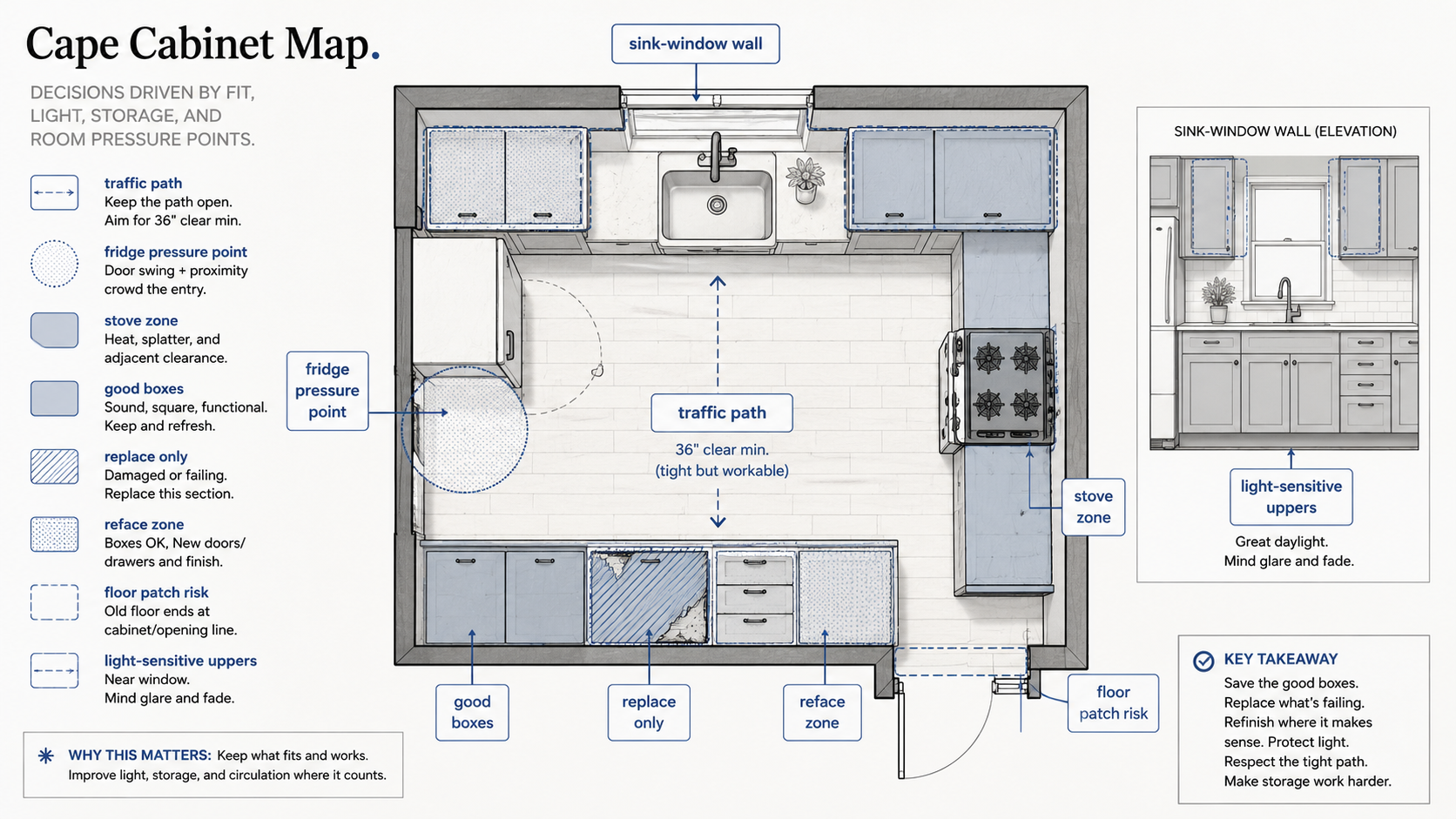
A Cape Cod cabinet decision works better made in layers, not all at once.
| Cabinet condition | Best move | Why it fits a Cape kitchen |
|---|---|---|
| Solid boxes, good fit, ugly doors | Keep the boxes and replace or simplify the doors | The old layout may already fit the sink window, walls, trim, and tight footprint better than new stock cabinets. |
| Good wood, worn finish, working layout | Repair, sand safely, paint, refinish, or change hardware | This keeps the room's proportions while removing the dated surface layer. |
| Bad drawers, good boxes | Upgrade drawer boxes, slides, hinges, and inserts | Storage improves without opening the walls, floor, and trim into a bigger project. |
| Rotten sink base or swollen cabinet parts | Replace the damaged section | Water damage spreads into plumbing, flooring, and countertop work fast if it's ignored. |
| Wrong layout that blocks the room | Replace or rebuild the cabinet plan | Keeping a layout that ruins appliance fit, storage, or circulation isn't preservation — it's just a worse kitchen with old cabinets in it. |
Refacing makes sense when the boxes are sound and the layout already works. Replacement makes sense when the boxes are failing, the sink base is rotten, the sizes fight every appliance, or the old layout wastes the best wall in the room.
Why Stock Cabinets Can Look Wrong in a Cape Kitchen
Stock cabinets aren't bad. They're just blunt instruments in a room that needs precision.
A Cape kitchen often needs smaller judgments than a stock system likes to make. One inch at the window casing matters. A fridge that projects too far into the walkway matters. A blind corner can swallow the only useful storage the room has. A tall pantry can block light the room genuinely needs.
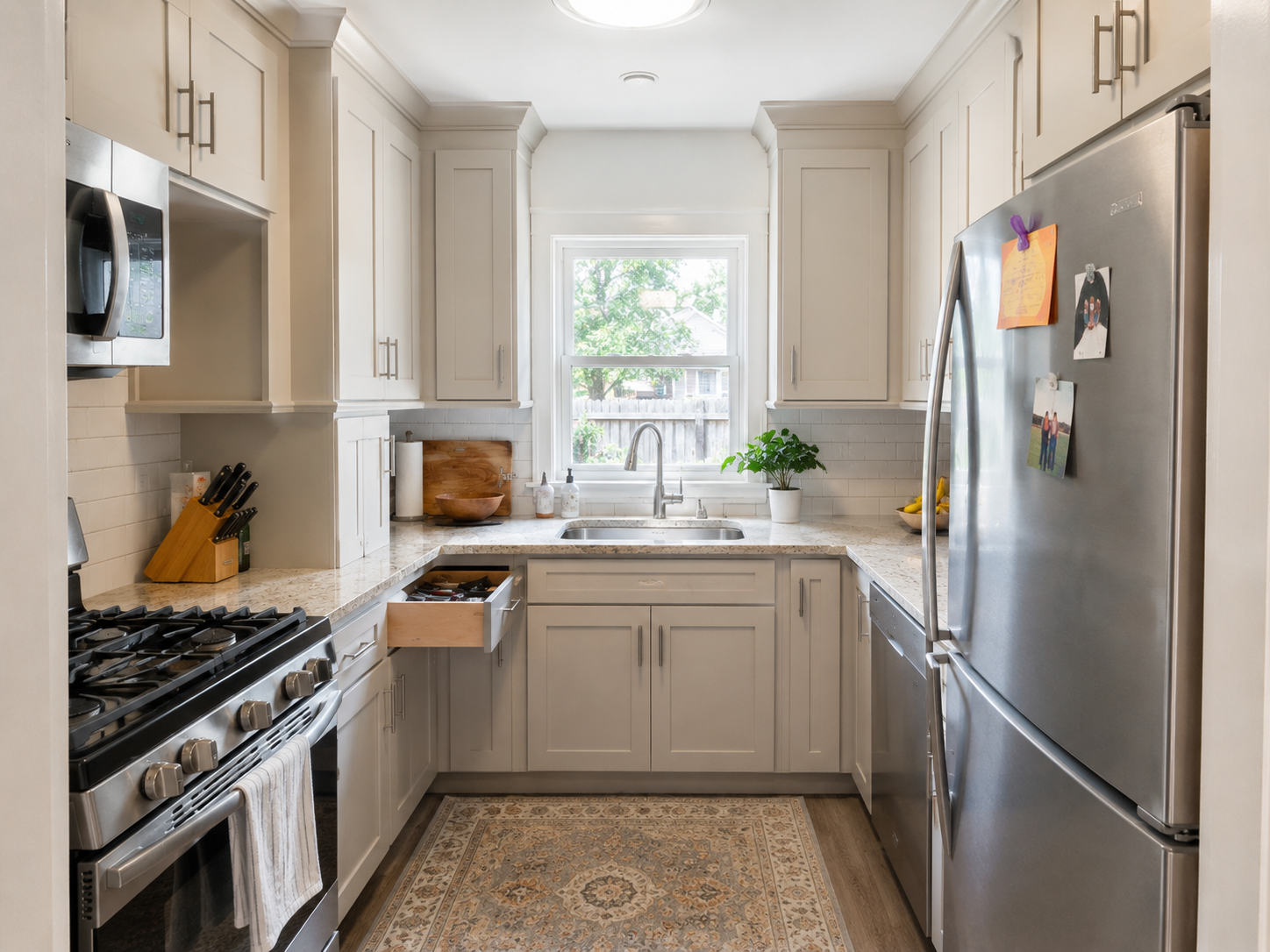
The mistake isn't buying affordable cabinets — plenty of affordable cabinets work fine in the right kitchen. The mistake is letting the cabinet package decide the room instead of the other way around.
In a small Cape kitchen, a better plan sometimes means fewer upper cabinets, a shallower box at one pinch point, a custom filler near an old wall, a repaired original sink run, or one rebuilt cabinet where the standard size just doesn't fit. That kind of discipline is usually what keeps the kitchen from feeling like a showroom package squeezed into an old room.
Cabinet Height, Window Light, and the Sink Wall
The sink wall is usually where a Cape kitchen either keeps its character or loses it.
Many older Cape kitchens put the sink under a window because the room needed daylight where the work happened. That relationship still matters. Crowd the window with new cabinets, cover the trim, darken the sink area, or force a bulky microwave near the glass, and the kitchen can feel smaller even after real money's been spent.
Upper cabinets near the window need restraint. A shorter run, an open shelf, a repaired original cabinet, or a cleaner casing detail can feel better than packing every inch with storage. Storage matters, but in a Cape kitchen, light is doing just as much work — lose it and the room gets heavy fast.
This is also where Cape Cod window replacement can affect the cabinet plan. A thicker replacement frame, changed trim, or lower sill can change how the sink, counter, backsplash, and uppers meet the window.
Appliance Size Can Break the Cabinet Plan
A cabinet plan that ignores appliances isn't really a plan.
Cape kitchens are often tight enough that a deeper refrigerator changes the walking path entirely. A wide range can eat the only drawer stack. A dishwasher can fight the sink base. A microwave over the range can look convenient on paper and then crowd the cooking zone and make the whole wall feel top-heavy in person.
Measure the actual door swing, not just the appliance width — fridge door, dishwasher drop-down, oven door, and whatever drawer sits beside each one. A cabinet elevation can look fine on paper and still fail the first time two doors open at the same time.
If the kitchen is very compact, work through the broader small Cape kitchen remodel layout before ordering cabinets. Cabinet style can't fix a bad appliance path.
What Different Eras Did to Cape Cabinets
Cape Cod kitchens got changed over and over across the decades. That's why one house can have a 1940s shell, 1960s cabinet boxes, 1980s doors, a 2000s counter, and a newer appliance package, all in the same room.
Original early Cape kitchens often had simpler built-ins, painted wood, inset doors, small drawer runs, and freestanding pieces mixed with built-in work — details worth respecting if they still function. Mid-century updates usually brought compact face-frame cabinets, laminate counters, and practical sink-window layouts that may not look fashionable now but are often sturdy and well fitted to the room. Later 1970s and 1980s replacements added heavier oak doors, raised panels, bulky uppers, dark stain, and soffits — sometimes solid, sometimes exactly what makes the kitchen feel dark and crowded today.
Don't judge by decade alone. Judge by fit, condition, structure, light, and layout.
How This Project Gets Bigger
Cabinet work gets bigger when a surface decision exposes the room behind it.
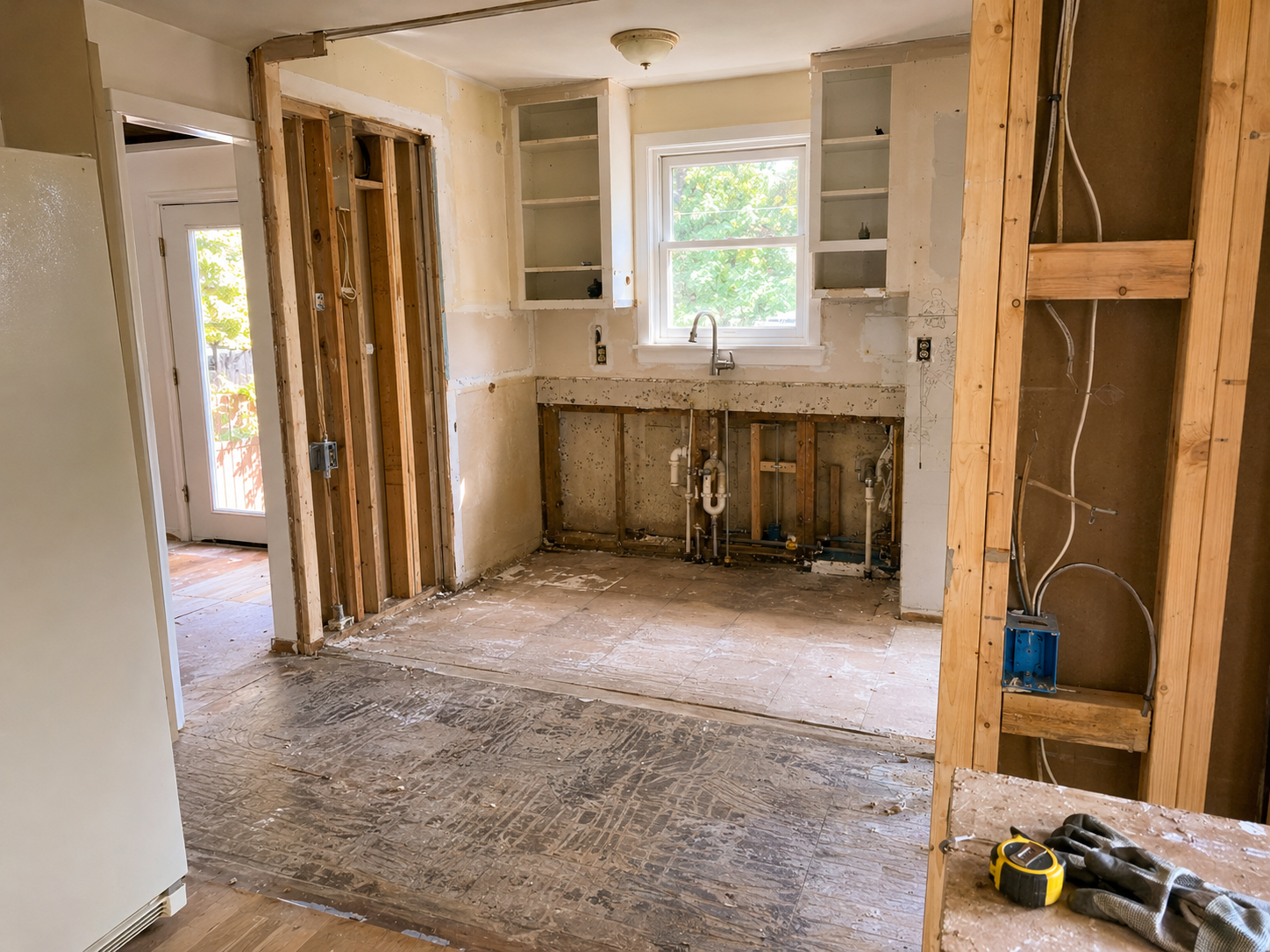
You replace one cabinet. The counter has to come off. The backsplash breaks. The outlet's in the wrong place. The floor doesn't continue under the old cabinet. The plaster behind it is damaged. The sink plumbing needs correction. The old light fixture is suddenly in the wrong spot. One cabinet decision turns into a kitchen project.
That's not a reason to avoid the work — it's a reason to name the scope before demolition starts. Decide early whether this is a cabinet refresh, a repair, a refacing job, a partial rebuild, or a full kitchen remodel. Keep changing the category midstream and the budget won't behave.
What Not to Touch Yet
Don't remove the sink wall first. It often holds plumbing, window trim, backsplash decisions, light, counter height, and the main working surface — study it before changing it if it's functioning and dry.
Don't tear out old cabinet boxes before checking whether the floor runs underneath them. If the old flooring stops at the toe kick, replacement cabinets can create exposed patches and a flooring decision you didn't plan to make.
Don't remove soffits, chases, or boxed areas until you know what's inside. Some are empty. Some hide ducts, plumbing, wiring, or old vent routes — the ugly box may be useless, or it may be doing a job.
Don't sand old painted cabinets casually. Test first, or use lead-safe methods when the house age and paint history call for it.
Minimum Improvement, Middle Renovation, or Full Cabinet Replacement
A Cape cabinet project needs a scope level before it needs a finish board.
| Project level | What it can achieve | What it cannot solve | Hidden work that may appear |
|---|---|---|---|
| Minimum improvement | Clean, repair, paint, change hardware, adjust doors, improve lighting, add inserts. | It won't fix a bad layout, rotten boxes, poor appliance spacing, or water damage. | Lead-safe paint work, hinge repair, drawer repair, minor plumbing under the sink. |
| Middle renovation | Reface doors, replace drawer fronts, rebuild one damaged section, improve storage, keep the basic layout. | It won't make the kitchen larger or correct every appliance conflict. | Counter removal, backsplash repair, outlet changes, floor patching, sink-base replacement. |
| Full replacement | New cabinet layout, new boxes, better appliance fit, new storage logic, larger design reset. | It can't ignore walls, windows, plumbing, flooring, electrical, and old-house fit. | Plaster repair, wiring, plumbing, flooring, window trim correction, permits, possible full kitchen remodel. |
Why Some Cabinet Jobs Feel Generic Even When They Cost the Same
Two Cape kitchens can spend close to the same cabinet money and come out feeling completely different.
One feels thoughtful, calm, bright, and built for the house. The other feels like a cabinet package was dropped into the room — too many uppers, bulky corners, heavy doors, weak lighting, trim that no longer lines up with the old window and door openings.
The better kitchen usually isn't the one with the most expensive cabinets. It's the one where the cabinet choices respect the room's actual proportions: protect the sink-window light, simplify the cabinet face, keep the hardware quiet, avoid crowding the window trim, make the appliance path work, and use fewer materials. A trendy backsplash, oversized pulls, or a tall pantry cabinet can all make a small room feel smaller if they fight the proportions the house already has.
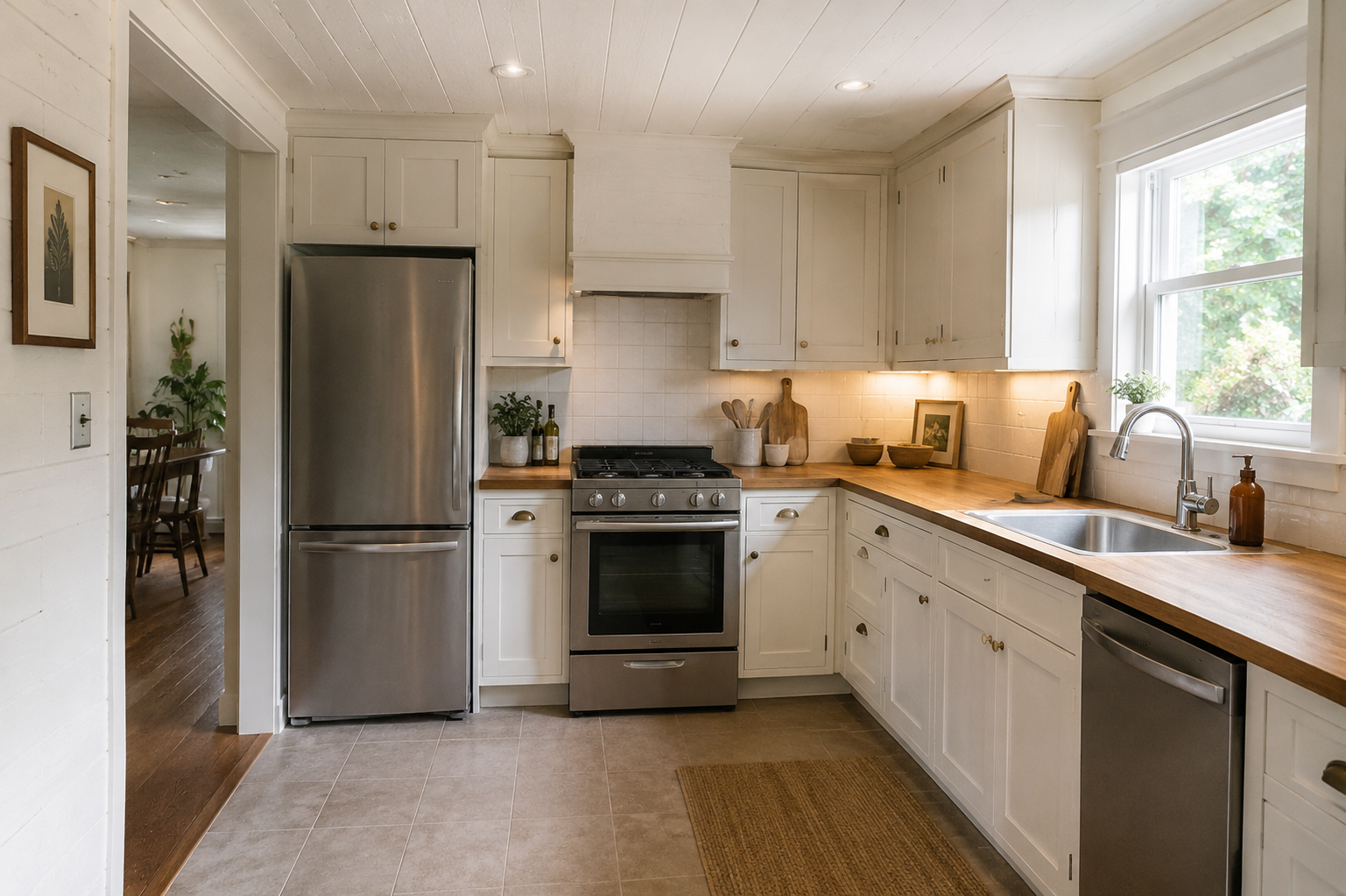
This is the same-money, worse-result problem in miniature: replacing solid old cabinets with new ones that fit the house badly isn't an upgrade, it's just a newer mistake wearing better paint.
The better approach solves the awkward parts first. Fix the sink base if it's damaged. Reduce visual weight near the window. Repair drawers that are wasting storage. Add lighting where the counter's dark. Keep the boxes that fit. Replace the parts that fail. Let the room tell you where the money should go, instead of a catalog.
Painted Cabinets, Wood Cabinets, and What Fits the House
Painted cabinets can work well in a Cape kitchen when the paint calms the room and lets the window, trim, and proportions come forward. Wood cabinets work too, as long as the tone isn't fighting the small space — the problem is rarely wood itself, it's heavy stain, busy grain, and bulky doors in a room that already has limited light.
If the cabinets are old painted wood, stripping them isn't automatically the best move — old paint history can be messy, and the cabinet may look better with proper prep, lead-safe handling where needed, and a durable painted finish. If they're orange oak or heavy raised-panel doors, painting can help, but changing the doors or simplifying the fronts often helps more. Paint can't always fix a fussy profile.
Smart Small Wins Before a Full Cabinet Replacement
Not every Cape kitchen needs new cabinets. Start with the moves that tell you whether the room has good bones: clean the boxes, adjust hinges, repair one bad drawer, add a real under-cabinet light at the darkest counter, remove a bulky valance if it crowds the window, change one test handle before buying a whole hardware package, paint a sample door before committing to the entire kitchen.
Add storage where the kitchen is actually failing, not where a catalog says storage should go. A shallow pantry on a side wall may help more than taller uppers near the window. A better drawer stack may matter more than more cabinets. A repaired base cabinet can be more useful than a decorative open shelf.
These moves aren't glamorous, but they prevent the worst kind of cabinet project — spending thousands before anyone's figured out what the kitchen actually needed.
DIY Cabinet Work That Makes Sense
DIY makes sense when the work is low-risk, reversible, and not disturbing hazardous old paint or hidden systems. A careful homeowner can clean cabinets, remove and label doors, change pulls, add organizers, adjust some hinges, install simple inserts, paint a test door, replace shelf pins, and improve loose storage.
Painting can be DIY if the surface is safe to work on and the prep gets taken seriously. Doors need to come off. Grease has to be removed. Gloss needs to be dulled safely. Hardware holes may need filling. The finish needs time to cure. A rushed paint job on cabinets gets ugly fast, because cabinet doors are touched every single day.
DIY doesn't mean doing every trade yourself. A homeowner can run the project and still hire out the sink base, electrical, counters, lead-safe work, or custom doors.
Where Professional Help Protects the Budget
Hire help where a mistake can create water damage, unsafe work, a failed inspection, or a worse layout — electrical changes, plumbing under the sink, gas range changes, range hood venting, structural wall changes, major layout changes, countertop templating, and lead-safe work when old paint is involved.
A cabinetmaker can also protect the design. In a Cape kitchen, one custom filler, one rebuilt sink base, or one better drawer stack can save the room from a bad stock-cabinet compromise. Professional help shouldn't take the project away from the homeowner — it should protect the parts that are expensive to redo.
What Cape Cod Kitchen Cabinets Can Cost
Treat these as 2026 U.S. planning ranges, not quotes. Size, region, cabinet condition, material, labor, paint safety, appliance changes, countertops, plumbing, electrical, and floor repair can all move the number fast.
| Cabinet scope | Planning range | What it usually includes |
|---|---|---|
| Minimum refresh | $500 to $3,500 | Cleaning, hardware, minor repairs, organizers, small lighting upgrades, DIY-friendly improvements. |
| Repair and repaint | $2,500 to $10,000 | Paint prep, cabinet painting, hinge work, drawer repair, small carpentry, selected professional help. |
| Refacing or new doors | $7,500 to $25,000+ | Keeping boxes, replacing doors and drawer fronts, veneer or finish work, hardware, better visual reset. |
| Partial rebuild | $8,000 to $30,000+ | Replacing sink base, adding drawer stacks, correcting one bad wall, keeping useful old cabinet runs. |
| Full cabinet replacement | $15,000 to $60,000+ | New cabinet boxes, new layout, possible counter, floor, plumbing, electrical, backsplash, and trim work. |
The cheap-looking job isn't always the cheap job. A full replacement can still look generic if the cabinets ignore the window, walls, appliances, and small-house scale.
Before-and-After Photos Can Hide the Cabinet Problem
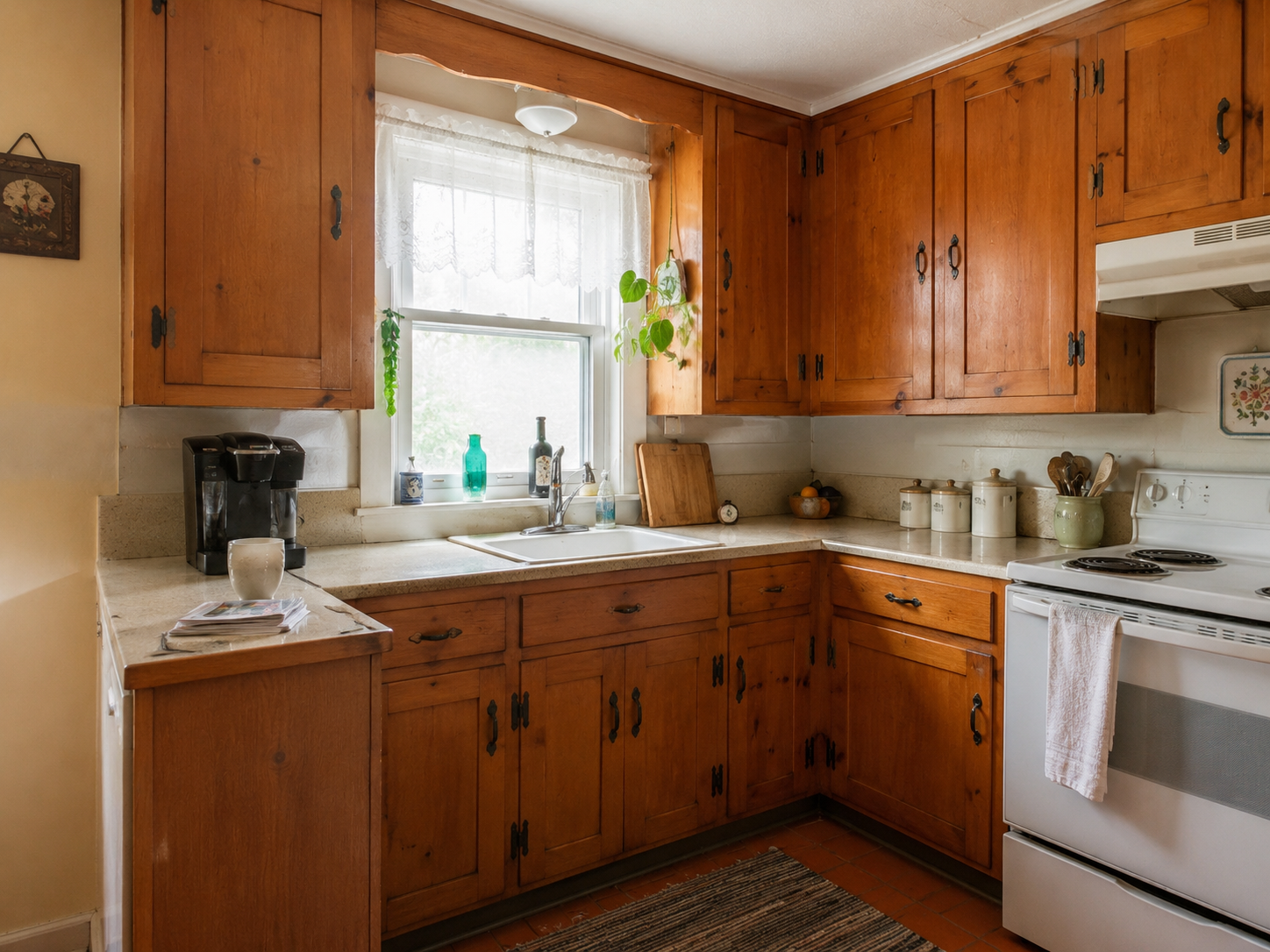
Cabinet before-and-after photos can be useful, but they often hide the decision that actually mattered. The after photo shows new doors, counters, and styling. It doesn't show whether the old boxes were saved, whether the floor had to be patched, whether the sink wall stayed dry, or whether the appliance path actually got better.
Use before-and-after images for ideas, not proof. Your Cape kitchen has its own window, wall, stair, door, floor, and cabinet fit to solve.
Decision Point
Before you order cabinets, decide what's actually failing.
If the boxes are dry, solid, and fitted well to the room, start with repair, doors, drawers, hardware, paint, lighting, and storage — don't tear out good cabinet bones just because the surface is tired.
If the sink base is rotten, the drawers are failing, or one wall was badly planned, replace the damaged or blocking parts first. A partial rebuild can be smarter than a full tear-out.
If the layout genuinely ruins appliance fit, storage, window light, and circulation, cabinet replacement may be the right move — but at that point, treat it as a kitchen plan, not a cabinet purchase.
Related Reading
- Cape Cod kitchen remodel
- Small Cape kitchen remodel
- Cape Cod house remodel
- Cape Cod window replacement
- Cape Cod architecture
FAQ
Should I replace old Cape Cod kitchen cabinets?
Not automatically. If the boxes are dry, solid, square enough, and fitted well to the room, they may be worth repairing, painting, refacing, or updating before full replacement.
When should old kitchen cabinets be replaced?
Replace them when the boxes are rotten, swollen, badly built, unsafe, too damaged to repair, or forcing a layout that blocks appliance use, storage, light, or circulation.
Is cabinet refacing good for a Cape Cod kitchen?
It can be a good fit when the cabinet boxes are sound and the layout already works. Refacing changes the surface, not the room plan, so it won't fix a bad appliance layout or rotten sink base.
Are old wood cabinets better than new cabinets?
Sometimes. Solid wood or good plywood cabinets that stayed dry can be very durable. But old doesn't always mean better — water damage, bad layout, failing drawers, lead paint, and poor construction still matter more than age.
How can I tell if my cabinet boxes are plywood or particleboard?
Look at an exposed edge for layered wood grain versus a speckled, pressed texture. Push the back panel — plywood feels rigid, particleboard feels thin or bendy. Check under the sink for swelling, since particleboard is far more vulnerable to water damage than plywood.
What cabinet style fits a Cape Cod kitchen?
Simple painted doors, flat or modest recessed panels, quiet hardware, and restrained upper cabinets often work better than bulky raised-panel doors, heavy trim, or oversized modern cabinet runs.
What is the biggest cabinet mistake in a small Cape kitchen?
Letting storage volume beat proportion. Too many uppers, bulky pantry cabinets, oversized appliances, and poor window treatment can make a small kitchen feel darker and more crowded.
How much do Cape Cod kitchen cabinets cost?
A small refresh may run a few hundred to a few thousand dollars. Refacing or new doors can move into the high four figures or low five figures. Full cabinet replacement can become a much larger kitchen project once counters, floors, walls, plumbing, and electrical are involved.