

The fastest way to wreck a Cape Cod kitchen remodel is to pick the cabinets before you understand the room.
From the doorway it looks like a finish job: new cabinets, new counters, better light, maybe open a wall. Then the work starts, and the kitchen turns out to be boxed in by the stair, the sink window, the old plumbing, a narrow doorway, and however the back of the house was added onto. So plan the layout first and price the finishes second. If the whole house needs a bigger plan, back up to the Cape Cod house remodel so the kitchen does not end up fighting the roof, the windows, or a future addition.
Why Cape Cod Kitchens Are Hard to Remodel
These kitchens are hard to remodel because the Cape Cod house was never built around a modern kitchen. Many of the older ones were workrooms: compact, closed off, and tied to a sink window, a back door, a basement stair, a chimney, or a single opening into the dining room. Nobody designed them for a big island, a wide refrigerator, a wall of pantry storage, and four people moving through at once.
The trouble usually isn't square footage on its own. A small kitchen can work beautifully when the openings, appliances, counters, and traffic path are organized, and a bigger one can still fail when every doorway, window, and old pipe lands in the wrong place. So a Cape kitchen remodel starts with movement, walls, windows, plumbing, and structure. Leave cabinet color for much later.
Start With the Layout, Not the Cabinets
The layout is what decides whether the remodel works. Before you order a thing, mark the sink window, the stove wall, the refrigerator spot, the stair, the back door, the dining-room opening, the basement access, and any wall you are hoping to open. Then draw the path people actually walk. If the route from the back door to the dining room cuts straight through the cooking zone, the kitchen will still feel wrong after you have spent the money.
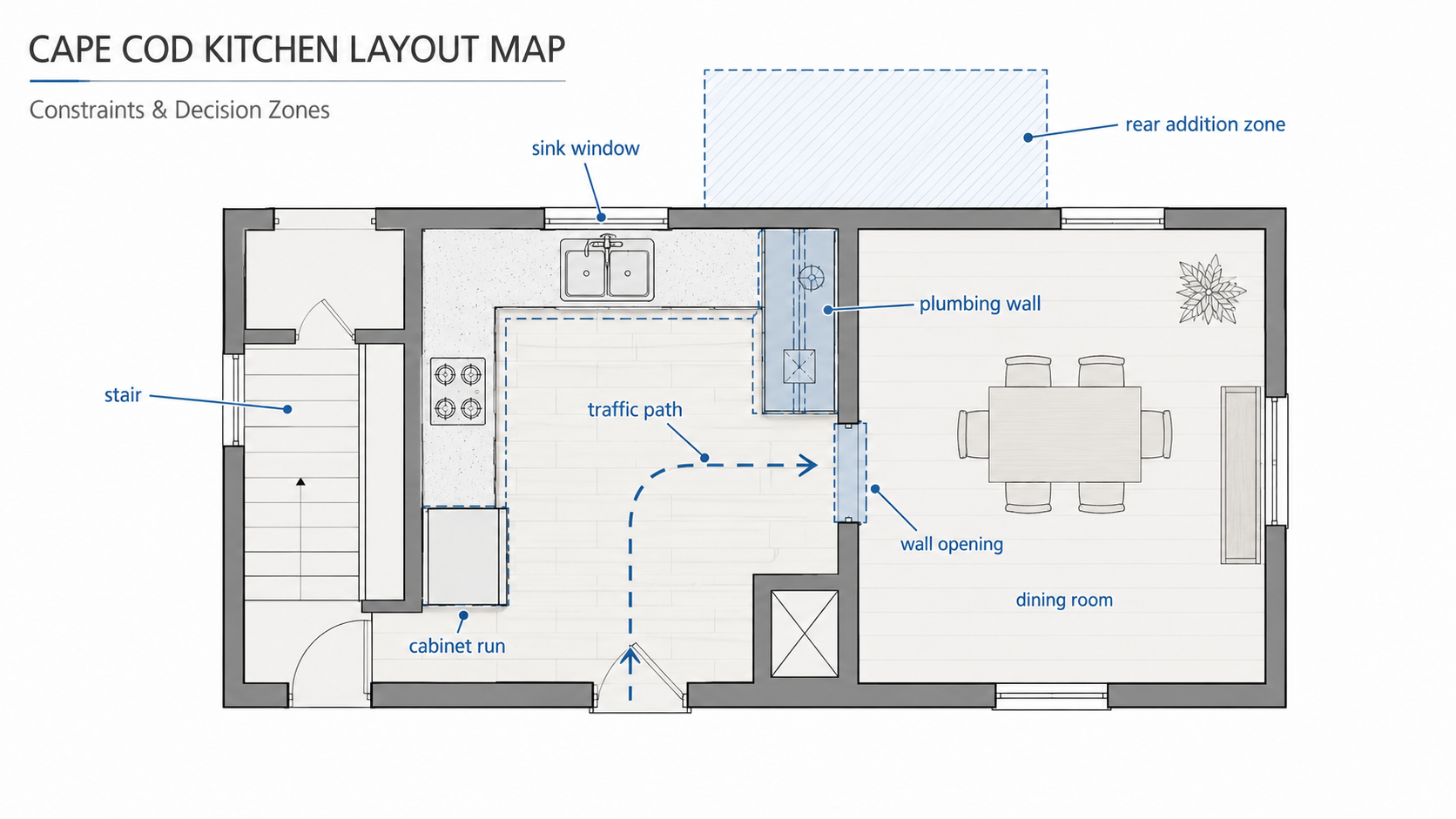
The first question is usually not where the island should go. It is whether this kitchen can take an island at all, and plenty of Cape kitchens are better off with a galley, an L-shape, a compact U, a peninsula, or just a wider cased opening. The layout also sets the budget. Moving the sink means plumbing. Opening a wall means a beam, a post, a ceiling patch, a floor patch, moved electrical, and permit review. Moving the window reaches all the way out to the siding, the trim, and sometimes the whole rhythm of the front or back of the house.
Where the Kitchen Usually Gets Trapped
Most Cape kitchens are trapped by more than one thing at once. The sink window pins the sink wall, a narrow doorway controls the circulation, the stair steals the only clean run of cabinets, a radiator or chimney or old plumbing wall blocks the obvious expansion, the back door cuts through the work zone, and the refrigerator ends up where a pantry should have gone because there was nowhere else to put it. I have stood in Cape kitchens where the only wall long enough for a real cabinet run had the basement stair coming down the middle of it.
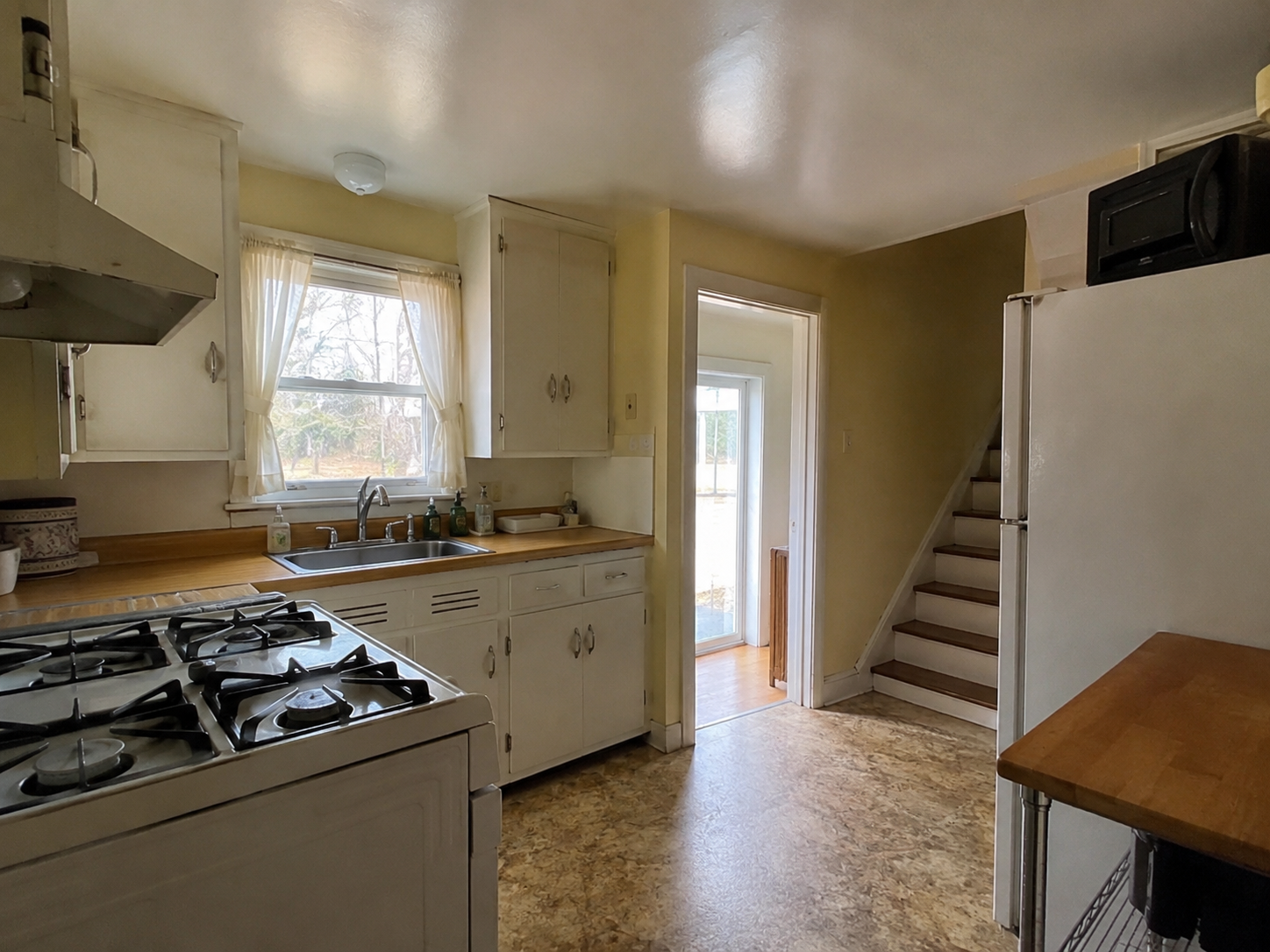
This is why copying a big open kitchen out of a photo usually disappoints. The photo shows the cabinets and the lighting; it does not show the old stair, the basement beam, the plumbing stack, the ceiling patch, the duct chase, or the way people actually move through the house. A good remodel works the traps first. Sometimes that means widening a doorway instead of pulling a whole wall, sometimes a smaller refrigerator or a shallow pantry or a peninsula, and sometimes it means admitting the kitchen needs a rear bump-out rather than forcing everything into the old footprint.
Can You Open the Wall in a Cape Cod Kitchen?
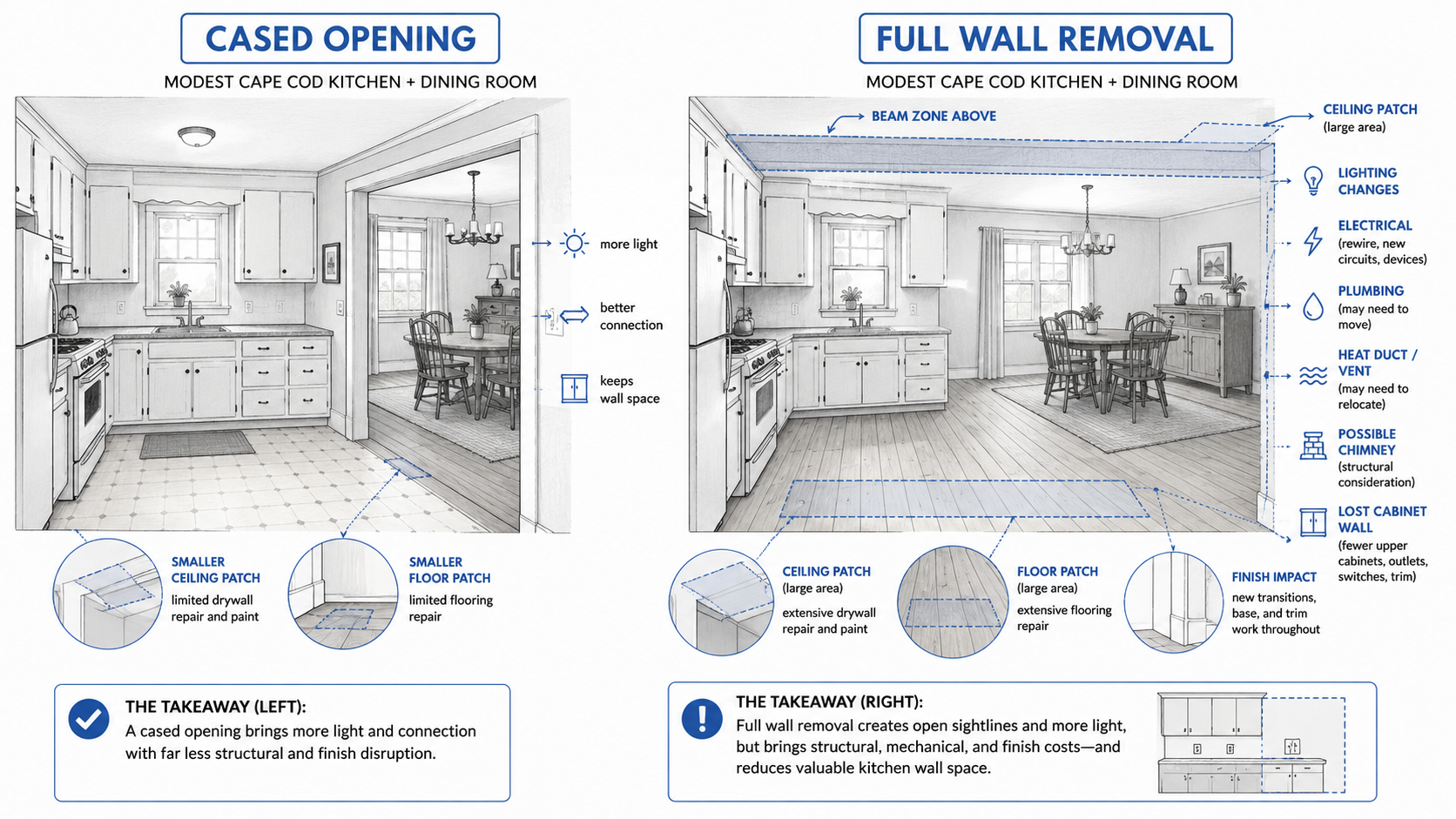
Sometimes, and not always cheaply. The wall between the kitchen and the dining or living room may be carrying load from the floor, the ceiling, the roof, or the upstairs framing, and even when it is not the main structural wall it can hold electrical, plumbing, heat ducts, old plaster, or a chimney that complicates everything. A cased opening is often the safer move than a full open-concept removal, since it buys light and connection without erasing the wall space a small kitchen needs for cabinets, outlets, switches, and trim.
Before you price the opening, ask what the finished ceiling will look like, because the expensive part is often not the beam. It is the ceiling patch, the floor patch, the lighting changes, the plaster repair, and the work of making the two old rooms feel like they were always meant to be one.
Here is the part that is hard to hear: the open-concept kitchen everyone pulls off Pinterest usually works against a small Cape. Taking out the wall buys you light and sightlines and costs you the exact wall space a tight kitchen needs for cabinets and counter, and there is no version where you get both. On a big house you would never feel the trade. On a Cape you feel it every day. I am not going to tell you which way to go, because it honestly comes down to whether you cook more than you entertain, but anyone who tells you open concept is automatically the upgrade on a small Cape is mostly selling you the wall demo.
Small Cape Cod Kitchen Layouts That Actually Work
Small Cape kitchens work best when they stop trying to act like big ones. A clean galley beats a cramped island. An L-shape with a small table beats a forced peninsula. A compact U can work when the corners earn their keep and the appliance doors do not swing into each other. And a wider opening to the dining room can make the whole kitchen feel larger without sacrificing the cabinet runs.
- Galley layout: best when the kitchen is narrow and the sink, stove, and refrigerator can stay in a clear working line.
- L-shaped layout: useful when one wall has a window and another wall can carry storage or appliances.
- Peninsula layout: better than an island when circulation is tight but you still need a landing zone or casual seating.
- Rear-expanded layout: best when the old footprint cannot hold the kitchen without hurting the rest of the house.
The aim is not the biggest possible kitchen. It is a kitchen that stops wasting your steps and stops blocking the rest of the house.
Make Sure the Appliances and the Vent Actually Fit
A layout can look right on paper and still fall apart when the real appliances show up. Standard sizes were not drawn for a small Cape. A typical range is thirty inches wide, a base cabinet is twenty-four inches deep, and a normal refrigerator runs thirty to thirty-six inches deep and stands proud of the counter, so the wide French-door fridge or the dream pro range often eats a doorway or a walkway it cannot spare. A counter-depth refrigerator sits flush and looks far better in a tight room, but it costs more and holds less, and that trade is real. The dishwasher needs its own twenty-four inches beside the sink where the plumbing already is, which in a Cape kitchen is twenty-four inches you were probably counting on for something else. I have seen more than one Cape kitchen where the refrigerator they ordered would not clear the door trim, and the box went back to the store.
The thing almost nobody plans is the range vent. A real hood has to duct to the outside, and in an old Cape that means a run through an exterior wall or up through the roof or eave, which the sink-window-and-outside-wall layout often makes awkward. The fallback is a recirculating hood that filters through charcoal and blows the air back into the room, and it does very little for grease, steam, and the smell of last night's fish. If you cook real food, plan the ducted vent early, because adding it later means opening a wall or a ceiling you just finished.
Older Cape Cod Kitchens Are Not All the Same
What the remodel runs into depends a lot on when the house was built or last updated. A 1930s revival Cape, a 1940s wartime Cape, a 1950s postwar Cape, and a 1970s-updated Cape can look alike from the street and hide very different kitchen problems. A 1930s Cape kitchen may still have plaster walls, old trim, narrow service spaces, and a layout built around a smaller way of cooking. A 1940s one tends to be tighter and more bare-bones, with short cabinet runs, older wiring, and small openings between rooms. The 1950s postwar Cape is the one most people are remodeling, with a boxed-in plan, low storage, an old sink window controlling the wall, layers of dated flooring, and a dining-room opening that almost works.
Later remodels pile on another layer. A 1960s or 1970s update might have left dropped ceilings, soffits, paneling, vinyl flooring, dark cabinets, or a rear addition that moved the traffic path. By the 1980s and 1990s, some Cape kitchens got opened up badly, with patched ceilings, awkward peninsulas, and windows or doors that no longer line up with the rest of the house. So before you price cabinets, figure out whether you are remodeling the original Cape kitchen, a postwar kitchen, or somebody else's old remodel, because each one hides a different set of costs.
1950s Cape Cod Kitchen Remodels Have Their Own Problems
The 1950s Cape kitchen deserves its own note, because so many postwar Capes were built small, fast, and practical, with the kitchen as a work zone rather than a family room. That usually means a tight cabinet run, a sink under a small window, a narrow doorway into the dining or living room, and barely any room for an island.
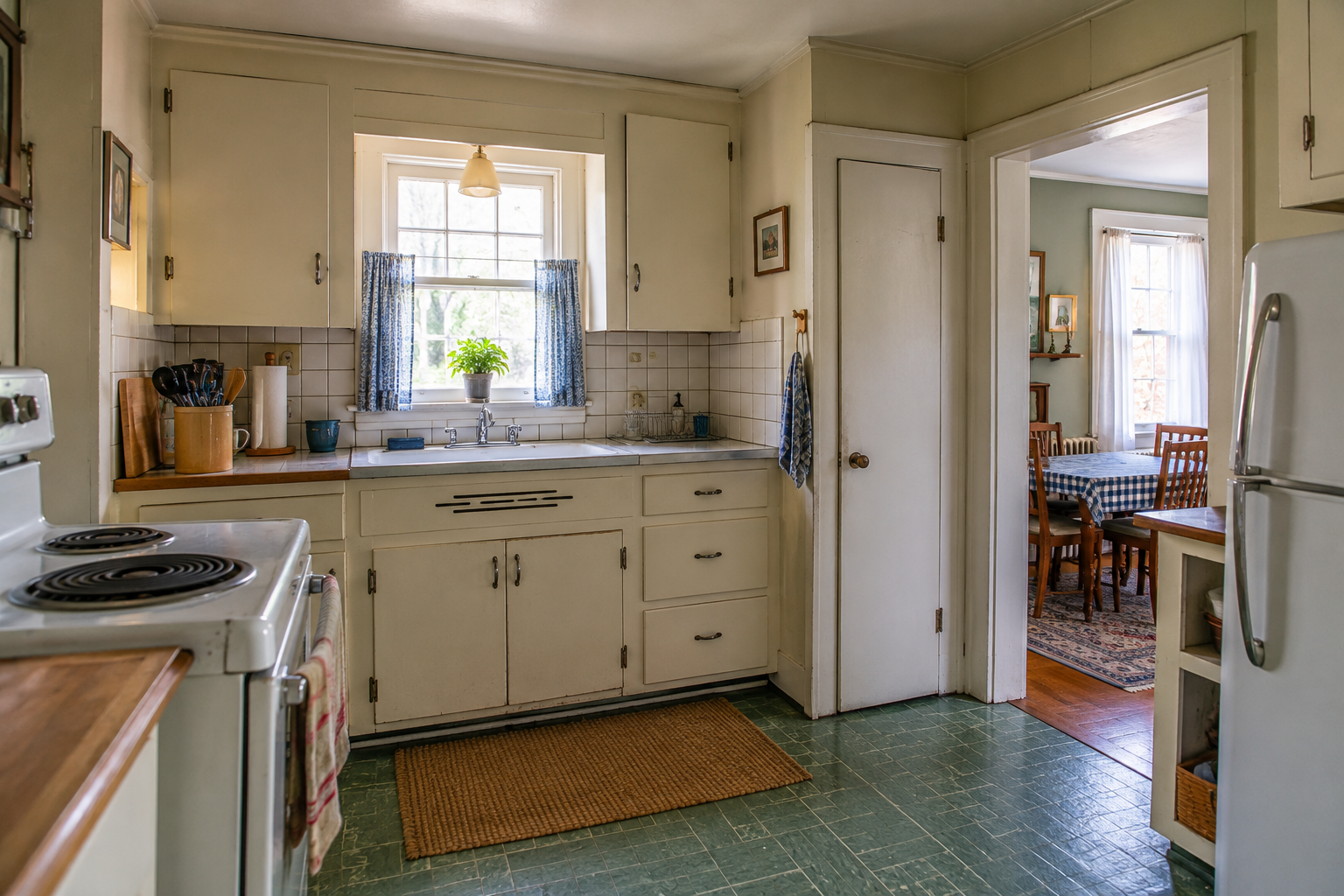
The cost surprise here is rarely the cabinets. It is the old wiring, the plumbing, the stacked flooring layers, the wall opening, the window placement, and what has to be handled carefully during demolition. Lead paint is a real concern in any pre-1978 house once painted surfaces get disturbed, and older flooring, mastics, ceiling materials, or pipe insulation may need testing before removal if anything looks suspect, so demolition should not start with a crowbar and a hope. A 1950s Cape kitchen can almost always be improved, but open concept is not automatically the right answer; often the better remodel is a cleaner galley, a wider cased opening, a smarter peninsula, a rear bump-out, or a sink-and-window wall rebuilt properly instead of forced into a catalog plan.
When a Rear Addition Makes More Sense Than Open Concept
Sometimes the old footprint is just too tight to fix from the inside. When the kitchen is hemmed in by stairs, doors, windows, and plumbing, pulling a wall may only hand you a bigger awkward room, while a rear addition can give the kitchen the depth it needs and leave the front of the Cape alone.
The upside is real: room for a working kitchen, a mudroom, a family eating area, or a better connection to the yard. So is the risk, since the roof tie-in, drainage, foundation, siding, and old-house scale all have to come together, and a bad rear addition can create leaks, snow traps, low-slope roof trouble, and a house that reads like a small Cape glued to a bigger box. Plan it with the whole house in mind, so the kitchen does not solve one problem by creating three new ones outside.
Windows, Light, and Why the Room Still Feels Dark
A Cape kitchen often leans on one important window, usually over the sink, and that window controls far more than light. It fixes the sink location, the cabinet run, the exterior wall, the backsplash height, the view, and the whole feel of the room during the day. Replace it carelessly and the kitchen can come out darker than it started.
If the kitchen windows are old, drafty, rotted, undersized, or already changed in a way that hurts the room, look at Cape Cod window replacement before you finalize the cabinets, because window size, frame thickness, grille pattern, sill height, and exterior trim all reach into the kitchen and the outside of the house at once. And do not give up glass area lightly in a small Cape kitchen, since losing even a little light can make the room feel smaller right after you have paid to improve it.
Plumbing, Stairs, and Old Framing Can Control the Plan
The kitchen plan is usually controlled by the parts that never show up in a finished photo. The plumbing stack may decide whether the sink can move at all. The stair may block the only good wall opening. The framing may cap how wide an opening can go without a beam. Old ductwork may sit exactly where the pantry belongs, and the existing electrical may be nowhere near enough for modern appliances, lighting, outlets, and the small-appliance circuits code now wants.
A layout that ignores those things is a drawing, not a plan. The real plan only starts once the hidden systems are found and priced.
What Gets Exposed After Demolition Starts
Once the old cabinets come out, the kitchen tends to change on you. You may find patched plaster, old wallpaper layers, flooring stacked on flooring, dead outlets, strange plumbing routes, abandoned venting, a sagging subfloor, or framing that looks nothing like the clean lines on the plan. It is common in older Cape kitchens, because the room may have been updated several times without ever being properly rebuilt. I have pulled a Cape kitchen apart and found three floors stacked on top of each other and a drain line running right where the dishwasher was supposed to go.
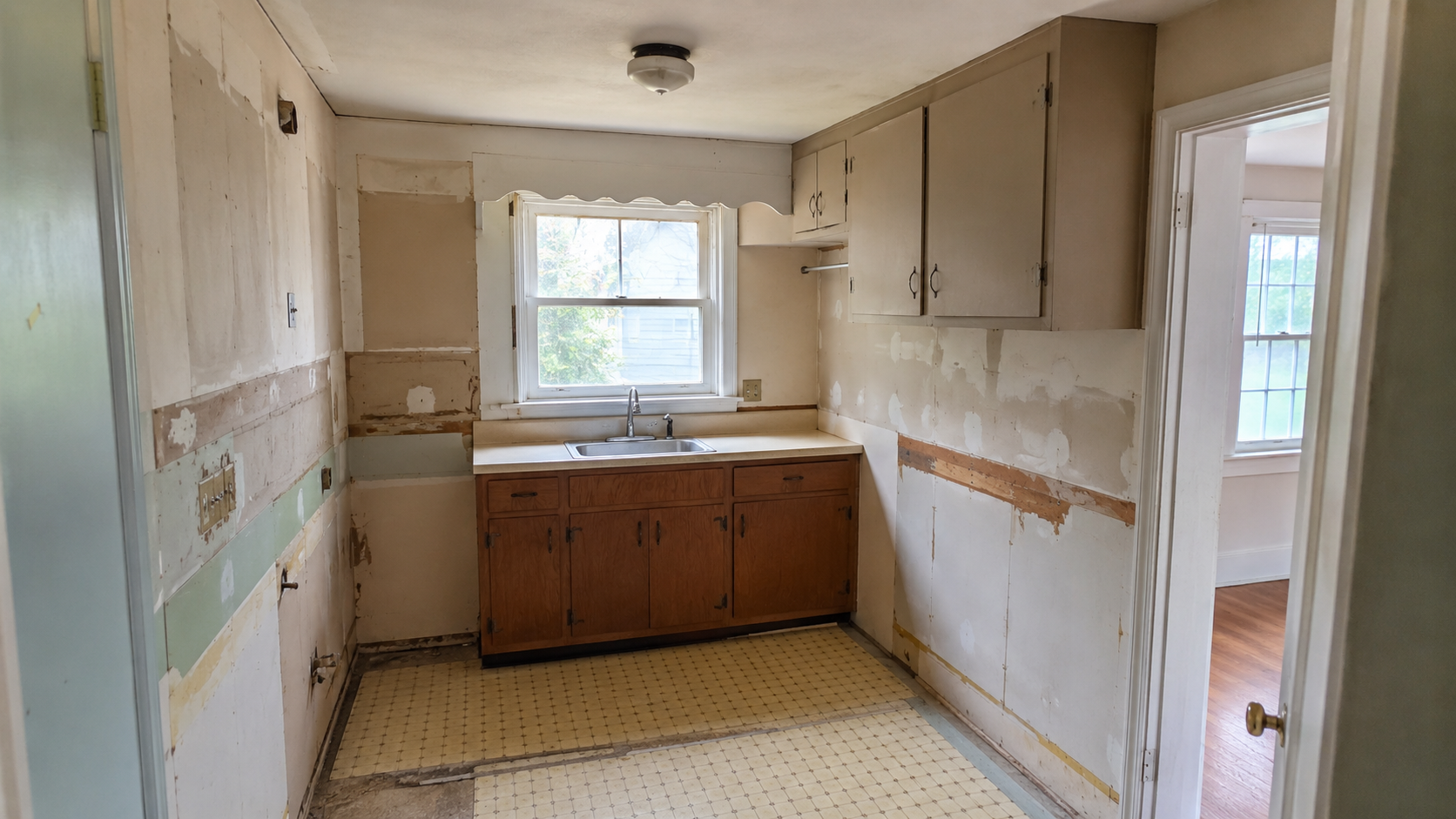
Build a demolition allowance into the budget. If the wall behind the sink is soft, the floor under the dishwasher is stained, or the ceiling patch shows old water damage, stop and fix the cause before you bury it under new cabinets.
What a Cape Cod Kitchen Remodel Can Cost
Treat these as 2026 U.S. planning ranges, not quotes. Local labor, material quality, permits, hidden damage, old wiring, plumbing moves, lead-safe work, and whether walls get opened can all move the price in a hurry.
| Scope | Planning range | What is usually included |
|---|---|---|
| Small refresh | $10,000 to $25,000 | Paint, hardware, lighting, limited flooring, appliance swaps, minor cabinet work, little or no layout change. |
| Standard small kitchen remodel | $25,000 to $70,000 | Cabinets, counters, sink, faucet, appliances, flooring, backsplash, lighting, and moderate repair work. |
| Layout remodel with wall work | $60,000 to $140,000 | Wall opening, beam or framing work, electrical changes, plumbing adjustments, ceiling and floor patching, better lighting. |
| Kitchen plus rear addition | $150,000 to $300,000+ | Foundation, framing, roof tie-in, siding, windows, HVAC, electrical, plumbing, kitchen finishes, and exterior repair. |
The number that surprises people is rarely the cabinet price. It is the wall opening, the old wiring, the plumbing move, the floor patch, the ceiling repair, or the exterior work after a window or addition changes the wall. Keep a contingency, too. Ten percent is thin on an older kitchen, and fifteen to twenty is closer to honest once the work opens walls, floors, ceilings, or old exterior openings.
What to Keep, What to Change, and What to Skip
Keep what gives the room useful limits, change what blocks function, and skip the upgrades that make the kitchen prettier without making it easier to use.
| Keep | Change carefully | Skip |
|---|---|---|
| Good sink window | Window size, sill height, exterior trim, glass area | Bulky replacement windows that make the room darker |
| Useful wall space | Dining-room openings and wall removals | Open concept that kills storage and creates patchwork |
| Simple cabinet runs | Appliance locations and pantry storage | Oversized islands in rooms that cannot carry them |
| Original trim where sound | Door casings, baseboards, old floors | Tearing out good material only to make the kitchen look new |
Before and After Photos Can Hide the Expensive Part
Before-and-after photos are good for ideas and bad for budgeting. The photo shows the bright new kitchen, not the beam above the opening, the lead-safe setup, the floor patch where the wall came out, the rewired circuits, the rerouted plumbing, the ceiling repair, the exterior window work, or the three weeks spent fixing an old addition. Use them to decide what feels right, not to guess what your house will cost.
What to Check Before Hiring Anyone
The right kitchen contractor for a Cape is more than a finish installer. They have to understand old-house constraints, small layouts, wall openings, windows, stairs, and the systems you cannot see. A few questions sort them out fast:
- Is the wall I want opened structural, or full of mechanical runs?
- What happens if old wiring, plumbing, rot, or stacked flooring turns up?
- Is lead-safe work included for pre-1978 painted surfaces?
- How do the sink window, the exterior wall, and the cabinet layout affect each other?
- What is excluded, like patching, painting, permits, design, appliance installation, floor repair, and electrical upgrades?
A good bid walks you through the sequence. A weak one just lists products.
Related Reading
FAQ
What makes a Cape Cod kitchen hard to remodel?
The room is usually small, but the bigger issue is constraint. Windows, stairs, narrow doorways, plumbing walls, low ceilings, old wiring, and traffic paths all compete for the same limited space.
Can you open up a Cape Cod kitchen?
Sometimes. A wall opening can help, but the wall may carry structure or hide mechanical runs. A wider cased opening is often safer than removing the whole wall.
Is an island a good idea in a Cape Cod kitchen?
Only if the room has enough clear walking space. Many Cape Cod kitchens work better with a galley, L-shape, compact U-shape, or peninsula.
What should I fix first in a Cape Cod kitchen remodel?
Fix layout, wiring, plumbing, window problems, water damage, floor issues, and wall-opening decisions before cabinets, tile, counters, and paint.
Why are 1950s Cape Cod kitchens different?
Many 1950s Cape kitchens were built as compact work zones with small sink windows, narrow openings, limited cabinet runs, old wiring, and layered finishes. They can be improved, but open concept may cost more than it looks.
How much does a Cape Cod kitchen remodel cost?
A light refresh may run around $10,000 to $25,000. A standard small kitchen remodel often lands around $25,000 to $70,000. Layout changes, wall openings, old-house repairs, or additions can push the cost much higher.
Should I replace the kitchen window during the remodel?
Replace it if it is rotted, leaking, too drafty, badly sized, or hurting the layout. But do not shrink the glass area or choose a bulky frame without checking how it affects light, cabinets, trim, and the exterior wall.
Is a rear addition better than opening the kitchen wall?
It can be when the old footprint is too tight. A rear addition adds real space, but the roof tie-in, foundation, drainage, siding, windows, and cost must be planned carefully.