
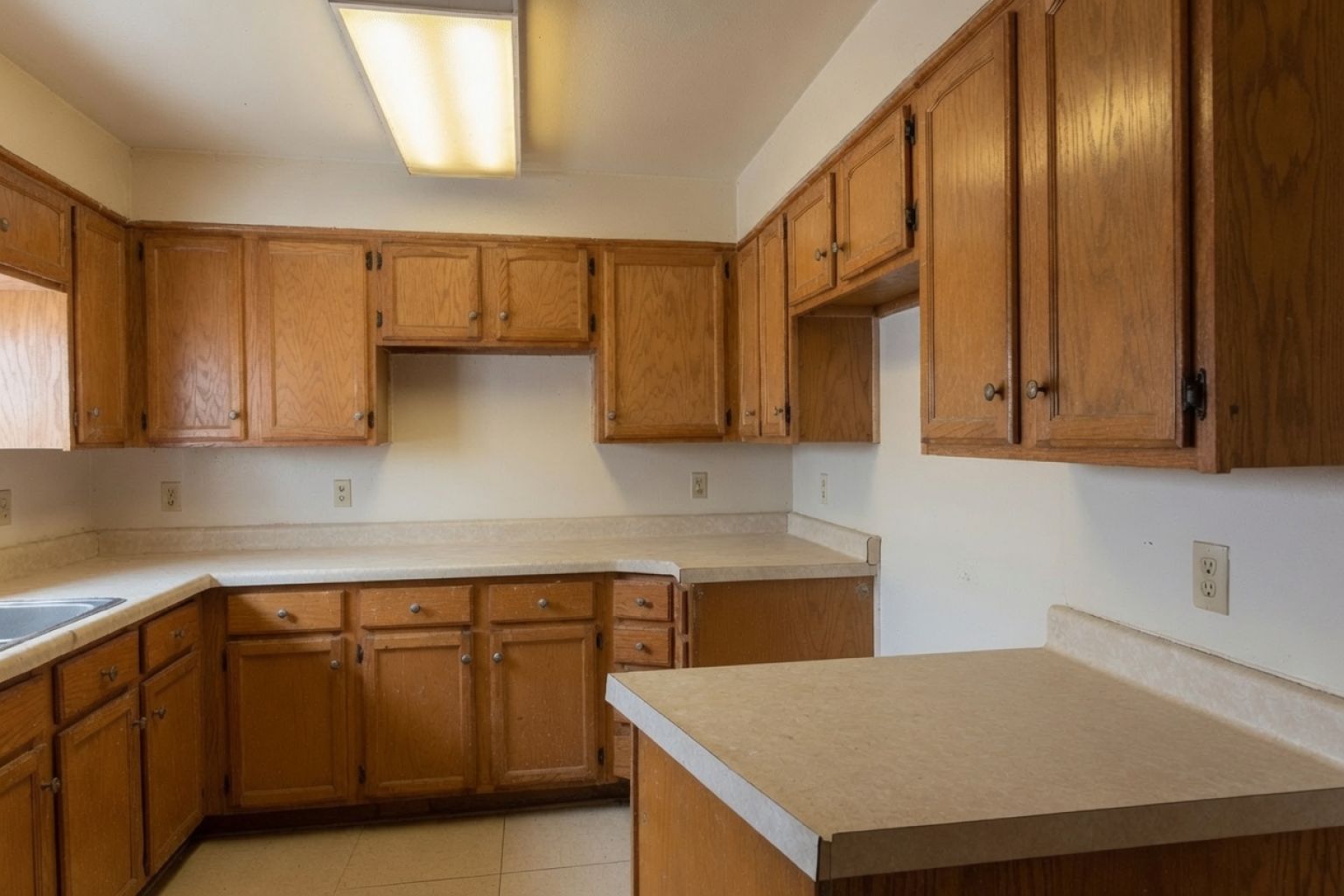


A dated 1990s kitchen is not always something to tear out. Half the time the layout works, the cabinet boxes are still solid, and the room only looks bad because every finish is pulling the same tired direction at once.
So I would not spend the first $5,000 making it look new. I would spend it working out what to keep, what is only dated on the surface, and what not to touch until I know the full scope.
The trap is that there is rarely one ugly thing. It is the stack — honey oak, yellow light, worn hardware, beige counters, a tired floor — all making each other look worse. Swap the wrong piece first and the room still feels dated; get the order right and it calms down without a full remodel. Before you decide anything about the boxes, read 1990s oak cabinets.
Check the room before you spend a dollar
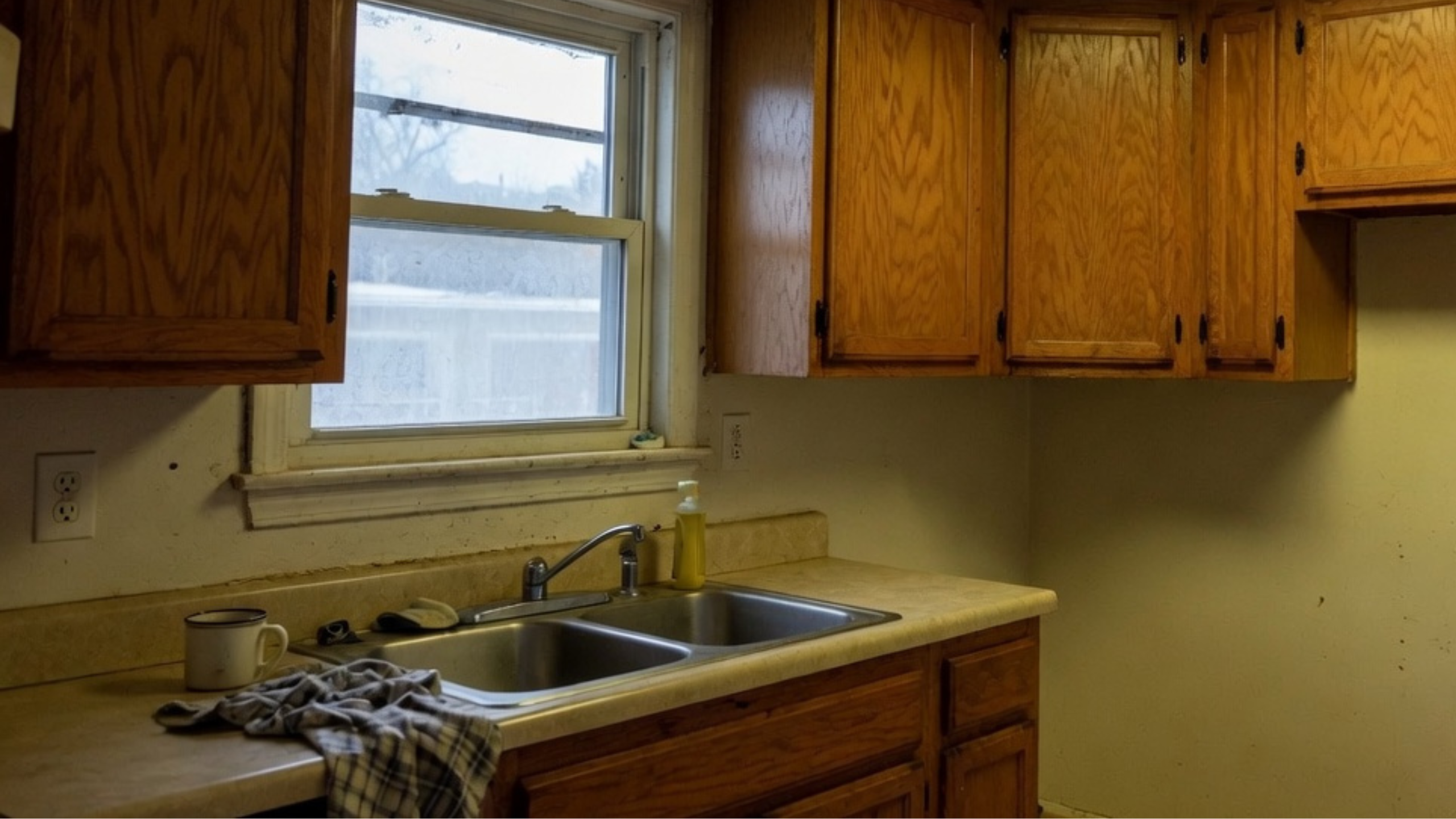
A 90s kitchen can look like a finish problem when the real money is hiding elsewhere — a soft cabinet bottom under the sink, a floor that stops at the cabinet line, a soffit stuffed with ductwork.
So before you buy paint, tile, or a faucet, walk the room like it owes you money:
- Are the cabinet boxes solid, or swollen and soft?
- Does the floor run under the cabinets, or stop at them?
- Is that soffit hiding ducts, wiring, or a vent?
- Will new light mean swapping a fixture, or running new wire?
- Do the appliance openings fit what you want to buy?
That half hour tells you whether $5,000 refreshes the kitchen or whether it is asking for a full 1990s kitchen remodel.
Where the first $5,000 goes
I split the money by impact, not by what looks fun in the store — the best return is the work that changes how the old finishes read together.
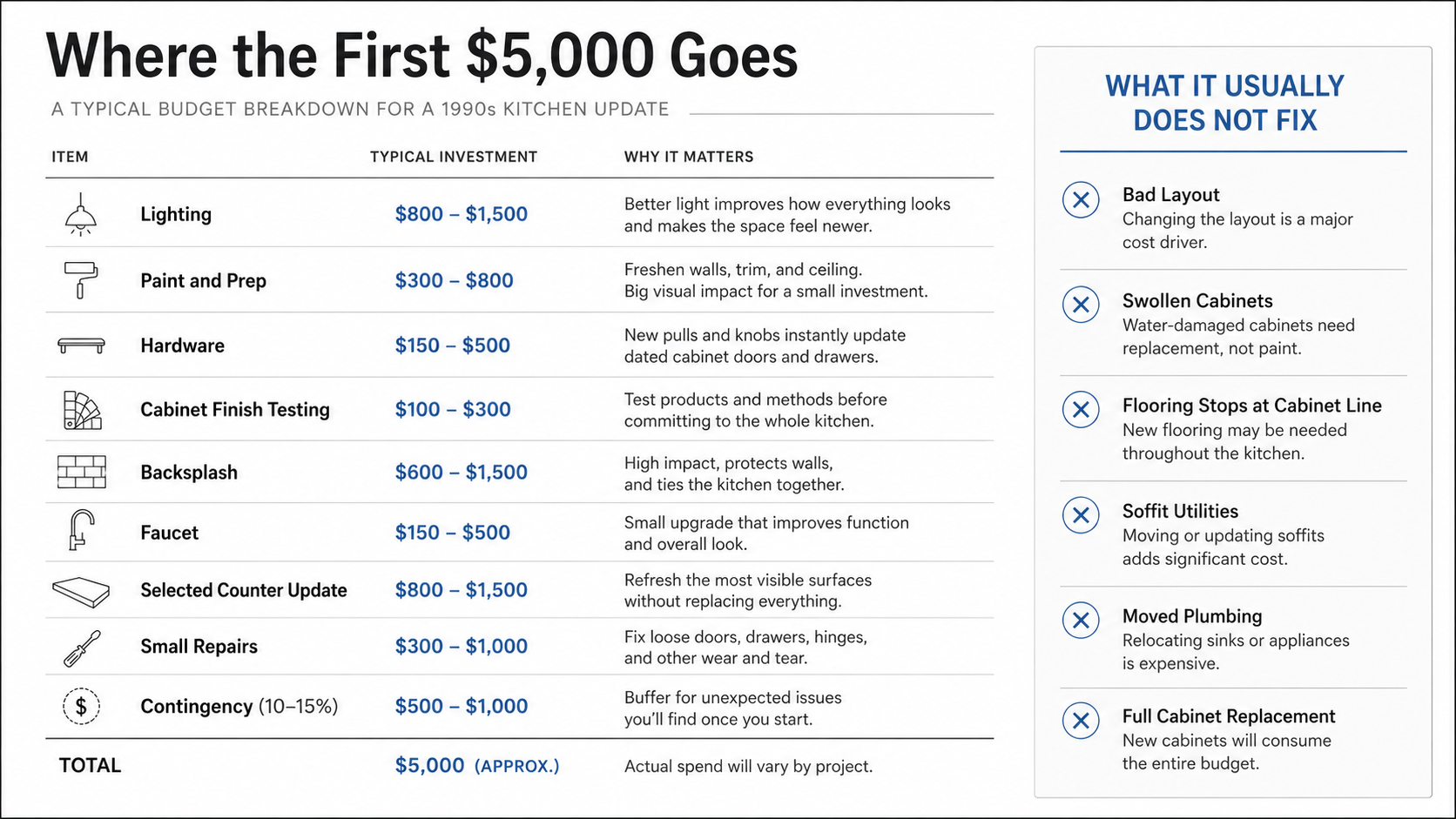
| Priority | Rough cost | Why it comes early |
|---|---|---|
| Lighting and bulbs | $400–$1,000 | Bad light makes oak and beige look worse than they are. |
| Hardware | $150–$500 | Updates the cabinet face without committing to paint. |
| Wall paint | $250–$700 | The right color calms the oak; the wrong one makes it shout. |
| Faucet and small repairs | $300–$900 | Better daily use, no change to the footprint. |
| Backsplash or select counter | $1,000–$2,500 | Where the room starts to feel clean instead of patched. |
Fix the light first
Spend on light before you judge the cabinets. A lot of 90s kitchens run warm bulbs or a fluorescent box that makes oak look orange and counters grubby. Better bulbs, a cleaner fixture, and some under-cabinet strips can shift the mood for a few hundred dollars — and show what the cabinets look like before you spend real money on them.
Test the oak before you fight it
Not every 90s kitchen needs painted cabinets. Plenty look dated only because the oak sits in a room where everything goes warm and shiny at once. Fix the light, quiet the hardware, calm the wall color, and the oak reads differently.
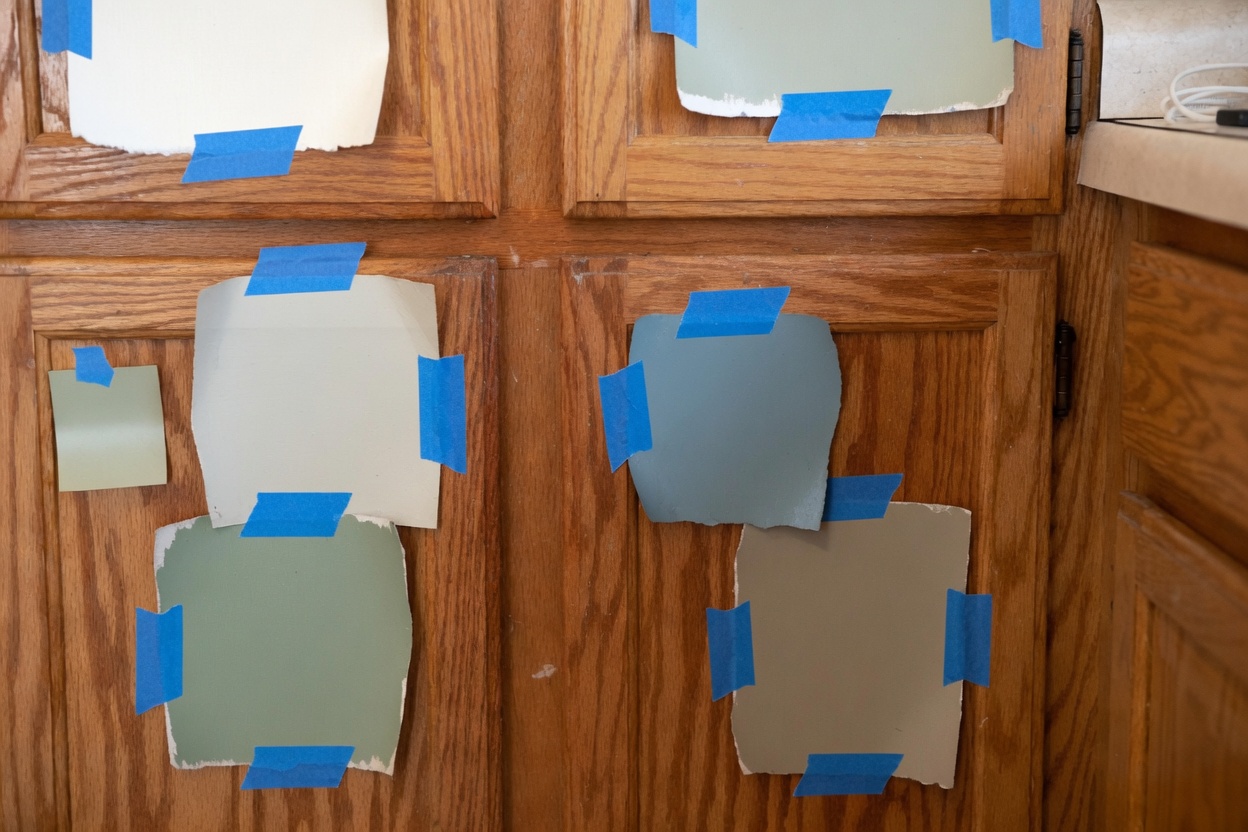
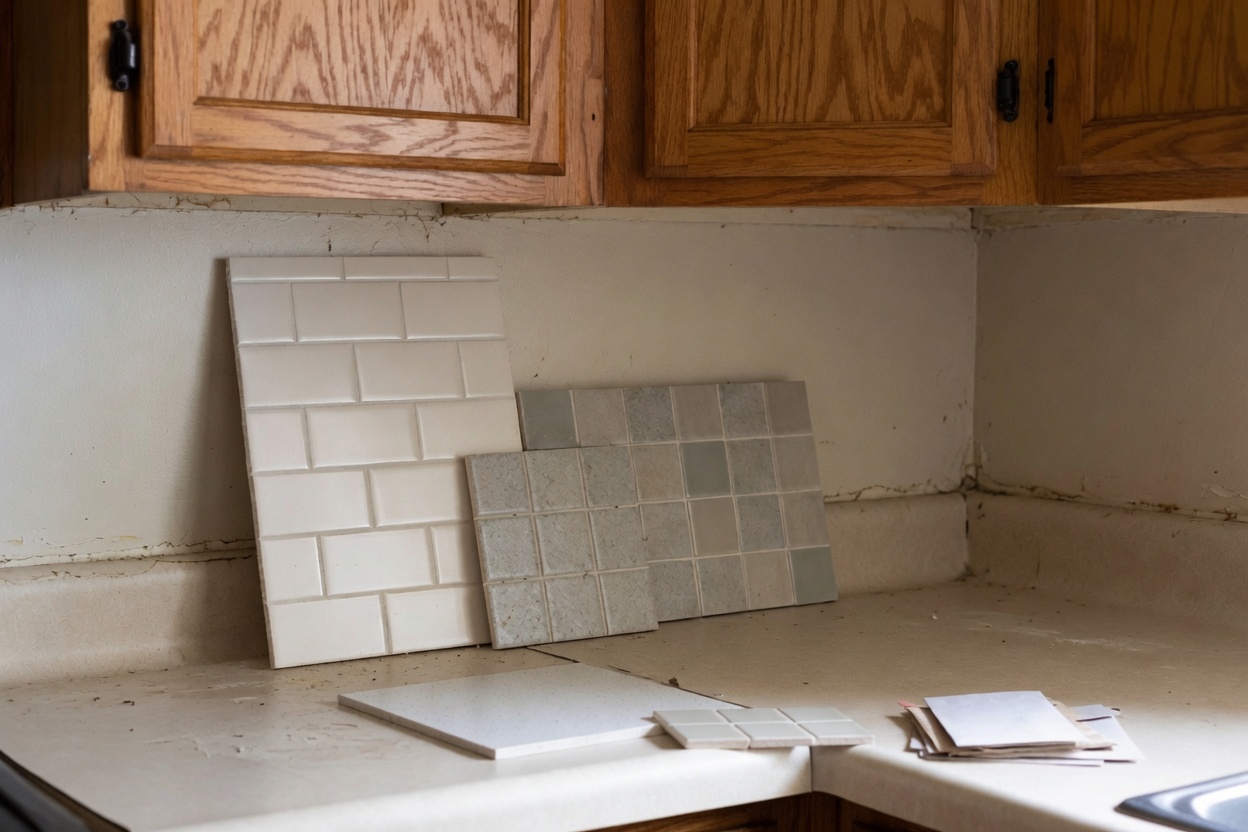
So test it. Put real samples up in the kitchen and live with them a few days — a white that looks crisp on screen can go cold or muddy the second it lands next to honey oak. Sometimes the oak still has to go, but at least then you know instead of guessing.
What to leave alone for now
The first $5,000 should not open every expensive door. A few things I would leave until the full scope is clear:
- Flooring — if a cabinet, island, or peninsula might move.
- Countertops — if the cabinets could still be replaced.
- Soffits — until you know whether ducts, wiring, or a vent lives inside.
- Appliance locations — moving one drags electrical, gas, or venting along.
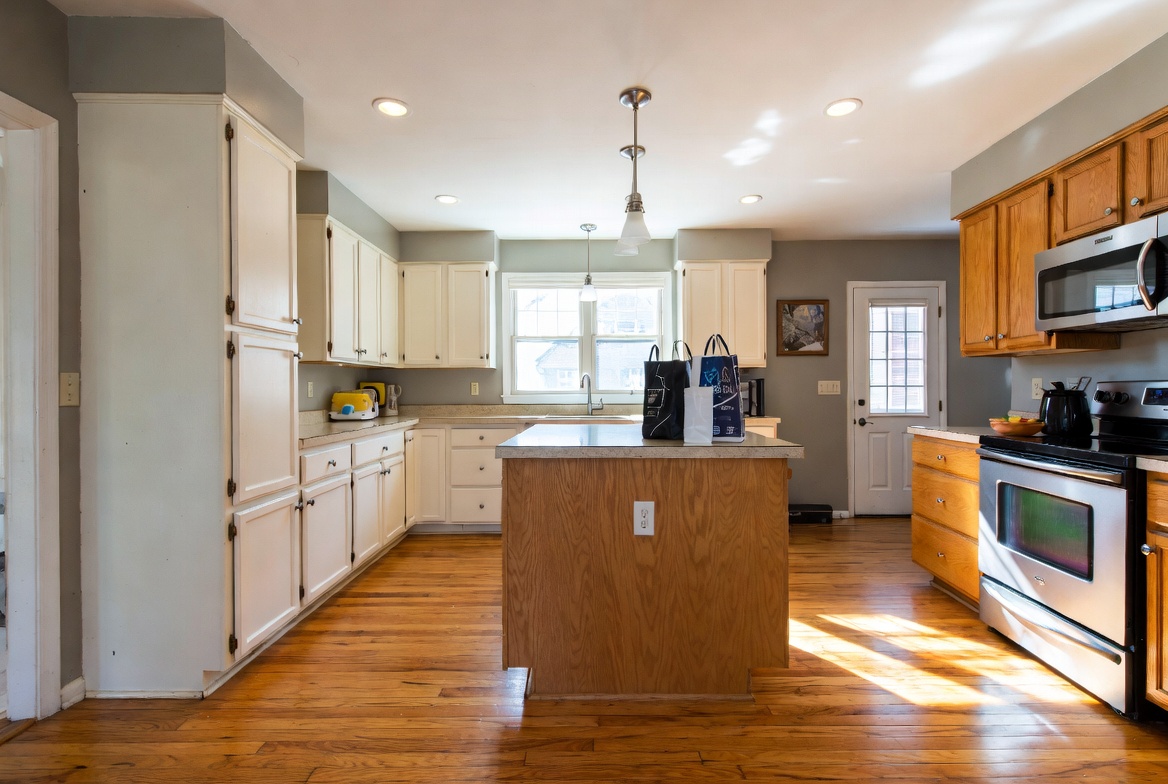
Each of these can turn a weekend job into a permit. Paint the cabinets and the old hinges look terrible; pull a peninsula and a bare strip of subfloor shows up. Partial updates are fine, but they need one plan, or you end up half-oak, half-new, and still dated.
The call
I would spend the first $5,000 only after answering three things: what is staying, what is only dated on the surface, and what could trigger a much bigger job if I touch it too early. If the layout works and the boxes are sound, put the money into light, hardware, paint, samples, and a clean surface update or two, and leave the wiring, gas, and permit work to a pro. If the layout is fighting you or the cabinets are shot, hold the finish money and plan the whole thing first.
The worst way to spend five grand is to make a kitchen look new for a year on top of problems you'll pay to fix twice.
Read this next
- 1990s Kitchen Remodel: What to Update First
- 1990s Oak Cabinets: Keep, Refinish, Paint, or Replace?
- 1990s Kitchen Before and After