

Where the Money Goes
The basement is the expensive option for a reason.
You are not just paying for concrete. You are paying for excavation, haul-out, soil prep, footing work, wall work, drainage, waterproofing, backfill, and the risk that one bad site condition turns a normal job into a much bigger one.
That is why this question gets answered badly online. Too many pages throw out one neat number and act like the job is settled. It is not. A basement on easy soil with decent access is one thing. A wet site with clay, deep frost, tight equipment access, and a higher water table is a different job entirely.
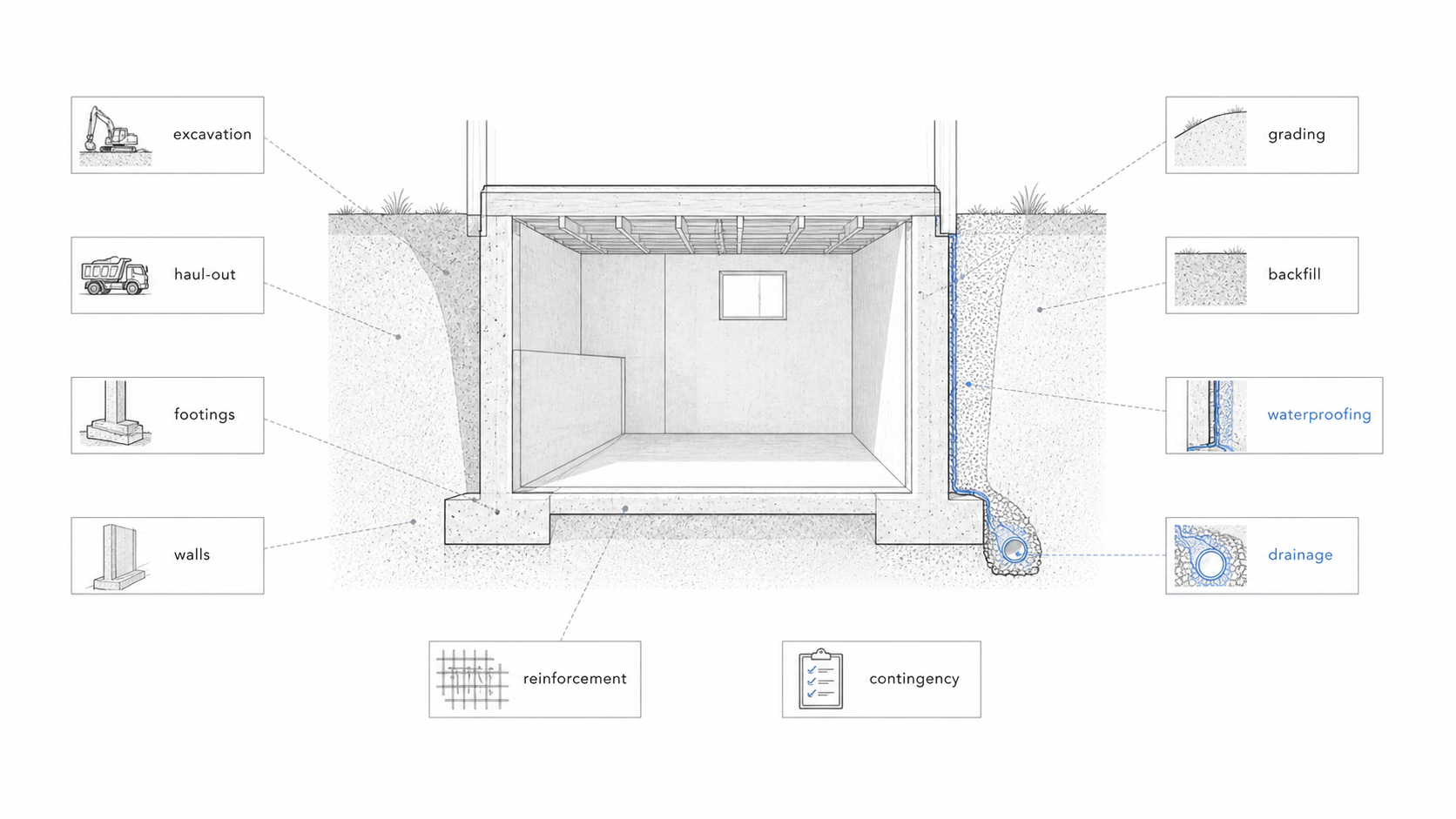
Illustration by ArchitectureCourses.org. A basement isn’t one cost—it’s a stack of site work, structure, and water control.
If you need the broad foundation map first, start with Types of House Foundations. If the site still looks uncertain, go straight to Foundations, Soil Analysis, and Site Investigation.
What Costs More, Fast
A slab is usually the cheapest route. A crawl space usually lands in the middle. A full basement usually costs the most before you even start finishing it.
| Foundation Type | Rough Cost Position | Where It Starts Getting Expensive |
|---|---|---|
| Slab-on-grade | Usually the lowest-cost option | Poor soil, frost requirements, thickened edges, plumbing complexity |
| Crawl space | Usually more than a slab, less than a basement | Moisture control, wall height, access, insulation, drainage |
| Basement | Usually the highest-cost option | Excavation, waterproofing, groundwater, wall height, spoil removal |
For rough national numbers, a basic slab often lands somewhere around the low-to-mid thousands on a simple footprint, crawl spaces are commonly priced by the square foot in a middle band, and basements are usually priced in the highest range before any interior finish work. Those numbers move fast once the site gets difficult.
What People Get Wrong First
The common mistake is thinking basement square footage is cheap extra space. Sometimes it is. Sometimes it is the most expensive square footage in the whole project because the site keeps fighting back.
Excavation is not free just because the machine is already on site. Waterproofing is not a decorative add-on. Drainage is not the part you value-engineer out because the concrete wall looks strong. Most basement cost overruns come from pretending the ground is simpler than it is.
Slab, Crawl Space, or Basement?
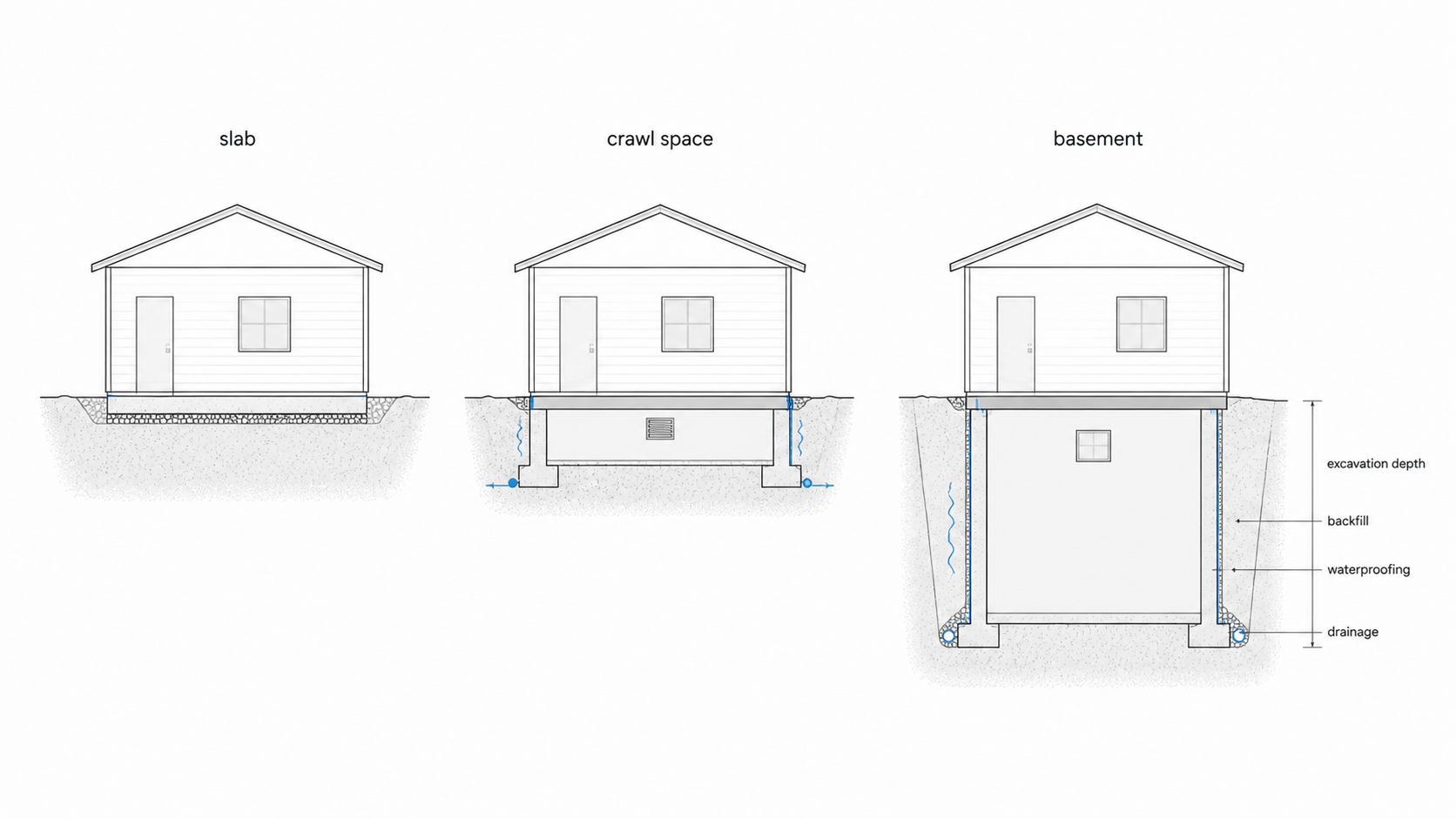
Illustration by ArchitectureCourses.org. Slab, crawl space, and basement foundations differ mainly in depth, structure, and water management.
| Option | Best Fit | Main Advantage | Main Cost Problem |
|---|---|---|---|
| Slab | Simple layouts, flatter sites, tighter budgets | Fast and efficient | You have very little forgiveness if plumbing or sub-base prep is wrong |
| Crawl space | Sites where access below the floor helps | Easier utility access later | Moisture control can quietly become the real bill |
| Basement | Cold climates, sloped sites, homes that benefit from real lower-level space | Usable square footage and storm protection | Excavation and water management drive cost fast |
Read this next: House Building Foundations if you are still deciding which system belongs on the site at all.
Excavation Is Where the Tone Changes
A basement needs room below the house. That sounds obvious, but it is the point where the job stops being cheap.
You are digging deeper. You are hauling more soil. You may need shoring, safer access, more time, and better sequencing. If the truck route is awkward or the site is tight, the price moves again. If the soil is rocky, wet, unstable, or full of surprises, the job moves from routine to difficult fast.
This is also why "my neighbor paid X" is weak foundation math. Their lot may not look that different from yours from the street. The soil below it can still tell a different story.
This part matters: Site Preparation if you are still early enough in planning to catch the obvious ground and access problems before pricing gets sloppy.
Basement Walls Cost More Because They Do More
A slab has to bear and stay stable. A basement wall has to bear, retain soil, resist water pressure, and survive long-term contact with the conditions outside it. That is a harder job.
Deeper walls mean more concrete or block, more reinforcement, more formwork or masonry labor, and more backfill care. Tall walls also raise the stakes on waterproofing. A weak slab edge can crack. A weak basement wall can crack, bow, leak, or keep doing all three until the interior starts paying for it.
If you need the wall side of the job broken down more clearly, use Foundation Wall Construction after this.
Footings, Soil, and Reinforcement
Foundation prices get distorted when people compare visible work and ignore the buried part.
Footing size, depth, reinforcement, subgrade prep, compaction, and bearing conditions are not the glamorous lines in the estimate, but they matter more than the polished sales language around them. Weak soil does not care that you want the budget to stay neat.
A smaller basement on honest footing work is usually a better decision than a bigger basement on shaky assumptions.
Also useful: Foundation Footings if you need to understand why footing depth and width change so much from one site to another.
Waterproofing Is Not Optional
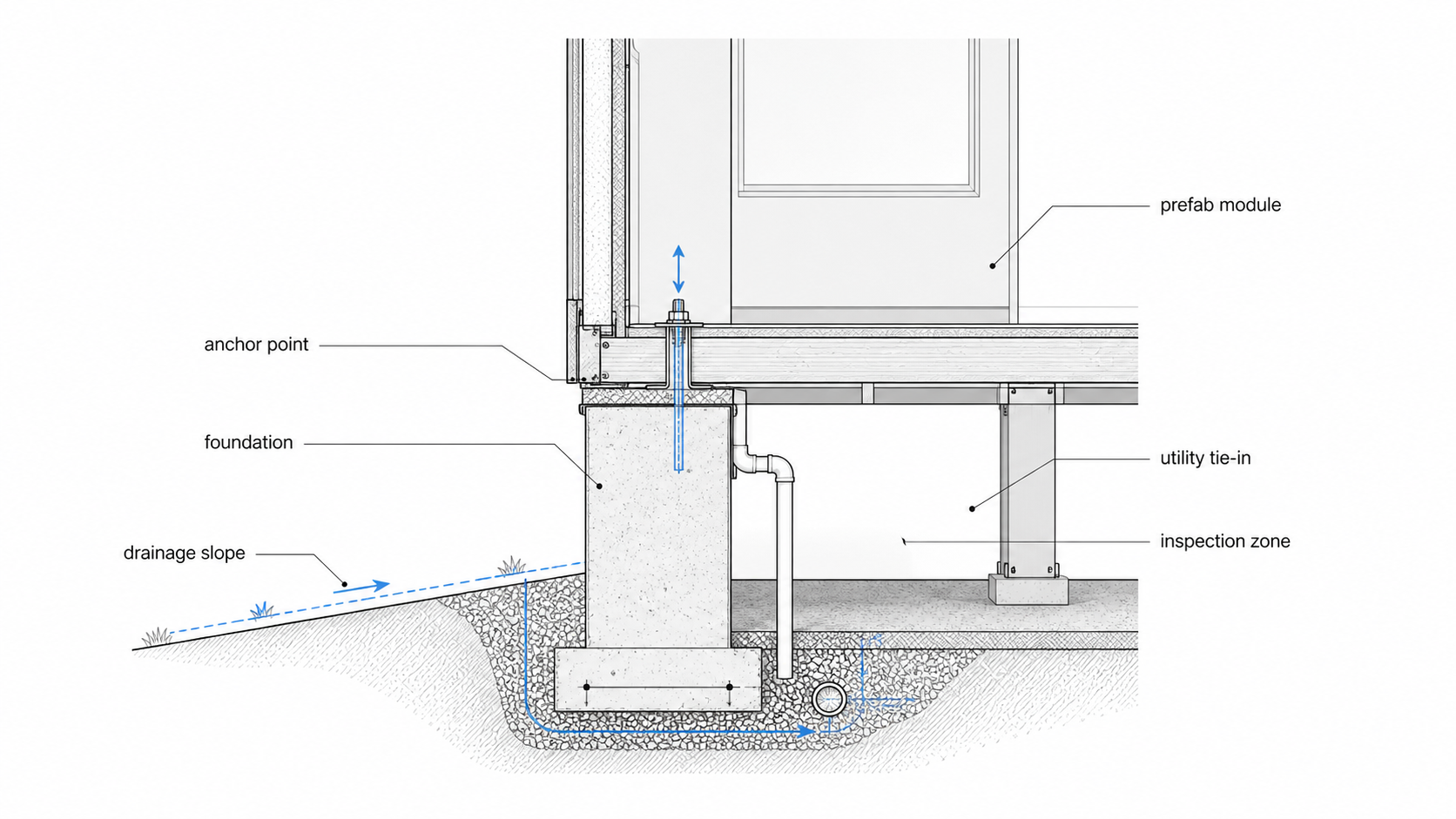
Illustration by ArchitectureCourses.org. Basement waterproofing is not just coating the wall—it includes drainage, slope, and where water goes after it leaves the foundation.
This is where people burn money later.
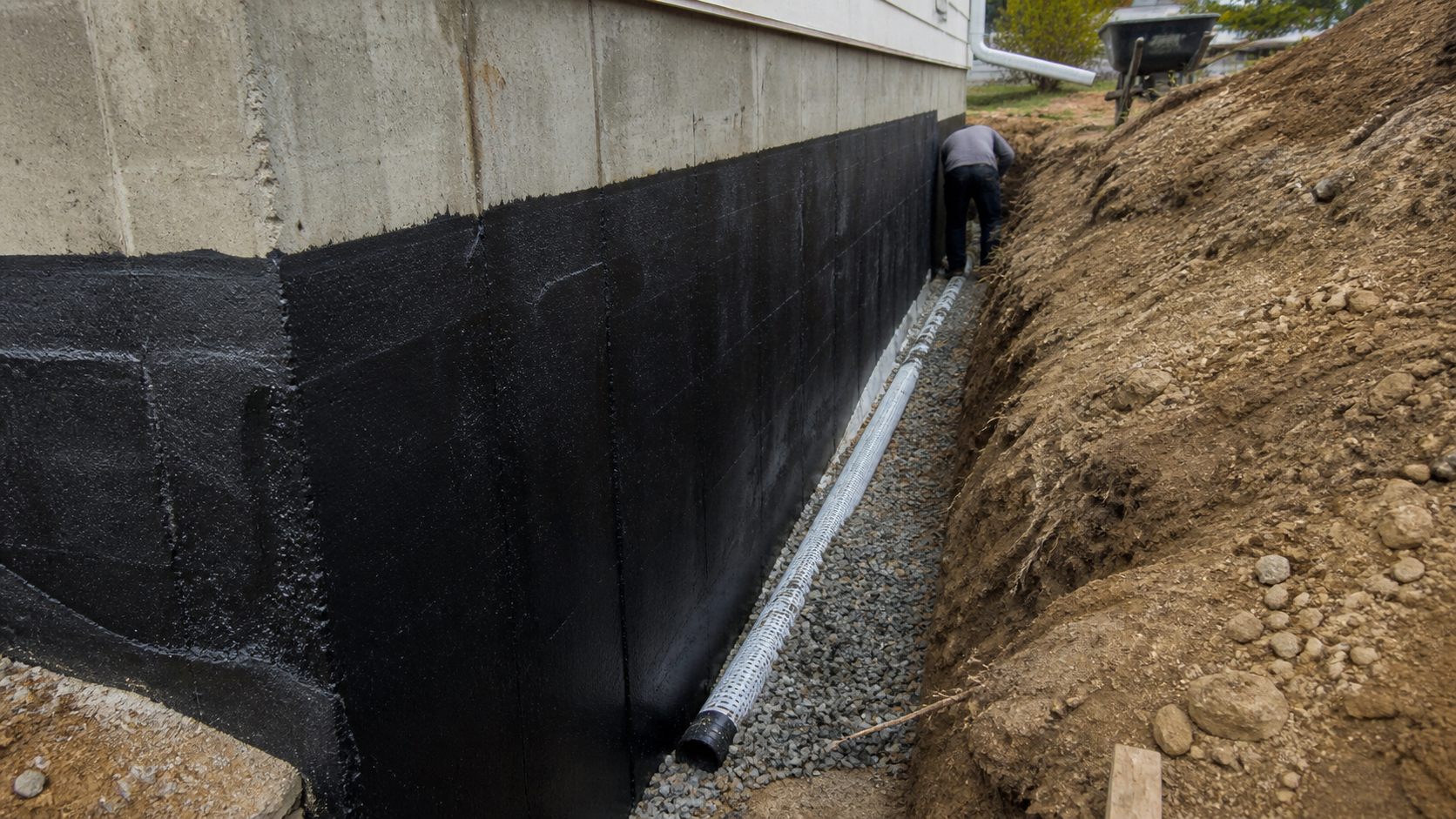
Image by ArchitectureCourses.org. Real basement waterproofing work: membrane, gravel, and footing drain installed before backfill.
A basement without good drainage and waterproofing is basically a bet against water. Sometimes you get away with it for a while. Then the wall stains show up, the corner smells damp, the floor edge gets dark, and suddenly the cheap version of the job no longer looks cheap.
Good basement pricing should already include the outside water story: membrane or coating, drainage layer if needed, footing drain strategy, downspout management, grading, and a clear idea of where water goes after it leaves the wall. If those items are thin, the estimate is thin.
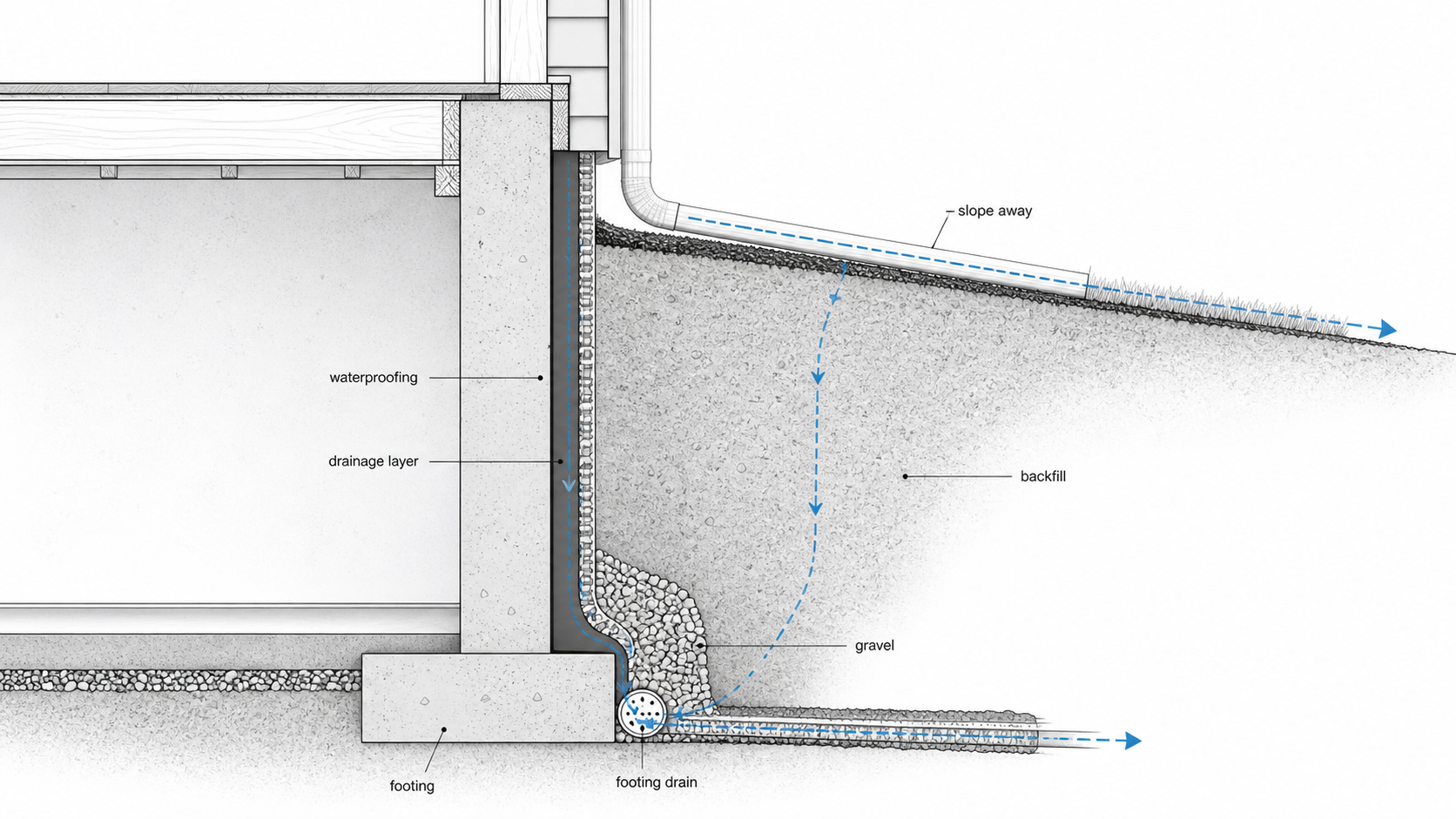
Illustration by ArchitectureCourses.org. Water control around a basement depends on slope, drainage layers, and a working footing drain—not just coating the wall.
Worth knowing: Exterior Foundation Waterproofing if you want to see how fast a basement budget goes wrong once water control gets treated like a minor line item.
Use This When / Avoid This When
| Use This | When | Avoid This | When |
|---|---|---|---|
| Basement foundation | You need real lower-level space and the site can support it | Basement foundation | The site has obvious groundwater trouble, poor access, or a budget with no room for surprises |
| Crawl space | You want utility access and less excavation than a basement | Crawl space | You are not willing to stay disciplined about moisture control |
| Slab | The layout is simple, the site works for it, and cost control matters most | Slab | You need easy under-floor access later or the site requires a different bearing strategy |
Where the Price Starts Climbing
Bad soil is the biggest cost variable and the one people understand least. Clay expands and contracts with moisture. Fill settles unevenly. Soft ground cannot bear standard footings without over-excavation and engineered replacement. Rock sounds solid until you realize the excavator cannot dig through it without a breaker, which costs more per hour than digging dirt. A soil test that costs $1,500 can prevent a $15,000 surprise during excavation. That is the best return on investment in the whole project.
A high water table changes everything about a basement job. More drainage. Better waterproofing. More caution during excavation because the hole wants to fill with water before the walls go in. Sometimes the water table makes a basement possible but expensive enough that a crawl space or slab becomes the smarter answer. Sometimes it makes the basement a bad idea entirely. This is the condition that turns the most reasonable-sounding budget into the most painful one.
Complicated footprints, stepped foundations, walkout conditions, big corners, and retaining situations all cost more because the work genuinely gets harder. Rectangles are cheaper than L-shapes. L-shapes are cheaper than houses with six corners and a walkout. That is geometry, not contractor greed.
Tight lots and awkward machine access matter more than homeowners expect. Moving soil out and materials in is part of the bill, and on an urban lot where the excavator barely fits and the spoil truck blocks the street, that part of the bill grows. Regional labor costs, inspection requirements, and frost-depth rules also shift the baseline — the same house in the same soil costs different amounts in different places.
The Numbers That Help
The most useful numbers are not one grand total somebody throws at you online. They are the numbers that help you compare directions.
- How much more is the basement than the slab on this site?
- How much of that difference is excavation?
- How much is waterproofing and drainage?
Then keep going.
- What does the estimate include for contingencies or unknown ground conditions?
- Are you pricing only foundation shell work, or are stairs, window wells, insulation, and waterproofing already inside the number?
That last one matters more than people think. Two quotes can look close and still be pricing different jobs.
What a Budget Should Include
| Cost Category | Why It Belongs in the Budget |
|---|---|
| Excavation and haul-out | Basements are won or lost here before concrete starts |
| Footings and reinforcement | Cheap assumptions below grade get expensive above grade |
| Foundation walls or slab work | This is the visible structural shell of the system |
| Waterproofing and drainage | Especially critical on basements and many crawl spaces |
| Backfill and grading correction | Bad finish grading can undo good wall work |
| Soil testing and engineering review | Small upfront money that can prevent very dumb decisions later |
| Contingency | Ground surprises are normal enough that pretending they will not happen is weak planning |
A contingency is not pessimism. It is basic respect for the fact that the buried part of a construction job does not always stay predictable.
Spend Here, Not Here
Spend on site assessment, footing design, drainage, waterproofing, and honest excavation planning.
Do not try to save the project by thinning the work that disappears once backfill goes in. That is the part the house keeps depending on after everyone leaves.
People often chase savings in the wrong place. They will agonize over small concrete upgrades while ignoring the slope of the site, where the downspouts will discharge, or whether the soil was even properly understood before the quote showed up.
How Long Does This Stage Take?
On a straightforward new build, a simple slab can move quickly. A crawl space takes longer. A full basement usually takes the longest because excavation, wall work, curing, waterproofing, drainage, and backfill all need to happen in a sequence that actually respects the work.
Weather matters. Soil conditions matter. Inspection scheduling matters. Access matters. This is another place where the site keeps deciding whether your timeline is real.
If someone gives you a basement timeline that sounds like a clean factory process with no chance of weather, water, or soil slowing anything down, take a harder look.
FAQ
Is a basement worth the extra cost?
Sometimes yes. If you need real storage, storm protection, mechanical space, or future living area, a basement can earn its cost. On the wrong site, though, it can become the most expensive square footage in the project before it even gets finished.
What is the cheapest foundation option?
Usually a slab, assuming the site works for it. Cheap on the wrong site is not really cheap.
Why do basement costs vary so much?
Because the site does not price like a countertop. Soil, water, access, depth, wall height, reinforcement, drainage, and local labor all change the job.
Does waterproofing add a lot to the budget?
It adds enough that people notice it. It costs much less than pretending you did not need it and paying for leaks later.
Should I choose a crawl space instead of a basement to save money?
That can be the smarter move on some sites. It depends on whether the project really needs the space a basement gives you and whether the site is going to punish a below-grade wall system.
How much contingency should I carry?
Enough that a soil or drainage surprise does not wreck the project. Zero contingency on a foundation job is fantasy.
Read Next
Cost Breakdown of Building a House — if the foundation question is part of a bigger budget problem and you need to see where this stage sits in the whole build.
Basement Foundations — if you are leaning basement and need the construction detail, not just the cost picture.
Crawl Space Foundation — if the site may want less excavation and the project does not need full basement space.
Slab-on-Grade Foundation — if budget control is the main driver and the layout works on a slab.
Basement Water Issues and Exterior Foundation Waterproofing — if the basement question is really a moisture question.