
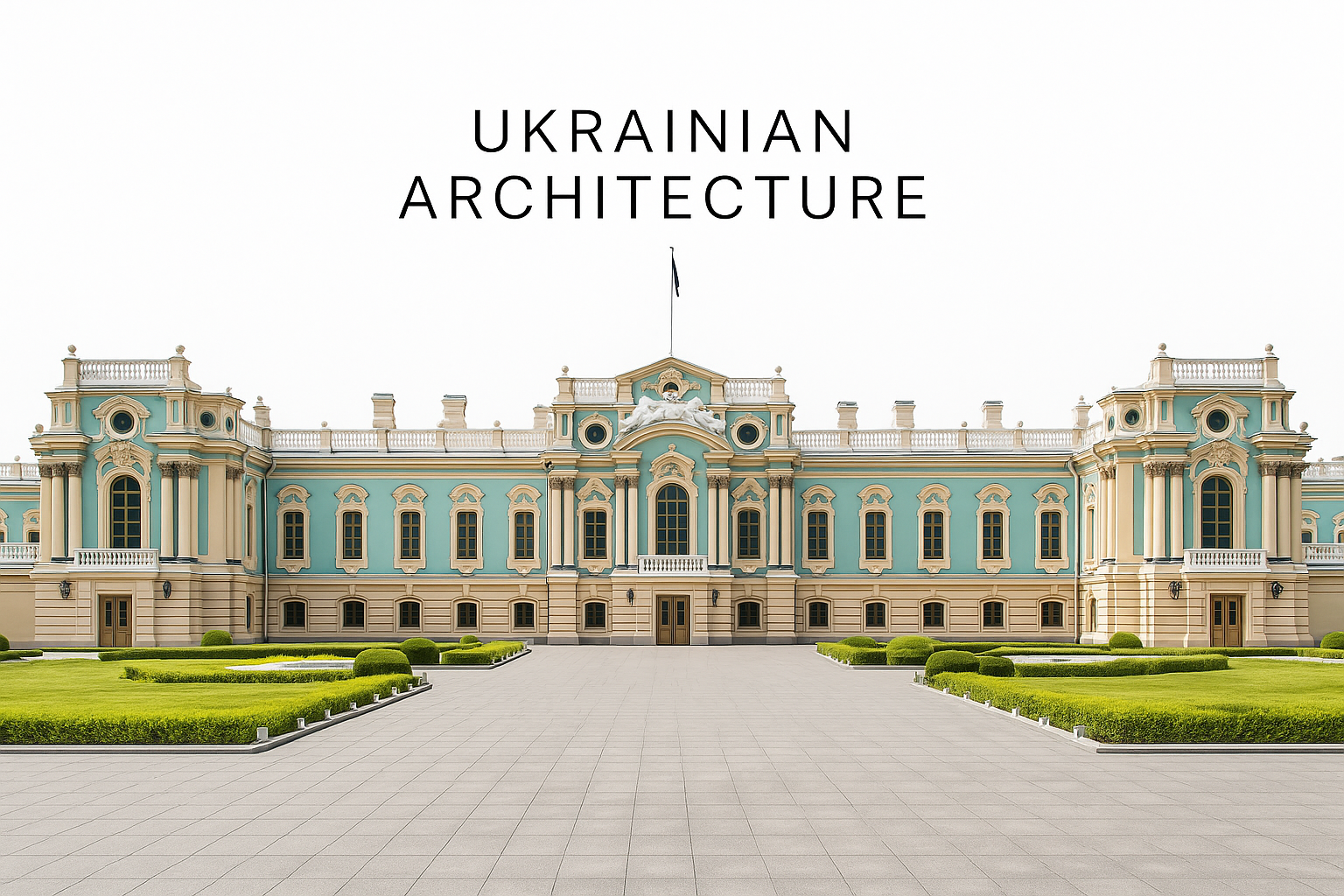
How Ukraine Built Its Own Architectural Language
Ukrainian architecture began in wood. Builders shaped what the land gave them. Timber homes, halls, and fort walls were built for survival, not show. Simple, carved, and made to face harsh winters.
As cities expanded, stone replaced wood. Public buildings and estates grew heavier, taller, more permanent. Every generation left its own layer: wood, brick, plaster, concrete, and now glass.
Look at the walls, not the words. They still build that way when no one’s watching.
From Wood Villages to Stone Cities: The Story of Ukrainian Architecture
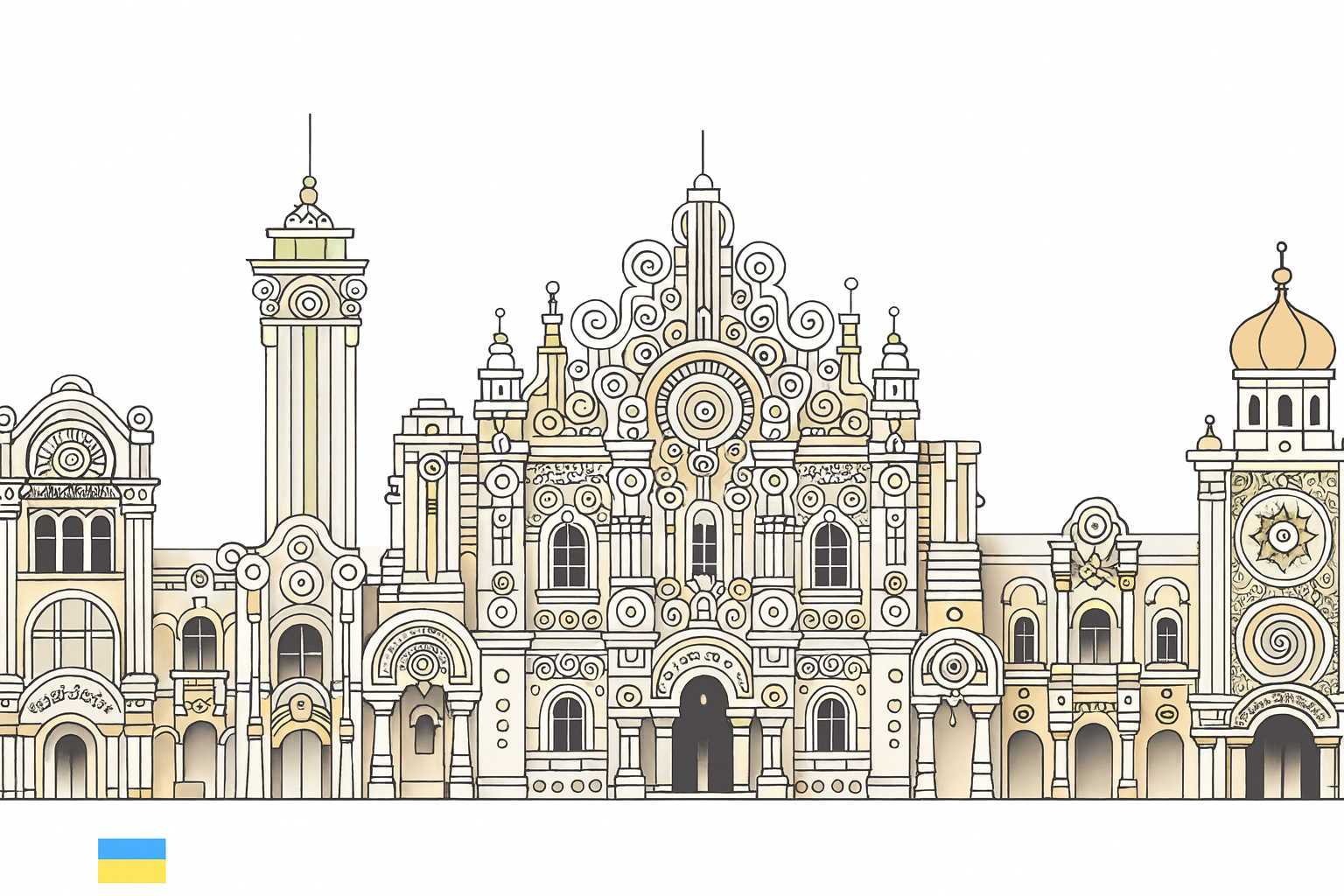
Early Ukrainian architecture began in wood. Timber was everywhere, easy to work, and fit the climate. Rural homes, halls, and fort walls were carved by hand, built for survival. Simple, strong, and shaped by weather.
As cities grew, builders turned to stone. Public buildings and estates followed. Masonry allowed scale, permanence, and precision. That shift from wood to stone shaped every period that came after.
Visual Timeline of Ukrainian Architecture
(From 18th century palaces to 21st century tech campuses.)
Notable Examples of Ukrainian Architecture
18th Century
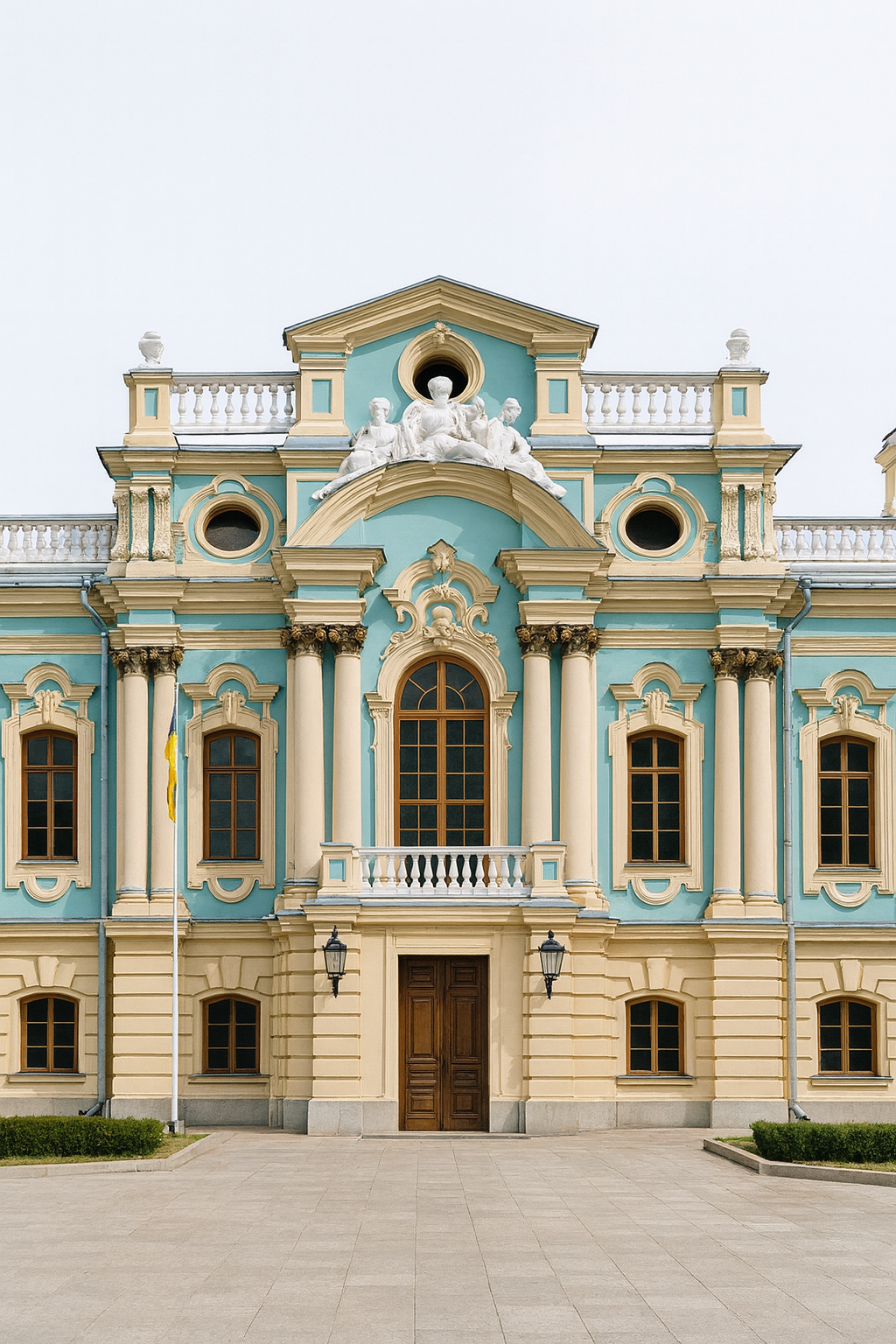
Mariinsky Palace (1750s, Kyiv)
Baroque design by Bartolomeo Rastrelli. Built for Russian royalty. Heavy ornament, turquoise walls, long axial gardens. Symbol of state power.
Focus on how composition enforces hierarchy. Every axis leads to control.
19th Century
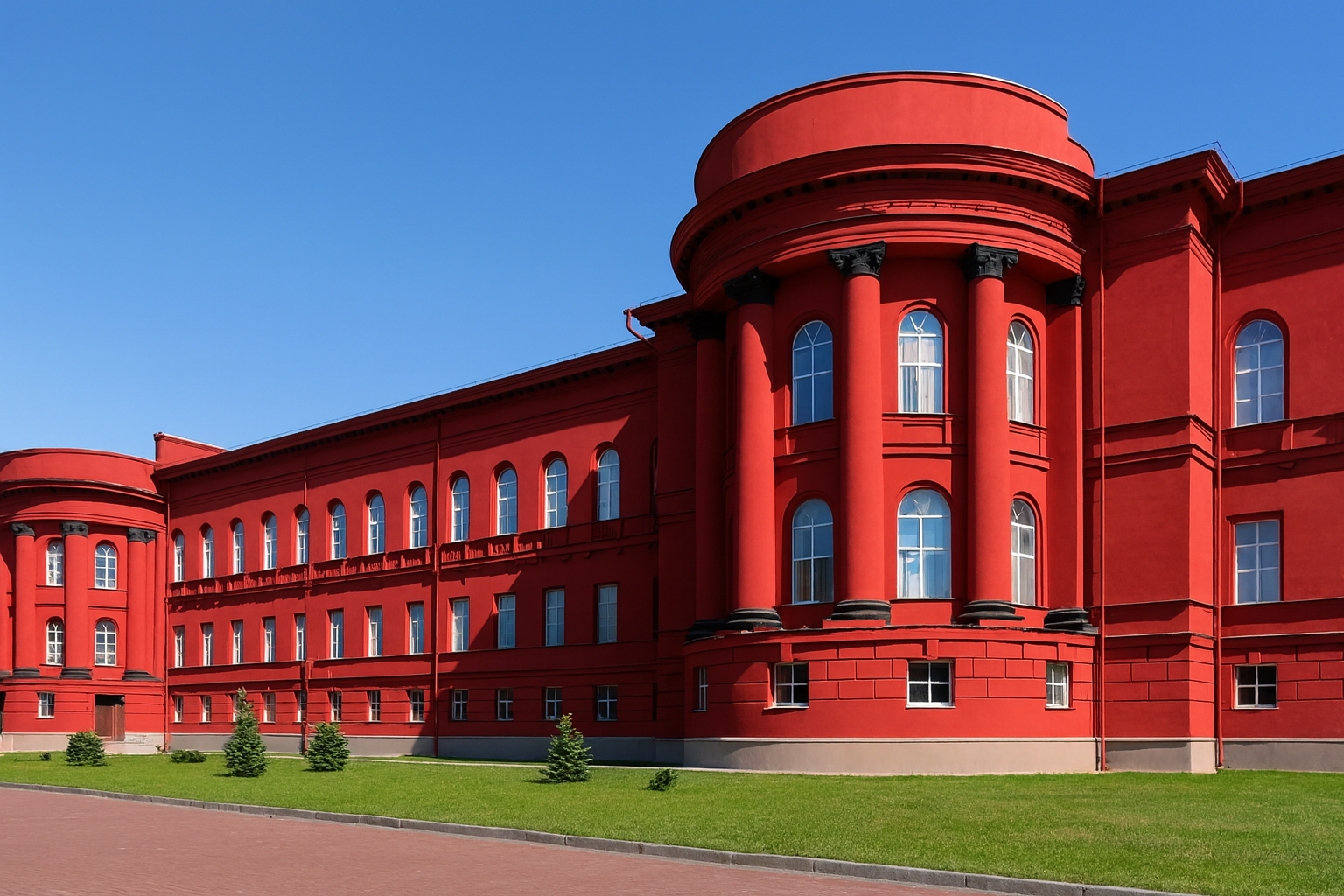
Taras Shevchenko National University (1837–1843, Kyiv)
Neoclassical by Vincent Beretti. The “Red Building.” Strict rhythm, full symmetry, academic monumentality.
See how proportion alone communicates authority without decoration.
Potemkin Stairs (1841–1846, Odesa)
Francesco Boffo. Monumental staircase that widens as it rises, creating an optical illusion.
Stand at the bottom. The view teaches scale and perception more than any drawing.
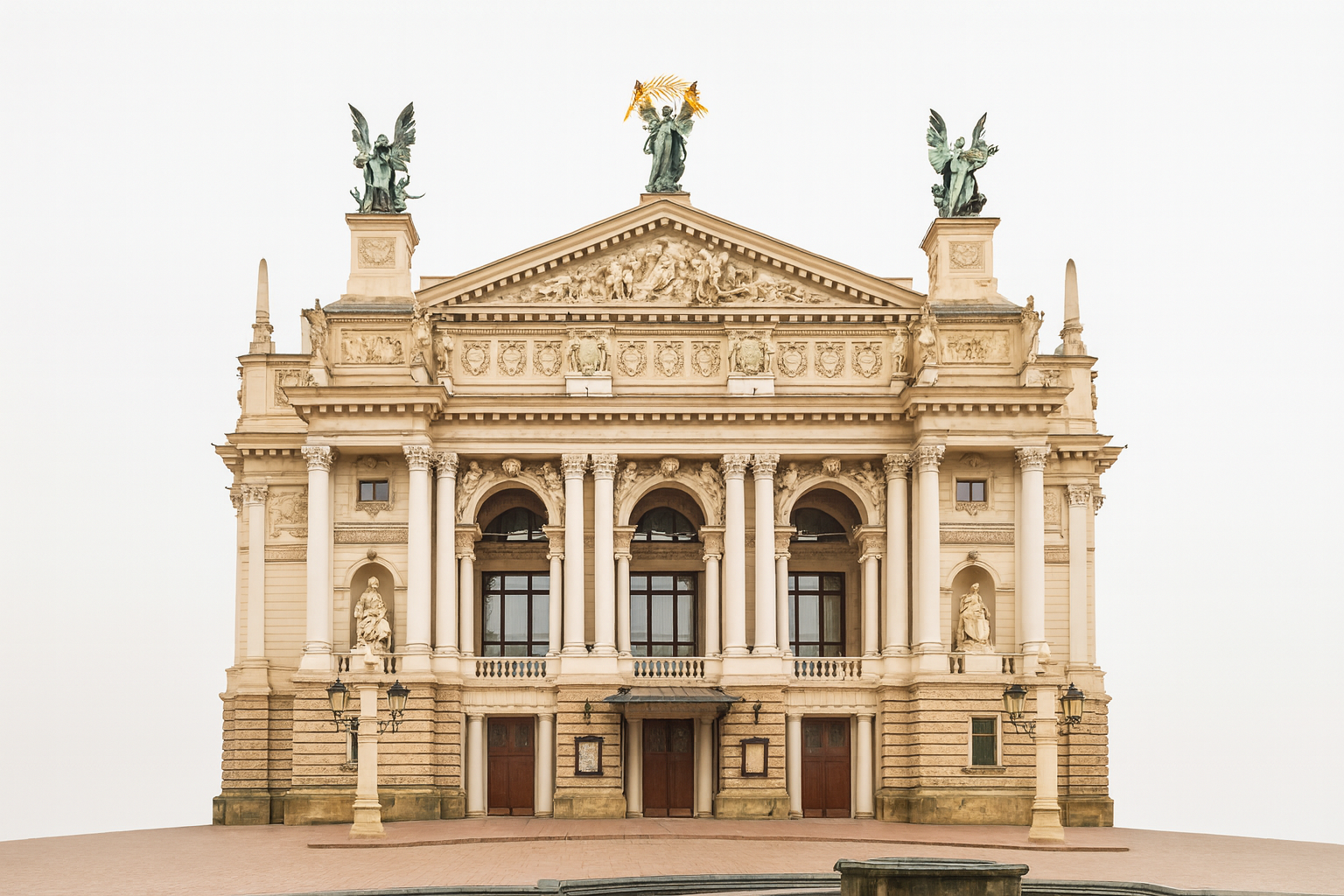
Lviv Opera House (1897–1900, Lviv)
Zygmunt Gorgolewski. Neo-Renaissance civic landmark with advanced concrete engineering.
Notice how structure and spectacle coexist. The ornament follows performance, not ego.
Odessa Passage (1899, Odesa)
Luxury shopping arcade in Neo-Baroque and Art Nouveau style. Glass ceilings and sculptural detail flood the space with light.
Look up. The architecture sells light before it sells goods.
Early 20th Century
House with Chimaeras (1901–1903, Kyiv)
Władysław Horodecki’s personal concrete experiment. Art Nouveau with animals, myth, and surreal detail.
Watch how narrative becomes surface. This is early storytelling through facade craft.
National Art Museum of Ukraine (1898–1904, Kyiv)
Vladimir Nikolayev. Greek Revival monument built for national art.
The power is in restraint. Classical order used to claim cultural confidence.
Poltava Regional Museum (1908)
Vasyl Krychevsky. Ukrainian Modern. Folk geometry, ceramics, color, national character.
Read the ornament. It’s local identity translated into material language.
1920s–1930s
Derzhprom Building (1925–1928, Kharkiv)
Government Industry Building. Pure Constructivism in concrete. Interlocking volumes and bridges.
Walk it mentally. Every mass obeys function before form.
Kharkiv Gosprom Square Ensemble (1928–1932)
Functionalist urban plan around Derzhprom. Offices, transit, civic order.
Think of it as a diagram for productivity made visible.
1940s–1950s
Kyiv Railway Station Rebuild (1945–1952)
Massive dome, portico, and socialist symbols. Postwar confidence expressed through scale.
Observe how symmetry and height still project optimism after destruction.
Hotel Ukraine (1961, Kyiv)
Mix of Empire and early modernism. Defining piece on the Maidan skyline.
The lesson is vertical control. Formally outdated yet visually dominant.
1960s–1980s
Ukrainian Institute of Scientific-Technical Information (1971, Kyiv)
The “Flying Saucer.” Ribbed concrete shell built during space-age optimism.
Study the geometry. It captures motion inside a fixed form.
Kyiv Crematorium (1975)
Avraam Miletsky. Brutalist structure folded into the hills.
Notice how raw concrete finds peace in topography.
Taras Shevchenko Memorial Museum (1970s, Kaniv)
Concrete and glass above the Dnipro River. Quiet and linear.
Feel the restraint. Form disappears into landscape and meaning stays.
1990s–Present
Maidan Nezalezhnosti Redevelopment (1991–2001, Kyiv)
Central civic space rebuilt after independence. Classical remnants meet glass facades.
The site teaches memory. Architecture holds political change in plain view.
Gulliver Business Center (2013, Kyiv)
Glass-steel tower, corporate skyline marker.
Watch how transparency becomes currency in a market city.
Theatre on Podil (2017, Kyiv)
Minimalist theater of brick and metal. Controversial, controlled, honest.
Judge the proportion. Good restraint always divides opinion.
UNIT.City Innovation Park (2019–present, Kyiv)
Tech campus built on reused industry.
Note how flexibility replaced monumentality. This is the new civic type.
What Ukraine’s Architecture Teaches When You See It Yourself
What Books Miss

Books miss it. They file everything into styles and dates, but standing there is different. Ukraine doesn’t read clean. It’s layered, patched, reused. You smell lime and rain, touch stone that still carries tool marks. The work isn’t polished. It’s alive.
Kyiv Up Close
In Kyiv, you notice how scale shifts fast. Heavy Soviet blocks beside quiet courtyards with vines running over chipped stucco. Architects call it contrast. Locals just call it life. The marble on new towers already dulls under soot, and next to it someone repaints a wooden door for the tenth time. The city balances decay and invention without ceremony.
Lviv in Morning Light
Walk Lviv early morning. Light cuts the dust and hits the carvings so you finally see the depth that drawings never show. Baroque moldings are softened by rain, stone turned gray-green. The lessons come from weather, not theory. You learn proportion by standing under it. You learn restraint by watching how plaster cracks along cornices yet still holds the shape. That’s design surviving use.
Quiet Lessons from Poltava and Chernihiv
In Poltava or Chernihiv, the rhythm is slower. Whitewashed walls against grass fields, roofs folded low against wind. No ornament can hide bad geometry here. Every joint, every shadow, tells if the builder understood balance. It teaches patience more than skill.
How to See Like an Architect
Seeing Ukraine through an architect’s eyes means training yourself to notice what isn’t drawn. The air gaps behind plaster. The way paint fades unevenly on the north side. The depth of a window reveal that tells how thick the wall really is. Once you start seeing like that, you can read any building, anywhere. The method works on new steel and old brick alike.
Field Practice
For students, the best field exercise is simple. Walk with a sketchbook, not a camera. Trace one doorway, one cornice, one roof angle. Forget perspective. Measure rhythm. You’ll understand more about history from five minutes of drawing on site than five hours of reading about it.
Lasting Impressions
And when you leave, it stays with you. How light sits on lime plaster. How silence feels under a vaulted ceiling. Ukrainian architecture teaches humility. It shows how much design can hold when everything else keeps changing.
How Ukraine Builds Its Language of Form
Key Ukrainian Architectural Styles Features

Ukraine reads through its materials. Forests gave timber. The steppe gave clay and lime. Stone arrived later and changed the mindset. You can still trace the shift in grain, color, and weight along a single street.
Kyiv
Kyiv stacks periods on top of each other. War repairs, Soviet rebuilds, new glazing. Walk Podil and Pechersk at dusk. Plaster peels and shows older brick. Window surrounds curve just enough to catch light. Roofs step to shed snow and keep gutters from icing over. Color is working skin, not decoration. Blues and ochres seal weather and brighten gray months.
What to notice
Uneven wall breath. Patches where a facade tells its own repair history. Light on shallow reliefs late in the day.
Lviv
Old plots force tight plans. Courtyards compress air and sound. Facades look European at first, then you see the local hand. Deep reveals. Thin iron balconies. Stucco chipped where rain hits hardest. Nothing is perfectly symmetrical and that is the charm. Streets feel lived, not staged.
What to notice
Arched entries that hide small courts. Window frames set back to modulate glare. Stone underfoot that shifts the way you walk.
Ukrainian Baroque
Not the heavy Western kind. Lighter. Closer to craft that began in wood. Curved gables, soft corners, and color that sits quiet in cloudy light. Ornament is present but disciplined. Floral stucco, shells, small volutes that guide the eye without drowning the wall. Mixed assemblies matter here. Plaster over brick. Wood trim meeting stone with care.
What to notice
Rounded transitions instead of sharp edges. Pale greens and creams with warm trim. Old stucco textured with fine cracks that tell age and weather.
If you want a deeper primer on this tradition, see our take on Ukrainian Baroque for a quick sweep of forms and language: read more. For civic fabric that frames many of these streets, this overview of public buildings helps you spot planning logic and proportion in play: government design basics.
Interior Design Elements in Ukrainian Architecture

You read a country through its interiors. Ukraine tells its story in wood grain, plaster tone, and daylight angles. Rooms aren’t about display. They’re about survival, rhythm, and quiet skill. Each region shaped its own balance between warmth and order.
Kyiv Interiors
Kyiv interiors carry restraint. Older homes run on logic before luxury. Exposed beams, clay ovens, thick plaster walls. Colors are muted: ochre, walnut, ash. Everything aims to hold heat and light. In civic buildings, the detailing rises—painted ceilings, carved panels, tiled stoves—but the proportions stay measured. You can feel the carpenter’s hand in every joint.
What to look for:
Shadow depth where wall meets beam. Slight unevenness in floor planks that proves handwork. The way natural light bounces off matte plaster instead of glass.
For a primer on how structure and finish merge in traditional homes, see Medieval Houses: History, Structure, and Modern Design Inspiration.
Lviv Interiors
Lviv breathes a different air. The ceilings lift, the walls curve. Renaissance and Baroque influence sits side by side with local craft. Interiors use tall windows to stretch daylight deep into the room. Paint tones—sage, clay, faded blue—shift with the weather. Many houses hide courtyards behind heavy doors, so sound and temperature stay stable all year.
What to notice:
Stone thresholds polished by centuries of shoes. Iron railings that mix geometry and floral scrolls. Light that cuts across ceilings painted just rough enough to catch dust and glow.
Ukrainian Baroque Interiors
Inside Ukrainian Baroque, elegance never overpowers structure. The geometry comes first, the ornament second. Stucco bands follow curves instead of covering them. Color works in harmony: greens, creams, pale gold. You find proportion everywhere—from door height to cornice line. It’s controlled, not lavish. These rooms feel built for calm conversation, not ceremony.
What to focus on:
Transition lines between wall and vault. The quiet rhythm of repeated motifs. Balance achieved through symmetry, not weight.
FIELD PICK
The Elements of Style: A Practical Encyclopedia of Interior Architectural Details – Stephen Calloway
Short visual reference for reading molding profiles, ceiling junctions, and plaster work. Handy if you’re sketching or restoring interiors with historic logic.
→ Buy on Amazon »
For more on how form and structure work together across eras, see Ukrainian Baroque and compare it with Government Buildings: Architecture, History, and Design Principles Explained to see proportion handled at a civic scale.
Reading Detail and Symbolism in Ukrainian Architecture
Every culture leaves its mark in detail. In Ukraine, meaning lives in carvings, colors, and structure. The work is rarely loud. It speaks through repetition, pattern, and what hands could do with limited tools.
Wood Carvings and Folk Detail
In rural Ukraine, doors, beams, and window frames carry small stories. Sunbursts, vines, and protective symbols cut into pine and oak. Each region has its rhythm. Western villages favor floral spirals, while central ones keep their carving geometric. None of it is decorative for show — it is belief turned into pattern.
When studying early woodwork, compare the rhythm of these motifs with structural logic in Medieval Houses: History, Structure, and Modern Design Inspiration. Both rely on the carpenter’s precision, not imported style.
Color and Stucco Work
Color in Ukraine is never neutral. From village homes washed in lime to Baroque churches painted turquoise or ochre, pigment carries mood and memory. Stucco adds relief that shifts with light. It’s a local way of animating walls without machinery. Walk through Lviv or Poltava at sunset and the facades read like moving paintings.
For a broader view of color logic across architecture, visit Color in Architecture: History, Psychology, and Use in 2025.
Tiered Roofs and Practical Geometry
Rooflines in Ukraine reveal climate intelligence. The layered slope breaks heavy snow, protects timber joints, and creates depth that defines the skyline. In Kyiv, you still see tiered domes and gabled homes using the same logic — form growing from weather, not fashion.
FIELD PICK
The Language of Ornament – James Trilling
A visual reference for reading pattern and cultural meaning in architecture and craft. Compact, precise, and valuable for anyone studying symbolic detail.
→ Buy on Amazon »
To see how these craft traditions evolve into full architectural language, continue to Ukrainian Baroque and trace how ornament became structure.
Influence of Ukrainian Architecture
Ukraine’s architecture leaves marks beyond its borders. It shaped how cities across Eastern Europe build for light, material, and proportion. Even under layers of history, the core ideas remain: build with what you have, and let craft speak louder than polish.
Modern Ukrainian architects carry that lineage forward. They reuse brick, timber, and lime plaster, pairing them with glass and steel. New work in Kyiv, Lviv, and Kharkiv often keeps the same color sense and tactile honesty that defined older villages. It’s not nostalgia — it’s continuity.
Today’s studios mix software precision with traditional craft. Roof angles still echo the snow logic of old homes. Wall textures still soften light instead of reflecting it. The conversation between past and present feels natural, not staged. It’s a working dialogue between survival and expression.
FIELD PICK
Architecture in Transition: Between Deconstruction and New Urbanism – Peter Noever
Useful for understanding how regions rebuild identity through design after political and cultural shifts. A strong lens for reading Ukrainian work today.
→ Buy on Amazon »
For more on material reuse and adaptive thinking, see Timeline of Building Materials: From Ancient Times to Today and how Ukraine fits that global evolution.
Field Notes on Ukrainian Heritage
Ukrainian architecture isn’t a gallery of styles. It’s a record of adaptation — wood cut by frost, stone shaped by siege, color chosen to defy gray skies. You read endurance in every wall joint and roof tier.
Kyiv still holds weight in its courtyards. Lviv still catches light the same way it did three centuries ago. What connects them is not nostalgia but structure. Each city shows how craft and survival became art.
For students or practitioners, these buildings teach a quiet lesson: design that lasts is built from need, not trend. It speaks with proportion, not noise.
For a deeper grounding in architectural lineage, see Introduction to History of Architecture: Where Every Architect Should Start and return to it once you’ve walked Ukraine’s streets. The real learning happens on site.
KEEP LEARNING
Architecture holds memory best when it’s built by hand and adapted with time. If you’re studying how heritage informs modern work, pair this reading with local examples and sketches. Every façade tells a technical truth.
FAQ
What makes Ukrainian architecture different from Russian or Polish styles?
It’s less about decoration, more about proportion and craft. Ukrainian buildings often come from local logic — wood joints, plaster texture, color that fits the light. The structure tells the story before the style does.
Why do many Ukrainian buildings use bright colors?
Color keeps villages alive through long winters. Pigment came cheap, made from lime and minerals, and bright walls bounced light inside narrow streets. It’s practical before it’s symbolic.
Is Ukrainian Baroque the same as European Baroque?
No. Ukrainian Baroque softens the show. Less gold, more rhythm. It trades heavy ornament for proportion and simple curves — a local balance between faith, weather, and material limits.
How does climate shape Ukrainian architecture?
Everything comes back to cold. Steep roofs, small windows, deep eaves, heavy walls. You can feel the weather in the structure. The smartest design moves came from trying to stay warm.
What can architects learn from Ukraine’s buildings today?
Build with what you have. Let material decide form. Don’t hide craft. Ukrainian work shows how design survives when budgets, tools, and time all run thin. The lesson still holds.