
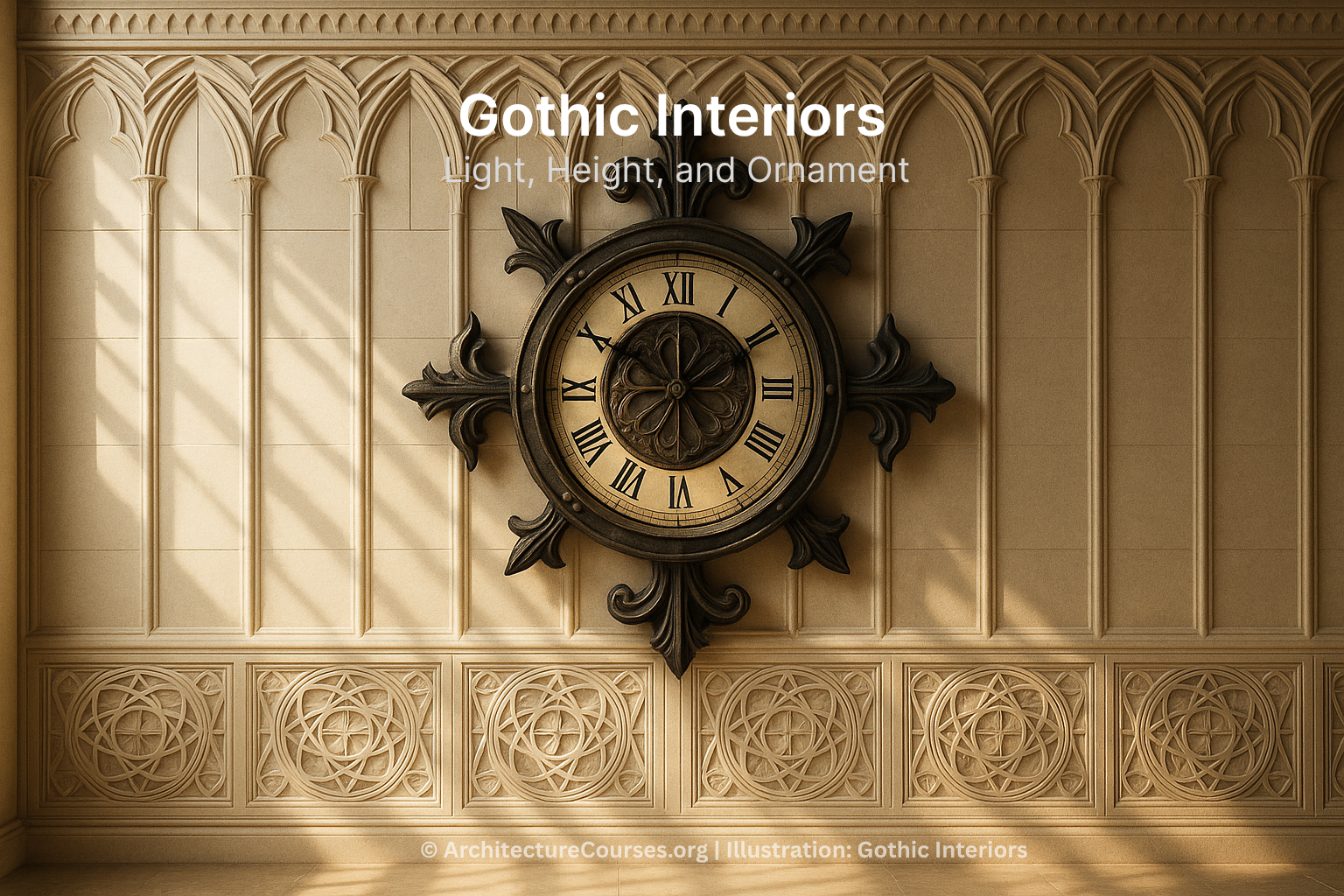
Gothic Interiors: How Structure Shapes a Room
I had a client who thought Gothic was a sad story. I asked why. “No one backs it anymore,” he said. He still wanted a Gothic study. Not the whole house. Just one room.
Forget the fake fog. Real Gothic rooms are clear and intentional. Tall volume. Controlled light. Structure you can read from the floor. Stone and glass doing work, not theater.
If you want a quick warm-up on basics, skim a plain intro to architecture and come back ready to follow the load path.
What it is, in plain terms
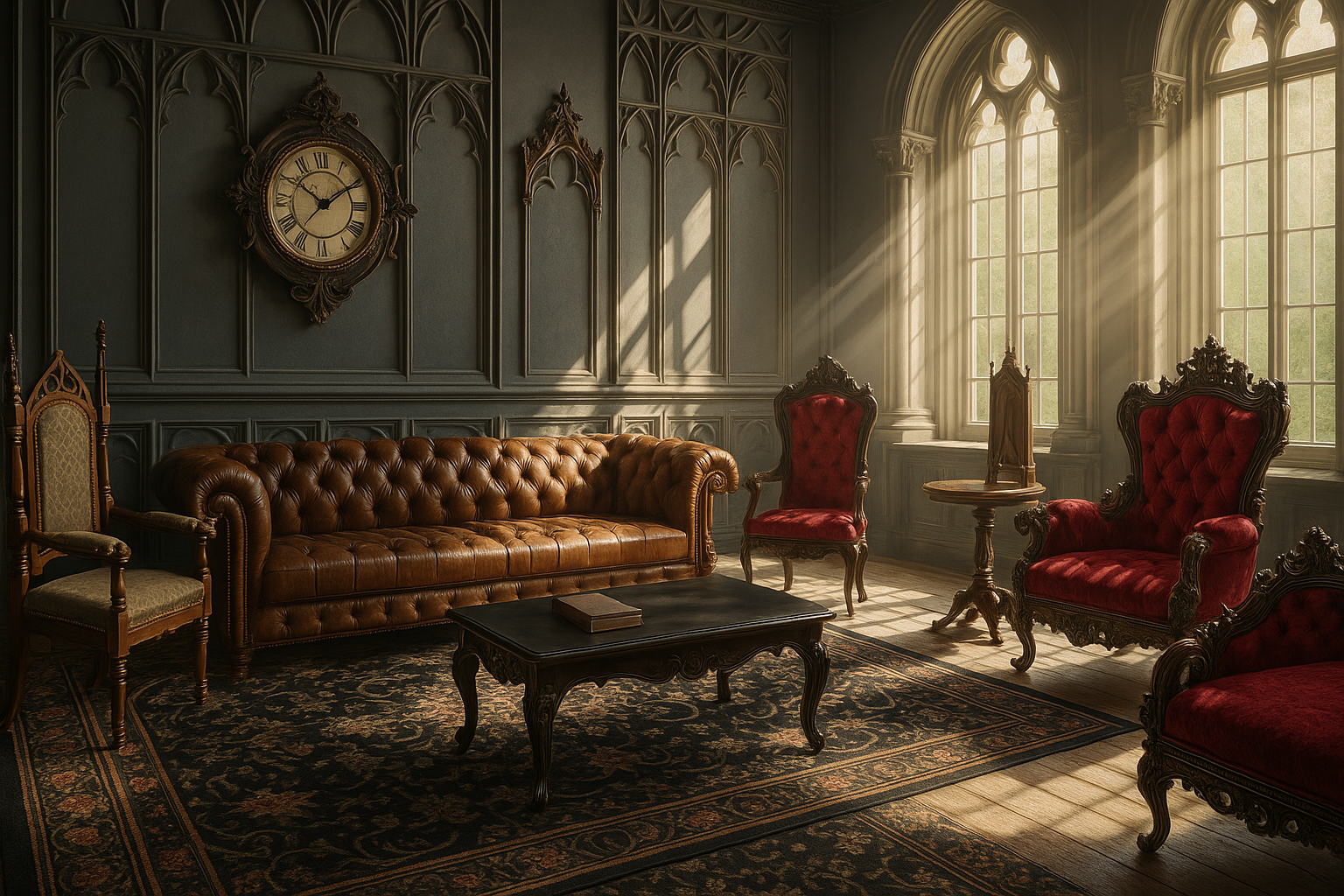
It is a way to hold big space with slim supports and a lot of glass. The pointed arch pushes force downward so openings can grow. Ribbed vaults move roof loads into clustered supports. Flying buttresses pick up the thrust and walk it to the ground, so the wall can open without giving up strength. None of this is decoration first. It is structure you can read.
How we got here
Early work was heavy and cautious, with small windows and thick ribs. The high phase refined the frame, thinned supports, and widened glass. Late work chased pattern and light, cutting stone into fine tracery. The nineteenth-century revival wave kept the look while hiding iron or timber frames behind the skin.
Core moves that make the look
Arches that earn their keep. A pointed profile gives height with less side push. Openings rise, walls stay stable.
Vaults as shells on a frame. The ribs are the bones. The webs are the skin. You get a light ceiling that still carries.
Buttresses with a job. They are not ornaments. They catch the roof thrust and plant it on solid ground.
Light placed high. Clerestory bands wash the plan with calm, even light. Tracery breaks glass into safe panels and handles wind.
For a clean breakdown of these parts and how they work together, see key Gothic elements.
Why Gothic Still Hits Hard in a Single Room
Most people think Gothic only works at cathedral scale. They’re wrong. You can apply the same logic to a 12×14 study and it’ll still feel right. Why?
Because the power of Gothic is about order, light, and the way structure shows itself.
-
A single pointed opening over a built-in desk reads as height, not style cosplay.
-
A ribbed ceiling panel can frame a workspace the same way a vault frames a nave.
-
One tall window with a deep jamb can wash a whole room with soft, even light.
You don't need stained glass. You don’t need gargoyles. Just layout that works and materials that carry their weight.
That’s the quiet trick: you can steal the system without copying the costume.
If you want to go deeper into these load and light moves, check the logic behind ribbed vaults and how they push force where you want it.
How the load actually travels
Roof into ribs. Ribs into clustered columns. Across the buttress and down to footings. You only open wall once that force has a clear path. Skip the path and cracks will rat you out. If you need wider context on periods and house types, skim the styles overview for bearings.
Light, color, and why the room feels calm
Big glass is not a mood trick. It is a light plan. High windows soften glare. Deep jambs stretch light across stone and floor. Color lives in the glass, but the room stays readable. Morning and late day paint the vault differently. That is part of the appeal.
Materials that carry the work
Stone excels in compression. If the quarry is weak, you keep spans short and let the ribs do more. Timber often frames the roof above the vault or replaces vaults in smaller halls. Lead and copper add mass on top, so size buttresses with roof weight in mind. Glass is panelized in lead cames and locked by tracery, so repairs can happen by bay without gutting the wall.
Site details that make or break it
Set springing lines level. Twist an impost and you twist the rib. Aim each buttress through its load line, not near it. Cut clean drips and sheds so water leaves surfaces fast. Water ruins stone faster than time.
Adapting the idea in a modern room
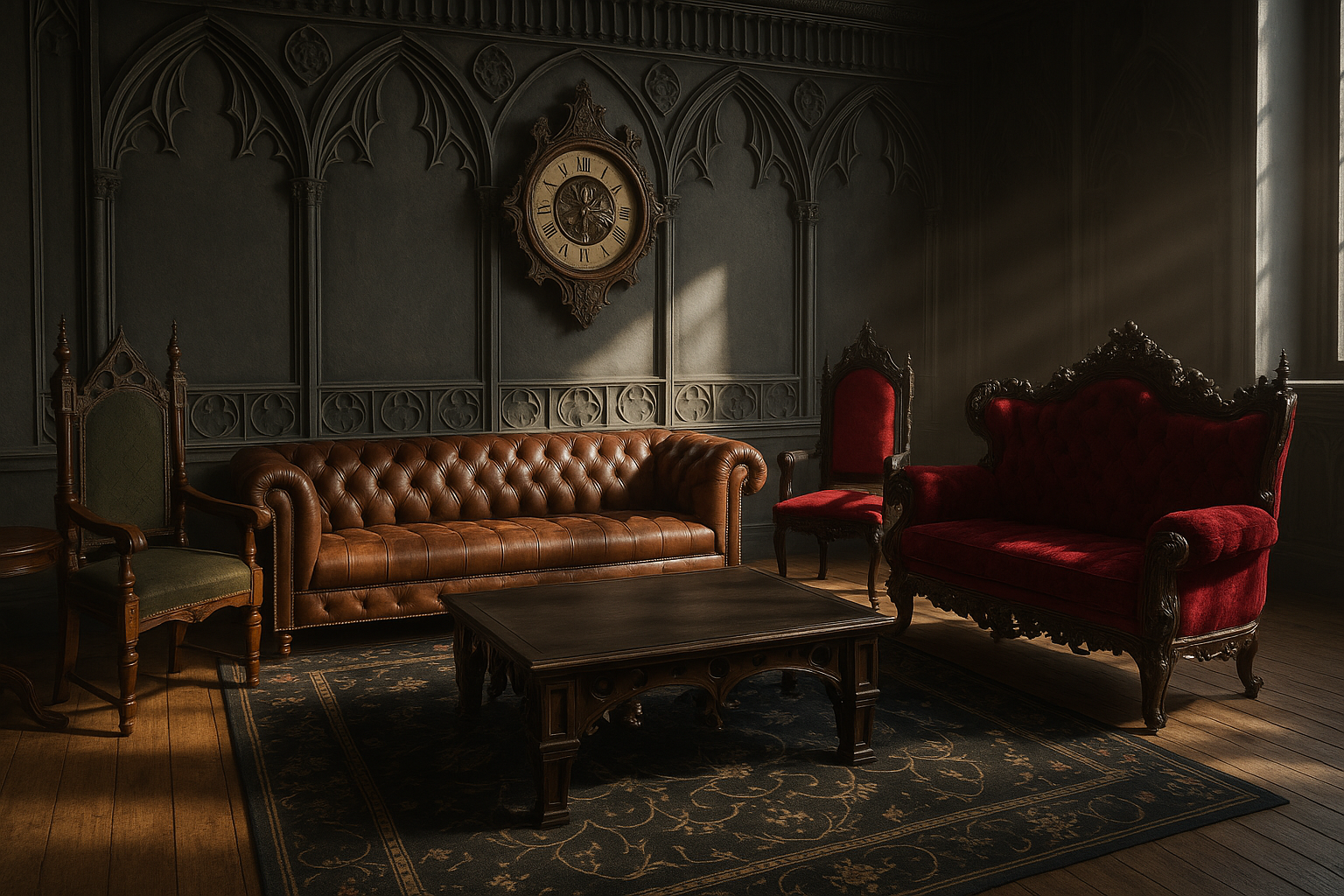
Create a clear top band for daylight. A high window strip or a light shelf evens the field. Let the frame read: a beam, a rib, a slim column you can follow with your eye. Keep finishes calm. One plaster tone, one wood tone, one metal finish. Break echo with slats, coffers, or carved panels where people sit.
Victorian Gothic, short take
Revival taste layered on practical frames. Expect pointed doors, tall skirtings, dark timber, patterned floors, and iron. Use it cleanly today: if the structure is steel, let it show. Put stone and wood where hands and eyes land. For wider revival context, see Gothic Revival basics.
Moody Gothic, how to pull it off
Start with deep greens, oxblood, charcoal. Break it with pale stone or plaster. Bounce light off ceilings and hide sources. Use small, warm pools where you work. Textures carry the room: velvet, carved wood, cast metal, rough plaster. Keep big fields matte so the light stays soft. For glass, use patterned or fluted panes to glow without glare.
Common mistakes
Arches with no job. If it does not carry or frame something real, skip it. Flat windows. No reveal means glare. Build depth so light has a place to land. Over-patterned glass. Too dark and the room goes dull. Balance color with transmission. Sticker buttresses. Do not paste them on a stable wall. If you need articulation, use a pilaster or a recess.
Costs, time, trade-offs
Stone carving is slow and skilled. Timber roofs move faster. Glass is modular and can phase by bay. Spend first on the frame and the light path. Add ornament after the room reads clean without it.
Can You Mix Gothic with Classic?
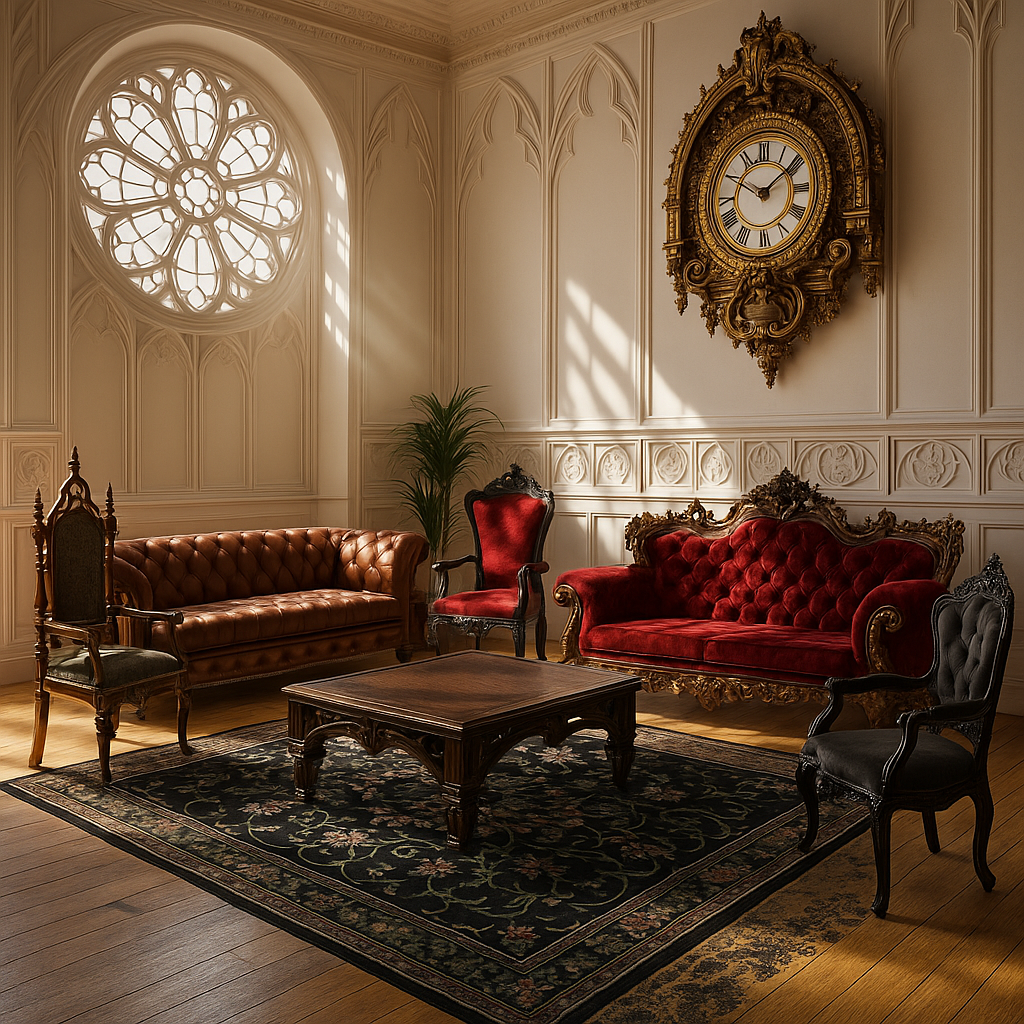
Figure: Gothic Revival living room featuring carved wall paneling, arched tracery window, and richly detailed furniture. The large wall-mounted clock contrasts the Gothic interior with a more classical, Baroque-inspired design.
You can mix them, but you have to respect what each style does well. Gothic design pulls you up. Classic design pulls you into balance. One is vertical energy. The other is calm geometry.
If you start with the structure, they can coexist. A tall pointed opening with clean trim. A ribbed ceiling inside a room laid out in a simple grid. Stone walls with classic proportion, then a Gothic light band above eye level. This feels grounded. The styles support each other instead of fighting.
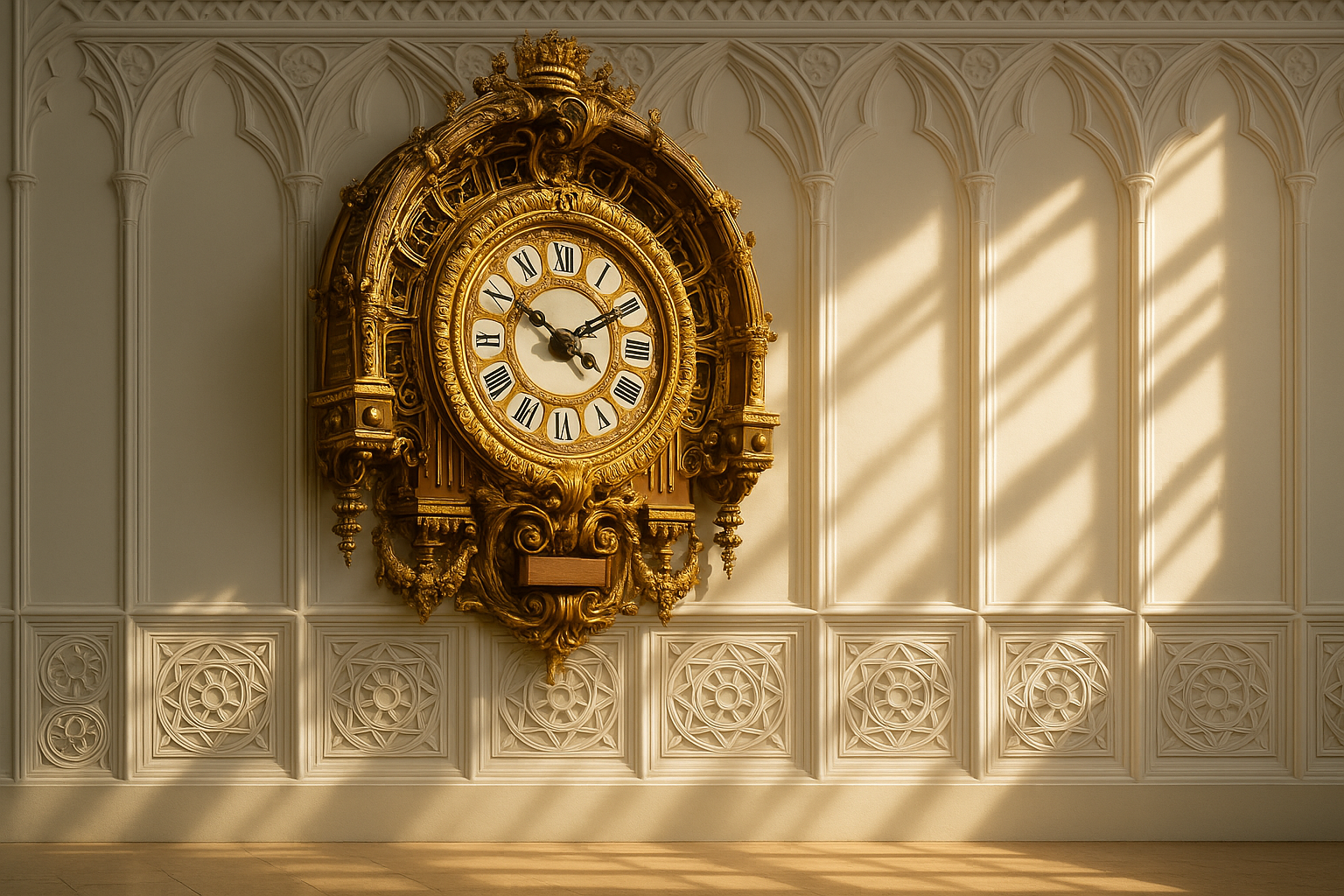
Figure: A richly gilded Baroque-style wall clock mounted on a Gothic interior wall. The ornate gold clock contrasts with the pointed arches and carved tracery panels, blending decorative styles from different architectural periods.
Where it goes wrong is when you treat both as decoration. Sticking tracery onto flat walls or shoving classical columns under a fake Gothic arch. That’s when it turns into theme park work. Follow the load first. Let the structure lead. Add the detail later.
If you need a quick refresher on how the Gothic side works, look at how the pointed arch moves force or how rib vaults hold a ceiling. Classic style has its own rules, but both care about proportion and material honesty. That’s where they overlap. Use that overlap. Don’t fake it.
FAQ
Can you build a modern Gothic room without stone?
Yes. Use engineered wood or steel for the frame. Wrap in plaster or left-natural timber. The load path matters more than the material list.
Do I need stained glass?
No. Use fluted, leaded, or patterned panes if you want to break glare. Light is the move. Color is optional.
What’s the easiest Gothic element to add in a normal house?
A pointed door or built-up arch with depth. It gives vertical pull without changing structure.
How do you stop echo in a tall Gothic-style room?
Add relief at ear height: slats, carvings, bookshelves, even fabric panels. Break parallel walls. Soft landings for the sound.
Does Gothic cost more?
If you chase real stone and carving, yes. If you borrow the vertical order and daylight logic and use modern stuff, it’s fine. Spend first on structure and the way light hits it.
Can you mix Gothic with a clean modern space?
Absolutely. Show the frame. Drop ornament. Keep the height and light plan. The bones do most of the work.
Keep reading
For a fuller starter map, see intro concepts in architecture. If you want the engineering behind the look, read technology of Gothic construction. For facades and stone patterns, try Gothic fronts and materials. If tracery is your focus, this guide to stone and light patterns is a solid next step.