
Brick can make a modern room better fast.
It can also make it feel like a coffee shop from 2014.
That is the real tension with brick in contemporary interiors. The material has enough history and enough surface texture to wake a room up, but it also has enough personality to take over when the rest of the design is not disciplined.
So the useful question is not just Should I use brick? It is this: what kind of modern room gets better with brick, what kind gets heavier and noisier, and how do you make it feel built in instead of staged?
That is where this article stays. Not “brick is cool.” Not “add an accent wall.” The better question is how brick changes the visual temperature of a modern room, when it adds weight in the right way, and when it starts acting like styling instead of architecture.
What Brick Does to a Modern Room
Modern interiors often run on clean planes, controlled color, sharp edges, and fewer materials. That can look excellent. It can also leave a room feeling a little too smooth, a little too thin, a little too temporary.
Brick changes that by adding three things at once: texture, age, and visual weight.
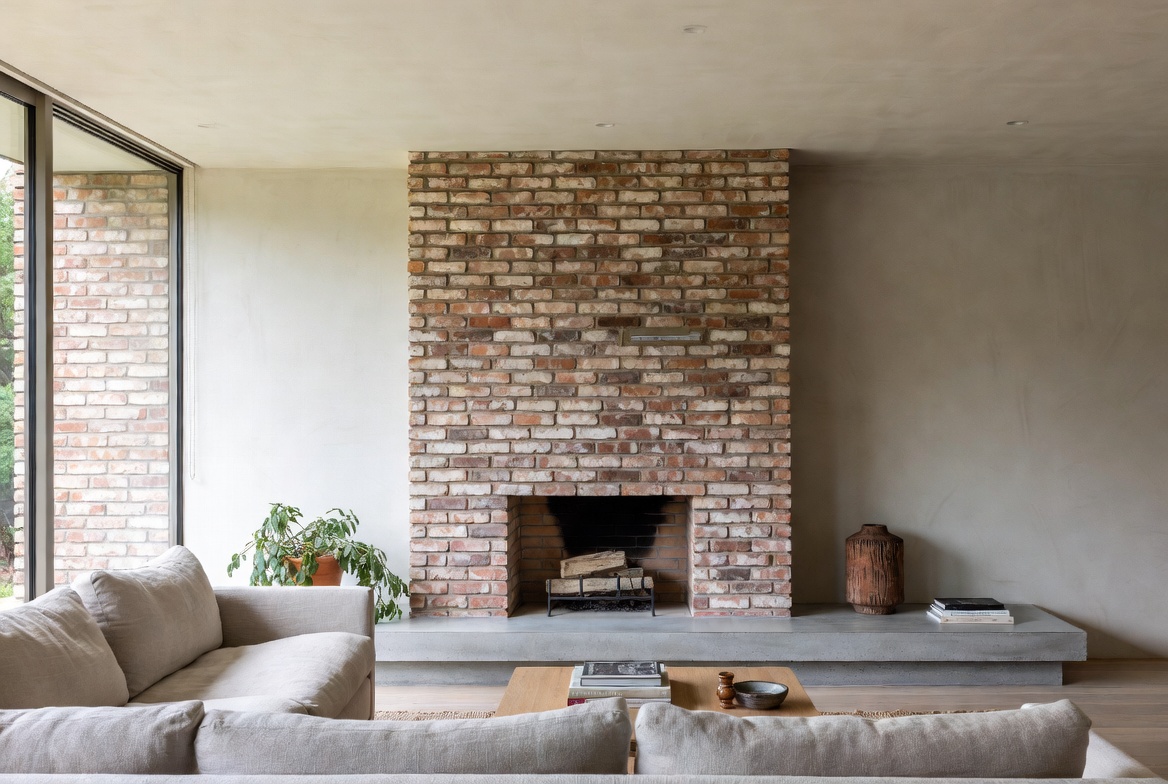
Texture is the obvious part. Age is what makes the room feel less newly assembled. Weight is the part people miss. A brick wall can anchor a room. It gives the eye one denser surface to settle on, which is why it often works so well behind fireplaces, along stair walls, and in long living spaces that otherwise feel too flat.
Used that way, brick helps modern design. Used carelessly, it turns the room into a theme.
The First Question to Ask: Is the Brick Supporting the Room or Just Interrupting It?
This is the cleanest filter.
Brick works in a modern room when it gives the space something it was missing: a focal wall, a stronger edge, a little depth, a little friction against all the cleaner finishes.
It fails when it is used to distract from a room that has a different problem. Bad lighting. Too many finishes. Weak furniture layout. Awkward scale. No hierarchy. Brick does not fix those problems. It just gives them more texture.
That is why one good brick wall usually does more than several smaller decorative gestures.
Where Brick Usually Looks Best in Modern Interiors
| Location | Why It Works | What Usually Keeps It Modern |
|---|---|---|
| Fireplace wall | Already a natural focal point | Quiet mantel, simple furniture, restrained accessories |
| Long living or dining wall | Adds depth to a room that feels too flat | Enough surface area for the brick to read as intentional |
| Stair wall | Turns circulation into part of the design | Full-height treatment and clean edges |
| Entry or mudroom | Brick can toughen up a hardworking zone | Durable finishes and not too many competing materials |
| Selected kitchen wall | Softens sleek cabinetry and modern appliances | Good sealing, simple counters, disciplined palette |
The pattern is simple. Brick looks strongest where the room wants one heavier surface, not five smaller moments of “character.”
Where Brick Starts Looking Forced
- Tiny accent patches. These usually feel like a sample board that escaped into the room.
- Busy open kitchens. Brick, stone, metal, open shelving, strong wood grain, and patterned tile rarely improve each other by all showing up at once.
- Flat edges and weak stopping points. This is where brick starts looking applied instead of built in.
- Overly glossy sealers. Brick should not look shellacked.
- Rooms that are already dark and heavy. Brick adds density. In the wrong room, that density becomes drag.
- Trying to force faux loft energy into the wrong house. A suburban family room does not become a warehouse because one wall got brick veneer.
Worth Knowing. If the look you want leans older and softer rather than sharp and urban, antique bricks are the better reference language before you decide what kind of brick surface belongs in the room.
Modern Brick Is Usually About Contrast, Not Matching
Brick almost never looks modern because it matches the room. It looks modern because the contrast is controlled.
That usually means pairing brick with smoother, quieter materials:
- Brick and black metal for sharper contrast
- Brick and glass to keep the room from getting too visually dense
- Brick and pale oak or walnut for a calmer, warmer modern interior
- Brick and plaster or painted drywall so one surface carries the roughness and the rest stay still
What usually goes wrong is overmatching the “industrial” idea. Too much metal, too many exposed bulbs, too much black hardware, too much reclaimed everything. Then the room stops feeling modern and starts feeling costumed.
Thin Brick, Reclaimed Thin Brick, or Full Brick?
This part matters more than people think, because the wrong product choice changes both the cost and the feeling of the room.
Thin Brick
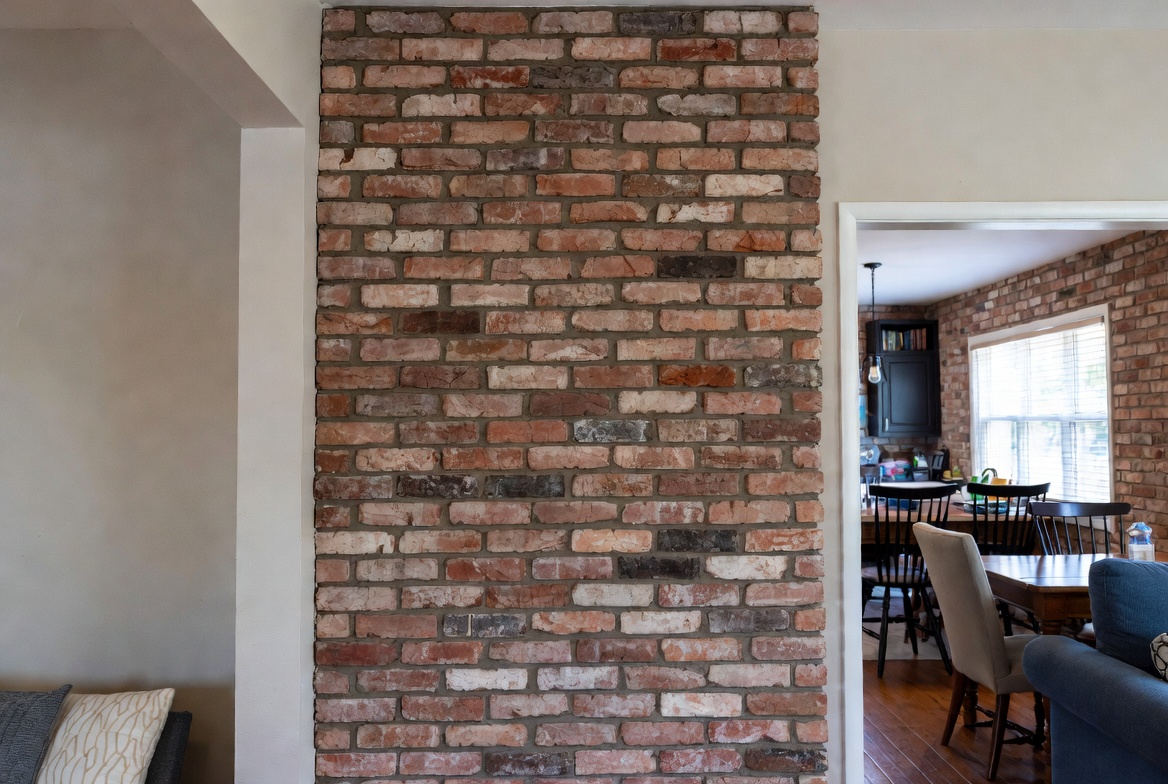
Thin brick is usually the cleanest route for most modern interiors. It gives you the face of brick without the thickness and weight of full masonry, which makes it easier to use on interior walls, fireplaces, and controlled backsplash areas.
If the room is tighter, cleaner, or more detail-sensitive, antique thin brick is often the smarter move.
Reclaimed Thin Brick
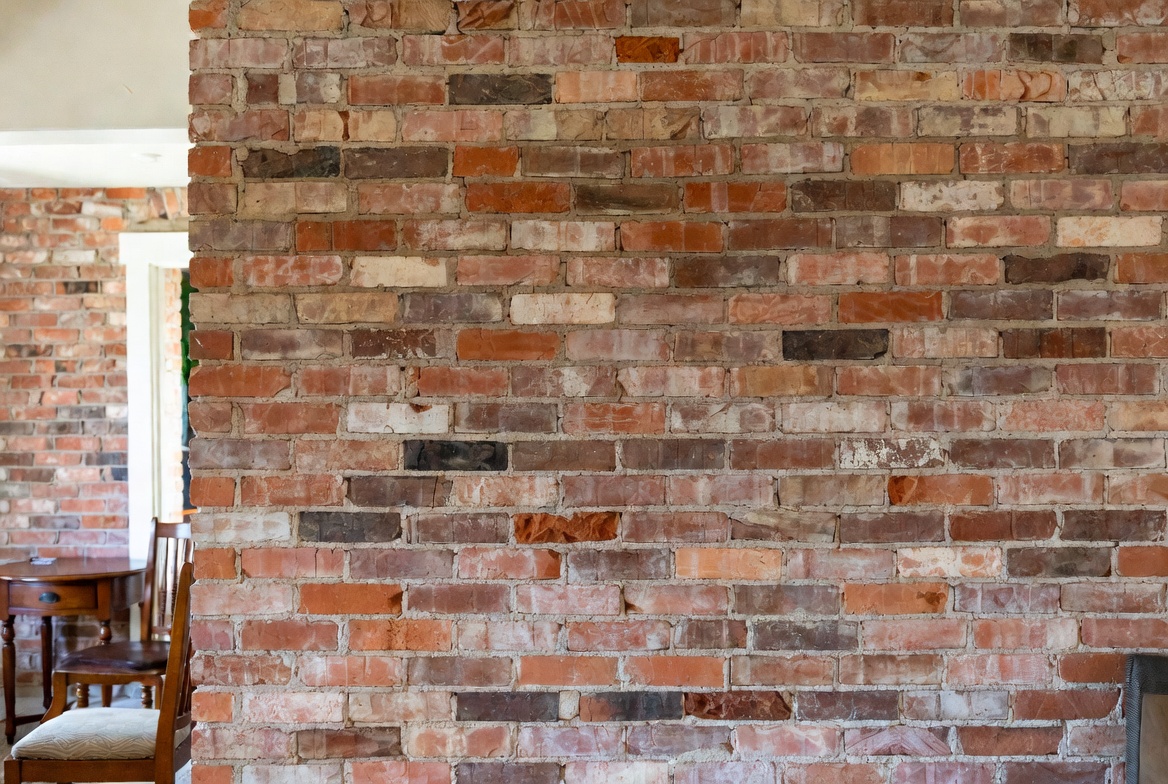
Reclaimed thin brick usually brings more variation, more chips, more roughness, and a slightly more industrial read. That can look excellent in the right room. It can also feel too gritty if the rest of the space is aiming for restraint.
Reclaimed thin brick usually works best when the room can carry more edge.
Full Brick
Full brick has more physical presence and more depth, but that does not automatically make it the better design choice indoors. Sometimes the thinner version is exactly what keeps the room from getting too heavy.
Color Changes the Mood More Than People Expect
People talk about brick like the main decision is whether to use it at all. Often the bigger decision is color.
Antique red brick brings more heat, more body, and more traditional pull. It can be excellent in modern rooms that need warmth and a little grounding. See antique red brick for that direction.
Antique white brick usually feels lighter, quieter, and easier to live with in more minimal interiors. It keeps the texture while reducing some of the visual weight. In rooms that already have enough warmth from wood and fabrics, antique white bricks often sit more easily.
Darker brick can look excellent too, but only when the room has enough light and enough discipline around it. Otherwise it starts absorbing everything nearby.
Lighting Is What Makes Brick Look Expensive
Brick lives on shadow.
That is why it can look flat and underwhelming in one room, then excellent in another with almost the same material.
Grazing light usually helps most. Light coming across the surface reveals the joints, the chips, the face variation. That is why wall washers, low-profile sconces, and carefully aimed directional lighting usually do more for brick than one bright overhead fixture ever will.
Warm light tends to make brick feel calmer and more grounded. Cooler light can push it toward a harsher industrial feel. Neither is automatically wrong. The room decides.
Exterior Brick Still Changes the Interior
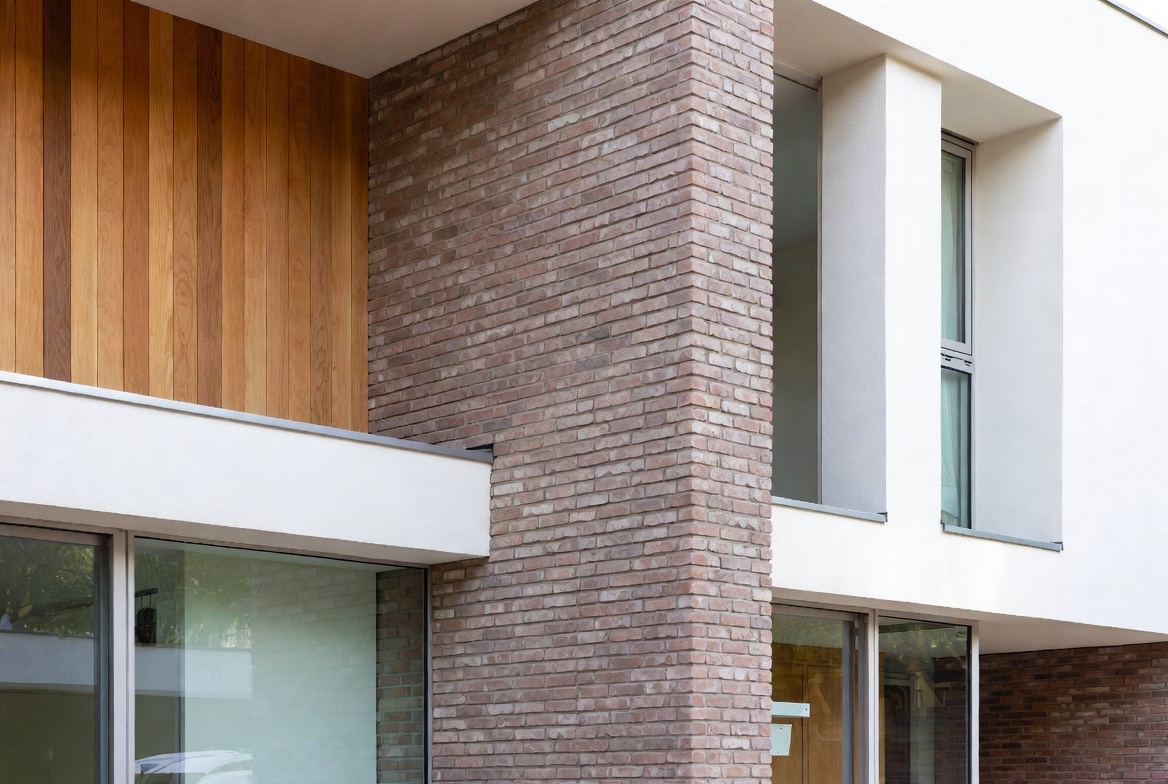
Even when this article is mainly about interiors, the outside still matters.
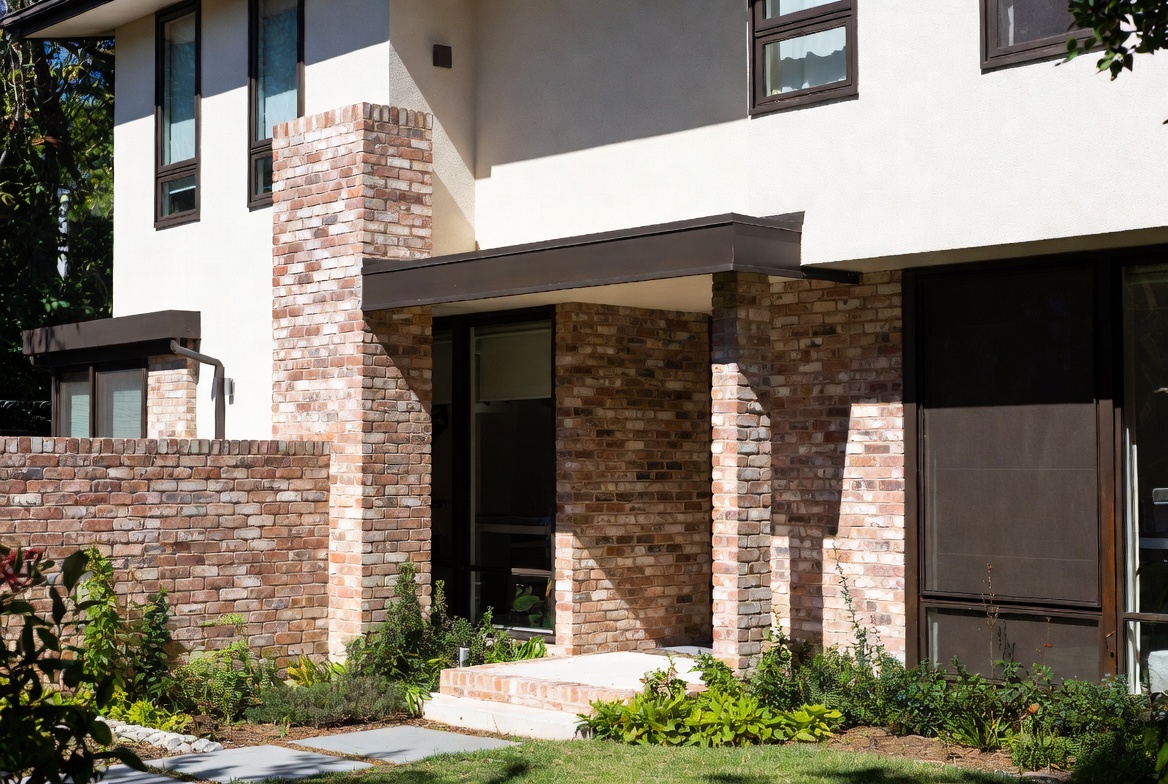
If a modern house already has brick on the exterior, that material is part of the room before you add a single interior wall treatment. You see it at the entry, through large windows, beside doors, across courtyards, and sometimes right at the threshold. That means the interior brick decision is never fully separate from the facade.
When the Outside and Inside Work Together
Brick usually feels strongest when the exterior and interior are speaking the same language without turning into a literal copy. That may mean an exterior brick wall wrapping into an entry, a courtyard wall reading through the glazing, or one interior brick surface picking up the color temperature of the brick outside.
That kind of continuity helps modern houses feel more settled. The material starts reading as part of the architecture instead of an indoor styling move pasted on later.
When Matching Starts Looking Overdone
The trap is trying to bring all the exterior brick inside. That usually gets heavy fast. A better move is selective carry-through. One wall. One threshold condition. One place where the outside material helps explain the inside.
Modern rooms usually do not need a full brick echo of the facade. They need one controlled moment of continuity.
Where Exterior Brick Helps Most
- Entries and vestibules. The material transition feels natural there.
- Window-facing walls. Interior brick can make more sense when it is already in dialogue with the facade outside.
- Courtyard and terrace edges. This is where inside-outside continuity can look architectural instead of decorative.
- Fireplace masses or chimney walls. Especially when the same element has an exterior expression.
The simple rule is this: exterior brick helps the interior most when it strengthens continuity, not when it turns the whole house into one long brick statement.
Where the Money Goes Wrong
Brick in modern interiors is often sold as a style decision. It is also a labor decision.
The visible material is only one part of the bill. The real number often grows through:
- surface prep
- corner treatment
- trim conflicts
- outlet and switch cuts
- mortar cleanup
- sealing
- the extra time it takes to make the wall stop looking fake
That is why brick often makes more sense on one strong wall than across several smaller decorative moves. A fireplace wall can justify the spend. A narrow niche or little coffee corner often cannot.
The better money question is not just square-foot price. It is whether the wall is important enough to deserve the labor.
How to Keep Brick from Hijacking the Whole Room
Use Less Than You Think
Modern rooms usually want one brick move, not several.
Let the Brick Carry the Texture
If the wall is doing the roughness, the furniture and finishes nearby usually need to calm down.
Watch the Mortar
Mortar color changes the whole read. Light mortar sharpens the pattern. Darker or warmer mortar can calm the wall down.
Do Not Ignore the Edges
Brick that starts or stops awkwardly looks cheap, no matter how good the brick itself is.
Sample the Brick in the Actual Room
Brick under warehouse lighting and brick beside your flooring, cabinets, paint, and daylight are not the same thing.
Best Modern Rooms for Brick—and the Ones to Be Careful With
Usually Worth It
- fireplace walls
- stair walls
- entries and mudrooms
- long living or dining walls that feel too flat
- controlled kitchen walls with restrained finishes
Use More Caution
- small bathrooms
- already-dark rooms
- tiny accent patches
- rooms overloaded with texture already
- spaces chasing a fake warehouse look they cannot really support
FAQ
Does brick work in minimalist interiors?
Yes, often very well. Minimal rooms usually benefit from one textured surface, as long as the rest of the space stays calm enough to let that wall carry the weight.
Is thin brick better than full brick for modern interiors?
In many cases, yes. Thin brick often gives you the visual effect without making the room too heavy or the installation too intrusive.
What color brick looks most modern?
There is no single answer. White and pale brick usually feel lighter and easier in minimal interiors. Red and deeper brick usually feel warmer and more grounded. The room decides which one is right.
Can brick work in a modern kitchen?
Yes, but it works best when the counters, hardware, shelving, and lighting are controlled. Brick plus visual clutter is rarely a good trade.
How much brick is too much in a modern room?
Usually more than one major wall unless the architecture genuinely supports it. In most modern interiors, one confident brick surface is enough.
Bottom Line
Brick works in modern design when it gives the room something clean-lined spaces often need more of: weight, age, and surface depth.
It fails when it is used like an instant-character product with no regard for scale, lighting, corners, or how much visual load the room can already carry.
That is the difference worth protecting.
Good modern brick does not make a room feel older for the sake of it. It makes the room feel more settled, more complete, and more built.