

The Architect’s Guide to Wooden Window Frames: What Works, What Fails, What Pays Off
Field-Tested Design, Species, Costs, and Install Rules
Wood belongs in windows because it performs in ways other materials try to imitate. It insulates naturally, carries finishes with depth, and repairs instead of replacing. The grain and texture read as part of the architecture, not a manufactured part. Walk a street with houses built across decades and the frames that still look alive are almost always wood.
Clients notice warmth when they run a hand along a sill. Builders notice when frames stay square through freeze and thaw. Designers notice when proportions look right in both modern lofts and Victorian rows. That is why wood has outlasted trends in aluminum, vinyl, and composite.
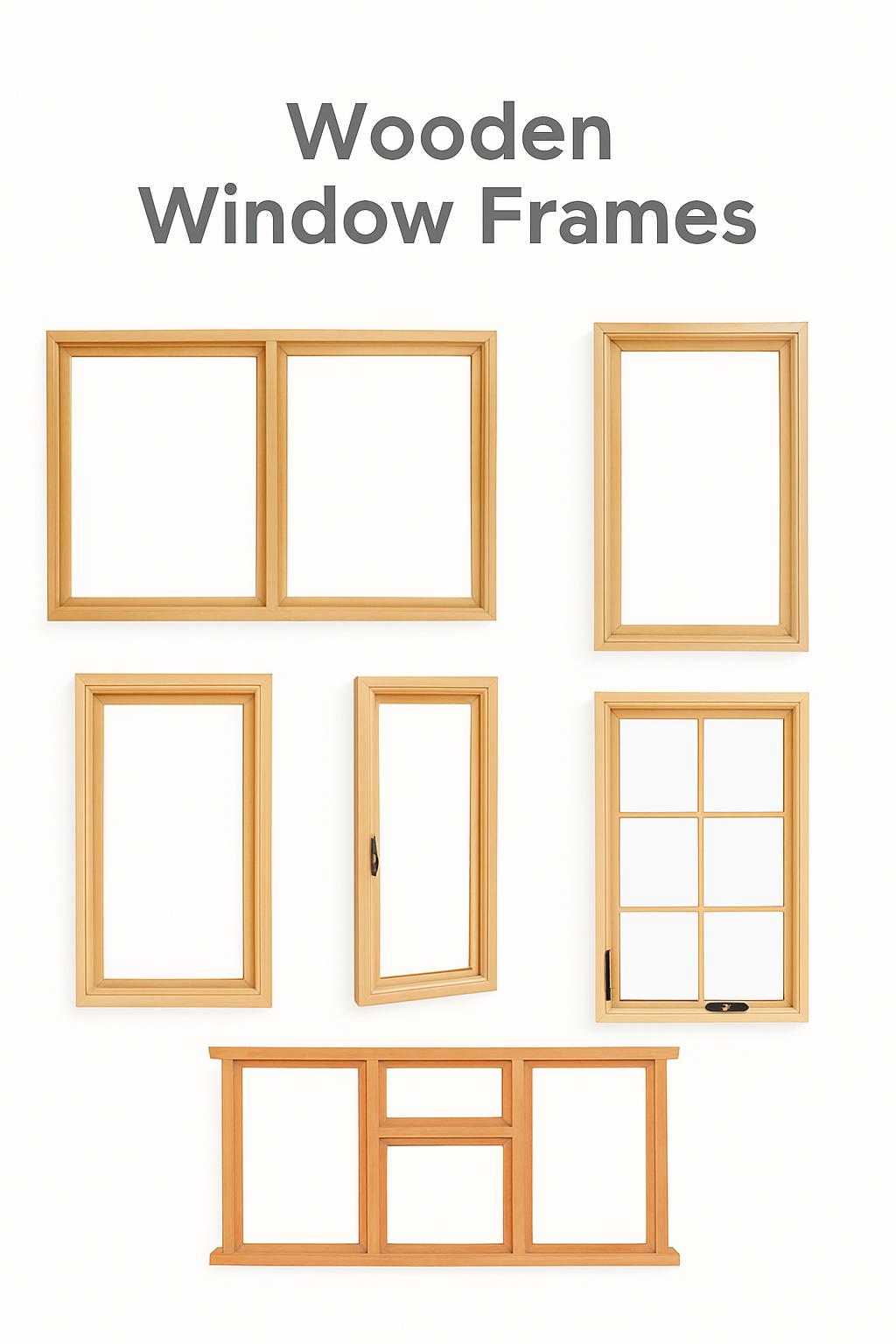
Wooden Window Frames
What We Specify, Why We Trust Them, and How We Install Them
Why Wood Frames Still Beat the Alternatives

Why Wood Still Wins (benefits we see in practice)
Natural look
Oak or mahogany frames present as furniture within a wall. In living rooms and façades, that sense of permanence sets them apart from synthetics.
Thermal edge
Wood is an insulator without engineered breaks. Match it with double glazing and it avoids condensation failures that plague aluminum.
Flexible finish
Paint, stain, or cut to match any profile. Historic trims can be replicated, slim lines can be detailed for contemporary lofts.
Responsible choice
FSC-certified stock is renewable and serviceable. Individual sills or rails can be replaced without scrapping the full frame.
Durability with detailing
When sills are pitched, ends sealed, and flashings tied to the barrier, cedar or oak can run for decades with little more than paint.
For broader design context, see Window Design: Complete Guide and Modern Windows: From Frames to Glass.
SHOP REFERENCE
Building Construction Illustrated – Francis Ching. The clearest sill and flashing diagrams for wood installs.
Species and Engineered Options

(how we choose stock that behaves)
Softwoods
Pine and Douglas Fir are affordable and easy to machine. Pine takes paint but dents and decays if neglected. Douglas Fir stays straighter and stronger, worth the added cost.
Hardwoods
Oak carries grain and strength for heavy-use areas. Mahogany resists rot and moisture with rich tone. Teak withstands coastal air and humidity where other species fail. Walnut and cherry deliver finish quality that elevates interiors.
Cedar
Balances durability and lightness. Natural resistance to insects and decay makes it a reliable choice for exterior frames. It can weather to silver-gray when left natural.
Engineered stock
Accoya and laminated timbers bring stability and dimensional control. They hold up under code pressures for energy performance and span without warping.
For hybrid options, see Modern Windows: From Frames to Glass.
MUST READ
Make Your Own Handcrafted Doors & Windows. Clear joinery techniques that still apply to modern frames.
Profiles and Details That Keep Water Out

Profiles, Sections, and Weathering Details (draw once, build everywhere)
Sightlines
Thin sections look sleek but must carry loads. Modern work can bring profiles down to 45 mm, but mullions need reinforcement.
Sills
Ten-degree pitch minimum with horns extended. Without slope and end dams, water creeps back and destroys plaster.
Head flashings
Must tie into the weather barrier. Caulked faces fail in seasons. Proper metal or membrane flashing avoids callbacks.
Jamb grooves
Simple 5 mm drip grooves under sill noses stop water from running back. Cheap detail, big impact.
Clad hybrids
Aluminum cladding can work if vented. Without drainage, moisture rots the frame unseen. Venting is essential.
Linked guides expand these strategies: How to Design Glass Windows: Materials, Frames, and Finish and Modern Window Designs for Homes That Work.
DETAILING GUIDE
Architectural Detailing – Edward Allen. Field-tested ways to tie wood into masonry without messy caulk lines.
Where Wood Frames Fit Different Styles
When Wood Makes the Façade (styles and regional logic)
Traditional builds
Double-hung and casements with divided lights feel correct in colonial, Georgian, or Victorian houses. Oak and mahogany carry the weight and hold detail without looking out of place.
Rustic and rural
Cedar and pine frames weather into cabins and farmhouses. Knots and exposed grain add to the character instead of fighting it.
Modern work
Tight sightlines and wide panes call for teak, walnut, or engineered stock. Frames are painted or stained in neutral tones so the glass and space dominate.
Contemporary mixes
Wood paired with metal or asymmetrical layouts works in lofts and suburban rebuilds. Cherry or maple blends warmth with sharper geometry.
For full breakdowns of form, see Architectural Window Types for Modern and Old Homes and Modern Window Designs for Homes That Work.
FIELD PICK
Woodworking: The Complete Step-by-Step Manual. Straight methods for shaping stock, useful when matching frame profiles.
Style Playbook: Traditional to Industrial
See Architectural Window Types for Modern and Old Homes, Modern Window Designs for Homes That Work, and Hacienda Style Windows: How to Blend Tradition with Modern Design.
Costs Builders and Clients Should Plan For
Costs, Bids, and Reality Checks (what owners actually pay)
Softwoods like pine
Entry frames land around $200–350 per unit. Affordable, easy to paint, but expect dents and a shorter cycle before repaint.
Mid-range hardwoods
Oak or cedar frames come in at $400–750. They carry traffic, handle weather, and give longer service with periodic sealing.
Premium hardwoods
Mahogany and walnut run $700–1,000 per frame. Chosen for finish quality and resistance to rot, often in high-end interiors or coastal work.
Top tier teak
$1,200–1,800 per frame. Nearly maintenance-free in wet climates, but cost limits it to select projects.
Labor
Standard installs run $200–500. Rerouting pipes or electrical pushes into the thousand-plus range.
Related context in Simple Window Design: Ideas for Every Home and New Window Design Inspirations for Home Exteriors.
SPEC DESK
Architectural Graphic Standards (AIA). Baseline sections and sizes that match real bid documents.
Costs, Bids, and Reality Checks
Table: Cost and Characteristics by Species
| Wood | Avg Cost (per frame) | Durability | Maintenance | Best For |
|---|---|---|---|---|
| Pine | $200–350 | Moderate | Frequent painting | Budget, interiors |
| Oak | $400–600 | High | Periodic sealing | Traditional, high-use |
| Cedar | $500–750 | High | Low, weather resistant | Exterior, rustic |
| Mahogany | $700–1,000 | Very High | Low | High-end, coastal |
| Teak | $1,200–1,800 | Extremely High | Very low | Luxury, humid zones |
| Walnut | $1,000–1,500 | High | Moderate | Modern, custom |
| Cherry | $800–1,200 | Moderate to High | Regular care | Contemporary, traditional |
| Reclaimed | $1,000–2,000 | Variable | Variable | Industrial, unique builds |
See New Window Design Inspirations for Home Exteriors and Simple Window Design: Ideas for Every Home.
Installation Rules That Prevent Callbacks

Install Sequence We Sign Off On
Start with clean cavities
No plumbing, wiring, or ducts in the bay. Surprises here triple the labor.
Frame heavy
Double studs and stiff headers. Soft framing flexes and leaves gaps once the window settles.
Set with a laser, not a tape
One eighth out of plumb over six feet makes sash drag forever. Use a laser to true jambs.
Seal and flash right
Head flashings must tie into the barrier, sills must slope. Caulk lines alone fail in one season.
Test before trim
Run sashes a dozen times. Check for drag or twist before casing hides the mistakes.
Cross-reference Make Your Own Windows: What to Know Before You Start and Build Your Own Windows: DIY Tips and Common Mistakes.
DETAILING GUIDE
Architectural Detailing – Edward Allen. Best resource for tying frames into brick or block cleanly.
Operators, Locks, and Smart Kits
(what we’ve swapped that still works)
Casement operators
We still trust dual-arm operators sized for the sash. Cheap units strip gears in a season. Brands like Truth and Prime-Line carry loads without fighting.
Single-arm variants
Good for narrow casements. Watch torque—students often under-spec and get complaints after the first wind storm.
Smart openers
Retrofit motors save reaches in tall stairwells. Safety means pinch-stop sensors and remote overrides. Installers need to check torque against sash weight.
Locking
Multi-point locks keep larger sashes tight against weatherstrips. On coastal installs, stainless strike plates avoid corrosion that jams mechanisms.
Amazon field picks we’ve rotated in real jobs:
Prime-Line EntryGard Dual Arm Operator
Truth Ellipse Casement Operator
Prime-Line TH23027 Single-Arm Operator
Prime-Line TH23031 Single-Arm Operator
Tuya Smart Motorized Window Opener
MySmartWindows Retrofit Kit (QuietCool)
Finish Systems and Maintenance
(keeping wood alive in real weather)
Coating stacks
Primer, two build coats, and a topcoat is the baseline. Always back-prime ends and cuts. Skipping this step is why south façades peel first.
Orientation matters
South and west exposures need shorter repaint cycles. Coastal projects demand marine-grade topcoats and stainless fasteners.
Seasonal checks
Sealant beads, sill end grain, and glazing putty should be inspected twice a year. Early touch-ups prevent substrate damage that costs tenfold later.
Hardware care
Wipe operators, lubricate gears with dry lube, and check screws. One seized crank can crack a sash corner.
Cross-reference Simple Window Design: Ideas for Every Home and New Window Design Inspirations for Home Exteriors.
Energy, Comfort, and Noise
(what wood contributes—and what glass seals)
Thermal
Wood frames carry U-values that beat aluminum, but glazing dominates performance. Pair with low-e glass and warm-edge spacers to avoid condensation at perimeters.
Acoustics
Wood’s density helps, but seals and insulated glass units do the real work. We’ve cut street noise by 20 dB in retrofits by adding compression gaskets.
Solar control
Deep reveals and simple canopies beat glass coatings in summer. We’ve avoided dozens of overheated living rooms just by pulling heads forward or extending horns.
Support material in Window Canopy Design That Blocks Sun and Adds Style and Modern Windows: From Frames to Glass.
DIY vs. Shop-Built vs. Custom Millwork
(who should build what)
DIY scope
Simple casements in pine are achievable if tolerances are forgiving. We’ve seen students pull it off when detail expectations are low.
Shop-built
Standard double-hungs, tilt-turns, and larger casements. Machinery sets joinery square and ensures weather seals seat properly. This is where most professionals buy.
Custom millwork
Curved heads, historic profiles, oversized sashes—these need full shops with knives ground to match. Costs jump, but review boards and architects specify it when accuracy counts.
Training help in Master Windows in Construction for Free: Step by Step Training and Make Your Own Windows: What to Know Before You Start.
Wood vs. Aluminum: Picking for Climate and Span
Wood frames
Better thermal performance and natural finish. Good for small to mid-size spans where section depth isn’t excessive. Works in cold or mixed climates if finish cycles are kept up.
Aluminum frames
Slim sightlines and strength for large panes. Conductivity is a liability without thermal breaks. Suits hot, dry, or high-span work.
Hybrids
Wood interior with aluminum cladding outside. Cuts maintenance while preserving warmth inside. We’ve specified them on towers where repainting 30 floors up isn’t realistic.
Compare full notes in Aluminum Window Frames: Everything You Need to Know.
Detailing Big Openings
(expansive windows without future leaks)
Mullions
Solid wood isn’t enough past certain spans. We size laminated stock or integrate steel to resist creep.
Heads
Structural deflection is the killer. A ½ in sag over a 10 ft span binds sash fast. Structural lintels with independent window frames are safer.
Seal continuity
More joints mean more leaks. Backer-rod and sealant geometry have to follow mullion and transom breaks exactly.
Linked examples: Expansive Windows in Contemporary Architecture and Expansive Window Design Examples.
Shading, Canopies, and Overhangs
(design once, save energy forever)
Rules of thumb
Project depth equal to half the window height for summer block. South faces benefit most; east and west need vertical fins.
Weather
Shading doubles as rain control. Proper drip edges stop streaks down façades and extend coating life.
Energy
We’ve cut peak cooling loads 20–30% on projects just by detailing fixed overhangs. No moving parts, long-term payoff.
See Window Canopy Design That Blocks Sun and Adds Style.
Troubleshooting and Aftercare
Drafts
Most come from failed seals or poor compression. Test with a smoke pencil; reseal before repaint.
Sticking hardware
Check crank alignment and torque. Replace worn shoes or misaligned operators. We’ve solved most “bad hardware” calls with a 5-minute reset.
Finish failures
UV exposure on south and west faces kills coatings fastest. Spot sand, prime, and recoat before the substrate shows gray.
Reference Modern Windows: From Frames to Glass for coordinating finish with glazing edges.
Related
Materials & Frames
Core Guides & Planning
- Window Design: Complete Guide
- Modern Windows: From Frames to Glass
- Simple Window Design: Ideas for Every Home
- New Window Design Inspirations for Home Exteriors
- How to Design Glass Windows: Materials, Frames, and Finish
- Modern Window Designs for Homes That Work
Styles & Regional Types
- Architectural Window Types for Modern and Old Homes
- Hacienda Style Windows: How to Blend Tradition with Modern Design
Shading & Canopies
Expansive Window Design
- Expansive Window Design Examples
- Expansive Windows in Contemporary Architecture
- History of Expansive Windows in Architecture
DIY & How-To
- Make Your Own Windows: What to Know Before You Start
- Build Your Own Windows: DIY Tips and Common Mistakes
Training & Courses
Books & Products
Books & Guides
MUST READ
Make Your Own Handcrafted Doors & Windows
Clear joinery that saves lumber and time. Cuts that hold up on site.
FIELD PICK
Woodworking: The Complete Step-by-Step Manual
Straight methods with hand tools. Square, tight joints every time.
DETAILING GUIDE
Architectural Detailing – Edward Allen
Details that tie frames into brick or siding without caulk lines.
SPEC DESK
Architectural Graphic Standards (AIA)
Sections and dimensions that pass review deadlines clean.
FAQ
Are wooden frames energy-efficient?
Yes. Wood is a natural insulator. Pair with low-E glazing for best results.
How long do they last?
With good finish cycles, 30–50 years. Teak and mahogany can stretch further.
Paint or stain?
Paint gives stronger UV protection. Stain shows grain but needs quicker cycles.
Which woods for tough climates?
Cedar and teak in coastal zones. Oak and fir in cold freeze-thaw regions.
Can I retrofit wood into aluminum storefronts?
Possible in inserts or hybrids. For large spans, wood needs reinforcement.
What stops drafts and rattles?
Compression gaskets, proper backer-rod, and seasonal seal checks.
Realistic installed cost per opening?
Standard pine: $400–600. Hardwoods and custom builds: $1,000+.
DIY vs. shop-built?
Small casements are manageable DIY. Large or historic frames should go to a mill.
Do wood frames help with noise?
Yes. Wood’s density cuts transmission. Seals and IGUs finish the job.
Can I automate existing frames?
Yes with retrofit kits. Ensure the frame is square and pinch-stop tested.
Sources
1. U.S. Department of Energy (DOE)
- Website: energy.gov
- Resource: The DOE provides information on energy-efficient window materials, including wood, and offers guidance on selecting windows that meet energy efficiency standards.
2. National Fenestration Rating Council (NFRC)
- Website: nfrc.org
- Resource: NFRC offers a rating system for windows, including wooden frames, helping consumers make informed choices based on energy performance.
3. Forest Stewardship Council (FSC)
- Website: fsc.org
- Resource: FSC certification ensures that the wood used in window frames comes from responsibly managed forests, promoting sustainability and environmental responsibility.
4. American Wood Council (AWC)
- Website: awc.org
- Resource: AWC provides resources and guidelines on the use of wood in construction, including window frames, emphasizing safety, sustainability, and performance.
5. Window and Door Manufacturers Association (WDMA)
- Website: wdma.com
- Resource: WDMA offers standards and certification programs for window and door products, ensuring quality and performance in wooden window frames.