
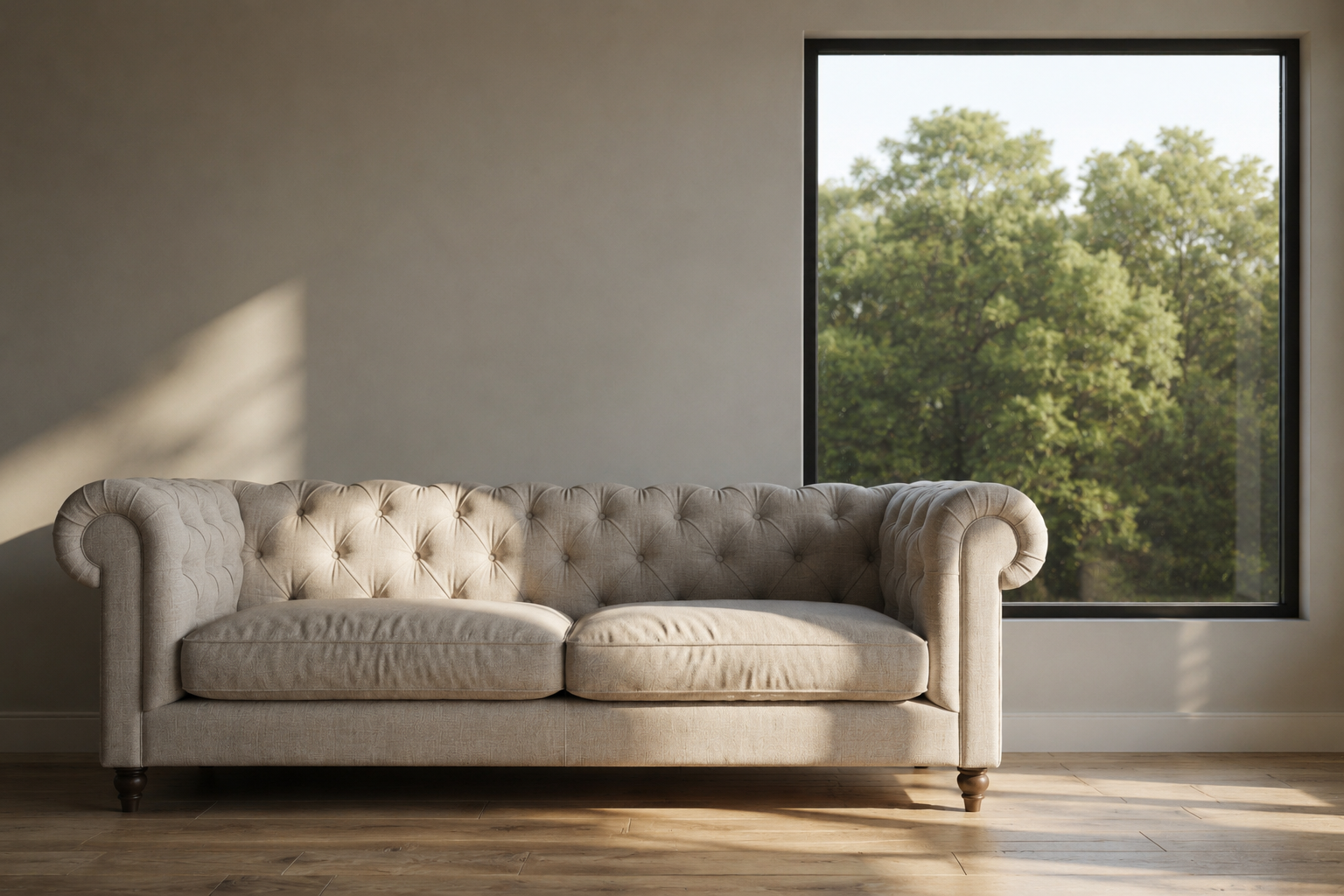
Clean Openings, Better Light, Fewer Mistakes
Simple window design gets ruined when people treat the window as decoration first.
The opening has a job. It brings in light, gives a view, vents a room, protects privacy, drains water, or holds a wall rhythm together. Sometimes it does two of those things. Rarely should it try to do all of them.
The bad designs are easy to spot. One random arch. One huge picture window where the room needed airflow. Heavy trim on the front elevation, thin trim on the side. A bathroom window so high it looks like it is hiding from the wall.
A simple window is not a plain window. It is a resolved one.

Image by ArchitectureCourses.org. A simple window still depends on the frame, wall opening, sill, glass, and exterior finish working cleanly together.
Give the Window One Clear Job
I would start here before choosing style, frame color, grids, or trim.
What does the opening need to do?
A kitchen window may need low morning light over a sink. A bathroom window may need privacy more than view. A stair window can bring light into the middle of a plan without exposing a bedroom. A fixed pane can frame a garden, but it does not ventilate the room. That is fine if another window nearby does the air work.
This is where catalog design gets people in trouble. The window looks good by itself, then the house has to absorb it. Wrong order. The wall comes first.

A clean opening can have trim, grills, shade, deep reveals, or texture. What it cannot have is confusion.
Proportion Before Style
An expensive window can still look wrong.
Most of the time, the problem is not the brand. It is proportion. The opening is too small for the wall, too wide for the room, too close to the corner, or misaligned with the door heads and roof line.

Start with the wall. Height first. Then roof line. Then doors. Then siding, brick, or stucco module. The window has to sit inside that order.
Simple does not mean every window is the same size. That would be lazy. A kitchen may need a wider opening. A bathroom may need a higher sill. A stair may need a narrow vertical slot. But the openings still need a shared discipline: head height, sill line, frame color, trim depth, spacing, or some other visible rule.
If every window is making its own argument, the facade gets tired.
Rhythm Is Not Decoration

A plain wall can look calm when the openings have rhythm. A decorated wall can look messy when they do not.
Rhythm comes from repeated heights, consistent spacing, aligned heads, or a deliberate break in the pattern. That last part matters. Sometimes the best window decision is no window. Blank wall gives the rest of the elevation room to breathe.
I would test the main elevation before ordering anything. Tape the openings on a printed elevation. Mark them on a photo. Use painter’s tape on an interior wall if the room already exists. You will catch proportion mistakes faster with a rough mockup than with a product brochure.
Check the obvious things first:
- Do the window heads align where they should?
- Does the sill height make sense from inside the room?
- Is one opening accidentally louder than the others?
- Is there enough blank wall left?
For the basic operating categories, see types of windows.
The Small Family of Window Types That Usually Works
Most houses do not need a full showroom of window types.
A simple set is usually enough: fixed windows where you need view, casements where you need strong air, awnings for high privacy openings, sliders for horizontal walls, double-hungs where the house already has that language, and narrow windows where privacy matters.
The mistake is not choosing any one of these. The mistake is mixing them without a rule.
| Window Type | Best Use | What to Check |
|---|---|---|
| Fixed | Views, stair walls, living rooms, tall spaces | Nearby ventilation |
| Casement | Kitchens, narrow walls, rooms needing strong airflow | Where the open sash lands |
| Awning | Bathrooms, high walls, rainy climates | Hardware access and maintenance |
| Sliding | Ranch houses, patios, horizontal walls | Track quality and drainage |
| Double-hung | Traditional houses, bedrooms, older facades | Balance, seals, and style fit |
| Narrow vertical | Stairs, bathrooms, side yards, privacy zones | Alignment with something real |
Fixed Windows

Fixed windows are the cleanest when the job is view or light. No sash swing. No crank. Fewer moving parts.
But fixed glass is often overused. If the room needs air, do not pretend the view solves that. Pair the fixed pane with a smaller operable window nearby.
Sliding Windows

Sliders fit low horizontal houses. Ranch houses, basement rooms, small additions, and patios often handle them well because they do not swing into a walkway.
The track is the part to check. Cheap tracks age badly. An out-of-square opening makes them worse.
Casement Windows

Casements are good when you want full-height air through a narrow opening. The sash can catch breeze in a way a slider cannot.
Do not put them where the open sash blocks a deck, path, or exterior stair. That is not a style issue. It is a use issue.
Awning Windows
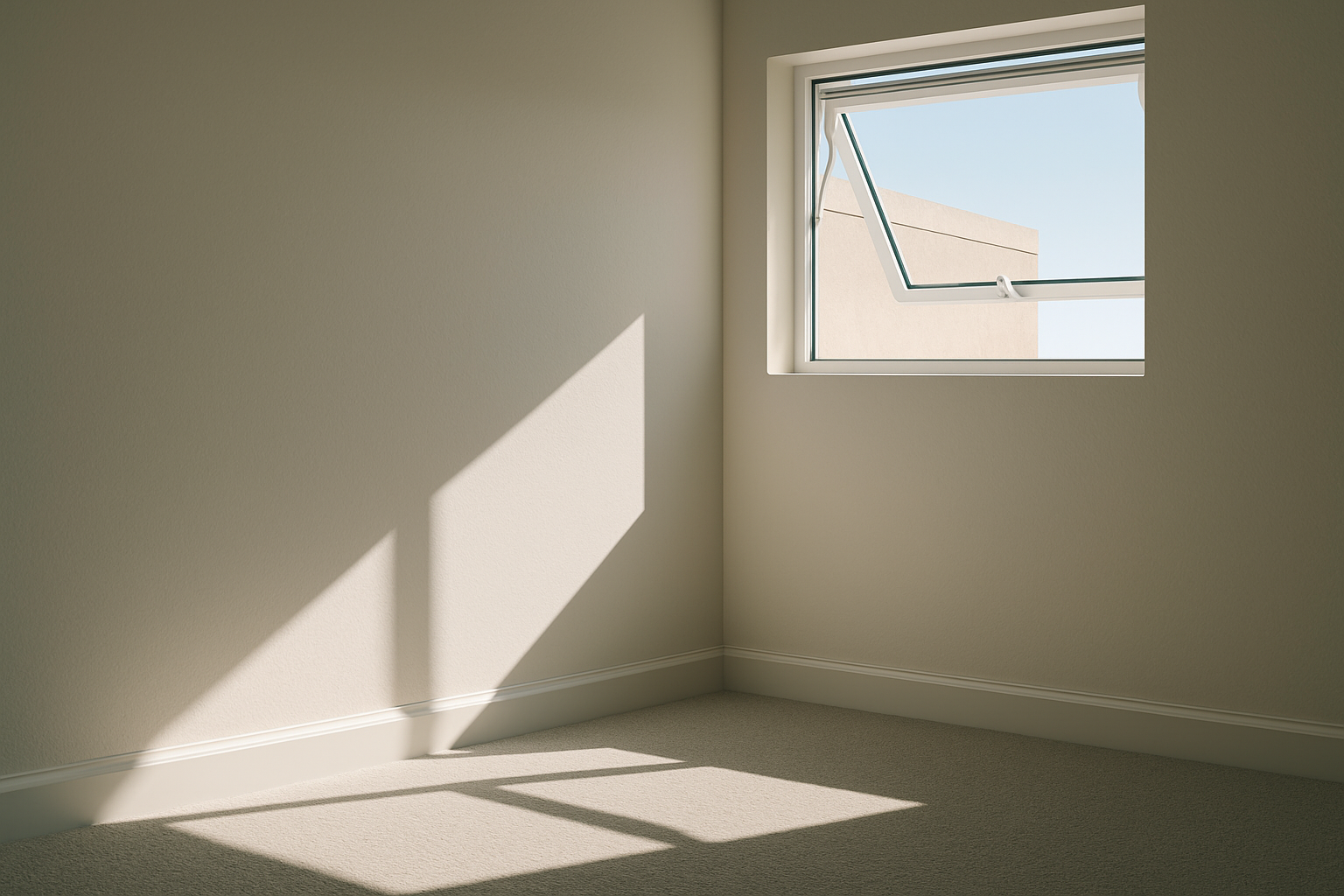
Awning windows work high on walls, above tubs, in bathrooms, and in rooms where privacy matters.
They can stay cracked open in light rain. Useful. Not magic. The arms, cranks, and seals still need maintenance.
Picture Windows
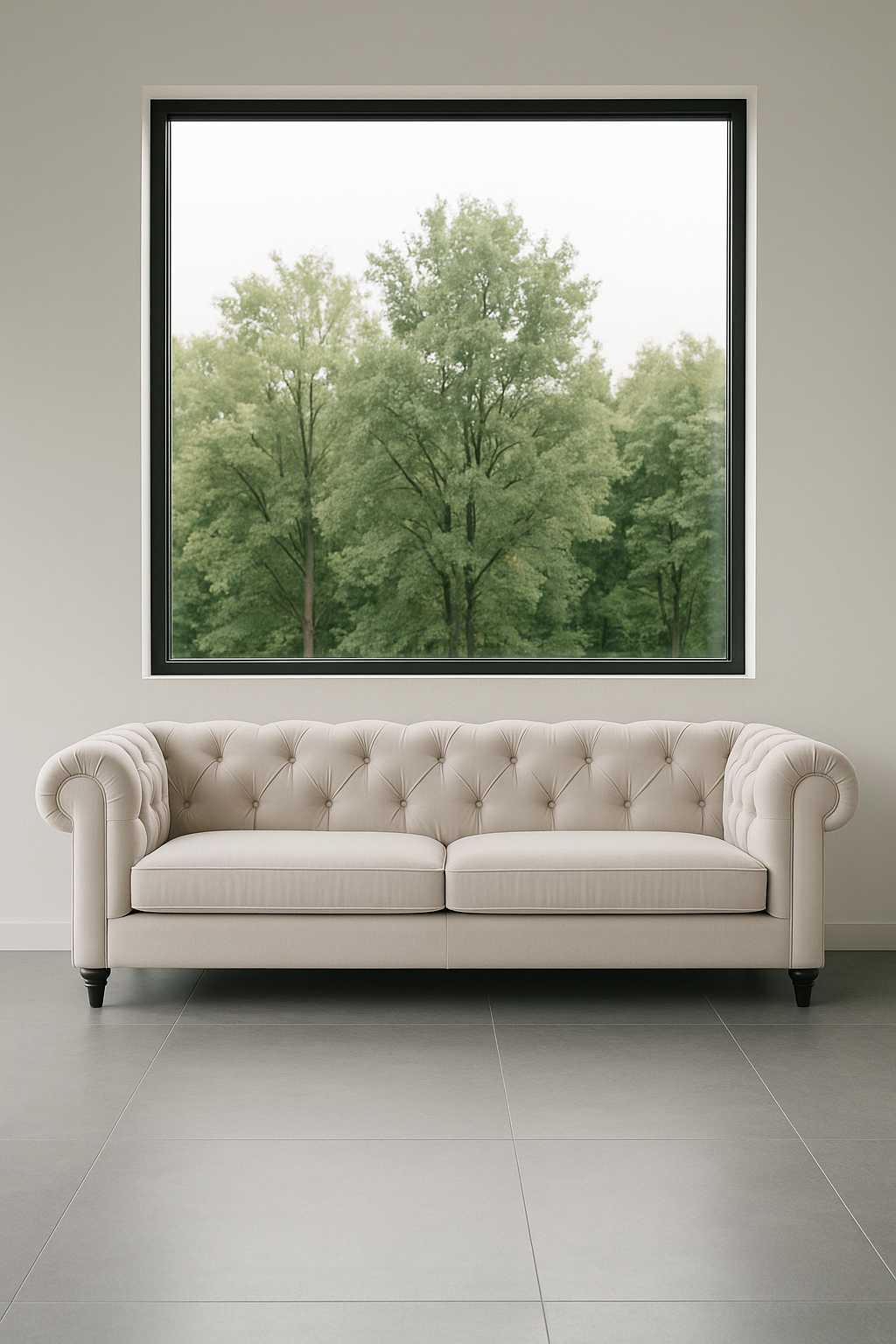
A picture window should frame something worth seeing.
If the view is weak, a large fixed pane can feel empty. Smaller openings, higher glass, or a fixed-and-operable pair often works better.
Frames, Grills, and Trim
Frames and trim decide whether a simple window feels intentional or cheap.
Thin aluminum can look sharp on a modern wall. Wood can look right on older houses because it has depth and repairability. Steel is beautiful when detailed well, but cold climates punish lazy steel frames. Vinyl is common, but the profiles often get thick. That can shrink the glass and make the opening feel heavier than planned.
For frame material details, see aluminum window frames and wooden window frames.
Grills are not automatically bad. Bad grills are bad. Two horizontal bars can sharpen a simple window. A colonial grid on every opening can make a plain wall look busy and fake.
Trim has the same problem. Craftsman trim works when it is flat, clear, and tied to the wall. Modern trim works when the reveal is controlled. Both fail when the sill, casing, and frame thickness do not agree.
Field pick: Architectural Detailing by Edward Allen is useful if you want window heads, sills, joints, and wall edges to make sense as construction, not only as elevation lines. Buy on Amazon.
When Small Windows Beat Big Glass

Big glass gets attention. Small windows often make the room work better.
A narrow window can light a stair, bathroom, closet wall, side yard, or entry without exposing the whole room. It can also keep a wall feeling solid. That matters on small houses and brick houses, where too much glass can make the building feel thin.
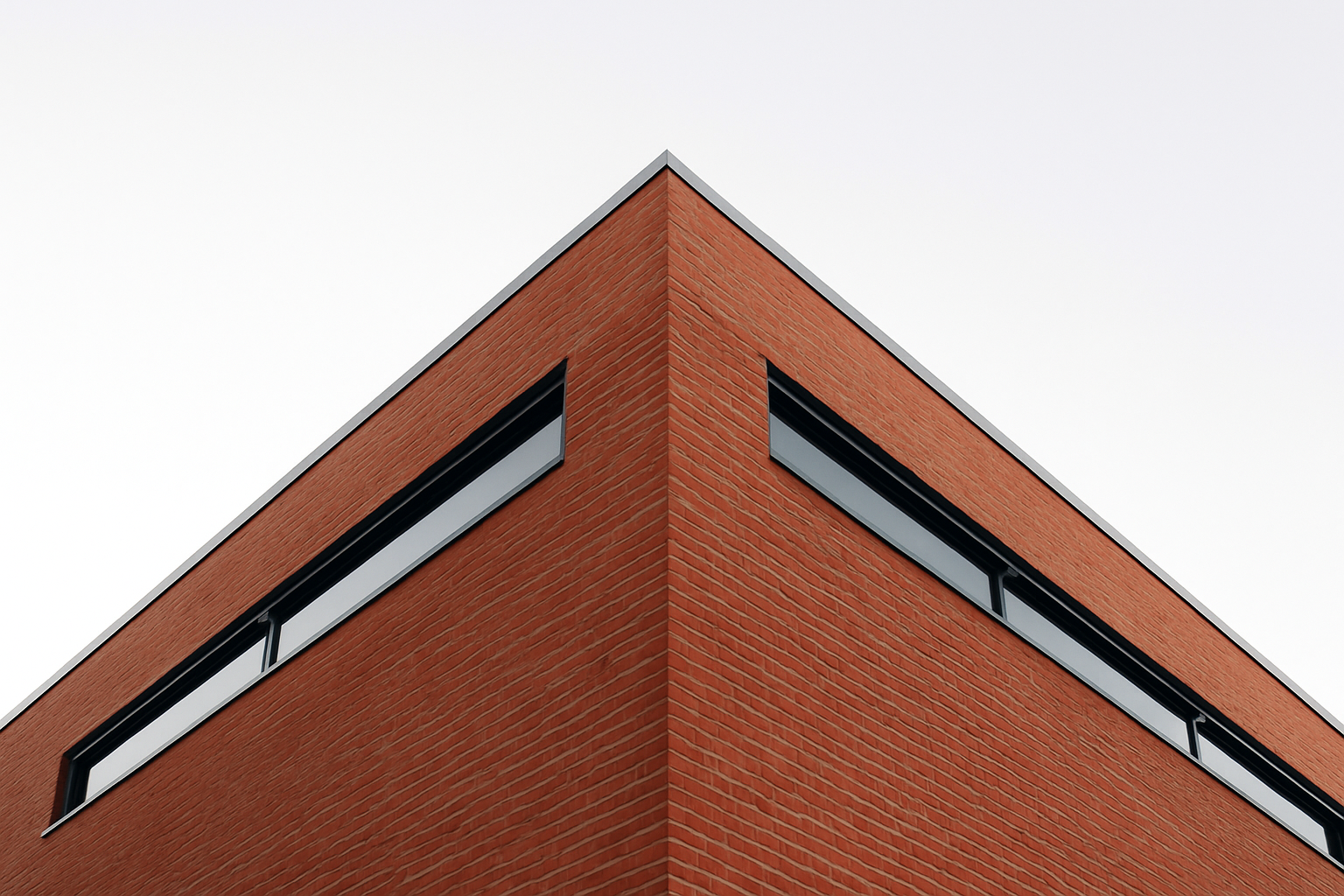
The window still needs to align with something. A stair run. A door edge. A cabinet line. A wall centerline. A repeated facade rhythm.
A random slit window looks like a mistake.
Orientation can undo the design. A narrow west-facing window can still overheat a room. A small north-facing opening may give soft light all day. Shape helps, but it does not replace shading.
If the opening needs shade from above, see window canopy design.
Old Brick and New Narrow Windows

Modern narrow windows can work in old brick, but the brick has to stay in charge.
This is where a lot of renovations go wrong. The new frame is too flush, too black, too sharp, or too thin for the wall. Old brick has depth and irregularity. Mortar joints are not perfect. If the new window sits like a flat sticker on the face of the masonry, the repair looks grafted on.
Set the frame back when you can. Even a small reveal gives the opening shadow and lets the new work sit inside the wall.
| Detail | Better Move | Why It Helps |
|---|---|---|
| Frame depth | Set the frame back from the brick face | Gives the opening shadow and hides slight irregularities |
| Sill line | Align with existing openings where possible | Keeps the facade tied together |
| Color | Use black, bronze, or charcoal only when it relates to the house | Stops the frame from becoming a random graphic outline |
| Flashing | Protect the sill and jambs before trim hides the joint | Brick stains quickly when water gets behind the frame |
Historic districts may also limit what can be changed. Check before ordering.
Glass Before Frame Color
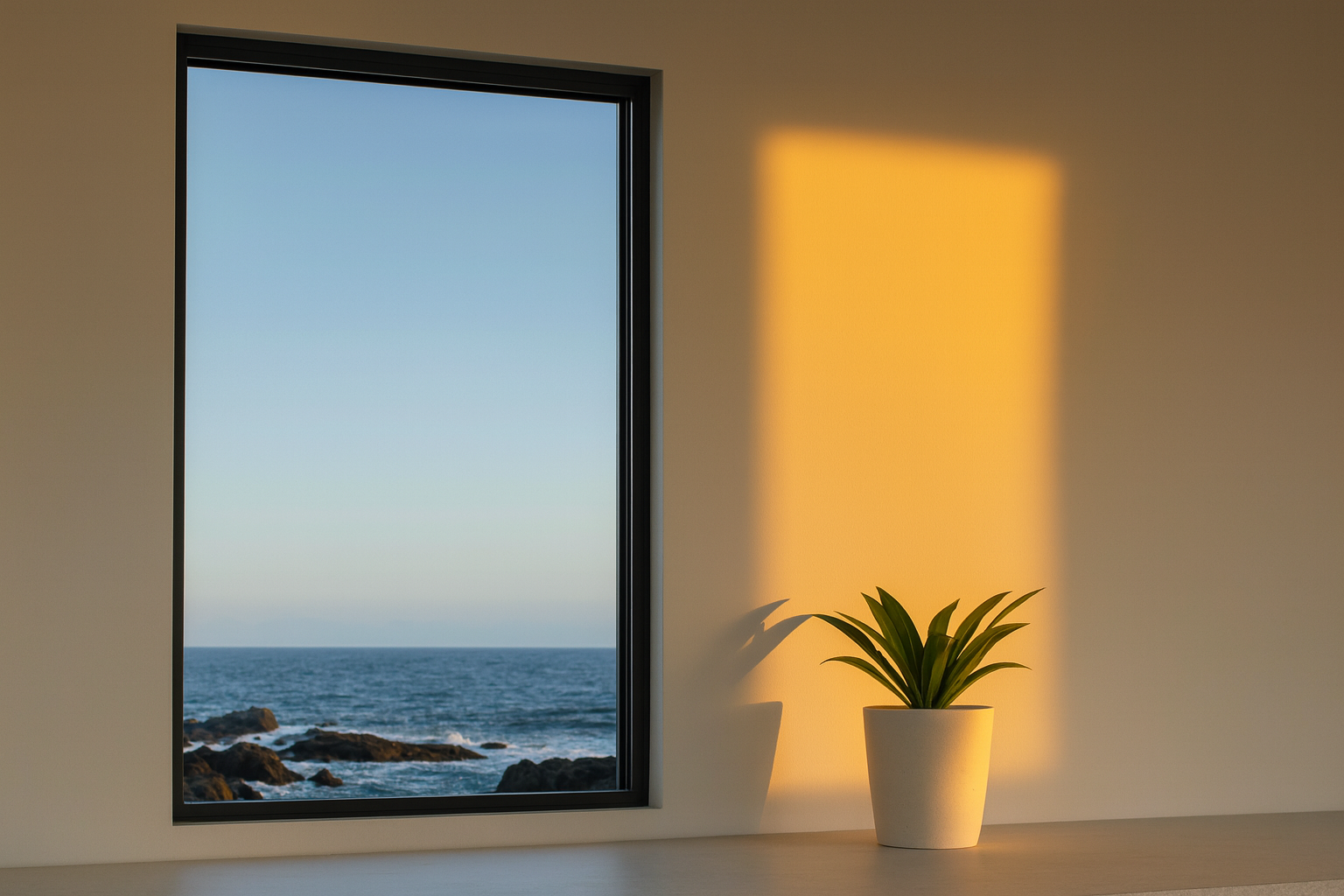
People choose frame color too early.
Glass controls more of the room than the finish color does. Low-E coating, insulated glass, pane spacing, spacer type, and exterior shading decide whether the room feels calm or harsh. A nice black frame around bad glass is still a bad window.
That does not make the frame unimportant. It changes the order. First ask what the window has to solve: heat loss, heat gain, glare, privacy, sound, airflow, or view. Then choose the frame.
For broader construction logic, see windows architecture and construction.
Climate Changes the Detail
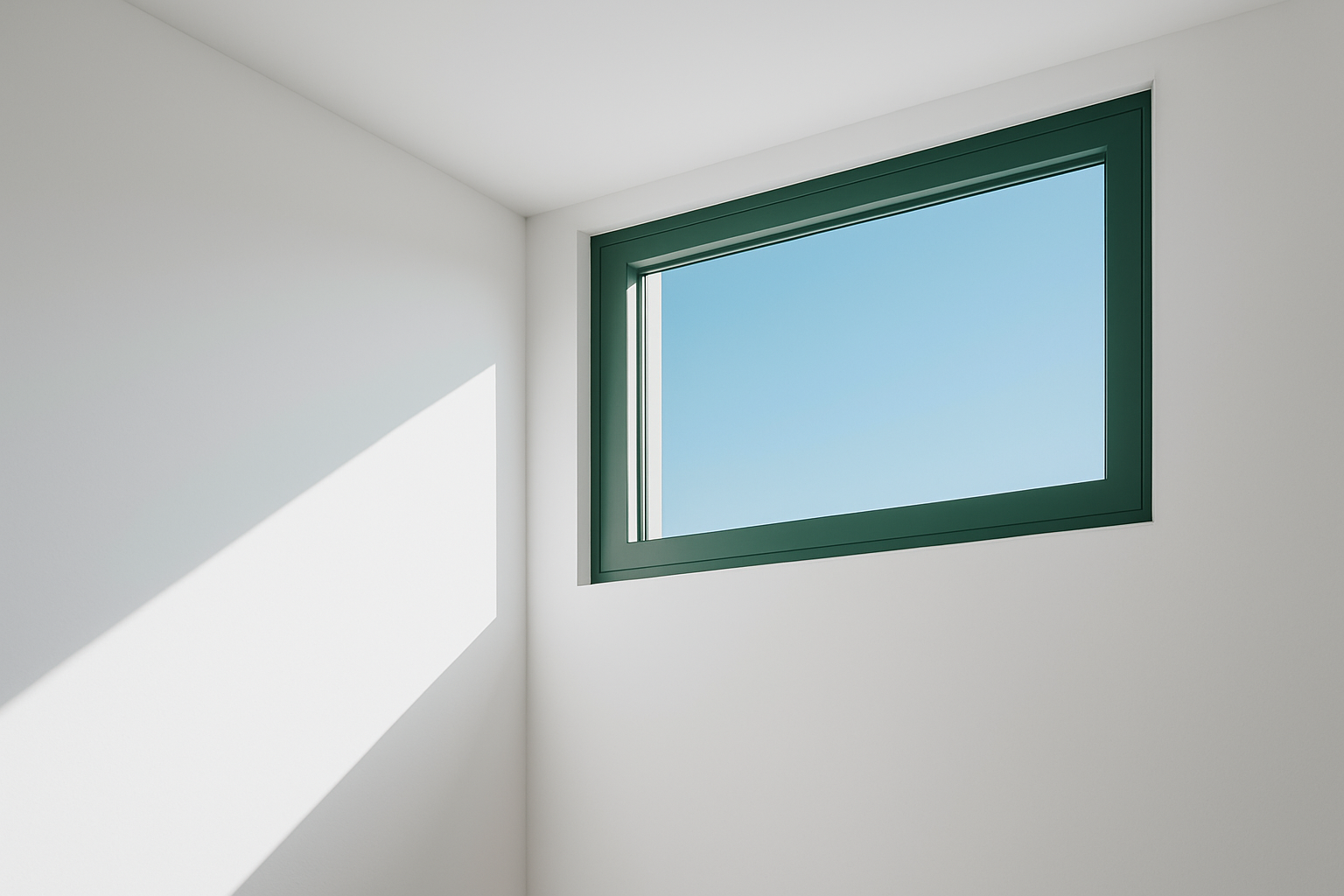
A simple window in Florida is not the same as a simple window in Minnesota.
Salt, humidity, snow, heat, wind, and sun all punish windows differently. A design can look clean in a rendering and still fail because the frame sweats, the hardware corrodes, the sill holds water, or the west glass turns the room into an oven.
| Condition | What Matters | Common Mistake |
|---|---|---|
| Coastal air | Corrosion-resistant frames, hardware, and fasteners | Cheap plated hardware near salt air |
| Cold winters | Good insulated glass, warm-edge spacers, air sealing | Ignoring condensation at frame edges |
| Hot sun | Low solar heat gain glass and exterior shade | Expecting glass alone to fix overheating |
| Urban noise | Airtight frames and laminated or asymmetric glass | Assuming normal double glazing solves street noise |
| High wind | Rated units, stronger anchoring, correct flashing | Choosing by style before exposure |
Installation Is the Design
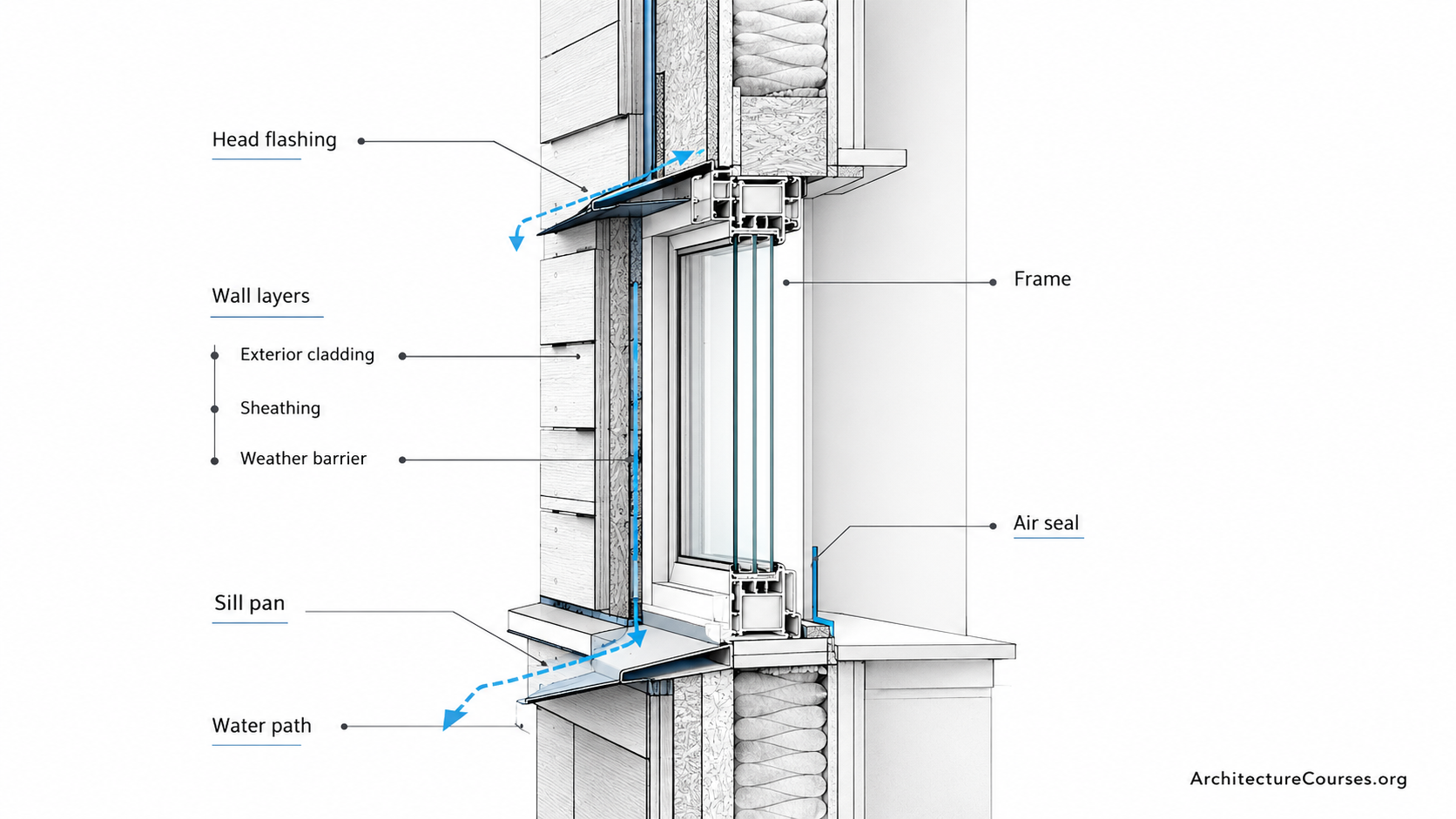
Illustration by ArchitectureCourses.org. A window stays dry when the frame, flashing, sill pan, air seal, and wall layers work together to move water outward.
This is the section I would not rush.
A simple window still needs a good opening, correct flashing, a sloped sill, and a clean air seal. No trim style fixes bad water management. No sealant replaces correct flashing.
A clean elevation drawing means very little if the sill pan, head flashing, and drainage path are wrong. Design gets better when the drawing stops hiding the problem.
For the framing side, read window rough openings and window header framing.
Shop reference: Building Construction Illustrated by Francis Ching is still one of the clearest books for seeing how head, jamb, sill, wall, and roof details fit together. Buy on Amazon.
If you are building a simple window rather than selecting one, use build your own windows.
Spend Here, Cut There
Spend on glass, flashing, fit, and hardware before decorative trim.
Better glass changes comfort every day. It affects glare, heat gain, heat loss, fading, noise, and how close someone can sit to the window without feeling cold or baked. That matters more than a fancier casing profile.
Flashing is less visible, but it is where the money protects the wall. A clean window with a bad sill pan is not a clean design. It is future rot with nice trim over it.
Hardware belongs in the same group. A cheap crank on a casement becomes annoying fast. A weak lock makes the unit feel poor. A slider with a bad track reminds you every time you open it.
| Spend On | Reason | Cut Back On |
|---|---|---|
| Glass quality | Comfort, glare, heat, and noise | Decorative grids that do not fit the house |
| Flashing and sill details | Water control | Overbuilt trim profiles |
| Good hardware | Daily use | Extra shapes for variety |
| Correct sizing | Facade and room balance | Mixed frame colors without a reason |
A quiet rectangle in the right place beats an expensive window trying too hard.
Hardware Is Not a Footnote
Handles, locks, cranks, hinges, tracks, screens, and weatherstripping decide how the window feels after the first year.
A good casement with a weak crank feels cheap. A slider with a poor track becomes irritating. A screen that does not fit makes the opening feel unfinished even if the window itself is good.
Hardware should disappear when the window is closed and feel solid when someone uses it. Anything louder than that needs a reason.
Before You Order
Do a slow review before paying.
- Check head heights against doors and roof lines.
- Decide which windows actually need to open.
- Check privacy from the street and neighboring houses.
- Match glass to orientation and climate.
Then check frame depth, trim, flashing, sill detail, and whether the main facade still has one window language. This is where many “simple” designs fall apart. The window package looks fine on a schedule. The elevation looks patched together.
For glass-specific design decisions, see how to design glass windows.
FAQ
What is the best simple window style for modern homes?
Fixed windows and casements usually work best. Fixed glass gives the cleanest view. Casements add air without cluttering the wall too much.
Are window grills outdated?
No. Bad grills are outdated.
How do I get privacy without blocking light?
Use narrow vertical windows, higher sill heights, frosted glass, deep reveals, or clerestory windows. The safest move is to place privacy into the opening shape before relying on blinds.
Are wood or aluminum frames better?
Wood is warmer and more repairable. Aluminum is sharper and better for slim modern profiles. In cold climates, condensation control may matter more than either look.
Why do simple windows sometimes look cheap?
Usually because the frame depth, trim, glass size, and wall proportion do not agree. The window may be simple, but the surrounding detail is unresolved.
Should all windows on a house match?
No. They should belong to the same family. A bathroom window, kitchen window, and living room window can be different sizes, but they need shared logic: frame color, head height, trim depth, spacing, or rhythm.