
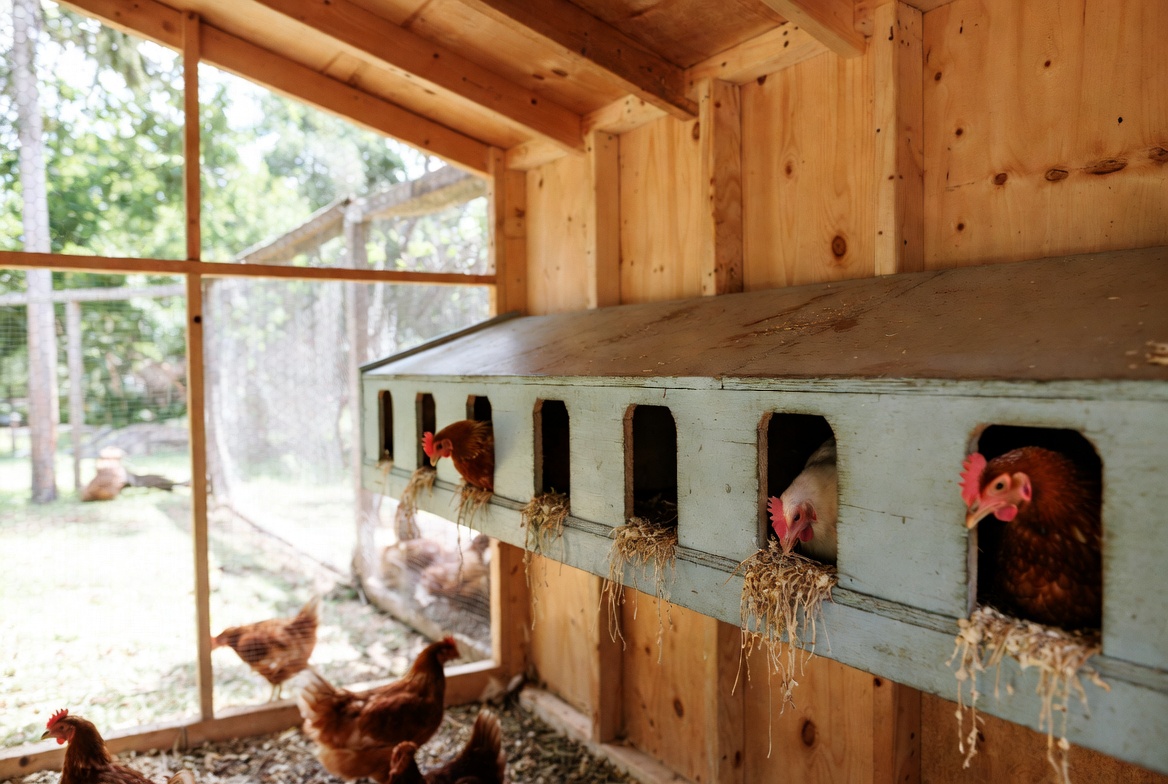
A bad chicken nest box causes the same mess every time. Dirty eggs. Broken eggs. Hens laying on the floor instead of where you want them. Then people blame the birds when the setup is the problem.
A good nest box does three jobs. It gives hens a place that feels quiet enough to lay. It keeps eggs cleaner. It makes collection easier. That is it. You do not need anything fancy to get there, but you do need the basics right: enough boxes, the right size, the right height, the right bedding, and the right relationship to the roosts.
Start here if you want to choose the right nest box before building one. This guide covers how many boxes you need, where they should go, what materials hold up, and which box style makes the most sense for your coop. If you already know you want a rollout setup, The Best Design for a DIY Roll Away Chicken Nest Box: Simple & Proven goes deeper into that version.
What the Box Needs to Do
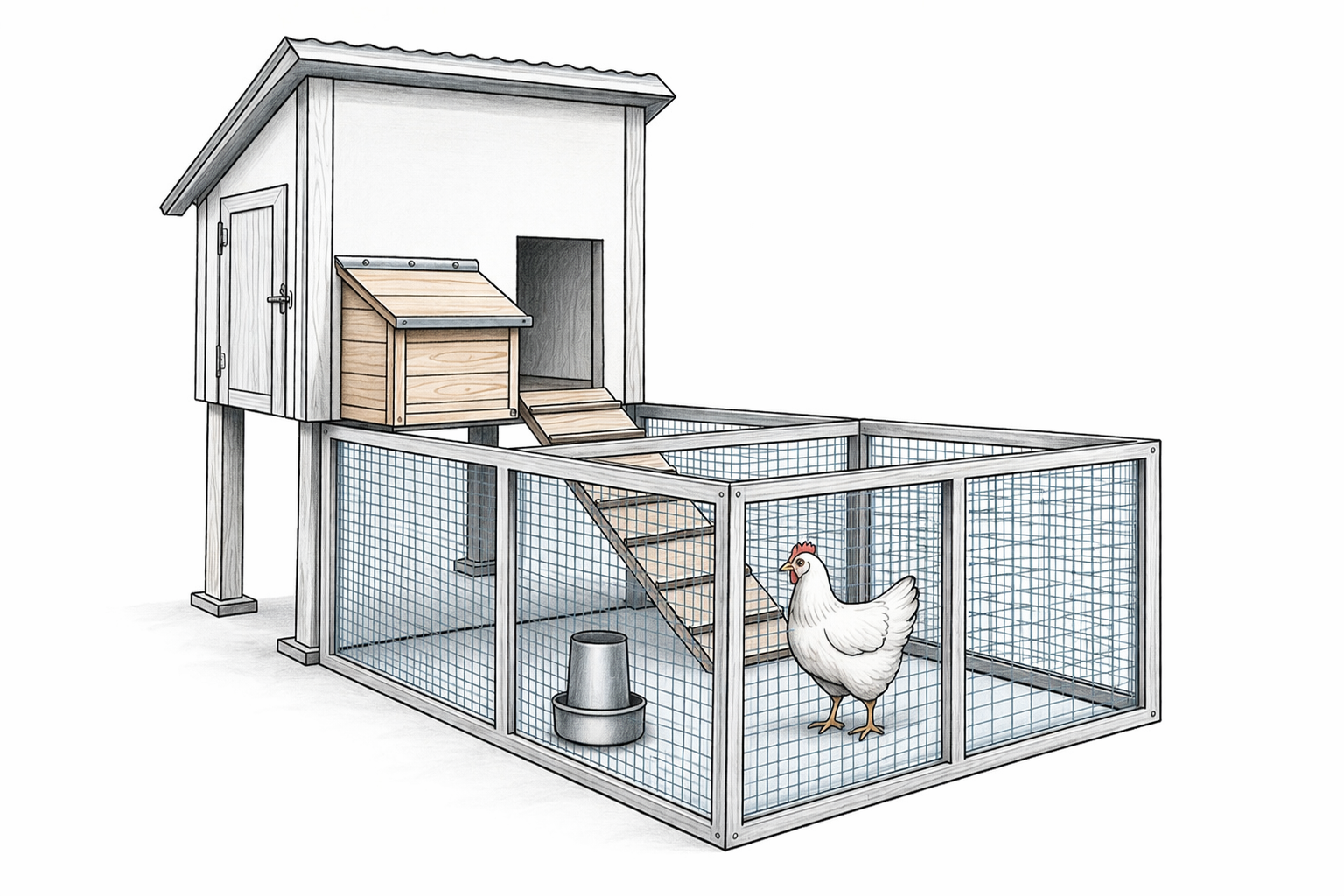
Raised chicken coop with an attached run, external nest box, access door, ramp, and feeder.
A nest box is not just a storage cubby for eggs. It is part bird behavior, part coop layout, part sanitation.
- It should feel sheltered enough that hens want to use it.
- It should keep bedding and eggs from spilling out.
- It should stay cleaner than the floor and calmer than the roost area.
- It should be easy enough to clean that you do not put it off.
- It should make egg collection simpler, not more awkward.
That is why plain, direct box designs usually age better than overbuilt ones. Once a box becomes hard to clean, hard to reach, or too exposed, the flock starts voting against it.
How Many Boxes You Need
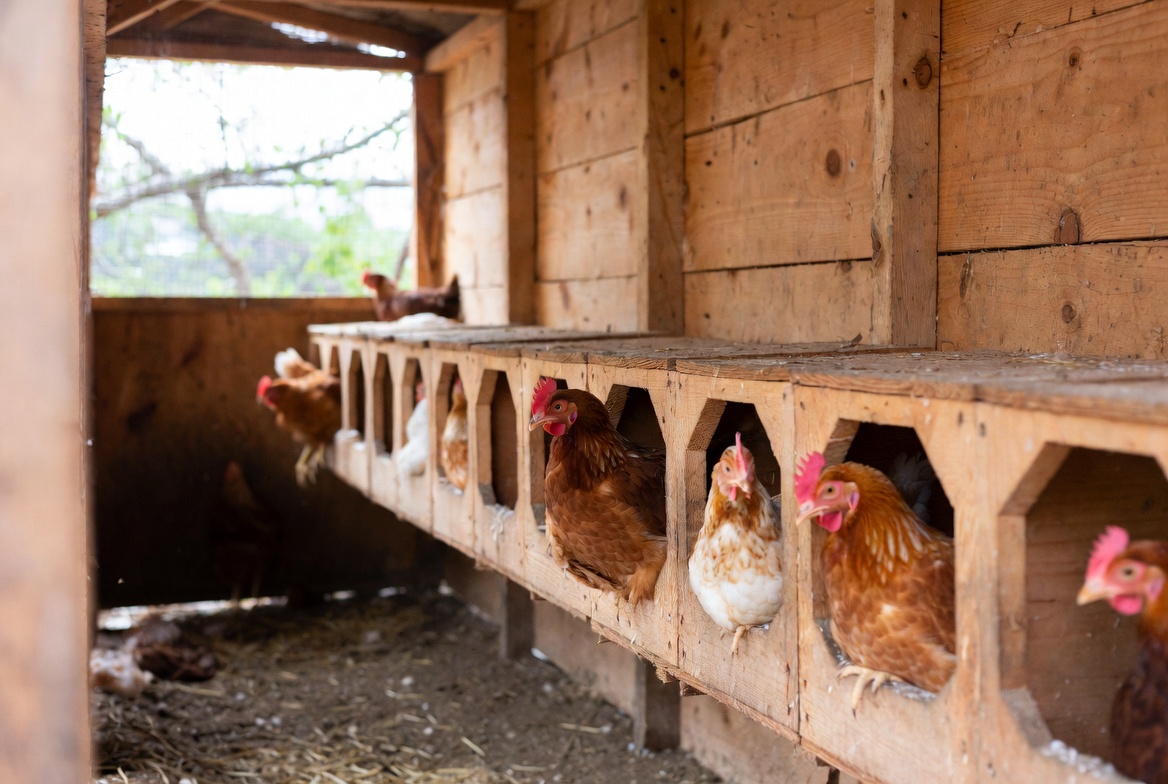
Image by ArchitectureCourses.org. A wooden nest box row inside a working coop, showing a simple box style that gives hens sheltered compartments along the wall.
The standard backyard rule is simple: one nest box for every 4 to 5 hens. That sounds too low at first, but chickens share boxes far more than new keepers expect. The flock does not spread out neatly. Several birds will often insist on the same box if it feels darker, calmer, or better placed than the others.
That means the count matters, but the setup matters just as much. Four badly placed boxes can perform worse than two good ones.
| Flock Size | Practical Box Count | Notes |
|---|---|---|
| 3 to 5 hens | 1 to 2 boxes | Two often works better than one because birds crowd favorites. |
| 6 to 10 hens | 2 to 3 boxes | A good target for most backyard coops. |
| 11 to 15 hens | 3 to 4 boxes | More important to separate the boxes from busy roost traffic. |
| 16 to 20 hens | 4 to 5 boxes | Collection access and cleaning speed start to matter more. |
For very small flocks, I would not force a single-box setup just because the ratio says you can. Two boxes usually smooth out traffic better. It also gives you a backup if one box becomes the dirty favorite for a week.
Nest Box Size by Bird Type
Most average laying hens do well in a box around 12 by 12 by 12 inches. Larger breeds often need closer to 14 by 14 inches. Bantams can use smaller boxes, but the bigger mistake is usually going too large, not too small. Oversized boxes invite crowding, sleeping, and extra mess.
The box should feel secure, not roomy. A hen is there to lay, not to lounge.
| Bird Type | Good Starting Size | What to Watch For |
|---|---|---|
| Bantams | 10 to 12 inches square | Do not oversize them so much that several birds pile into one box. |
| Average layers | 12 x 12 x 12 inches | The safest default for most backyard flocks. |
| Larger breeds | 14 x 14 inches or slightly larger | Too-small boxes make entry awkward and can increase floor eggs. |
A front lip matters too. Standard nest boxes usually need a 4- to 6-inch front edge to help hold bedding in place and keep eggs from rolling out. In rollout boxes, that detail changes because the egg path is controlled differently, but standard boxes still need that lip.
Where Nest Boxes Should Go
Placement decides more than most people think. You can build a good box and still get a bad result if you put it in the wrong place.
Raise Them, But Not Too Much
Nest boxes are commonly set about 18 to 24 inches above the floor. That keeps them cleaner and feels more natural to the birds. Lower than that, and they start behaving more like floor litter. Higher than that, and access gets clumsy, especially for heavier hens.
Keep Them Away From the Roosts
This is one of the biggest practical details. Keep nest boxes away from the roosting area, and keep the roosts higher than the boxes. Chickens want the highest sleeping point in the coop. If the nest boxes are too high, too convenient, or directly under the roosts, they get soiled fast.
Give Them a Calmer, Darker Spot
Hens tend to prefer a spot that feels quieter and a little darker than the rest of the house. That does not mean hiding the box in a damp corner. It means giving it some privacy instead of placing it in the brightest traffic lane of the coop.
Make Egg Collection Easy
This part gets ignored in DIY builds. If you have to twist around a feeder, duck under a roost, and reach through bedding just to collect eggs, the setup is wrong. The best nest box is not just easy for hens to enter. It is easy for you to maintain.
Also useful: the bigger coop layout still matters. If the whole house is cramped or awkward, the nest boxes will not fix it by themselves. Chicken Coop is the broader starting point if you are still sorting out the overall coop plan.
Which Box Style Fits Your Coop?
Not every nest box needs to do the same job. Some keepers want the simplest possible wooden box. Others want cleaner eggs and less pecking, so they move to rollout designs. Some want outside access because daily collection is a chore. The right choice depends on how you use the coop, not on what looks best in a photo.
| Box Type | Best For | Main Strength | Main Weak Point |
|---|---|---|---|
| Standard box | Most backyard flocks | Simple, cheap, easy to build | Eggs stay in the nest unless collected quickly |
| Roll-away box | Cleaner eggs, fewer pecked eggs | Eggs move out of reach | Slope and bedding details can fail if done badly |
| Exterior-access box | Fast daily collection | You can gather eggs without entering the coop | Hatch detailing can become a leak or predator problem |
| Community box | Flocks that share boxes well | Less framing and fewer dividers | Can get messy if too many birds pile in at once |
| Stacked or double-decker box | Tight coops with limited wall space | Saves floor area | Needs better anchoring and cleaner access |
A normal box is still the best starting point for most backyard keepers. It is forgiving. A rollout box is better when broken eggs, dirty eggs, or egg eating keep repeating. An exterior-access box is worth it when the coop layout makes inside collection annoying enough that you start putting it off.
If rollout is where you are headed, use the child page for the full build logic, not just the summary here: The Best Design for a DIY Roll Away Chicken Nest Box: Simple & Proven.
Best Materials for a Chicken Nest Box

Basic materials for building a DIY roll-away chicken nest box, including wood, screws, liner, finish, reclaimed materials, and a secure latch.
Nest boxes live in a rough environment. Dust, damp air, manure, feathers, and daily use beat them up faster than people expect. The good material choice is not the prettiest one. It is the one you can still clean easily six months from now.
Wood
Plywood is the workhorse. It is easy to cut, easy to screw together, and easy to seal. Pine is also common. Cedar lasts well but costs more. Thin scrap wood often turns into extra work once it warps or splits.
Plastic
Plastic is easy to wash and does not absorb moisture, which is why tote conversions and bought plastic boxes stay popular. The trade-off is that plastic can feel flimsy unless the box is well supported.
Metal
Metal boxes clean up well and hold shape, but they can run hot in the sun and feel colder in winter. They also look tougher than they sometimes are if the edges, tray, and latch details are weak.
Hinges, Screws, and Latches
Use screws instead of nails for most DIY builds. Hinges should not feel cheap. Latches matter more than people think, especially on outside-access boxes. A hatch is only useful if it closes tight every time.
Best Bedding for Nest Boxes
Bedding does more than cushion eggs. It changes how dry the box stays, how often you have to clean it, and whether the hens keep using it.
Pine shavings are a strong default because they absorb moisture well and stay easy to refresh. Straw works in some backyard setups, especially when it is kept dry and changed often, but it can mat up or hold dampness if the box design is poor. The more humid the coop, the less forgiving the bedding choice becomes.
For standard boxes, keep bedding dry and modest. Do not overpack it. For rollout boxes, be careful. Too much loose bedding can slide into the egg path, stop the rollout, and defeat the whole point of the design.
That is one of those real-world details that trips people. The box looks good on day one. Then the bedding shifts, the egg sticks, and the flock teaches you what the drawing ignored.
Small Details That Change How the Box Works
Slope the Top
If you build a bank of boxes, slope the top or cap it so hens do not roost on it. A flat nest-box roof turns into a manure shelf fast.
Add a Step if the Boxes Are Raised
A small perch or step in front of the box helps hens enter cleanly, especially when the boxes are raised. That detail matters more for heavier birds and higher box rows.
Keep the Inside Easy to Clean
A nest box with impossible corners does not stay clean. This sounds minor until you have to scrape packed bedding and manure out of a bad corner for the fifth time. Simpler interior shapes age better.
Make Parts Easy to Remove
If the front, lid, tray, or liner can come out easily, you will clean the box more often. If every part is permanently trapped behind another part, you will not.
Build Outside Hatches Properly
Outside-access boxes are convenient, but they ask more from the build. The hatch needs a drip edge, a good overlap, and hardware that closes tight. This is where a lot of otherwise good boxes become weak points.
Where Nest Box Problems Start
Most nest box trouble is not mysterious. It starts in the same handful of places.
Too Many Boxes, Bad Layout
People often add more boxes before fixing the layout. If every hen is fighting over the same darker corner, the answer is not always another box. Sometimes the answer is making the other boxes feel equally usable.
Boxes Under the Roost
This is a classic mess-maker. Hens sleep above, droppings fall below, eggs get dirtier, and the box becomes a cleanup problem instead of a laying spot.
Roosts Set Too Low
That invites birds to sleep in the nests. If the flock starts bedding down in the boxes at night, the nesting area gets filthy in a hurry.
Roll-Away Slope Done Wrong
Too flat and the egg stays put. Too steep and it hits the tray too hard. Some rollout boxes also fail because the bedding slides into the cup or because the landing area has a little drop instead of a controlled glide.
Overbuilt Boxes That Fight You Later
Stacked towers, hinged accessories, multiple compartments, outside hatches, liner systems, and pretty trim all sound good until the box becomes hard to clean or awkward to use. Most backyard setups do better with one or two clear ideas executed well.
Ignoring What the Flock Keeps Telling You
If one bird keeps sleeping in a box, or one box keeps getting all the traffic, pay attention. Flocks tell you quickly which part of the setup feels safer, darker, warmer, or calmer. Good design listens to that instead of fighting it.
Should You Build One or Buy One?
Both can make sense.
Build your own if your coop is an odd size, you want exact placement, or you already have usable materials. DIY also makes more sense when you care about matching the box to a bigger custom coop layout.
Buy one if your main priorities are speed, easy cleanup, and not having to debug the geometry yourself. Bought boxes are rarely perfect, but they can save time when the problem is not design ambition but simply needing a clean, usable nest box this month.
What I would not do is buy a bad plastic box and then rebuild half of it to make it work. At that point you have paid twice.
Pick the Box Type That Fits Your Coop
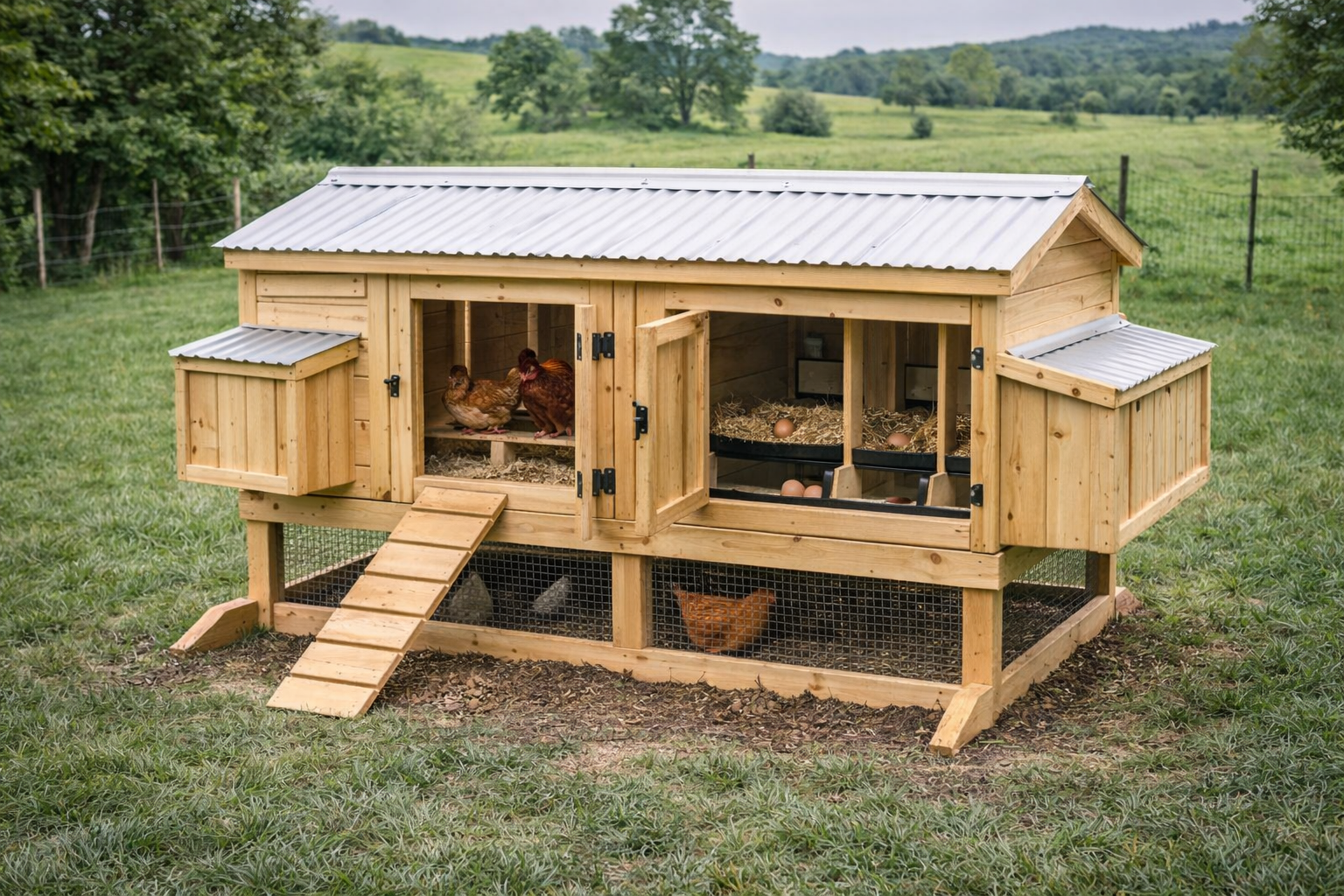
- Choose a standard box if your flock is small, eggs are not getting broken, and you want the simplest reliable setup.
- Choose a roll-away box if dirty eggs, broken eggs, or egg eating keep repeating.
- Choose an exterior-access box if daily egg collection is awkward enough that you avoid it.
- Choose a community box if your flock shares well and you want fewer dividers to clean.
- Choose a stacked or tower layout only when wall space is tight and you are ready to detail access and cleanup properly.
Read This Next
These are the next pages worth opening.
- The Best Design for a DIY Roll Away Chicken Nest Box: Simple & Proven if cleaner eggs and rollout trays are the main goal.
- How to Build a 3-Compartment Roll-Away Chicken Nest Box if you need a bigger nesting wall for a medium flock.
- How to Build the Ultimate Chicken Coop if the nest boxes are only one part of a larger coop build.
FAQ
How many nest boxes do I need for 6 hens?
Two boxes is a practical target for 6 hens. The basic ratio says one box per 4 to 5 hens, but small flocks still tend to crowd favorite boxes, so two usually works better than one.
What size chicken nest box works for most laying hens?
Around 12 x 12 x 12 inches works for most average layers. Larger breeds often do better in boxes closer to 14 x 14 inches.
Should nest boxes be higher or lower than roosts?
Lower. Roosts should sit higher than the nest boxes. Chickens want the highest sleeping spot, and that helps keep them out of the nests at night.
Can I put nest boxes on the floor?
You can, but it is not the best default. Boxes raised around 18 to 24 inches off the floor usually stay cleaner and work better.
What bedding is best in a chicken nest box?
Pine shavings are a strong default because they absorb moisture well and are easy to refresh. Straw can work too if it stays dry and clean. In rollout boxes, too much loose bedding can interfere with the egg path.
Why are my hens sleeping in the nest boxes?
Usually because the roost setup is wrong. The roosts may be too low, too crowded, or less comfortable than the boxes. Sometimes one lower-ranked bird also gets pushed out of the better sleeping spot and ends up in a nest.
Are roll-away nest boxes worth it?
Yes, when dirty eggs, broken eggs, or egg eating are repeating problems. No, if your current standard boxes are already clean, calm, and working fine. Rollout boxes solve specific problems. They are not automatically better in every coop.
Should nest boxes open to the outside?
They can. Outside access makes collection easier, but the hatch has to be weather-tight and predator-resistant. If that detail is weak, the convenience is not worth it.
When should I add nest boxes for young hens?
Have them in place before pullets begin laying. Giving birds time to find and get used to the boxes helps reduce floor eggs.