
Low-pitched roofs can look calm, modern, and efficient. They can also become a maintenance problem fast when the slope, drainage, materials, and ventilation are handled badly.
That is the real trade-off. A low-pitched roof is not just a flatter version of any other roof. It behaves differently. Water moves slower. Debris stays longer. Material choices narrow. Small detailing mistakes matter more.
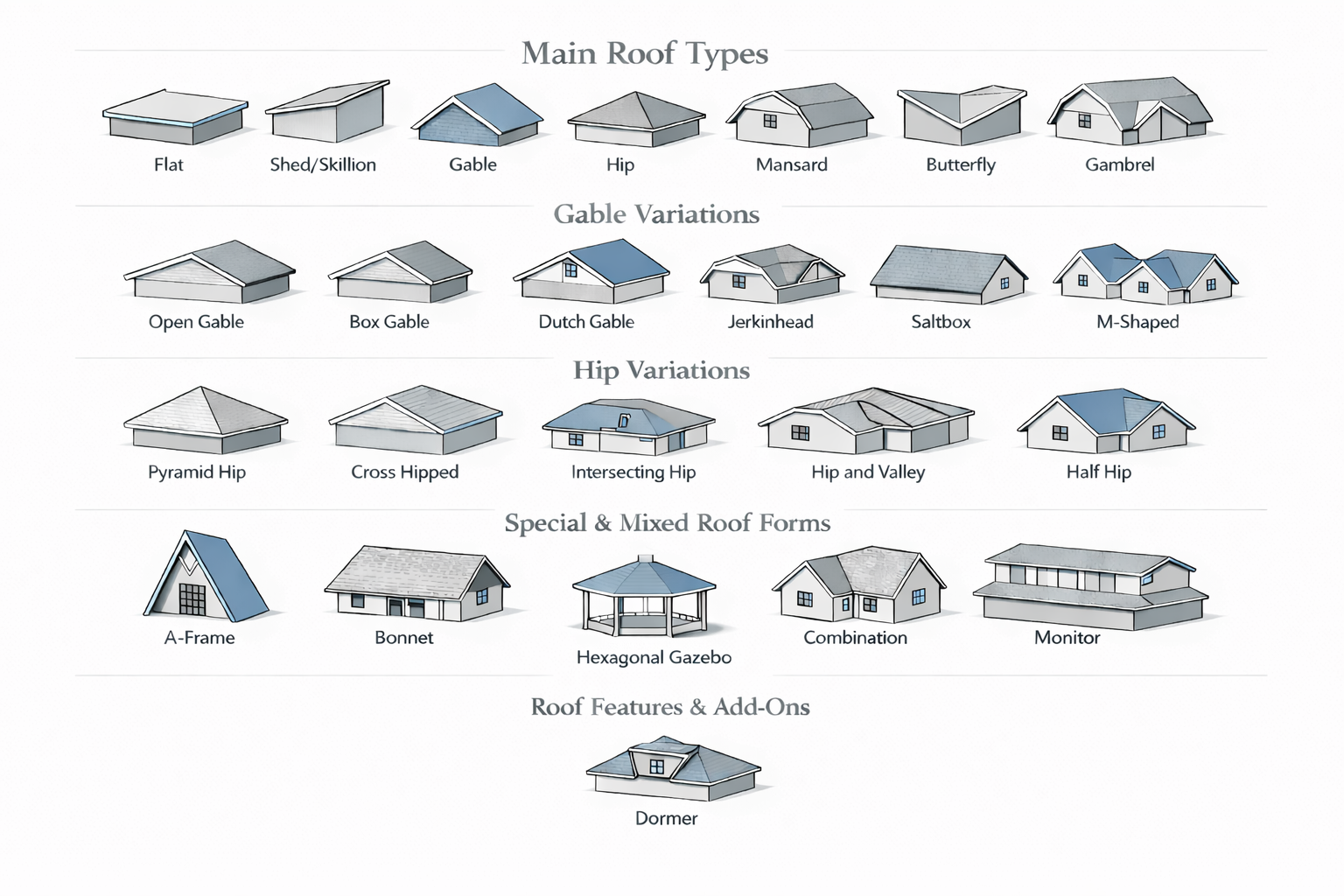
This page covers where low-pitched roofs work well, where they start causing trouble, which materials make sense, and how they compare with steeper roof forms. If you are still sorting roof families more broadly, start with Types of Roof Lines: Which One Fits Your Home?.
Where a Low-Pitched Roof Makes Sense
| Situation | Why it works | What to watch |
|---|---|---|
| Modern or minimalist house | The lower profile keeps the roof quiet and clean. | Bad edge detailing will show immediately. |
| Mid-century renovation | It fits the original horizontal character of the house. | Do not ruin the profile with bulky patchwork repairs. |
| Urban infill or tight lot | The roof mass stays lower and cleaner. | Drainage has to be solved early, not at the end. |
| Solar-focused roof plan | It can give you a controlled plane for panel layout. | Pitch, exposure, and maintenance access still matter. |
| House with a roof deck or rooftop use | The shallow slope makes rooftop use more realistic. | Structure, waterproofing, and drainage all get more demanding. |
A low-pitched roof works best when the whole house is built around its logic. It works worst when it gets chosen for the look alone.
What Counts as a Low-Pitched Roof?
In simple terms, a low-pitched roof usually falls around the shallow end of residential roof slopes, often in the range below a standard steep gable roof and above a nearly flat membrane roof. In practice, many people use the term for roofs around the 2:12 to 4:12 range, though exact thresholds shift by material, code, and manufacturer rules.
The important point is not the label. It is the behavior. Once the roof gets shallower, water drains more slowly, snow sheds less easily, and the material system matters more.
That is why low-pitched roofs sit in a different decision category than a typical gable roof or hip roof. They need more discipline, not less.
Why People Choose Low-Pitched Roofs
They keep the roof line quiet
A low-pitched roof can make a house feel longer, calmer, and more settled. That is one reason it fits modern and mid-century work so well. The roof stops shouting and lets the wall planes, windows, and proportions do more of the work.
They can reduce visual bulk
On some houses, especially broader one-story houses, a steeper roof can make the top of the building feel too heavy. A lower pitch keeps the mass down and can make the house feel more controlled.
They can support rooftop use
If the design includes solar panels, a terrace, or a carefully planned green roof, a lower pitch can help. But that benefit only matters when the structure and waterproofing are designed for it.
They can simplify the overall form
On the right house, a low-pitched roof can remove unnecessary roof gymnastics. Fewer dramatic peaks. Fewer fake style moves. Less clutter.
That is also why they often sit comfortably inside broader home roof design work where the goal is restraint, not roof theatrics.
Where Low-Pitched Roofs Start Causing Trouble
Drainage is less forgiving
The biggest weakness is simple: water leaves the roof more slowly. That means poor slope, bad outlets, clogged drains, weak flashing, or careless seams turn into real problems faster than they do on a steeper roof.
Snow can stay put
In snowy climates, a low-pitched roof does not clear itself the way a steeper roof does. That adds structural load and raises the stakes for drainage, ice control, and material choice. If snow is a major part of the climate, compare low-pitched options against steeper roofs before locking the design in.
Debris builds up faster
Leaves, twigs, dirt, and windblown trash do not clear as easily. Once debris starts blocking drainage paths, water sits longer, and the roof gets riskier.
Ventilation needs more thought
Low-pitched roofs do not naturally forgive poor ventilation. Moisture buildup, heat accumulation, and condensation problems can all get worse when the roof assembly is shallow and badly planned.
Bad material choices show up fast
A lot of roof failures on shallow roofs are not really “low-pitch failures.” They are bad-system failures. The wrong material got used. Or the right material got detailed badly. Or the installer treated a shallow roof like a normal shingle roof and hoped for the best.
Best Materials for Low-Pitched Roofs
| Material | Best when | Watch for |
|---|---|---|
| Standing seam metal | You want durability, a clean look, and a slope high enough for the system. | Not every metal profile works at the same pitch. |
| Single-ply membrane | The roof is very shallow and waterproofing reliability matters most. | Seams, penetrations, and edge detailing have to be done well. |
| Modified bitumen | You need a proven low-slope system and the project is more practical than decorative. | Appearance is less refined than some other systems. |
| Shingles | The pitch is high enough for the product and local rules allow it. | Do not assume shingles work on every shallow roof. |
Material choice should happen early, not after the roof shape is already fixed. If you are still comparing systems, see Flat Roofing Materials: Complete Guide for Homeowners and Builders and Roofing Materials List: From Metal Sheets to Shingles.
Low-Pitched Roof vs. Flat Roof
People use these terms loosely, but they are not always the same thing.
A flat roof is usually treated as a low-slope technical roof system that depends heavily on membrane performance and drainage detailing. A low-pitched roof can include that category, but it can also describe a shallow sloped roof that still reads more like a roof plane than a flat deck.
The line matters because some materials and details that work on a mild slope may not work on a much flatter roof. That is why “almost flat” can be one of the riskiest zones on the page. It looks simple, but it has less room for bad decisions.
Ventilation Matters More Than Many Homeowners Expect
Low-pitched roofs need a roof assembly that can manage heat and moisture well. That does not always mean one exact vent strategy for every house. It means the roof build-up, insulation, air sealing, and venting approach all have to work together.
When that coordination is weak, shallow roofs start trapping problems instead of shedding them. Moisture sits where it should not. Materials age faster. Interior comfort drops. Repair costs rise.
This is one reason low-pitched roofs work best when they are designed as a full system, not just sketched as a style move.
Cost Reality
A low-pitched roof is not automatically the cheap option.
The framing can be simpler in some cases. The overall roof mass can be lower. Access can be easier. But those savings can disappear if the waterproofing, drainage, insulation, and edge conditions get more specialized.
That is the real cost picture:
- simpler shape can lower some framing costs
- better membrane or metal systems can raise material cost
- poor drainage design can turn a “cheap” roof into an expensive repair cycle
- rooftop use, green roofs, or solar integration can add structural and detailing cost quickly
If the budget is tight, the safer move is usually not “make it flatter.” The safer move is “keep it simpler.” Sometimes that still means low-pitched. Sometimes it means a plain gable or shed roof instead.
When a Low-Pitched Roof Is the Wrong Call
- the site gets heavy snow and the structure is not designed for it
- the owner wants low maintenance but the design depends on perfect drainage discipline
- the builder is weak on shallow-roof detailing
- the roof material is being chosen too late
- the house would read better with a clearer pitched form
A low-pitched roof should solve something real: scale, profile, solar layout, rooftop use, or architectural restraint. If it solves nothing and only adds risk, it is the wrong roof.
FAQ
What is the main advantage of a low-pitched roof?
The main advantage is control. It can give a house a cleaner, calmer profile while still allowing practical uses like solar placement or rooftop access in the right design.
What is the biggest problem with low-pitched roofs?
Drainage. Water leaves more slowly, so the roof has less tolerance for poor detailing, blocked drains, and weak material choices.
Are low-pitched roofs good in snowy climates?
Usually with caution, not by default. They can work, but snow load, drainage, ice management, and structure all need more attention than on steeper roofs.
Can you put shingles on a low-pitched roof?
Sometimes, but not on every shallow slope. It depends on the pitch, the product, local rules, and the full roof assembly. This is one area where guessing is expensive.
Are low-pitched roofs more modern looking?
Often yes. They usually read as quieter and more horizontal, which is why they fit modern and mid-century houses so well.
Do low-pitched roofs cost less?
Not automatically. Simpler framing can help, but better waterproofing and drainage work can offset those savings.
What roof style should I compare a low-pitched roof against?
Usually a simple gable, hip, or shed roof. Those comparisons make the trade-offs clearer than comparing it against highly unusual roof forms.
When should I avoid a low-pitched roof?
Avoid it when the climate is harsh, the detailing team is weak, the owner wants near-zero maintenance, or the house would clearly work better with a steeper roof.
What to Keep in Mind
A low-pitched roof can be excellent. It can also be one of the fastest ways to turn a clean design into a leak-prone one when the slope, material, and drainage are treated casually.
The right question is not whether low-pitched roofs look good. They often do. The right question is whether a low-pitched roof makes sense on this house, in this climate, with this builder, using this roof system.
Read Next:
- Types of Roof Lines: Which One Fits Your Home?
- Flat Roofing Materials: Complete Guide for Homeowners and Builders
- Roofing Materials List: From Metal Sheets to Shingles
- Gabled Roofs
- Hip Roof Line: Advantages, Disadvantages, and Applications
- Steep Roofs: Design, Construction, and Maintenance
- Home Roof Design: Essential Tips for Every Style