
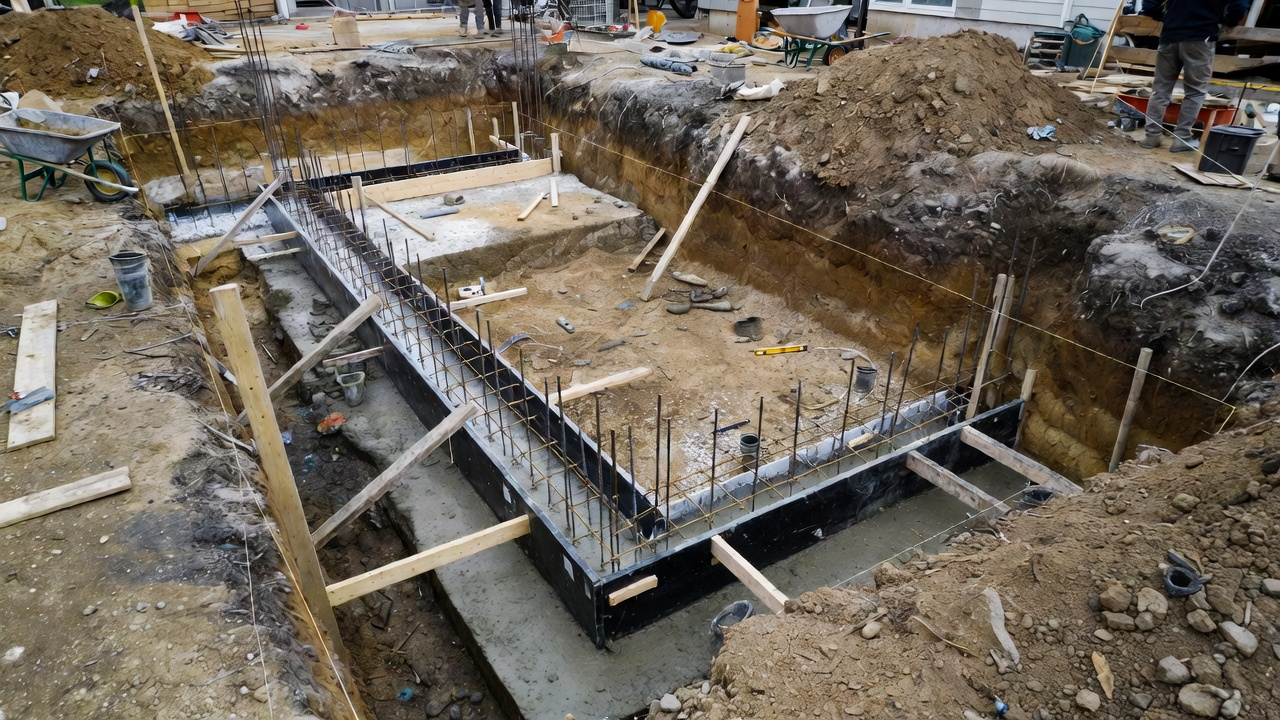
A lot of DIY foundation talk falls apart because people use one word for ten different jobs.
A shed pad is not a house foundation. A few deck piers are not a basement wall. A small slab extension is not the same risk as trying to support a full structure on wet ground you barely understand.
That is where people get themselves in trouble. They hear “foundation” and assume this is one big category. It is not. Some foundation work is realistic for a careful DIYer. Some of it is a fast way to waste money, fail inspection, and find out too late that the hard part was never the concrete. It was the ground under it.
This page is the blunt version. Not the “you can do anything with confidence” version. The better question is not whether a foundation can be DIY. It is which foundation jobs stay small enough, simple enough, and forgiving enough to do yourself without creating a bigger mess later.
If you need the broader background first, start with types of building foundations. If you are still sorting out how concrete foundations differ from piers, slabs, crawl spaces, and full below-grade work, this page on concrete foundations helps frame the bigger picture.
What This Covers
- which foundation jobs real DIYers actually seem to pull off
- where the regret stories start repeating
- why layout, drainage, and soil matter more than the pour itself
- which jobs should usually stay out of DIY territory
- how to decide whether you are saving money or just delaying the bill
The First Correction
Small Detached Work Is Not the Same as House Foundation Work
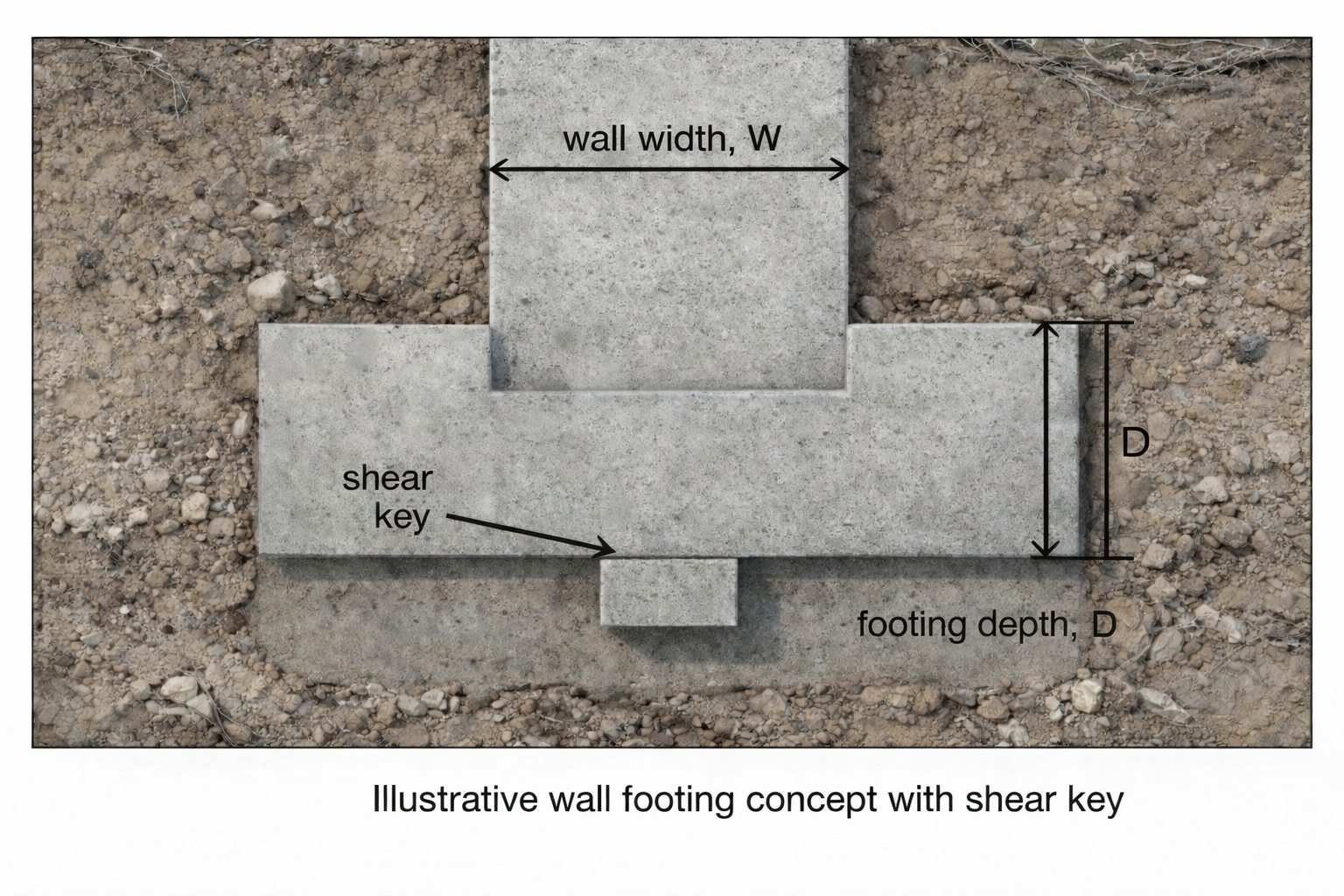
This is the split that matters most.
DIYers do seem to get away with small detached work all the time. A shed base. A few deck footings. A small walkway pad. A slab under a light outbuilding where the loads are modest and the consequences of being slightly ugly are survivable.
Whole-house foundation work is different. The stakes are higher, the inspections matter more, the geometry matters more, the soil matters more, and the cost of being wrong is not a rough-looking pad. It is settlement, water, cracking, framing problems, or a structural repair bill that wipes out whatever the shortcut was supposed to save.
That is why the smart DIY conversation starts with scale and consequence, not optimism.
The Jobs That Make Sense for DIY
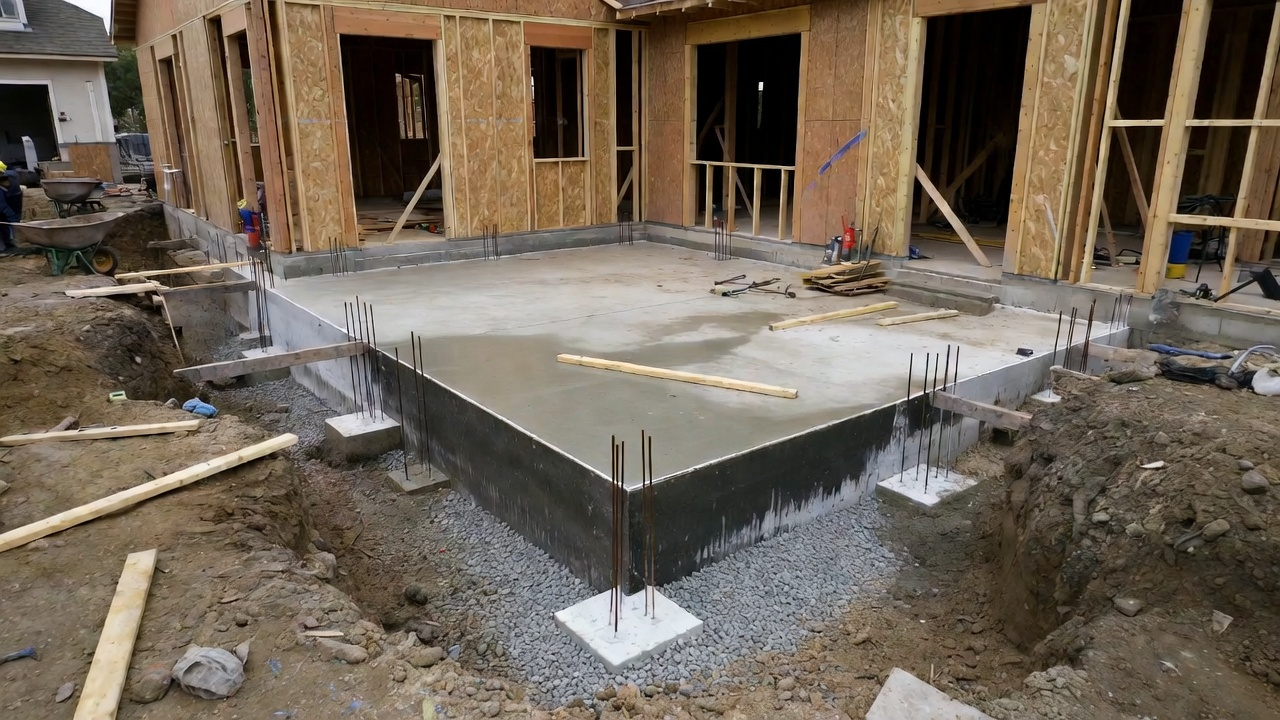
A slab foundation under construction before framing and site cleanup.
Small shed or outbuilding pads. This is probably the most realistic entry point. Not because it is foolproof, but because a detached shed base gives you some tolerance. A lot of people go gravel instead of concrete for exactly that reason. It is easier to correct, easier to level again, and less punishing if the first pass is not perfect.
Simple deck footings or piers. If the permit path is clear, the frost depth is known, and the loads are modest, this is one of the more realistic DIY foundation jobs. It is still physical work. Rocky soil, wet soil, or deep holes can turn it miserable fast. But it is at least a job people actually finish without wrecking the rest of a house.
Small slab extensions and utility pads. A pad for bins, mechanical equipment, or a small apron is different from a slab carrying a building. People do these themselves all the time. The common warning is always the same: the finish is harder than it looks, and mixing a mountain of bags sounds cheaper until you are halfway through and hate your life.
Gravel foundations for light structures. Honestly, this is the smarter DIY answer more often than people want to hear. For many sheds and light detached buildings, a well-prepared gravel base is more forgiving than trying to become a concrete finisher for one weekend.
Read this next: slab-on-grade foundations. It helps clarify why a true slab foundation is a real system, not just “pour some concrete and call it done.”
The Jobs That Usually Shouldn’t Be DIY
A full house foundation. Basement walls, major retaining conditions, frost walls for a primary structure, crawl-space perimeter foundations, and full structural slab systems usually should not be your learning project.
Anything on wet, unstable, or questionable soil. This is where the threads turn ugly fast. Clay that turns to muck. Trenches taking on water. Fill nobody can really identify. Ground that passes a casual glance and then falls apart once you dig. If the soil is the problem, confidence is not the fix.
Anything that needs tight geometry over a larger footprint. A foundation that is out of square does not stay a foundation problem. It becomes a framing problem, a layout problem, a material waste problem, and then a swearing problem.
Anything where failure is expensive to revisit. That includes work under an existing house, structural additions, and conditions where fixing a mistake means jacking, demolition, drainage correction, or engineer involvement later.
Anything you are already trying to rationalize too hard. This one is real. If the whole plan depends on “it’s probably fine,” “the inspector may not care,” or “I’ll figure it out once I open the ground,” the job is already trying to tell you something.
Where People Get Burned
The ground was worse than expected. This is probably the most common pattern. Not bad concrete. Bad base. Wet clay. Saturated soil. Loose fill. Buried junk. Ground that could not be compacted properly. Once that happens, the pour itself stops being the main issue.
The layout was casual. A small error in batter boards, diagonals, depth, or formwork can stay hidden right up until the part where it matters. That is how people end up pouring something out of square, too shallow, or in the wrong place.
They treated bags like a money-saving shortcut. Sometimes bag mix is fine. Sometimes it turns into hours of hauling, mixing, lifting, and trying to hit a finish window while the first batch is already moving on you. More than one person starts with “I’ll just mix it myself” and ends with “never again.”
They underestimated finishing. This shows up constantly. Digging the holes may be doable. Getting the forms in may be doable. Finishing concrete well enough that it drains properly and does not look like a panic pour is where confidence tends to thin out.
They called the concrete too early. This one is pure self-inflicted pain. Forms looked close enough. Bracing looked close enough. Then the truck is on the way, a tube shifts, a form bows, or somebody realizes the anchor-bolt plan was never really settled. Concrete has a way of exposing half-finished thinking fast.
They missed the inspection sequence. This one sounds dumb until it happens. Holes are dug. Tubes are in. Concrete is placed. Then somebody finds out the footing inspection should have happened before the pour, not after. Sometimes inspectors work with people. Sometimes they do not. Either way, it is not a smart place to improvise.
They tried to solve water with concrete instead of fixing the water. This is another big one. If runoff, grading, or chronic moisture is the real problem, pouring footings into it does not magically make it sound.
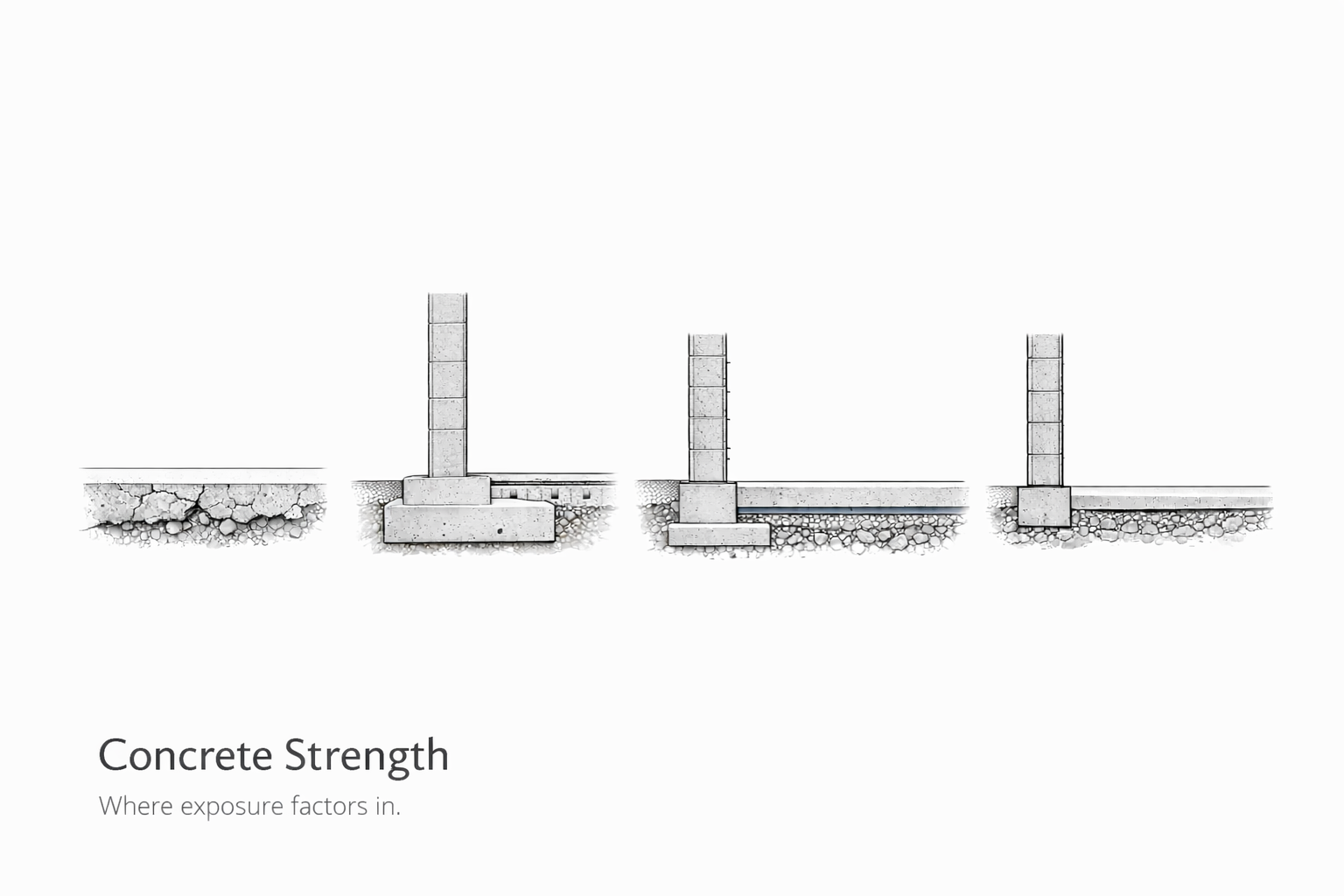
The concrete spec was weak from the start. Not every failure starts with the pour. Sometimes the mix was understrength, underdesigned, or wrong for the exposure conditions, especially on slabs or exterior work. That usually shows up later as scaling, spalling, weak edges, or cracking that people wrongly blame on “bad luck.”
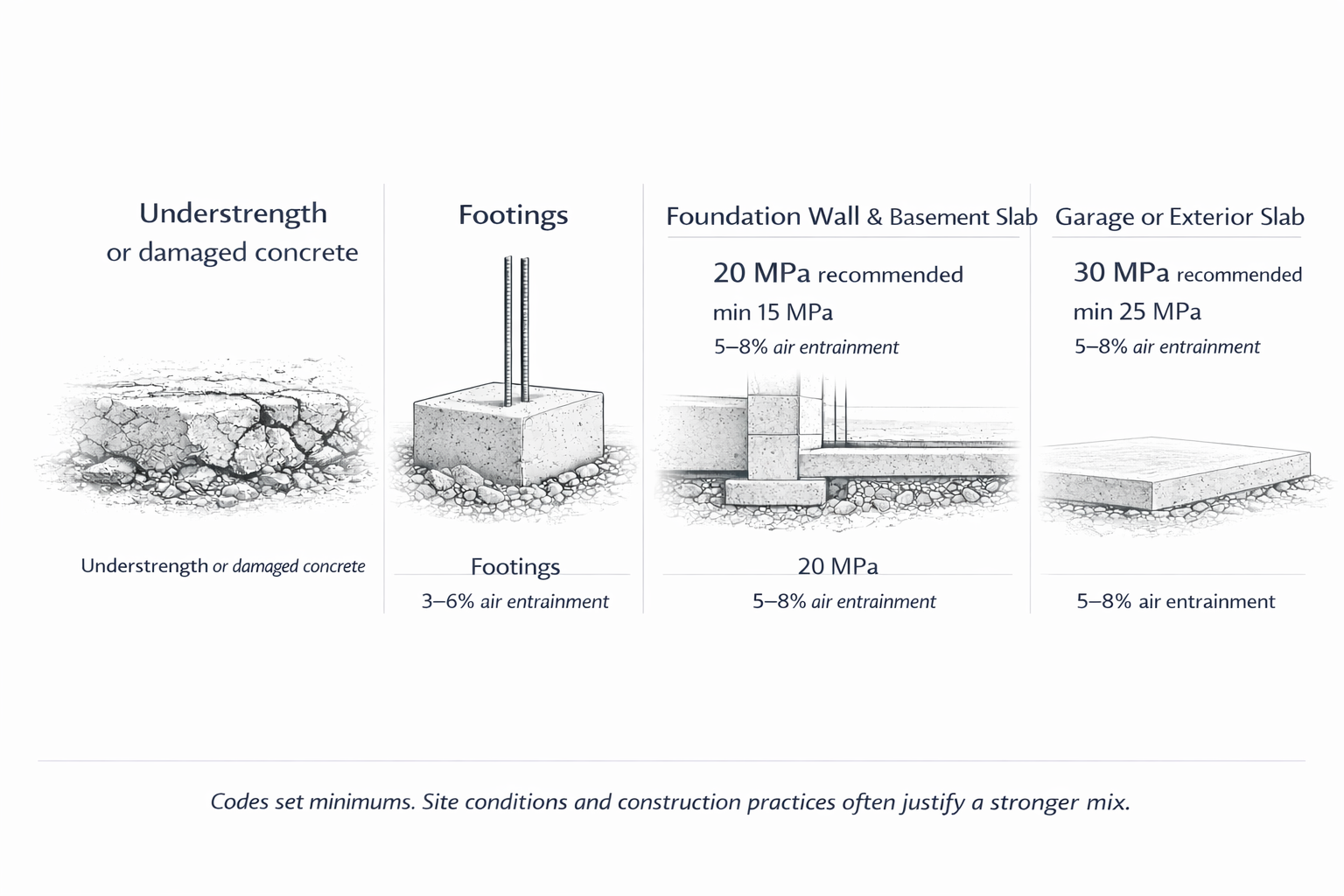
Comparing damaged concrete with footing, foundation wall, basement slab, and garage slab mix guidance.
This part matters: before you dig anything serious, this guide to soil analysis and site investigation is worth reading. Most DIY foundation mistakes start before the concrete truck ever enters the conversation.
The Pattern in Real-World DIY Threads
The pattern is pretty clear once you read enough of these stories.
DIYers sound fairly confident when the job is small, detached, and easy to redo. A few footings for a deck. A modest shed base. A small slab where appearance matters less than function.
The tone changes once the work gets structural, wet, large, or highly visible. Then the language shifts from “doable” to “grueling,” “harder than it looks,” “get ready before the truck comes,” and “I would not do that one again.”
That is also why there is no honest “success rate” number here. I did not find one worth repeating. What I found was a strong pattern: small detached jobs are where DIY holds together. Full foundation work is where the regret stories pile up.
How to Decide Without Lying to Yourself
Can you fix it if it goes wrong? That is the real test. A shed pad that comes out rough is annoying. A house footing on bad soil is a completely different class of mistake.
Do you understand the inspection path before you dig? Not after. Before. Depth, forms, footing inspection, reinforcement if required, final inspection. The order matters.
Do you know the frost depth, drainage conditions, and bearing surface? If not, you are not really estimating the job yet.
Is the job ugly if you miss, or expensive if you miss? Ugly is survivable. Expensive is where you stop pretending this is just a learning experience.
Are you trying to DIY because the job is reasonable, or because the quote hurt your feelings? That one clears things up fast.
The Smarter DIY Version
If you want to stay in DIY territory and keep the risk sane, the smarter path usually looks like this:
- keep the project detached and modest
- choose a gravel base where it makes sense instead of forcing concrete
- call the building department before you dig
- locate utilities before excavation
- treat drainage and compaction as the real job, not a side note
- hire out the pour or layout if that is the weak link instead of insisting on doing every step yourself
That last one gets overlooked. DIY does not have to mean you personally do every ounce of the work. Sometimes the smart move is doing the excavation and prep yourself, then paying for the layout check or the pour.
WORTH OWNING
Black & Decker: Complete Guide to Concrete & Masonry. Good basic reference for forms, mixes, finishing, and repair if you are still deciding whether your project is small enough to learn on.
The Honest Answer
Yes, some foundation work can be DIY.
No, that does not mean “a foundation” is a good DIY category.
Small detached pads, some deck piers, and forgiving light-structure bases are where the real DIY wins tend to live. Full house foundations, wet excavations, and anything that depends on perfect geometry, real soil judgment, and expensive consequences are where the fantasy usually breaks.
That is really the correction. The question is not whether you are tough enough to do it yourself. The question is whether the job is small enough, simple enough, and forgiving enough to survive your learning curve.
If the work is starting to look more technical than expected, this page on foundation excavation methods helps you see where the digging alone starts getting more serious.
And if the project is already drifting toward hired equipment, inspections, or tricky access, this piece on choosing excavation contractors is a better next step. If you are still trying to figure out whether the quote was actually unreasonable, compare it against concrete foundation installation cost: DIY vs. professional before deciding the whole thing is just contractor markup.
FAQ
Can you really DIY a foundation?
Sometimes. Small detached foundation work is the realistic DIY zone. Full house foundations usually are not.
What foundation jobs are most realistic for DIY?
Shed pads, gravel shed bases, small slab extensions, and some deck footings or piers are the most realistic starting points.
What foundation jobs usually need a pro?
Basements, crawl-space perimeter foundations, frost walls for houses, major retaining conditions, wet or unstable soils, and anything structural under a home.
What mistake shows up most often?
Bad soil and bad base preparation. People focus on the concrete and miss drainage, compaction, frost depth, and inspection sequence.
Is bagged concrete worth it for DIY foundation work?
Sometimes for small jobs. Once the volume grows, the labor, timing, and finish quality become the thing people regret most.
What is the smartest DIY foundation option for a shed?
Often a well-built gravel base, depending on the shed size, manufacturer requirements, frost conditions, and your local code.
Official Sources
- American Wood Council: Prescriptive Residential Wood Deck Construction Guide
- City of Apple Valley: Deck Footings and Inspection Requirements
- Prince George's County: Residential Deck Permit Requirements
- SAFEbuilt / City Permit Guide: Footing and Inspection Requirements
- HUD: Design Guide for Frost-Protected Shallow Foundations