
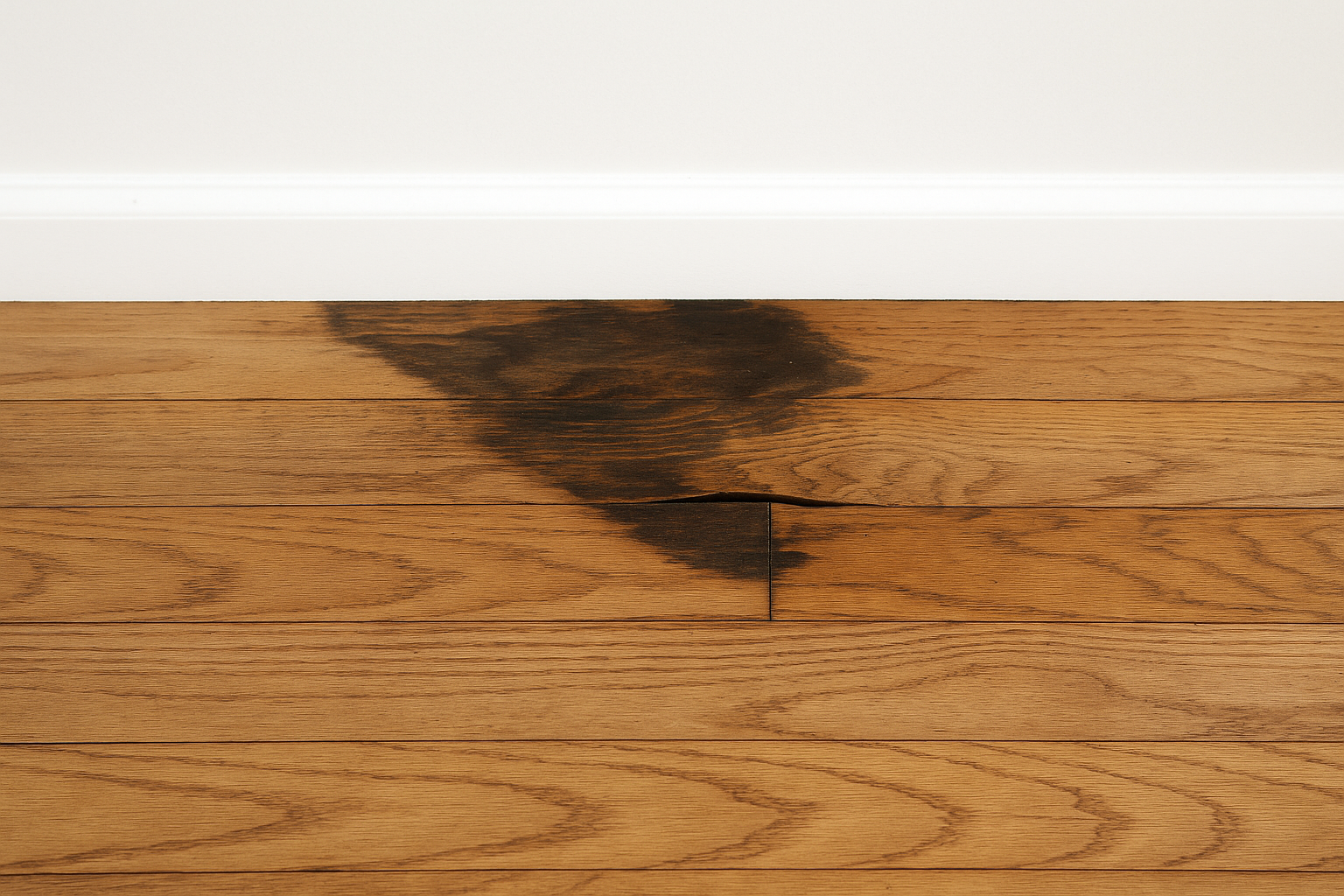
Floors fail in slow motion. A little sag. A soft spot. A crack that keeps coming back. People see the symptom. Builders look for where the load slipped, where moisture crept in, or where the structure changed years before. This guide walks through every major floor problem and explains how to read what is actually going on under the surface.
If you already know the basics from our overview of how floors work in a house, the logic here will click fast. If you want more of the structural side, a detailed joist and subfloor breakdown fills in the framing behind these problems.
Older houses, bad remodels, moisture issues, pests, missing support, and weak materials all leave fingerprints. The goal is simple. You should be able to walk into a room and understand what the floor is trying to tell you.
The Big Picture: Floors Fail for a Reason
Floors do not sag, crack, or feel soft without a cause. Something changed the structure, the moisture, or the load. You read floor failures the same way a mechanic reads engine noise. You look at patterns.
A sag in the middle of a room usually means undersized joists or a beam that has dropped. A sag along one side often points to a rim joist, sill plate, or foundation issue. A soft spot is almost always water. Cracked grout or tile tells you the floor is flexing. Termite trails near the baseboard say the wood is hollowing out.
Why Floors Sag

Sagging is the number one complaint in older houses. Some sagging is harmless. Some means structural failure is underway. You look at location, direction, and shape.
1. Undersized Joists
Many houses built before modern span tables used whatever lumber was available. Some used 2x6 joists where 2x10 should have been. Some spaced joists too far apart. Others used long spans with no mid beam.
Signs it is just undersized lumber:
• The sag is long and shallow
• It runs across the entire room
• No cracking, no new movement, just age
This kind of sag is common in houses built before the 1950s. If the structure has been stable for decades, it is more of a comfort issue than a collapse risk. Stiffening the joists helps.
2. Rot or Water Damage
Water ruins floors from the ends first. The rim joist, the sill plate, the bathroom subfloor, the laundry room corner. When floors sag near walls, water is usually the culprit.
What to look for:
• Soft wood at the perimeter
• Mushy or crumbling subfloor
• Moisture stains below or behind trim
• A sag that is sharper at one edge
Bathrooms are the classic failure point. A leaking toilet flange or shower curb rots the subfloor. The floor dips. Tile cracks. The repair always costs more than the homeowner expects.
If the sag sits near the foundation, check the sill plate and rim joist. A sill that has rotted can drop an inch without anyone noticing until the floor sinks.
3. Bad Remodels
When someone removes a wall without understanding load, the floor above tells the story. A missing bearing wall shows up as:
• A long sag line
• Cracks above doorways
• Floors dipping toward the removed wall
Sometimes a contractor adds a heavy island or tub without reinforcing. Joists bow. Subfloors flex. The dip grows slowly.
4. Beam Movement
If a beam settles or a support post sinks into soil, the floor above follows. You can often see this from the basement. A beam that has a belly. A post leaning. A jack post sitting on a thin padstone.
Beam problems are easier to diagnose if you already understand load paths and how floors pass weight into beams and down to the foundation. When that path breaks, sagging shows up fast.
Uneven Floors in Old Houses
Old houses are rarely level. That does not mean they are unsafe. You separate character from danger.
Normal Unevenness
Old framing dries, moves, shrinks, and settles. Typical harmless signs:
• A gradual slope from one side of a room to another
• Floors that feel “tilted” but do not bounce
• No cracks, no soft spots
• Doors work normally
Homes from the 1920s to 1970s often have small slopes that never change. You can live with it.
Danger Signs
• A slope that keeps worsening
• A dip that feels springy
• New cracks in tile, drywall, or trim
• Doors that suddenly stick
• Gaps appearing along baseboards
These changes mean the structure is still moving. You need to find the source. Bad water control, new loads, pests, or foundation settlement all leave clues.
Older homes with diagonal plank subfloors often move differently from homes with modern plywood or OSB. Plank systems can open up or loosen over time. A separate floor materials guide helps explain how these older layers behave under newer finishes.
Subfloor Failures: Delamination, Swelling, Soft Spots
Subfloor problems show up fast because the finish sits right on top of them. You can diagnose most failures by feel.
1. Delamination
OSB and plywood can separate between layers. When this happens the floor feels hollow or weak.
Causes:
• Moisture under the floor
• Roof leaks
• Slow plumbing leaks
• Concrete slab moisture
You know you hit delamination when the surface looks fine but gives slightly under pressure.
2. Swelling
OSB swells when it gets wet. Sometimes it dries back. Sometimes it stays raised.
Signs:
• A bump or ridge under hardwood
• LVP that rocks when you step on it
• Tile cracking in a straight line
Swelling always means moisture is reaching the subfloor from somewhere. You need to track the source before replacing anything.
3. Soft Spots
Soft spots mean wood fibers have broken down. Either water sat too long or mold has eaten the material.
Check nearby rooms. Soft spots often start near tubs, toilets, exterior doors, and laundry machines. The closer you are to plumbing or weather exposure, the more likely water is the cause.
Subfloor repairs always reveal the real problem under the top layer. A proper fix means removing the finish, cutting out the bad wood, and tying in new framing. Quick patches never last.
Mold Under Floors
Mold shows up when moisture and organic material stay together long enough. Floors hide moisture well, so mold often grows unseen.
How to Spot It
• Musty smell
• Dark or fuzzy spots on joists or sheathing
• Black staining around plumbing
• Cold, damp rooms above
If the floor above feels soft, you already have structural damage along with mold.
Why It Happens
• Poor ventilation in crawl spaces
• Wet basements
• Leaking supply lines
• Condensation from HVAC systems
• Incorrect vapor barriers
Mold is not always a DIY job. When the framing is affected, you need containment, protective equipment, and proper removal. A lot of homeowners try bleach. It does nothing to stop mold in framing members.
Many floors fail early because the moisture problem under the floor was never fixed.
Rim Joist and Sill Plate Rot
If you want to find serious floor failure, check the rim and sill. These two pieces of wood carry the weight of the whole floor. When they rot, everything above dips.
How Rim and Sill Rot Starts
• Poor drainage outside
• Missing flashing
• Gutters overflowing into the wall
• Old fiberglass insulation trapping moisture
• Termites entering from the soil
• Long-term leaks in siding or windows
A rotten sill compresses and drops. A rotten rim no longer supports the joist ends. The floor near exterior walls sinks.
What You Look For
• Cold or damp baseboards
• Gaps opening between flooring and trim
• Floors sinking toward exterior walls
• Crumbling wood behind the rim or sill
These repairs are expensive because you have to support the house while replacing structural wood. You often find foundation cracks or settlement at the same time.
If you want more structural context, look at a section that explains how floors connect to foundations and walls. Understanding that load path makes rim and sill failures much easier to read.
Termite and Pest Damage in Floor Framing
Termites, carpenter ants, and other pests love floor framing. They start low and work upward.
Signs of Termite Damage
• Pencil-thin mud tubes climbing foundation walls
• Hollow-sounding joists
• The subfloor skin holding up while the core is gone
• Tiny piles of frass along walls
Some floors stay intact on the surface while the joists below are almost empty. This is common in old houses that were never treated.
Carpenter Ants
Ants remove wood to build galleries. They prefer moist wood, so their presence usually means a water problem too.
Rodents
Mice and rats do not destroy the structure, but they chew vapor barriers, insulation, and subfloor edges. They also add moisture. A crawl space full of rodents is a crawl space with rising humidity.
When to Call a Pro
• Any sign of structural damage
• Hollow joists
• Subfloor that collapses under pressure
• Widespread tunnels or holes
Pest damage pairs with moisture damage more often than not. Fixing one without the other is pointless.
How Builders Diagnose Floor Failures
You do it in layers.
1. Look at the finish
Cracks, slopes, soft spots, gaps, peaks, squeaks. Each one points to a stress point.
Tile cracks in straight lines. Wood buckles in long waves. Vinyl gaps at joints. Carpet dips where the subfloor dips.
2. Map the directions
Sagging that runs parallel to joists usually means joist issues. Sagging that runs perpendicular usually means beam issues.
3. Check below
Crawl space, basement, mechanical room, access panels. You follow the load path from the finish down to the foundation.
4. Measure deflection
A straightedge and a tape measure tell you more than any tool. How much deviation. Where it begins. How sharp it is.
5. Trace moisture
Moisture meters, visual staining, mold smell, cold spots, drips, plumbing lines, exterior walls.
6. Match symptom to structure
• Sagging near center: joists
• Sagging near wall: rim or sill
• Cracked tile: deflection
• Soft spot: water
• Musty smell: crawl space moisture
• Peaked vinyl: flatness errors
• Buckled hardwood: humidity swings
Once you understand how floors are built and how loads move through joists, beams, and subfloors, reading failures becomes much easier.
When a Floor Problem Is Dangerous
Not all floor issues need immediate action. These do:
• A floor sinking rapidly
• Subfloor collapsing under pressure
• Joists with large notches or holes
• Posts sinking into soil
• Active water leaks
• Termites eating structure
• Rim and sill rot
This is when you bring in a structural engineer or a carpenter who understands load paths.
Repair Options and What They Cost
Costs vary by region but the patterns are predictable.
Sistering Joists
Used to stiffen or replace weakened joists.
Moderate cost. Requires access.
Adding Beams or Posts
Adds permanent stiffness.
Higher cost. Needs proper footing.
Replacing Subfloor
Weak spots or delamination.
Medium cost in open areas. Higher in kitchens or bathrooms.
New Sill or Rim
Expensive. Needs jacking and temporary supports.
Tile Replacement
Always costly because tile removal is slow. Damage underneath often adds more work.
FAQ
Why is one room soft while the others feel solid?
Usually localized moisture, plumbing, or subfloor failure. Floors do not soften evenly.
Are uneven floors always a structural problem?
No. Many older houses settled and stopped moving decades ago.
What does cracked grout mean?
Movement. Either the floor is flexing or the tile was installed on a weak substrate.
Can sagging floors collapse?
Rare, but possible when rot, pests, or missing support are involved.
How do I know if it is a joist problem or a beam problem?
The direction of the sag usually tells you. Parallel dips point to joists. Perpendicular dips point to beams.
Should I level old floors?
Only if the structure can handle it. Sometimes you fix the structure. Sometimes you shim the finish.
Can LVP hide floor problems?
It hides small defects. It cannot hide dips or structural movement.
Official References and Standards
1. North American Flooring Standards and Testing Bodies
NWFA – National Wood Flooring Association
Covers hardwood and engineered wood installation standards, moisture testing, fastening schedules, and refinishing guidelines.
https://www.nwfa.org/
RFCI – Resilient Floor Covering Institute
LVP, vinyl sheet, vinyl tile, underlayments, adhesives, and environmental health standards.
https://rfci.com/
TCNA – Tile Council of North America
US tile installation standards, deflection requirements, backer board rules, membranes.
https://www.tcnatile.com/
MIA + BSI – Natural Stone Institute
Natural stone flooring standards, weight rules, deflection limits, sealing requirements.
https://www.naturalstoneinstitute.org/
CRI – Carpet and Rug Institute
Carpet installation standards, indoor air quality testing, carpet tile guidelines.
https://carpet-rug.org/
2. Structural Standards Directly Affecting Floor Materials
ICC – International Code Council
IRC and IBC flooring structure requirements, live loads, fire ratings, moisture barriers.
https://www.iccsafe.org/
APA – The Engineered Wood Association
OSB, plywood, subfloor panels, span ratings, fastening schedules, moisture guidelines.
https://www.apawood.org/
AWC – American Wood Council
Wood joist spans, L/360 and L/480 deflection limits, engineered wood design, DCA 6.
https://www.awc.org/
PTI – Post-Tensioning Institute
Concrete slab design, reinforcement, and pre-stressed slab-on-grade floor behavior.
https://www.post-tensioning.org/
3. Moisture, Indoor Air Quality, and Building Science
Building Science Corporation
Moisture control, slab vapor emissions, crawlspace behavior, flooring over slabs.
https://buildingscience.com/
EPA Indoor Air Quality
VOC emissions from flooring, carpet safety, adhesives, underlayments.
https://www.epa.gov/indoor-air-quality-iaq
ASTM International
Concrete moisture tests (ASTM F2170, F1869), LVP standards, laminate performance.
https://www.astm.org/
4. Concrete, Slab-on-Grade, and Finishes
ACI – American Concrete Institute
Slab-on-grade construction, polished concrete tolerances, curing, cracking control.
https://www.concrete.org/
ICRI – International Concrete Repair Institute
Concrete surface prep standards (ICRI CSP Profiles) used before installing flooring.
https://icri.org/
5. Manufacturer Standards
Schluter Systems
Uncoupling membranes (DITRA), waterproofing, tile floor movement joints.
https://www.schluter.com/
Custom Building Products
Thinset, grout, membranes, substrate requirements.
https://www.custombuildingproducts.com/
Ardex
Self-leveling compounds, moisture barriers, substrate prep.
https://www.ardexamericas.com/
Mapei
Flooring adhesives, waterproofing, leveling products, tile mortars.
https://www.mapei.com/
6. Canada-Specific Codes
NBCC – National Building Code of Canada
Joist spans, floor loads, fire separation, moisture control.
https://nrc.canada.ca/
Canadian Wood Council
Wood framing spans, deflection, engineered wood.
https://cwc.ca/