

A good 1960s house was built around daily life, and you can feel it the moment you step inside. There is more glass than the decade before. The rooms run into each other instead of hiding behind doors. The back of the house actually looks at the yard. Nothing feels as boxed-in as a 1950s plan.
That shift is what ties the decade together, even though the houses can look nothing alike — plain brick ranches, angular split-levels, steep-roofed chalets, cleaner mid-century modern homes. They were built for family use, not formal show, and bigger windows, attached garages, looser plans, and more casual living gave all of them the same underlying logic.
That logic is the place to start — whether you are trying to place a 1960s house, decide what is worth keeping, or change it without stripping out the thing that made it good.
What Defines 1960s House Style
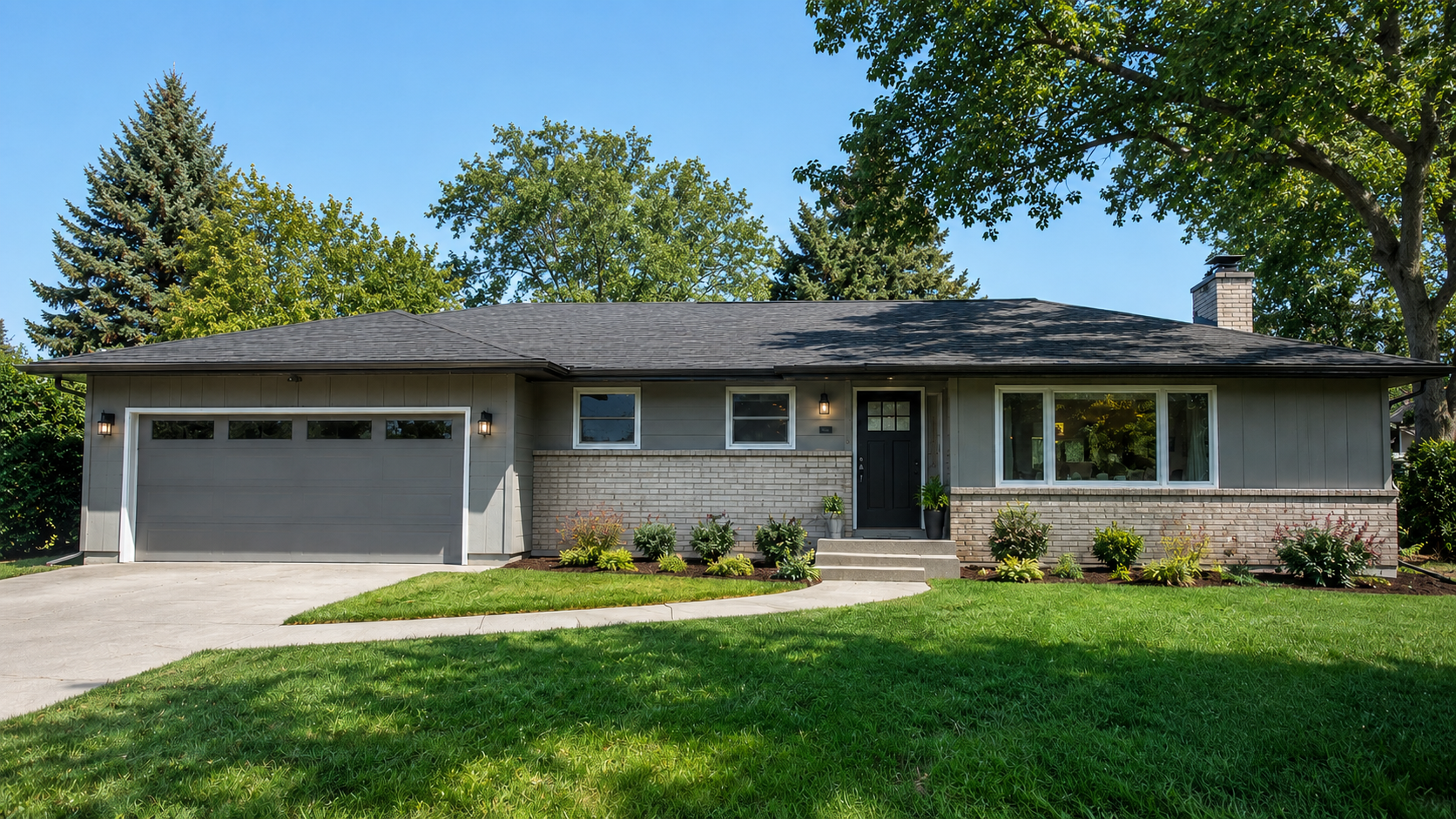
These houses were practical, but they were not timid. Builders wanted family-friendly plans and designers were still willing to reach for some drama, which is why the decade can swing from plain brick ranches to angular split-levels to steep-roof chalets and cleaner mid-century modern homes without feeling like four separate worlds. The casual logic underneath holds them together.
| House Type | What It Looks Like | What Made It Work | What Gets Lost First |
|---|---|---|---|
| Ranch | Long, low, horizontal, wide front window, backyard glass | Easy circulation, single-level living, strong yard connection | Its horizontal calm when bad additions get piled on |
| Split-Level | Short level changes, bedrooms up, den or rec room down | More usable space on suburban lots | Light and openness around the stair core |
| Chalet-Style | Steep roof, exposed beams, balcony or deep eaves | Strong roof character and memorable street presence | Its timber expression when fake stone and weak remodels get added |
| Mid-Century Modern | Post-and-beam logic, low planes, glass, cleaner detailing | Light, structure, and landscape connection | Its discipline when trim, clutter, and bad replacements creep in |
Why the Decade Still Works
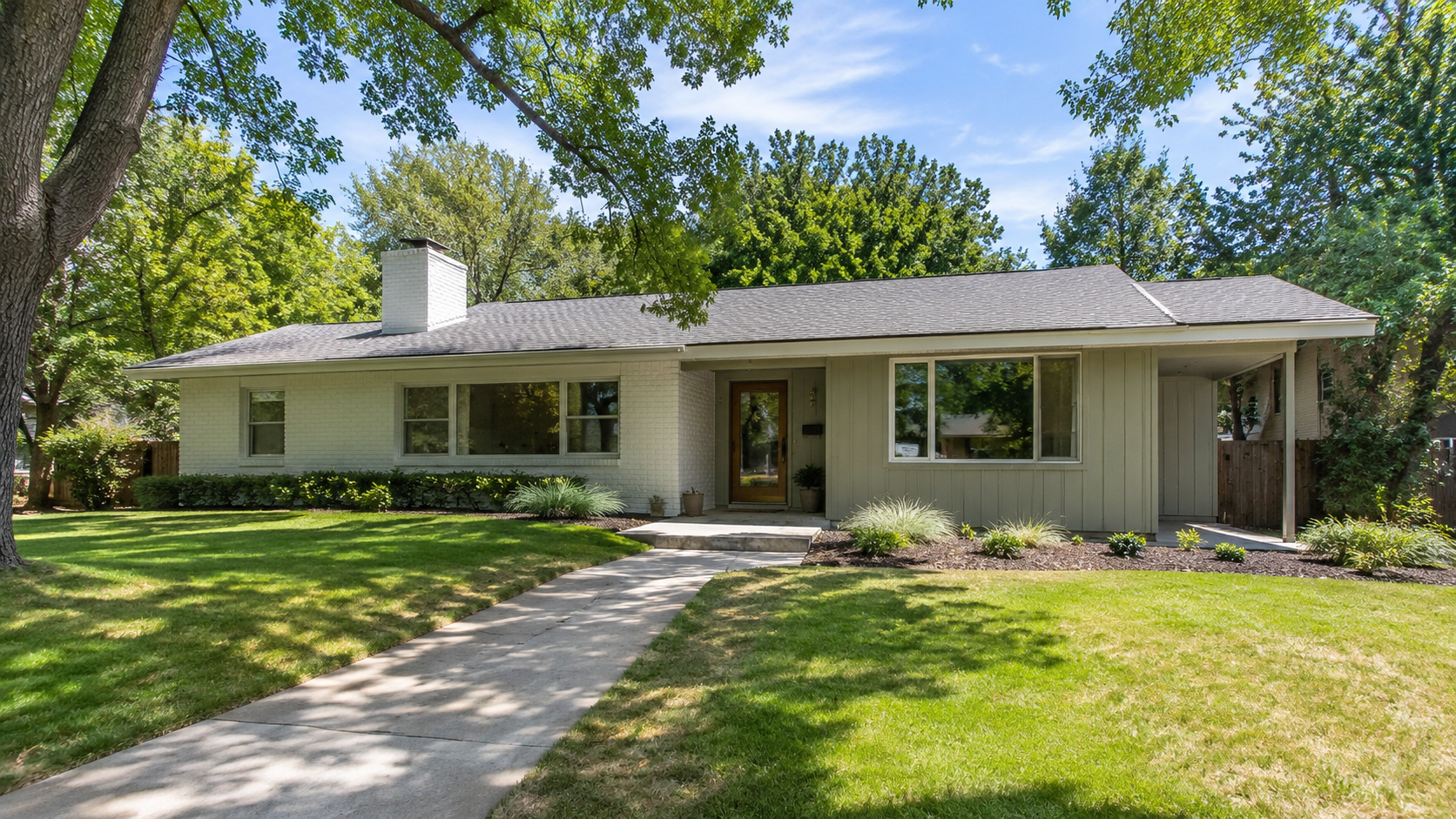
These houses still make sense because they solved ordinary living problems well. Kitchens started opening into family space. Backyard access got easier. Glass got bigger. Garages and carports became part of the plan instead of an afterthought tacked on at the side. Even when the construction was plain, the house usually felt easier to live in than older layouts with more walls and more formality.
The best of them also knew when to stop. The rooflines stayed clean, the framing was direct, and the plans were repetitive enough to build cheaply without feeling dead. The 1960s ranches that still stop me on a street are almost always the ones nobody tried to improve — that restraint is a big part of why the decade still reads well from the curb.
If you want a visual reference for what to preserve and what to strip back in a 1960s house, Atomic Ranch: Midcentury Interiors is a good one to keep nearby.
The Main 1960s House Types

Ranch Houses
Ranch houses carried a lot of the decade. Long footprint, low roof, a picture window in front, a sliding glass door out back, brick mixed with siding. The plan could be modest and the house still felt open, because the sightlines were better and the backyard connection actually mattered.
What makes a 1960s ranch hold up is not nostalgia. It is the horizontal discipline — the way the house lies along the lot instead of reaching up. Break that with a top-heavy addition, fussy trim, or a fake period overlay, and the house loses the one thing that made it strong.
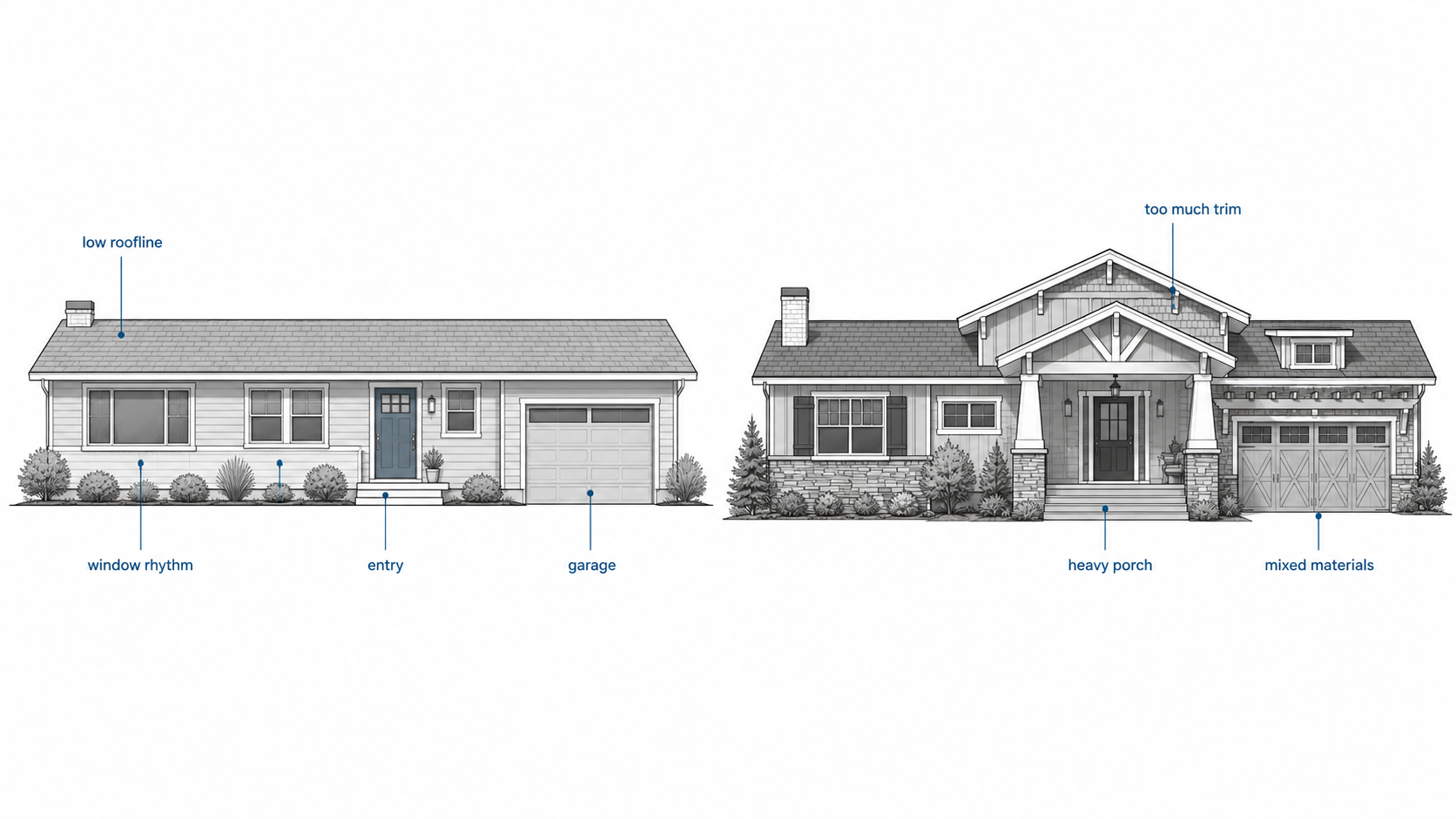
For a deeper remodel page, use 1960s ranch house remodel before changing the entry, the garage face, or the front elevation.
Split-Level Homes
Split-levels were one of suburbia's clever answers to space and grade: half a flight up, half a flight down, with the living space spread across short level shifts instead of one flat slab or one tall box. Bedrooms stayed separate without feeling far away, dens and rec rooms could tuck below, and the house felt larger than its footprint suggested.
What dates them is not the split itself. It is the dark stair core, the weak railings, and the heavy finishes that block the light. Keep the short level shifts; the fix is almost always lighting, openness, and better rail details.
Chalet-Style Homes
These were never the dominant 1960s suburban type, but they matter because they show the decade was willing to borrow a strong form. Chalet-style houses brought Alpine roof drama into ordinary subdivisions — steep gables, deep eaves, exposed beams, balconies, a bolder silhouette than the plain ranch next door.
The roof is doing most of the work. As long as that timber and roof language stays clean, the house can still look sharp. Once fake stone, a weak siding swap, or a messy addition takes over, the whole thing starts to look confused about what it is.
Mid-Century Modern
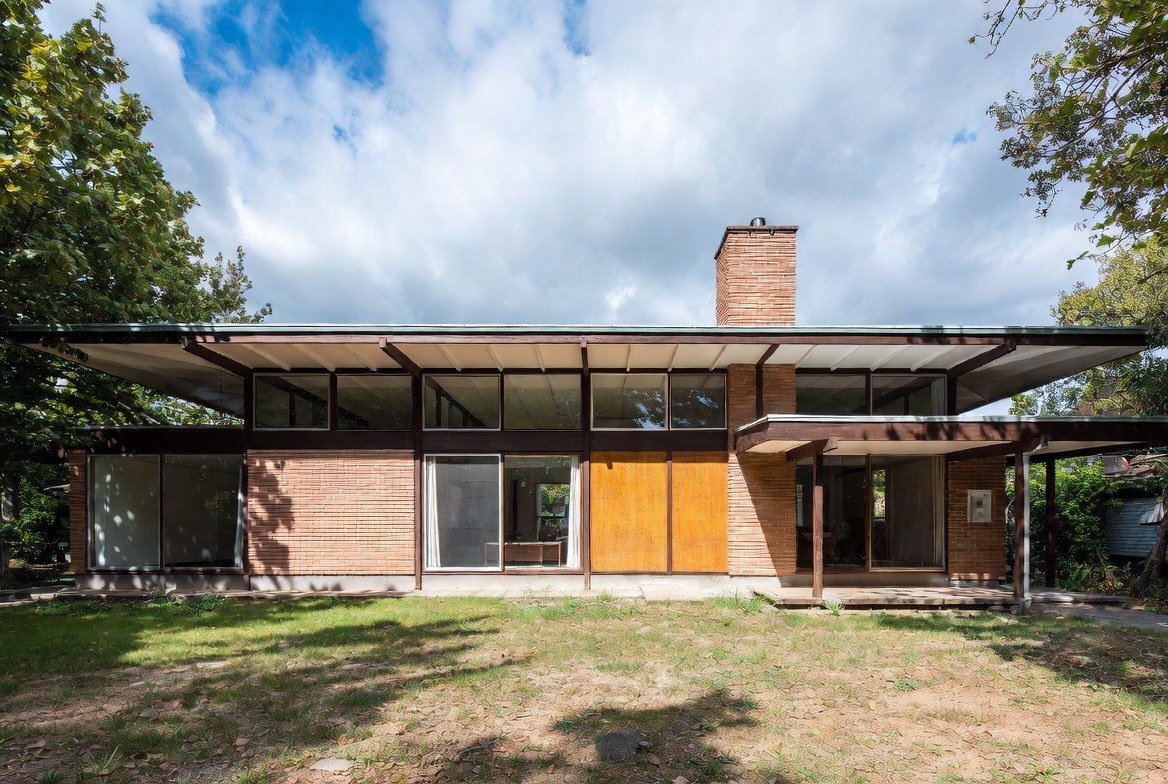
This is the high-design branch of the decade — flat or low planes, post-and-beam structure, larger glass, a stronger indoor-outdoor flow, and far less decorative noise. Some were architect-designed; some were the better suburban versions of those same ideas. Either way, the logic is easy to read when the house is still intact.
Mid-century modern houses age well when the structure and the glass stay legible. They age badly when extra trim, a fake farmhouse move, or a bad replacement window blurs the lines the original was built on.
Where the 1960s Sit Between 1950s and 1970s Houses
The 1960s sit between two different instincts. The 1950s still carried a lot of postwar compactness — smaller rooms, simpler ranch forms, lower budgets, more conservative plans. The 1970s pushed the other way, into heavier textures, darker interiors, sunken living rooms, bolder color, and chunkier materials.
The 1960s land in the middle. The houses usually have more glass and looser planning than the 1950s, but they read cleaner and lighter than the heavier 1970s versions that came next. That middle position is exactly why a careful eye should not drag every 1960s house backward into the 1950s or forward into the 1970s. The point is to protect the light, the roofline, the plan logic, and the outdoor connection that made the decade useful in the first place.
For the decade before, see 1950s house styles. For the next shift, see 1970s house style.
What to Keep, What to Change
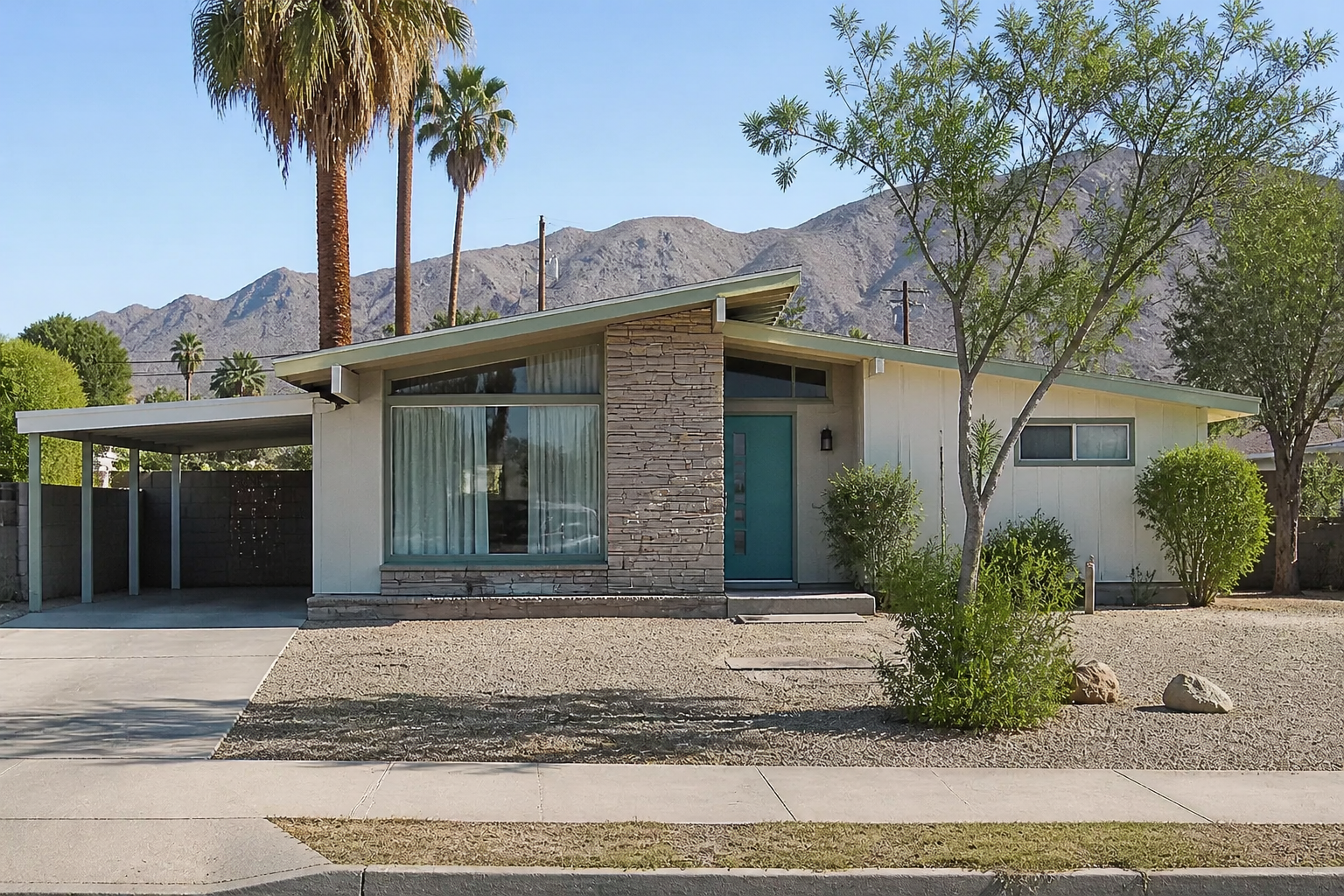
The bones of many 1960s houses are better than their surfaces, and telling those two things apart is most of the work.
| Keep | Upgrade | Avoid |
|---|---|---|
| Open flow, large glass, low rooflines, strong horizontal massing | Insulation, HVAC, electrical, older windows, tired kitchens and baths | Clumsy second-story additions, fake craftsman trim, shrinking the glass, overdecorating the exterior |
| Short level shifts in split-levels | Railings, stair lighting, entry clarity | Turning the stair core into a dark dead zone |
| Exposed beams and roof drama on chalets | Roof insulation, weathering details, exterior finishes | Covering strong forms with weak veneers and mixed materials |
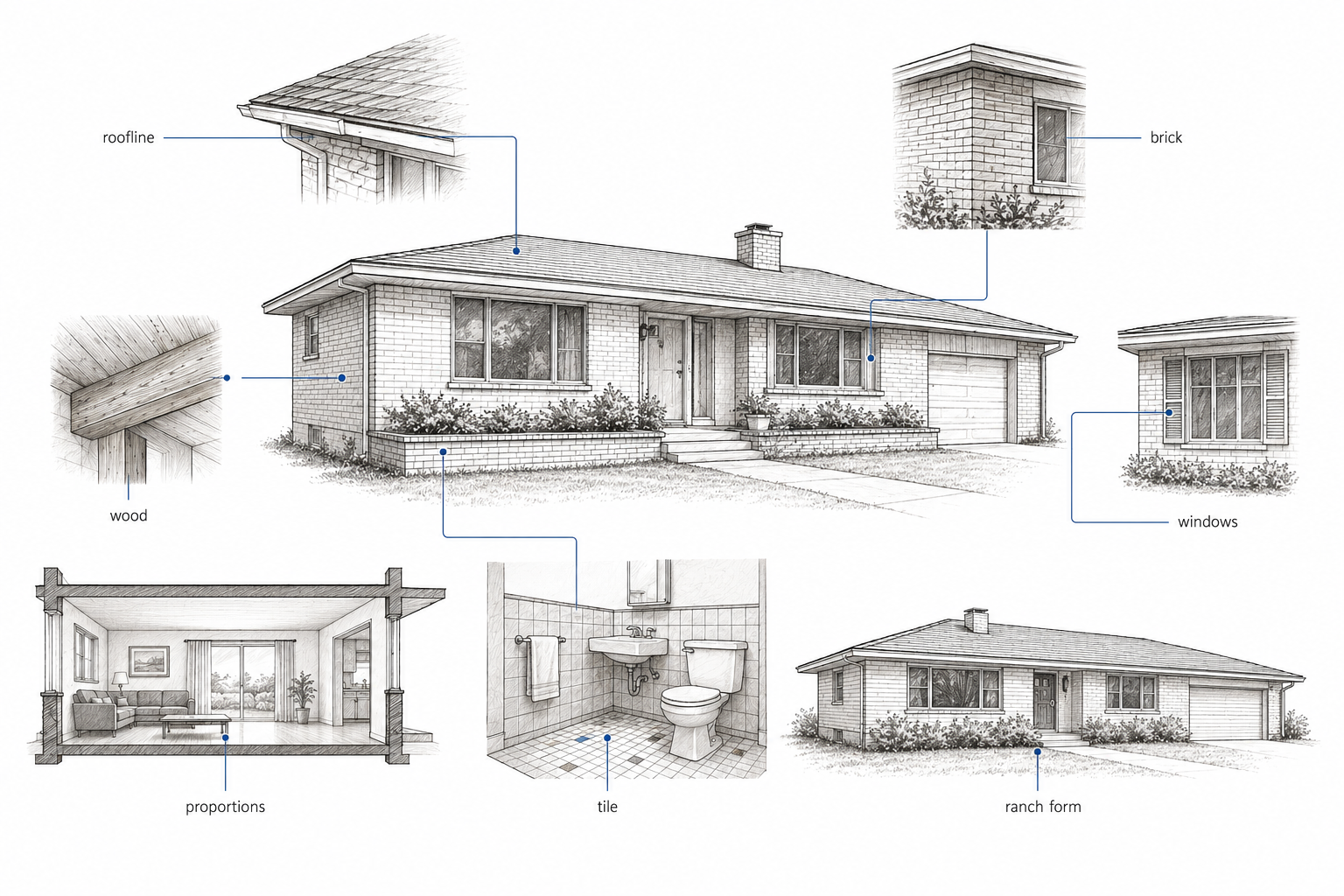
The order matters as much as the list. Sort the architecture from the surfaces first, then decide how much of the visible stuff actually needs to change. Too many 1960s houses get updated backward — the cosmetic work goes first and the building logic gets ignored until it is too late to protect. If you are planning a bigger project, read 1960s house renovation before you treat the work as a style update.
The Decor Is Not the Architecture

This page is about the house, not every decorating move from the decade. The 1960s had plenty of those — strong interior color, modular furniture, bold wallpaper, shag, paneling, statement lighting. Some of it still works and some of it does not, but that is a separate question from what makes a 1960s house worth keeping.
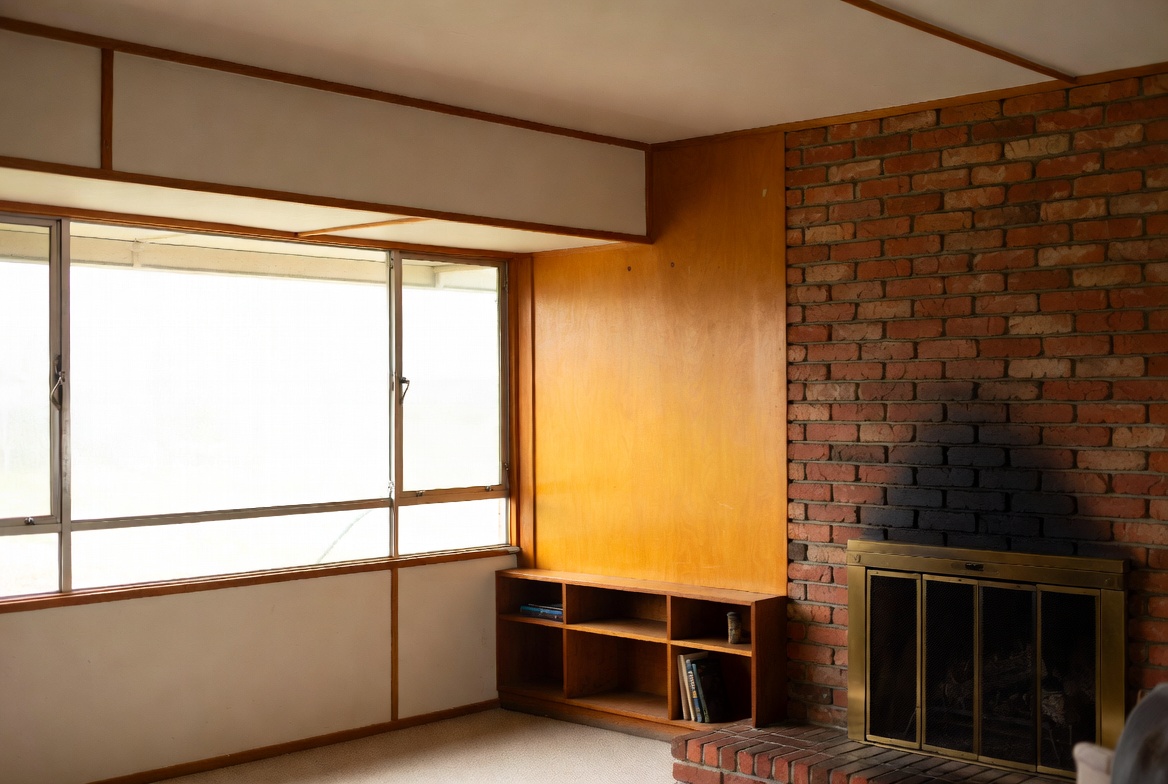
The architecture is the layout, the glass, the roofline, the massing, and the way the house meets the yard. The decor just sits on top of that — and you can strip out every avocado appliance and shag rug in the place without touching what actually makes it a good 1960s house. For the interiors side, go to 1960s decorating style: colors, furniture, and materials.
Where Updates Start Going Wrong
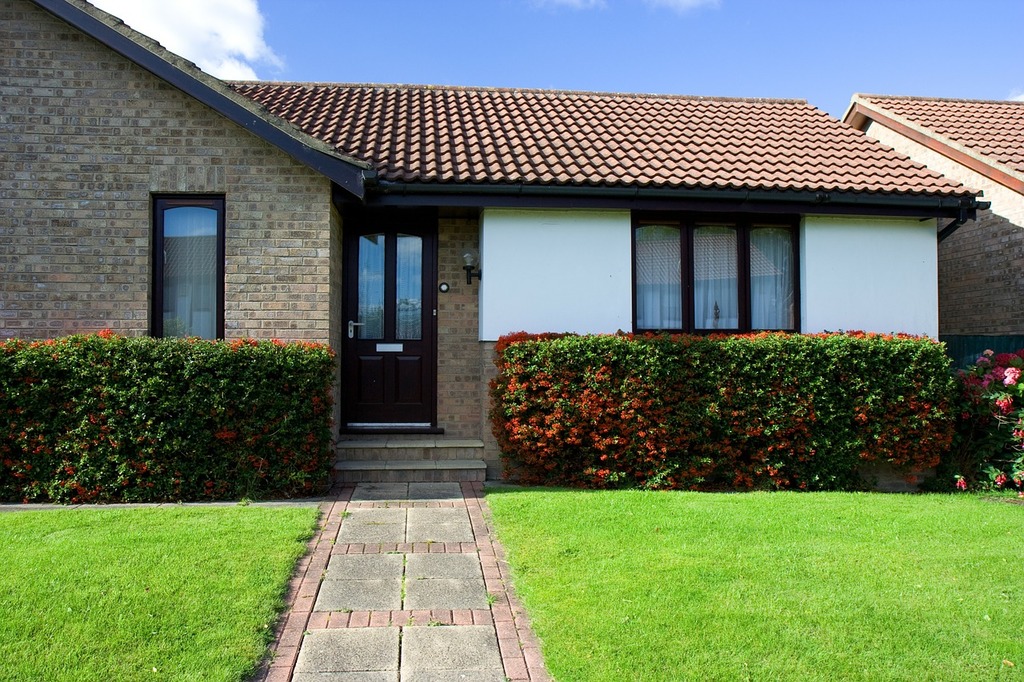
Most of the updates that go wrong fail the same way — they fight the house instead of working with it.
- Shrinking the glass. The house loses its light and the indoor-outdoor link weakens fast.
- Adding fake style language. Low ranch walls do not want heavy craftsman trim or a random farmhouse overlay.
- Smothering the horizontal lines. A bad addition or a bulky front feature makes the whole house read top-heavy.
- Opening every wall without a plan. Most 1960s houses need one or two better openings, not a full gut.
- Treating every surface as dated. Some of the brick, paneling, beams, and built-ins are worth cleaning up, not wiping out.
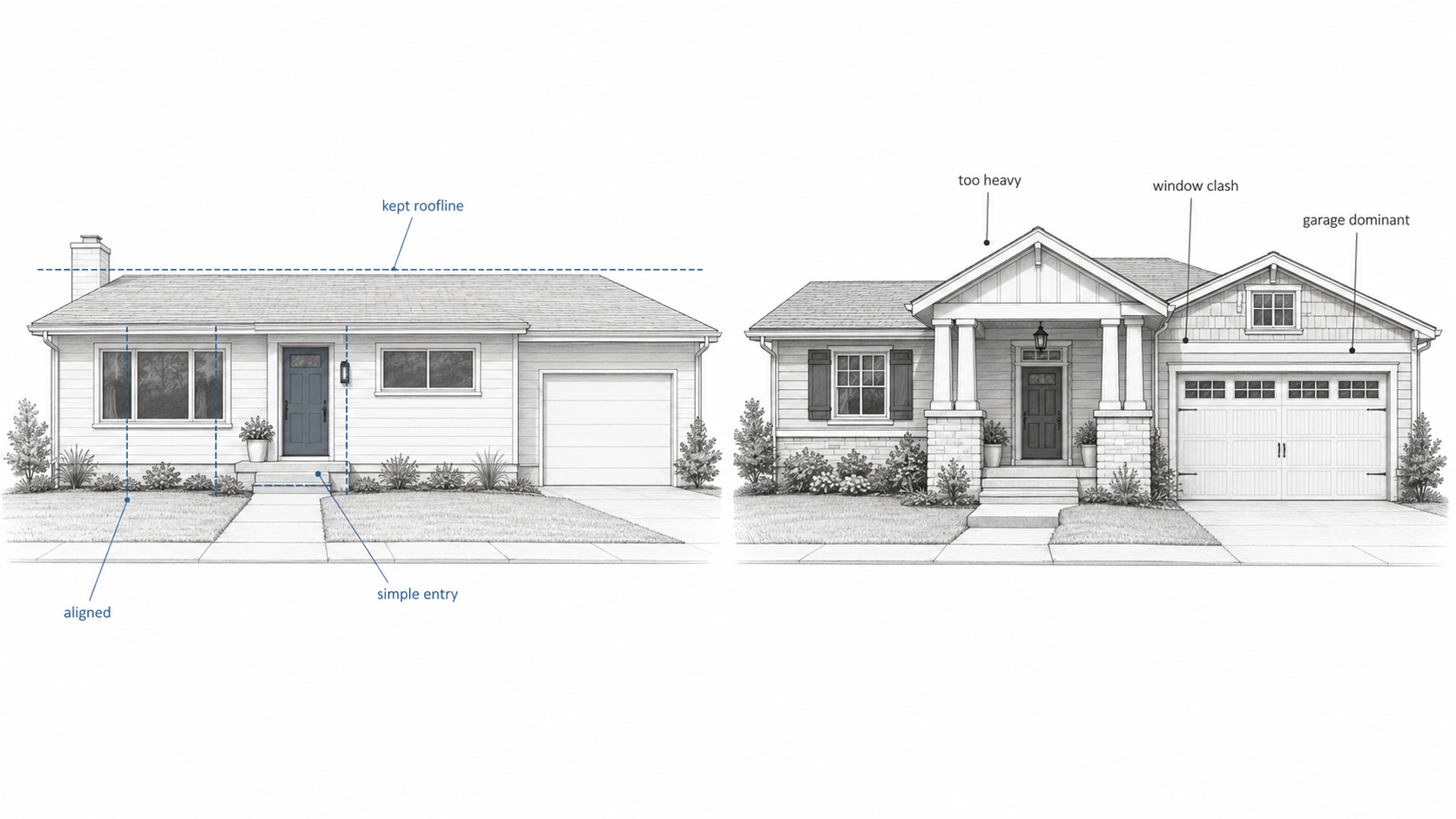
The updates that land respect the house's original logic instead of trying to turn it into a different decade. If the exterior is the main problem, use modern upgrades for 1960s home exteriors before you choose paint, porch details, or replacement windows.
Kitchen and Bath Updates Should Support the House
The kitchen and the bathroom are usually where a 1960s house feels most dated, but they should not be treated as their own little projects. A kitchen wall touches the light, the circulation, the flooring, the ceiling, and the sightlines into the living space. A bathroom change pulls in plumbing, ventilation, subfloor, tile, and daily clearance. Either room can come out looking brand new and still leave the house worse if the layout, the light, and the original proportions got ignored along the way.
Use 1960s kitchen remodel for the kitchen-specific scope, and 1960s bathroom remodel before you choose tile or fixtures.
Fast Wins If You Own One
- Run one flooring material across the main level where you can.
- Widen one key opening instead of stripping every wall out.
- Keep the ceiling line calm.
- Upgrade the large sliders and windows without losing the original proportions.
- Let the backyard connection do its job again.
- Fix the light at the stair landings and split-level entries.
None of those moves are flashy. That is exactly why they work — they make the house more like itself instead of like something it was never meant to be.
FAQ
What styles were common in 1960s houses?
Ranch houses, split-level homes, chalet-style houses, and mid-century modern homes were some of the clearest 1960s types.
Are 1960s houses worth renovating?
Yes, when the layout, light, and massing are still intact. Many have strong bones and respond well to careful upgrades.
How do you modernize a 1960s house without ruining it?
Upgrade insulation, systems, windows, kitchens, and baths, but keep the glass, the flow, the roofline, and the relationship to the yard.
Are 1960s houses energy efficient?
Not by current standards. Many need better insulation, tighter windows, and mechanical updates — but those changes should be made without wrecking the house's proportions.
What is the biggest mistake in a 1960s remodel?
Breaking the house's original lines and flow with a clumsy addition, weak replacement windows, or too much borrowed style language.
Read This Next
- 1960s House Renovation if you are moving from style research into actual remodeling decisions.
- 1960s Ranch House Remodel if the house is a long, low ranch and the entry, garage, or exterior feels dated.
- 1960s Decorating Style if your next question is more about interiors than architecture.
- Modern Upgrades for 1960s Home Exteriors if you are fixing the outside and need to know what helps versus what hurts.
- 1950s House Styles if you want to see what the decade before this one was still carrying forward.
- 1970s House Style if you want to follow the shift into the next decade.