

A 1960s room goes bad when everything shouts.
Orange wall. Shag rug. Globe light. Plastic chair. Busy wallpaper. Do all of it at once and the room starts looking like a set.
Most good 1960s rooms were calmer than that.
One strong color. A low sofa. Warm wood. A clean lamp. Pattern in one place, not everywhere. Enough open floor so people can sit, talk, and move around.
Start with the room: windows, floor, fireplace, built-ins, ceiling height, and traffic path. Then add the 1960s pieces.
The Room Should Not Look Like a Costume
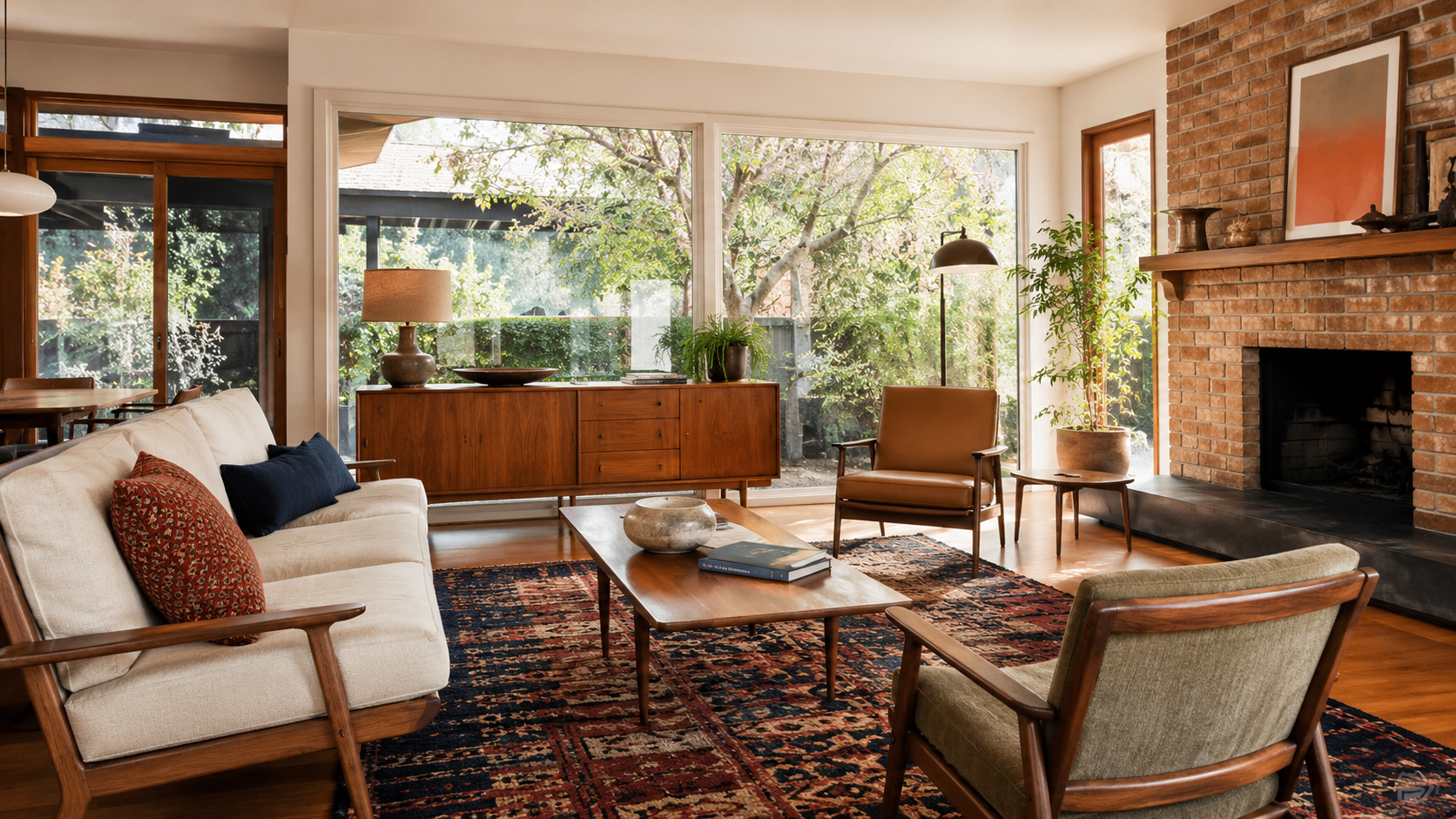
1960s decorating style works best when warm wood, color, pattern, lighting, and furniture scale support the room instead of turning it into a retro set. Image by ArchitectureCourses.org.
The fake 1960s look usually comes from stacking too many period signals at once.
One orange chair can work. Orange chair, orange wall, orange rug, orange lamp, fake retro sign, plastic table, and three clashing patterns usually does not. The room stops feeling designed and starts feeling labeled.
The livable version is quieter. It uses one strong color, one warm wood tone, one real pattern, one or two good lamps, and enough plain surface to let those pieces breathe.
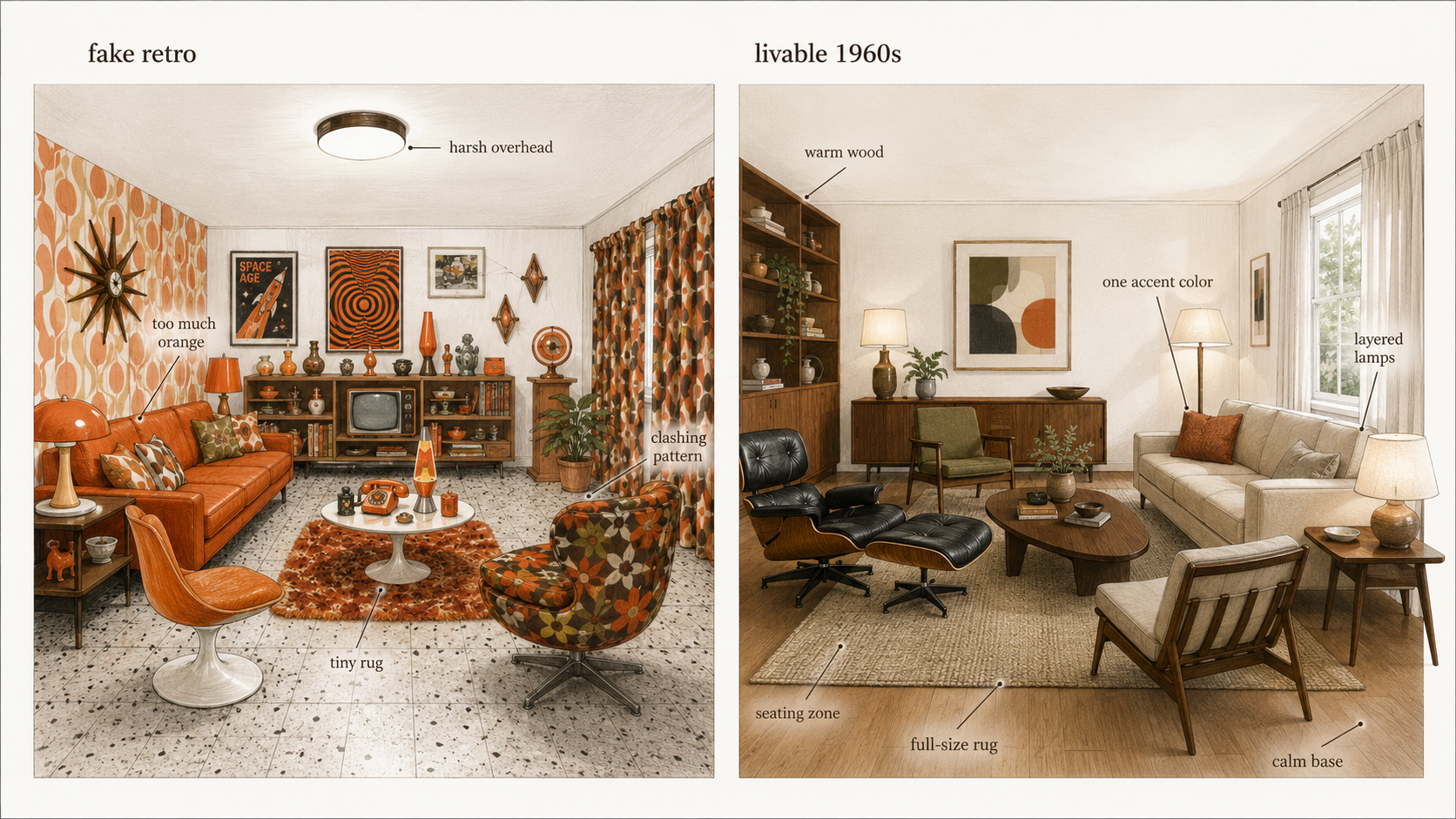
The fake 1960s look usually comes from stacking too many retro signals at once, while the livable version uses color, scale, pattern, lighting, and materials in the right order. Illustration by ArchitectureCourses.org.
A good 1960s room should make a visitor feel the decade before they can name every object in it.
What 1960s Decorating Style Looks Like
1960s decorating style sits between two different moods.
Early in the decade, many rooms still carried 1950s restraint: cleaner lines, lighter woods, modest upholstery, compact furniture, and softer colors. By the later 1960s, interiors got stronger. Color deepened. Pattern got bigger. Furniture became lower, heavier, rounder, or more sculptural. Lighting became part of the room instead of just a ceiling fixture.
That mix is why 1960s interior design style can look calm in one house and bold in another.
| Element | Common 1960s Look | What Goes Wrong Today |
|---|---|---|
| Color | Avocado, gold, orange, brown, cream, olive, teal, rust | Using every color at once |
| Furniture | Low sofas, wood case goods, tapered legs, sculptural chairs | Buying novelty pieces that do not fit the room |
| Materials | Wood, brick, stone, vinyl, laminate, glass, chrome, brass, textured fabric | Mixing too many shiny replacements |
| Pattern | Geometric prints, florals, stripes, textured wallpaper | Making every surface compete |
| Lighting | Globes, pendants, shaded lamps, swag lights, wall lights | Relying on one overhead fixture |
The room should not feel like a costume. It should feel like the decade’s best ideas were cleaned up and given room to breathe.
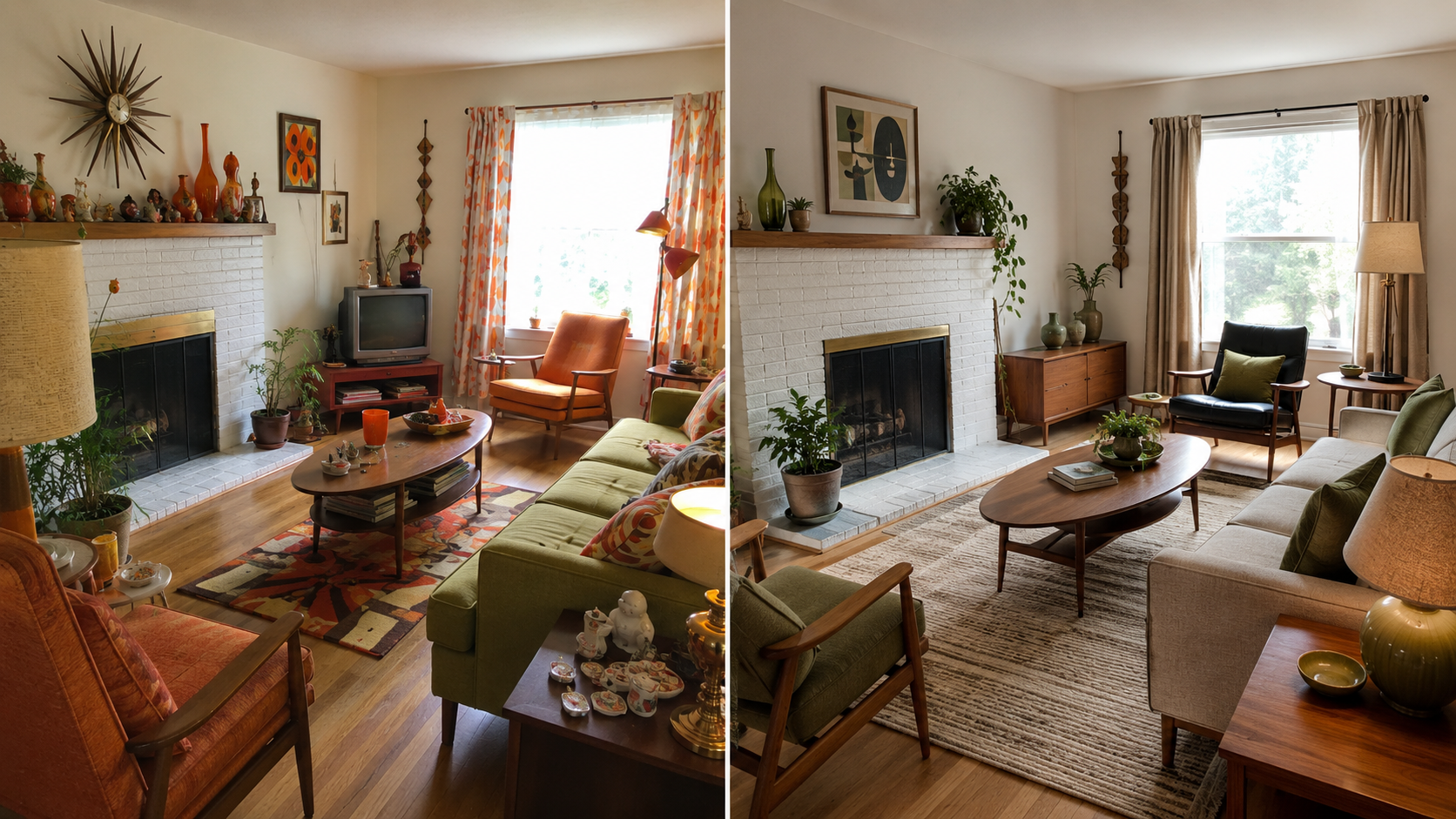
A livable 1960s room usually works better with a calm base, warm wood, one strong accent, and a properly scaled seating area than with every surface shouting retro at once. Image by ArchitectureCourses.org.
The Color Palette Has to Be Controlled
Color is the fastest way to make a room feel 1960s.
It is also the fastest way to ruin it.
A strong 1960s palette usually works when it has one dominant base, one warm accent, and one grounding material. That may mean cream walls, walnut furniture, and orange textiles. Or olive upholstery, warm wood, and brass lighting. Or white walls, teak furniture, and a mustard rug.
Three strong color decisions in one small living room is usually enough. Four or five starts to feel like a theme restaurant.
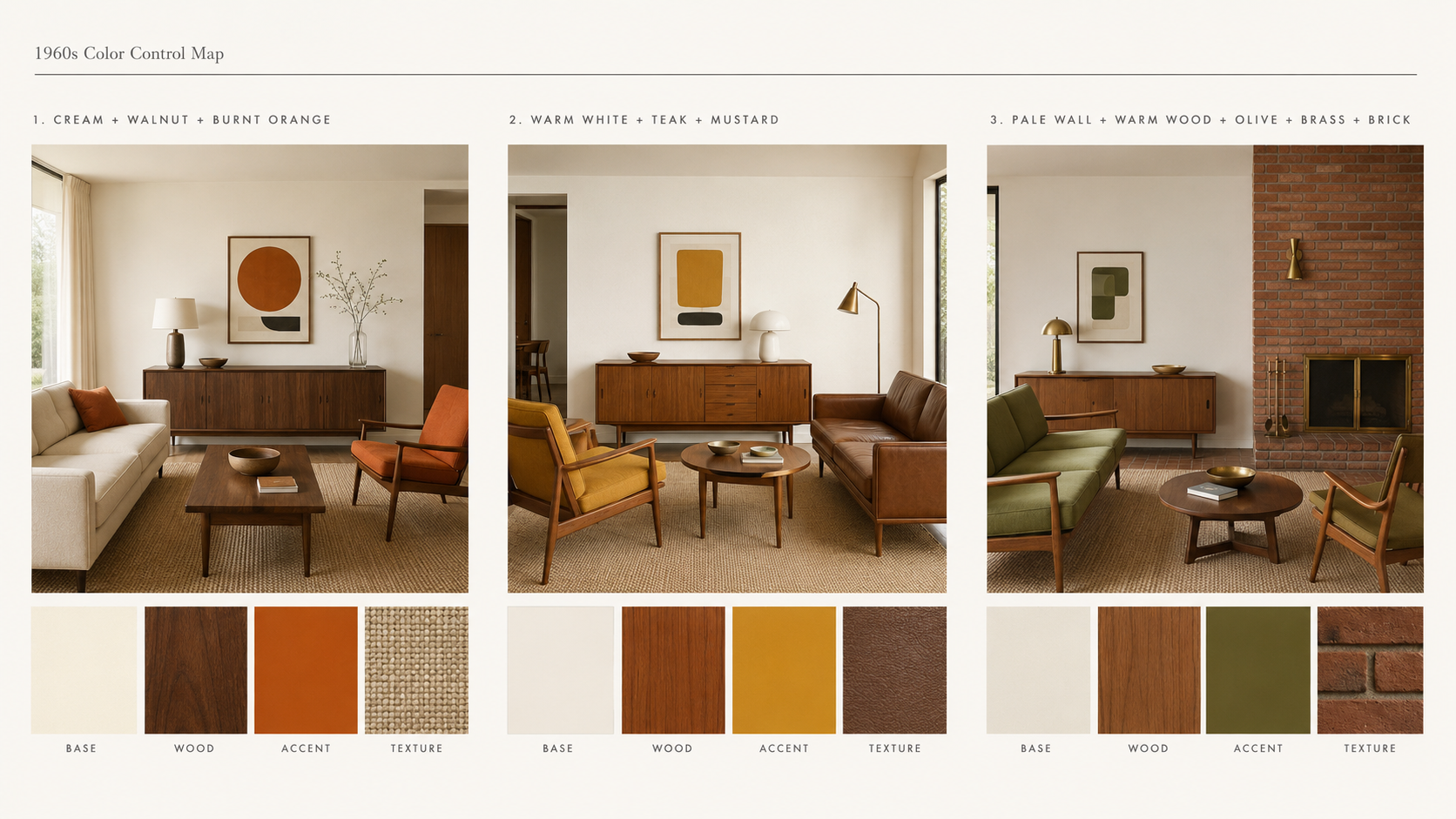
A 1960s color palette works better when one base color, one wood tone, one strong accent, and one quiet texture do the work instead of every surface competing. Illustration by ArchitectureCourses.org.
| Palette Type | Good Use | Use Carefully |
|---|---|---|
| Warm 1960s | Cream, walnut, rust, burnt orange | Too much orange on walls and upholstery |
| Earthy 1960s | Olive, tan, brown, brass, brick | Dark rooms with no contrast |
| Bright 1960s | White, teal, yellow, chrome, graphic art | Plastic-looking finishes and flat lighting |
| Modern 60s Decor | White walls, wood, one bold chair or rug | Rooms that become too plain to read as 1960s |
If the room already has brick, wood paneling, terrazzo, tile, or a strong fireplace, count that as part of the palette. Existing materials are not neutral just because they are old.
Furniture Should Sit Low, Not Small
1960s style living room furniture often sits lower than traditional furniture.
That does not mean every piece should be tiny. A good 1960s living room usually has broad, grounded furniture: a low sofa, lounge chair, wood coffee table, long credenza, or simple side tables with clean legs.
The mistake is filling the room with small retro pieces that all have the same tapered-leg silhouette. One sofa, one chair, one credenza, and one good lamp can say more than eight little mid-century pieces fighting each other.
Keep the seating usable. A sofa seat height around 16 to 18 inches can still be comfortable for many people. Go too low and the room may look stylish but punish knees every day.
Wood matters too. Walnut, teak, oak, and warm-stained birch can all work, but they should not all compete in the same room. Pick one main wood tone, then let the rest support it.
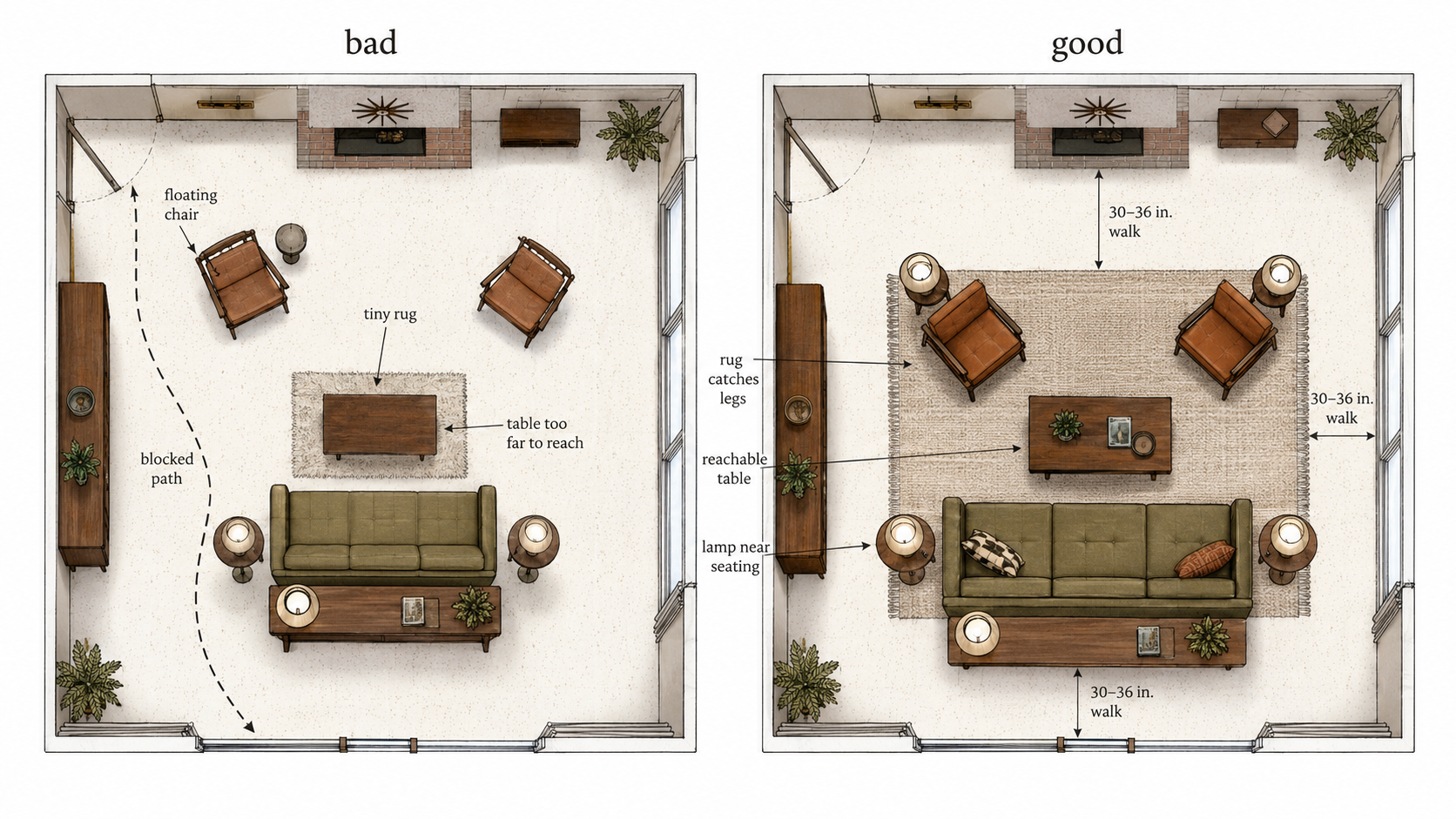
1960s living room furniture works when the sofa, chair, table, rug, lamps, and walkways are scaled together instead of scattered as separate retro pieces. Illustration by ArchitectureCourses.org.
1960s Living Room Decor Starts With the Conversation Area
A 1960s living room should not be arranged only for the TV.
The best rooms from the decade usually make a conversation area first. Sofa, chairs, table, lamp, fireplace, window, and art all work together. The TV can exist, but it should not control every wall unless that is how the household really lives.
Start with the largest fixed feature. In many houses that is the fireplace, a broad window, built-ins, or a long uninterrupted wall. Then place the sofa so the room has a clear sitting zone. A walkway should usually stay around 30 to 36 inches where people pass through the room.
That one measurement changes the design. If a coffee table, lounge chair, or media cabinet blocks the route, the room may look good in a photo and fail every evening.
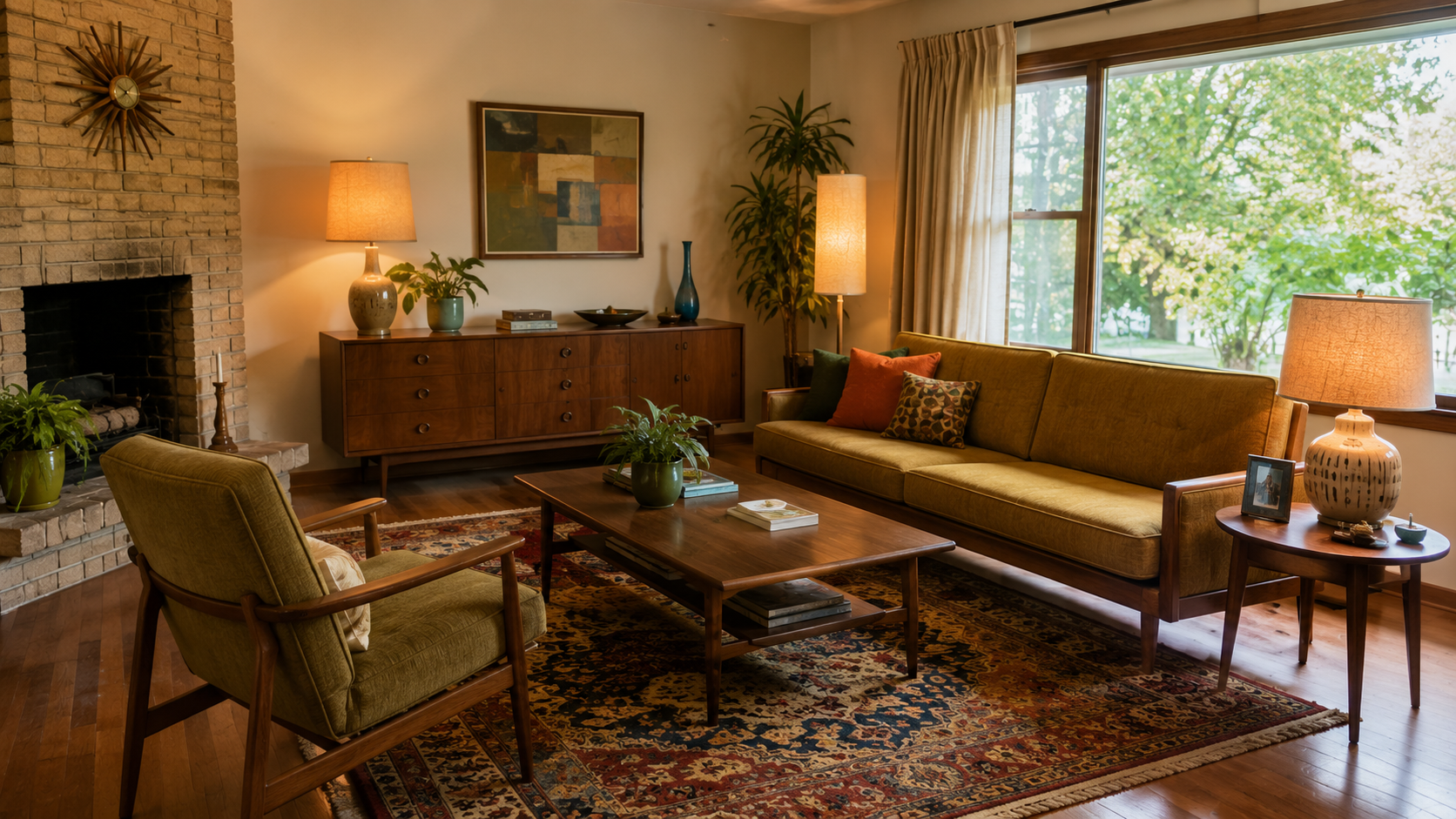
A 1960s living room works better when the sofa, chair, coffee table, rug, lamps, and window light create a real conversation area instead of a TV-dominated layout. Image by ArchitectureCourses.org.
For 1960s living room decor, use one major period move:
- A strong sofa color with quieter walls and wood furniture.
- A patterned rug with calmer upholstery.
- A sculptural lamp with simpler furniture.
- A long credenza under art, books, or a low media setup.
Do not use all four at full volume in the same small room.
Pattern Should Have a Job
Pattern was not shy in the 1960s.
Geometric prints, large florals, stripes, textured wallpaper, abstract art, and graphic rugs all fit the decade. The question is where the pattern belongs.
A patterned rug can hold a seating area together. Wallpaper can make a dining nook or entry feel intentional. A bold chair can wake up a quiet room. Curtains can soften large glass.
Pattern goes wrong when it appears everywhere at the same scale. Large rug, large wallpaper, large pillows, large art, and strong drapery can flatten the room into visual noise.
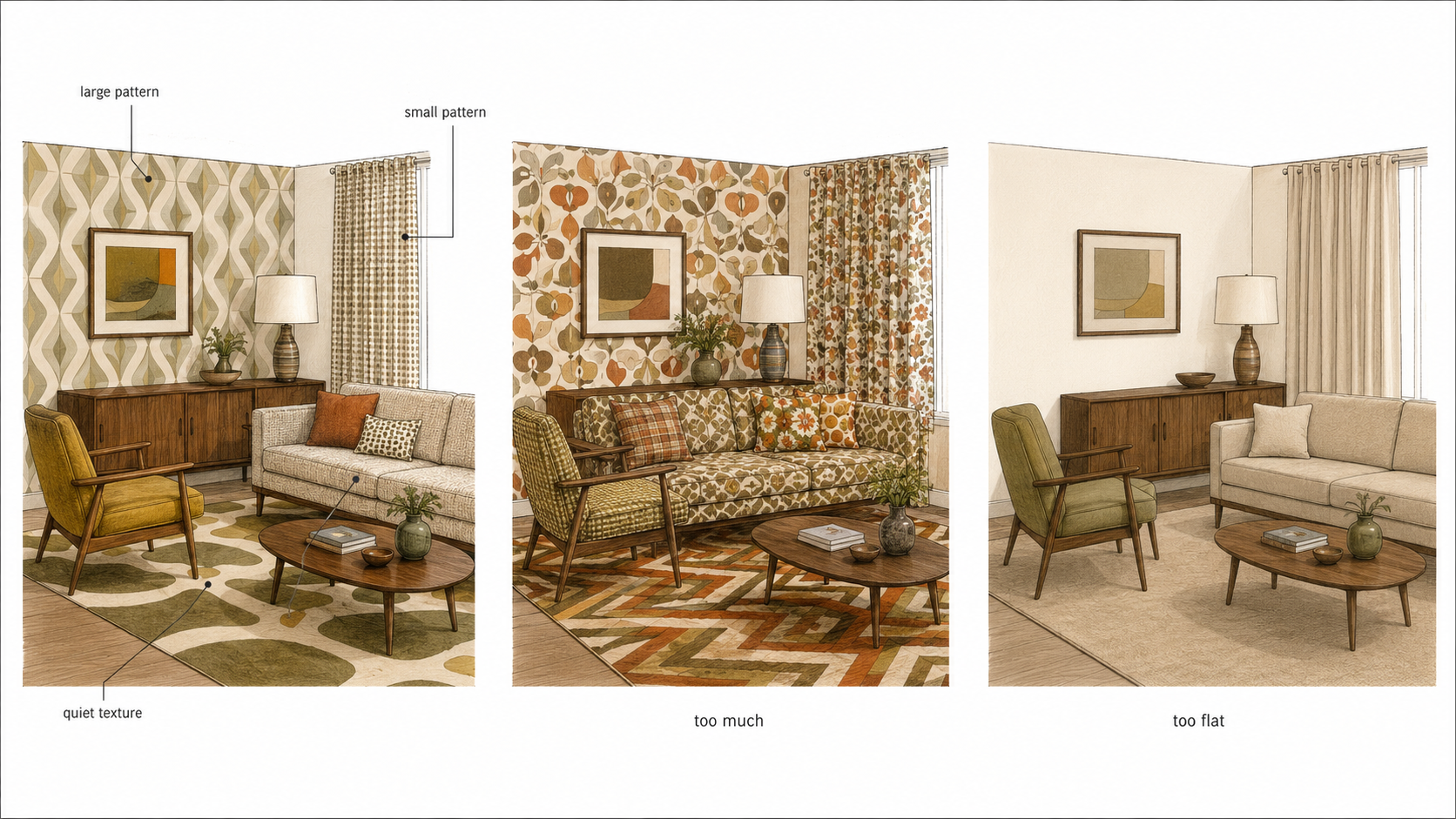
1960s patterns work best when one large pattern, one small pattern, and one quiet texture are balanced instead of putting every surface at full volume. Illustration by ArchitectureCourses.org.
Use one large pattern, one small pattern, and one quiet texture. That is usually enough.
Lighting Makes the Style Believable
Bad lighting makes 1960s decor look fake.
Many rooms from this era need layered light: a ceiling fixture or pendant, one or two table lamps, a floor lamp, and sometimes a wall light. The lamps matter because 1960s interiors often used lower furniture and warmer materials. One cold overhead fixture can make the whole room feel dead.
Globe pendants, drum shades, ceramic lamps, brass lamps, smoked glass, and simple wall lights can all work. The trick is not to make every fixture a statement.
If the room has an old brick fireplace, wood paneling, or warm upholstery, use lighting that makes those materials look alive at night. A room can look perfect in daylight and fail after 7 p.m. if all the shadows fall in the wrong places.
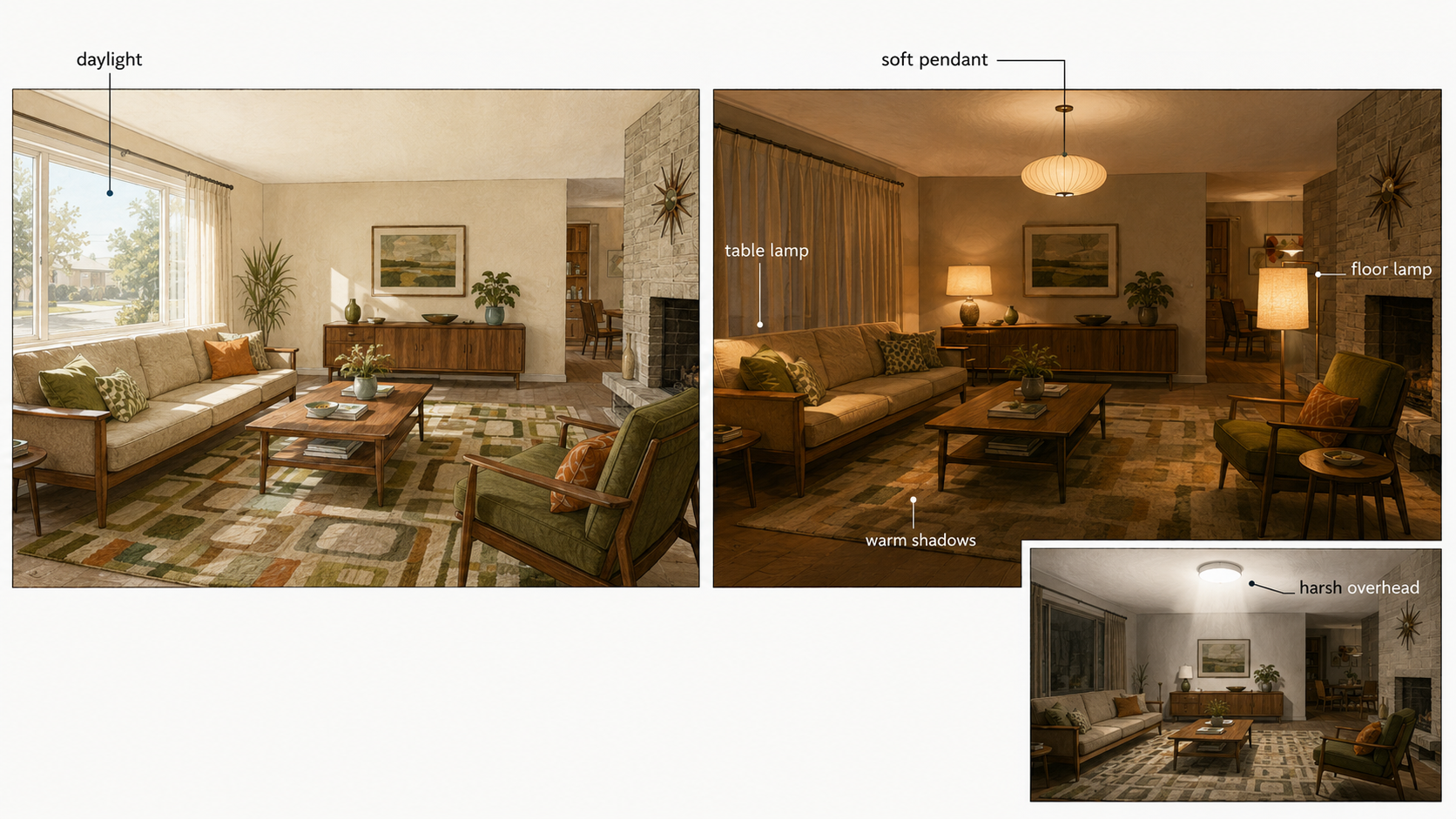
1960s decorating fails fast under one harsh overhead light; the room needs daylight, task light, table lamps, floor lamps, and warm evening shadows. Illustration by ArchitectureCourses.org.
Materials Give the Room Its Weight
1960s interiors were not only about color. They had texture.
Wood case goods, brick fireplaces, stone floors, vinyl tile, ceramic lamps, grasscloth, woven shades, textured upholstery, chrome legs, brass hardware, laminate counters, and glass tables all show up in different versions of the decade.
The best modern version keeps some material weight. If everything becomes white drywall, pale flooring, flat cabinets, and thin black metal, the room may look current but lose the 1960s thread.
Keep one or two original materials when they are sound. A brick fireplace, wood built-in, vintage tile, or good cabinet box can anchor the room. Replace the weak parts around it.
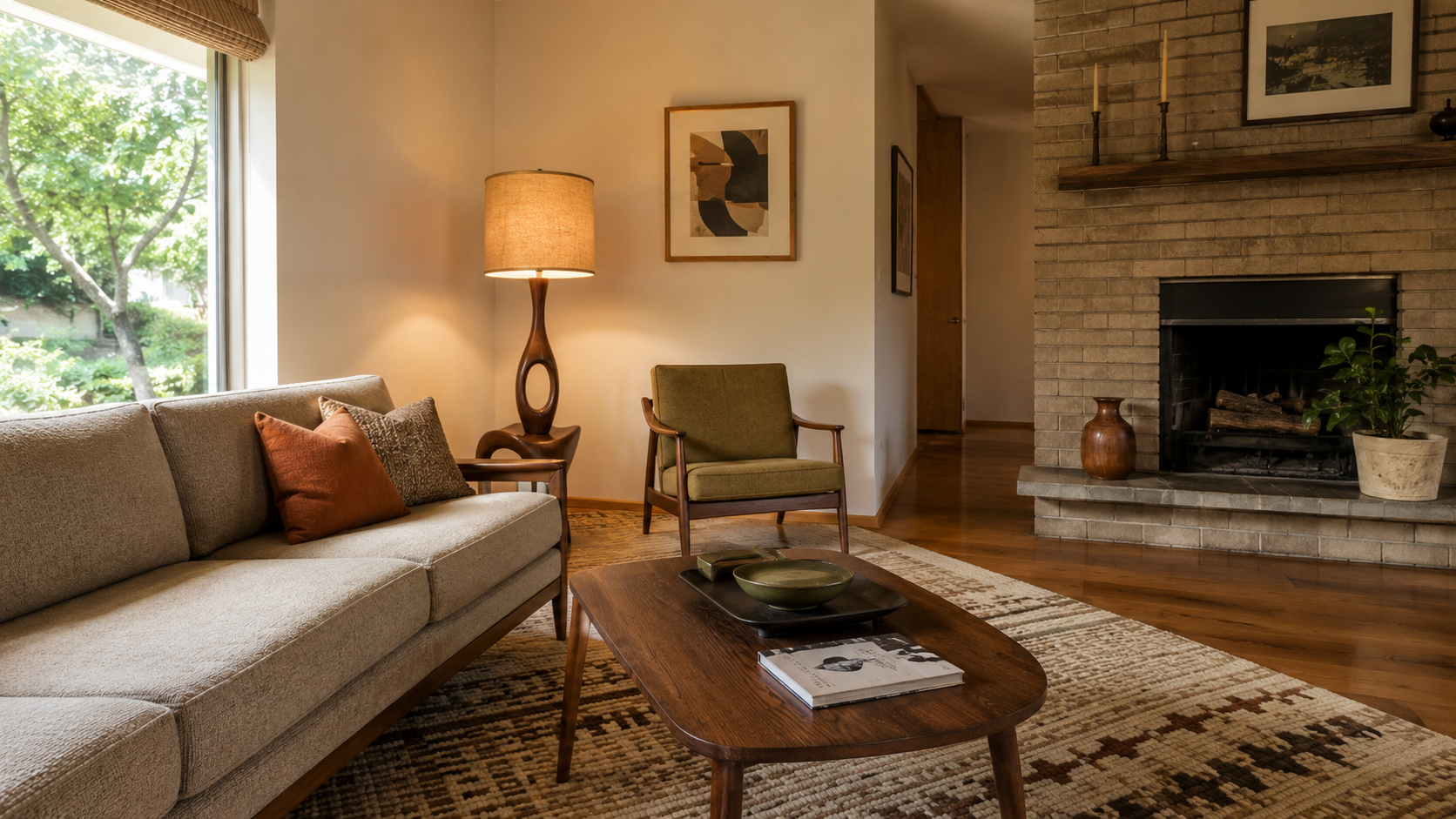
A good 1960s living room feels warm, scaled, and livable, with wood furniture, one strong accent color, a patterned rug, and an architectural feature like a brick fireplace doing the work instead of retro clutter. Image by ArchitectureCourses.org.
That is where a 1960s house can save money and look better at the same time.
The Part That Makes 60s Decor Look Fake
The fake look usually comes from scale, not color.
A tiny orange chair in a large room. A too-small rug floating under a big sofa. A pendant hung too high. A console table that looks like a prop. A wallpaper pattern that ignores the door trim, window height, or ceiling line.
Those details make a room feel staged even when every individual piece is 1960s.
Use the room’s real measurements first. Sofa length, window width, fireplace size, ceiling height, walkway clearance, lamp height, and rug size matter more than the label on the furniture.
A living room rug should usually be large enough to catch at least the front legs of the main seating pieces. A pendant over a dining table should usually sit low enough to light the table, not the ceiling. A credenza should relate to the wall width, not just the TV size.
That is the difference between 1960s decorating style and a pile of retro objects.
How to Use 1960s Style Home Decor Today
The cleanest modern 60s decor keeps the bones simple.
Use calmer walls if the furniture or rug is bold. Use stronger wall color if the furniture is quiet. Let wood carry warmth. Let one pattern do the heavy work. Keep lighting warm. Avoid novelty pieces unless the room can absorb them.
A modern room can still read as 1960s with only a few moves:
- A low sofa with clean arms.
- A warm wood coffee table or credenza.
- One bold textile in rust, olive, mustard, teal, or orange.
- A globe, drum, ceramic, brass, or smoked-glass lamp.
That is enough for many rooms. The rest can stay current and quiet.
Why Some 1960s Rooms Stay in Memory
The rooms people remember usually have warmth before novelty.
A brick fireplace. A low wood table. A lamp that throws good evening light. A chair with one strong color. A rug that makes the seating area feel settled. Books, plants, ceramics, and small signs of use.
Those details matter because 1960s decorating can become flat when it is treated only as a shopping list. The best version has atmosphere.
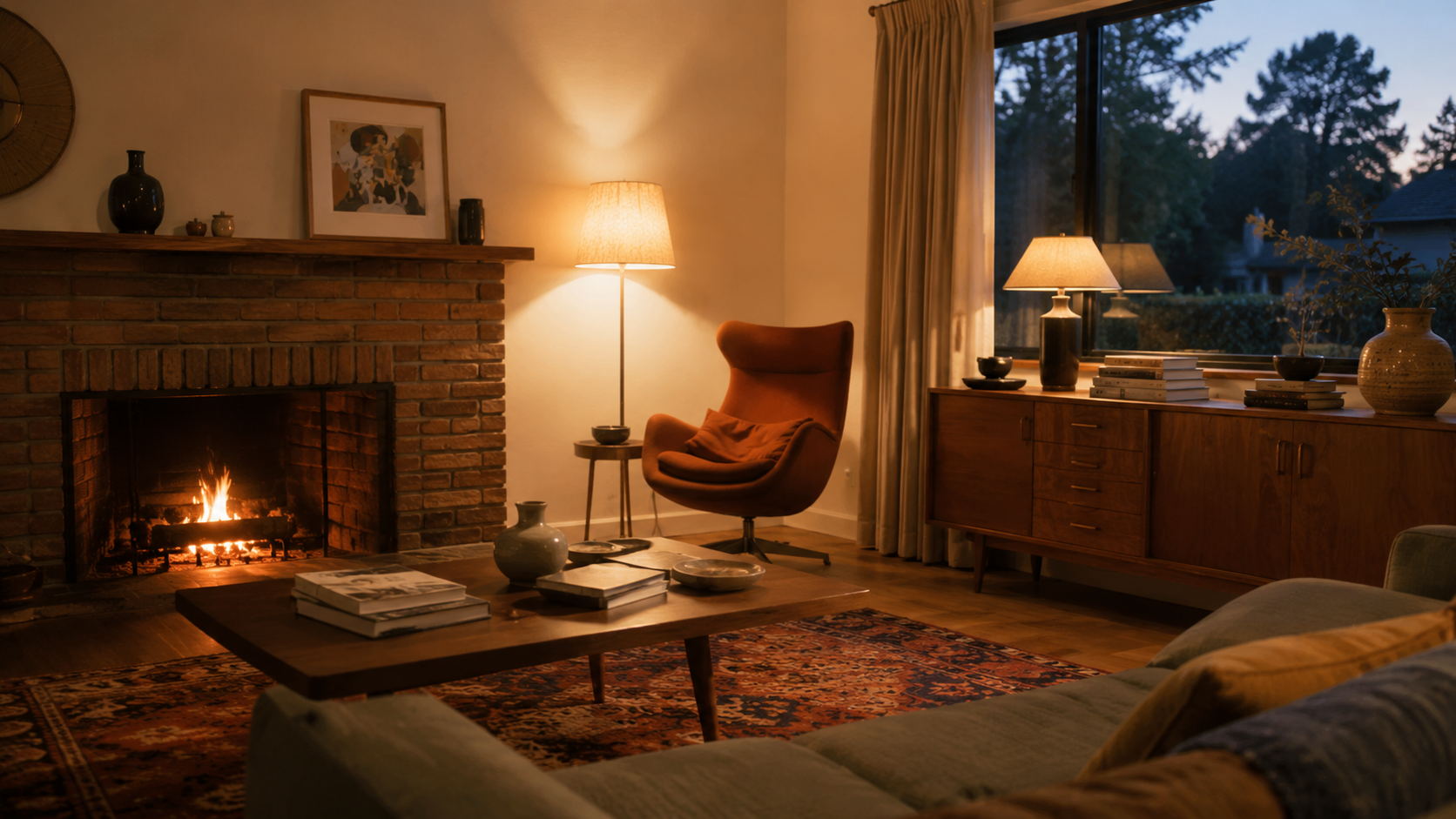
Some 1960s rooms are remembered less for exact furniture pieces than for the warmth of brick, wood, lamp light, and a layout that felt calm and lived in. Image by ArchitectureCourses.org.
That is the version to copy: not the loudest room, but the room that still feels good after dinner when the lamps are on.
What to Keep From an Original 1960s Interior
Do not tear everything out because it looks old.
Some original 1960s interiors have useful pieces hiding under tired finishes: wood built-ins, brick fireplaces, simple stair railings, original tile, flat-panel cabinet doors, long windows, pocket doors, ceiling beams, and room proportions that still work.
Keep the pieces that support the room.
Remove or repair what fails: worn carpet, damaged paneling, poor lighting, unsafe wiring, bad ventilation, stained ceilings, broken tile, swollen cabinets, failing floors, or finishes that trap the room in darkness.
For the architecture side of the decade, use 1960s house style. If you are moving from decorating into remodeling, use 1960s house renovation before demolition starts.
Kitchen and Dining Rooms Need Restraint
A 1960s kitchen can carry style, but the room has to work first.
Warm wood cabinets, laminate counters, colored appliances, patterned flooring, pendant lights, and banquette seating can all belong to the period. But kitchens punish bad nostalgia faster than living rooms do.
A cabinet that looks charming but has a bad box, poor clearance, weak ventilation, or failing plumbing is not worth saving for style alone. A new kitchen that ignores the house’s lines can look just as wrong.
For a kitchen, start with cabinet condition, appliance clearances, light, ventilation, flooring transitions, and the connection to dining or family space. Then decide how much 1960s color, wood, or pattern the room can handle.
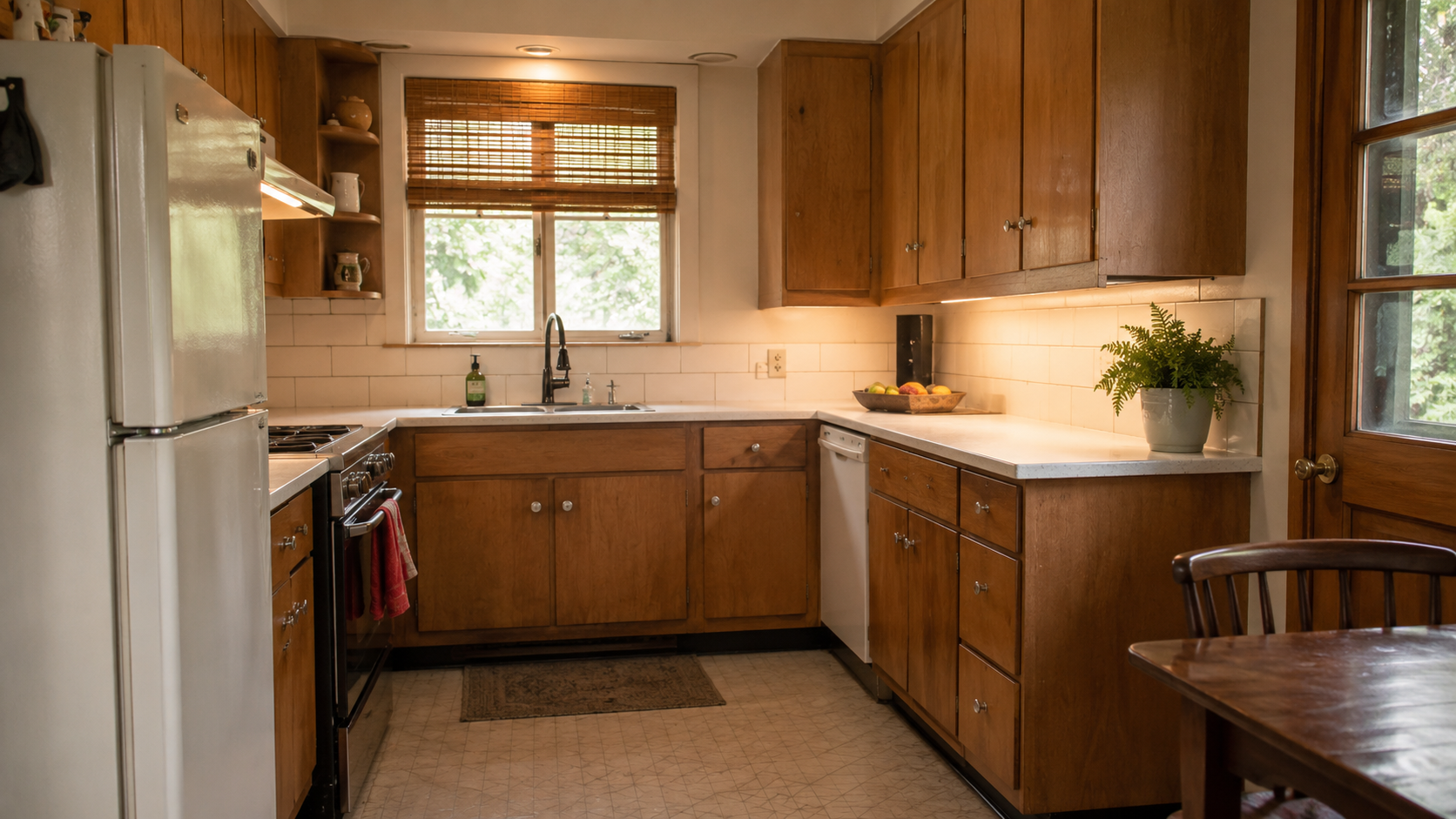
Original 1960s kitchen cabinets can still work when the boxes are solid, the layout is usable, and smaller updates improve light, hardware, and daily function. Image by ArchitectureCourses.org.
For kitchen-specific scope, use 1960s kitchen remodel.
Bedrooms Should Be Quieter
Bedrooms can use 1960s style, but they usually need a softer hand.
A walnut dresser, low bed, simple lamps, warm rug, textured curtains, or one patterned textile can carry the decade without making the room feel busy. Strong orange, avocado, or mustard walls can work in some rooms, but they change the light fast.
Use the window direction as the control. A north-facing bedroom can feel heavy with brown and olive. A bright south-facing room can handle warmer color better. A small bedroom may need the 1960s feeling in furniture and lamps, not on every wall.
Bathrooms Can Keep Color Without Feeling Dated
1960s bathrooms often had colored tile, compact vanities, wall-mounted medicine cabinets, chrome, pastel fixtures, or stronger floor patterns.
Some of that is worth keeping if the tile is sound, the walls are dry, the ventilation works, and the room layout still functions. Color alone is not the problem. Moisture, poor fan performance, bad clearances, and failing grout are the problems.
If the tile is solid and the room works, modern lighting, a better fan, cleaner caulk, updated hardware, and a simpler wall color may be enough. If the wall is soft, the floor is damaged, or the plumbing is failing, the room is no longer a decorating project.
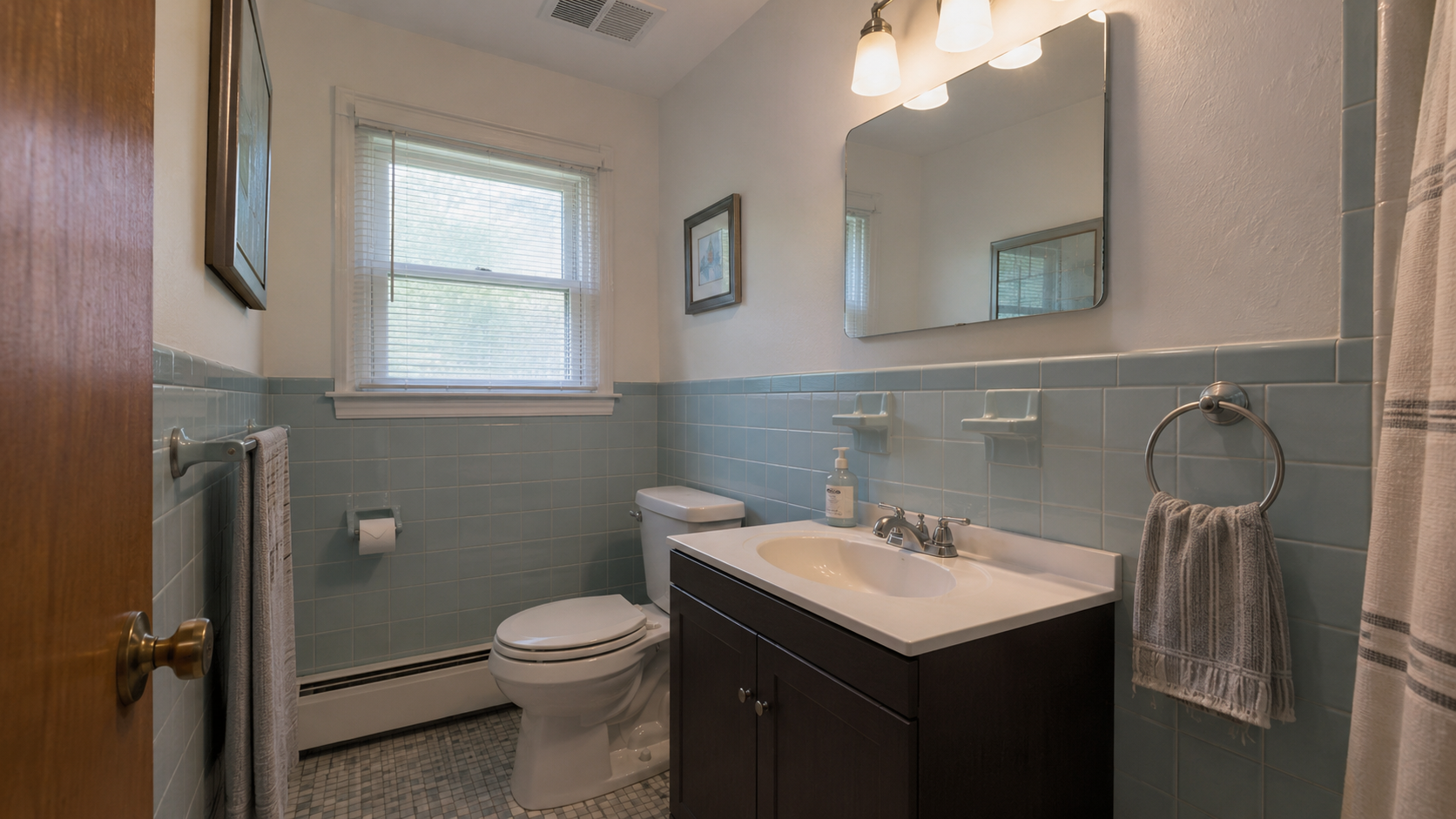
Original 1960s bathroom tile can sometimes stay when it is sound, dry, clean, and the room still works with a modest refresh. Image by ArchitectureCourses.org.
For the remodel side, use 1960s bathroom remodel.
What to Avoid
- Too much orange. Orange works better as an accent than as the whole room.
- Too many tapered legs. Mix leggy furniture with one grounded piece so the room does not feel nervous.
- Small rugs. A small rug makes 1960s furniture look like props.
- Cold lighting. Warm materials need layered light, not one harsh overhead fixture.
- Fake retro signs. The room should feel lived in, not labeled.
- Copying only the loudest rooms. Many good 1960s interiors were warm, practical, and restrained.
Common Questions
What is 1960s decorating style?
1960s decorating style uses warm wood, bold color, low furniture, patterned textiles, graphic art, textured materials, and stronger lighting. The best version feels comfortable and useful, not like a retro stage set.
What colors were popular in 1960s home decor?
Common colors included avocado, olive, mustard, gold, rust, orange, brown, cream, teal, white, and warm wood tones. The safest modern approach is to use one strong 1960s color with quieter walls and materials.
What is 1960s living room decor?
It usually means a conversation-focused room with a low sofa, lounge chair, warm wood table or credenza, patterned rug or textile, layered lamps, and one strong color or material move.
How do I make modern 60s decor without making the room look fake?
Use one or two period signals: a wood credenza, low sofa, globe lamp, patterned rug, or warm accent color. Keep the rest of the room simple and correctly scaled.
What furniture fits a 1960s style living room?
Low sofas, lounge chairs, wood coffee tables, long credenzas, simple side tables, sculptural lamps, and clean-lined upholstered chairs all fit. Avoid filling the room with too many small retro pieces.
Is 1960s interior design the same as mid-century modern?
No. Mid-century modern is one branch of 1960s design. The decade also included ranch interiors, split-level family rooms, bold color, heavier textures, paneling, patterned wallpaper, and more casual suburban decorating.
What to Read Next
For the architecture behind the decorating, read 1960s house style.
If the decorating project is becoming a remodel, start with 1960s house renovation.
For kitchen work, use 1960s kitchen remodel. For bathrooms, use 1960s bathroom remodel.