
Architecture Design Sustainability: 7 Types That Matter
Types of Sustainability in Architecture Design: Key Approaches
Sustainability in architecture is not an add on. It is what makes a building last without draining money, health, or the environment.
There are seven main types that matter: energy, water, materials, resilience, comfort, social impact, and economy. Below we break down each, show where it works, and point to real moves you can apply.
Sustainable Architecture Types: The 7 You Need to Know
Sustainability in architecture is not one method. It is a set of moves that tackle different pressures: carbon, cost, comfort, culture, resilience, and waste. The strongest projects mix them, but each has its own weight.
Environmental sustainability
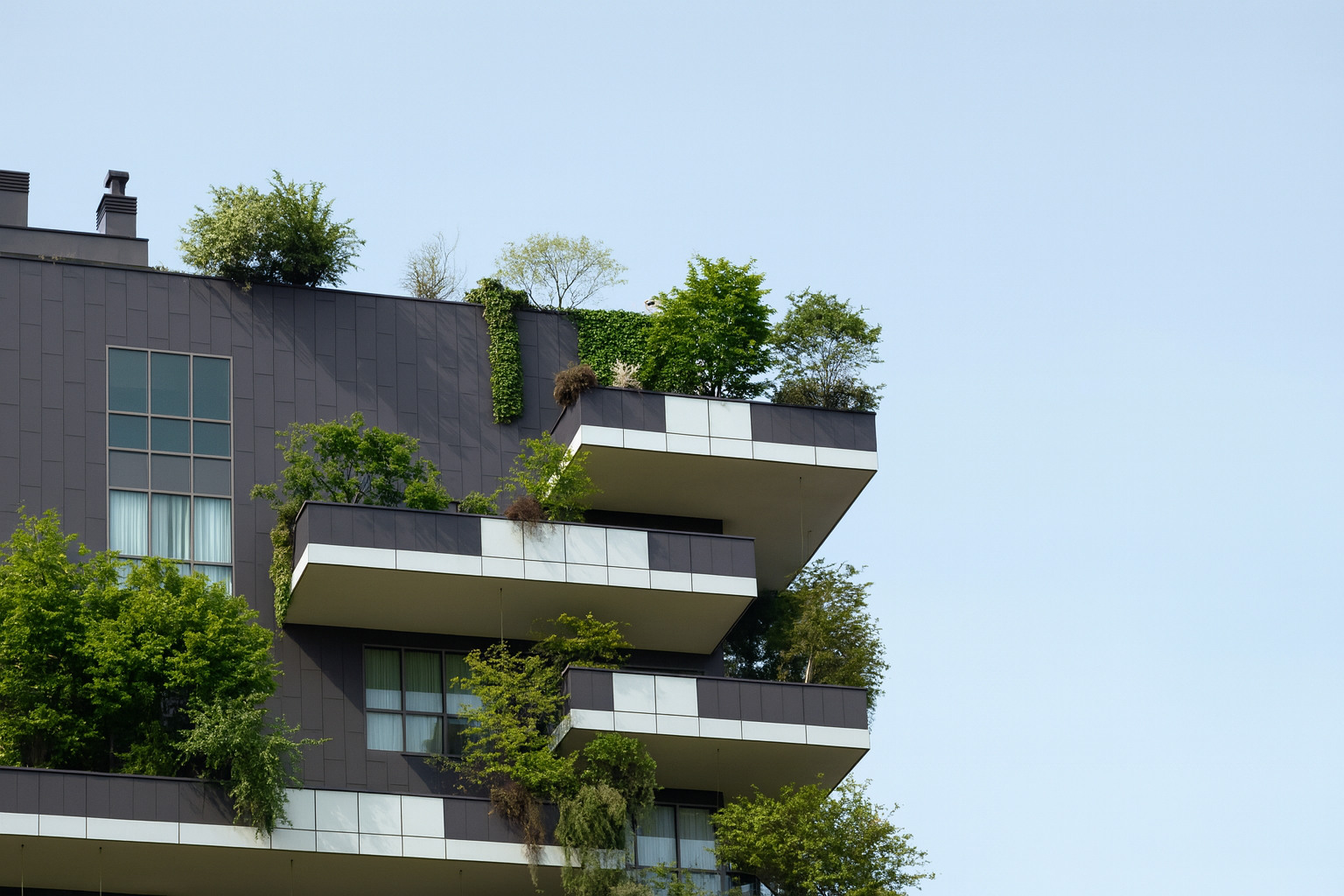
Start with the envelope. Reduce loads before you buy machines. Cross ventilation, orientation, shading, insulation. Choose timber, hempcrete, or recycled brick to shrink embodied energy. The Bosco Verticale in Milan stacked 900 trees on its towers, reducing heat gain and filtering city air. With buildings producing nearly 40 percent of global emissions, this is the front line.
→ Ask yourself: would your building still perform if the solar panels disappeared tomorrow? If not, you have not designed sustainably.
Economic sustainability

Money decides whether sustainable design survives or dies in real markets. Use materials that last decades, shrink mechanical systems so utility bills fall, and allow layouts to adapt. The Edge in Amsterdam uses 70 percent less energy than peers, and it is also one of the city’s most valuable office properties.
→ A quiet truth: most green projects that failed financially were overdesigned. The right number is the sustainable number.
Social sustainability
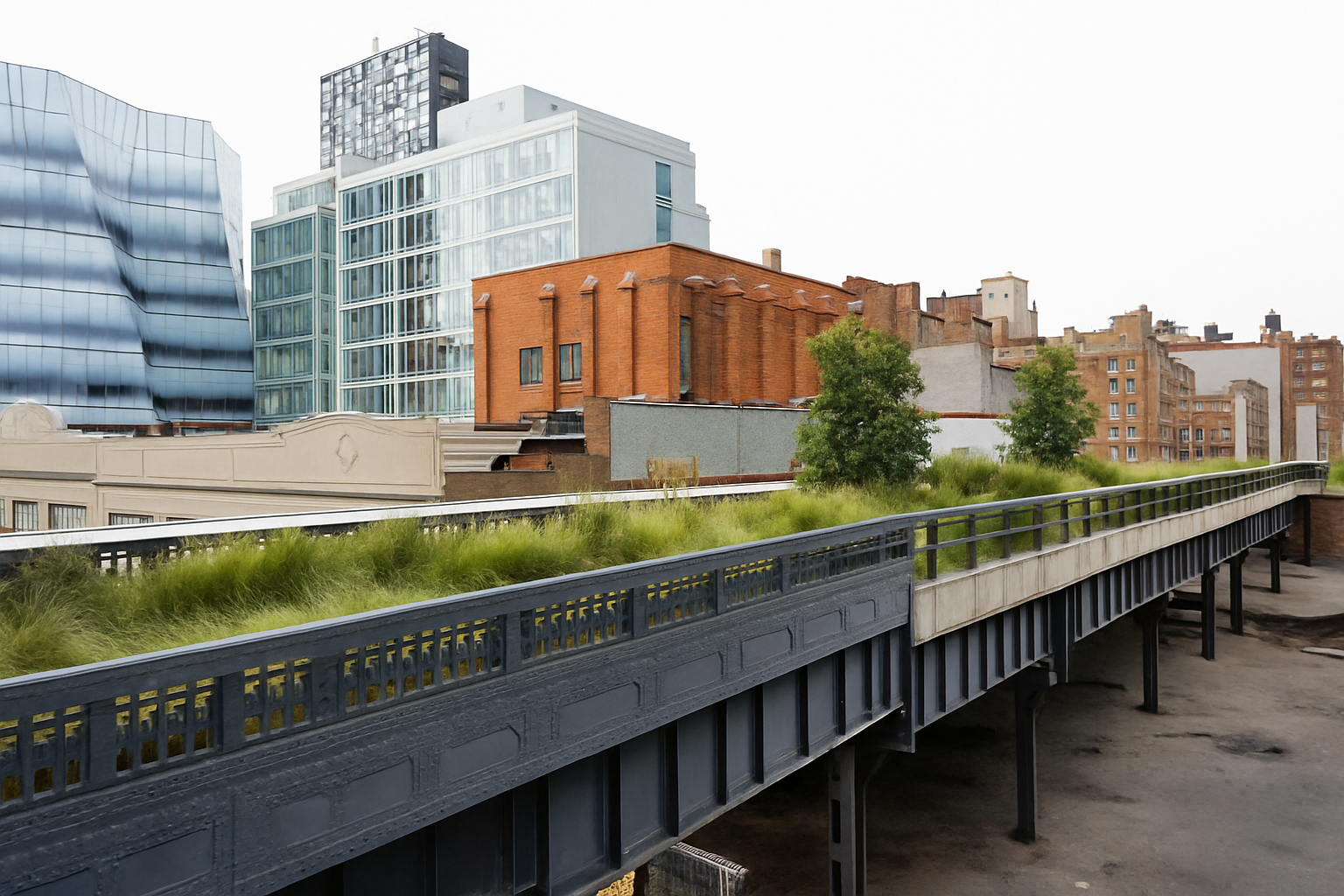
People live inside the result. That means daylight, clean air, steady temperatures, and spaces that invite contact. Parkroyal on Pickering in Singapore drapes greenery across half its site, cutting noise and filtering air in the city core. These are not luxuries. They are the conditions of health.
→ If you doubt it, look at tenant surveys. Complaints about glare, drafts, and noise outrank energy savings every time.
Technological sustainability
Smart systems can make lean design work harder. Automated controls trim loads. 3D printing cuts waste. Self healing concrete adds decades of life without patching. Dubai’s 3D printed office cut construction waste by 60 percent and went up in weeks.
→ The risk: gadgets become gimmicks if not tuned. Half of smart buildings burn more energy because nobody maintains the software.
See also: Methods of Sustainable Construction: What Works, What Wastes Money
Cultural and historical sustainability
Tear down less. Reuse more. Conversions and adaptive reuse save materials and preserve identity. Dutch shipyards turned into cultural districts show how industrial memory can become civic space. If sustainability erases culture, it is incomplete.
→ Walk through Amsterdam’s Eastern Docklands today. Lofts, studios, and parks now sit where cranes once did. That is carbon saved and history carried forward.
Resilience
Climate change means more floods, more shocks, more extremes. Resilient design is about flexibility: raised buildings, flexible frames, absorbent landscapes. The Netherlands built whole neighborhoods on floating platforms. They are not utopia. They are insurance.
→ In New York, insurers already discount properties below FEMA flood elevations. Resilience is not only survival. It is market value.
Circular design
Design for disassembly. Think of the building as a temporary assembly of parts, not a permanent monolith. Amsterdam’s Circl Building can be dismantled with nearly all materials reused. That is zero waste in practice.
→ The uncomfortable question: would your building still be worth something if it were taken apart tomorrow?
You might like: Sustainable Architecture 101: The Basics You Need
How Cities Are Actually Doing It: A Quick World Tour
Below is how real places are pushing the seven sustainability types in practice. Short, concrete, and usable. If you want me to dig deeper on any city, say the word.
New York
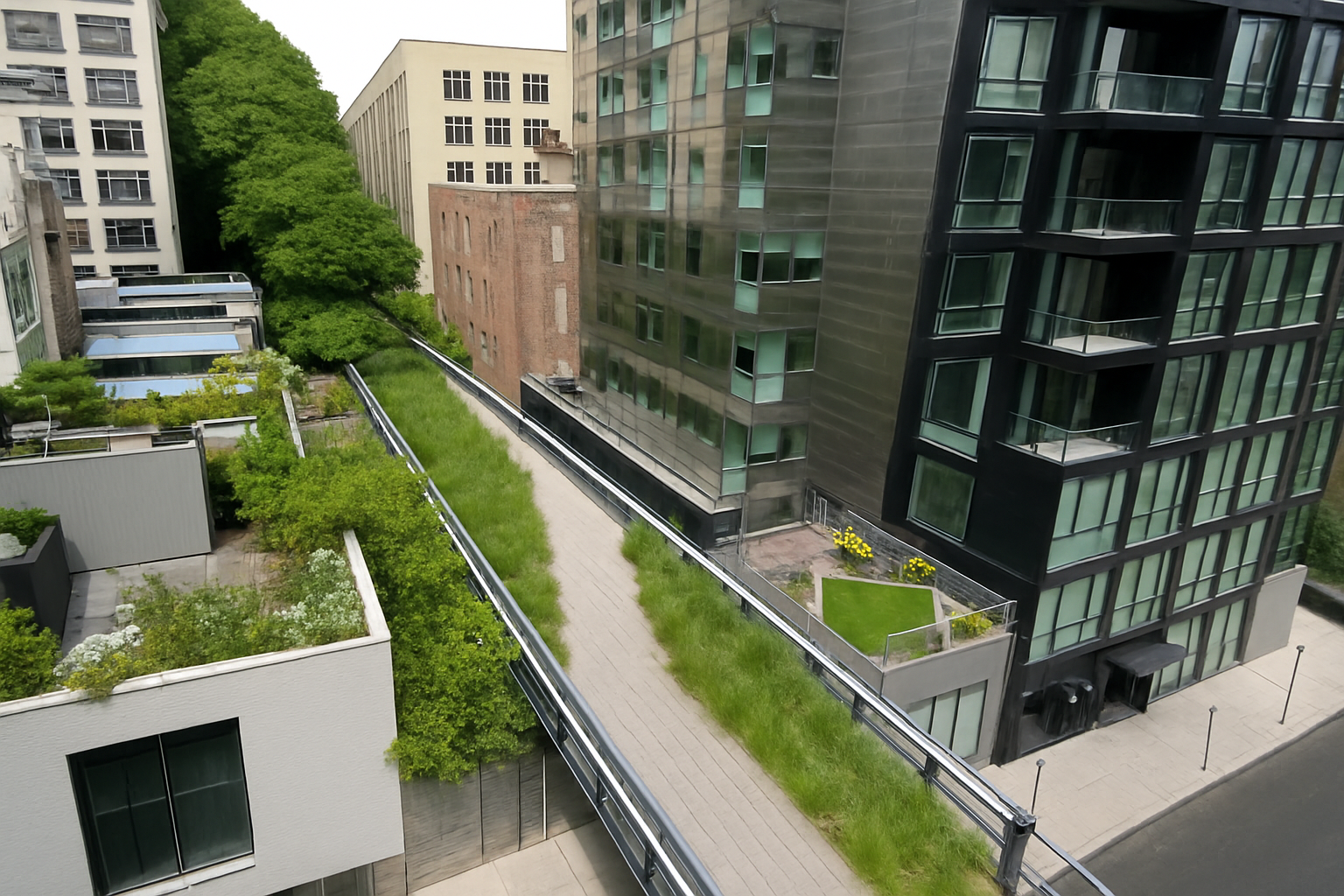
Envelope and electrification are getting forced into projects by law. Local Law 97 sets lifetime carbon caps for big buildings. Local Law 154 steers new work away from on-site combustion. Teams respond with tighter shells, heat pumps, and solar or green roof zones on every workable roof. The interesting shift is financial. Owners are folding PACE into the capital stack so envelope and HVAC upgrades pencil instead of getting cut.
Sustainability types in play: environmental, economic, resilience, circular through roof reuse and retrofits.
Amsterdam
The city treats circularity as a design brief. You see it in buildings designed to come apart, in recycled brick facades, and in neighborhood-scale pilots like floating housing that rises with water. Adaptive reuse is everywhere, from shipyards turned public districts to banks that rebuilt with material passports so components can be reclaimed later.
Sustainability types in play: circular, resilience, cultural, environmental.
Copenhagen
District heating is the quiet powerhouse. Most buildings plug into a shared low-carbon heat backbone, which lets architects focus on envelope and daylight while the city cleans the energy mix. Public space doubles as stormwater storage, and new precincts are laid out so walking and biking beat the car by default.
Sustainability types in play: environmental, resilience, social, economic.
Singapore
Towers carry greenery because it earns its keep. Facades and sky gardens cut heat, cool air around occupied zones, and soften noise at street level. Public housing blocks lean on cross-ventilation, deep shade, and connected parks so comfort is not only mechanical.
Sustainability types in play: environmental, social, technological where controls run the systems.
Rotterdam
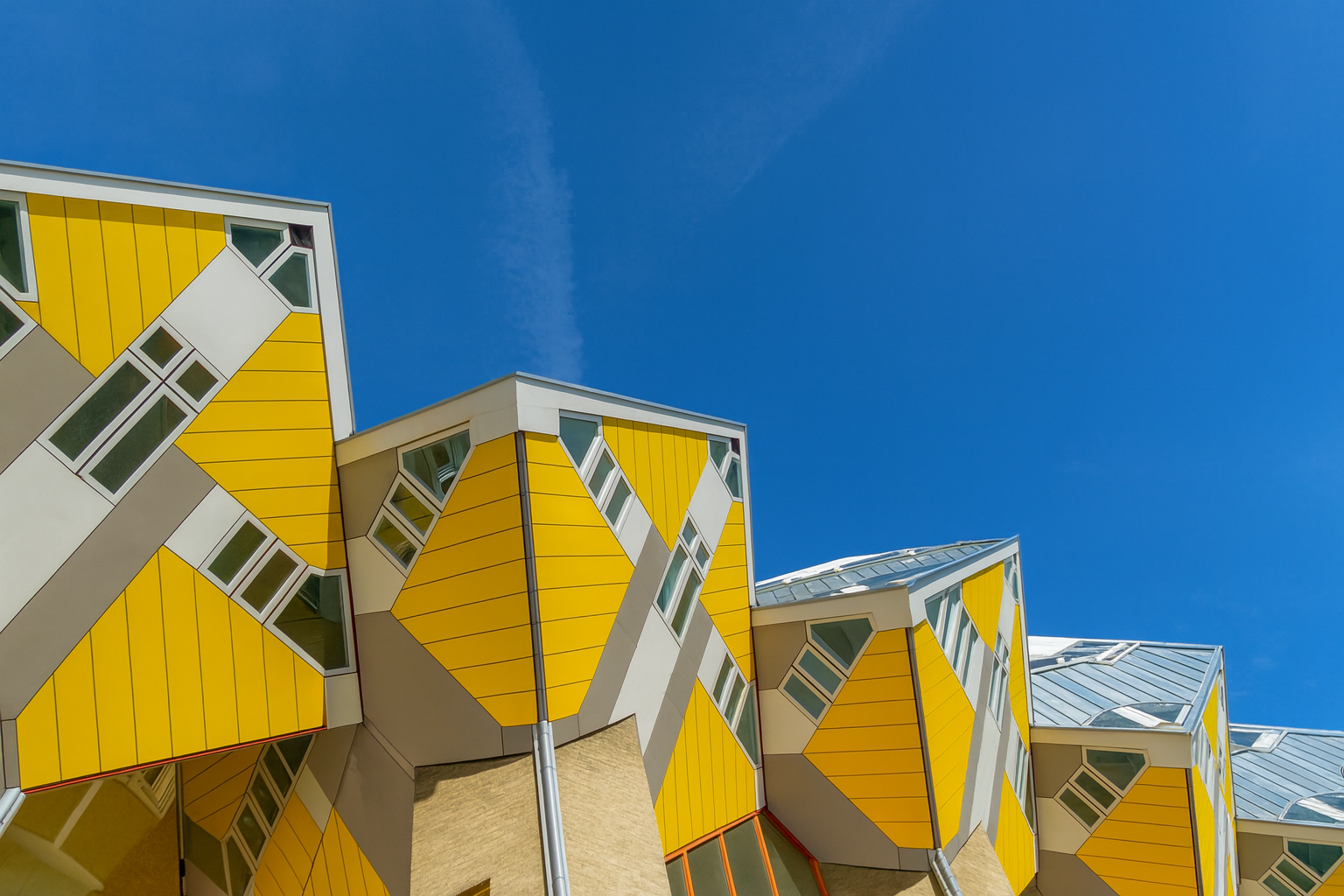
This is the water lab. Plazas hold kids most days and stormwater during cloudbursts. You can stand on a quay and watch floating buildings ride the tide. Industrial roofs carry farms and PV. The lesson is practical. Treat flood control, public space, and energy as one design problem.
Sustainability types in play: resilience, environmental, social, circular through reuse of old docks.
London
Planning forces carbon math early. Major projects must show operational energy, whole-life carbon, and a credible retrofit path. On the ground you see lean envelopes, mixed-mode ventilation, and serious embodied-carbon swaps like timber and recycled steel. Public agencies now ask for post-occupancy data instead of just design intent.
Sustainability types in play: environmental, economic, circular, technological through metering and feedback.
Paris
Code pushes energy and carbon, but the bigger move is urban form. Streets are being rebalanced for bikes and trees, schoolyards turn into cool islands in summer, and “reinvent” competitions keep steering design teams toward adaptive reuse instead of demolition.
Sustainability types in play: environmental, social, cultural, circular.
Vancouver
Passive House migrated from houses to mid-rise and towers. The city’s zero-emissions rules make heat pumps and good envelopes the default. District energy shows up in new neighborhoods, and wood is used at real scale because the supply chain is local and certified.
Sustainability types in play: environmental, economic, resilience, cultural where timber is regional craft.
Melbourne
Retail and campuses are proving tough standards do not kill budgets. You will find shopping centers running on strict materials lists and solar, offices with serious daylight strategy, and neighborhoods that plan shade, wind, and water before architecture drawings start. The roofscape works. PV where it earns, green build-ups where it does not.
Sustainability types in play: environmental, economic, resilience, circular.
Barcelona
Traffic-calmed superblocks stitched together quiet streets, trees, and local commerce. Schools add shade, water play, and reflectivity to handle heat spikes without turning into sealed boxes. You can feel the social dividend on foot. Less noise. More street life.
Sustainability types in play: social, environmental, resilience.
Oslo
Construction sites run on electricity, not diesel, and municipal fleets went electric fast. That policy pressure cleans the air while projects are built, not only after they open. Buildings lean on high-performance shells and heat pumps because the grid is clean enough to reward the move.
Sustainability types in play: environmental, technological, economic through lower fuel spend.
Tokyo
Big buildings report and trade emissions, which turns energy performance into a budget line. Roof planting is common because it reduces heat islands and tempers peak cooling. Transit and compact blocks keep transport energy down before a single facade is drawn.
Sustainability types in play: economic, environmental, social.
Shenzhen
Transit electrification went first. Buses and taxis switched to batteries, which cut street-level pollution and noise. New districts then lined up building codes around heat pumps, shading, and sun control so the private stock does not undo the public gains.
Sustainability types in play: technological, environmental, social.
What to copy tomorrow
Pick one city whose constraints match yours. If you fight floods, study Rotterdam’s dual-use public space. If your market is retrofit-heavy, borrow London’s whole-life carbon playbook. If policy is your lever, use New York’s approach and tie design to a numeric target with a financing path. The pattern is consistent. Lower the loads with form and fabric. Electrify the rest. Make roofs and streets carry more than one job. Keep what already exists working longer.
In Focus: The Hidden Problem of Fake Sustainability in Architecture
Sustainability sells. Clients want it, cities demand it, and architects promote it. The problem is that many projects wearing the green label barely cut their impact. That is greenwashing: design that looks eco friendly in renderings but fails in real performance.
The all glass tower that brags about its solar panels but bleeds energy through uninsulated facades. The luxury condo with a token patch of roof planting that gets photographed but never maintained. Or the office that wins a certification by swapping light bulbs while still running oversized chillers and boilers.
One common example is the so called sustainable high rise built out of concrete and glass. Both are some of the most carbon heavy materials on the planet. Adding PV panels or a rainwater tank on top does not erase the footprint.
How to avoid it
Check the basics first. Is the envelope efficient? Are loads reduced before renewables are added? Were materials sourced and detailed with reuse in mind? Certifications can help, but numbers on lifecycle performance matter more than plaques.
A real green building is not about add ons. It starts with less energy, less waste, and a shell that does the work. If those pieces are missing, you are looking at a sales pitch, not sustainability.
Why Some “Sustainable” Buildings Make Things Worse
Not every eco friendly project is doing the planet a favor. In some cases, the design choices actually raise emissions instead of lowering them.
Glass towers in hot climates are a classic trap. Even with efficient glazing, they need huge cooling loads year round. Or take the so called green material shipped across oceans, like bamboo flooring in Europe that carries more carbon in transport than it saves on site. Another mistake is tearing down a perfectly usable building to replace it with a net zero one. Demolition burns more energy and creates more waste than retrofitting ever would.
A lot of glass skyscrapers in the Middle East are marketed as sustainable. They pass certification checklists, but their cooling demand wipes out most of the claimed benefits.
How to do it right
Lean on passive cooling and shading before you spec a bigger chiller. Source local timber, stone, or recycled brick instead of chasing exotic green materials. And always ask if an old structure can be upgraded instead of replaced. Adaptive reuse beats a brand new eco tower every time.
The bottom line: if a building consumes more energy to keep running than it saves, it does not matter how many solar panels are bolted on. That is not sustainability. That is waste in disguise.
Related: Sustainability in Architecture Design: What’s Changing in 2025?
Sustainable Design Strategies in Architecture
The Real Work Behind the Word “Green”
Sustainability in architecture isn’t just solar panels and buzzwords. It’s the details you don’t see in renderings: insulation tucked behind old radiators, pipes that recycle greywater, roofs that grow wild to cool the city below.
I’ve walked enough projects to know the difference between theory and what holds up in the field. Here’s what actually works.
Start With Energy, Not Form
Too many towers still begin as glass fantasies until the energy model kills them. The lesson: run the numbers first. A tight envelope cuts demand, shrinks equipment, and saves twice. Look at the Empire State retrofit—38 percent less energy just by rethinking glass and systems.
Passive Design Still Wins
Thick walls, courtyards, shading—old tricks remain unbeatable. Modernism forgot them, but climate keeps reminding us. One retrofit in Brooklyn dropped cooling loads by half with just new windows and sealing. Technology mattered less than stopping leaks.
Materials With Real Math
Cross-laminated timber is exciting, but shipping it across oceans wipes out the benefit. Local, reused, or low-carbon materials do the heavy lifting. I’ve seen warehouses reborn with their own salvaged joists—it looked rough, but the carbon stayed locked.
Water Counts Too
One Bryant Park recycles millions of gallons a year through its cooling towers. The Javits Center roof turned into habitat while cutting stormwater runoff. Energy gets headlines, but water is where resilience shows up.
People Use or Break Systems
Smart lighting that teachers tape over. Rainwater tanks that become mosquito farms. If a strategy needs perfect maintenance, it won’t last. The best systems—like the green roof on Javits—work because nature does the maintenance.
Beyond the Building
No design is green if the grid behind it is dirty. New York’s Local Law 97 proves regulation forces change. Compare that with Milan’s Vertical Forest towers—trees on balconies built from vision, not law. Both routes push the culture forward.
Sustainable design isn’t a checklist. It’s trade-offs, details, and systems that outlast renderings. Look under roofs, into basements, at storm drains. That’s where the future is being built.
FAQ
1. What does sustainability in architecture really mean?
It means designing buildings that last, cost less to run, and do less damage to the planet. Not just “green features” bolted on, but a building that works better over its entire life.
2. Is sustainable architecture more expensive?
Upfront, yes—usually 5 to 10 percent more. But the payoff shows in smaller energy bills, less maintenance, and avoided penalties under newer laws. Over time, those savings beat the premium.
3. What’s the biggest mistake architects make with sustainability?
Starting with the look. If you draw a glass box first and try to fix it later with solar panels, you’ve already lost. The envelope should come before the rendering.
4. Which type of sustainability matters most today?
Environmental impact. With buildings driving nearly 40 percent of global emissions, cutting loads and carbon is the front line. Everything else builds on that.
5. Do old buildings have to be torn down to go green?
No. In fact, retrofitting is often greener than rebuilding. Adaptive reuse saves carbon locked in materials. Cities like London and Amsterdam prove that retrofits can outperform new builds.
6. What’s the role of technology—do smart buildings solve everything?
Tech helps, but it’s no silver bullet. A leaky building with sensors is still a leaky building. Smart systems work best when paired with a strong envelope and clear design logic.
7. How are cities actually enforcing sustainability?
Through laws and penalties. New York’s Local Law 97 fines carbon-heavy buildings. Copenhagen uses district heating. Singapore mandates greenery on towers. Cities now set the floor, not just guidelines.
8. What does “circular design” mean in practice?
It means planning for a building’s second life. Think of walls, beams, and finishes as parts that can be taken apart and reused. Amsterdam’s Circl Building is designed to be dismantled with almost zero waste.
9. Can small projects apply the same principles?
Yes. Even a house can tighten its envelope, use local materials, and plan for flexibility. You don’t need a skyscraper budget to design sustainably.
10. What’s the single habit architects and students should build now?
Always ask: what happens 30 years from now? If your design will need gutting or replacement before then, it’s not sustainable. Durability is the hidden test.
Related
- Local Law 97 NYC: What Architects and Building Owners Need to Know
- Methods of Sustainable Construction: What Works, What Wastes Money
- Sustainable Architecture 101: The Basics You Need
- Sustainability in Architecture Design: What’s Changing in 2025?
- NYC Green Architecture: What Architects Are Building for 2030
- Building a Truly Green NYC Apartment: What It Takes in 2025
- Ecofriendly Roofing Guide: Costs, Mistakes, and Real Options That Work
- Biophilic Office Design: Creating Healthier, Happier Workspaces
- Eco-Friendly House Without the Green Guilt
Best Books on Sustainable Architecture
Best Books for Beginners
Sustainable Architecture: Principles, Paradigms, and Case Studies – 8th Edition by James Steele
✔️ The perfect starting point for learning sustainable architecture.
✔️ Covers eco-friendly design principles, material selection, and energy efficiency.
✔️ Includes real-world case studies of green buildings in action.
The New Carbon Architecture: Building to Cool the Climate by Bruce King
✔️ Learn how buildings can absorb more CO₂ than they produce.
✔️ Covers cross-laminated timber (CLT), hempcrete, and bio-based materials.
✔️ Must-read for architects, builders, and sustainability professionals.
Green Building Illustrated by Francis D.K. Ching
✔️ A visually engaging guide to sustainable building principles.
✔️ Explains passive solar heating, energy-efficient designs, and water conservation.
✔️ Easy-to-follow illustrations and practical applications.
Best Books on Energy Efficiency & Net-Zero Design
Designing Climate Solutions: A Policy Guide for Low-Carbon Energy by Hal Harvey
✔️ Explores how buildings can reach net-zero energy consumption.
✔️ Covers solar power, wind energy, and geothermal heating.
✔️ A must-read for urban planners, architects, and sustainability leaders.
The Passivhaus Handbook: A Practical Guide for Ultra-Low Energy Homes by Janet Cotterell
✔️ Step-by-step guide to designing ultra-low energy homes.
✔️ Covers airtight construction, insulation, and ventilation systems.
✔️ Includes case studies of successful Passivhaus projects.
Net Zero Energy Design: A Guide for Commercial Architecture by Thomas Hootman
✔️ Focuses on energy-efficient offices, schools, and public buildings.
✔️ Explains how to integrate renewable energy and lower energy demands.
✔️ Ideal for designers working toward carbon-neutral goals.
Best Books on Sustainable Materials & Circular Economy
Material Revolution 2: New Sustainable and Multi-Purpose Materials by Sascha Peters
✔️ Covers the latest breakthroughs in eco-friendly building materials.
✔️ Discusses biodegradable, self-healing, and recycled construction materials.
✔️ Great resource for architects, engineers, and product designers.
Sustainable Building Essentials – 11-Book Series
✔️ Explores why durability and reusability are critical for sustainable design.
✔️ Challenges common misconceptions about green certifications.
✔️ Covers adaptive reuse, circular economy, and waste reduction.
Systemic Circular Economy Solutions for Fiber Reinforced Composites by Marcello Colledani
✔️ Introduces closed-loop construction and zero-waste building strategies.
✔️ Explains how modular architecture and recycled materials can reduce environmental impact.
✔️ Essential for architects focusing on sustainable and regenerative design.
Best Books on Urban Sustainability & Smart Cities
Walkable City: How Downtown Can Save America, One Step at a Time by Jeff Speck
✔️ Discusses urban planning strategies that reduce car dependence.
✔️ Explains why walkability is a critical factor in sustainable cities.
✔️ Great for architects, city planners, and policymakers.
Smart Cities: Big Data, Civic Hackers, and the Quest for a New Utopia by Anthony Townsend
✔️ Covers how AI, data analytics, and smart grids are reshaping urban sustainability.
✔️ Discusses real-world examples of tech-driven sustainable cities.
✔️ A must-read for anyone interested in the future of urban planning.
Biophilic Cities: Integrating Nature into Urban Design by Timothy Beatley
✔️ Explores how green roofs, urban forests, and natural elements improve city life.
✔️ Discusses the mental health and ecological benefits of biophilic design.
✔️ Packed with real-world case studies from cities worldwide.
Resources
🔹 World Green Building Council – Global policies on sustainable construction.
🔹 International Living Future Institute – Home of the Living Building Challenge.
🔹 U.S. Department of Energy – Building Technologies Office – Research on energy-efficient architecture.
🔹 European Commission – Sustainable Building – EU sustainability policies.
🔹 ArchitectureCourses.org – Free architecture & sustainability courses.