
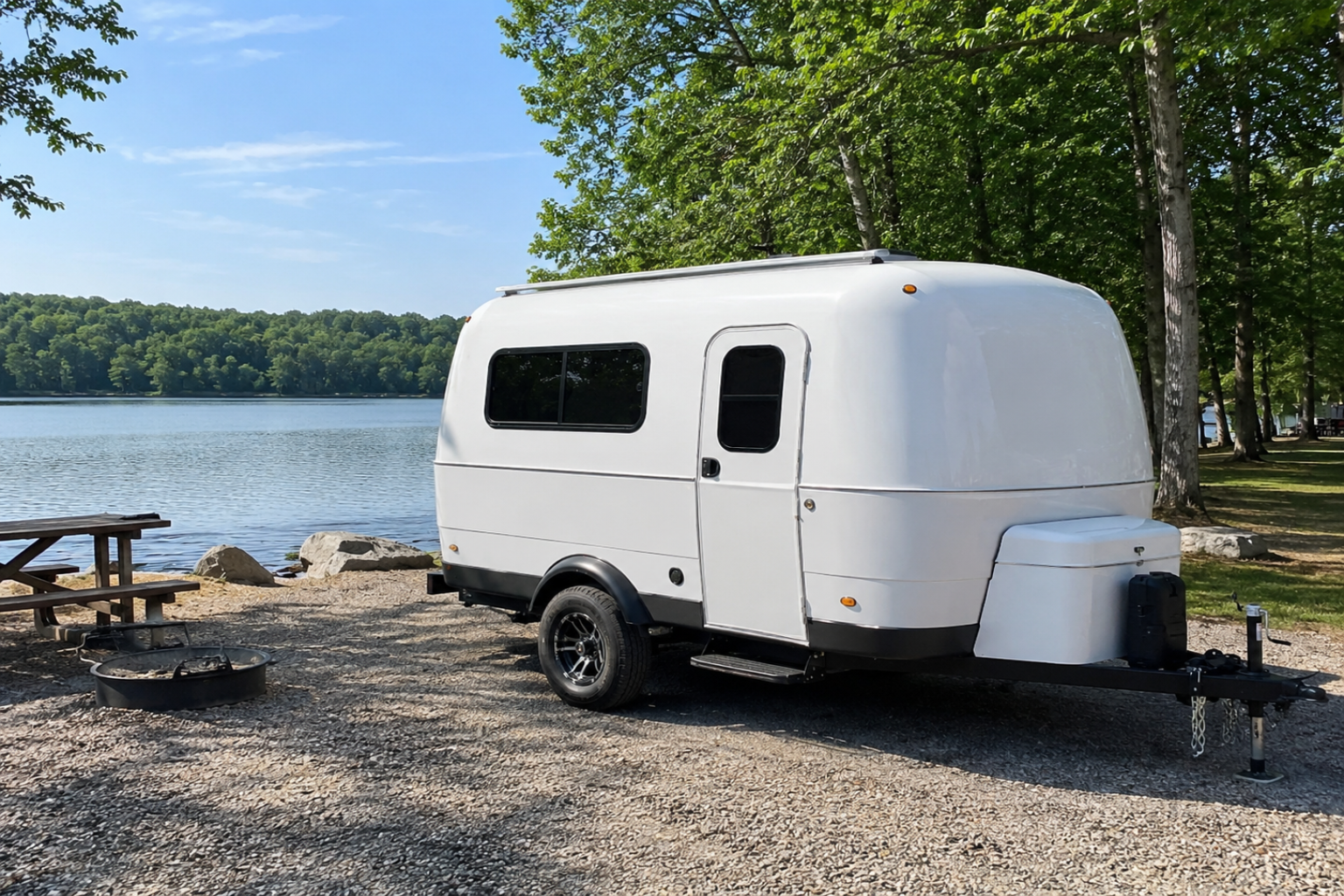
Scamp, Casita, and Oliver are not really three sizes of the same trailer. They are three different buying decisions.
Scamp is the light, simple one. Casita is the middle choice many couples end up comparing everything else against. Oliver is the expensive one that makes more sense if you have the tow vehicle, the money, and the kind of camping that uses the better build.
The right answer is not the brand with the best fan group. It is the trailer that fits your tow vehicle, your bed needs, your bathroom tolerance, your storage habits, and the way you actually camp.
Quick Comparison
| Trailer | Best For | Basic Weight Picture | Main Catch |
|---|---|---|---|
| Scamp | Lower budget, simple camping, lighter tow vehicles | 13, 16, and 19 ft models; lightest of the three brands | Small beds, tight baths, basic interior finish |
| Casita | Couples who want a proven fiberglass trailer without Oliver pricing | 15, 17, and newer 24 ft choices; 17 ft is the classic comparison model | Still narrow inside; tall buyers must test headroom and bed fit |
| Oliver | Higher budget, four-season use, long trips, better systems | Legacy Elite and Legacy Elite II; much heavier than Scamp and Casita | High price, higher tow vehicle demand, more systems to maintain |
The Real Difference Between Scamp, Casita, and Oliver
The easy way to compare these trailers is to line up the lengths and prices. That helps, but it does not tell you what living with one feels like.
A Scamp feels like a small camper first. A Casita feels like a small fiberglass travel trailer with a little more finish and weight. An Oliver feels like a premium compact RV. That sounds obvious, but it matters. A buyer who wants a simple weekend trailer may not enjoy paying for Oliver systems. A buyer who wants long trips, cold-weather comfort, and a more solid cabin may outgrow a basic Scamp fast.
None of them is the automatic winner. The wrong one is the one that asks too much from your vehicle, your body, or your budget.
Scamp: Best If You Want Simple and Light
Scamp makes the most sense when you want to keep the trailer small and the trip simple. The 13 ft model is the lightest way into this group. The 16 ft gives more room without turning into a large trailer. The 19 ft is different because it is a small fifth-wheel, so it needs a different tow setup.
The trade-off is space. The beds are small, the bathroom can be tight, and the finish is not trying to feel fancy. That is not a flaw if you know what you are buying. It becomes a problem only when someone expects a tiny trailer to feel like a small apartment.
What Scamp Does Well
- Lower entry cost than Casita and Oliver in most buyer situations.
- Very light compared with most travel trailers.
- Small enough for simple campsites and easier storage.
- Simple systems, which can mean fewer expensive things to fix.
- Good choice for buyers who want function more than polish.
What You Give Up With Scamp
- The interior can feel plain.
- The bathroom layouts are tight.
- The bed size may be the real deal breaker, not the kitchen.
- Storage is limited if you pack heavy.
- Some buyers will outgrow it after one or two seasons.
Scamp is not the best choice if you want a rich interior, a large wet bath, a roomy bed, and a quiet premium cabin. It is better for buyers who want a small trailer that gets them camping without turning the purchase into a luxury RV decision.
Casita: The Strong Middle Choice
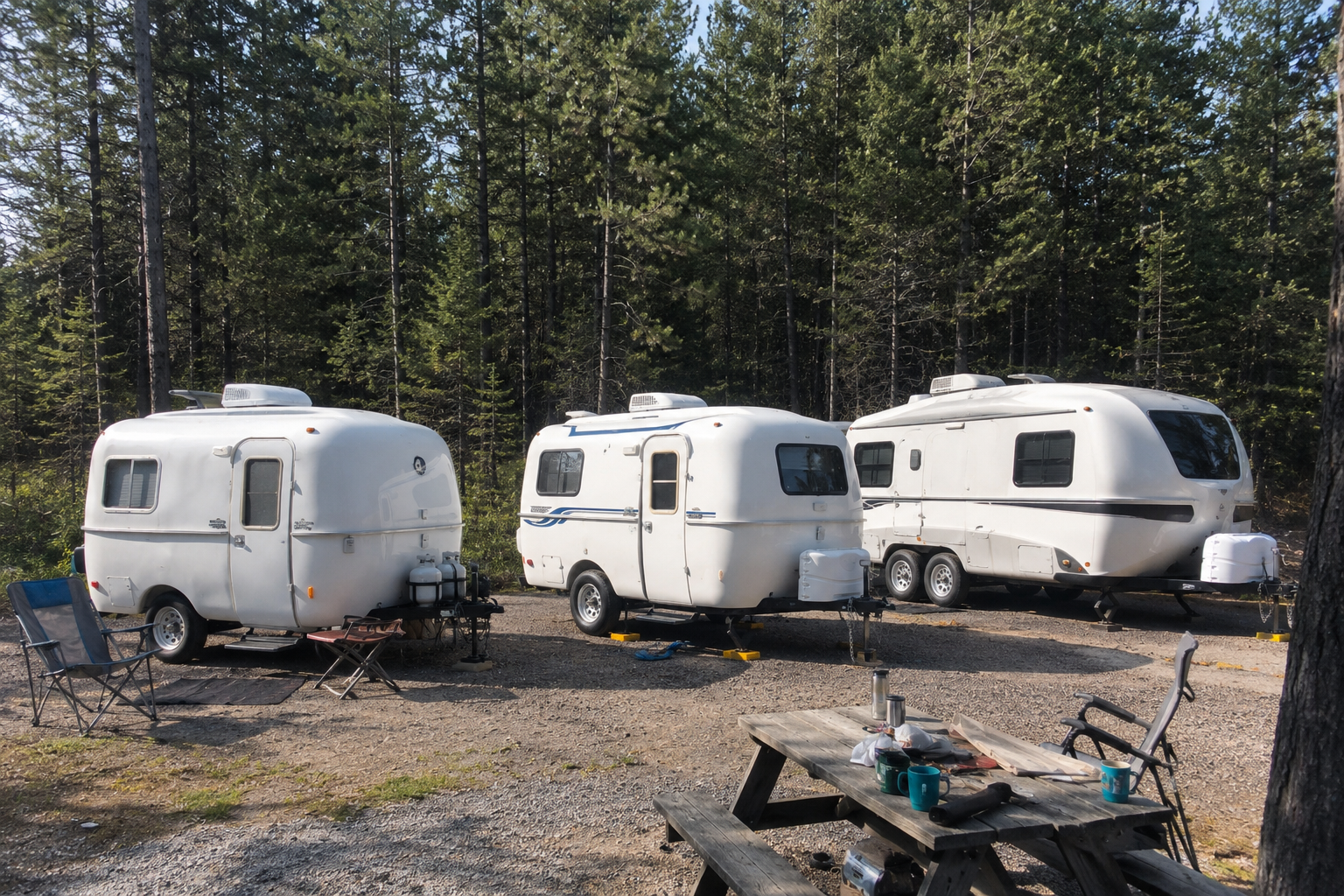
Casita is the middle choice for a lot of buyers because it feels more settled than a very basic small camper but does not jump into Oliver money. The 17 ft models are the ones most people end up comparing because they are small enough to tow and store, but large enough to feel usable for two people who pack with some discipline.
The main thing to test is not the brochure. Step inside. Sit at the dinette. Stand in the bathroom. Lie on the bed. Casita works well for many couples, but it is still a narrow fiberglass trailer, not a roomy RV.
What Casita Does Well
- Better finished feel than a very basic small camper.
- Simple enough for normal camping, not overloaded with luxury systems.
- Good used-market demand.
- Several layouts, including versions with or without a bathroom.
- A strong fit for couples who want small but not tiny.
What You Give Up With Casita
- It is still narrow inside.
- Headroom can be a problem for taller buyers.
- The bed and dinette setup must be tested in person.
- The “sleeps up to” number does not mean adults will be comfortable.
- The bathroom is useful, but it is still a small trailer bathroom.
Casita is the safest pick for many buyers who want a fiberglass trailer but do not want the price and weight of an Oliver. It is not a large RV. Treat it as a compact camping cabin, not a small apartment.
Oliver: Best If Budget and Tow Vehicle Are Ready
Oliver is the premium choice, but that does not make it the automatic choice. It costs more, weighs more, and asks more from the tow vehicle. In return, you get a stronger build feel, a double-hull fiberglass shell, better insulation, and a trailer that makes more sense for longer trips or colder weather.
The mistake is buying Oliver because it is “better” in the abstract. It is better for the buyer who will use what it offers. For short weekend camping close to home, it may be more trailer than the trip needs.
What Oliver Does Well
- Stronger premium feel inside and outside.
- Double-hull fiberglass construction.
- Better insulation story than simple single-shell trailers.
- More comfort for longer trips.
- Better fit for buyers who camp in colder or rougher weather.
What You Give Up With Oliver
- The price is in a different class.
- The loaded weight can push many SUVs too hard.
- More systems mean more things to understand and maintain.
- Factory service distance matters if you live far from Tennessee.
- It may be too much trailer for short weekend camping.
Oliver is not the “better Casita.” It is a different buy. It works best when the buyer has the budget, the tow vehicle, and the camping style to use what Oliver offers.
The Stuff That Decides the Purchase
1. Dry Weight Is Not Camping Weight
Dry weight is the trailer before your normal life gets added. Water, propane, batteries, solar gear, tools, clothes, food, dishes, bedding, bikes, and options all matter. A trailer that looks safe on paper can feel heavy once loaded.
Before buying, check the trailer GVWR, your vehicle tow rating, payload, hitch rating, rear axle limit, and tongue weight. Payload is where many buyers get trapped. The trailer tongue pushes down on the tow vehicle, and that weight counts against what the vehicle can carry.
2. “Sleeps Four” Can Mean “Sleeps Two Adults and Two Small Kids”
Small trailer sleep numbers are marketing numbers. Check the actual bed size. Lie down inside if you can. Sit on the edge of the bed. Try getting up without crawling over another person. A trailer can look fine in photos and still feel wrong at midnight.
3. The Bathroom Is a Lifestyle Choice
A bathroom sounds like an easy yes, but in a very small trailer it takes space from seating, storage, and openness. A wet bath is helpful during rain, cold nights, and roadside stops. It also adds cleaning, tank care, moisture, and less elbow room.
For some buyers, a tiny bathroom is worth it. For others, campground bathrooms and a simpler layout make more sense.
4. Factory Distance Matters
These are not mass dealer-lot trailers with service on every corner. Scamp is tied to Backus, Minnesota, Casita is in Rice, Texas, and Oliver is built in Hohenwald, Tennessee. That matters for pickup, factory work, parts, warranty help, and serious repairs.
Before you buy, ask yourself a boring question: “If something needs factory attention, how hard is that trip?”
5. The Shell Lasts Longer Than the Appliances
Molded fiberglass can age well. That does not mean every used trailer is a smart buy. Tires age. Axles age. Fridges fail. Water pumps quit. Window seals leak. Cushions wear out. Old wiring gets messy. A clean shell can hide tired systems.
Which One Should You Buy?
Buy Scamp If...
- You want the lightest and simplest choice.
- You have a smaller tow vehicle.
- You care more about camping than interior polish.
- You are okay with tight space.
- You want a lower-cost way into molded fiberglass.
Buy Casita If...
- You want the strongest middle choice.
- You are a couple or small family that packs light.
- You want a proven fiberglass trailer without Oliver-level cost.
- You want a bathroom option but can accept compact space.
- You care about resale but still want a practical trailer.
Buy Oliver If...
- You have the budget for a premium fiberglass trailer.
- Your tow vehicle can handle the loaded weight.
- You camp for longer trips, colder weather, or more off-grid time.
- You want better insulation and a more solid cabin feel.
- You plan to keep the trailer for many years.
Best Choice by Buyer Type
| Buyer Situation | Best First Look | Why |
|---|---|---|
| Lowest budget | Scamp | Simple, light, and less costly than the others. |
| Best middle ground | Casita 17 ft | Compact, proven, and easier to justify than Oliver. |
| Premium comfort | Oliver | Better build feel, insulation, and long-trip comfort. |
| Small SUV owner | Scamp or smaller Casita | Start light, then check loaded weight and payload. |
| Tall buyer | Walk through all three before buying | Headroom, bed length, and bathroom space matter more than photos. |
| Used trailer buyer | Scamp or Casita first | More used choices at lower prices, but inspect systems carefully. |
Used Trailer Checks Before You Pay
Fiberglass trailers hold value because the shell can last. That strong resale can also make buyers overpay. Do not pay a high used price just because the word “fiberglass” is in the listing.
- Check tire date codes, not just tread.
- Look for soft spots around windows, vents, floor edges, and plumbing.
- Test the fridge, water pump, furnace, A/C, lights, outlets, and charger.
- Ask about axle age and brake service.
- Check the frame for rust, cracks, bad repairs, or bent parts.
- Open every cabinet and smell for dampness.
- Run water into the sink and shower, then check below for leaks.
- Confirm title, VIN, and weight sticker before sending money.
The Tow Vehicle Test
Do this before you fall in love with a floor plan:
- Find your vehicle tow rating.
- Find your vehicle payload sticker on the driver door area.
- Check the trailer GVWR, not only dry weight.
- Estimate tongue weight from loaded trailer weight.
- Add passengers, pets, cargo, hitch gear, and the trailer tongue weight.
- Leave safety room. Do not run at the edge of every rating.
This is where many Scamp vs Casita vs Oliver decisions become clear. A trailer can be beautiful and still be wrong for your vehicle.
How These Trailers Compare to Tiny Homes
A fiberglass travel trailer is not the same thing as a tiny house. A trailer is built for travel, hookups, tanks, towing, and campground life. A tiny house is more about living space, code issues, land, utilities, and long-term placement.
If you are comparing trailer life with tiny living, start with tiny houses, movable tiny homes, and rules for tiny houses on wheels. Those pages help separate camping decisions from housing decisions.
Final Pick
Pick Scamp if you want simple, light, and lower cost. Pick Casita if you want the best middle choice for a compact fiberglass trailer. Pick Oliver if you want premium comfort and your budget and tow vehicle are ready for it.
The smartest buyer does not ask, “Which brand is best?” The smarter question is: “Which one fits my vehicle, body, budget, and camping style without making every trip harder?”
FAQ
Is Scamp better than Casita?
Scamp is better if you want lighter weight, lower cost, and a simpler trailer. Casita is better if you want a more finished compact trailer and can handle the higher price and weight.
Is Oliver better than Casita?
Oliver has a more premium build and stronger comfort features, but it costs much more and weighs more. Casita can be the better buy if you want small, simple, and proven.
Can a small SUV tow a fiberglass trailer?
Some small SUVs can tow some Scamp and Casita models, but the answer depends on loaded trailer weight, tongue weight, payload, brakes, hitch rating, and passengers. Check the vehicle sticker and manual before buying.
Which fiberglass trailer has the best resale value?
Scamp, Casita, and Oliver all tend to hold value better than many standard stick-built trailers. Condition, age, options, location, and service history still matter.
Which one is best for full-time living?
None of these are large full-time homes. Oliver is the most comfortable for long trips, but even Oliver is still a compact trailer. For long-term living, storage, bathroom comfort, insulation, and tow vehicle limits matter more than brand pride.
Should I buy new or used?
Buy new if you want a factory warranty, current options, and fewer unknowns. Buy used if you can inspect carefully and avoid overpaying. With fiberglass trailers, used prices can stay high, so compare the used price against the real cost of a new build.
Read This Next
- Comparing Mobile Home Manufacturers: Clayton, Fleetwood, and Champion
- Tiny Houses
- Movable Tiny Homes
- Tiny Home Cost
Sources used for this article
- Scamp 13 ft trailer specifications
- Scamp 16 ft trailer specifications
- Scamp 19 ft fifth-wheel trailer specifications
- Casita Spirit 17 ft specifications and starting price
- Casita Patriot 15 ft specifications
- Casita Discovery 24 ft specifications
- Oliver Legacy Elite specifications
- Oliver Legacy Elite II specifications
- NHTSA towing safety guide