

Foundation waterproofing products do not rescue a bad waterproofing system.
If the wall was poorly prepped, the cracks were not handled, the drainage layer is missing, the downspouts dump too close, or the grade is feeding water back to the house, no bucket of coating is going to fix that on its own.
This page is about the product side of the job: what each product does well, where it fits, and where people waste money.
If you want the full assembly first, read Exterior Foundation Waterproofing: What You Need to Know.
Start Here Before You Buy Anything
Exterior waterproofing is usually a combination of:

- crack and joint repair
- a waterproof coating or membrane
- a drainage layer that protects the wall and moves water down
- grading and downspout discharge that keep water away from the house
If the wall is bowing, the cracks are widening, or the basement floods regularly, stop shopping coatings first. That is not a simple product problem anymore. It is a repair and drainage problem too. For crack-related cases, see Foundation Cracks in Houses: When to Worry and When to Repair.
Quick Comparison
| Product Type | Best Use | What It Does Well | What It Will Not Do Alone |
|---|---|---|---|
| Liquid-applied waterproof coating | DIY-friendly wall coating on a properly prepared surface | Covers irregular surfaces and small defects well | Will not replace drainage or fix structural cracks |
| Rubberized asphalt coating | Below-grade wall protection on block or poured concrete | Thick, durable coating for serious exterior work | Needs clean prep and should not be left unprotected during backfill |
| Dimpled drainage membrane | Over a coated or waterproofed wall | Creates a drainage path and protects the wall assembly | Is not the whole waterproofing system by itself |
| Crack sealant | Small stable cracks and joints before coating | Closes the leak path before the wall gets covered | Will not solve movement, settlement, or bowed walls |
Best Products by Job

Illustration by ArchitectureCourses.org. Comparison of liquid membrane and cementitious coating on a basement foundation wall.
Best DIY-Friendly Waterproof Coating
Liquid Rubber Foundation Sealant makes the most sense when the wall is already exposed, properly cleaned, and you want a flexible exterior coating without a complicated setup.
- Good for poured concrete or masonry walls that are clean and dry
- Rolls or brushes on without specialty tools
- Useful when you need a flexible coating over a repaired wall
Where it fits: accessible exterior wall sections, smaller retrofit work, and homeowners doing careful prep work themselves.
Where it does not: soaked walls, major water pressure, bad grading, or projects where the drainage plan is still wrong.
It is the easy one to reach for. That does not mean it is the one to use everywhere.
FIELD PICK: Liquid Rubber Foundation Sealant
Best Heavy Coating for Traditional Exterior Foundation Work
For a tougher below-grade coating on block or poured concrete, Henry Waterproofing Emulsion (208R Rubberized Asphalt) is the better fit, especially when the trench is already open and you are building a more serious exterior assembly.
- Better suited to serious exterior foundation work than light-duty paint-style products
- Common choice when paired with a drainage board or dimple mat
- Works better as part of a system than as a one-product promise
This is the messy one. It is not hard to understand. It is just harder to do neatly and harder to undo once it is on everything you touched by accident.
It also needs the rest of the wall assembly to be taken seriously. Thick coating over bad prep is still bad work.
JOBSITE PICK: Henry Waterproofing Emulsion (208R Rubberized Asphalt)
Best Drainage Layer Over a Waterproofed Wall

Delta-MS Foundation Membrane System belongs in the assembly when you want wall protection plus a clear drainage path down to the footing drain.
- Adds an air gap between soil and wall
- Protects the coating during backfill
- Helps move water toward the footing drain instead of letting it sit at the wall
This is the product people misunderstand most. It is useful. It is not the whole job. If the wall underneath is not repaired and waterproofed properly, a dimpled membrane does not magically fix that.
Think of it as the layer that helps the better waterproofing job survive the rest of the job.
SYSTEM PICK: Delta-MS Foundation Membrane System
Best Exterior Crack Sealant for Small Stable Cracks
Not every repair starts with a bucket. Sikaflex Crack Flex Sealant is the one to reach for when you have small stable exterior cracks or joints that need to be sealed before the main wall coating goes on.
- Good for hairline to modest exterior cracks and joint lines
- Flexible enough for small movement at non-structural areas
- Useful as prep, not as a replacement for the waterproofing layer
If the crack is stepped, widening, repeated, or tied to visible wall movement, do not treat this like a caulk problem. Start with diagnosis first.
REPAIR PICK: Sikaflex Crack Flex Sealant
What to Buy for Common Situations
| Your Situation | Better Product Choice | What Else It Usually Needs |
|---|---|---|
| You have an exposed exterior wall section and want a DIY coating | Liquid Rubber Foundation Sealant | Crack repair first, then drainage and grading review |
| You have the trench open and want a tougher below-grade coating | Henry Waterproofing Emulsion | Drainage layer over it before backfill |
| You already coated the wall and want protection plus drainage | Delta-MS Foundation Membrane System | Working footing drain and proper backfill |
| You have a few small stable exterior cracks | Sikaflex Crack Flex Sealant | Wall coating after repair if the area is below grade |
| You have heavy leakage, standing water, or recurring flooding | No single coating is enough | Drainage correction, possible French drain, and full system review |
What People Commonly Buy Wrong
- They buy an interior masonry coating for an exterior below-grade problem. That is usually symptom management, not the full fix.
- They treat the dimple board as the waterproofing. It is a drainage and protection layer, not a substitute for the wall waterproofing under it.
- They coat dirty or damp concrete. Adhesion drops fast when prep gets rushed.
- They patch one crack and ignore roof water and grading. If water keeps loading the wall, the problem usually comes back.
- They backfill straight against the coating with no protection layer. That is how good material gets damaged by the rest of the job.
The Order That Usually Holds Up
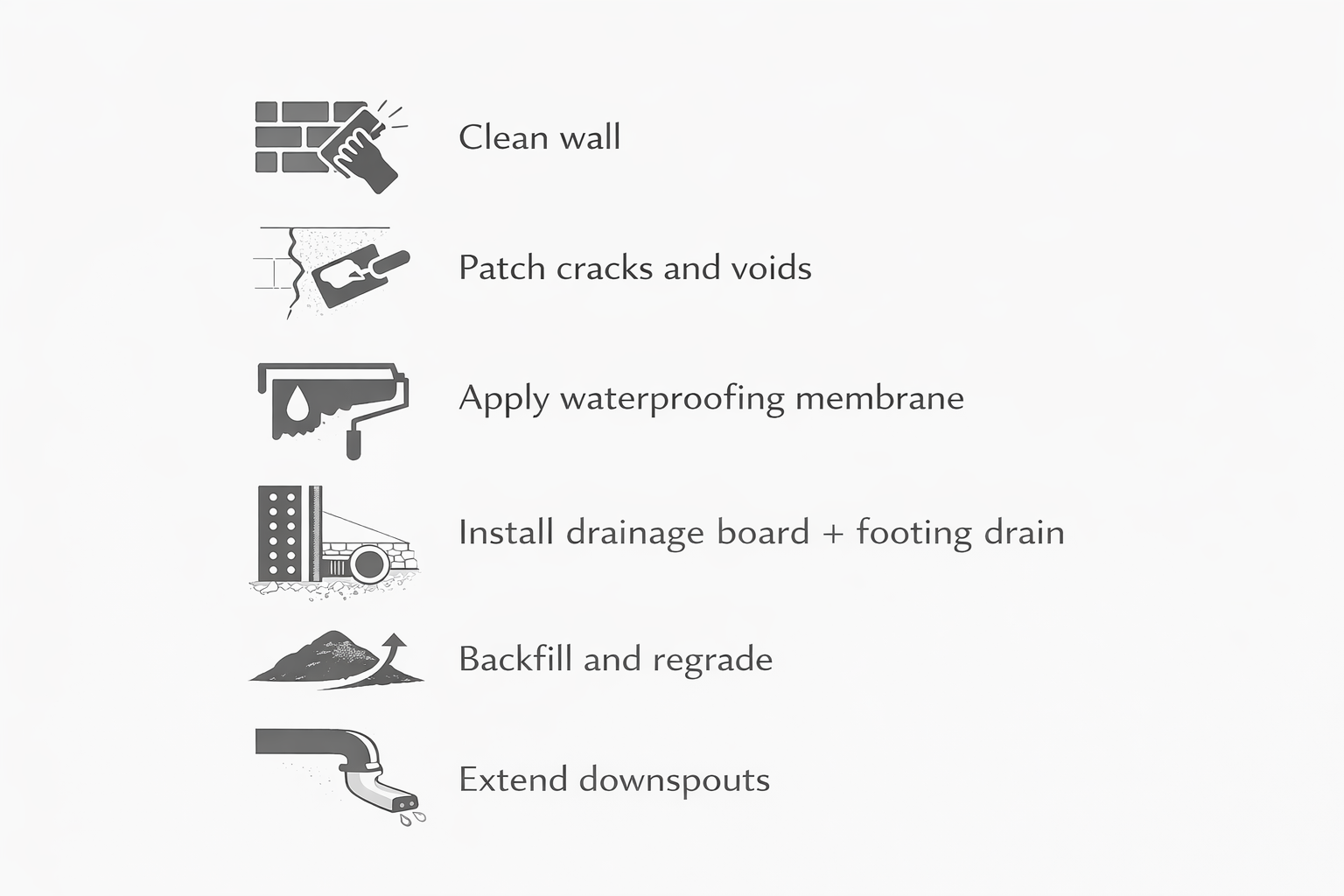
- Clean the wall down to sound material.
- Repair cracks, holes, joints, and penetrations.
- Apply the waterproof coating or membrane correctly and let it cure.
- Add the drainage layer or protection board.
- Make sure water has somewhere to go: slope, downspouts, footing drain, or sump discharge where needed.
- Backfill carefully instead of shredding the work you just paid for.
If the larger issue is water management around the foundation, not just the wall face, the next page to read is How to Install a French Drain with a Sump Pump the Right Way.
One More Thing Before You Spend on Products
If your downspouts dump next to the house, or the grade pitches toward the wall, fix that before you start believing in miracle coatings. A lot of “failed waterproofing” is just outside water still being sent right back to the same foundation line.
What’s Next
- Exterior Foundation Waterproofing: What You Need to Know if you want the full wall assembly and not just the product shortlist.
- 5 Best Materials & Tools for Sealing a Leaking Foundation if your problem is one leaking crack or one local failure instead of a full exterior job.
- Foundation Cracks in Houses: When to Worry and When to Repair if you are not sure whether you are dealing with waterproofing, movement, or both.
FAQ
What is the best exterior foundation waterproofing product?
There is no single best product for every job. A liquid coating works for some DIY situations. A heavy asphalt emulsion works better for tougher below-grade coating jobs. A dimpled membrane helps as the drainage layer over the waterproofed wall. The better answer is usually a system, not one bucket.
Is Liquid Rubber enough by itself?
Sometimes for a limited, well-prepped exterior wall section. It can work on an accessible wall where cracks are already sealed, the surface is dry enough for proper adhesion, and outside water is not still being dumped back at the same foundation line. It is not enough if the wall stays wet, the grading is wrong, or the job has serious hydrostatic pressure and drainage problems.
Is Delta-MS a waterproofing membrane?
It is better thought of as a drainage and protection layer. It helps a lot, but it is not the full waterproofing system by itself.
Can I just use Drylok for exterior foundation waterproofing?
Not as the first recommendation for a full exterior below-grade system. It is more limited and makes more sense for lighter-duty use than for a full trench-open exterior assembly.
What is the best product for exterior foundation cracks?
For small stable cracks, a flexible crack sealant can be enough before coating the wall. For larger, repeating, stepped, or moving cracks, stop treating it as a simple sealant purchase.
Do I need to dig to the footing?
If you are doing full exterior waterproofing, usually yes. Partial shallow coating work often leaves the lower leak path untouched. That is why so many halfway repairs look better for one season and then fail again once the lower untreated section keeps taking water.
How long do exterior waterproofing products last?
That depends as much on drainage, prep, and backfill protection as it does on the label. A good assembly can last a long time. A good product in a bad system usually does not.