
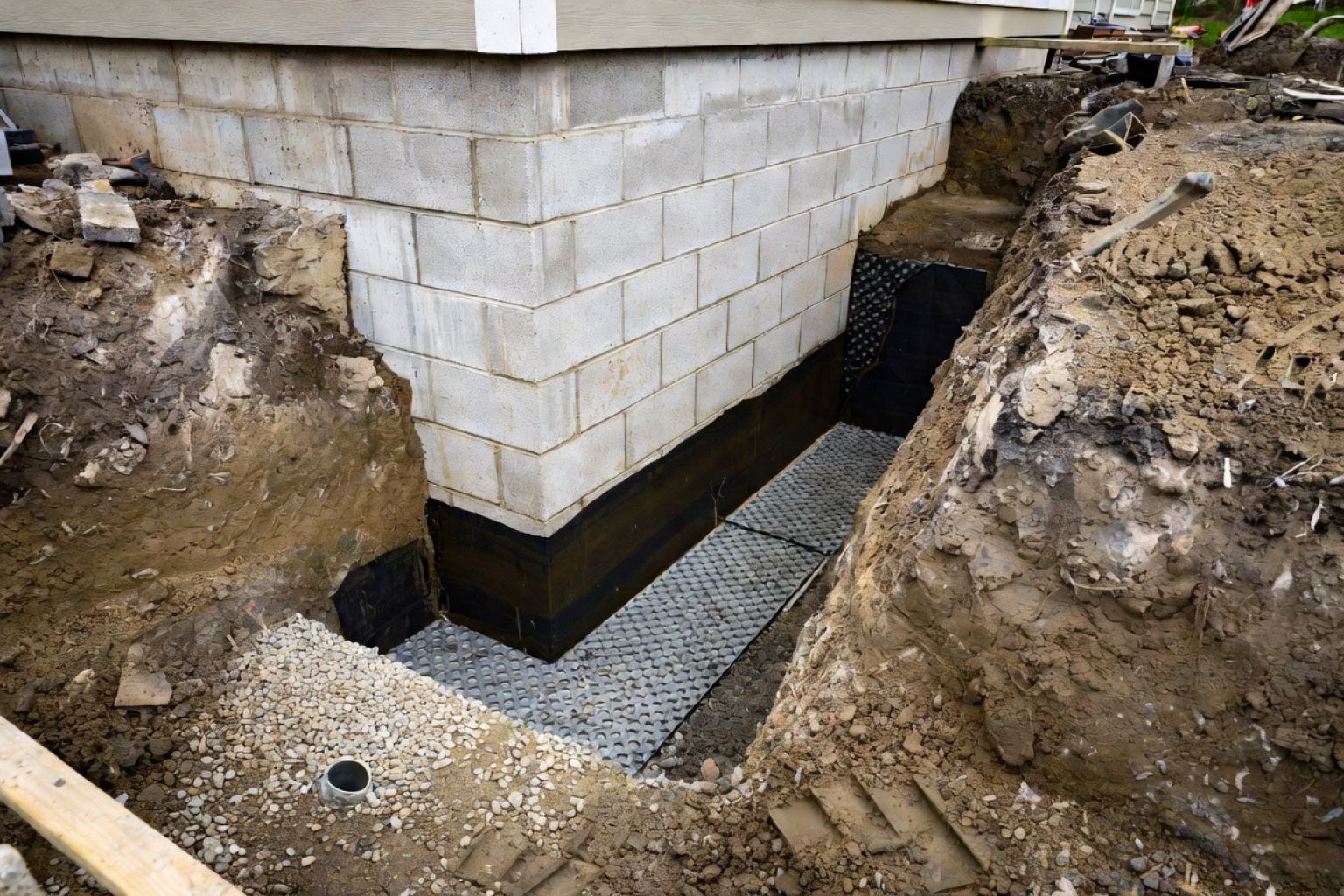


Water entering through a basement wall usually starts with wet soil, failed drainage, an open crack, or a break in the exterior wall protection.
Interior coatings and dehumidifiers do not stop that water outside the wall. Exterior foundation waterproofing exposes the foundation, repairs the surface, installs a continuous waterproof layer, adds drainage protection, and gives collected water a working outlet.
What Exterior Foundation Waterproofing Includes
A complete exterior system has four main parts:
- Wall cleaning, crack repair, and surface preparation.
- A below-grade waterproof membrane or coating.
- A drainage board or mat that protects the membrane and carries water downward.
- A footing or perimeter drain with a working discharge point.
A membrane without drainage leaves water pressing against the wall. A drain without proper wall protection leaves cracks, joints, seams, and penetrations exposed.
Waterproofing, Damp-Proofing, and Interior Drainage
| Approach | What it does | Main limitation |
|---|---|---|
| Exterior waterproofing | Blocks outside water before it reaches the foundation wall. | Does not repair settlement, bowing, or other structural movement. |
| Damp-proofing | Slows moisture movement through the wall. | Is not intended to control active leakage or sustained water pressure. |
| Interior drainage | Collects water after it reaches or passes the wall. | Does not stop exterior soil and water from remaining against the foundation. |
Interior drainage can be the practical retrofit where exterior access is blocked or excavation would cause major damage. It manages water after entry instead of stopping it outside.
Where Exterior Waterproofing Fails
- The wall is not exposed deeply enough. Shallow digging leaves the lower leak path buried.
- The surface is dirty or unstable. Membranes fail when installed over loose parging, soil, dust, honeycombing, or open cracks.
- The membrane is interrupted. Corners, joints, pipe penetrations, window wells, and top terminations are common failure points.
- The drain has no reliable outlet. Water collected at the footing still needs to reach daylight or a sump system.
- Backfill damages the work. Large debris and careless compaction can puncture the membrane or crush drainage components.
- Final grading sends water back to the house. Surface water should move away from the foundation.
The Exterior Waterproofing Sequence
1. Excavate to the Required Depth
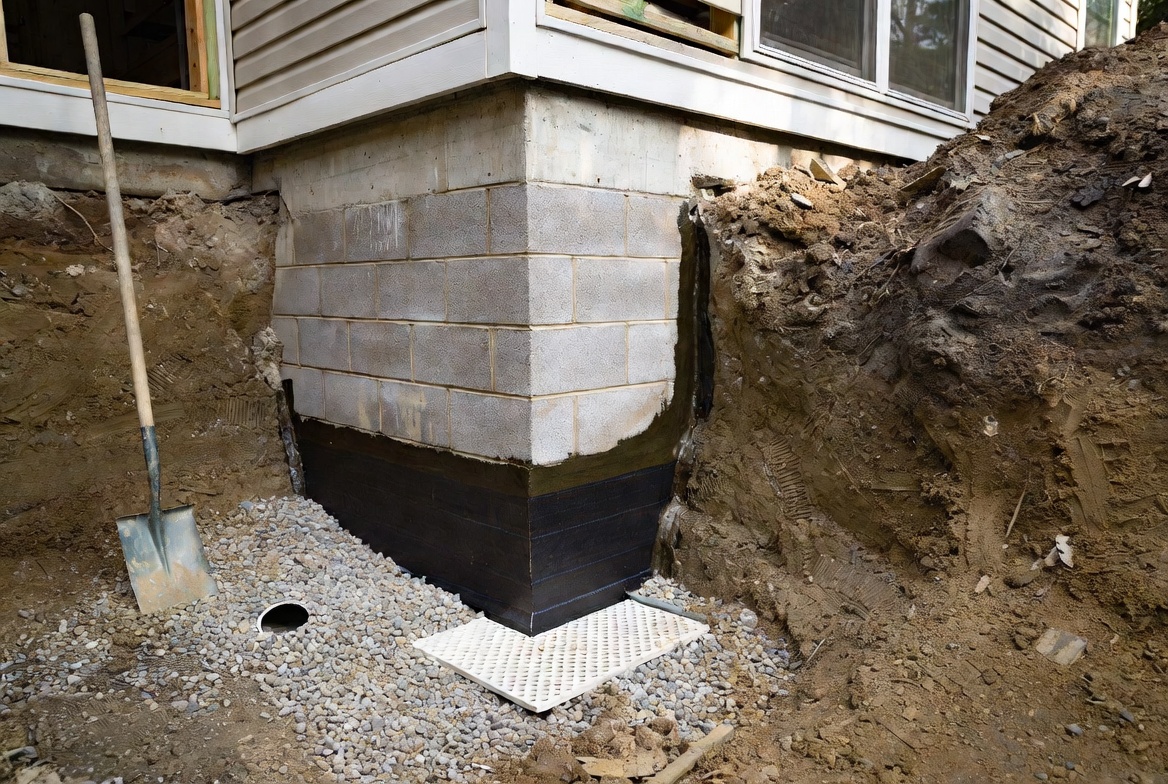
The wall must be exposed where water is entering. On many basement foundations, that means digging to the footing rather than opening only the upper part of the wall.
Utilities, porches, decks, driveways, steps, window wells, trees, and neighboring property lines can control the excavation method. Deep or restricted work requires a safe plan for trench support, equipment access, soil storage, and water control. See foundation excavation methods for the main options.
2. Clean and Repair the Wall
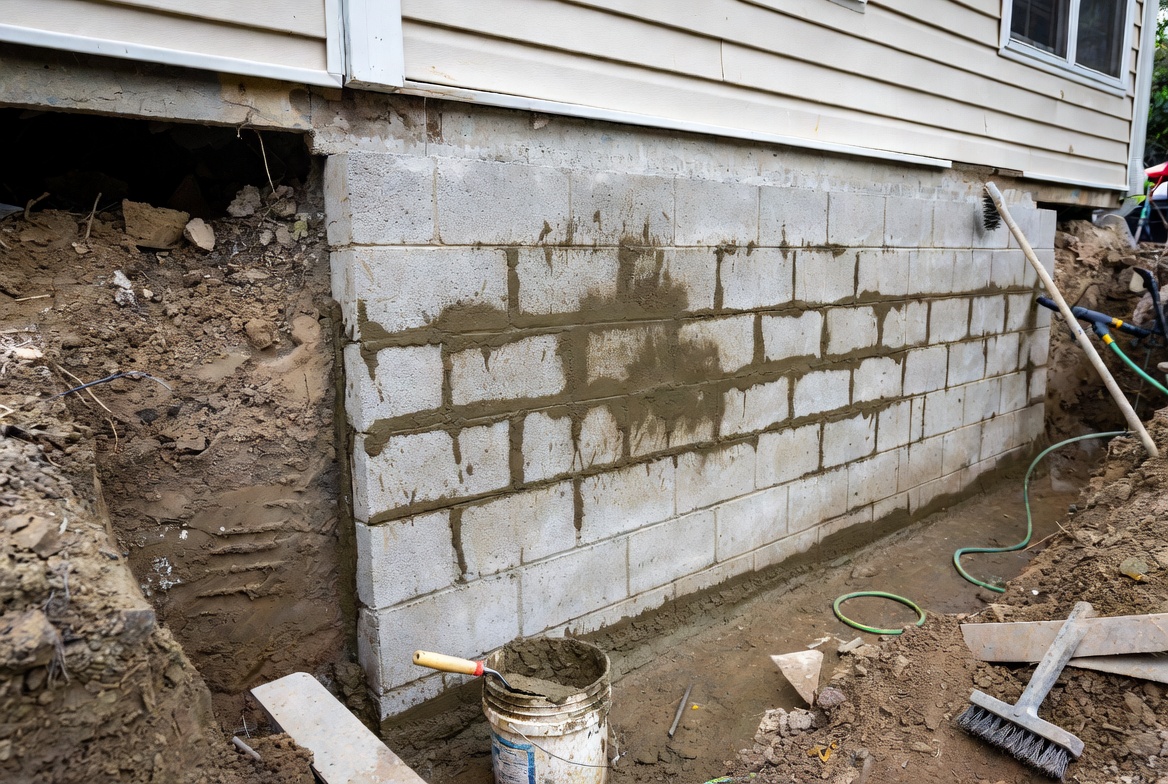
Remove soil, loose coatings, failed parging, and unstable material. Repair open cracks, form-tie holes, honeycombing, damaged masonry, and gaps at penetrations before covering the wall.
Waterproofing is not a structural repair. Bowing, displacement, settlement, or widening cracks need separate assessment. See foundation cracks in houses before covering visible movement.
3. Install a Continuous Waterproof Layer
The system may use a liquid-applied membrane, sheet membrane, or another approved below-grade product. The choice depends on wall condition, water exposure, installation temperature, surface geometry, and compatibility with the drainage layer.
Coverage in the middle of the wall is rarely the hardest part. Corners, seams, penetrations, ledges, cracks, and terminations require careful detailing.
4. Add Drainage Protection

A drainage board or dimple mat protects the membrane and creates a path for water to move downward. It should connect cleanly with the lower drainage assembly instead of stopping above the area where water collects.
5. Repair or Replace the Footing Drain
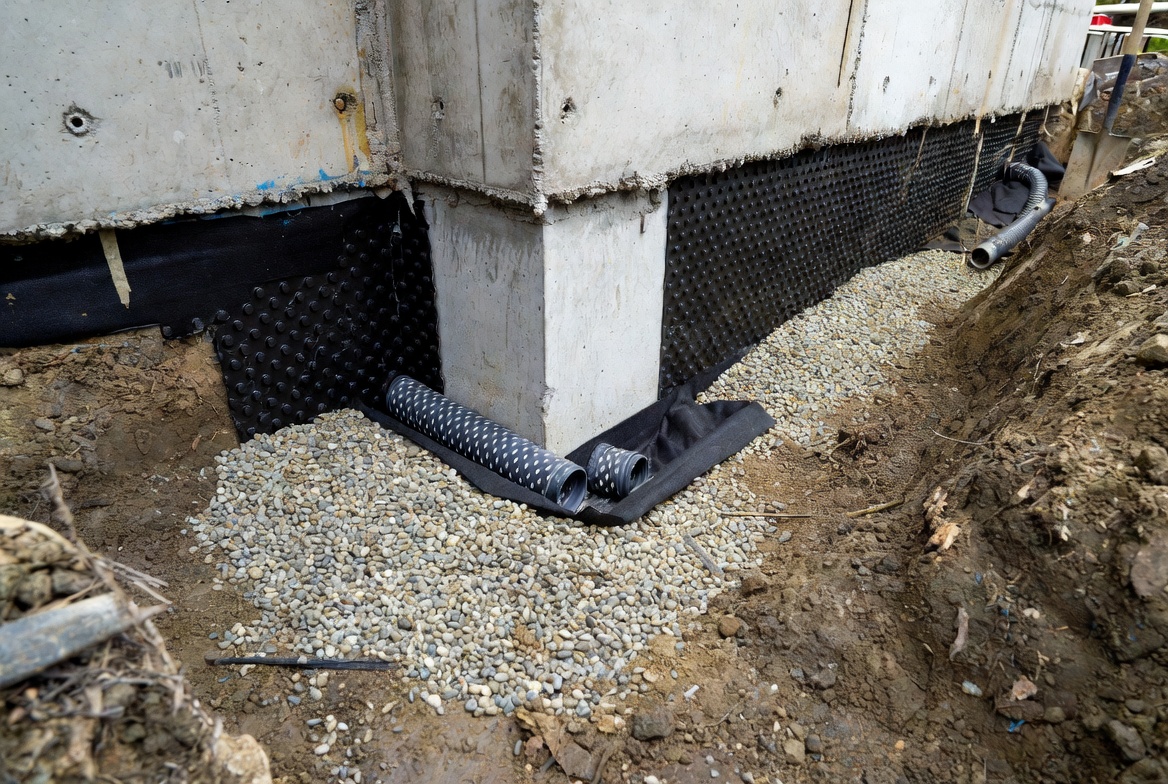
The drain needs suitable stone, filtration where required, correct elevation, and a confirmed discharge point. A buried perforated pipe with no working outlet will not control water.
Where gravity drainage is not possible, the system may discharge to a sump basin and pump. See how to install a French drain with a sump pump for the basic drainage path.
6. Backfill and Grade the Site
Protect the membrane and drainage board during backfill. Remove large debris and place material without striking or dragging against the wall system.
Final grading should slope away from the house. Downspouts should discharge far enough away that roof water does not return to the excavation line.
Transition Details Control the Result
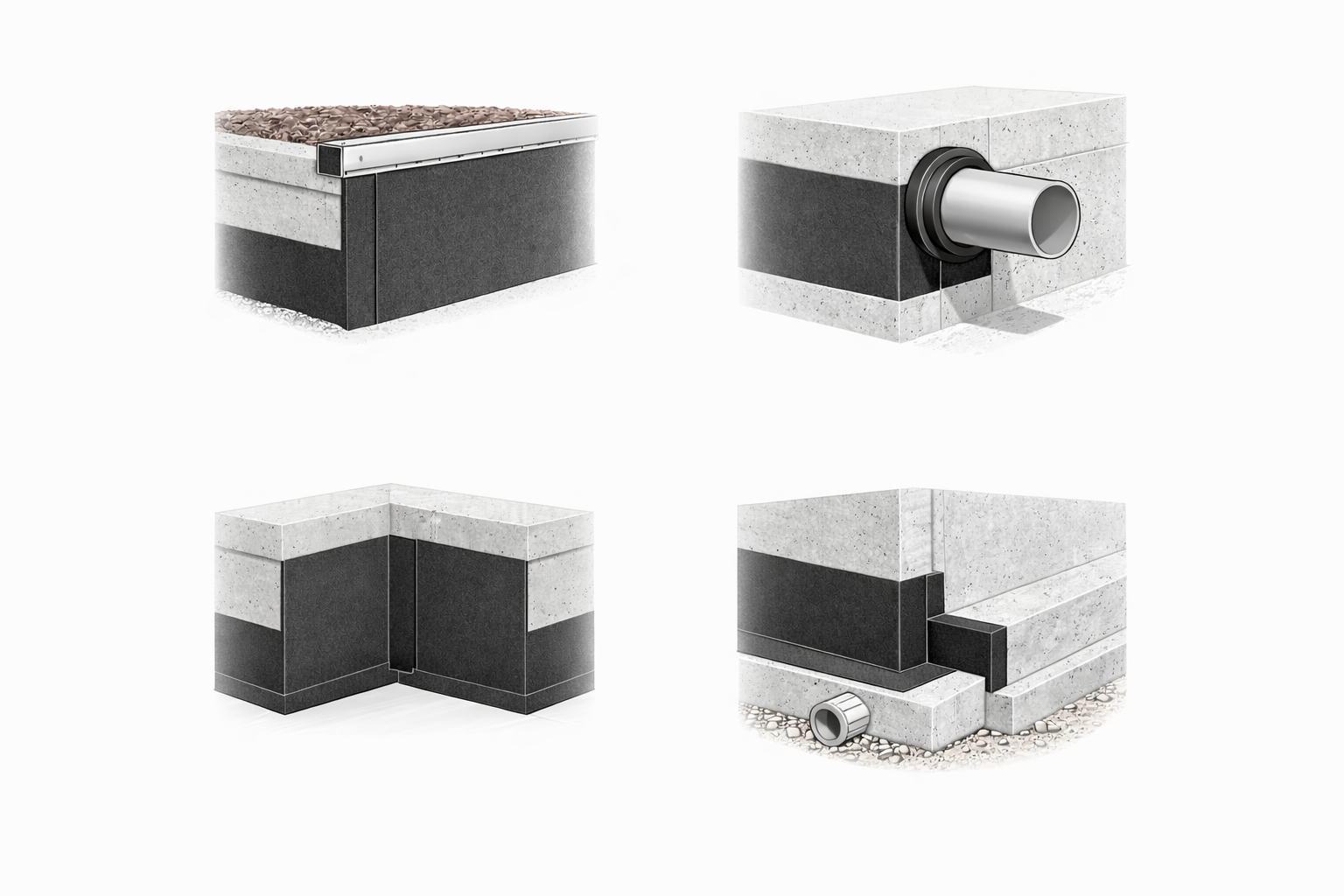
A wide field of membrane can look complete while one failed transition still leaks. Check how the contractor will handle:
- Pipe and service penetrations.
- Inside and outside corners.
- The top edge of the membrane.
- Window wells and below-grade openings.
- Porch, step, deck, and addition connections.
- The joint between the wall and footing.
When Exterior Waterproofing Is Worth the Excavation
- Water enters after heavy rain, spring thaw, or long wet periods.
- The below-grade wall is visibly wet.
- Interior finishes keep failing from repeated water entry.
- Exterior grading and drainage are poor.
- The footing drain has failed or has no useful outlet.
- The wall is already being excavated for structural repair or another project.
Full excavation may not be the first repair for one isolated leak at an accessible, stable crack. Confirm the water path, correct grading and downspouts, and decide whether a targeted repair can reach the defect.
What Homeowners Can Do
| Work | Homeowner scope | Professional scope |
|---|---|---|
| Regrading soil and extending downspouts | Often manageable on an open, simple site. | Needed where drainage, retaining walls, paving, or property lines complicate the work. |
| Small exposed crack repair | Possible when the crack is stable and fully accessible. | Needed for widening, stepped, displaced, repeated, or structural cracks. |
| Deep excavation beside an occupied house | Not a reasonable homeowner project. | Requires safe excavation, utility control, water management, and planned backfill. |
| Full waterproofing and drainage assembly | Difficult to complete correctly at full foundation depth. | Appropriate where the wall, drain, and backfill all need coordinated work. |
What Changes the Cost
Excavation and restoration often cost more than the membrane itself. The price changes with:
- Wall length and excavation depth.
- Soil, rock, groundwater, and trench-support requirements.
- Equipment access and soil haul-out.
- Driveways, steps, porches, decks, fences, planting, and window wells.
- Crack, masonry, or structural repairs found after excavation.
- Footing-drain replacement and sump work.
- Backfill material, compaction, grading, and surface restoration.
Compare quotes by scope. A low price can exclude drainage, disposal, imported backfill, crack repair, restoration, or the lower part of the wall.
What to Ask the Contractor
- How deep will the excavation go?
- How much of the wall will be exposed?
- How will cracks, joints, masonry defects, and penetrations be repaired?
- What waterproofing product and drainage layer will be installed?
- How will corners, window wells, pipe penetrations, and the wall-footing joint be detailed?
- Where will the footing drain discharge?
- How will the membrane be protected during backfill?
- What soil, paving, landscaping, steps, decks, and other work will be removed and restored?
- What is excluded from the quote?
Frequently Asked Questions
Is exterior waterproofing better than interior drainage?
Exterior waterproofing stops water before it passes through the wall. Interior drainage manages water after it reaches the foundation. The better method depends on access, wall condition, water source, budget, and how the basement will be used.
Can only the top part of the wall be waterproofed?
Only when the confirmed defect is limited to that area. Shallow work will not fix a leak that starts lower on the wall or near the footing.
Do I need both a membrane and a drain?
Often. The membrane protects the wall, while the drain carries water away from the base of the foundation.
How long does exterior waterproofing last?
Service life depends on the product, surface preparation, transition details, drainage performance, backfill damage, soil, and surface-water control.
Is exterior waterproofing a good DIY project?
Surface drainage work and small exposed repairs may be manageable. Deep excavation and a full below-grade assembly should be handled by qualified contractors.
What if the basement is damp but not leaking?
Check indoor humidity, grading, downspouts, condensation, and the location of damp areas before assuming the foundation needs full excavation.