

A 1970s front door can make the whole house feel dated before the siding, roof, or windows get a fair look.
Sometimes the door is the problem. Dark stained wood. A tired storm door. Worn brass hardware. Smoked glass. Heavy trim. A porch light that looks too small. A sidelight that still works but feels trapped in the wrong color scheme.
Other times the door is not the problem.
The door may be one of the better original pieces on the house. The mistake is replacing it with something that belongs on a different decade: fake farmhouse glass, oversized black handles, random craftsman trim, or a bright color that fights the brick.
A good 1970s front door update does not erase the entry. It cleans up the parts that failed and keeps the parts that still give the house its shape.
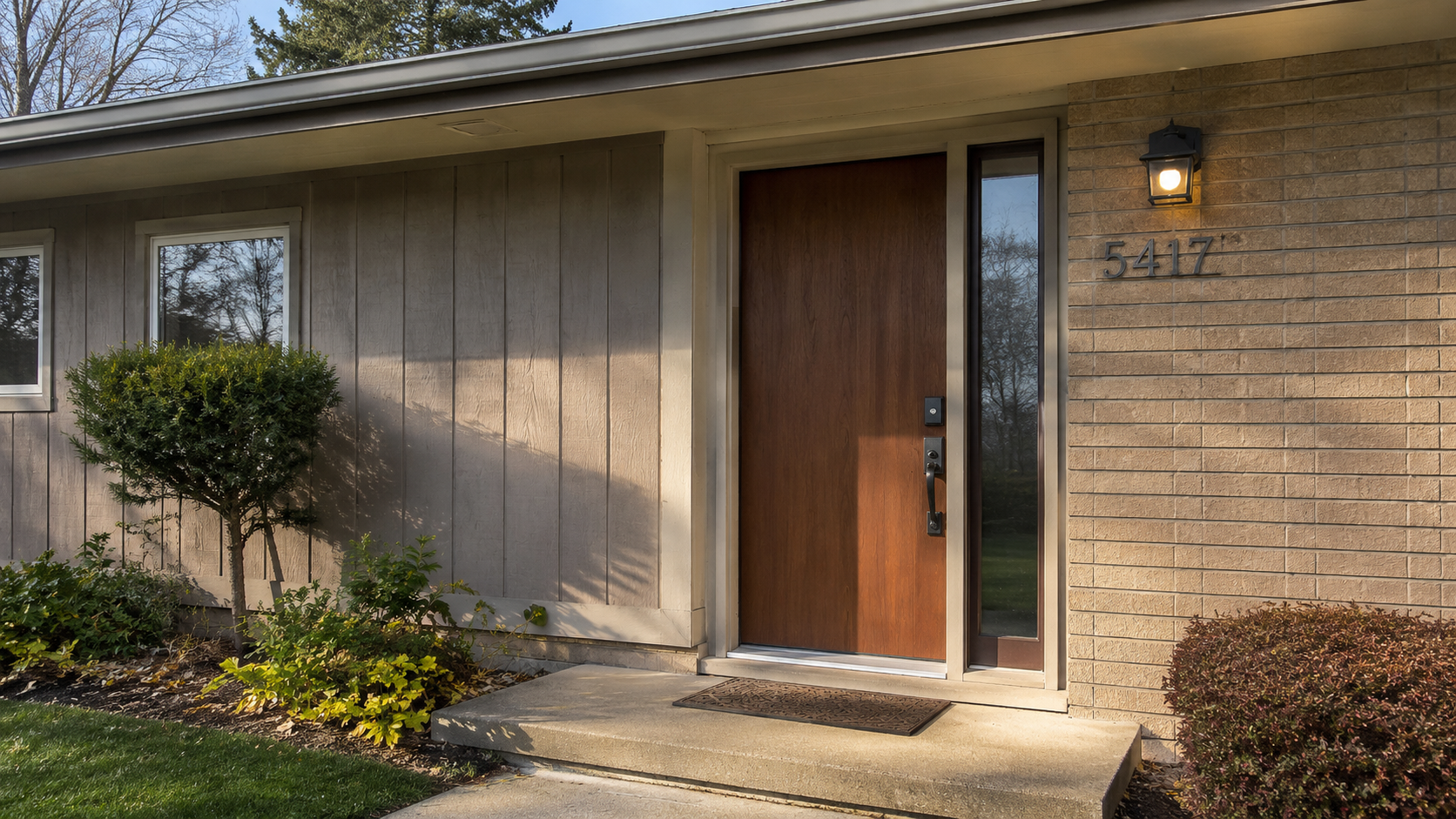
What makes a front door look 1970s
Most 1970s front doors were not trying to be delicate.
You see stronger wood grain, darker stains, narrow glass inserts, vertical sidelights, amber or smoked glass, metal storm doors, brick beside the entry, and simple porch lights that were often too small for the opening. Some doors had carved panels or decorative glass. Some were plain slabs with one strong vertical glass strip.
The style depended on the house. A ranch might have a low, quiet entry near the garage. A split-level might have a tighter landing and a door that sits under a small overhang. A contemporary 1970s house might have heavier wood, bigger glass, and a more dramatic entry.
The common thread is the assembly. The door, sidelight, trim, threshold, hardware, storm door, brick, and light all work together. Replace one piece without looking at the others and the entry starts to look patched.
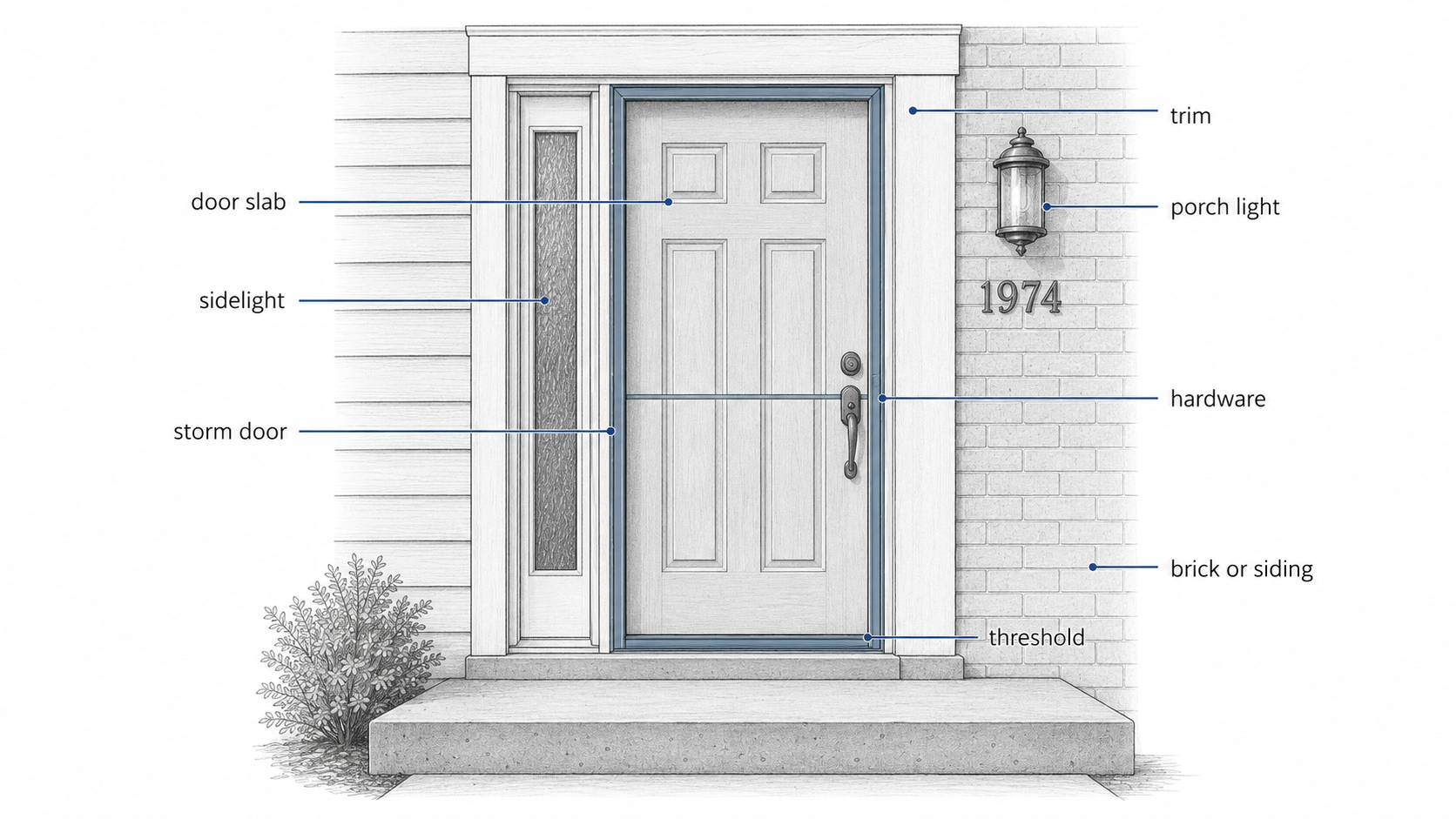
The door is only one part of the entry
A lot of bad front door updates start with one sentence: "We just need a new door."
Maybe. But the door might not be what is making the entry look tired.
Check the whole opening first. Look at the trim. Look at the sidelight. Look at the storm door. Look at the threshold. Look at the porch light. Look at the house numbers, mailbox, brick color, siding color, and walkway. The weak part may be the old storm door or the yellowed light fixture, not the wood door itself.
That matters because a replacement door can cost money and still leave the entry wrong.
If the original door is solid, square, dry, and sized well for the opening, it may deserve cleaning, refinishing, repainting, new weatherstripping, and better hardware before replacement. If the slab is warped, leaking, rotted, delaminated, poorly insulated, or hacked up from old locks, replacement starts making more sense.
Do not judge the door by how old it looks. Judge it by condition, proportion, water control, security, daylight, privacy, and whether it still fits the house.
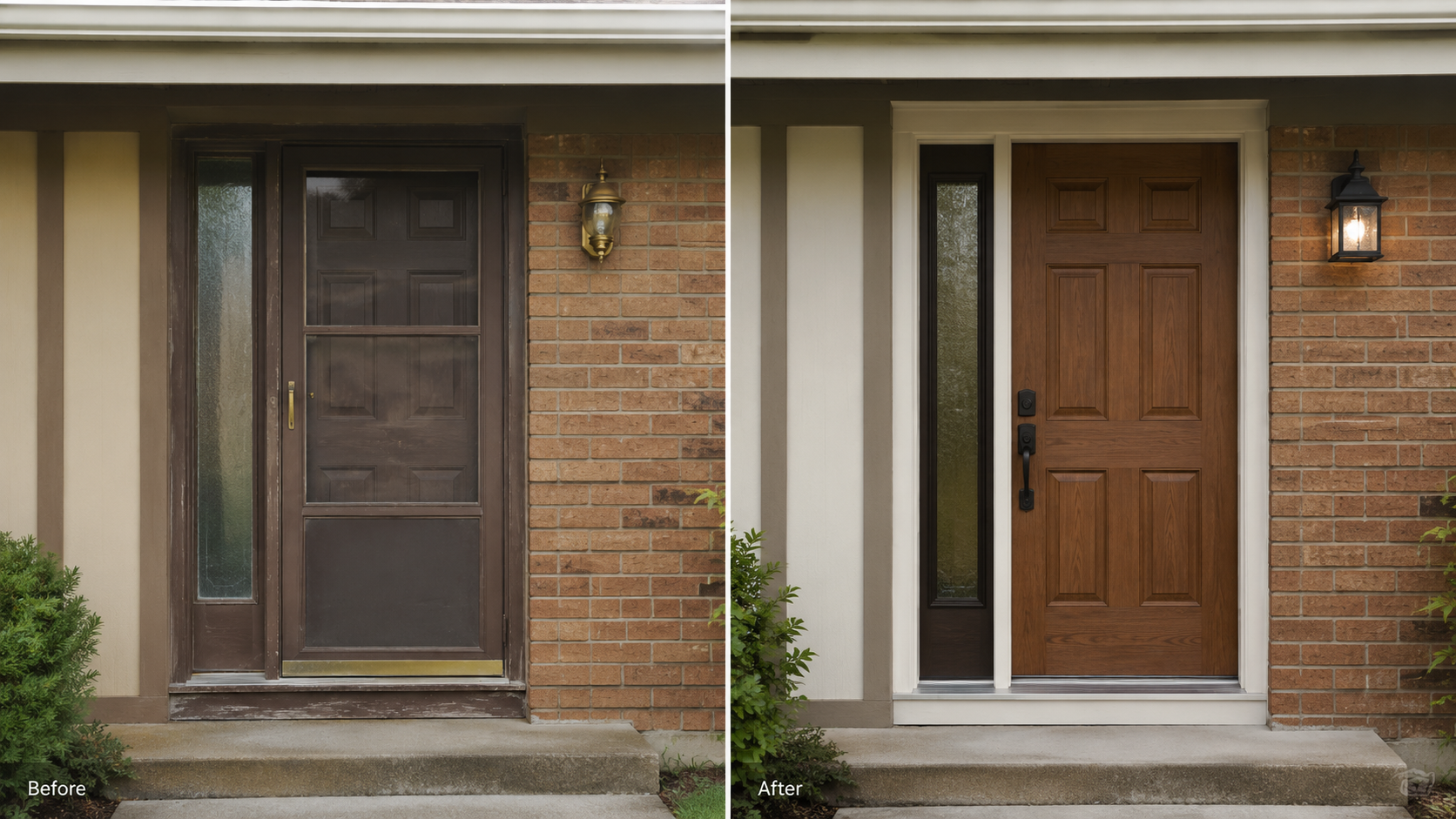
Before-and-after updates that usually work
The best 1970s front door before-and-after projects are not dramatic. They are cleaner.
The old entry might have a dark door, weak light, faded trim, loose threshold, cloudy storm door, and hardware that looks worn out. The after version keeps the same opening but sharpens it: fresh paint or stain, better hardware, repaired trim, clearer glass, a proper porch light, and a threshold that looks sealed instead of tired.
That kind of update respects the house because it does not pretend the entry belongs somewhere else.
A 1970s ranch does not need a fake cottage door. A split-level does not need a giant modern pivot-door look. A modest suburban house does not need luxury hardware that makes the rest of the facade look cheaper by comparison.
Good door updates make the entry look maintained, not disguised.
Wood doors are worth a second look
Many 1970s wood front doors look heavy because the finish has aged badly.
The stain may have gone orange, red, or almost black. The varnish may be cloudy. The lower rail may show water wear. The lock area may be scratched from years of keys, pets, bags, and weather.
That does not mean the door is junk.
A solid wood door with good proportions can be one of the best things on the front of the house. Refinishing it can keep warmth that a flat replacement door will not give back. Repainting it can work too, especially when the surrounding brick or siding needs a calmer color next to it.
But do not romanticize a failing door. If it is warped, split, soft at the bottom, hard to latch, leaking around the edges, or badly cut from past hardware, repair may cost more than the door is worth.
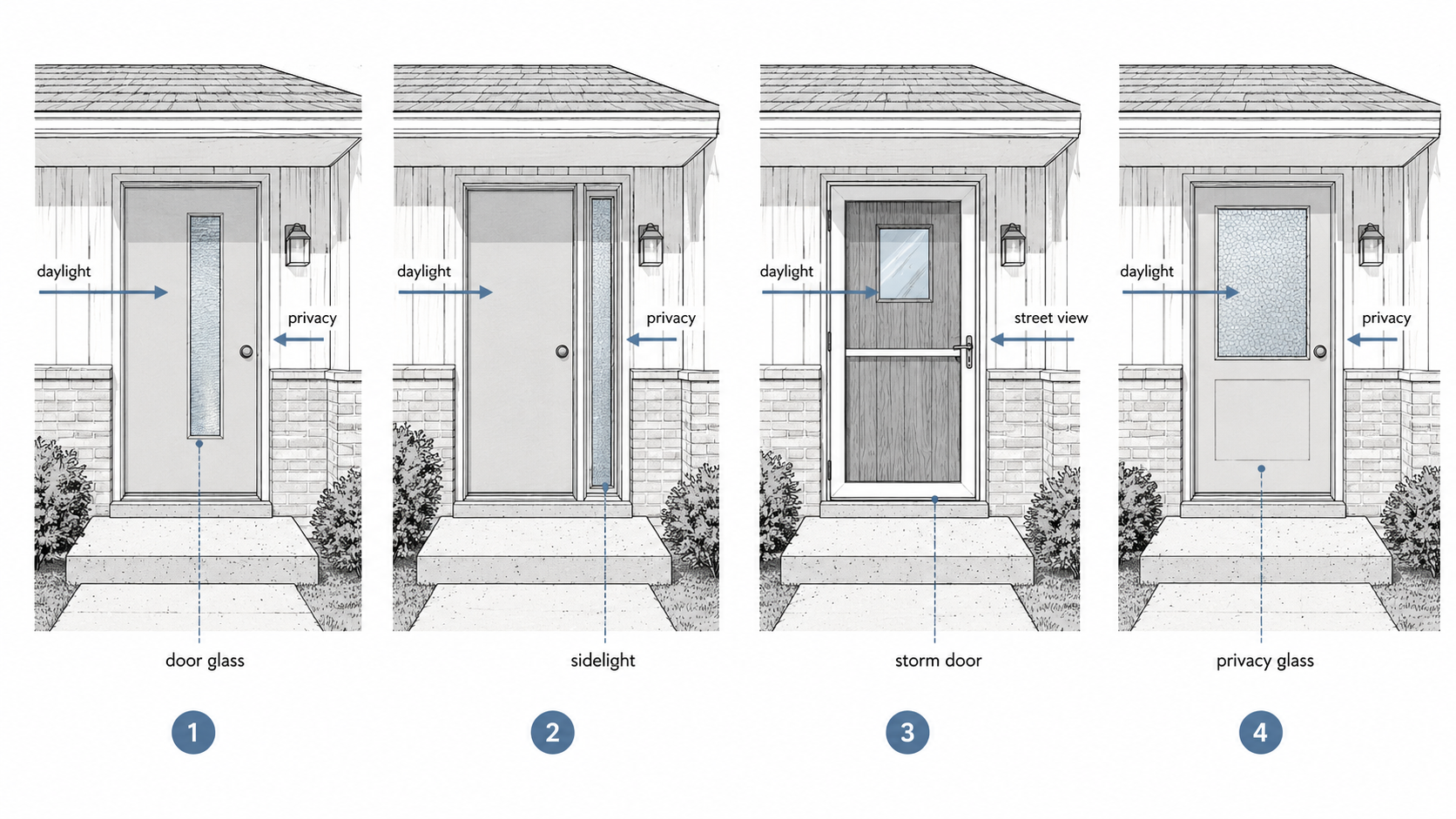
Glass inserts and sidelights change the whole entry
1970s entries often used vertical glass.
Sometimes it was in the door. Sometimes it was in a sidelight. Sometimes both. That glass can be the reason the entry still has character. It can also be the reason the house feels exposed, dark, or dated.
Glass decisions are not only style decisions. They change daylight, privacy, security, heat gain, and how the entry reads from the street.
If the sidelight is well placed, keeping it can make the entry feel original and bright. If the glass is damaged, fogged, unsafe, or too exposed, replacement glass or a better privacy pattern may be enough without changing the whole door.
Be careful with decorative replacement glass. The wrong pattern can age faster than the old door did.
Storm doors can help or ruin the look
A storm door can protect the entry. It can also make a good door disappear.
Old aluminum storm doors are one reason many 1970s entries look tired. The main door may be decent, but the storm door is cloudy, bent, yellowed, scratched, or carrying the wrong color. From the street, that is what people see first.
If the door behind it is worth showing, choose a storm door that gets out of the way visually. Full-view storm doors usually work better than busy ones when the original door has good wood, glass, or panel detail.
If the old storm door traps water, rubs the frame, blocks the hardware, or makes the entry feel like a screen porch, fix that before blaming the main door.
Colors that usually fit 1970s entries
1970s houses can handle stronger door colors, but the color has to answer the house.
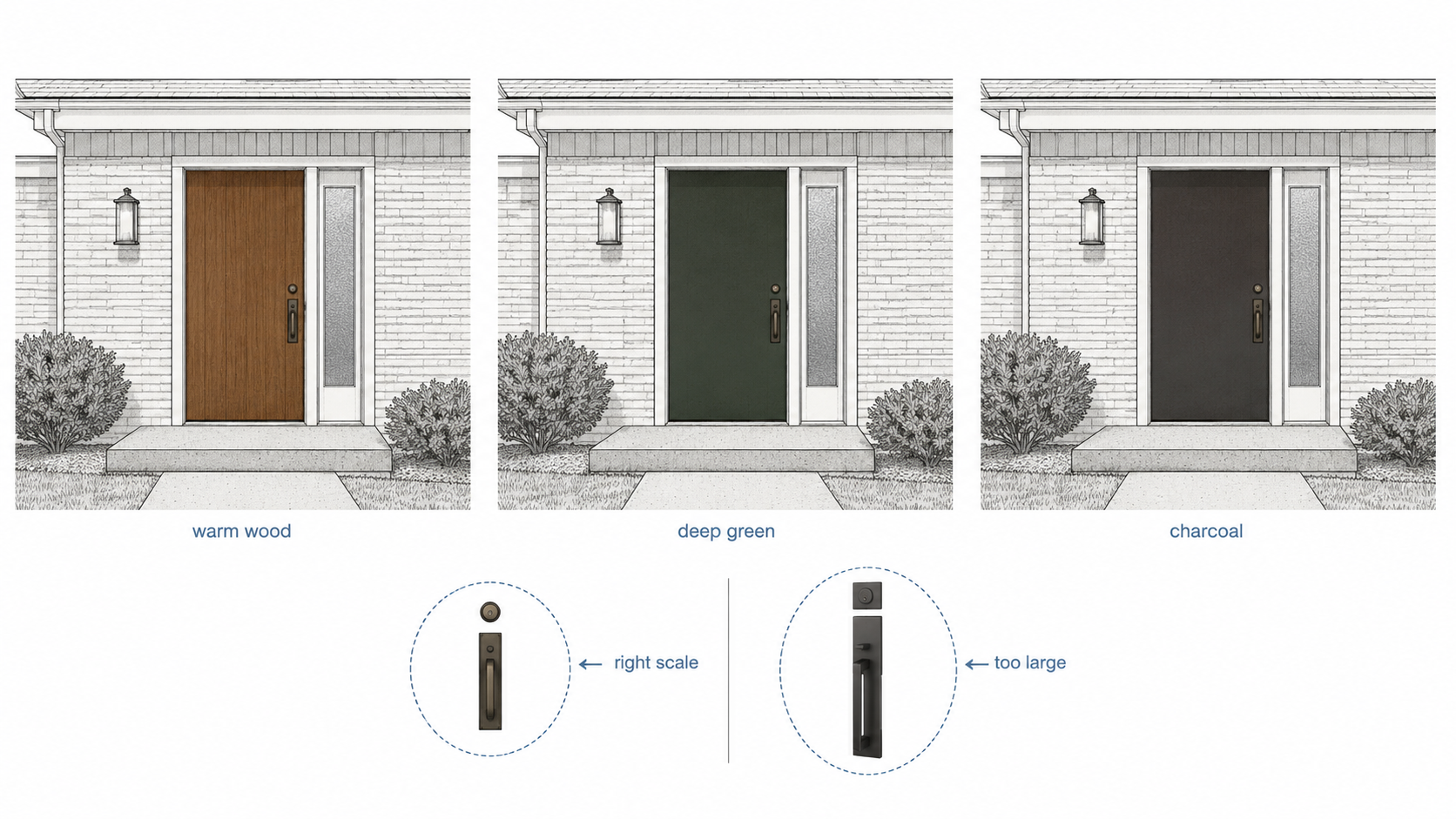
Warm wood works with brick, stone, and earth-tone siding when the finish is clean. Deep green, brown-black, charcoal, muted red, or dark blue can work when the surrounding materials are calmer. A soft cream or warm off-white can help a dark entry, but it can also look weak if the trim and brick are too heavy around it.
The mistake is choosing a color from a door chart without looking at the house in daylight.
Paint a large sample. Look at it beside the brick, siding, trim, roof, porch light, and hardware. Look at it in morning and afternoon light. A color that looks rich on a chip can go flat, purple, orange, or too black on the actual door.
Hardware should look like it belongs
Door hardware is small until it is wrong.
Oversized black handles can look sharp on a new modern door and strange on a modest 1970s entry. Bright brass can look original or cheap depending on the door, light fixture, and house numbers. Oil-rubbed bronze can get too heavy on an already dark entry.
Pick hardware by scale first. Then finish.
The lockset should fit the rail and stile of the door. It should not crowd the glass, fight the panel layout, or require ugly patching around old holes. If old hardware left scars, solve that before ordering something that exposes the damage.
This is also a security decision. A good-looking lock installed into a weak, split, or poorly shimmed frame is not a good update.
When replacement makes sense
Keep the original door when it is sound and fits the house. Replace it when the problems are deeper than finish.
- The slab is warped. If the door will not seal or latch properly, paint will not fix it.
- The bottom rail is soft. Rot at the lower edge usually points to water exposure that needs repair before anything else.
- The glass is unsafe or failing. Cracked, loose, fogged, or poorly sealed glass may push the project toward replacement.
- The frame is damaged. A new slab in a bad frame can still leak, bind, or look crooked.
The frame matters as much as the slab. A door can only perform as well as the opening around it.
Old paint, old trim, and safe work
Many 1970s houses are pre-1978 houses.
That matters at the front door because doors, frames, sidelights, trim, thresholds, and nearby painted siding are high-wear areas. Sanding, scraping, drilling, cutting, or removing painted parts can disturb old paint.
Do not dry-sand an old painted entry because you want a weekend door refresh. Test first when needed. Use lead-safe methods when painted surfaces may be disturbed. If you hire the work out, use a contractor who understands EPA Renovation, Repair and Painting rules for pre-1978 homes.
There may also be old caulk, glazing compounds, flooring at the entry, or adjacent materials that deserve caution before removal. The door is small. The dust path through the house is not.
The right order for a door update
Start with cleaning and repair. Wash the door, trim, glass, threshold, and porch light area. You need to see what is dirt, what is finish failure, and what is damage before you spend anything.
Check the swing, latch, weatherstripping, threshold, frame, and bottom rail. A beautiful door that leaks air or water is still a failed entry.
Decide whether the original door is worth keeping. Sound wood, good proportions, useful glass, and a strong fit with the house are reasons to save it.
Remove visual clutter. Weak storm doors, bad house numbers, tired lights, old mail slots, mismatched locks, and random trim can age the entry more than the slab itself.
Choose color last. The right color depends on the brick, siding, roof, trim, glass, and hardware — not the other way around.
Then update in one pass: door finish, hardware, light, threshold, trim repair, caulk, weatherstripping, and house numbers. The entry will look more intentional because it was handled as one piece instead of a series of separate decisions made over time.
FAQ
Should I keep an original 1970s front door?
Keep it if the door is solid, dry, square, secure, and still fits the house. Refinish or repaint it before replacing it. Replace it if it is warped, rotted, leaking, badly damaged, or unsafe.
What color works best on a 1970s front door?
Warm wood, charcoal, brown-black, deep green, muted red, dark blue, and warm off-white can all work. The right choice depends on the brick, siding, trim, roof color, glass, and hardware — not the trend color of the year.
Are 1970s front doors energy efficient?
Some are not by current standards, especially if the door is poorly sealed, warped, or paired with a bad threshold. Weatherstripping, threshold repair, storm door replacement, or a new insulated door may help depending on the condition of the opening.
Can I update a 1970s front door without replacing it?
Yes. Many entries improve significantly with refinishing, paint, new weatherstripping, better hardware, a better porch light, repaired trim, clearer glass, and a cleaner storm door.
What makes a 1970s front door look bad?
The usual problems are tired finish, cloudy storm doors, worn hardware, weak lighting, bad trim repair, clashing paint, fogged glass, and replacement details that do not match the house.
Do I need to worry about lead paint on a 1970s front door?
Possibly. If the home was built before 1978 and painted surfaces will be disturbed, lead-safe work practices may apply. Doors and trim are high-wear areas, so sanding or scraping old paint should be handled carefully.
Read This Next
For the next decade of entry and house-style changes, read 1970s house style.
If the front entry is part of a sunken living room or level-change remodel, read 1970s sunken living room.
If the project is moving from style into renovation, use 1960s house renovation for the older-house safety and scope checks that still apply to many early 1970s homes.