
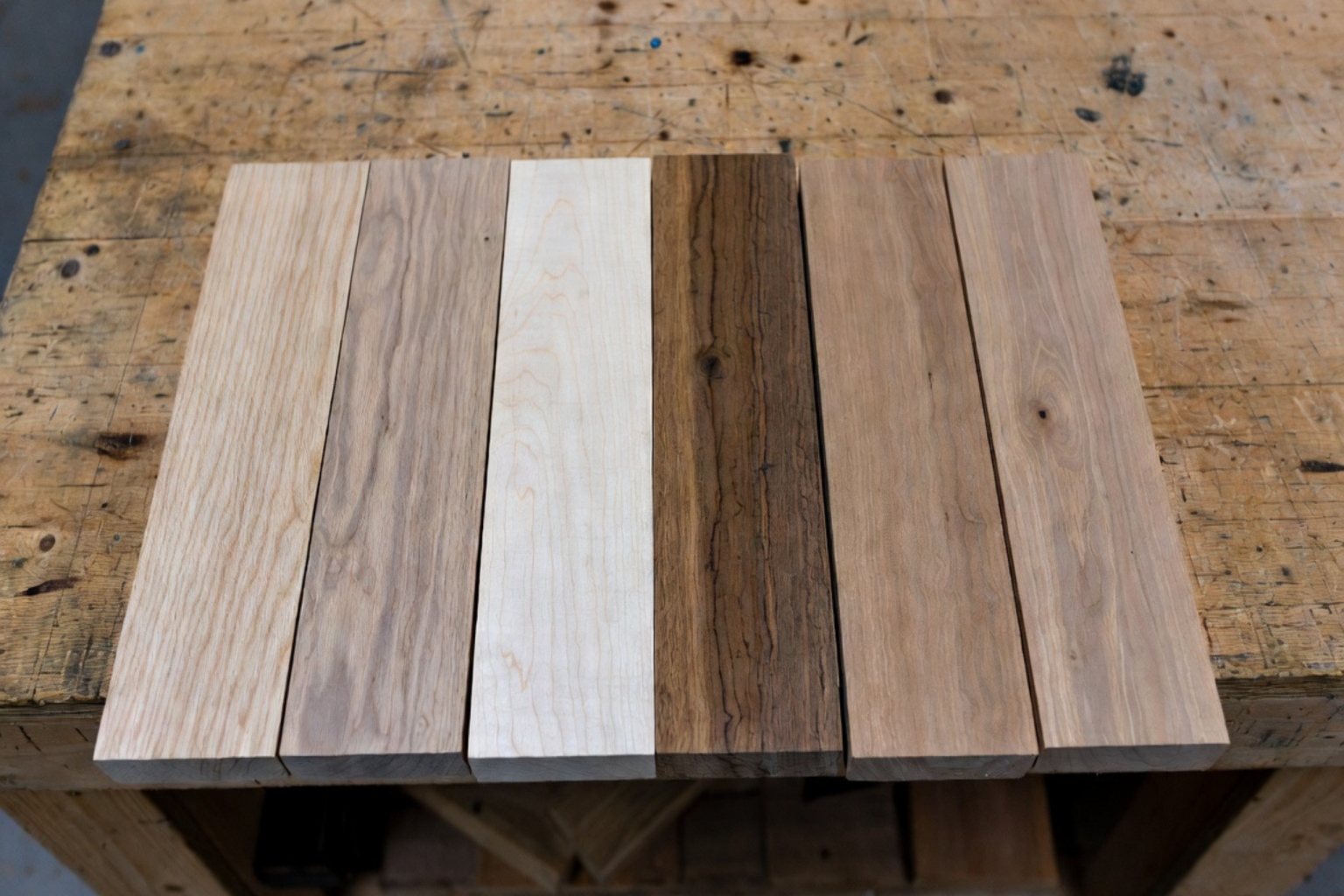
Hardwood floors fail when moisture, the subfloor, or the product choice is wrong. The species and finish change the look, but the room and installation decide how the floor holds up.
Choose the job first: flooring, stairs, furniture, cabinets, or trim. Then choose the species, board type, width, and finish that fit that job.
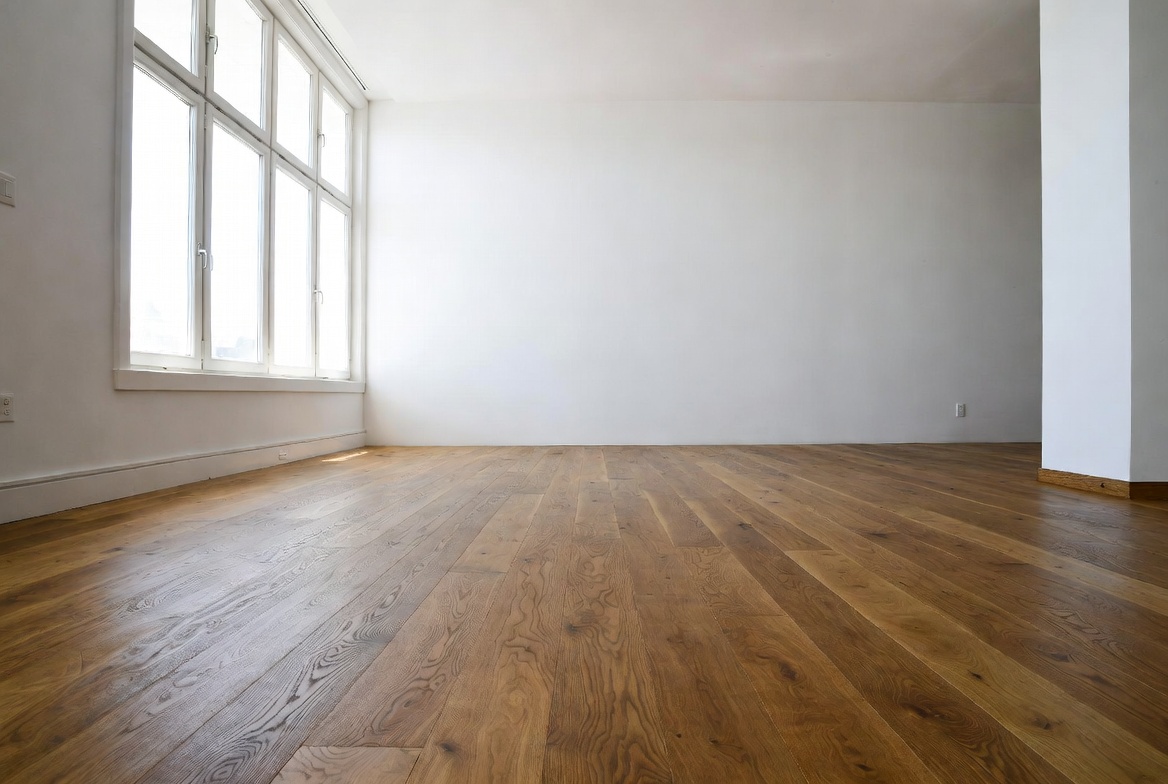
Hardwood Is Not One Product
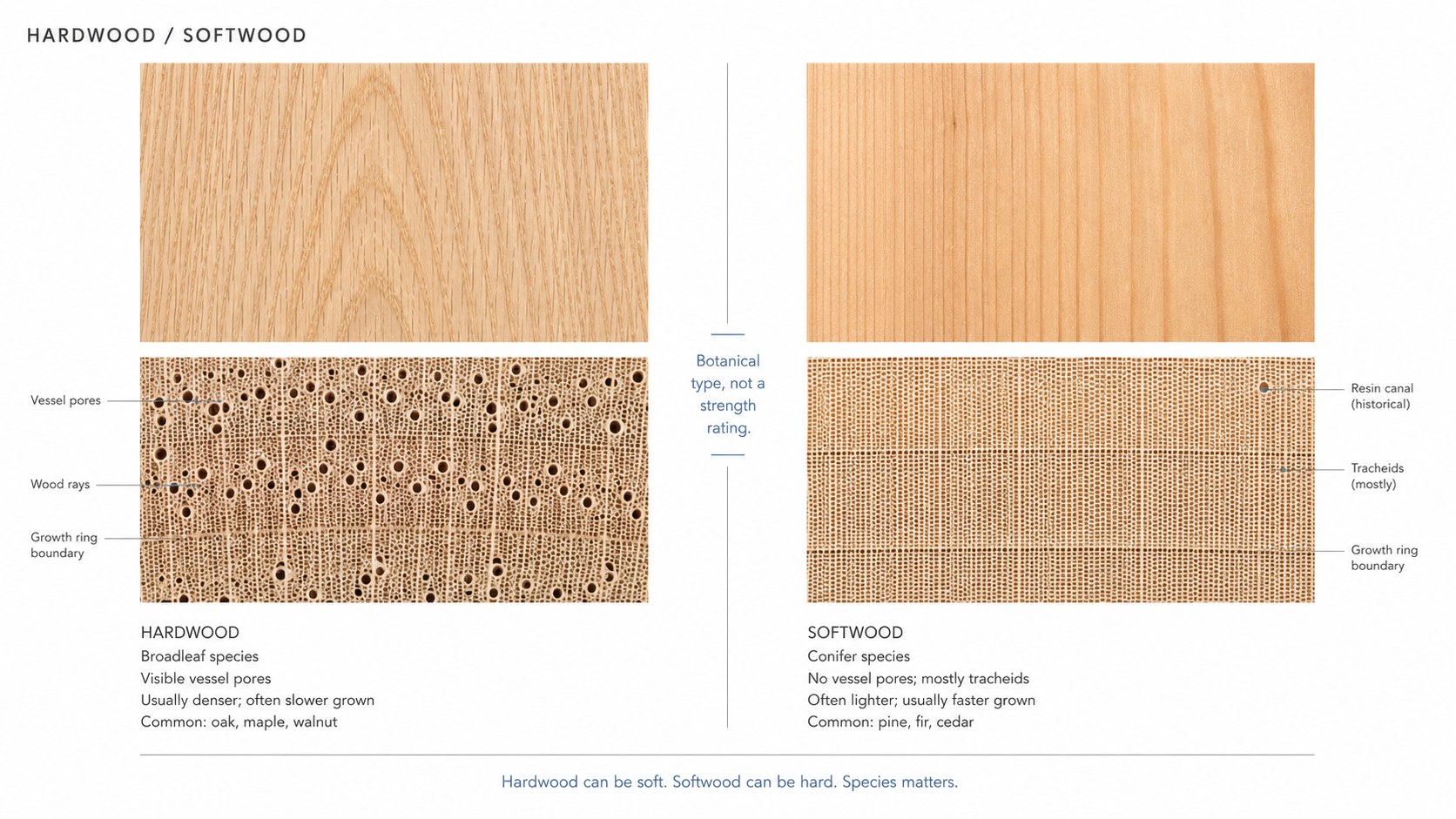
Hardwood can mean oak flooring, maple stair treads, a walnut table, or cherry cabinet parts. The name describes a group of trees; it does not tell you how hard, stable, or suitable the finished board will be.
Species, grain, cut, grade, moisture content, and installation all affect the result.
For flooring, the first choice is solid or engineered hardwood. Both can have a real wood surface. Laminate and vinyl only copy the look. Structural products such as plywood and I-joists belong to a different group; see engineered wood products.
Where Hardwood Works
| Project | Why Hardwood Fits | Check First |
|---|---|---|
| Living rooms and bedrooms | Warm surface, repairable finish, and natural variation | Subfloor flatness, moisture, transitions, and plank direction |
| Stairs and landings | Durable surface that can match the floor and trim | Slip resistance, tread thickness, and nosing detail |
| Furniture and built-ins | Strong grain and a finish that can be repaired | Stability, edge treatment, and expected use |
| Cabinets, paneling, and trim | Natural color and grain without a printed pattern | Color matching, panel movement, and finish samples |
A floor also depends on the joists, subfloor, underlayment, and transitions below it. See how floors work in a house.
Solid Hardwood and Engineered Hardwood
Solid hardwood is one piece of wood through its full thickness. It can often be sanded and refinished several times, but it reacts more directly to changes in humidity.
Engineered hardwood has a real wood wear layer over a layered core. It can be more stable, but quality depends on the wear-layer thickness, core, adhesive, and manufacturer limits.
| Type | Construction | Ask Before Buying |
|---|---|---|
| Solid hardwood | One wood species through the full board | Is the room stable enough for the species, width, and installation method? |
| Engineered hardwood | Real wood wear layer over a layered core | How thick is the wear layer, what is the core, and where can it be installed? |
Neither type is always better. Concrete slabs, radiant heat, wide planks, basements, and large humidity swings can change the choice.
Check wood moisture, acclimation, and movement before ordering.
Common Hardwood Species
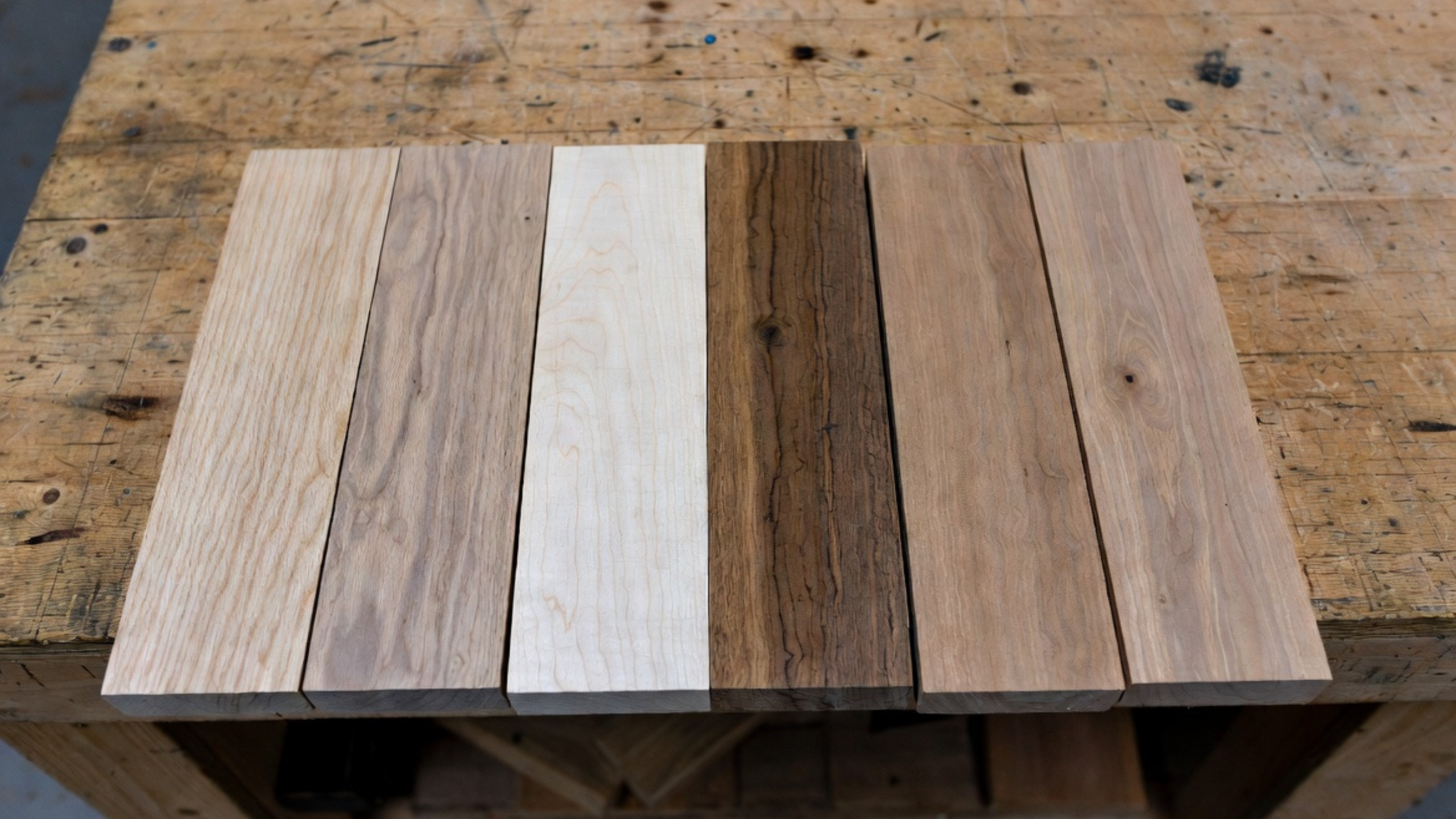
Species change the color, grain, hardness, and amount of variation in the floor. Stain changes color, but it does not change the grain.
| Species | Typical Look | Janka Hardness (lbf) | Common Uses |
|---|---|---|---|
| White oak | Tan to gray-brown with controlled grain | 1,360 | Flooring, stairs, cabinets, and furniture |
| Red oak | Open grain with warmer or pinker undertones | 1,290 | Flooring, trim, and refinishing work in older homes |
| Hard maple | Pale color and fine grain | 1,450 | Flooring, cabinets, work surfaces, and clean-lined rooms |
| Hickory | Strong color contrast, knots, and active grain | 1,820 | Floors and interiors where visible variation is wanted |
| Walnut | Deep brown color and softer grain | 1,010 | Furniture, millwork, and lower-traffic rooms |
| Cherry | Warm reddish brown that darkens with age and light | 950 | Cabinets, furniture, and built-ins |
The Janka numbers come from USDA Forest Products Laboratory testing and measure the force needed to press a steel ball halfway into the wood. They predict denting under a concentrated load, and little else. Scratch resistance comes mostly from the finish, so a 950 cherry floor under a tough finish in a shoes-off house can outlast an 1,820 hickory floor in a sandy entryway. Grit, water, and dropped objects can damage any species on the table.
White oak and red oak do not look the same. Compare full boards before ordering; the oak species overview explains the main differences.
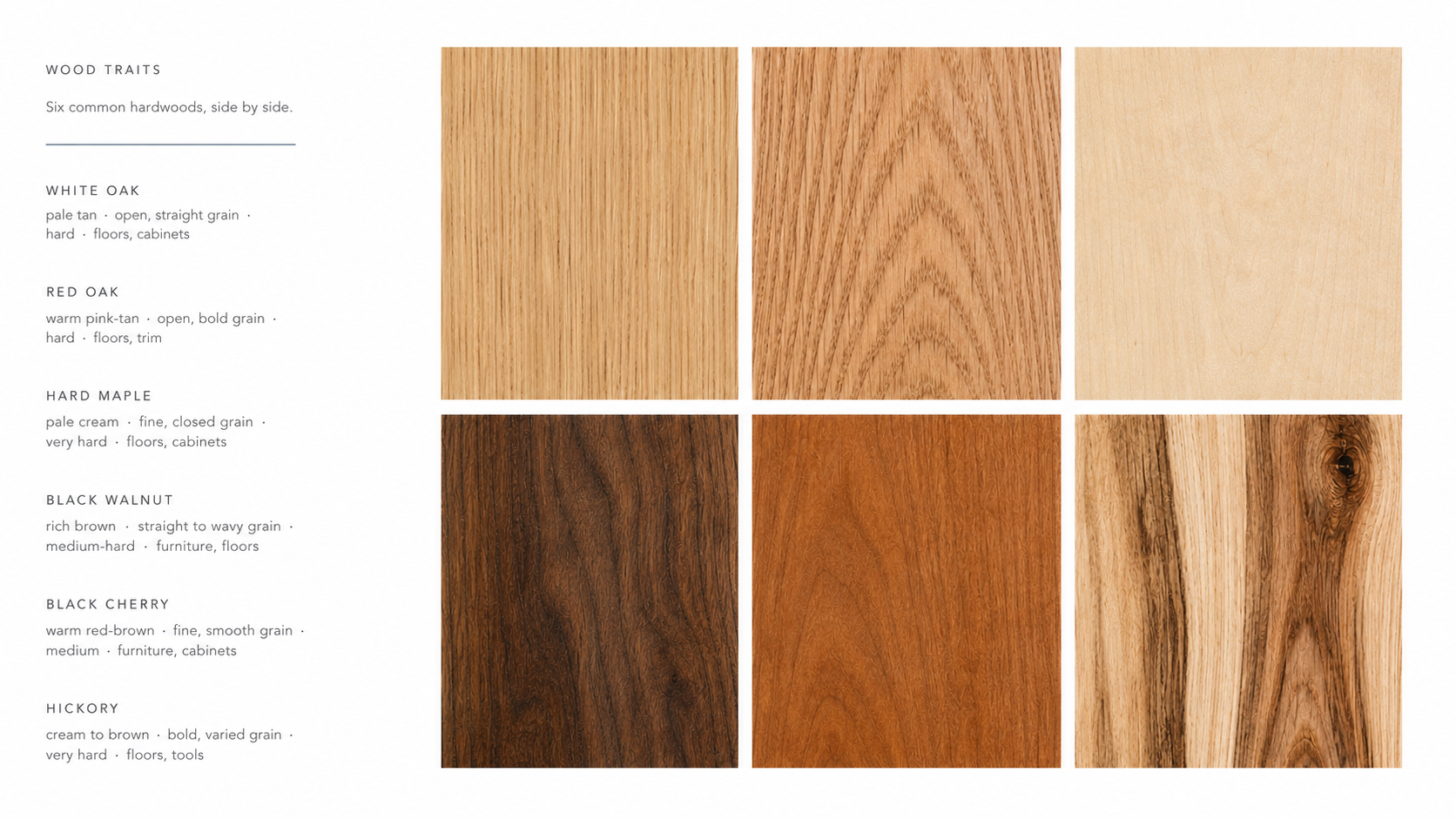
A Small Sample Can Be Misleading
One sample board cannot show how the full floor will look. Board width, length, grade, cut, sheen, and natural variation all change the finished room.
Wide planks show more grain and movement. Matte finishes hide small scratches better than high-gloss finishes. Rift-sawn and quarter-sawn boards often look more even than plain-sawn boards.
Lay several full boards in the room beside the wall color, cabinets, and nearby flooring before making the final choice.
Even that has a limit. A natural-grade floor pulls boards from hundreds of trees, and no sample layout predicts the full spread of color and knots across a whole room. Grade selection controls the variation better than sample shopping does, and grade itself is a range, not a guarantee.
Choose the Floor System Before the Stain
Start with the room and the floor below it. Check the subfloor, moisture, installation method, transitions, and expansion space before choosing stain color.
- Subfloor: It must be dry, sound, and flat enough for the product.
- Room: Kitchens, entries, slabs, basements, and seasonal homes need more moisture planning than dry bedrooms.
- Board width: Wider boards show more movement and need closer control of moisture and installation.
- Finish: Choose the color and sheen after the species and product are settled.
Compare hardwood with tile, vinyl, and other surfaces in how to choose floor materials.
Why Hardwood Floors Fail
Common causes include moisture, a wet slab, poor subfloor preparation, missing expansion space, weak drainage, and installation that does not follow the product instructions.
Cupping, gaps, buckling, dark edges, soft spots, and loose boards are signs of a problem below or around the floor. More finish will not fix the cause.
Clean spills quickly and investigate water near exterior walls, doors, kitchens, and bathrooms before sanding or replacing boards.
Hardwood Beyond Flooring
The same species can behave differently in a stair tread, table, door, or cabinet panel. Wide parts need room to move across the grain.
For furniture and millwork, stability, grain direction, color match, and repairable finishes can be more important than a flooring hardness rating.
See how to choose the right wood for your project.
Frequently Asked Questions
Does hardwood always mean a hard floor?
No. Hardwood describes a tree group. Compare the actual species and product construction.
Is engineered hardwood real wood?
It can be. Engineered hardwood normally has a real wood wear layer over a layered core. Check the wear-layer thickness, core, warranty, and allowed installation method.
Can hardwood go in a basement?
Do not assume it can. Test for moisture and follow the product instructions. Engineered hardwood is often used over slabs, but it does not replace moisture control.
Can hardwood be refinished?
Solid hardwood can often be refinished when enough thickness remains. Engineered hardwood varies. Thin wear layers may allow little or no sanding.